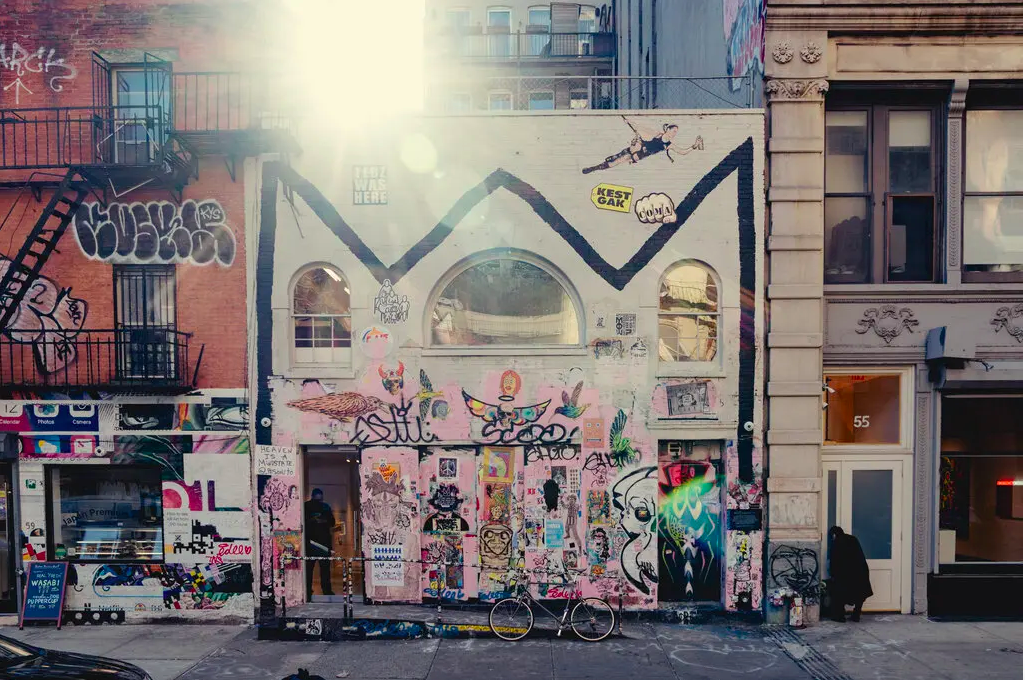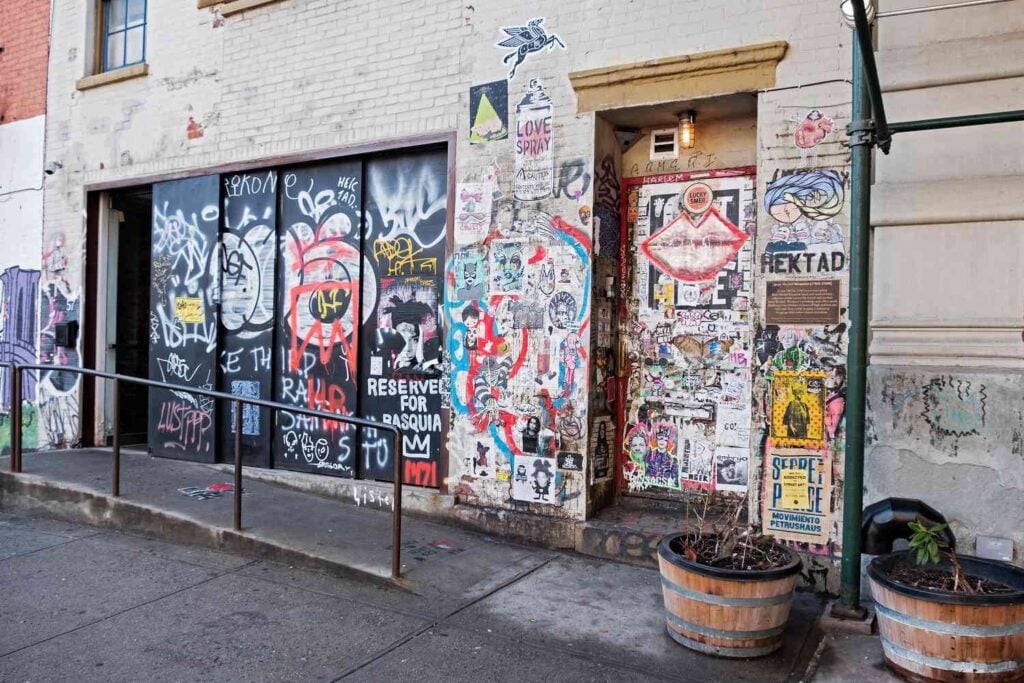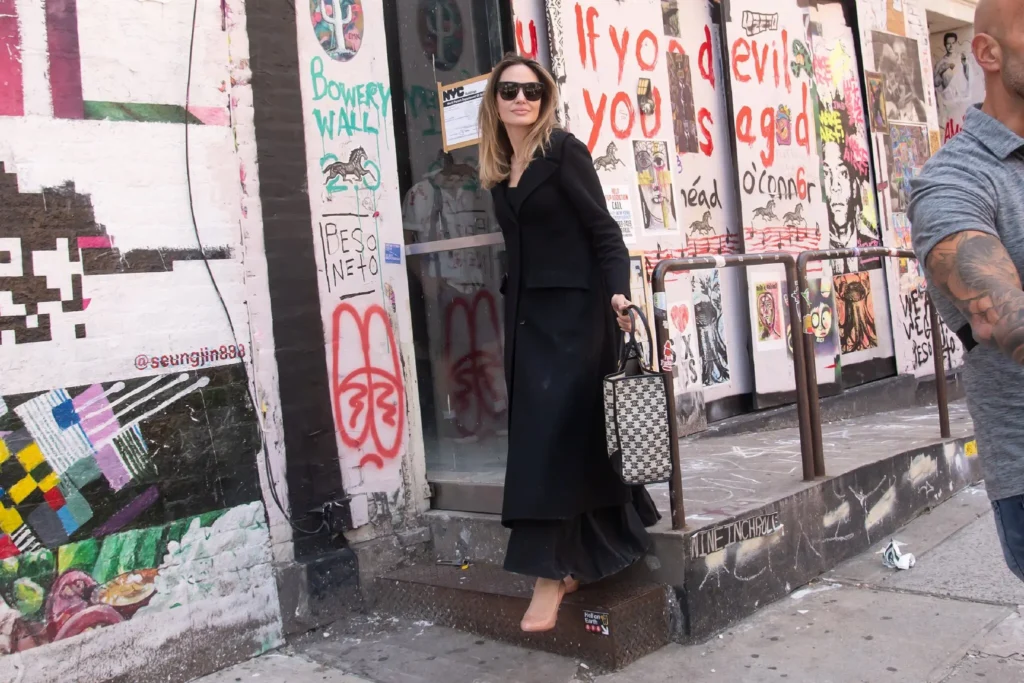
What do Angelina Jolie, Jean-Michel Basquiat, and Andy Warhol have in common? As announced last spring, American superstar Angelina Jolie has launched her brand Atelier Jolie, which finds its physical space in a unique location: Andy Warhol’s house, also known as Basquiat’s workplace.
The house, located in Manhattan’s East Village and rented for $60,000 a month, is the new headquarters of Atelier Jolie. Choosing this location proves to be successful both in terms of brand identity and communication strategy. Atelier Jolie is not just a fashion brand but also a collective, intending to bring together a community of tailors, pattern makers, and international artisans, offering them the opportunity to create new garments with unused and vintage fabrics. But let’s learn more about the history of this place.
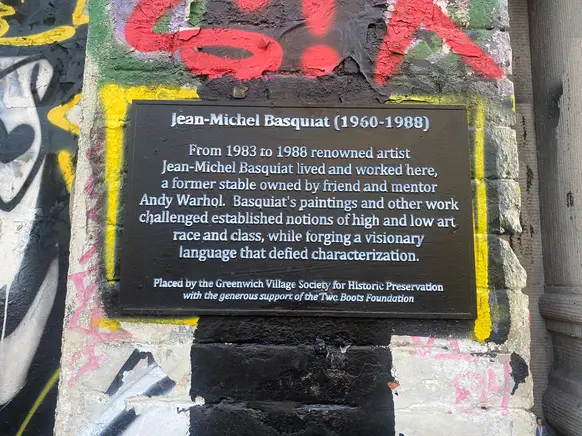
Originally built in 1860 as a stable at 57 Great Jones Street, the building later came under the ownership of the Five Points Gang led by mobster Paul Kelly. In 1970, Andy Warhol acquired the two-story, 613-square-meter structure, renting it to Basquiat, who lived and worked there from 1983 until his death in 1988. In 2018, the house was the site of an exhibition featuring works by cult street artists from the 1970s, including Al Diaz, co-creator of the iconic SAMO© tag, aka Same Old Shit, alongside Basquiat. Al Diaz himself recently stated that the graffiti discovered during the renovation were not made by Basquiat but by him during the 2018 exhibition.

But what does the art world (and beyond) think of Jolie’s choice?
We found out by reading an article in Ocula Magazine that reports some comments from scholars and people close to Basquiat. «Should it be a tribute to Basquiat?» said photographer Richard Corman, Basquiat’s last portraitist, «He stayed there for a while, so it could have become anything. And Angelina is an artist so… it’s not a Chase Bank». Alexis Adler, who shared the space with Basquiat for a period, also reflects on the transformation of the place, saying: «It is still associated with him and the art he made there. It could have become a McDonald’s or something that would have no association with him. I hope Jolie understands that she is in an important space and maybe she will pay homage to it in some way». Art historian and Basquiat scholar Dieter Buchhart, on the other hand, raises critical questions about Jolie’s decision to turn the building into a fashion atelier. Buchhart suggests that there are more appropriate alternatives to preserve the artist’s legacy, highlighting the lack of respect in adopting a commercial perspective. «There have been much less important artists who have received museums. …This space, this Great Jones Street, is the only connection to the city, to Warhol, to everything. I think this should really be respected». We can only wait to see how this place, which aims to become a kind of fashion factory, will be animated.