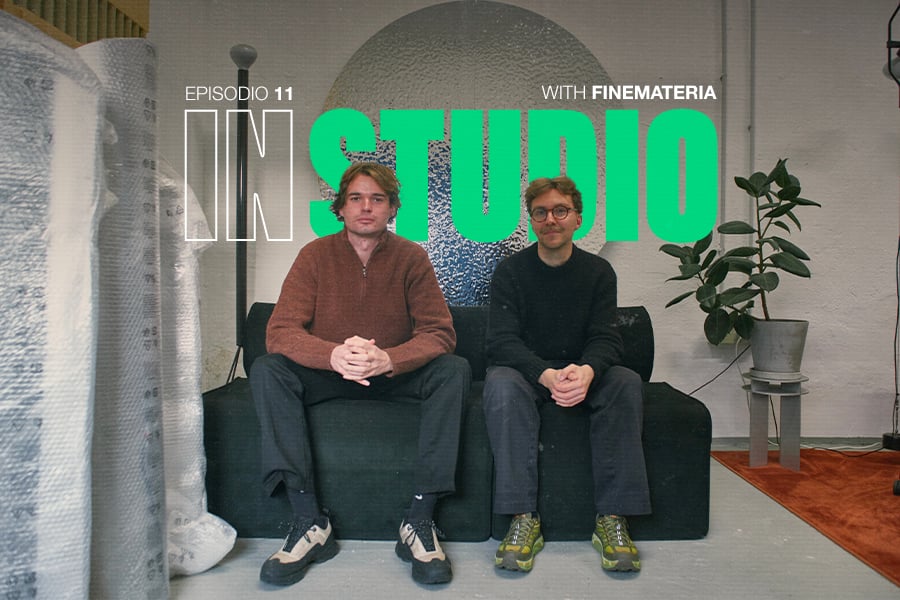
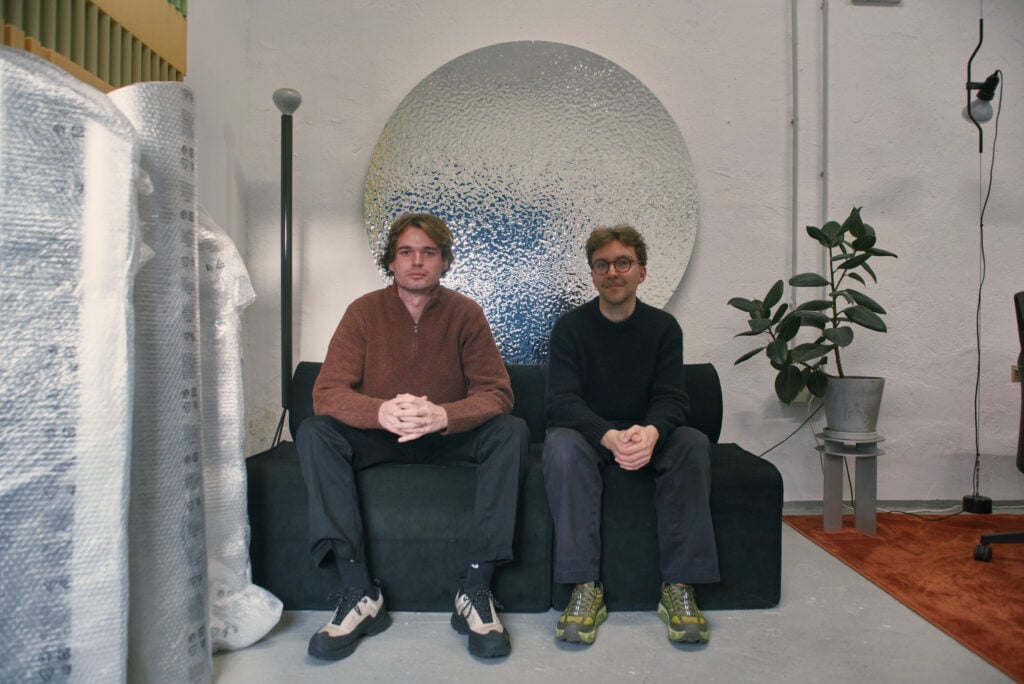
For the eleventh episode of IN STUDIO we visited Gianluca Sigismondi and Stefano Bassan, founders of Finemateria Studio. A design studio that, as the name suggests, focuses on the material rather than the form. Sigismondi and Bassan, born in 1996, met at the IED University in Milan, and from the 2020 edition of Edit Napoli onward, they officially launched Finemateria with the intention of «creating intense ideas, emotions, and memories in relation to materials,» as stated on their website. We interviewed them to learn more about their research and how they experience their studio, located in Milan within the spaces of DOPO Space.
The Studio
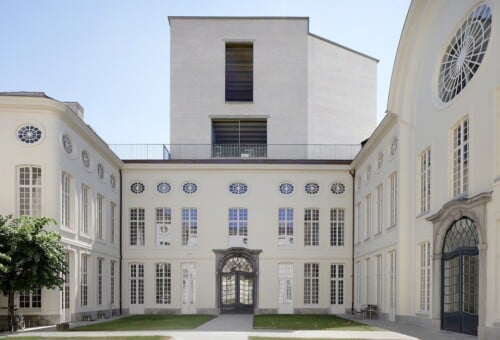
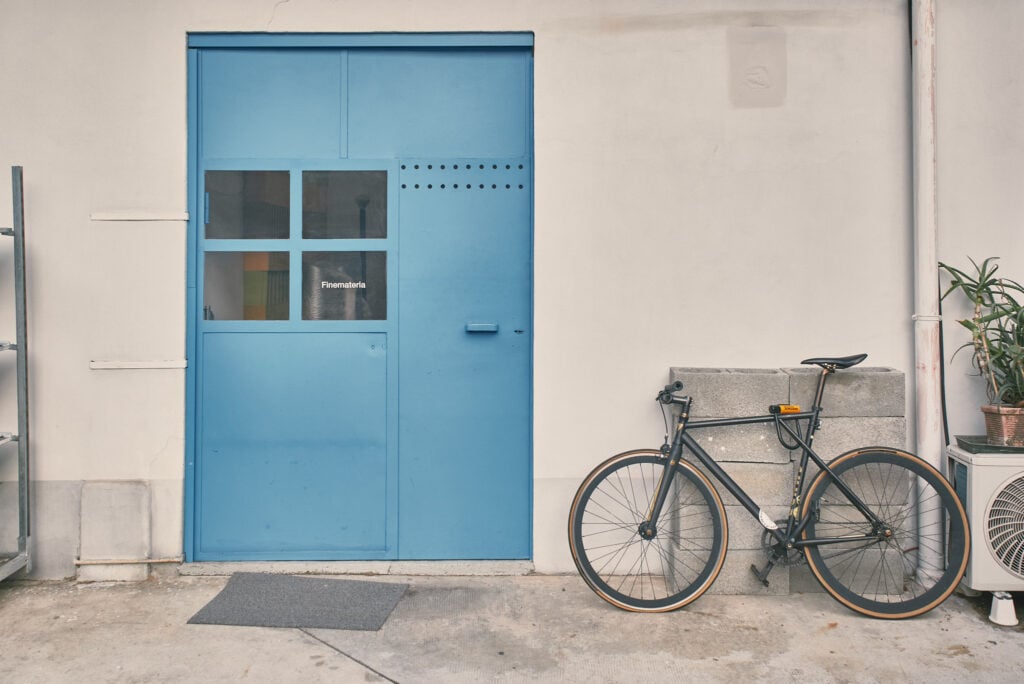
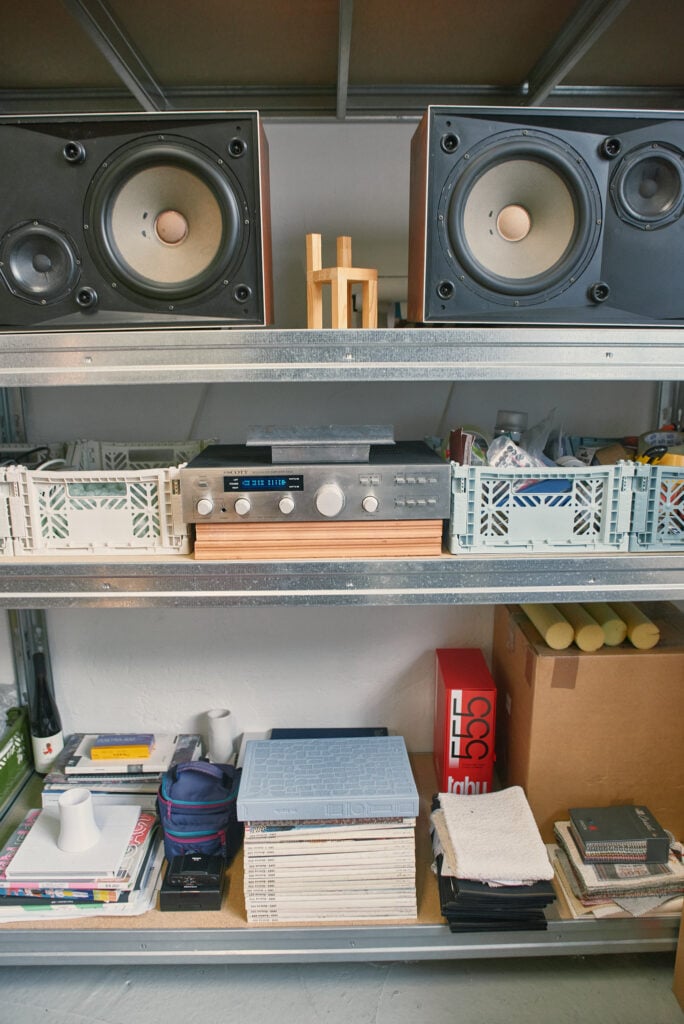
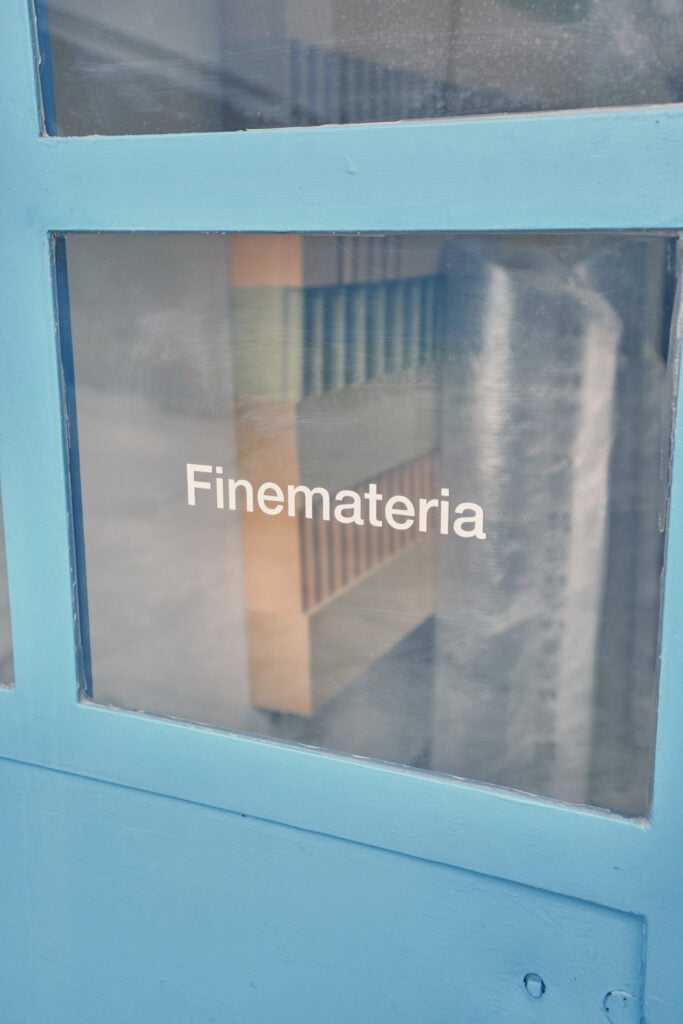
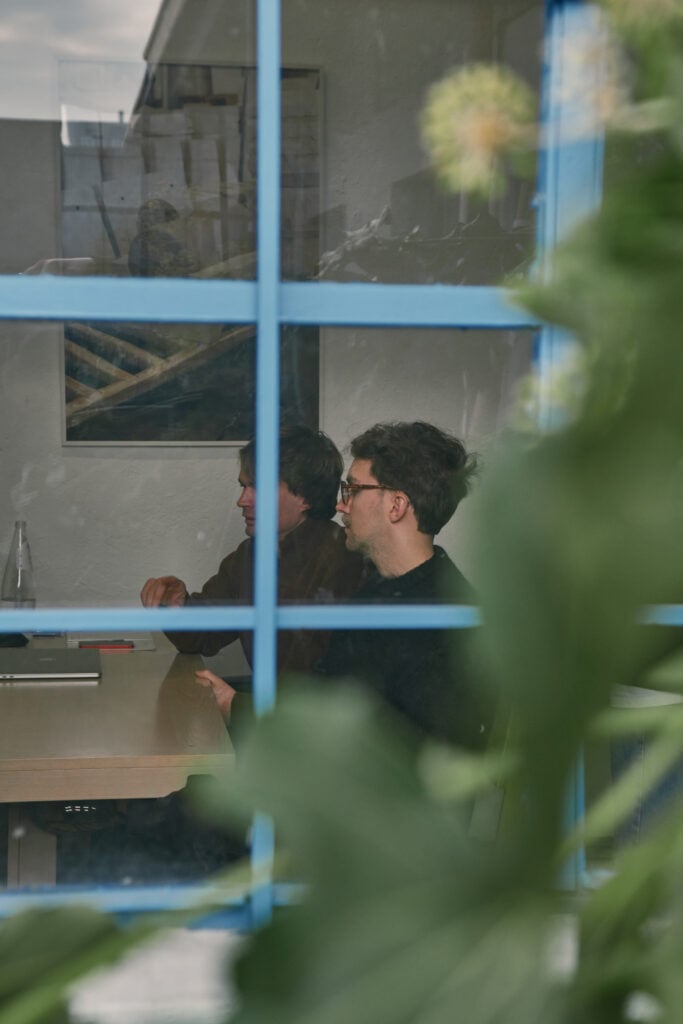
Finemateria’s studio is situated in a unique context in the Corvetto neighborhood, an area buzzing with artistic activity, inside a large building, somewhat isolated but allowing for concentration and out-loud leisure. These spaces belong to DOPO?, later transformed into DOPO Space, gathering architects and designers like Bianca Felicori, Carlotta Franco, Salvatore Peluso, PLSTCT and Parasite 2.0 (interviewed in Spigola). DOPO Space is not just a coworking space; it is an active cultural and artistic hub marked by a schedule of events, parties, collective lunches, and dinners. A true focal point for the Milanese artistic scene. As soon as we entered, this became apparent. The expansive spaces welcome visitors into a small oasis of peace – at least during the day – where the presence of architects and designers is evident. Everything is carefully curated, allowing the urban soul of the place to breathe. Next to the azure door of Finemateria’s studio, a plethora of plants populates the courtyard. It is Clinica Botanica, an urban nursery promoting solely recovered and native plants. In essence, a “concept of a radical institution,” as the founders declared in many interviews. But now, let’s step into Finemateria’s studio and get to know them better.
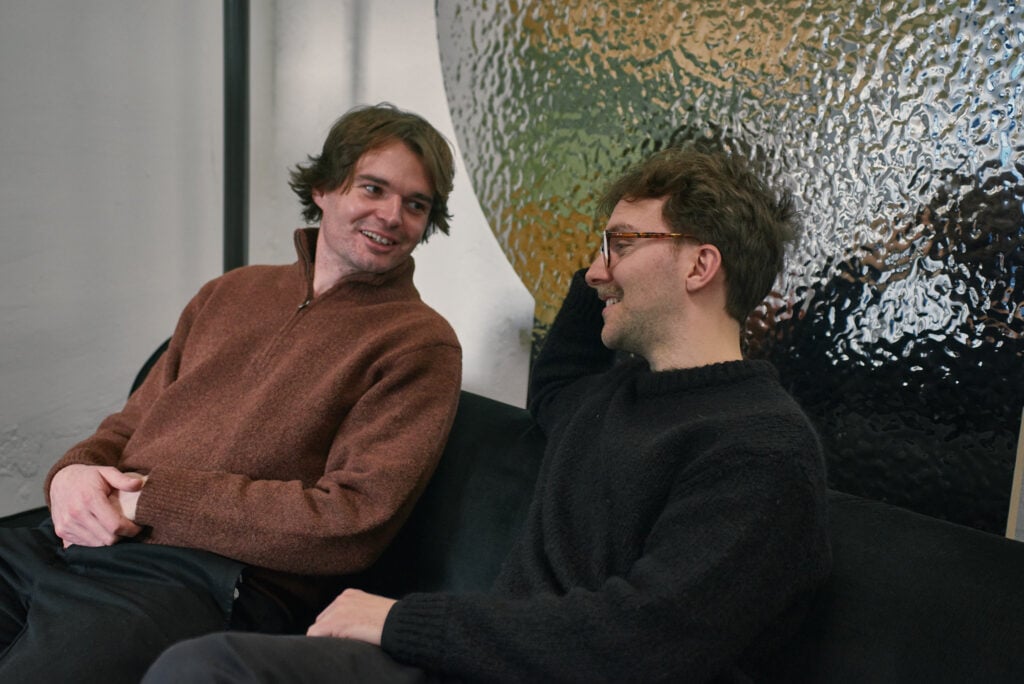
Let’s start from the beginning. How did you get here? How did everything start?
S.B. We met at the University, here in Milan at IED. When we were finishing our thesis, our professors Cara Judd and Davide Gramatica asked us to help them with a specific project they were working on with their studio CARA \ DAVIDE Design. We were in the studio with them for about nine months, being their first interns. It was during that time that we realized that working together professionally could work.
G.S. At CARA \ DAVIDE, we worked in a very authentic way, not much like an internship. We did many things that typically aren’t given to someone who has just graduated from university. Another crucial factor was the approach of Cara and Davide, completely different from that of IED, to which we were accustomed. After the internship, we went our separate ways for two years; each had our own experiences independently. Still, in the meantime, we had decided that sooner or later, we would definitely start our studio together. The name had already been decided – Finemateria – and I believe that everything started moving from Edit Napoli, where we won with the COMFORT / UNCOMFORT chair. We started getting published, thinking about new projects and ideas, until today, where we have become a lively studio.
Where does the name Finemateria come from?
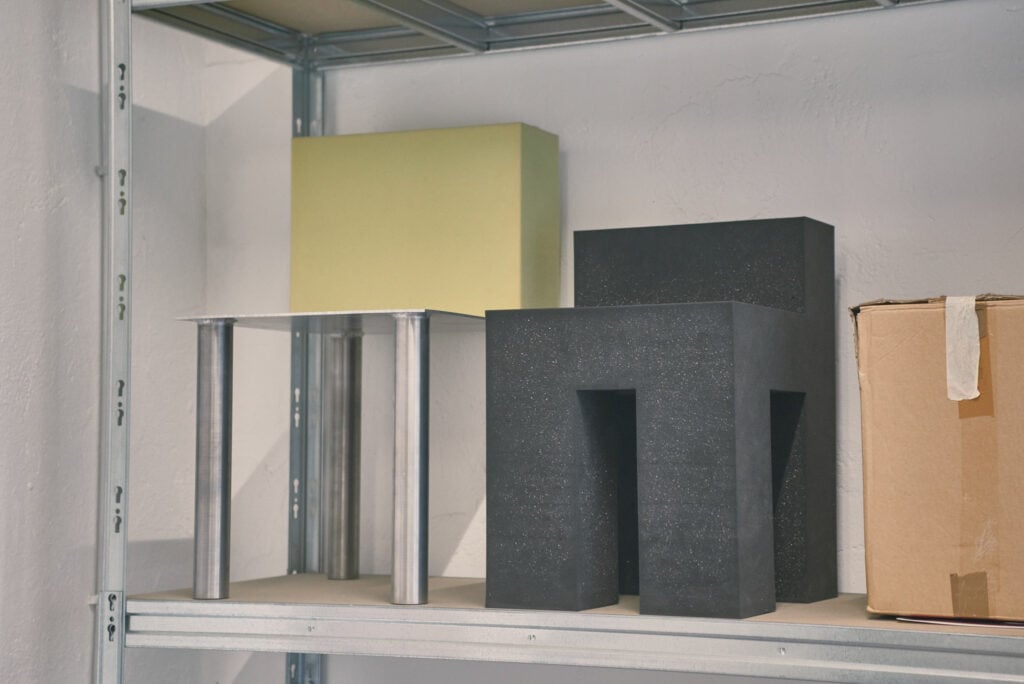
G.S. We wanted the name to reflect the importance of the material for us. In almost all our projects, we give importance to materials rather than form. We always felt that it wasn’t just about the form; everything had to come from the material, used well. The end is the material.
S.B. Understanding the imaginary of a design studio is not easy, especially in Italy. We studied product design but didn’t want to limit ourselves to just that. We understood that to be contacted by both industry and museums, it was necessary to provide a very specific imaginary. We worked on Finemateria as one works on a mini-brand, with the intention of creating a strong identity.
I’m reminded of a term widely used these days, collectible design. A phrase that encompasses all those objects that oscillate on the thin line between art and design. What do you think?
S.B. When we started, this concept didn’t exist. Or rather, it was only the Design Academy in Eindhoven doing that kind of design. Graduates found themselves in a country where there was no industry behind them, so it was automatic for them to carry forward their creative ideas. I think it has exploded predominantly in Italy only in the last two years.
G.S. In my opinion, collectible design is more of a “you want and you can” thing, while product design is more of a “you want, but the company has to want it too.” There is a significant difference. I think collectible design has exploded because there are many more creative people than twenty years ago; everyone wants to have their space, and that is a much more controllable method of expression. It is also worth noting that being a product designer for companies is not so easy today; there is much less demand, especially in Italy. Another factor to highlight is that, as beautiful as it is, most collectible design doesn’t stand on its own. Only thirty percent succeeds; the rest is self-expression without economic feedback, even just taking ourselves as an example. In this sense, I can say that our goal is precisely to find a bridge between all these things. Specializing is not a momentary goal.
How would you explain your research?
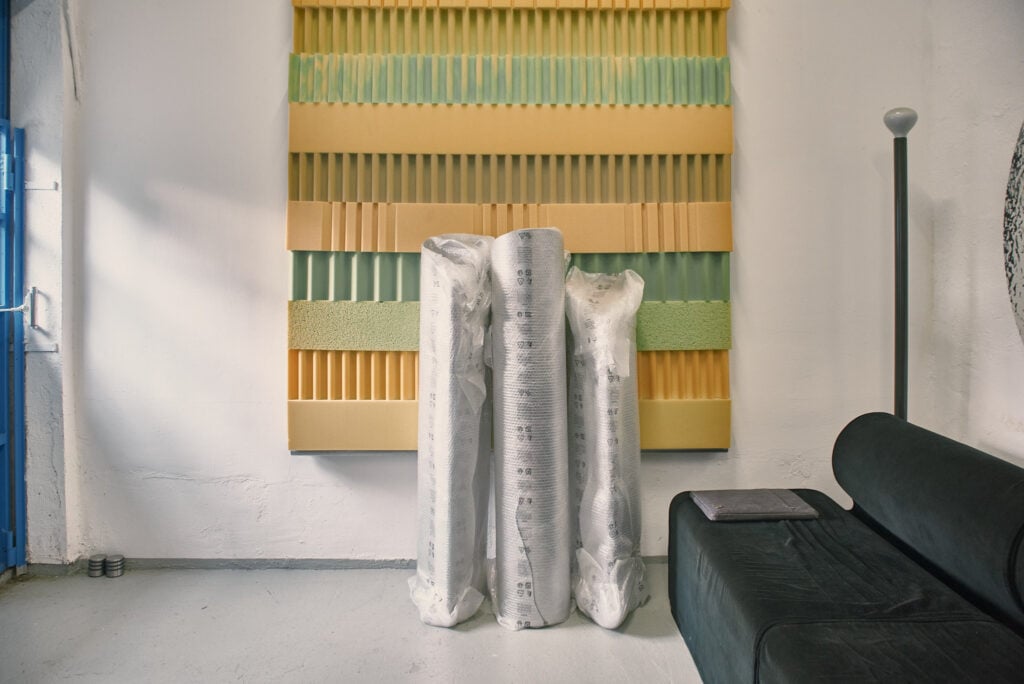
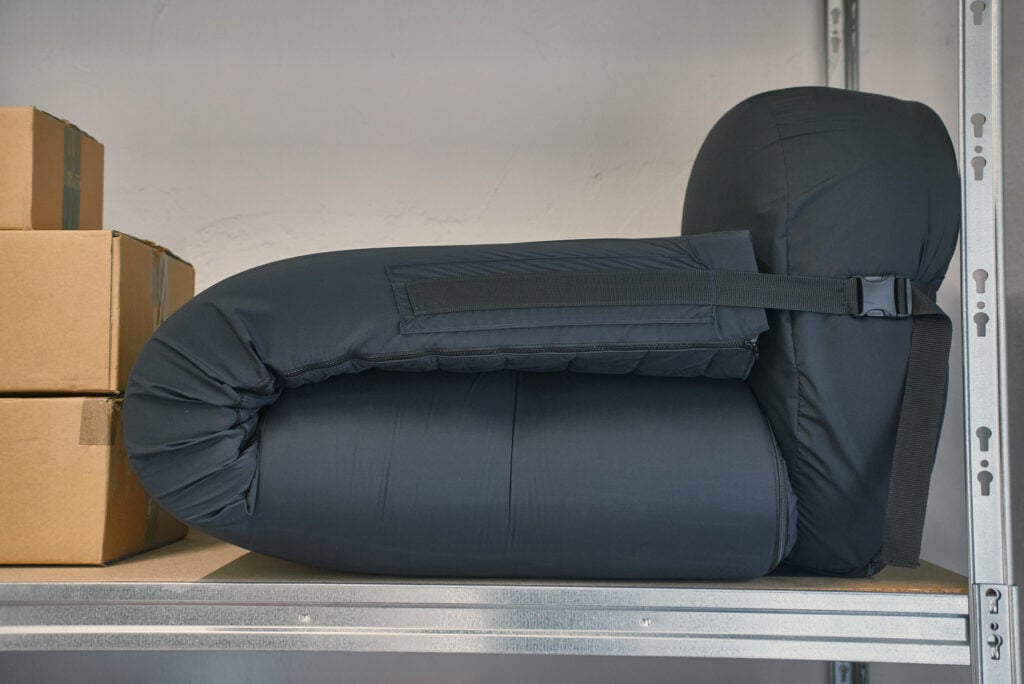
G.S. We started using expanded polyurethane. In 2021, we presented a carpet with that material at the Salone del Mobile; then, we did Vita Lenta in Piazza della Ragione, and even the black chair was in polyurethane. People wrote to us and said, “You are the foam guys.” Commissions started coming in for the material. At some point, you realize that you don’t want to be “the polyurethane guys,” so you have to make it clear that you like materials.
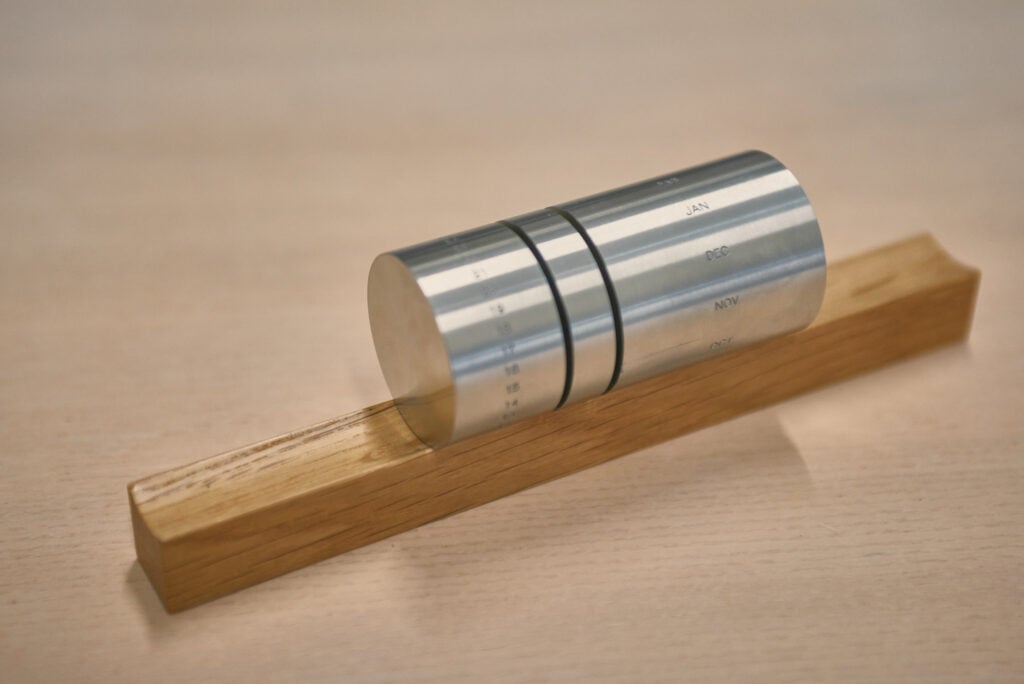
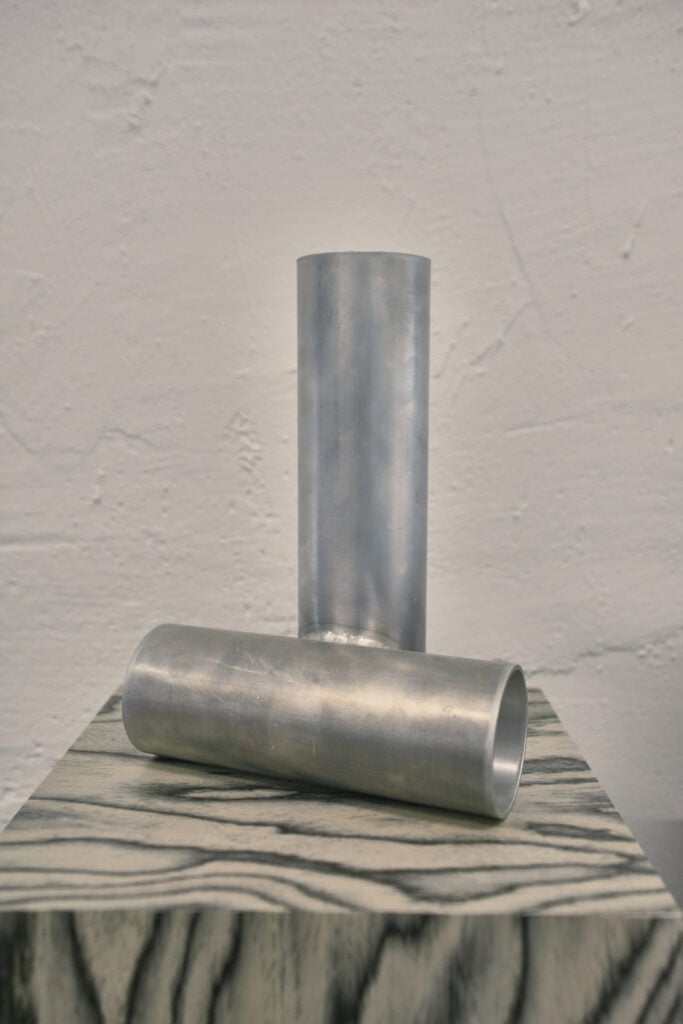
S.B. Our research started with a common thread, that of polyurethane. Then, finding many other ideas and different outputs, we were able to demonstrate that we know and want to work with other materials. For example, with ceramics, aluminum, steel, like for this small calendar. I think, more generally, if you get used to ranging even when you’re young, you make it clear that you are a designer. A bit like those of the old school used to say, “You design from the spoon to the city.”
On one hand, not focusing on a niche can be a double-edged sword. What do you think?
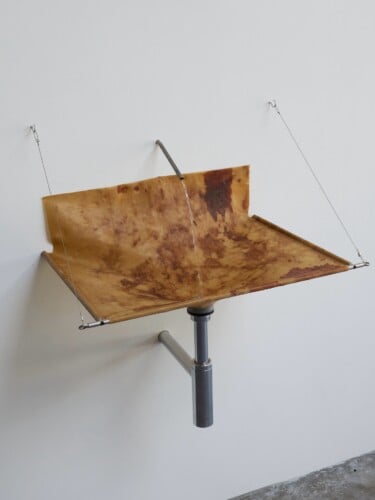
G.S. It’s a choice. I couldn’t specialize in one area; I specialize in my way of drawing. It’s nice when a person recognizes Finemateria’s work even in very different things; it fills your heart a bit. For example, when we did the Fontanella here at Dopo Space, people were saying, “This is so Finemateria“.
What do you think are the elements that link to your work?
G.S. I would say ours is a warm minimalism. Minimalism is usually associated with something cold, while for us, it’s warm, welcoming, Italian rather than Swiss.
S.B. The essential nature of our projects has been recognized. We try to be concise in production and dedicate the right amount of time to it.
Let’s talk about the studio. How do you find it here? How did you end up here?
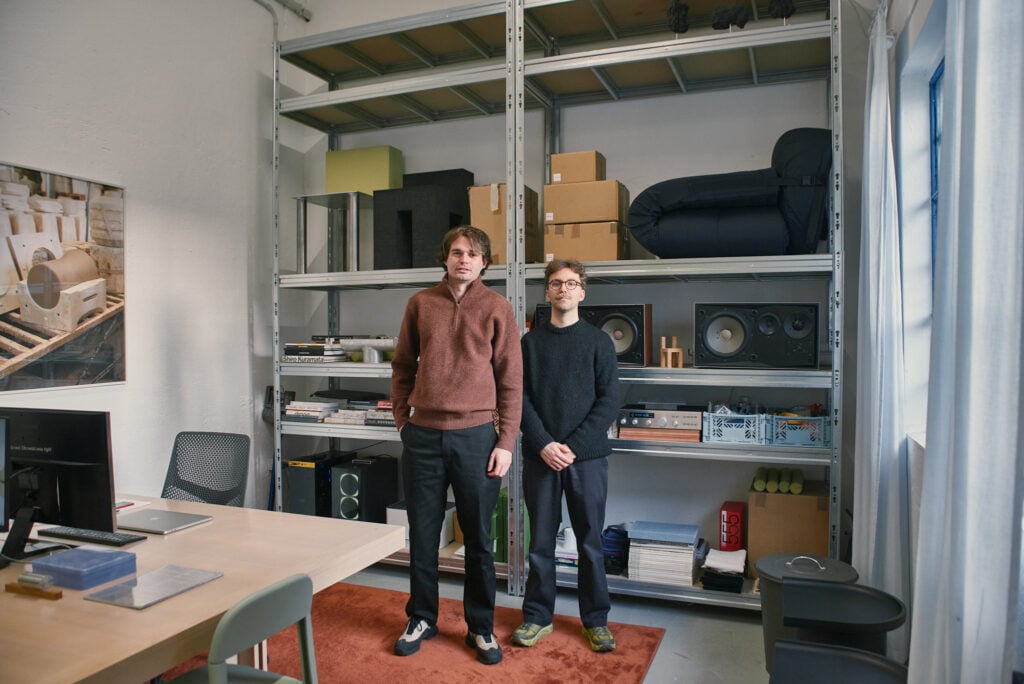
G.S. We knew in advance that this space was going to open. When they gave us the map, we immediately decided that this would be our studio. We were the first to enter Dopo Space because ours was the first studio ready; that’s why we were featured everywhere at the beginning. For us, it’s perfect here because it’s a shared space, but you still have the opportunity to have your moments alone.
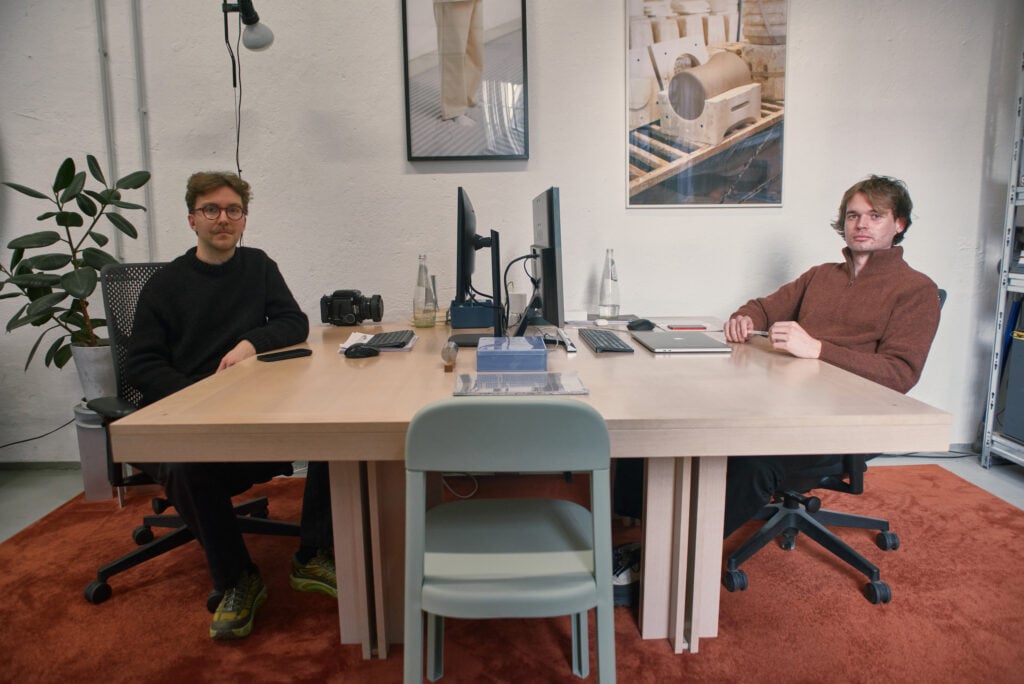
B.S. We used to work at home before. At a certain point, the need to have our own studio became quite evident. Our home-studio was on the fourth floor; it was very inconvenient to carry things up and down, even just for photoshoots. Even before deciding to come here, I had already bought this table by Carlo Scarpa and knew it would be the protagonist of this space.
G.S. We feel very comfortable in this space, and eventually, we would like to have our own space with a collective and perhaps use it for events. Being here, you realize how much potential spaces like this have.
Give us a little spoiler. What do you have planned for the Salone?
G.S. For the Salone del Mobile, the collaboration with Kristalia will continue. Recently, we won a competition with Studio Latte and took over the former drinking water house in Trotter Park. The entire concept is based on the cult of daytime bathing; in general, there should be an experiential setup.
Last customary question. What object cannot be missing in your studio?
S.B. The table by Carlo Scarpa. It was the first thing to enter here and allowed us to start working immediately.
Ph Credits Andrés Juan Suarez