Interview with Francesca Todde
by Gaia Giani for Micamera
edited and translated by Giulia Zorzi
Iuzza is a book to hold in your hands. It invites you to travel and discover Goliarda Sapienza, who did not only write The Art of Joy, her best-known work, but also other works such as Autobiography of Contradictions, which includes Open Letter, The Thread of Noon, I, Jean Gabin, The University of Rebibbia (from which Mario Martone’s latest film Fuori, recently presented at the Cannes Film Festival, was adapted), and The Certainties of Doubt. Francesca Todde was inspired by all these works, reading and rereading them and making them her own, thus mapping the itinerary of her journey following Goliarda’s traces. A journey that lasted seven years.
Todde immerses herself in her works creating connections. The initial occasion can be accidental, a coincidence, but then something happens that pushes her to go deeper and explore. This was also the case with her previous book, A Sensitive Education (released in 2020), which tells the story of a bird educator and his empathetic approach to these elusive beings. The book is also published by Départ Pour l’Image, the publishing house she founded together with Luca Reffo.
This interview was conducted on May 10th, the anniversary of Goliarda Sapienza’s birthday, which would have been her 101st. It is therefore a tribute to her and an opportunity to explore Iuzza. We started with a simple question to create a framework in which to place the beginning of a photographic work that takes off from the written word.
G.G.: How did you encounter her work?
F.T.: Some French friends told me about her; in France The Art of Joy was published before it was here, in 2005, and it was a publishing sensation. Goliarda Sapienza was born in 1924 and died in ’96; she worked from the ’50s until her death mainly creating projects of autofiction. Even The Art of Joy, her best-known novel, can be considered a work of autofiction, in the sense that it contains an autobiographical part mixed with other elements. Many tend to equate Goliarda Sapienza herself with Modesta, the protagonist. In reality, Modesta is not even inspired by her but by other women she met in her life, a kind of dream of what she would have liked an ideal female role to be. Moreover, it is a completely original female role, because she commits terrible crimes without ever being punished: she lives her life in a continuous motion of liberation. She is split: she has a very strong ethics without having a morality. I really liked the book also from a purely literary point of view, precisely because of how it is written. Reading it you find yourself in a kind of vortex; you never manage to gain enough distance to understand if you like it or not, or what you are reading, and I liked that very much.
My French friends said to me, how come, you’re Italian and don’t know Goliarda Sapienza? They gave me Moi, Jean Gabin, which was the first book I read and the last one she wrote, dealing with her childhood. I started reading it in French, then I bought the Italian edition by Einaudi. At that point the problem became – sorry to say – the covers, which were horrible. On the cover of The Art of Joy there is a ’20s pin-up, which has nothing to do with the content and you wonder: who chose that? Or they used Goliarda’s face, images from when she was an actress. These are two totally separate aspects of her life and it seemed a bit strange to me to overlap them… So I started covering the books, because I struggle to read a book whose cover I don’t like, so I cover it; I do this also with other books, often covering them with other images. I began to wonder what kind of imagery could be linked to the content of the book: that’s when my interest sparked. I started thinking it would be nice to do a work on Goliarda Sapienza’s imagery; her writing is full of vivid images. Meanwhile, I found out that her husband, Angelo Pellegrino, was still alive and it is thanks to him that all Goliarda’s works were published. I wrote to him, went to visit him in Rome, and we started this sort of collaboration. We met six times in total.
He told me where to look, giving me precise addresses, because I needed geographical references to seek inspiration not only in the imagery but also in the places, which therefore had to be her places, so that I could really look for her, find something that spoke of her, trying to feel if I experienced any sensations. If I had done it in a different, non-her place, it wouldn’t have made sense to me.
G. G.: Besides this presence-absence map, were you also thinking of key words?
F. T.: There were many words related to the body, for example the palms of the hands and often the nape or the forehead. A wonderful poem says: “I waited / the forehead on the wood of your absence.” Goliarda Sapienza wrote many poems, each more beautiful than the other. They are collected in a book called Ancestral. In the last part there are some in Sicilian, but only three or four; we chose one for the final part of the book.
G.G: The presence of the body and desire is very strong in your book; I find it in the first chapter, which opens with a strongly sensual and erotic landscape. Then I find it in the tactility, the sensoriality of the book-object, and finally, also in the images. Some are material, others seem to belong to a dreamlike imagery. The first chapter, titled Penelope, introduces you to the Mediterranean; its sensuality and materiality by contrast make you think of the loss of physicality in contemporary times and of our Mediterranean as a place of human life losses and wars. But looking at IUZZA a completely different heart beats, and for this reason I would like to ask you to start from here, from the first chapter, Penelope.
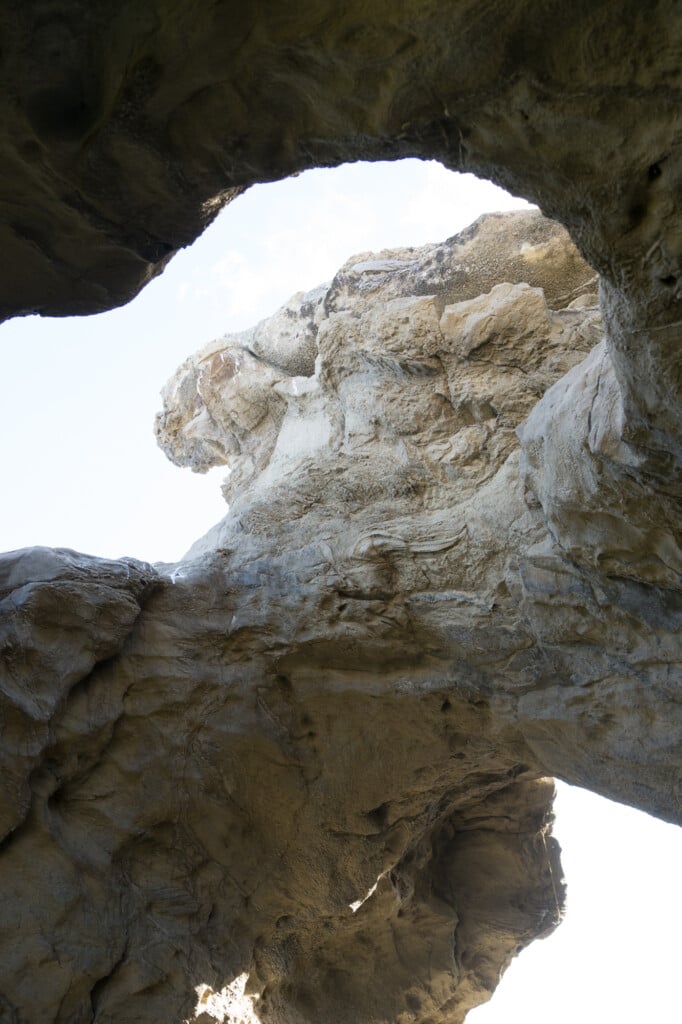
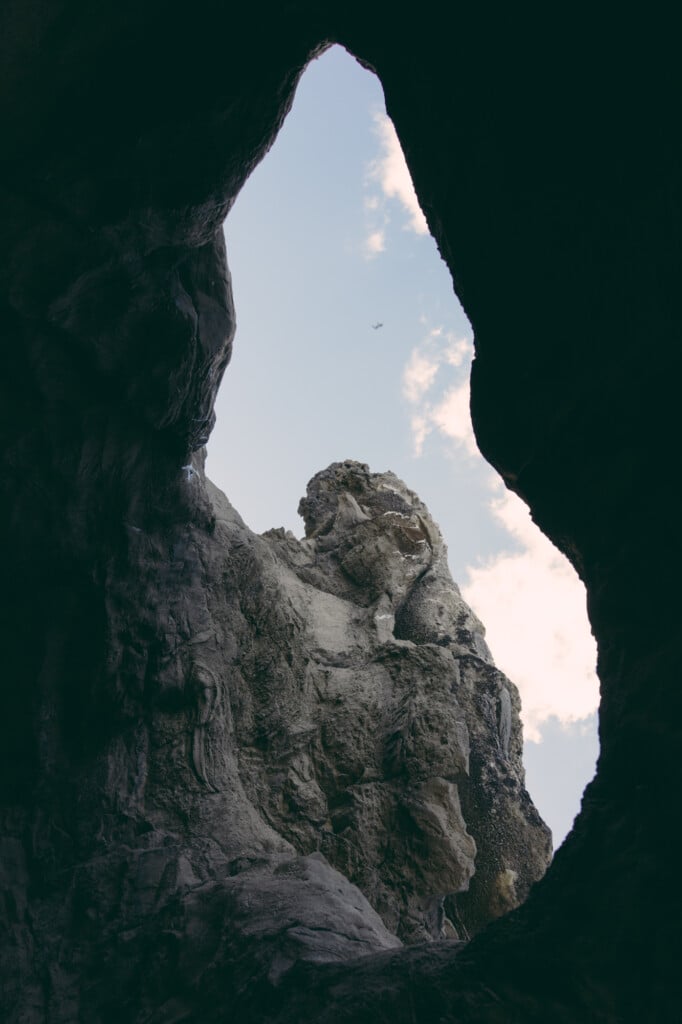
F. T.: In the first two chapters there is also the whole issue of Greekness, Magna Graecia, and Sicily. She was from Catania, and the archipelago where I took the photos is called the Archipelago of the Cyclopes; according to legend it was born from stones thrown by Polyphemus at Ulysses’ ships. Here lies the island of Lachea, which is also the one photographed at the beginning of the book. The island of Lachea is exactly the point where Etna was born, because the first eruption was underwater and formed the island of Lachea.
G.G.: So this photo is Etna?
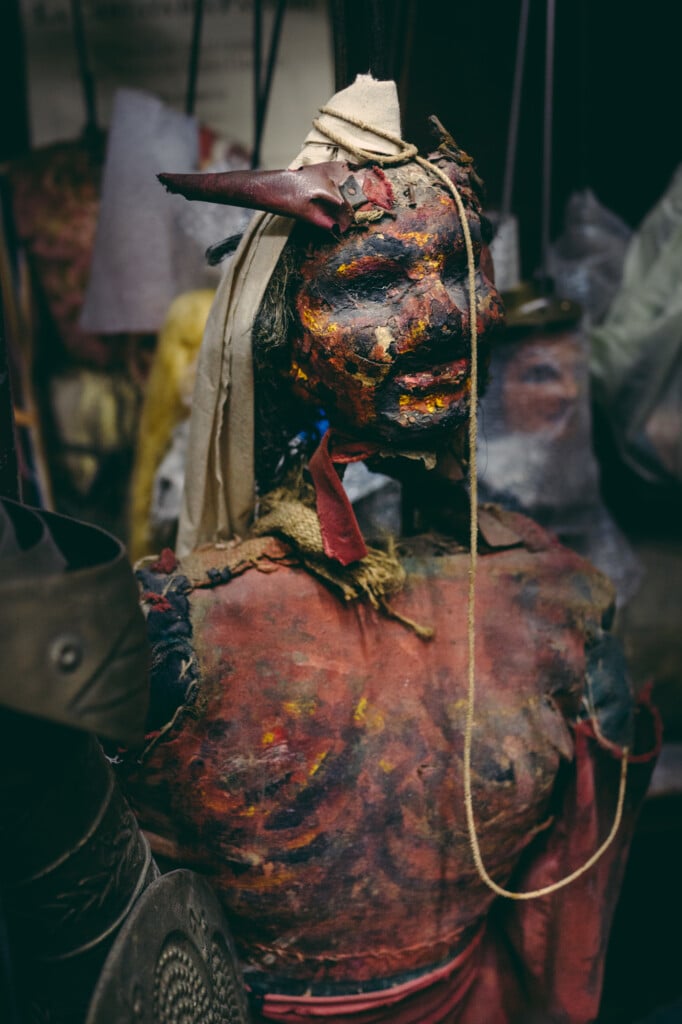
F.T. Yes, it’s Etna, and here there is a Sicilian “pupo” (puppet) because at a certain point, when she was still a girl, Goliarda had to leave school for making disrespectful comments towards her religion teacher — she told him he came to indoctrinate, to impart the opium of the people. Her father helped her burn the uniform of the “little Italian,” the fascist one. She was sent to work for small artisans in the neighborhood, which was San Berillo, a true casbah. It still is today, but the artisans are gone.
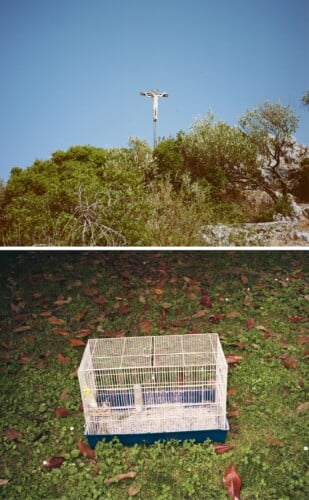
The puppeteer she used to visit was named Insanguine: the Insanguine family still exists, and there is even a museum; at the end of the book I included a photo of the puppeteer Insanguine. I looked for a workshop that still makes Sicilian puppets in the same way: they are almost life-sized and have the peculiarity of stiff legs, with a straight bar. At night, Goliarda had to repair the skirts that had been pierced by swords during the day. The strange thing was that at that time puppet shows were forbidden to women and reserved for a male audience.
G.G. I really like this pairing of Etna with a pupo. How did you work on the sequence?
F.T. Luca and I worked on the making of this book for six months. We started with a very large selection — after all, we’re talking about seven years of work, so there were many images. As we went on with the selection, the work became easier. In the end, the central part, the one about Positano, was the simplest because we already had a pretty clear idea of how it should be. Luca then divided the sequence into seven chapters, and this rhythm allowed us to develop the texts without making everything too heavy. The texts were written by him; he took my notes from seven years and rewrote them into a complete form.
G.G.: Are the chapters like stages of a journey?
F.T. The journeys were many. For example, for the first chapters, I went to Sicily several times; I contacted Cutgana of the University of Catania, which manages Lachea Island. Cutgana is the organization that oversees the natural reserves of Sicily, and Lachea Island is a nature reserve. They took me there on their little boat, and that’s how I was able to take these photos. You can see the marl here, a whitish sedimentary rock.
I like this place because it is extremely sensual; Penelope is also the chapter of the mother, just as Lachea is the mother-island of Etna. She talks about it in an autobiographical novel when she tells of a boy who takes her hand while they are near the Cyclops archipelago, and he tells her the legend. She also writes about it in a letter to Attilio Bertolucci (the poet, father of Bernardo), reminding him they had talked about the myth of Penelope, and specifies that she was beginning to think about a character inspired by her.
I wondered if this character could be Modesta, the protagonist of The Art of Joy. I discussed it with Angelo Pellegrino, but he didn’t confirm it, and the doubt remains with me. Anyway, I was interested in understanding why Goliarda was interested in the character of Penelope, because we have always been told she was the faithful wife who stays at home while the husband is away. In reality, she is a woman who rules her own island like a queen for twenty years, never letting her power be taken away. A figure of great strength. I really like the story of the bed trick: when Ulysses returns home, she doesn’t recognize him and doesn’t want to be approached. So she sets a trap, orders Eurycleia to move the bed — something only the true Ulysses knows to be impossible — and when he gives the right answer, she understands it’s really Ulysses. It’s as if the recognition had to pass through something physical. That’s why I was interested in Penelope’s figure.
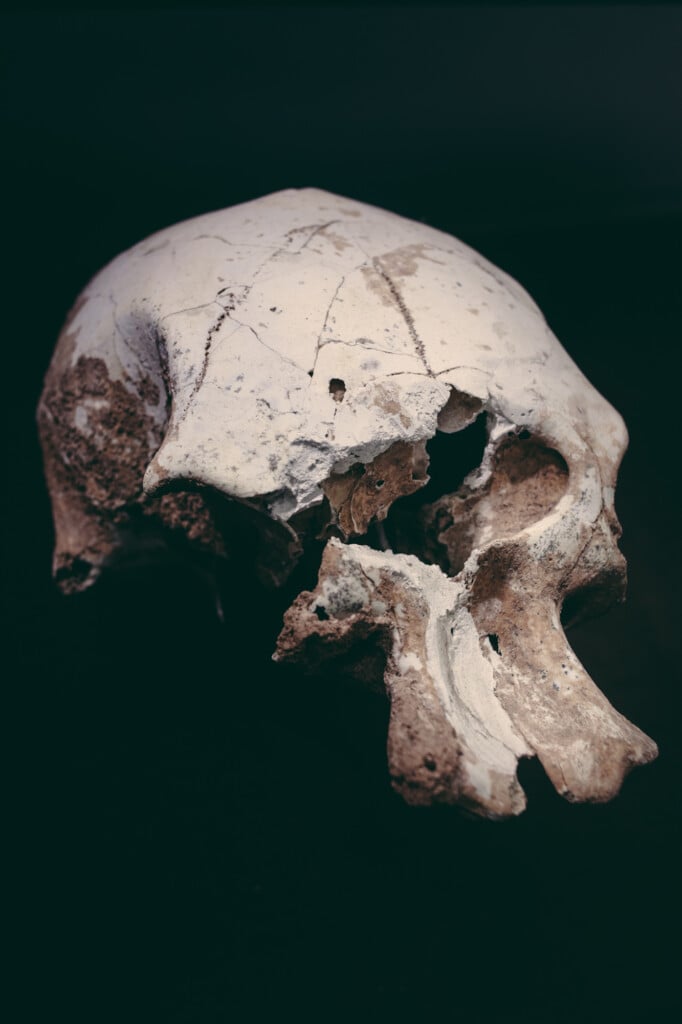
In the first chapter, there is a skull of a dwarf elephant, which is in the archaeology museum. In archaic times, dwarf elephants were endemic to Sicily, and the myth of the cyclops probably comes from finding these skulls, from the eye socket cavity.
I thought it was a common nickname in Sicily, but it was actually a family thing.
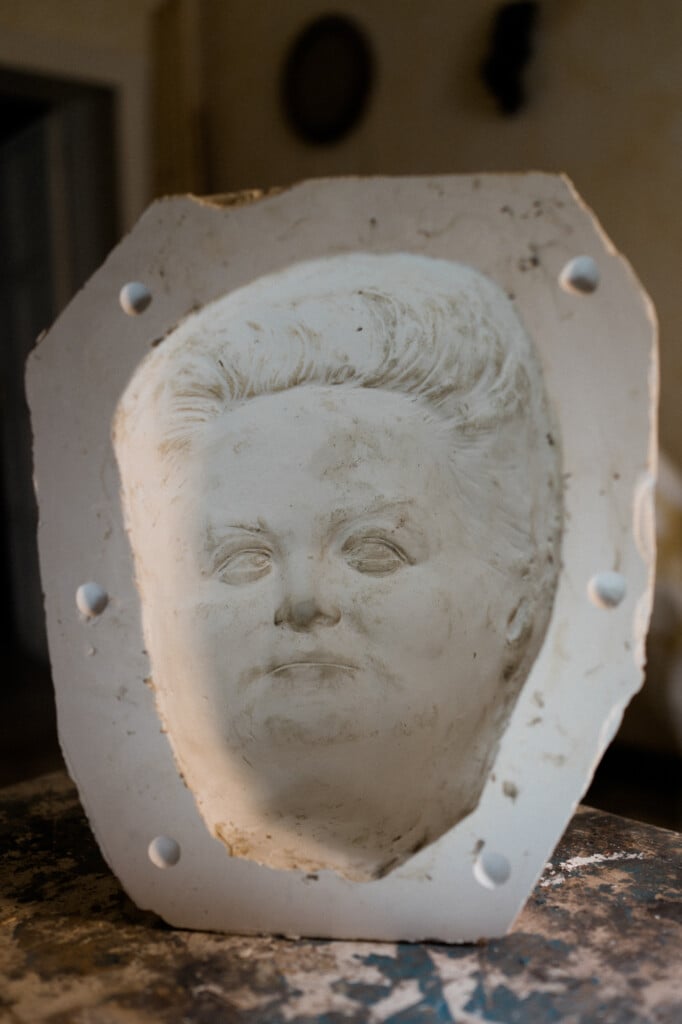
Also in the first chapter, we find the cast of the face of the mother, Maria Giudice, a heroine of socialism from the 1910s-20s. She was the first woman head of the Chamber of Labor in Turin; later the party sent her to Sicily because she was an inconvenient figure, where she met Peppino Sapienza, nicknamed the lawyer of the poor.
The image of the mother’s cast is the only one I designed. Usually, when I shoot, I go to places and wait to see what happens, but in this case, I asked a friend, a sculptor from Palermo, Francesco Albano, to create a face starting from photographs of Maria Giudice. Then I photographed the negative form: I liked it because it has the features to align the two halves, just like the sweets for the Day of the Dead festival. I like this relationship with death, since the dead are always present, especially on November 2nd, which in Goliarda’s time was a bit like their Christmas because the dead brought presents.
GG: When her mother died, Goliarda Sapienza was very ill. Is there a part about this in the book?
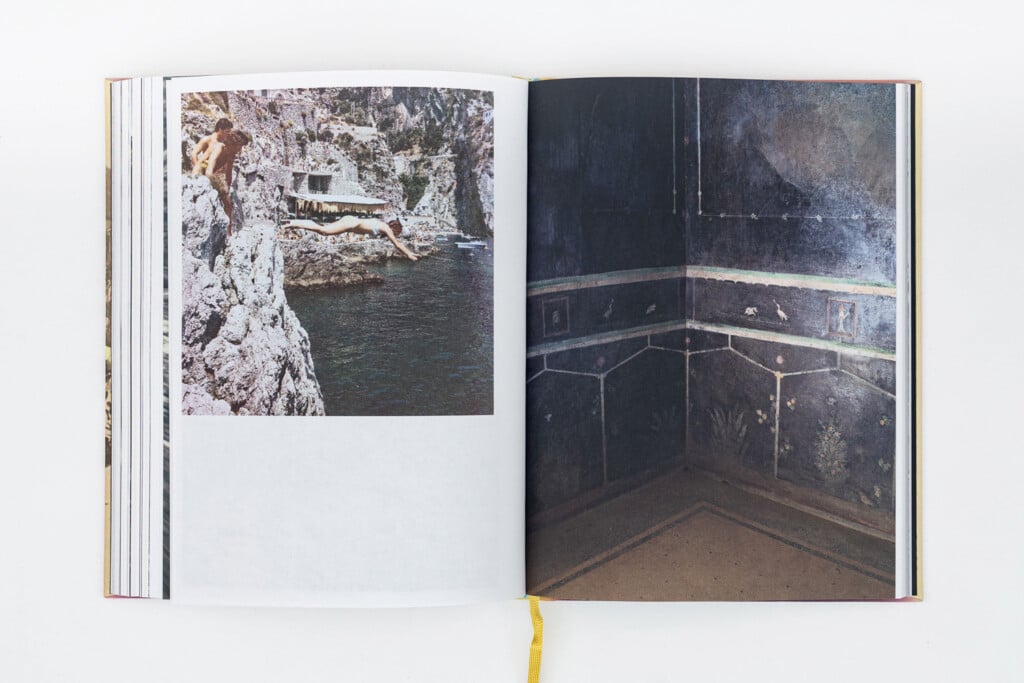
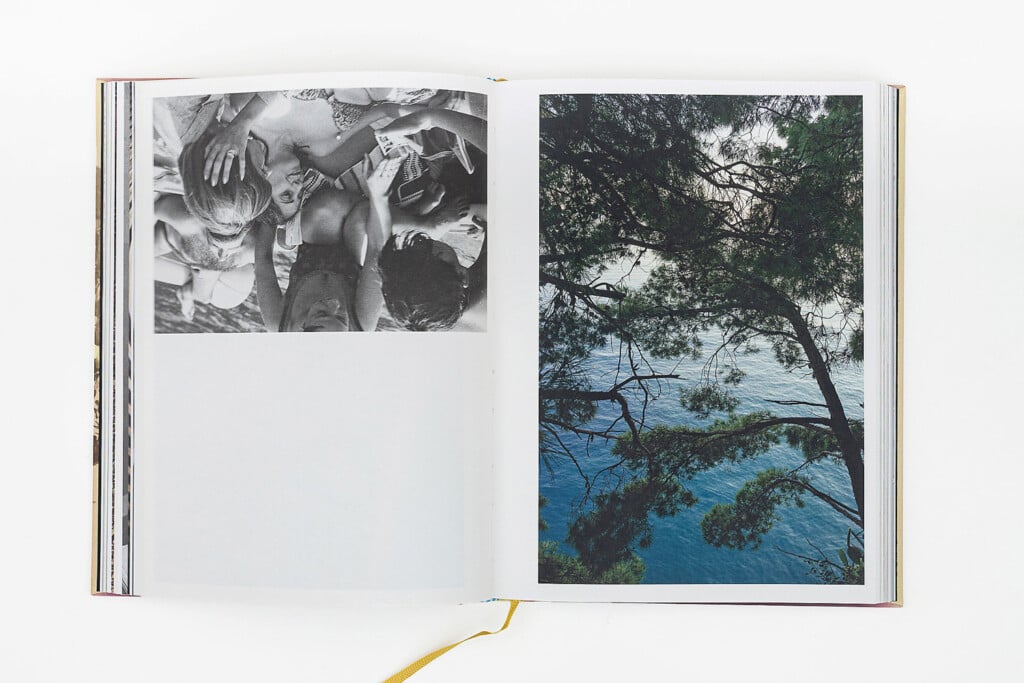
F.T.: Yes, in the book the chapter is called Storm, but we almost called it Tempest. It all starts with July 20th 27 baths, which is a note written inside a Henry James book. Goliarda Sapienza always wrote on the first pages of books. July 20th 27 baths struck me a lot, because it seemed like a dosage prescription – which was indeed somewhat her way of approaching things. She would arrive at the sea and dedicate herself to diving: she was famous for diving from great heights.
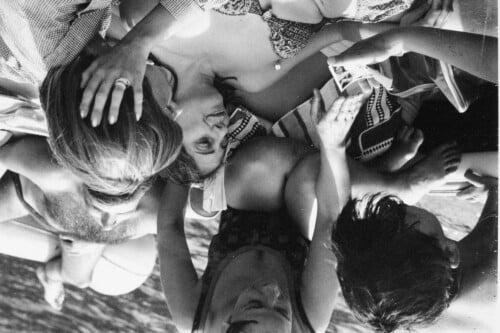
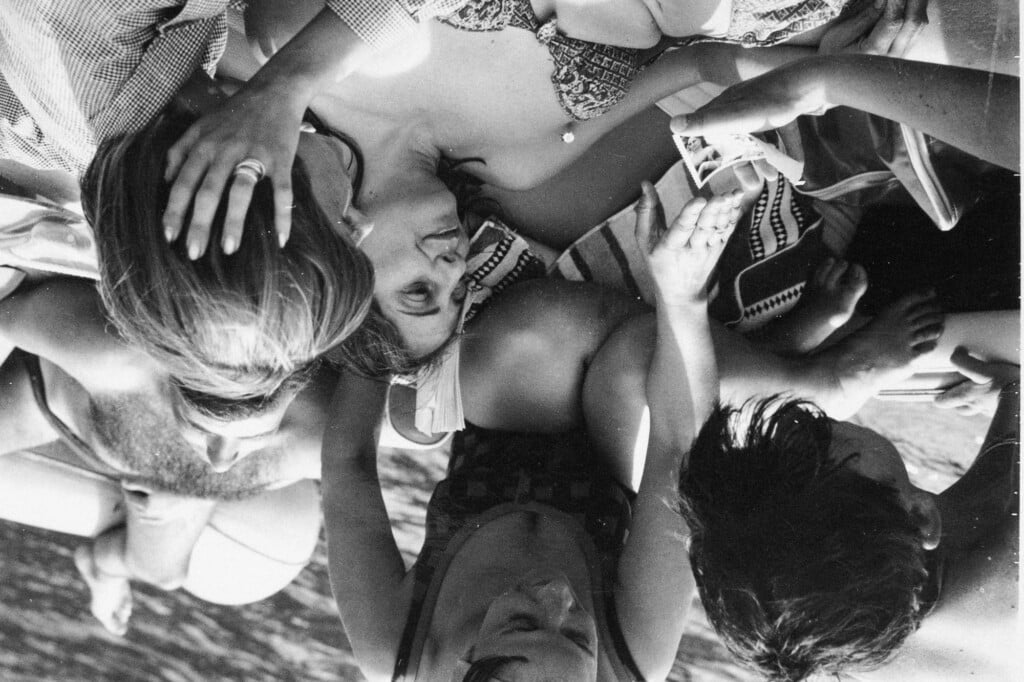
The early 1950s were the happiest years of her life, she was with Citto Maselli, who at that time began to gain some success as a filmmaker, money started to circulate at home, they could go on vacation. In this photo, they are with some friends; I took it to emphasize the movement of their hands, which conveys the idea of friendship. During this time she was surrounded by friends.
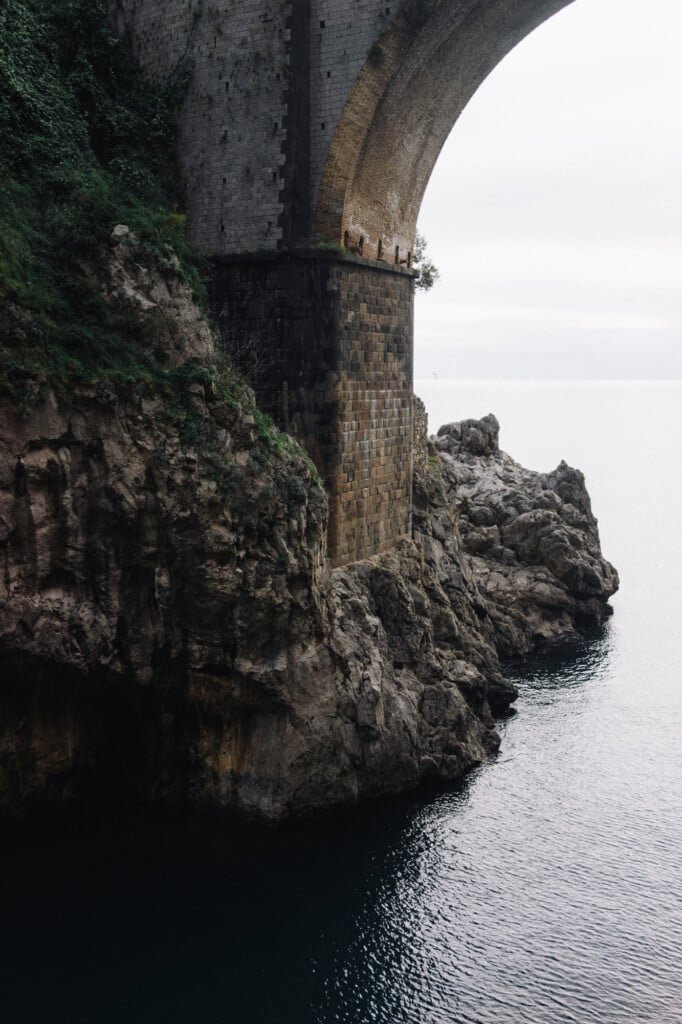
She had a true passion for the landscape; when she was on the Amalfi Coast, she would take a small boat and tour the coves alone… the landscape is wonderful, but as soon as the weather changes, if a storm arrives, it can become dangerous in an instant because you are very small compared to the cliff. These images were taken at the Fjord of Furore, which is one of those places better avoided when the tide is high and the sea rough.
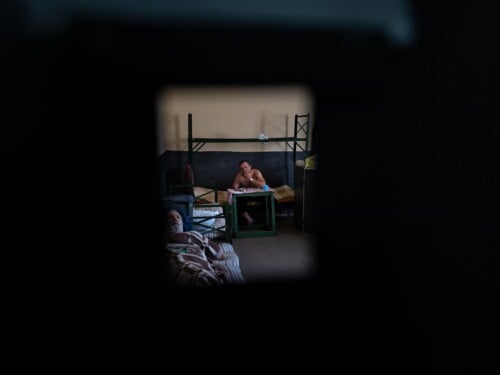
After the first suicide attempt (there was a second one) she ended up in a psychiatric clinic. It was the 1960s; she underwent 14 electroshocks, completely lost her memory, her English, her driving license, she couldn’t drive anymore. After a while, Citto Maselli managed to get her out, thanks to the intervention of a young psychoanalyst, Ignazio Majore. They took her home and she did two years of psychoanalysis with Ignazio Majore – she talks about this in Open Letter and Noon Thread, which is the title of the next chapter: Noon. This chapter deals exactly with this, when you are swallowed by your own shadows. It opens with a photo of a bas-relief of Jonah being swallowed by the whale. Then there is a photo of her at the moment of illness.
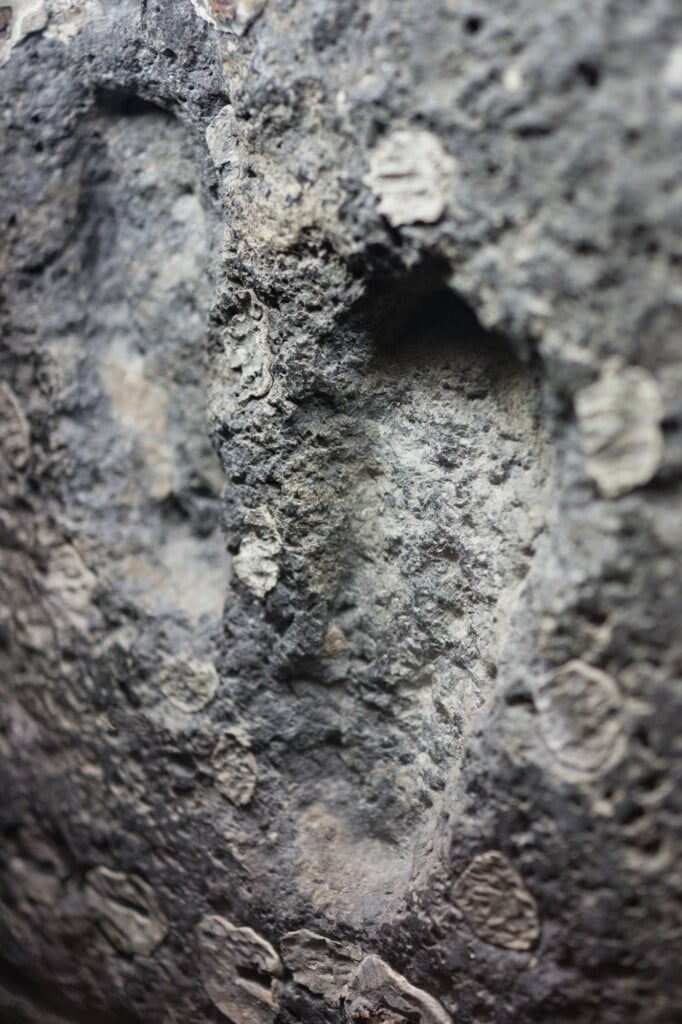
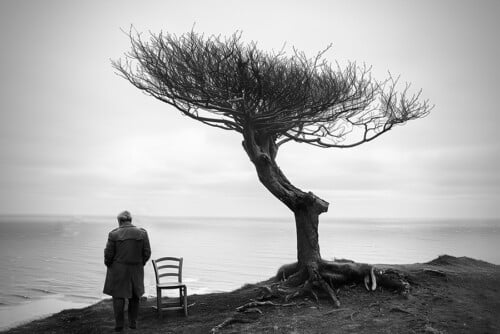
In one of her poems, she talks about “dying alone and without sheets” and this image has always made me think of that poem. Noon talks about this sinking; there is the image of the footprints of Saint Agatha, found at the Sanctuary of Saint Agatha in the Prison in Catania. It is said that when Saint Agatha was tortured, when her breasts were cut off, her feet sank into the lava stone from the pain. This chapter symbolically tells the martyrdom, the electroshock, and then the rise, the recovery of contact with the world through metamorphosis.
Writing helped Goliarda get out of this terrible period; she began The Art of Joy and the next chapter of my book is entitled, precisely, Joy.
At the beginning of each chapter, there are these fake transparencies; in reality, the writings are printed in a much lighter tone. We wanted the eye to have the sensation of glimpsing a thin writing and the hand the perception of a thick paper.

G.G. The details of these natural elements seem like a product of imagination yet at the same time the materiality of the elements returns…
F.T. This first image refers to the girl dragging a log at the beginning of the book.
“And here I am at four, five years old in a muddy space dragging a huge piece of wood. There are neither trees nor houses around, only sweat from the effort of dragging that hard body and the sharp burning of the palms wounded by the wood. I sink into the mud up to my ankles but I have to pull, I don’t know why, but I must. Let’s leave this first memory as it is: I don’t want to make assumptions or invent. I want to tell you what it was without altering anything.”
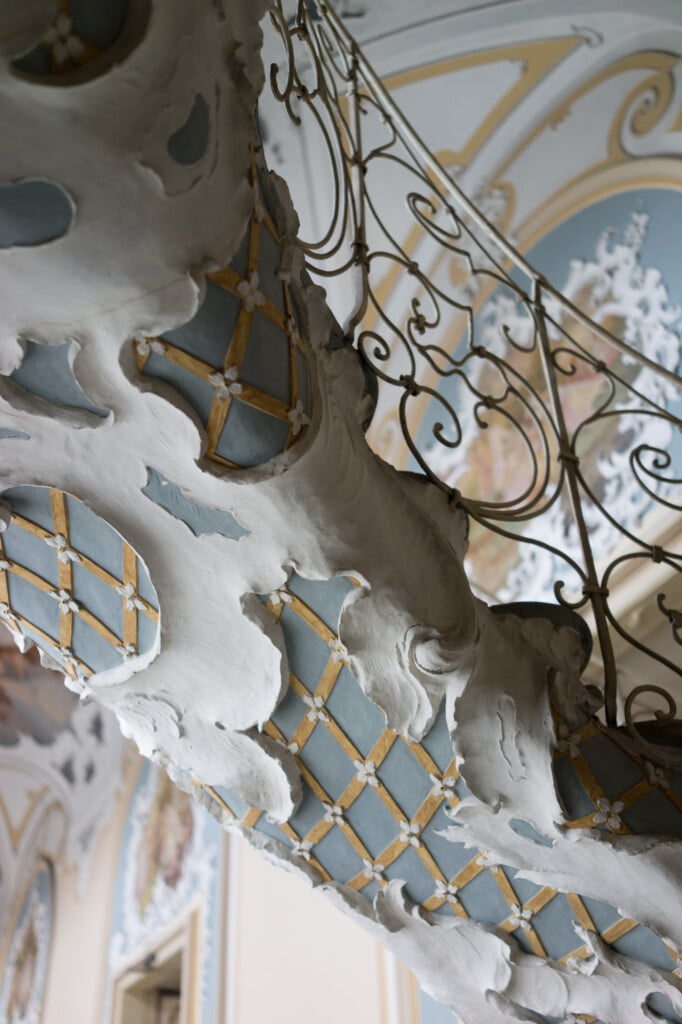
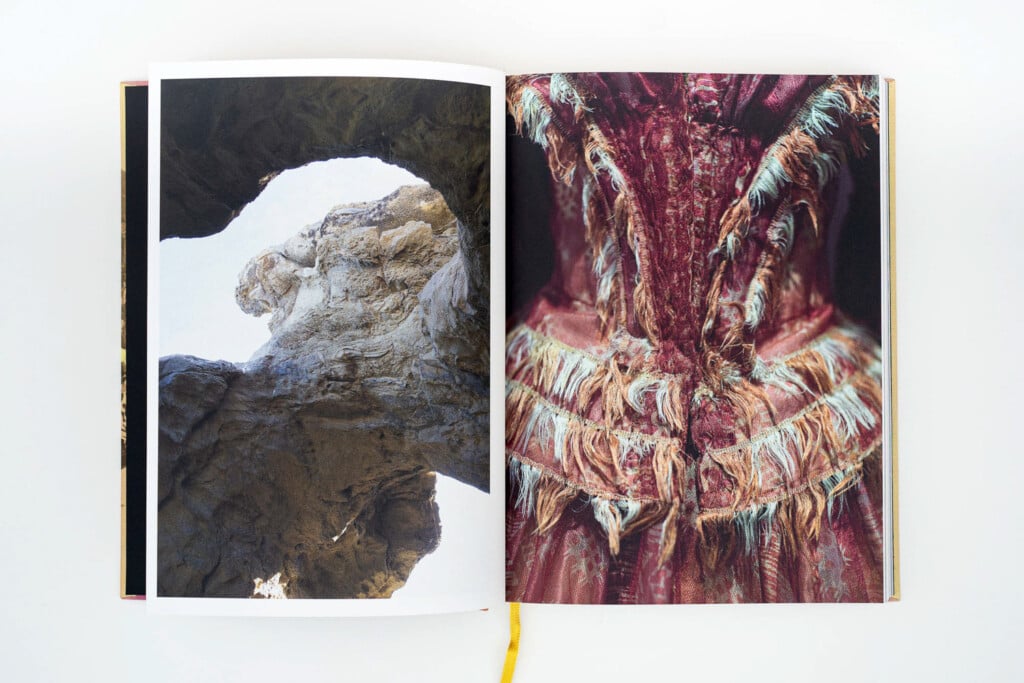
The nature of the place has features reminiscent of Baroque drawings; these are aspects reflected in the architecture and correspond also to her life journey. She begins to write The Art of Joy, it is the moment when everything melts, warms, colors. What interested me was to render the physicality of landscapes, because she often talks about the body and when she does, they are landscapes: “on the wood of your absence,” or also at the beginning of The Art of Joy when the father’s incest with the girl is narrated as a rock that overturns on her. There is always the theme of the human landscape, Luca Reffo talks about the mimicry of the landscape. It’s untranslatable, it’s like the mimetic expression of the face of the landscape.
The images of the staircase and other details belong to a historic villa in Catania, Palazzo Biscari. In the notes at the end of the book, there are the names of all the places I photographed.
The image of the doll, instead, is from Pompeii. There were these terracotta dolls with sex organs; nowadays we no longer have dolls with sex. I had gone to Pompeii to visit the Villa of the Mysteries – I was looking for a particular photo that I needed for this work. In the Villa of the Mysteries, there is a room depicting the moment when the woman gets married, from the pre-wedding to the moment she joins the man and initially has horror of sexuality. There is a horrified figure with all the veils going in the opposite direction; another is kneeling before a large cloth that seems to cover a volcano, an obviously phallic symbol. I was interested in seeing this room, but it was full of tourists and impossible to photograph, there were many reflections, the wall is shiny, and as soon as it receives light, nothing can be seen anymore. The project is like this: I would go to a place to photograph something I had in mind, and then I would find something else.
In the text section, we reproduced her unusual triangular way of writing. When Angelo Pellegrino showed us the manuscripts, we said to ourselves ‘when will we have the chance to do triangular texts again?’ The texts have different colors: Italian is white and is first because she was Italian, French is light gray and second because they discovered her first and introduced her to us, English is last and is dark gray. The vertical notes refer to A Lover’s Discourse by Roland Barthes. The page layout is complex: there is the fake transparency of the page printed at 6%, the texts at the beginning of each chapter, the notes on the images which in some cases were absolutely necessary, the credits for the archives, the notes on the text, and the vertical notes I mentioned earlier. The text section was the hardest to compose: as I said, Luca also reworked seven years of my notes.
G.G.: Did you work on the computer in these different phases or by hand?
F.T.: We do only the first screening on the computer, then we work with small prints, especially for fine choices and pairings: we use packs of photos that we arrange on panels.
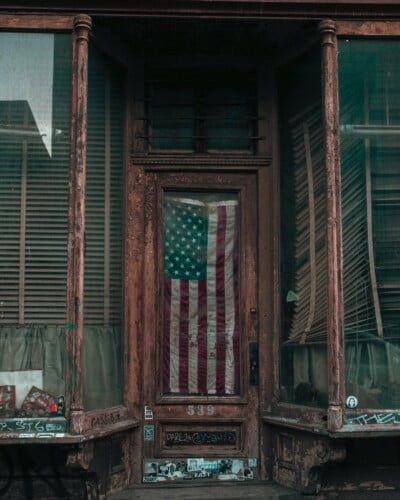
When I started this work, I immediately thought of a book. The luck was also that Le Monde published some images; that money allowed me to move forward. Another time, again Le Monde commissioned portraits of Angelo Pellegrino and Citto Maselli: they needed institutional portraits, but it was during this trip that I photographed Citto’s jacket, because among themselves they said she was a little Iuzzetta living in the pocket of his jacket. Back home, looking at that photo, I realized it was identical to the entrance of the house where they had lived for 15 years. Citto died three months after our meeting; ten years earlier he had had a stroke and was in a wheelchair.
G.G: Can you tell me something about the stairs that appear in every chapter?
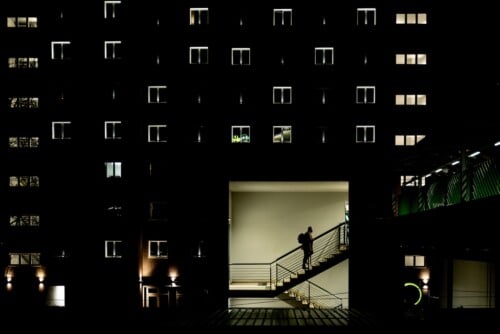
F.T. The chapter Stranger opens with a step. Not all stories are told in the book; this is the step of Anna the chair maker. When Goliarda went to the artisans’ workshop, Anna taught her how to weave the straw of chairs. At some point, Anna was transferred elsewhere, and Goliarda spent days sitting on that step, crying for her and waiting for her. Then there are the stairs of the Benedictine Monastery, where the university is located, which was supposed to house Goliarda Sapienza’s archive. When I photographed it, I didn’t know the archive was supposed to go there.
At the end of the book, there is the staircase of the chapel in the cemetery. At the base of the stairs there is a picture of the dead woman, which inspired the title of the chapter: The Dead Woman. It is a huge sculpture by Corrado Cagli.
The stairs have a symbolic and architectural role: it is a way of thinking about a journey and a rite of passage. It also represents a human path that can be vertical or descending. In this book the staircases connect the different chapters and accompany the narrative. And since the book is not chronological, the stairs guide the reader by marking passages from one time and space to another.
The title of the book IUZZA is a nickname for Goliarda Sapienza, who had Sicilian roots (she was born in Catania). In Sicily, many nicknames end with -uzza, such as Maruzza, Rosuzza, and Iuzza was hers. The word iuza derives from the Greek word euse, which means good. It is a term of endearment that has many meanings, including beautiful, beloved, and pure.
Finally, the book is a tribute to Goliarda Sapienza’s courage, her struggle, her ability to resist suffering, and her artistic and personal freedom. It is a portrait that tells the woman behind the writer, with all her complexities and contradictions.
G.G. At the beginning of Open Letter, Goliarda Sapienza writes that she feels the need to organize, categorize, creating truth and lies at the same time.
Did you use a criterion of truth?
F. T. This idea has always been part of the project: memory can be a tool for reinventing. So much so that in her books you might find different accounts of the same biographical event. It’s all a reinterpretation, not to be faithful to anything, but to preserve the inspiration.
GG: This question leads to the next one: you start from the text, how do you then relate to the image?
F. T. It always begins with an intuition, the feeling that there are aspects that interest me. It takes me a while to understand exactly what, but then I look for the most direct way to get there. The interesting part is always what happens along the way. I’m passionate about storytelling, sometimes they are micro projects, it depends.
Goliarda raises some issues: the issue of the sea, the Mediterranean, a type of femininity that is far from the feminism of her time. It’s very interesting. She is more of an anarchist. When I sign the book, I always draw a little star: it’s a star of Saint Agatha, protector of the city, but it’s also the star of the deli where she always went to get the crepes, and for me it has always been the star of anarchy. Goliarda Sapienza is hard to classify, but maybe she could be considered an anarchist, even though my goal is always to create a context, not to define.
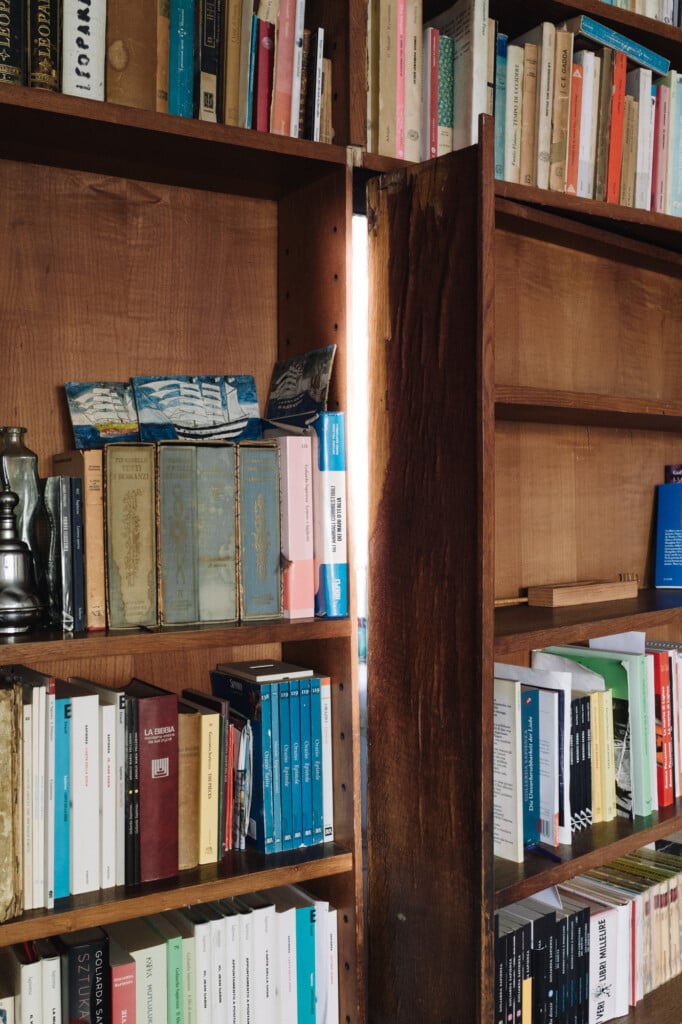
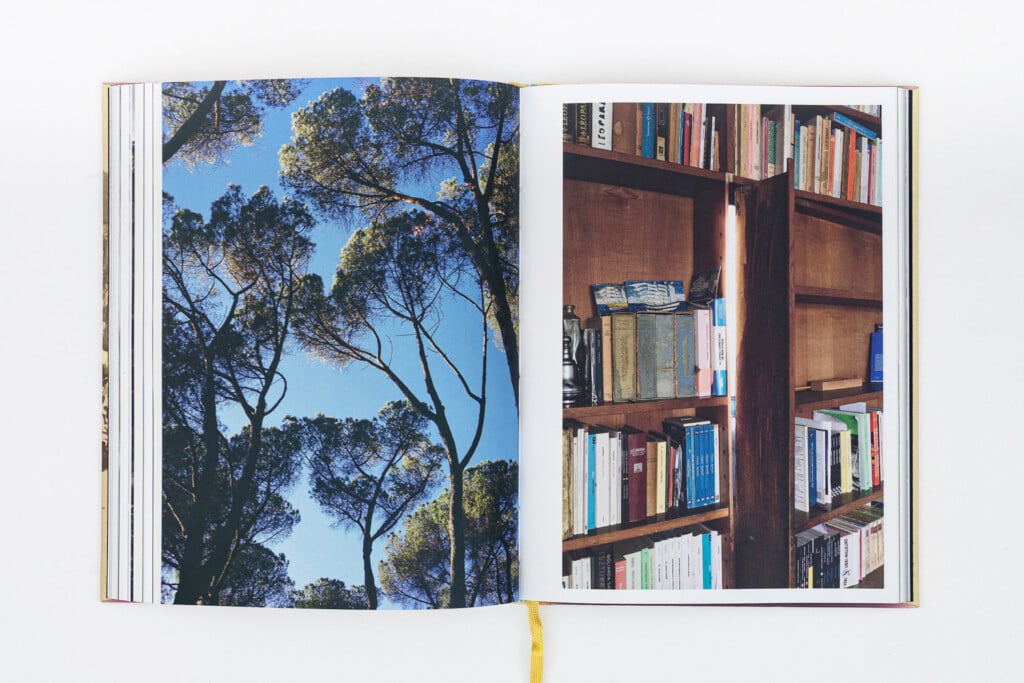
I would also like to know from which images and in what way the readers of Goliarda Sapienza are affected. Many photographs are inspired by her life rather than her works… for example, after being a partisan during the war, she always had the feeling that racists could come to get her, so at home she had hiding places with secret doors, and in the book there is a photo of her bookshelf with the hidden door.
G.G. When I first read The Art of Joy, even though it is different, the continuous transformation, evolution of Modesta made me think of Virginia Woolf’s Orlando. What do you think?
F.T. When Goliarda Sapienza wrote The Art of Joy, at the beginning she had an epigraph from Empedocles, which was later removed in the printed version, but I think it would have been perfect for Orlando as well, and it is this phrase:
“Because once I was a boy and a girl and a bush and a bird and a silent fish that leaps out of the sea.”