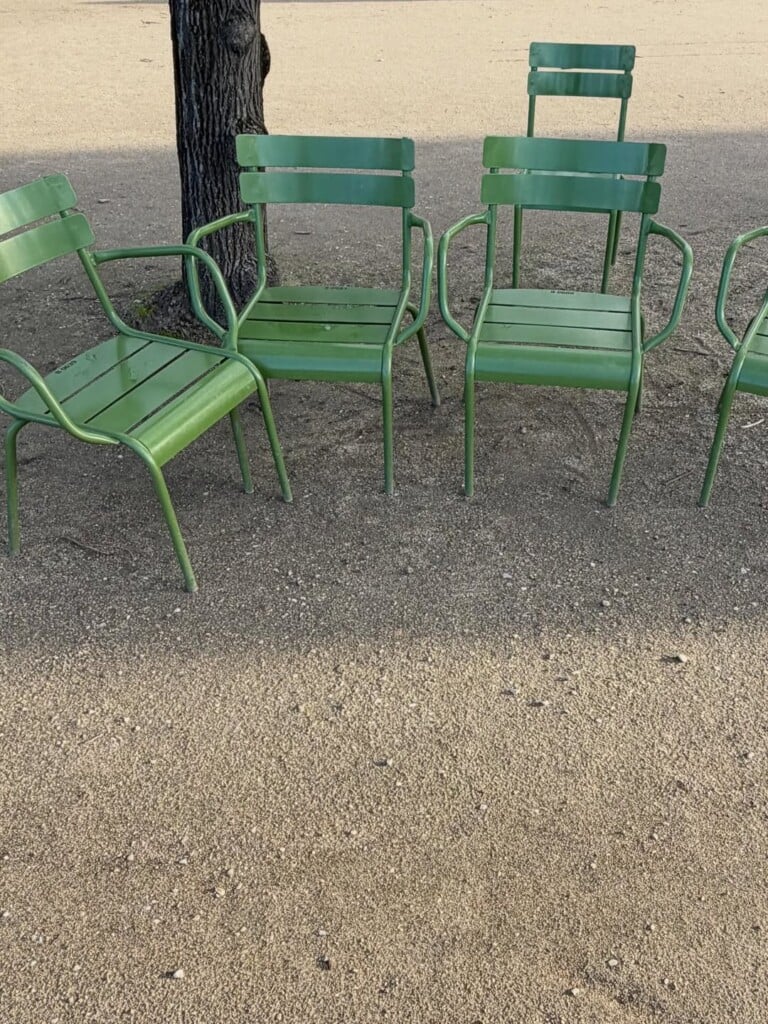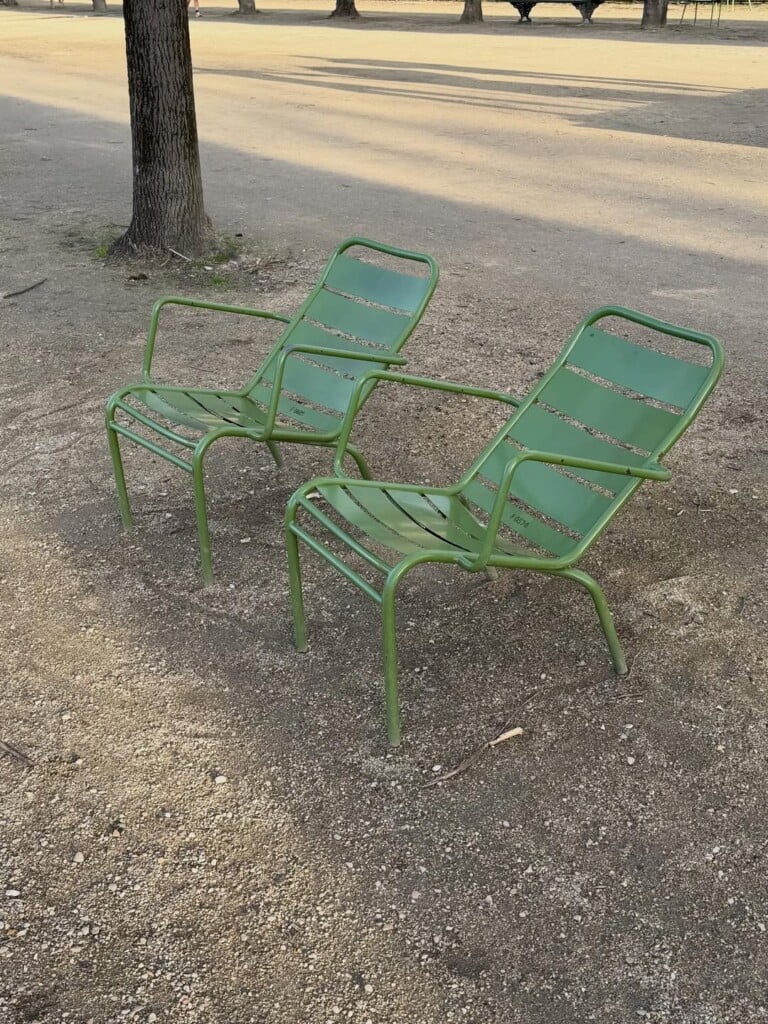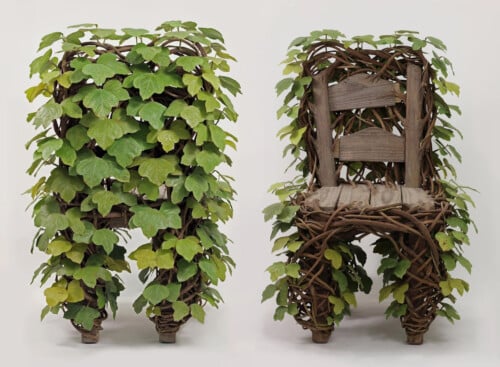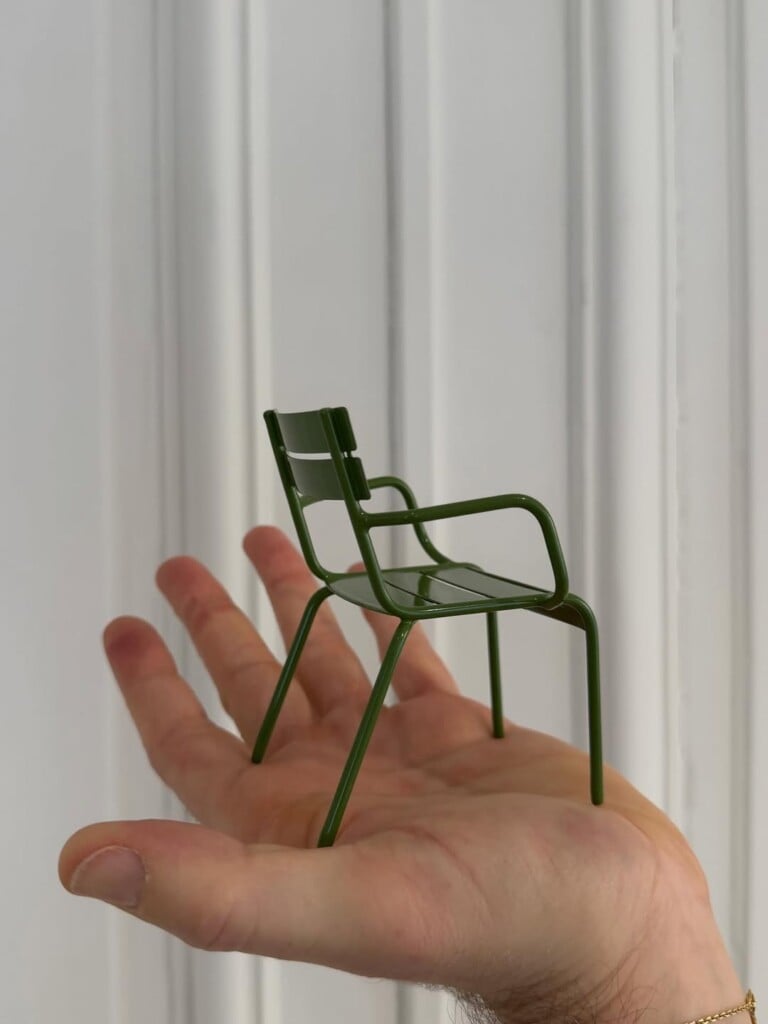
Jonathan Anderson, Creative Director of Dior, chose to transform the green chairs of the Jardin du Luxembourg into the manifesto object for the Women’s Fall/Winter 2026–27 runway show invitation. A gesture that brings attention back to one of Paris’ most recognizable pieces of urban furniture, created in the 19th century as a movable alternative to the fixed benches in the Senate garden. Designed to be freely repositioned, allowing everyone to choose their own viewpoint within the park, these chairs have over time become an archetype of French public design: individual yet immersed in a collective dimension, light yet stable, simple yet distinctive. In short, design pieces that immediately evoke the imagery of the Jardin du Luxembourg.
Visualizza questo post su Instagram
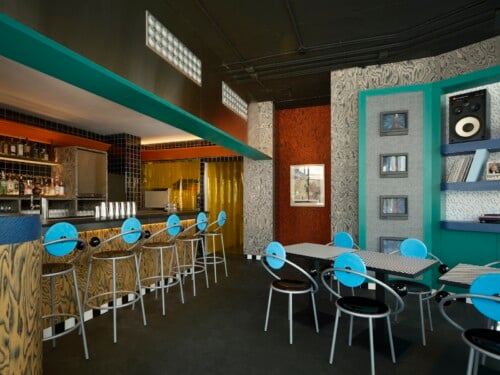
The model we know today took shape in 1923 in Parisian foundries and moved through the twentieth century, evolving until production was entrusted to Fermob in the 1990s. In 2004, the redesign by Frédéric Sophia marked the transition from iron to aluminum, making the chairs lighter and more durable, while expanding the color palette beyond the original olive green. The same green we saw echoed in the runway set design. Yet their strength has never been purely aesthetic; it is above all structural. These are chairs that do not impose a perspective, but grant one. Objects that exist to be moved, oriented, and claimed.
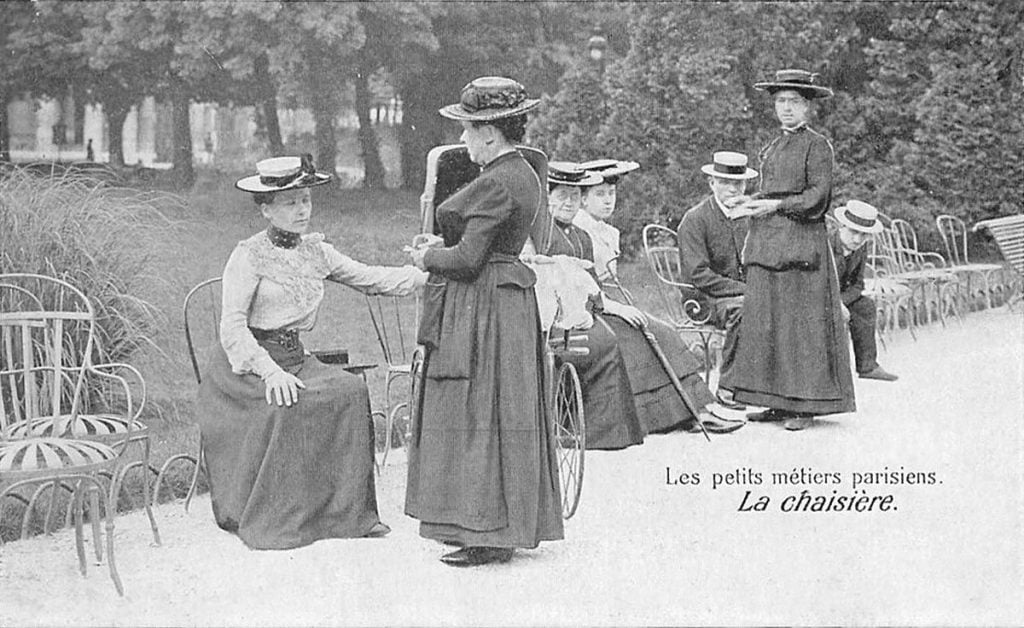
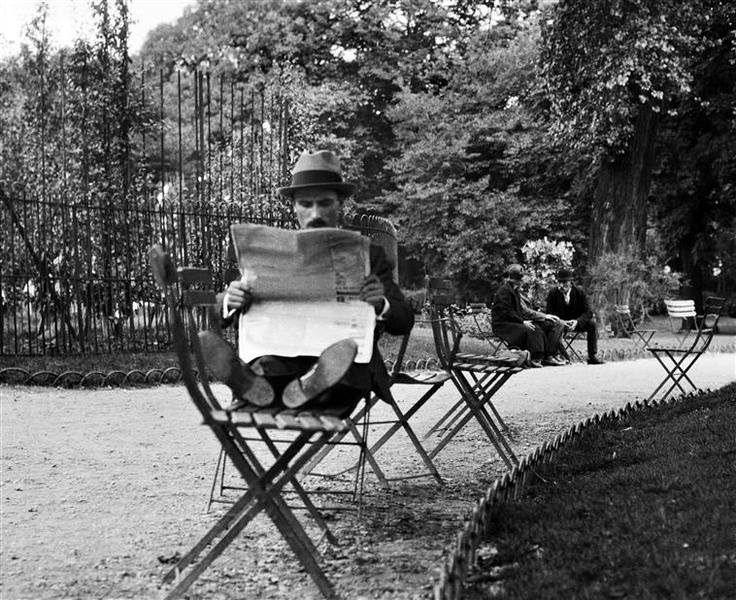
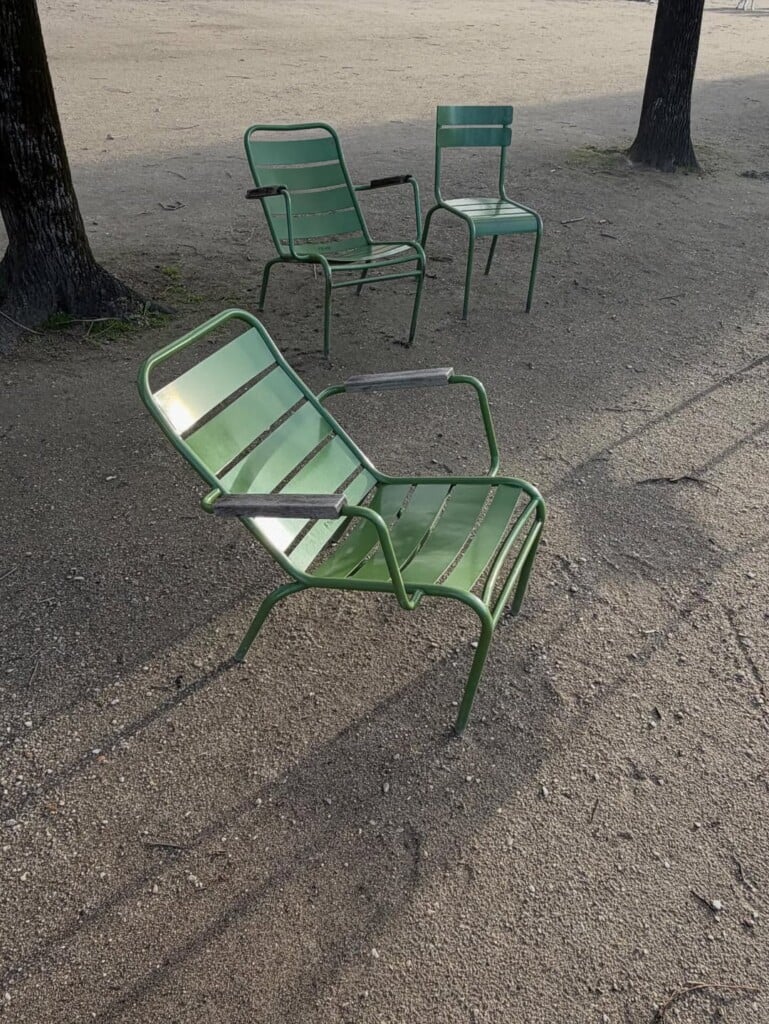
This very nature seems to make them perfect for the fashion system. The Luxembourg chair is not simply a Parisian symbol: it is a device for observation. You sit down to read, to talk, to wait, to watch. And fashion, which exists precisely within that tension between the observer and the observed, becomes the perfect context for such a manifesto object. Moving it from the public garden to a runway invitation means transforming an item of furniture that is both iconic and democratic into a conceptual symbol, capable of evoking leisure time and social ritual all at once. Anderson’s choice thus immerses us in an imaginary that invites us to enjoy the spectacle of fashion without taking it too seriously — just as one would during a moment of relaxation, even in one of the most chaotic weeks of the year.
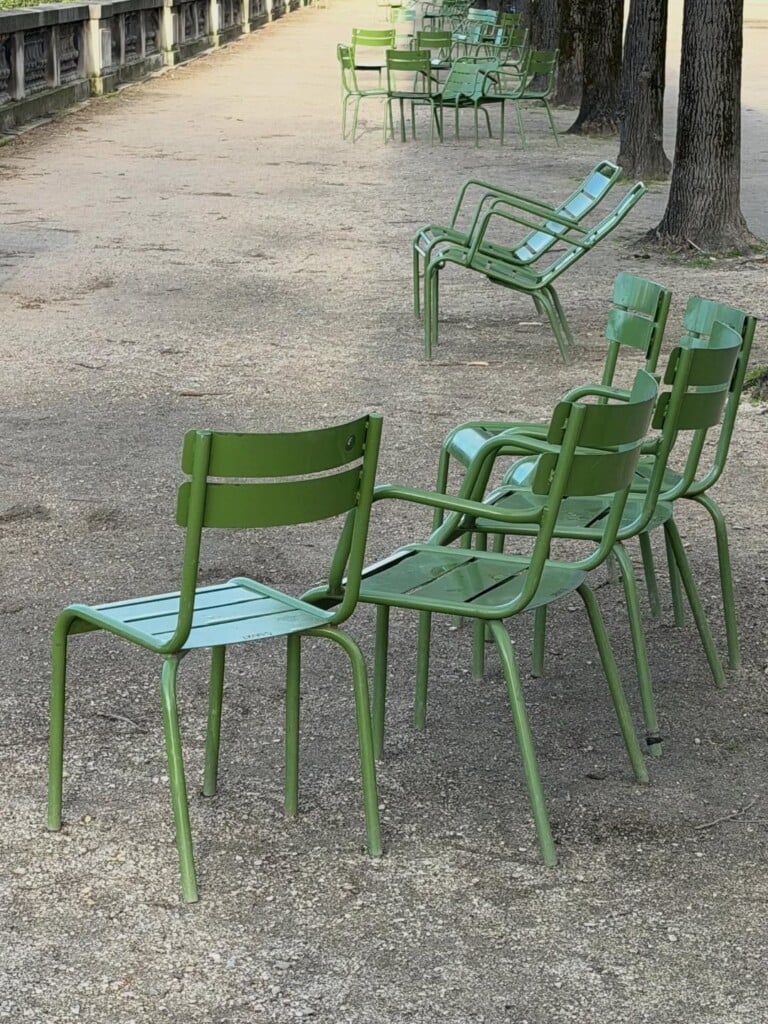
From the park to the front row, the leap is less distant than it may seem. In both cases, it is about choosing a vantage point from which to observe. The chair remains identical to itself: essential lines, metal structure, a balance between function and lightness. And it is precisely this ability to move across different environments and meanings that confirms it as a design icon — not out of nostalgia, but for its adaptability.