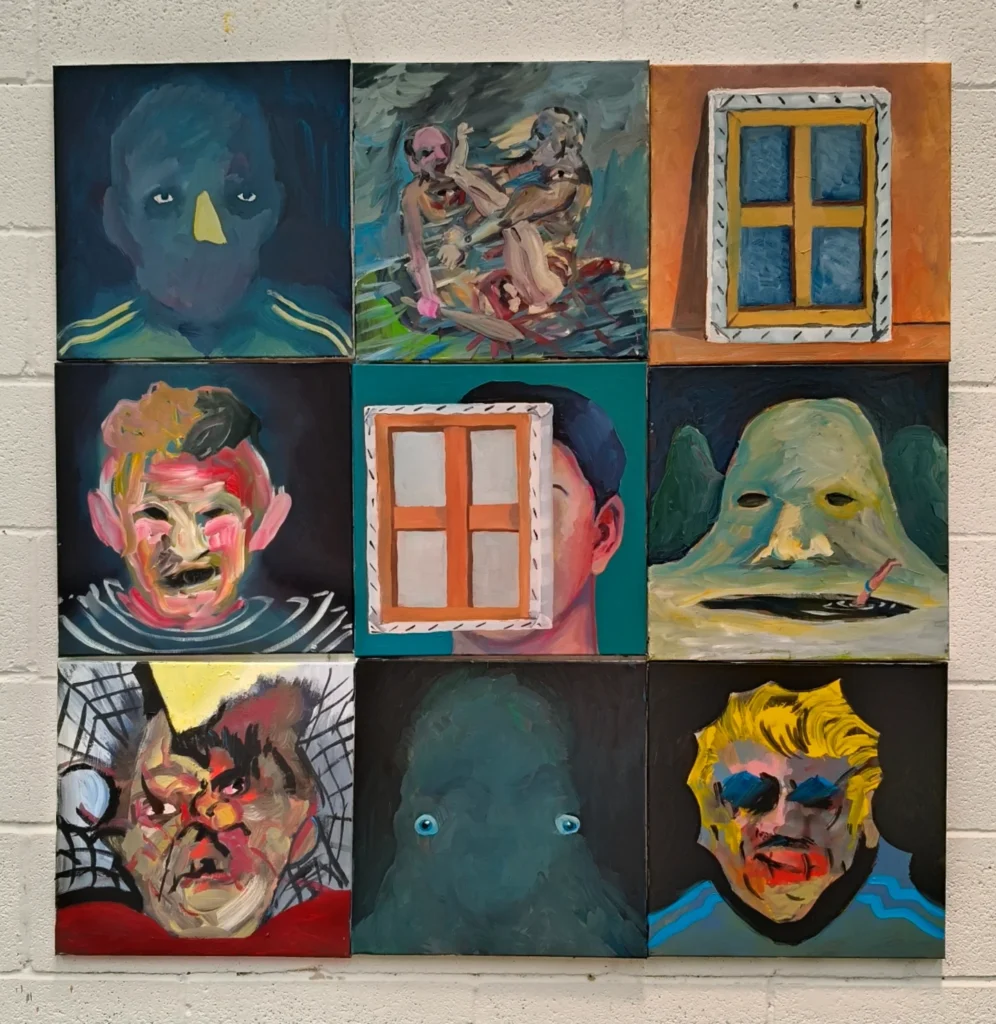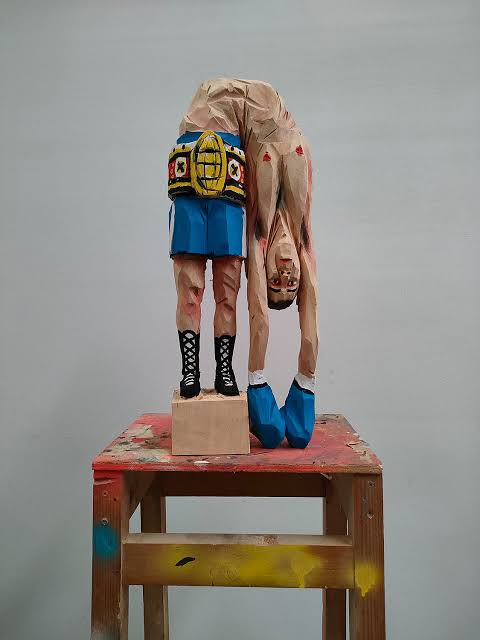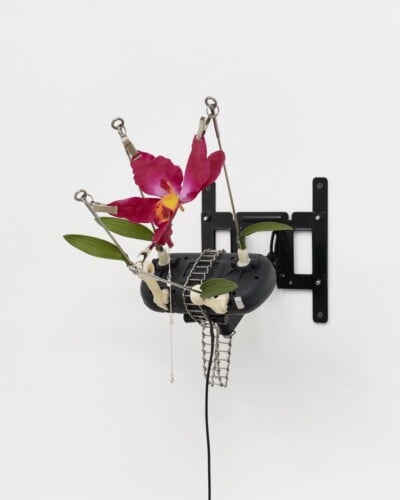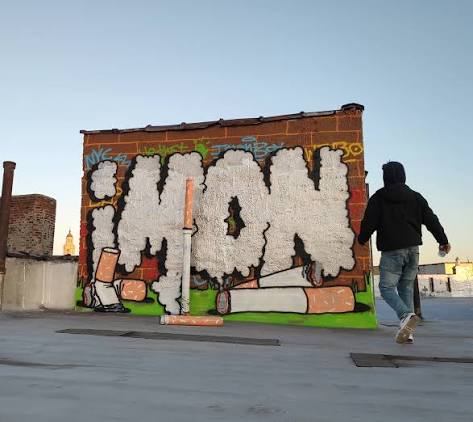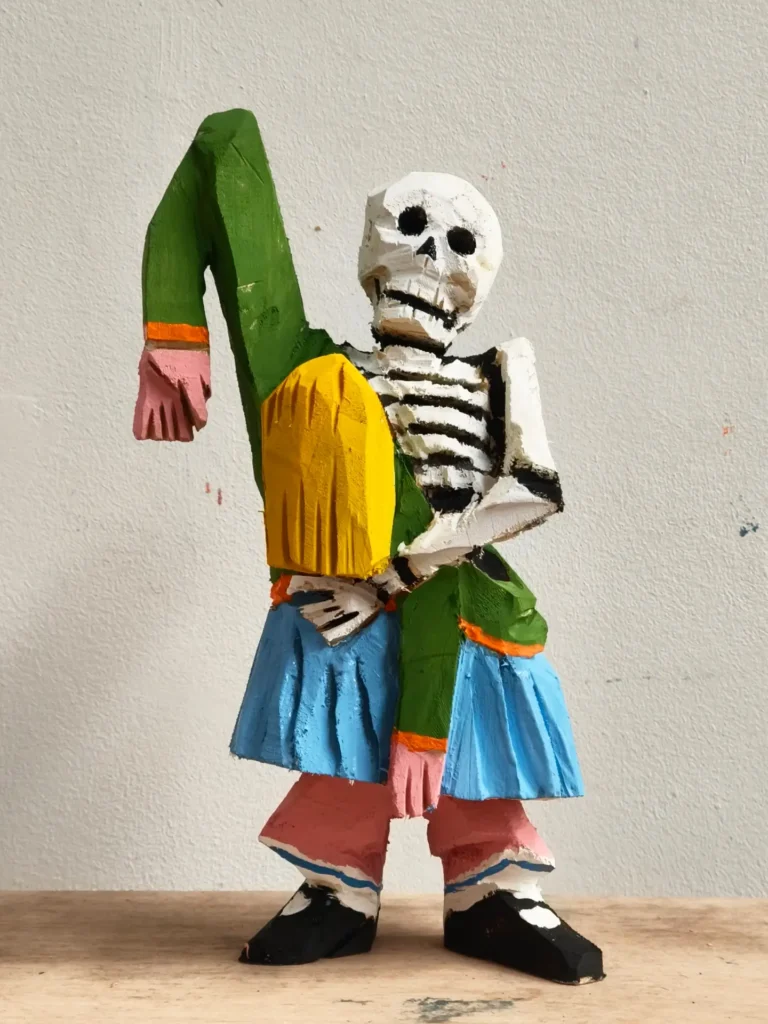
A face stretched almost to the point of losing its own proportions, a car turned into an impossible shape, a familiar character that suddenly stops being recognizable. In the sculptures of artist Kiko Miyares something always seems to be out of place. And yet it is precisely this alteration that forces us to look more closely.
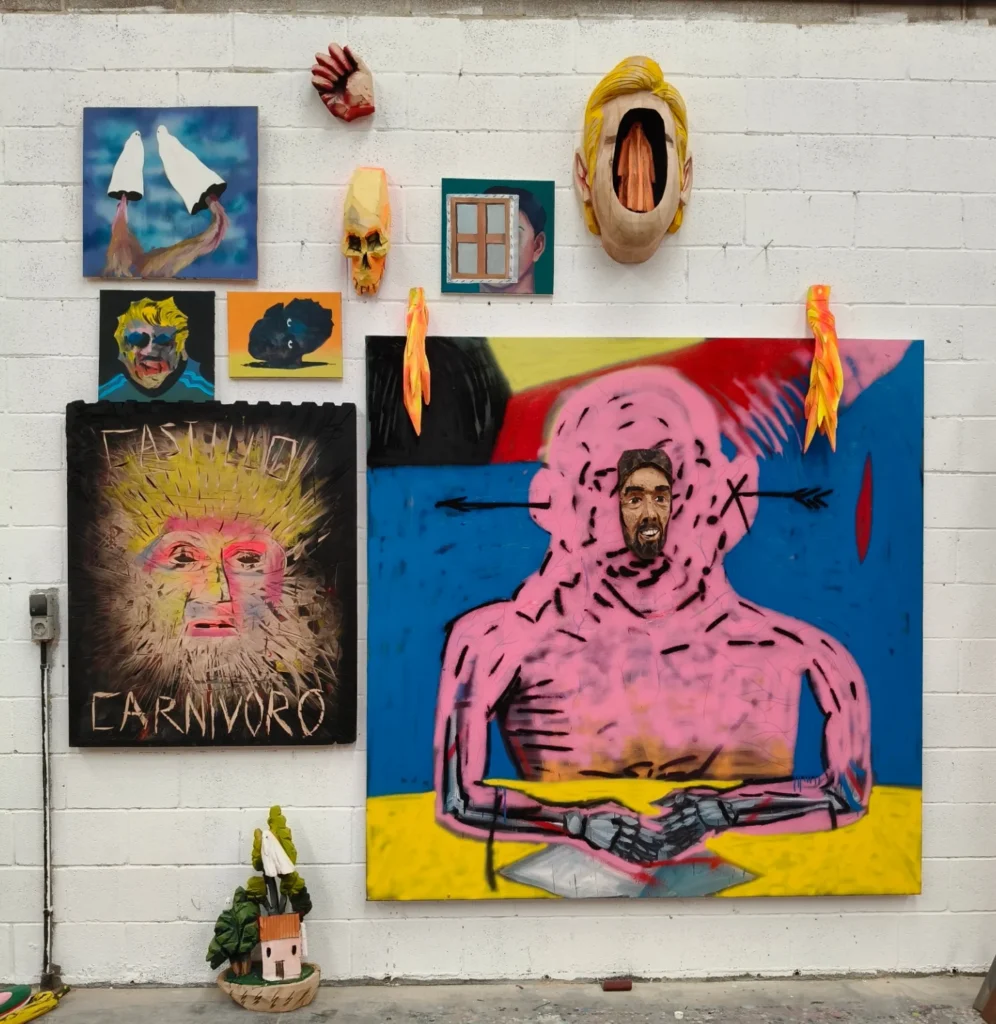
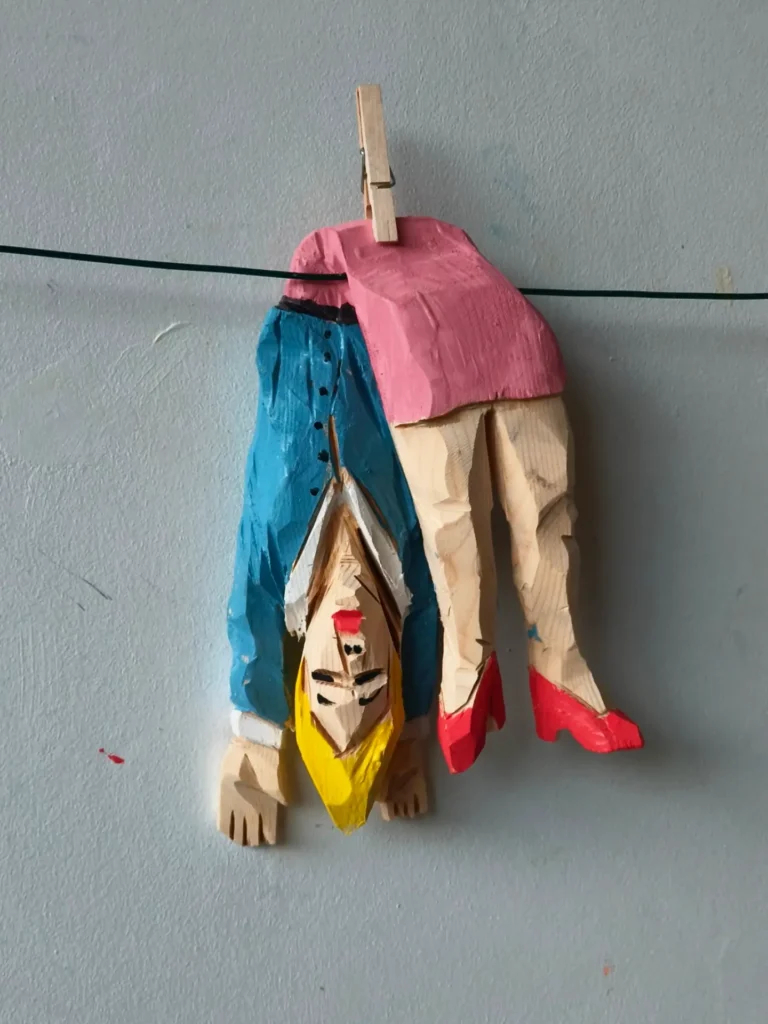
Born in Llanes, in Asturias, in 1977, Miyares trained as a painter before progressively shifting his practice toward sculpture, especially wood sculpture. Since 2004 he has made this material the center of his practice, turning it into a tool for questioning the way we recognize shapes, bodies and images.
His work often starts from something we already know. A head, a face, a body, a car or a character belonging to popular culture. The next step is the decisive one: Kiko Miyares alters its proportions, perspective and structure until he creates a figure that remains familiar enough to be recognized, but distorted enough that it can no longer be read the way it was before.
It is an in-between zone that particularly interests the artist, the one in which the eye recognizes an image and, immediately after, notices that something doesn’t add up. His sculptures don’t simply ask to be viewed from one precise point. As one changes position, the relationships between the parts change too, and what looked like a compact figure can turn into an almost abstract composition.
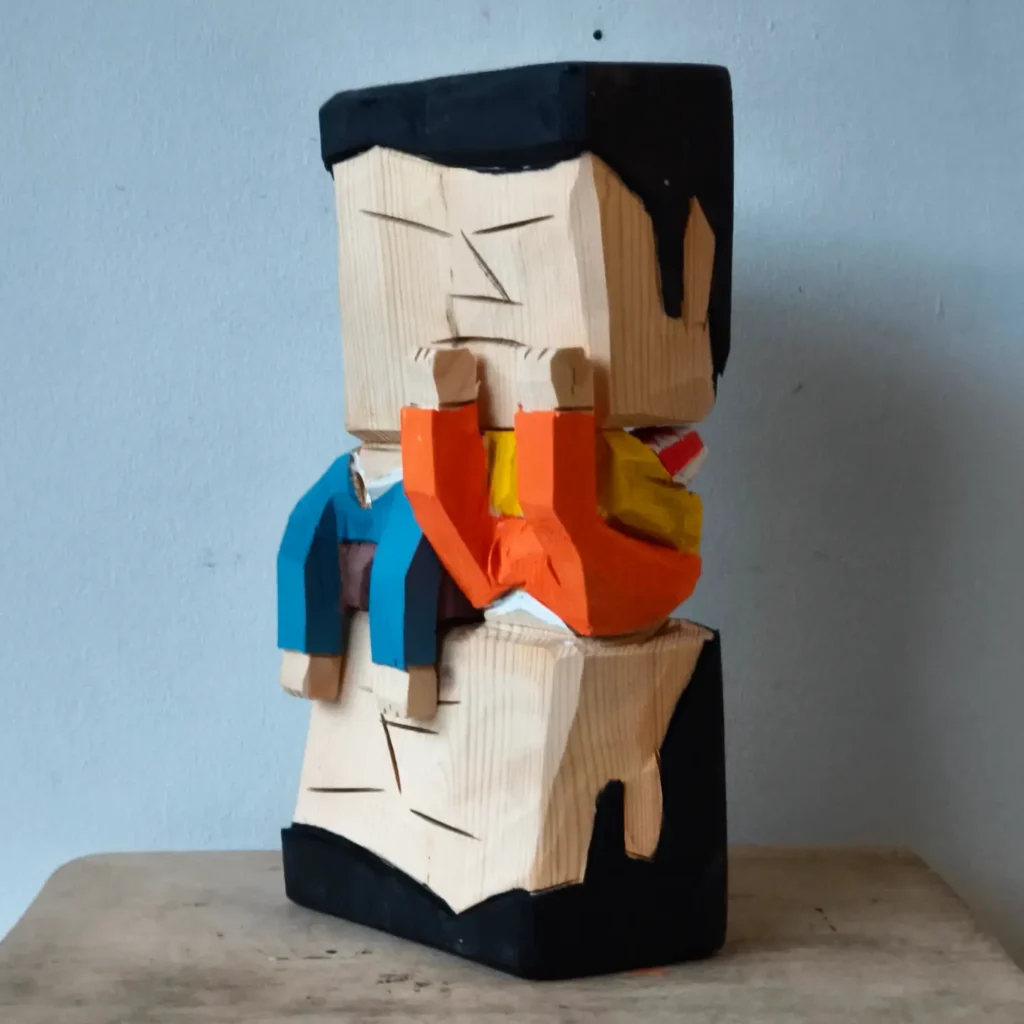
Distortion, then, is not simply an aesthetic choice. It is the real tool through which Miyares works on perception. The choice of material also helps make this process particularly physical, the wood retains traces of manual work, while the design of the pieces has become increasingly complex over time. It is this contrast between planning and craft-like gesture that characterizes Miyares’s practice: the image can be born from a precise idea, but it must then contend with the material, with its limits and with its imperfections.
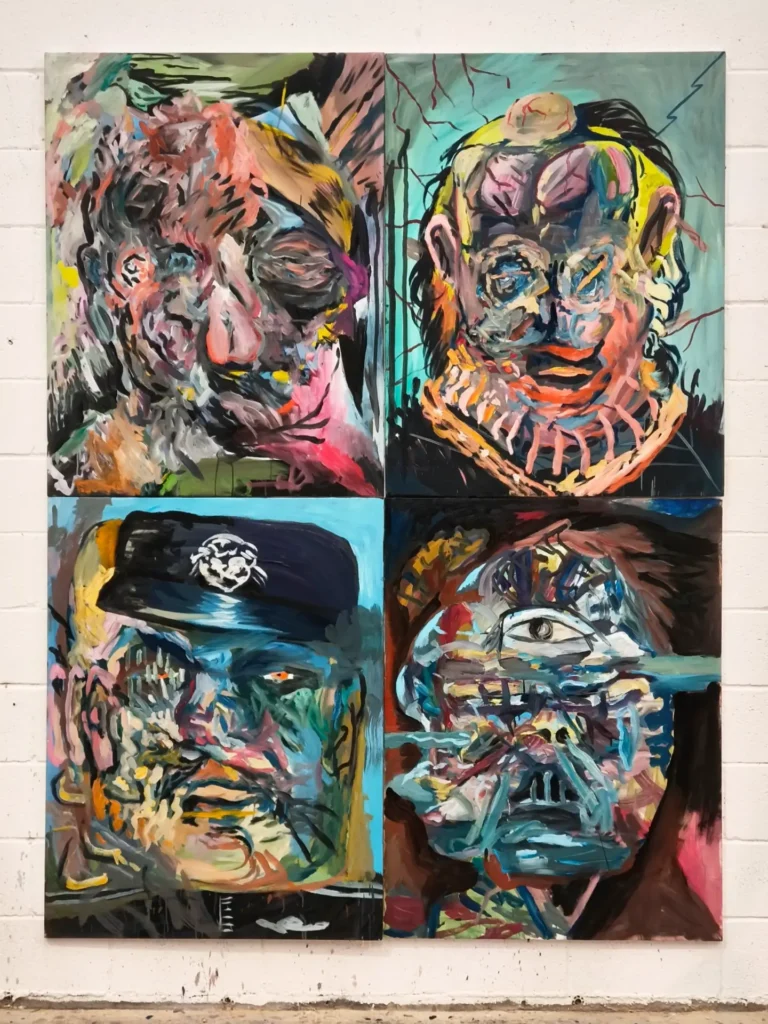
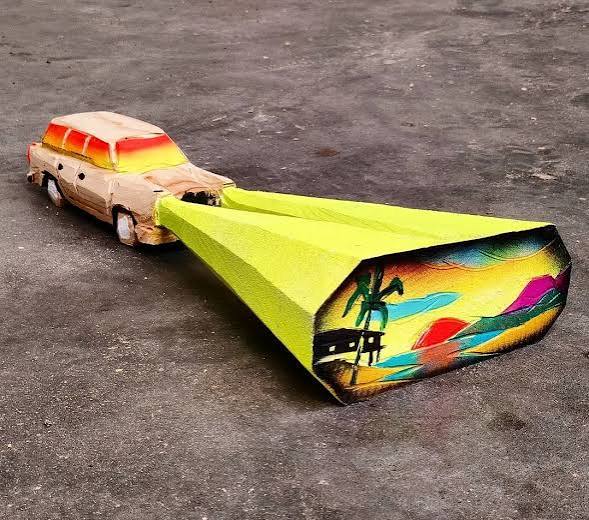
This tension becomes evident in his car sculptures as well. In a series featured by Colossal, small vehicles carved from blocks of wood seem to send long beams of light outward, which become at once headlights, supports and structural parts of the piece. The object retains its recognizability, but its function is entirely rethought.
Once an image we thought we knew has been altered, our memory also has to do a bit of reconstruction work. The character stays there, but no longer fully matches what we remembered. It is in this gap that Miyares’s sculptures find their strength. They don’t replace reality with a fantastical version: they take something familiar and push it far enough to make it interesting again. Distortion thus becomes a way of interrupting the automatism of looking.
Kiko Miyares’s works function even when we know nothing of their backstory. Before we can even interpret them, they force us to do one very simple thing, which is to look at them a second time.