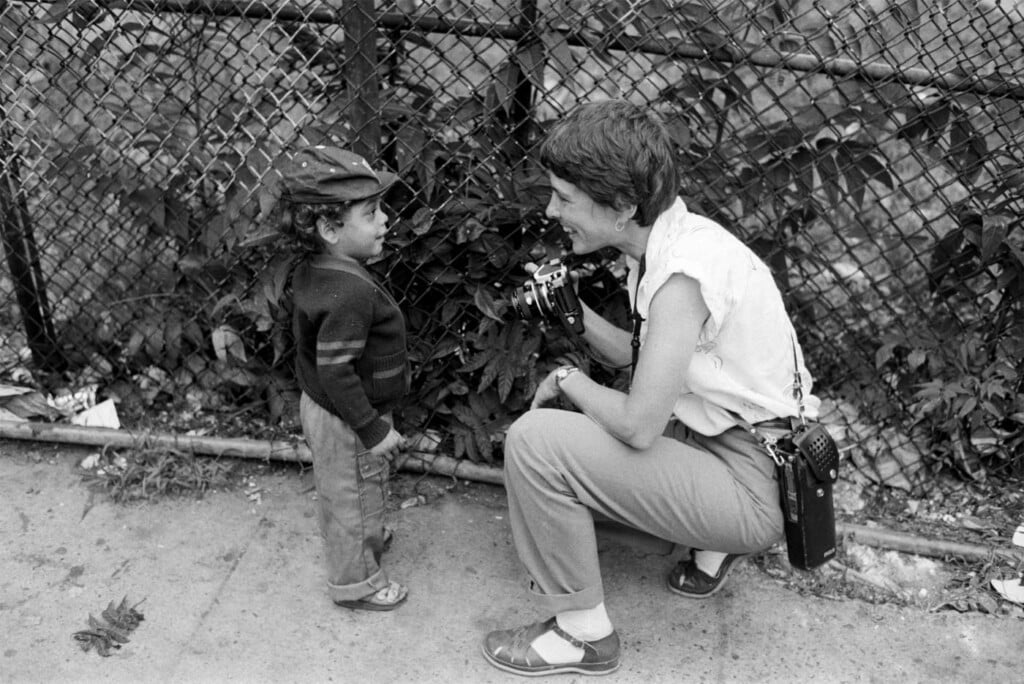
The biography of Martha Cooper reads like the field diary of a modern explorer. Born in Baltimore in the 1940s, she fell in love with photography thanks to her father when she was still preschool age. She graduated at sixteen, earned an art degree at Grinnell College, joined the Peace Corps teaching English in Thailand, rode a motorbike from Bangkok to London, and took a diploma in ethnology at Oxford. Only after all of this did she arrive in New York.
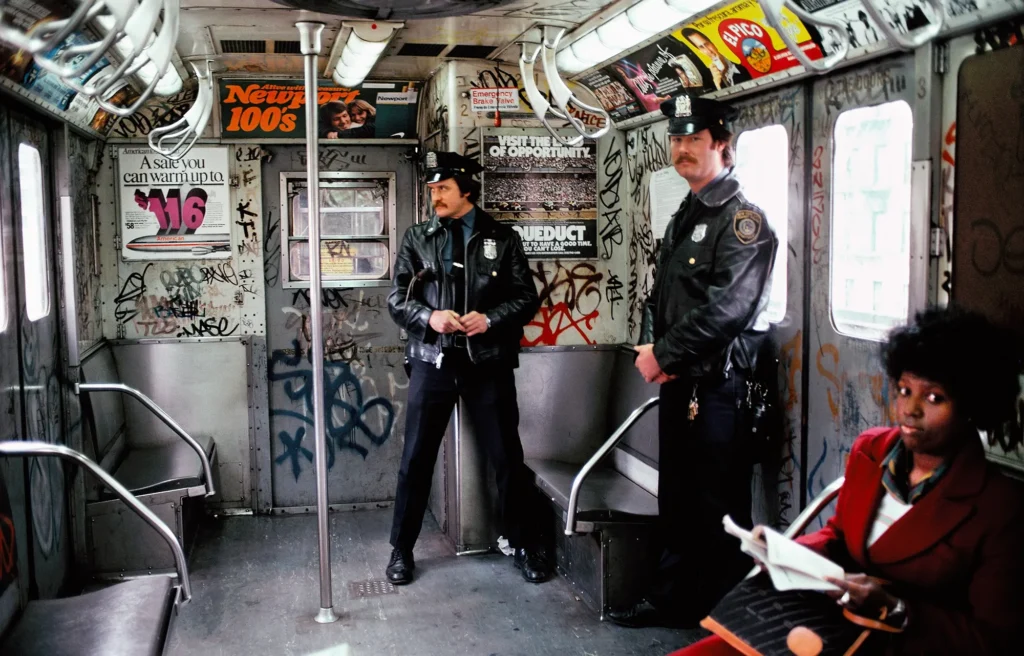
In 1977 she joined the New York Post at a moment when the city was on the verge of collapse. Her assignments ranged from documenting crimes to photographing famous personalities and the so-called “weather shots“, a series of images that appeared as full-page illustrations in the newspaper. The bankrupt city was marked by poverty and misery, yet at the same time it opened up a multitude of free spaces for those who claimed them creatively. Cooper photographed both sides.
«It’s an outlaw art. That’s what makes it exciting»
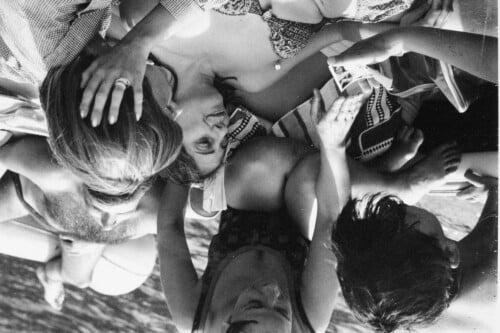
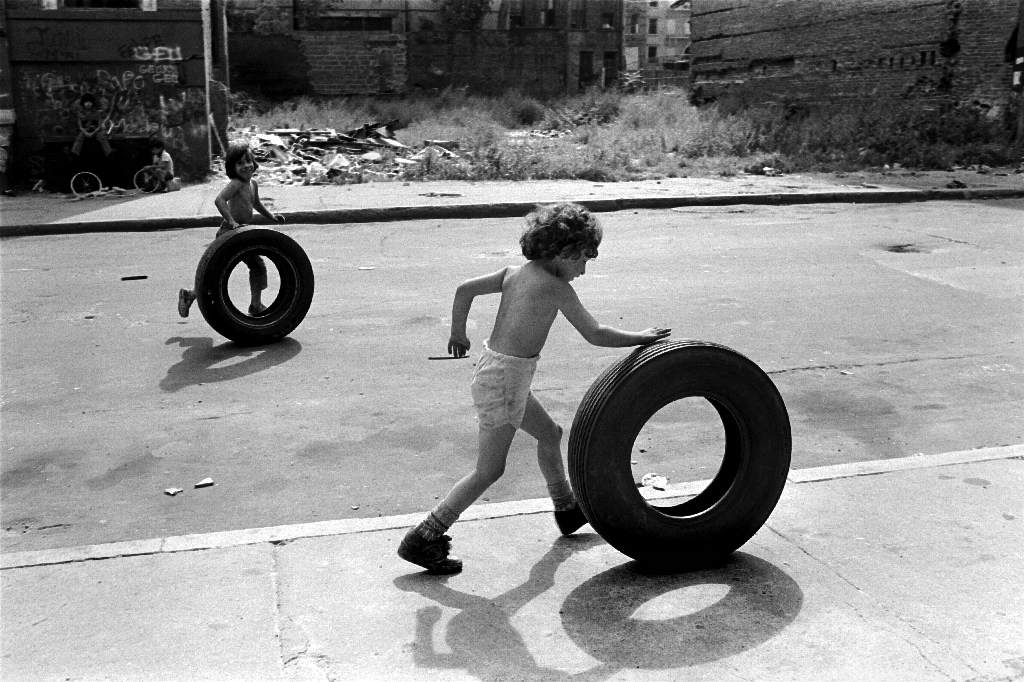
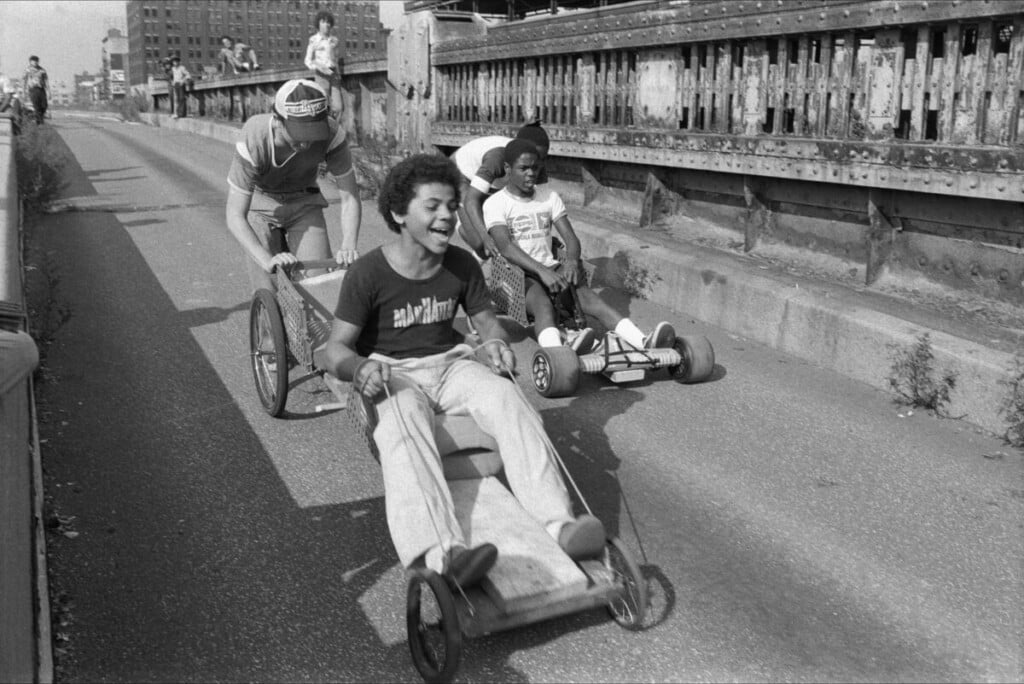
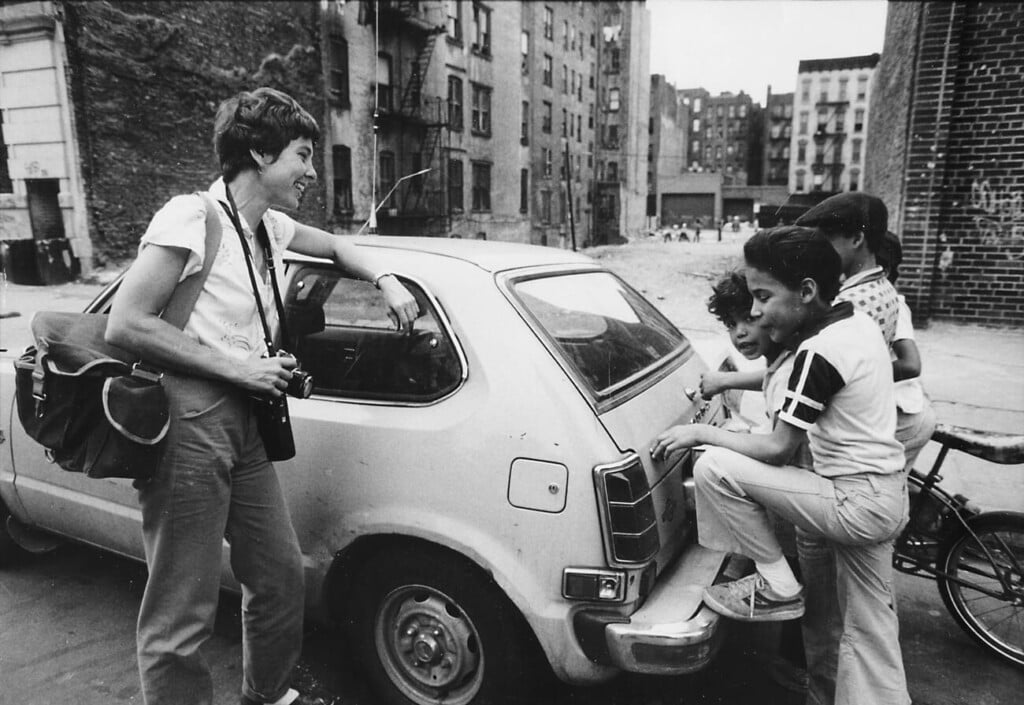
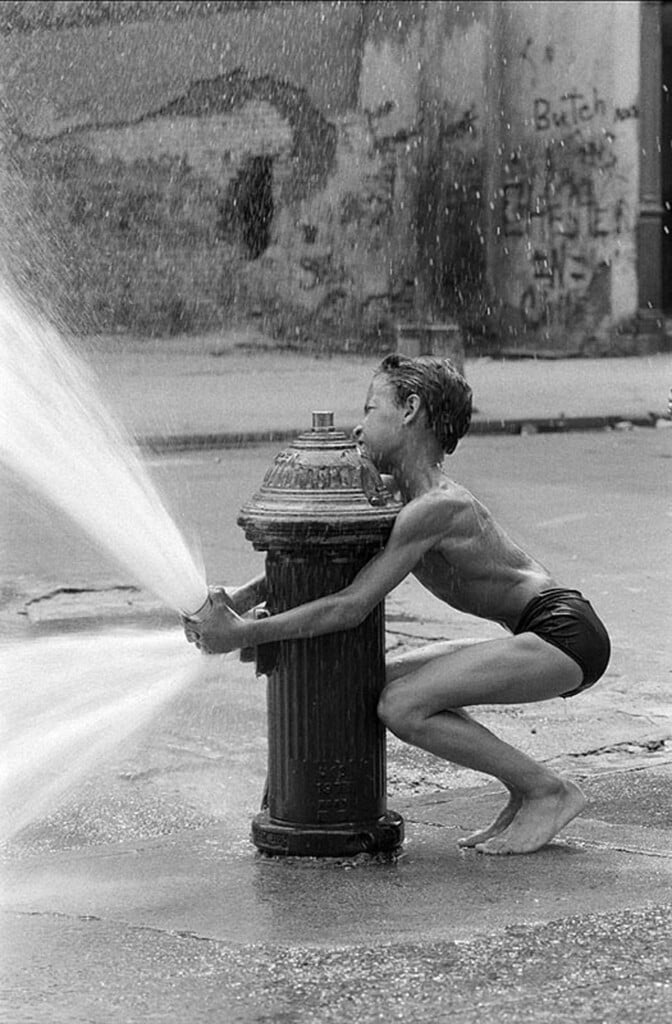
From 1977 to 1980, between assignments at the Post, Cooper began documenting unsupervised children playing among the rubble of New York’s decaying neighbourhoods, primarily the Lower East Side. The photographs show groups of children building toys or playing with objects found in the street, in an era that predates video games. It was a personal project, with no commission, no destination.
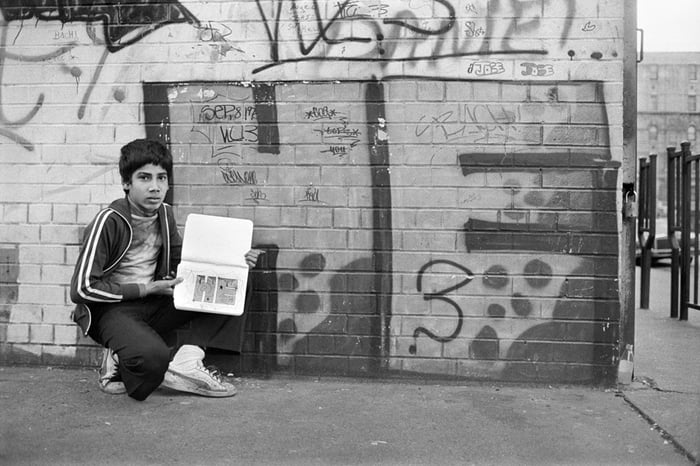
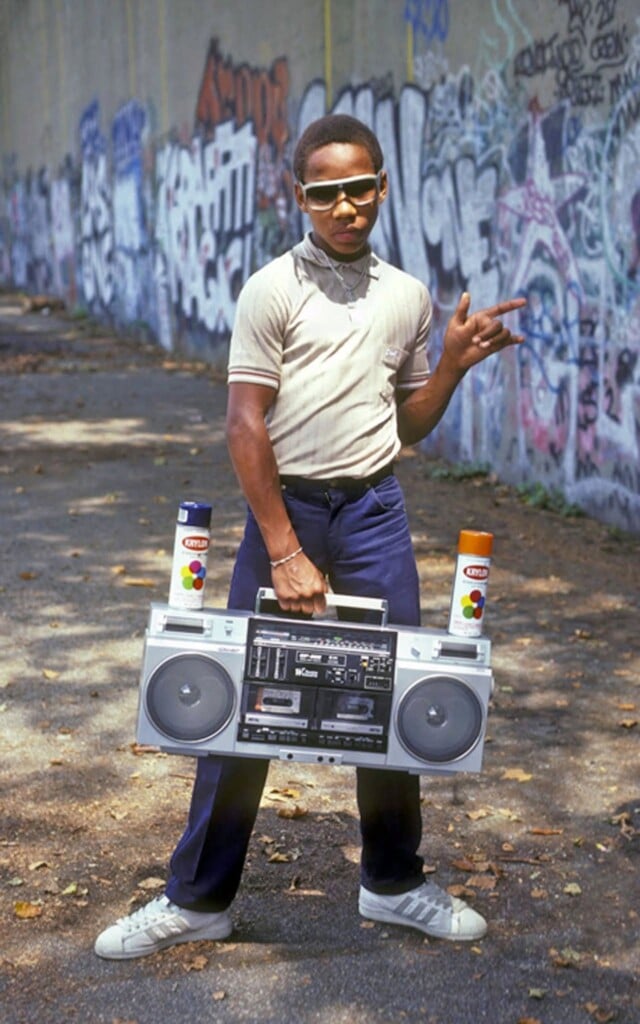
One day in 1979, during one of these outings, she noticed a boy with a notebook. His name was Edwin Serrano, alias HE3. Serrano explained to her that graffiti was an art form and that every artist was writing their own nickname. «I hadn’t understood at first that the kids were writing their names. It wasn’t political graffiti, against something or for something. It was just a name — and then I started recognising the names, and it became a game, and I got drawn into the game», Cooper said years later.
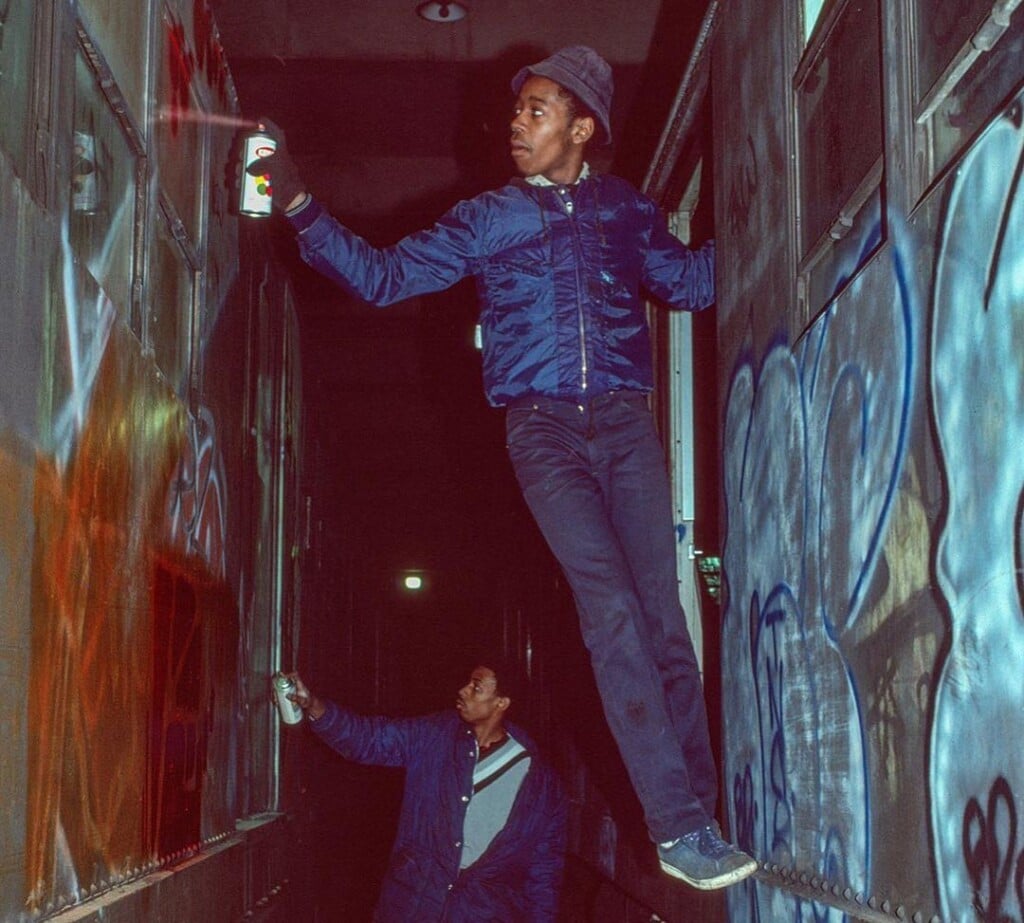
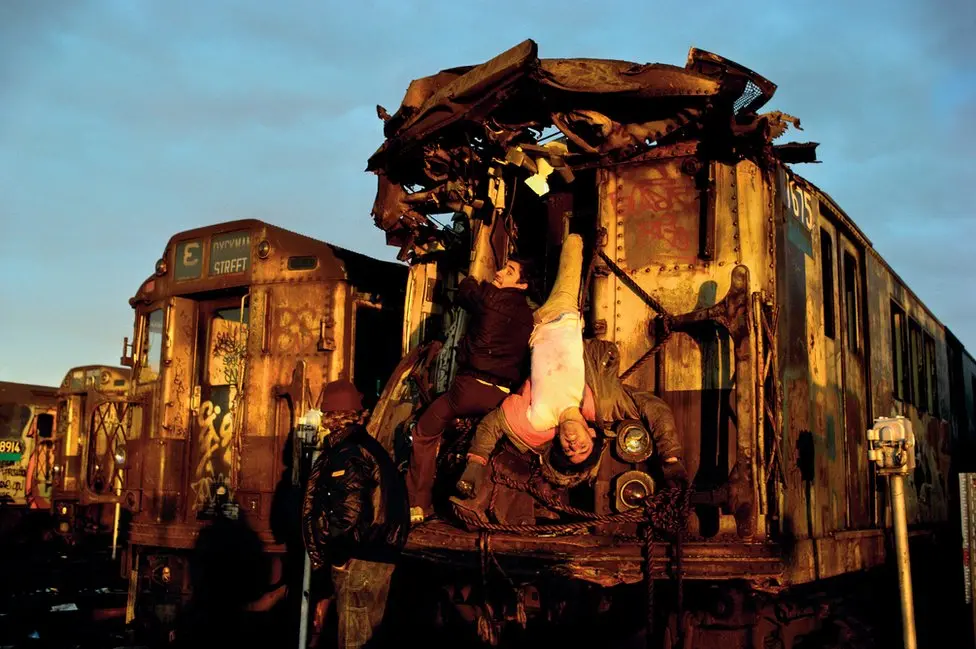
HE3 introduced her to Dondi, Donald Joseph White, one of the most respected writers on the scene. Cooper began accompanying him at night, in the rail yards, for hours — she once spent eight hours with him in a single night while he covered an entire subway car with his letters.
Subway Art: America’s most stolen book
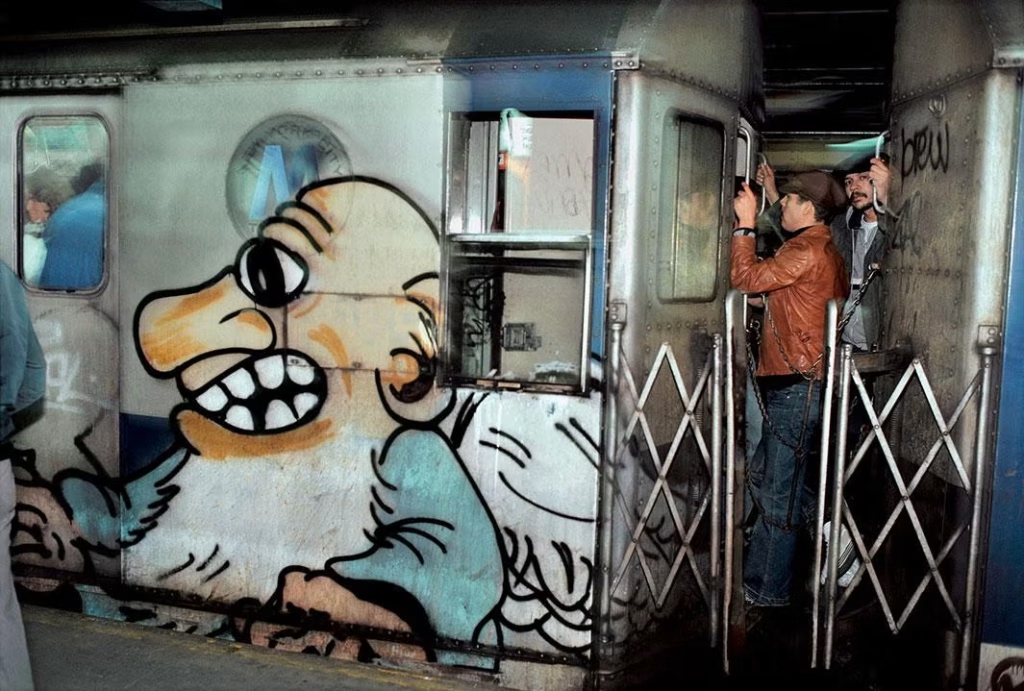
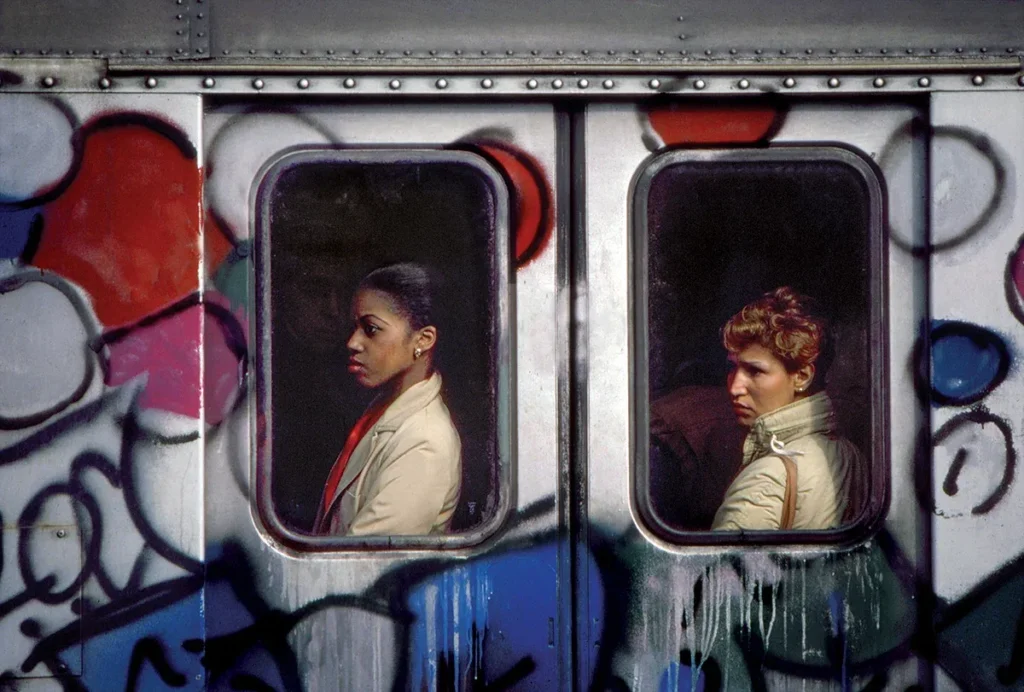
For years Cooper photographed in conditions no publisher wanted to touch. Graffiti was considered vandalism, not culture. She and Henry Chalfant had worked separately for a decade, each convinced they were making a book, each unable to find a publisher, until they decided to combine their work into a single volume. Subway Art was published in 1984 by Thames & Hudson. It was initially a commercial failure, then kids began stealing it from bookshops — a gesture that was somehow consistent with everything else. Today the book is considered the graffiti “bible”, has sold more than half a million copies, and is affectionately remembered as probably the most stolen art book of all time.
«When we published Subway Art, the reason it became so popular was that it was the way kids could study styles. There was no internet, there was no other way to look at those pieces and understand how they were constructed», Cooper explained in an interview with Collater.al in 2013, on the occasion of the Outdoor Urban Art Festival.
An archive that never ends
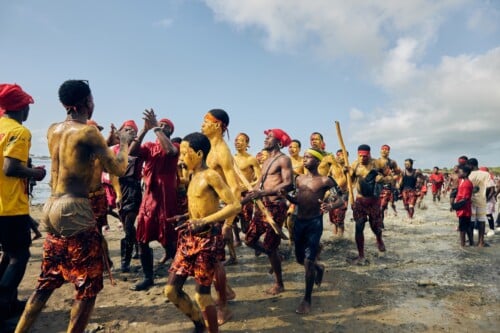
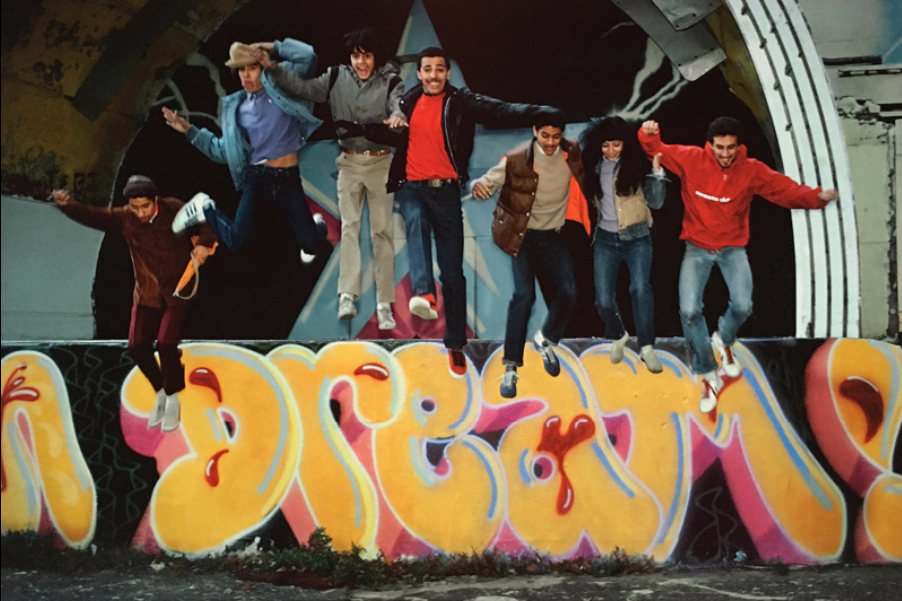
Subway Art was only the beginning of a vast catalogue that reflects the true breadth of Cooper’s gaze, never confined to graffiti alone. During the same years she documented b-boying and the birth of hip hop culture in the Bronx. Those photographs, published around the world, helped turn hip hop into the international youth movement it is today. They were followed by Hip Hop Files (2004), a collection of hundreds of rare photographs from the early 1980s; We B* Girlz (2005), on women in hip hop culture; Street Play (2006), which gathers the very images of children playing in the street that she began at the Post; Tokyo Tattoo 1970 (2012), the fruit of her years spent in Japan before New York. Going Postal and Name Tagging collect images of graffiti and street art on postal stickers. The latest major project is Spray Nation, made with Roger Gastman: Cooper and Gastman combed through hundreds of thousands of Kodachrome slides to bring to light lost moments from New York’s 1980s graffiti scene — from obscure tags to portraits, from action sequences to painted subway cars.
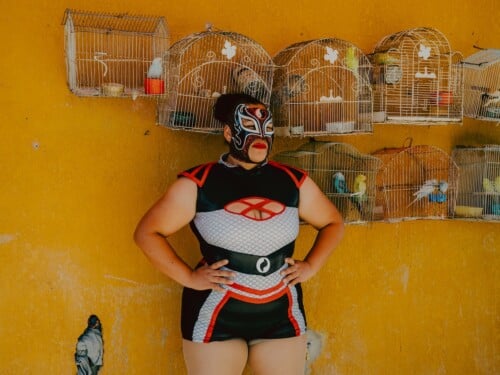
The thread running through all of this has always been the same: «My interest was in photographing art in people’s lives, outside of galleries and museums — unusual hairstyles, customised clothes, hand-painted signs. I’m always looking for people who create art in their everyday lives. This turns my life into a treasure hunt.»
She thought she was documenting something destined to disappear
There is a confession that Martha Cooper has made more than once, and it says everything about the nature of her gaze: «In the 1980s I had the feeling that I was documenting something that was about to disappear. I thought my photographs might become the record of something people would not have known about otherwise.»
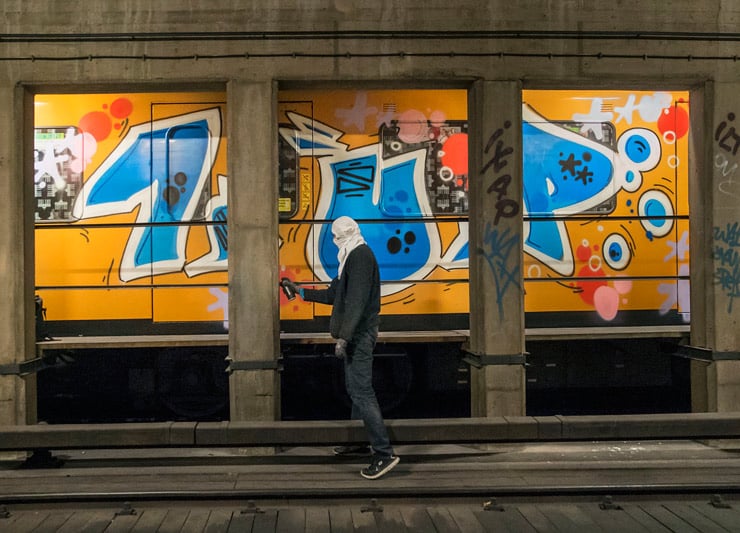
She could not have imagined what would follow. «I never thought it would spread the way it did. I thought something like graffiti was a product of New York City at that particular moment and place. I thought: in ten years it won’t exist anymore and I’ll have the document. In a way I thought I was preserving a historical archive — but of something destined to vanish. Not of something that was just beginning its story and would go on for the next thirty years.»
That underestimation is perhaps the most beautiful thing about Cooper‘s story. She was not building a legacy. She was simply looking, with the same attention one gives to fragile things.
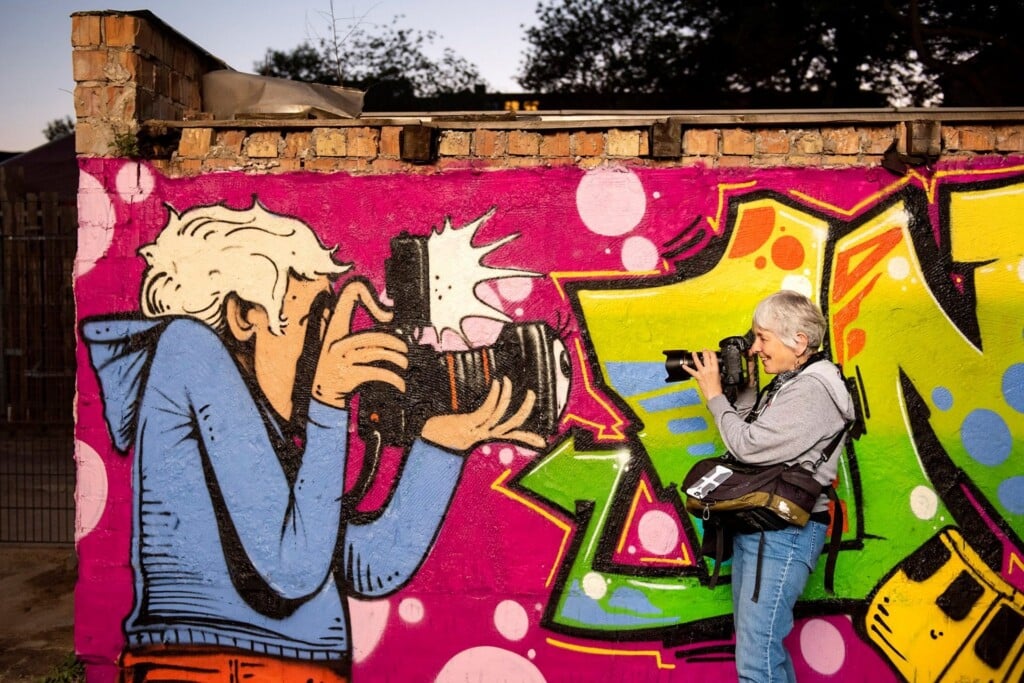
Eighty-three years old, still on the street
Throughout her career, Cooper has photographed a series of subcultures which she has shared with the public through numerous publications. In 2019, filmmaker Selina Miles dedicated a documentary to her — Martha: A Picture Story, which premiered at the Tribeca Film Festival in New York. A film that gave renewed visibility to a body of work built in silence, over decades, without ever seeking a stage.
Today Martha Cooper is 83 years old. She is still on the street, and little in her work has changed.
In 2013, at the end of the interview, she had already sensed how the logic of visibility was transforming everything — including the survival of works: «The number of people who will see the real thing versus the number of people who might see it online is completely different. It almost doesn’t matter anymore how long your piece stays in the original location. It will get out into the world anyway.»
She, on the other hand, keeps going to see things in person.
Read also: Shirley Baker, street photographer of the English streets