MASI Lugano‘s exhibition season opens with a tribute to photographer Ernst Scheidegger, friend of artists and collaborator with Magnum Photo. A frequent visitor to the Parisian avant-garde art scene, Scheiddeger is known for his portraits of artists, above all Alberto Giacometti, his great friend, but-also Salvador Dalí, Max Ernst, Hans Arp and Max Bill, among others. The exhibition places “face to face” – as the title of the exhibition curated by Tobia Bezzola and Taisse Grandi Venturi reads – Scheiddeger’s photographs with the works of the protagonists of 20th-century Art, whom he himself frequented and portrayed as a photojournalist. The exhibition consists of two nuclei. The first, devoted entirely to the photographer, features a body of unpublished shots selected from his archive and printed from scratch. The second places his famous artist portraits in dialogue with their own works.

Linking the two exhibition nuclei is Alberto Giacometti, «Ernst’s most recurring model as well as his great friend,» explains curator Taisse Grandi Venturi, «The two met in 1943 in Maloja, during his military service, and then met again in Paris during the 1950s and 1960s.» It is Giacometti’s own voice that welcomes the public to the exhibition, from the documentary film made by Scheiddeger in the artist’s atelier, documenting the creative process.

«There is a young photographer from Zurich, Scheidegger, who a few years ago took a lot of pictures of the sculptures in the atelier here with me, etc.,” he said. Now he is preparing a booklet, and there is a publisher in Zurich, a young one, who is publishing it. The book, I’ve seen the layout, it’s very, very nice, and I really want it to come out, because [Scheidegger] has put his all into it. It’s a bit like a reportage, but really special.»
– Lettera di Alberto Giacometti a Pierre Matisse, 11 maggio 1957
Who’s Ernst Scheiddeger?
Swiss by birth, Ernst Scheidegger (1923 – 2016) was an eclectic artistic figure. Painter, graphic designer, editor, filmmaker, publisher and gallery owner, but above all photographer. He trained at the Kunstgewerbeschule in Zurich, where he took classes with Max Bill, who would later become his great friend, but it was his work with Werner Bischof that took him to Paris in 1949. There he met Giacometti again and began assiduously frequenting the ateliers of avant-garde artists. A few years later he is hired by Magnum Photo as a photojournalist, but in ’56, with the tragic death of the two founders Bischof and Capa, Ernst, greatly shaken, will leave the business to accept a professorship at the Hocheschule für Gestaltung in Ulm. From this point on, his language changes, relating back to his youthful studies; in addition to photography, it includes graphic design, exhibition and book design, films and documentaries. Later he also founded his own publishing house, Scheidegger & Spiess, which is still active.

Early works
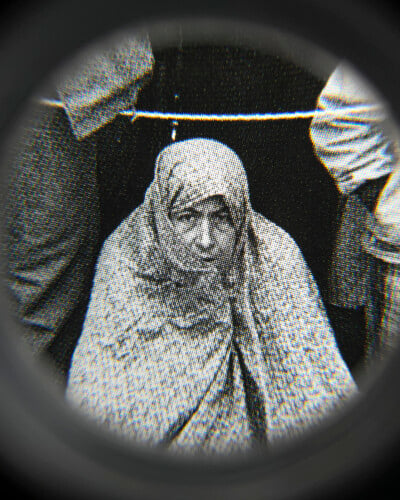
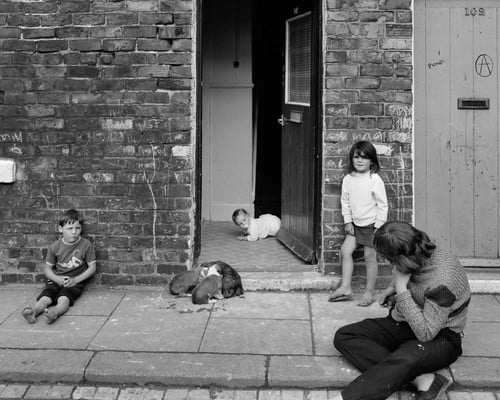
To surprise are first the unpublished shots in which his interest in the human being is evident, then the faces of the artists who have marked the history of 20th-century art – in dialogue with some of their lesser-known works. In this initial body of work, Ernst is in search of his own style. Strong contrasts of light and shadow embrace the subjects of his shots, passersby, inhabitants of the places that the photographer traverses between one documentary journey and another. With a documentary gaze, Ernst immortalizes a society still shaken by war but eager for rebirth. «The grain of the film often coarse, situations of strong contrast, unclear or blurred outlines, daring under- and overexposures, distorted perspectives, and truncated motifs show a young photographer who has first decided to forget everything he learned during his years of training,» reads the text by curator Tobia Bezzola, «The world he shows us is never truly bright, but when the light happens, it becomes immediately blinding. This repertoire of harshly characterized motifs encompasses many classic themes of post-war photographic and cinematic neorealism: the reflection of stage lights on the faces of artists and circus clowns, the cheap thrills of the fair and the amusement park, the lively popular life that animates the streets of Southern Europe, street children, the Salvation Army, festivals, and workers’ demonstrations. In those silent observations of a photography flâneur, everyday reality is captured with poetic hints and strong social emphasis.»

The artist portraits
From Hans Arp, Max Bill, Serge Brignoni, to Marc Chagall, Salvador Dalí, Max Ernst, Oskar Kokoschka, but also Le Corbusier, Fernand Léger, Verena Loewensberg, Joan Miró, Henry Moore, Sophie Taeuber-Arp, and many others. Ernst Scheidegger photographs most of the artists of the Paris scene. His portraits are almost always commissioned, published in magazines and illustrated volumes, one of the most active patrons being the Parisian gallery Maeght. Scheidegger’s shots are never “glossy,” the situations are always very real, inside the artists’ studios at work. «The photographic narratives that Ernst Scheidegger shoots in the studios of artists in the second half of the 20th century are the work of a man who basically shared the adventure of his protagonists and felt those images as part of a common enterprise,» Bezzola explains. The exhibition offers the viewer an up-close and intimate look inside the studios of artists who made the history of the 20th century, revealing faces to the many unknowns that dialogue with their works of the same, on loan from the Kunsthaus Zürich museum.


Some exhibited works


In cover: Ernst Scheidegger, Salvador Dalí nel suo atelier a Portlligat, ca. 1955 © Stiftung Ernst Scheidegger-Archiv, Zürich
La mostra è aperta fino al 21 luglio 2024, qui più info.