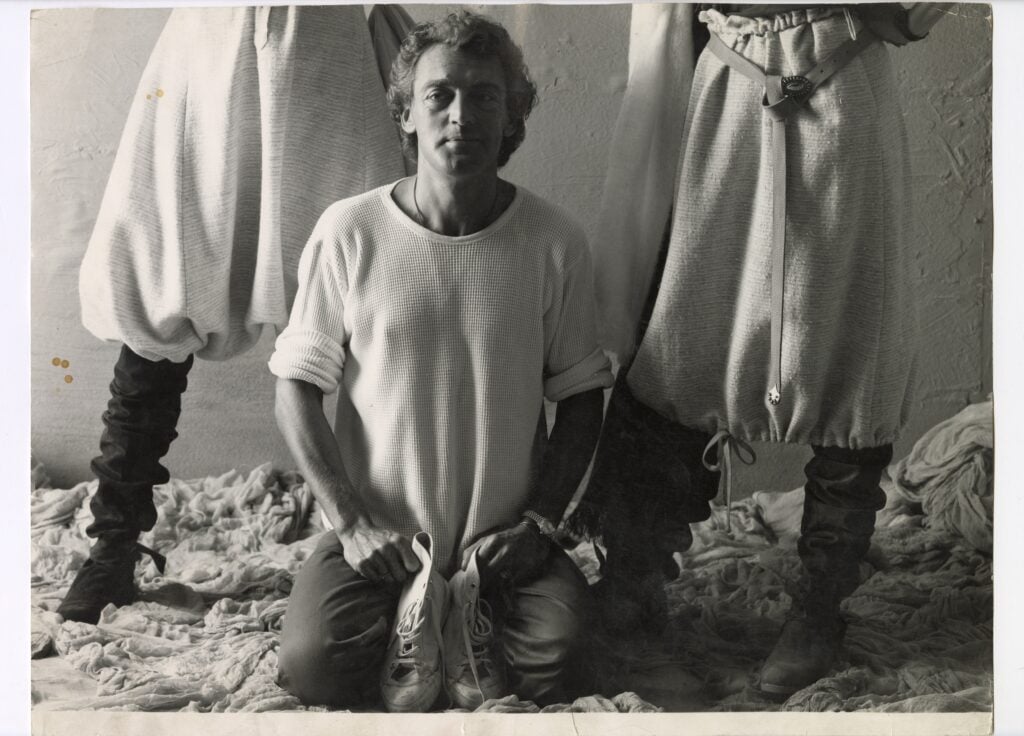
Walter Albini, widely known among fashion enthusiasts, is a name that has been talked about little for too long. Last May, the revival of the eponymous brand was announced by the Swiss investment group Bidayat. But who is Walter Albini, and why did he choose Milan in 1972 to present his creations at the Circolo del Giardino, opening the doors to what is now, over fifty years later, the Fashion Week as we know it? To discover more about the designer’s history, one can visit the “Walter Albini” exhibition at the Study and Communication Archive Center (CSAC) of the University of Parma, open until April 14. But let’s go in order.
Who is Walter Albini
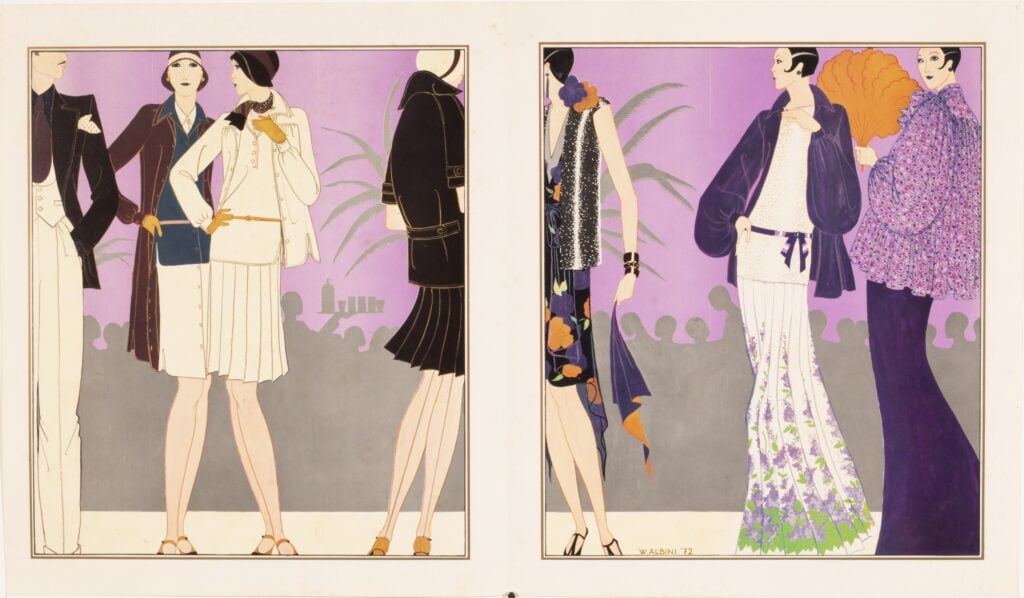
Born in 1941 in Busto Arsizio, Walter Albini paved the way for all Italian designers to come. The inventor of the total look and Italian prêt-à-porter, Albini focused on making clothes accessible to the middle class. His research on fabrics and production methods brought fashion closer to people, acting as a bridge to the future. In 1972, he presented five collections for five different fashion houses: Callaghan for jersey, Basile for outerwear, Escargots for knitwear, Diamants for shirts, and Misterfox for evening dresses. All of this took place at the Circolo del Giardino in Milan. In short, Albini’s vision was already looking towards contemporaneity. At a time when the epicenter of fashion was Paris, Florence, and Rome progressively became symbols of Italian fashion, thanks in part to the strategy of Gian Battista Giorgini, the promoter of the Italian brand par excellence. This modus operandi set the stage for Walter Albini’s vision, which, in turn, transformed Milan into the nerve center of the Italian fashion system as we know it today. Despite his premature death in 1983, Walter Albini remains a key figure in Italian fashion.

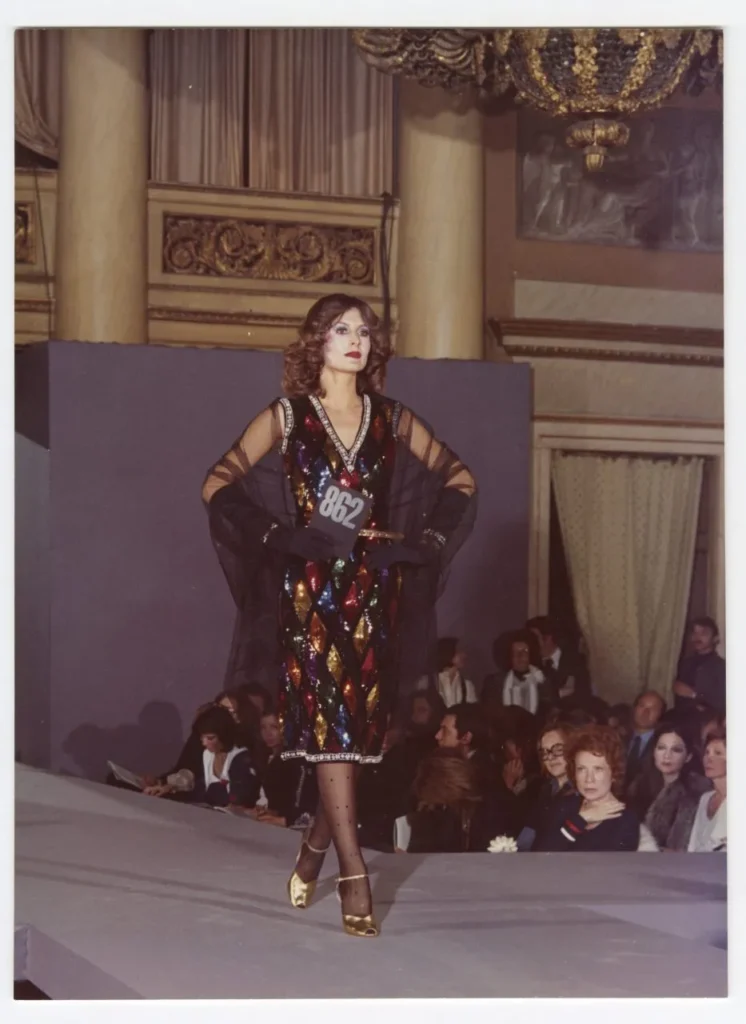
The reason he presented his clothes in Milan lies in the partnership that developed between the textile industry and fashion. It took a few more years to see the Milan Fashion Week flourish: in 1976, as Olivia Selene recounts in Vogue Italia, everyone except Valentino moved to the Lombard capital to present their collections. At that time, it seemed to be the perfect city to host fashion presentations ready to be worn, given the editorial, creative, and marketing fervor active in Milan.

The exhibition at the CSAC of the University of Parma
The “Walter Albini” exhibition at the CSAC, part of the University of Parma, aims to give back the designer’s legacy from his beginnings in the 1960s to the early 1980s. The exhibition, curated by Matilde Alghisi and Paola Pagliari, is built on two separate donations: the first from 1983 belonging to Paolo Rinaldi and the second from Marisa Curti, Walter Albini’s partner for many years, holding most of the archive surviving until today. All the material showcased by the curators revolves around Albini’s creative force, from pencil drawings dating back to his art school years to sketches heavily influenced by the liberty culture, the 1930s and 1940s, Coco Chanel, Bauhaus, Constructivism, and Viennese geometric motifs. In these sketches, the stylist’s entire creative vision is captured, combined with vintage photographs that allow a reliving of his early fashion shows, especially the one at Circolo del Giardino, the beginning of Made in Italy that convinced almost everyone to move to Milan.