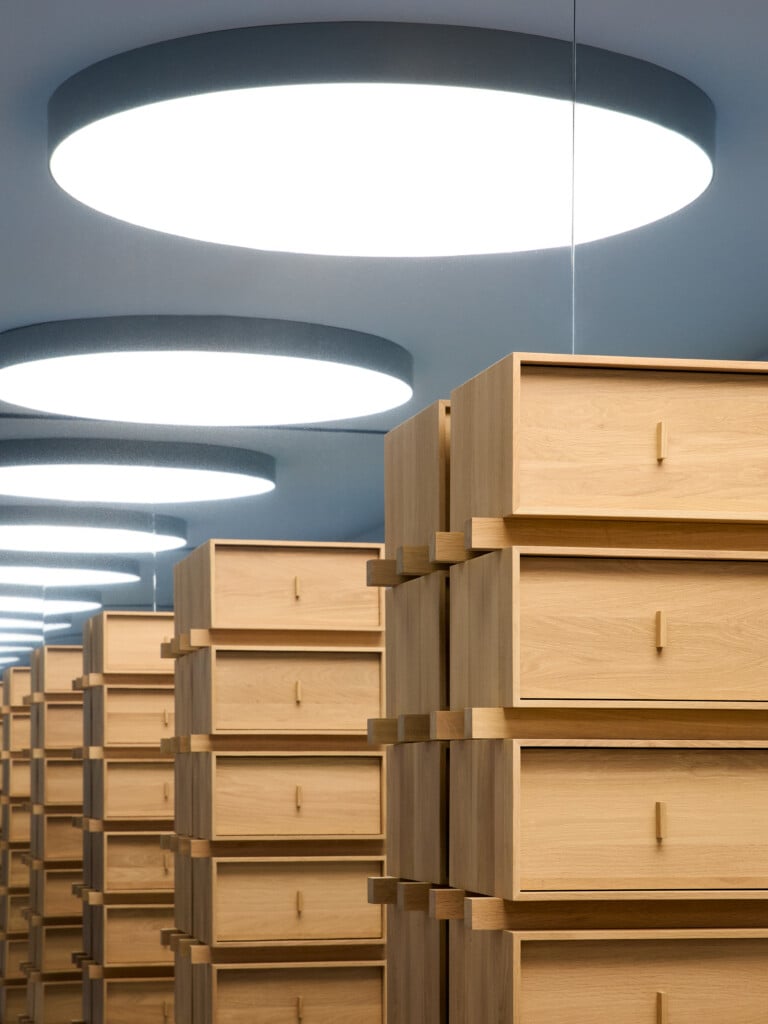
At Milan Design Week 2026, inside the Convey space, among the new collections presented by Woak, one of the projects that struck us the most was Pluri, designed by Naessi studio. A new modular storage system that immediately brought to mind a very precise image: a Jenga tower ready to change shape at any moment. An object that works with balance, layering, and the idea that every single element can alter the entire composition.
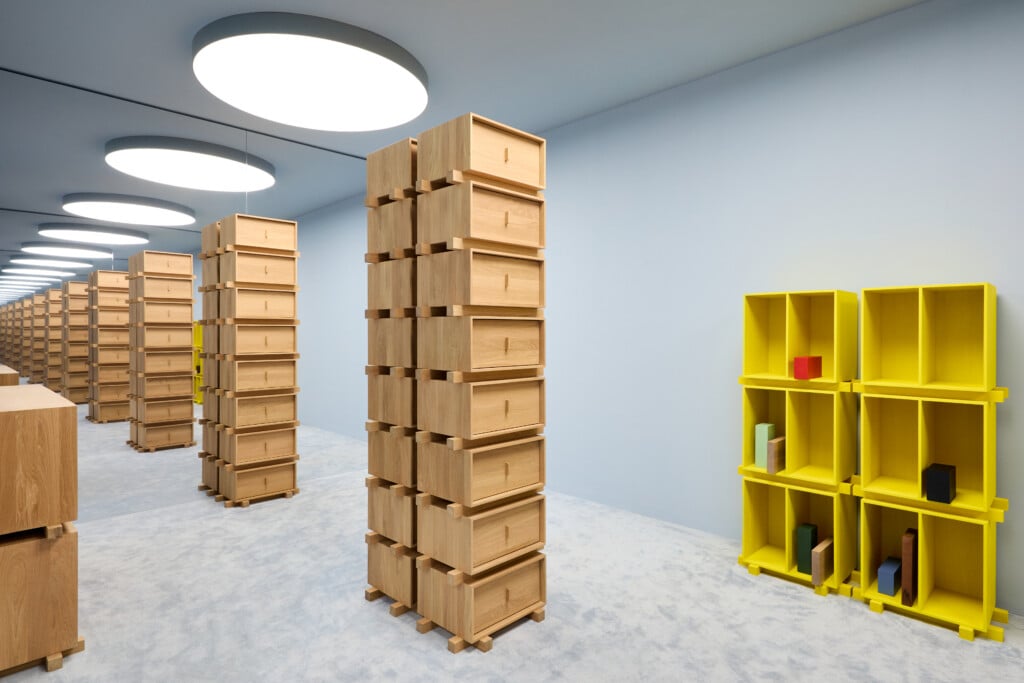
The parallel with the famous game is not only visual. Pluri seems to be built around the same tension between stability and transformation: modules that come together, move, stack, and create ever-changing configurations. An open system that changes along with the objects it contains and the space around it.
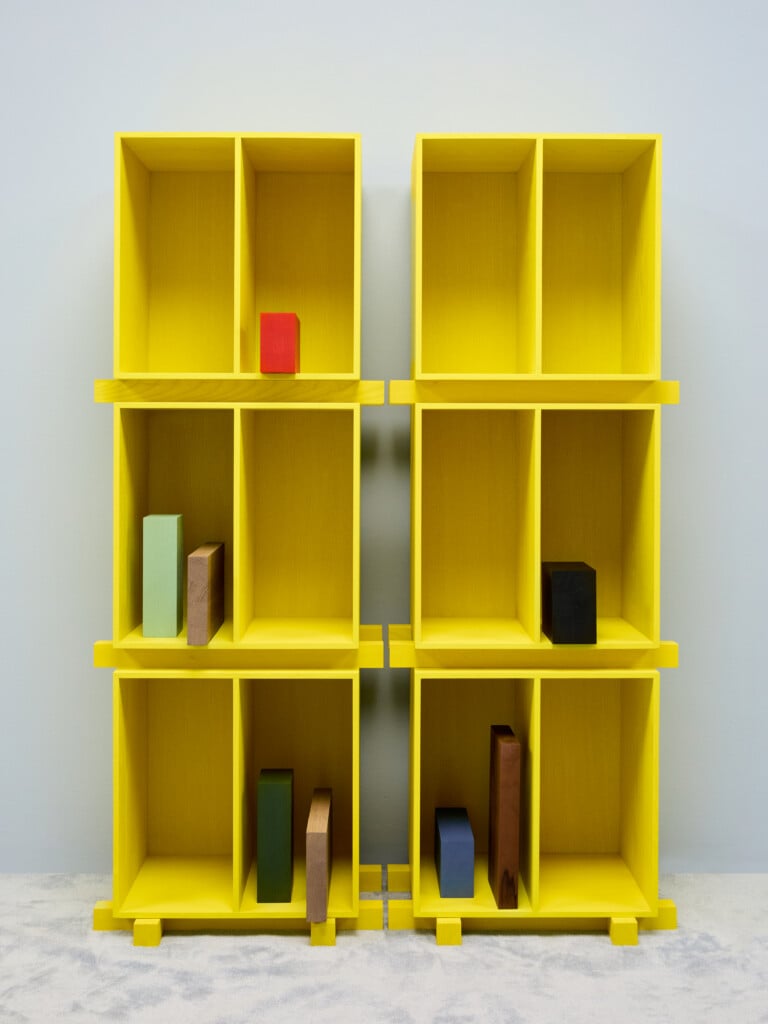
The name comes from the Latin prefix “pluri-”, evoking the concept of multiplicity as a design principle. Everything starts from a primary unit, a drawer or an open compartment, which, when replicated and combined, generates a modular archive in constant evolution. Presented within the exhibition project curated by /àr-o/ studio, the brand’s art director, Pluri entered into dialogue with the new collections designed by Antonio De Marco and with Woak’s new color palette, fitting perfectly into the brand’s research between formal rigor and experimentation.
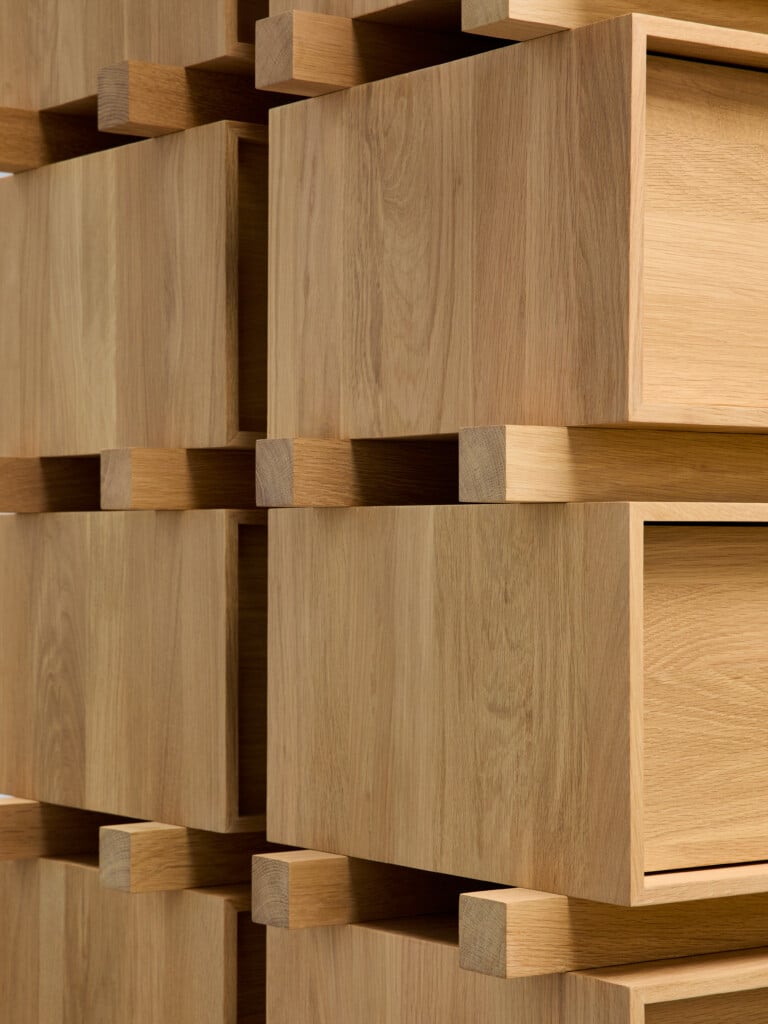
Beyond its modular nature, what makes Pluri interesting is the way it turns storage into something more personal. Not simply a system for organizing objects, but a structure that preserves them and places them in relation to one another, almost like an archive of everyday memories.

“We like collecting fragments of materials and small objects,” say Eleonora and Alessandro, founders of Naessi. “Over the last few years, we have created an archive that is slowly growing richer with new elements. There are not too many hierarchies; they are objects that intrigue us and that we do not want to forget.” From an obsidian stone found in the woods to a Japanese aluminum ruler, fragments of brass, or objects picked up at flea markets: Pluri was born precisely from this practice of preserving, understood as both an aesthetic and emotional gesture.
With its clear architectural matrix, the project manages to bring together function and expressive freedom. And perhaps this is exactly why it continues to make us think of Jenga: not only because of its structure made of stacked blocks, but because of the idea that even the smallest shift can generate a completely new balance.
ph. Claudia Zalla