The primordial cauldron of Anastasiya Tarasenko (Kyiv, 1989) preserves the traces of a painful and traumatic experience lived firsthand. A state of unconsciousness caused by an ectopic pregnancy, and the subsequent negotiation with death, long guided the artist in translating into painting the fragments and psychological states explored through the memory of a dark and suspended journey.
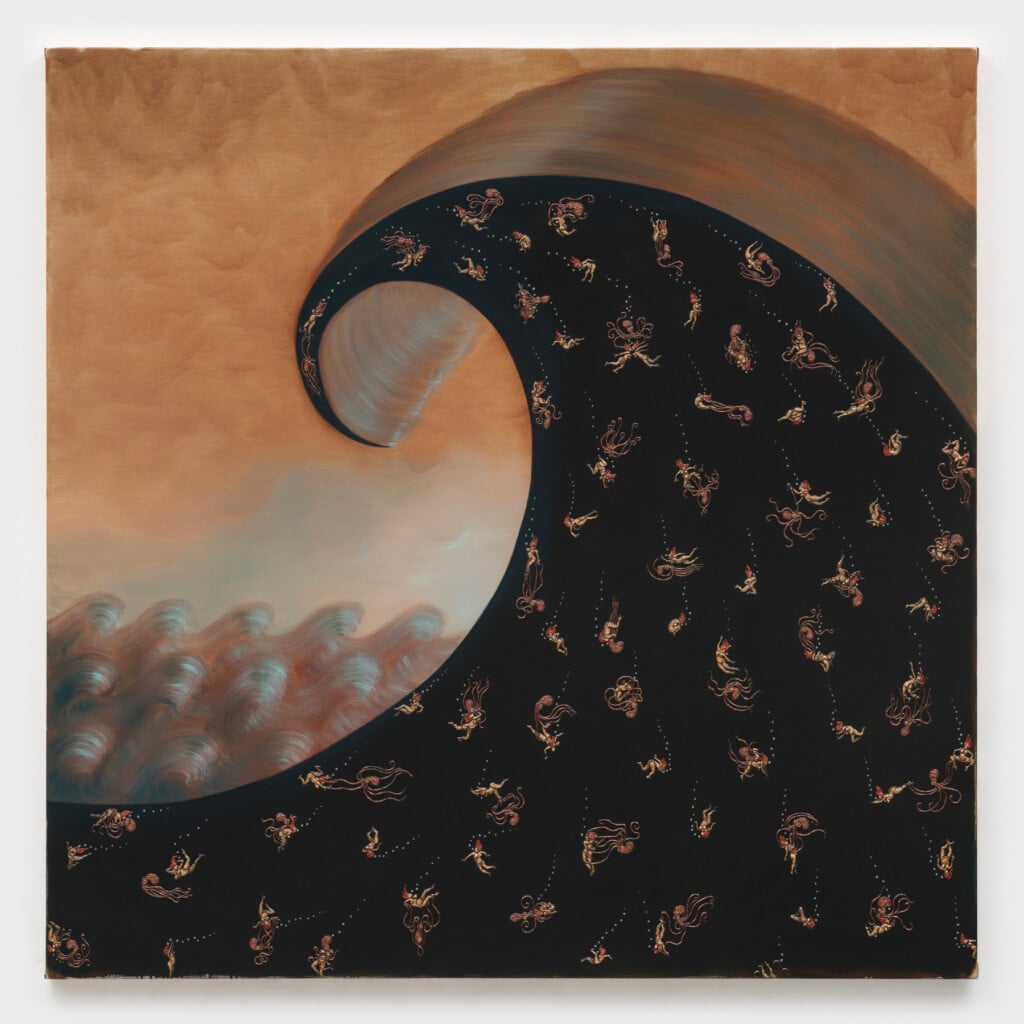
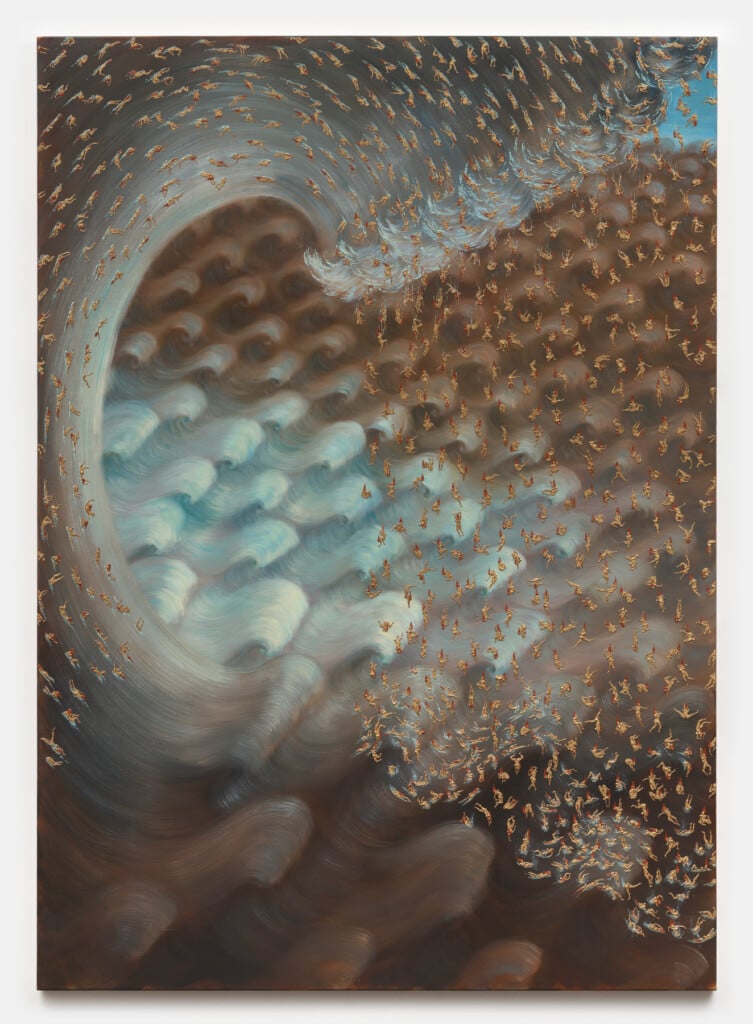
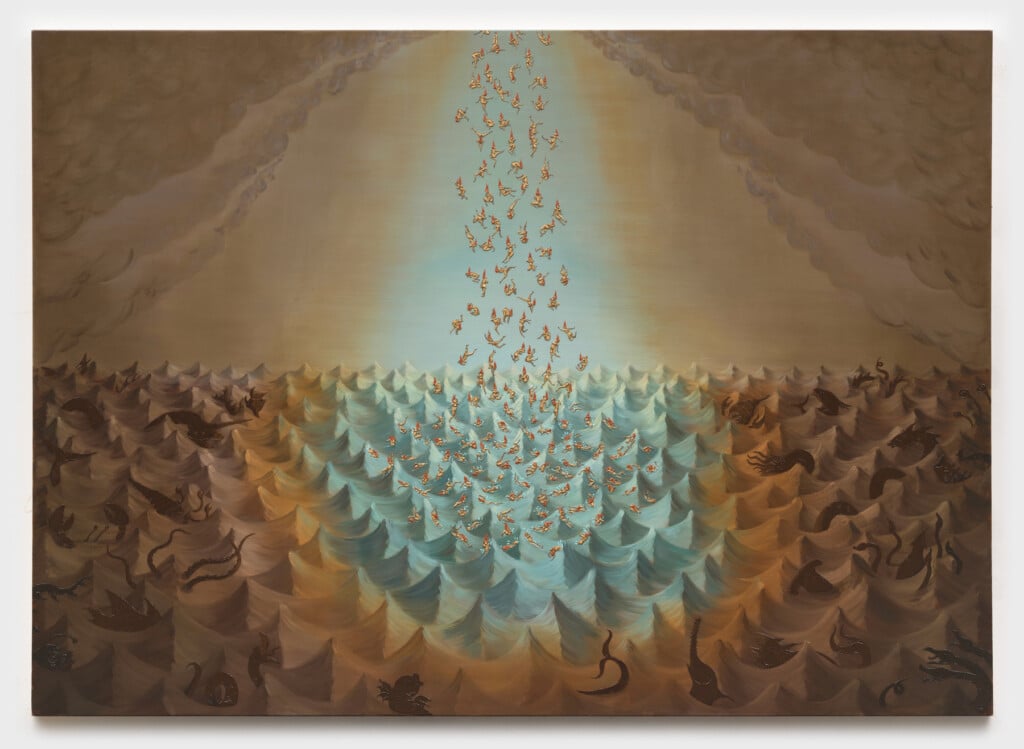
The resulting works were brought together in the solo exhibition Primordial Soup, hosted between April and May 2026 at Anna Zorina Gallery in New York. In her search for the sensations experienced during those days of forced suspension, water and the flow of life dominate the scene, fueling the construction of a floating and possible landscape. The deep ocean and waves driven by absolute anarchy motivate a distancing from the self that becomes a reflection on the human condition.
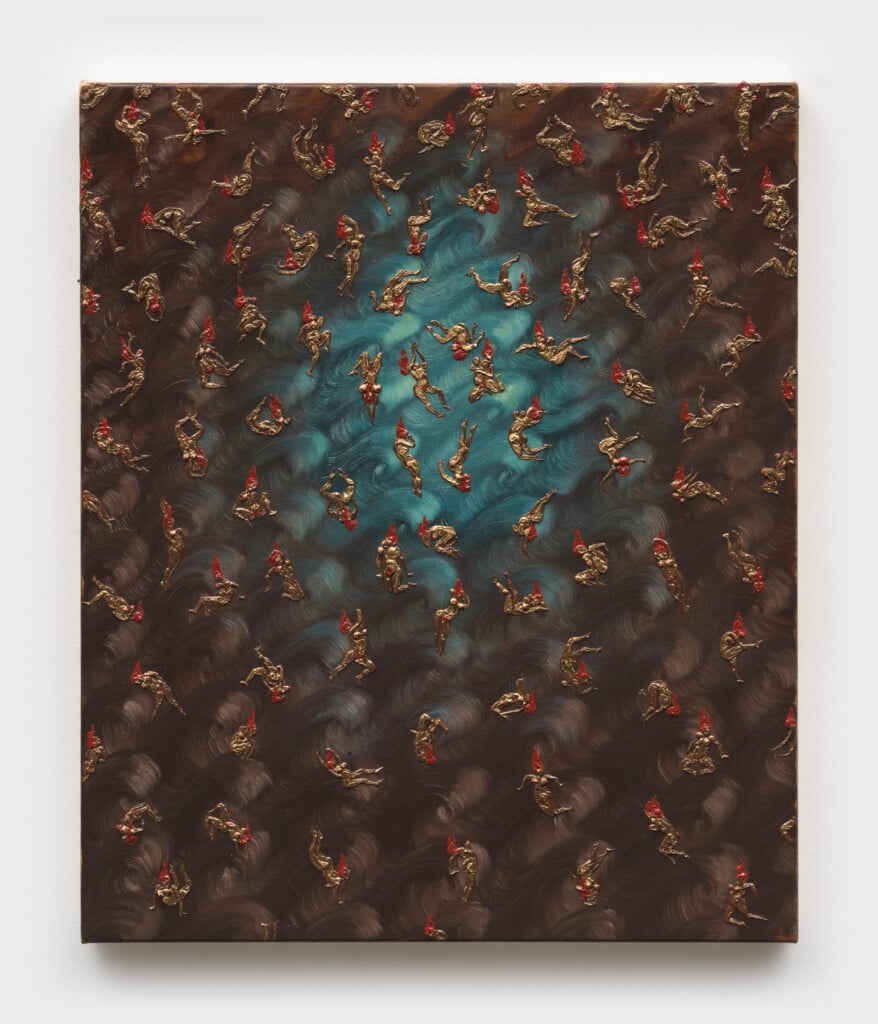
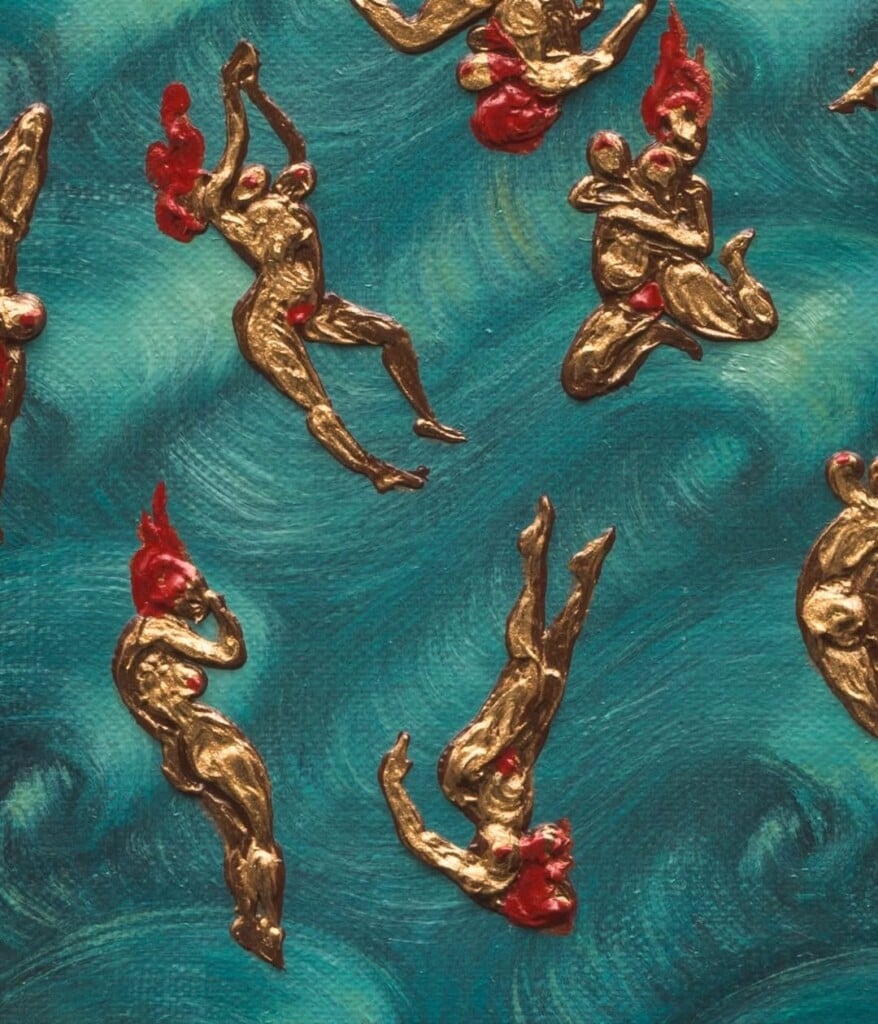
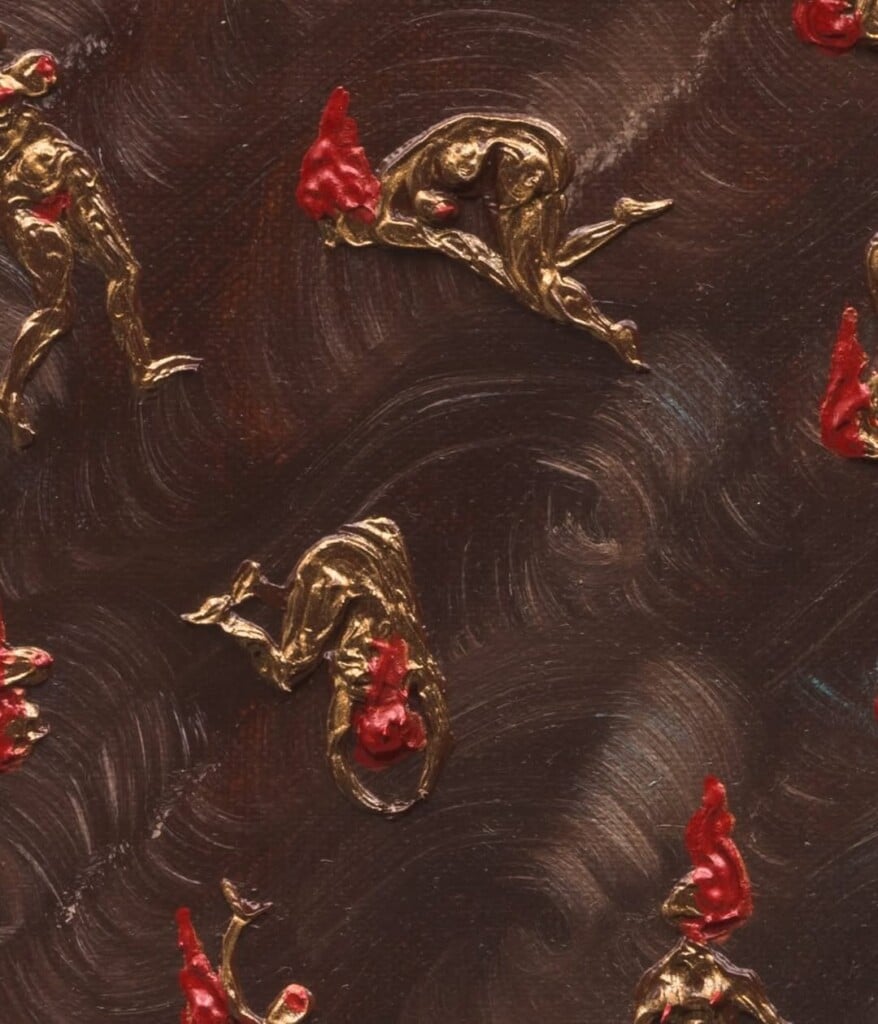
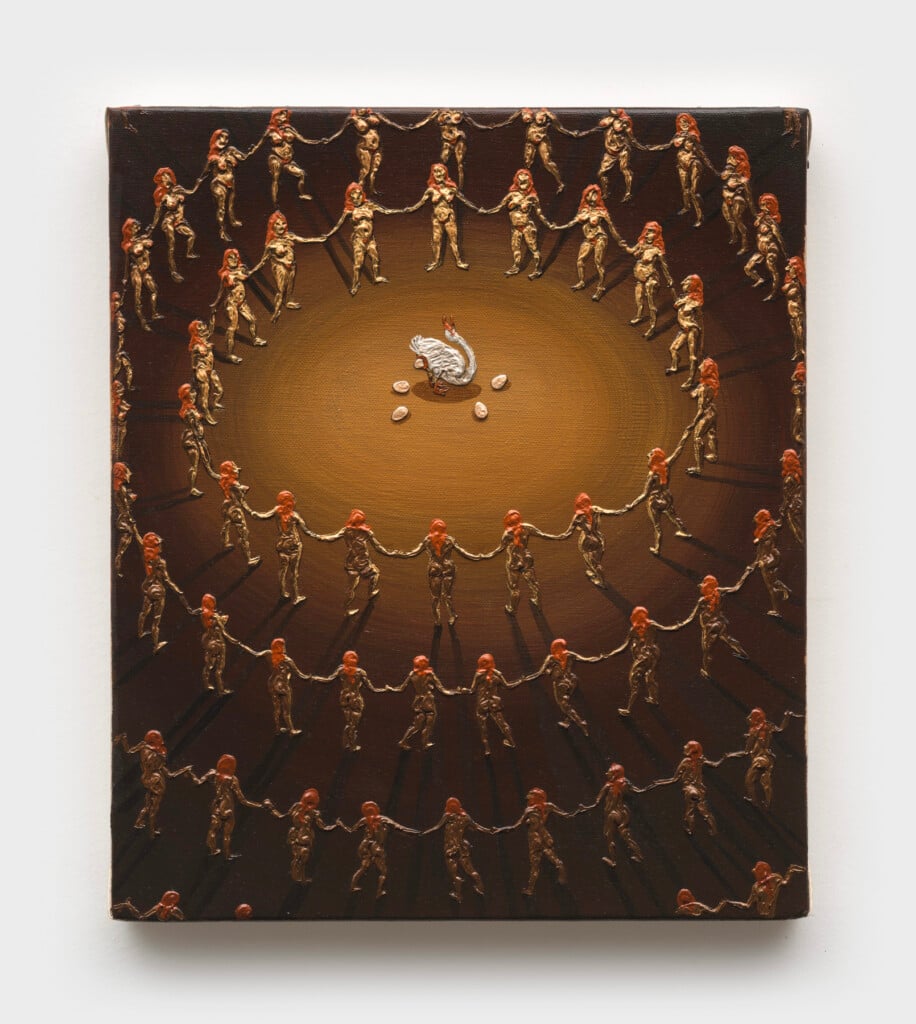
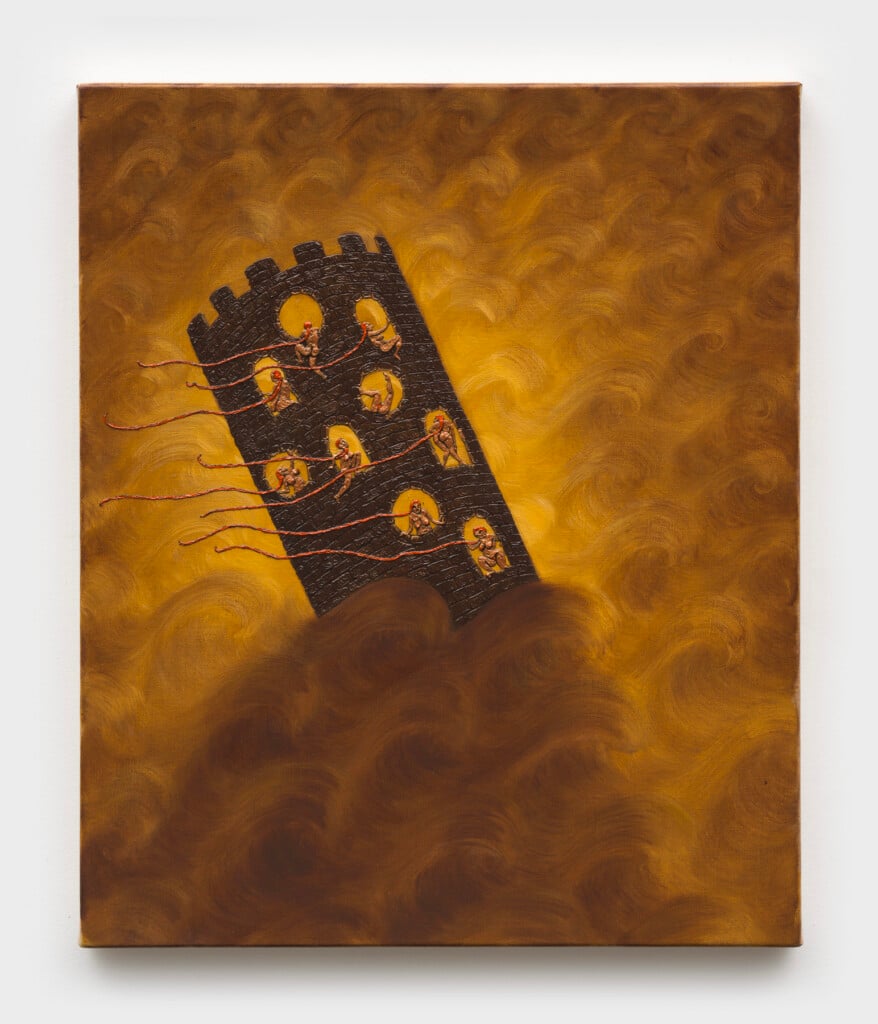
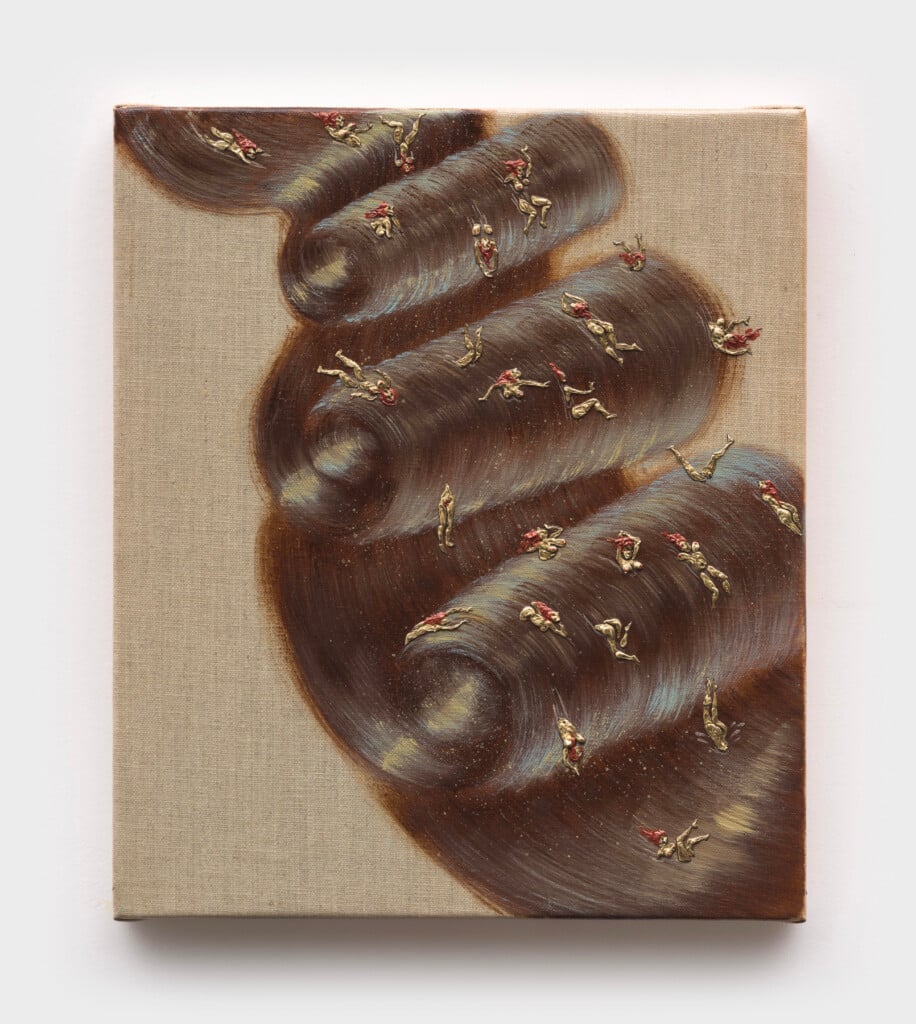
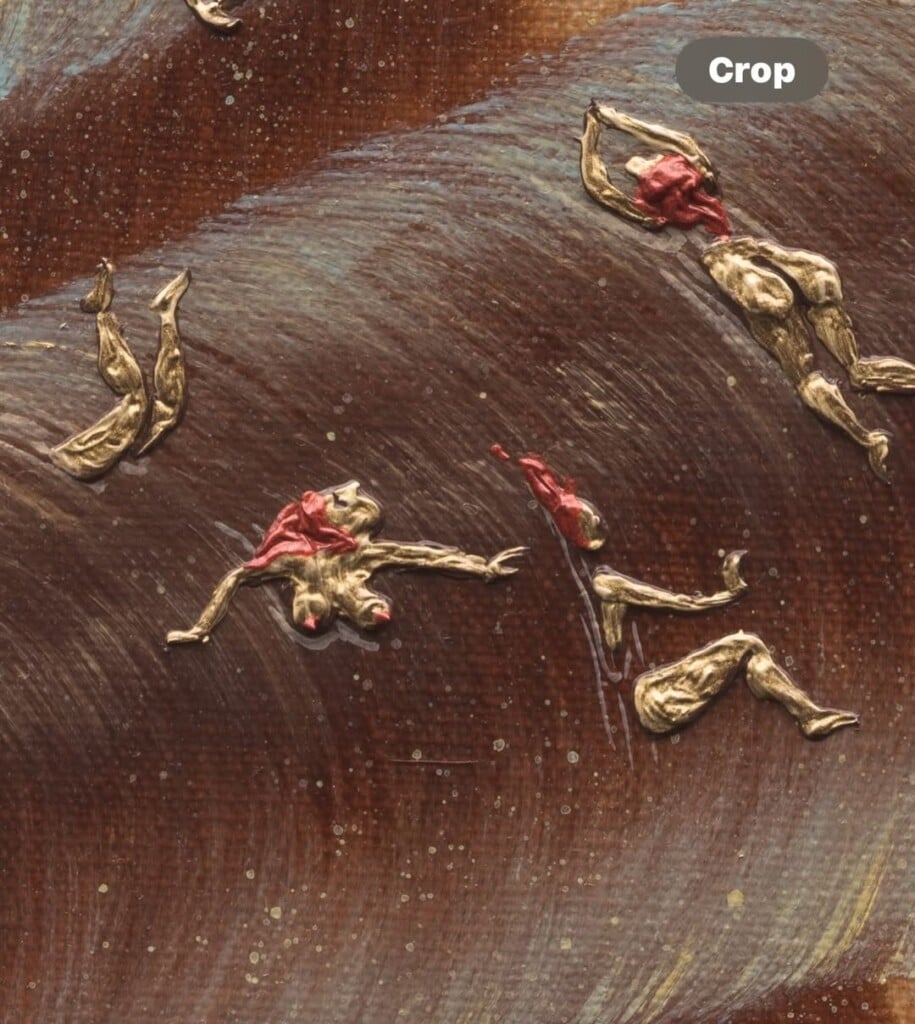
Throughout the history of art, both the Renaissance and the paintings of Sandro Botticelli have demonstrated how the repetition of one or more figures can become the storytelling device of a new season. Through this very practice, the illustrious Florentine painter handed down to posterity his graphic and illustrative version of the Divine Comedy and, consequently, the otherworldly journey of Dante and Virgil. Swimming through the flow of the darkest abyss, Anastasiya Tarasenko similarly recreates the dreamlike imagery explored by a small figure—herself—repeated obsessively across the surface of paintings that shimmer like precious patterns.
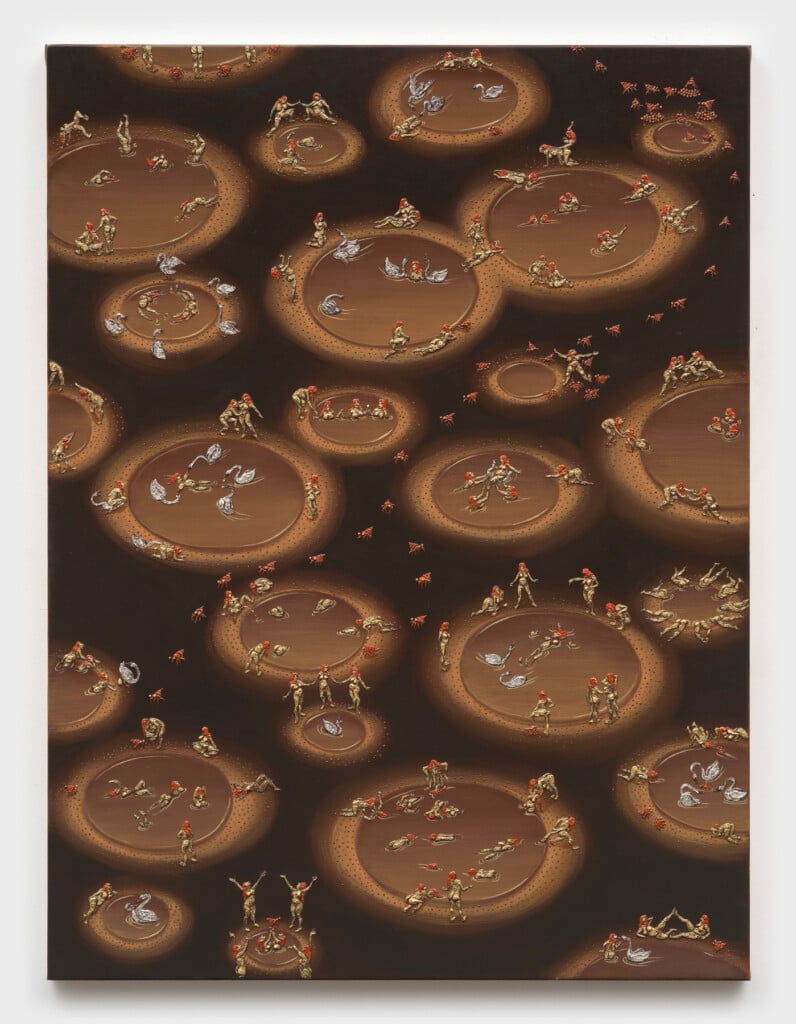
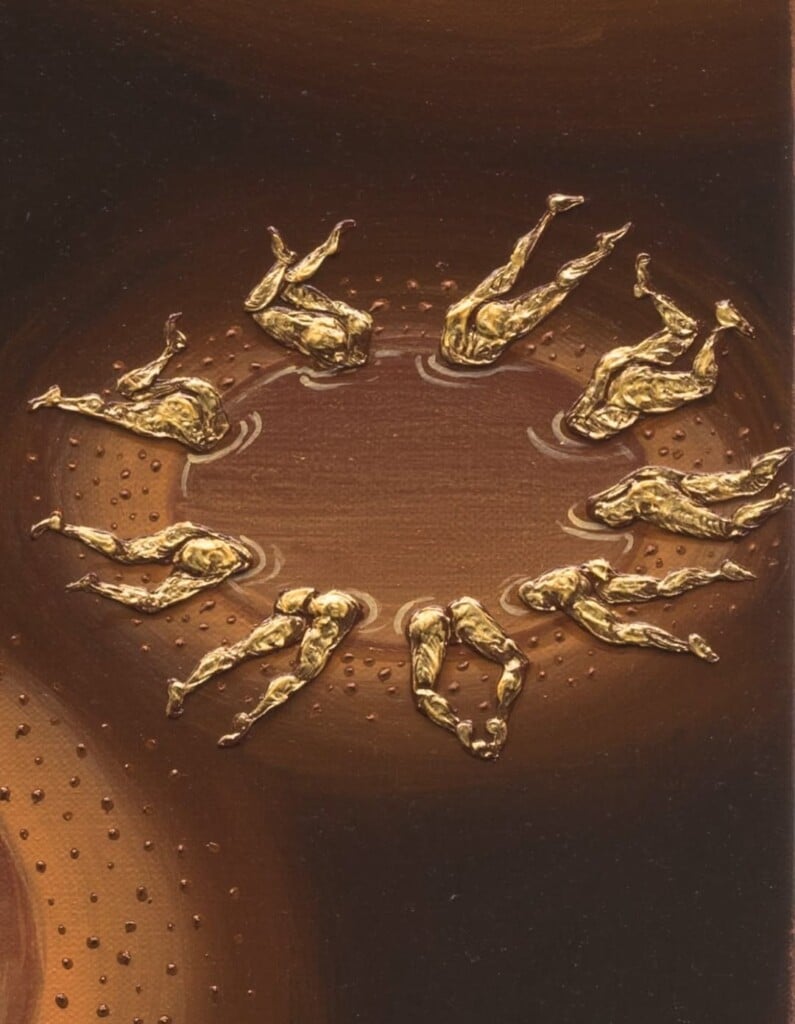
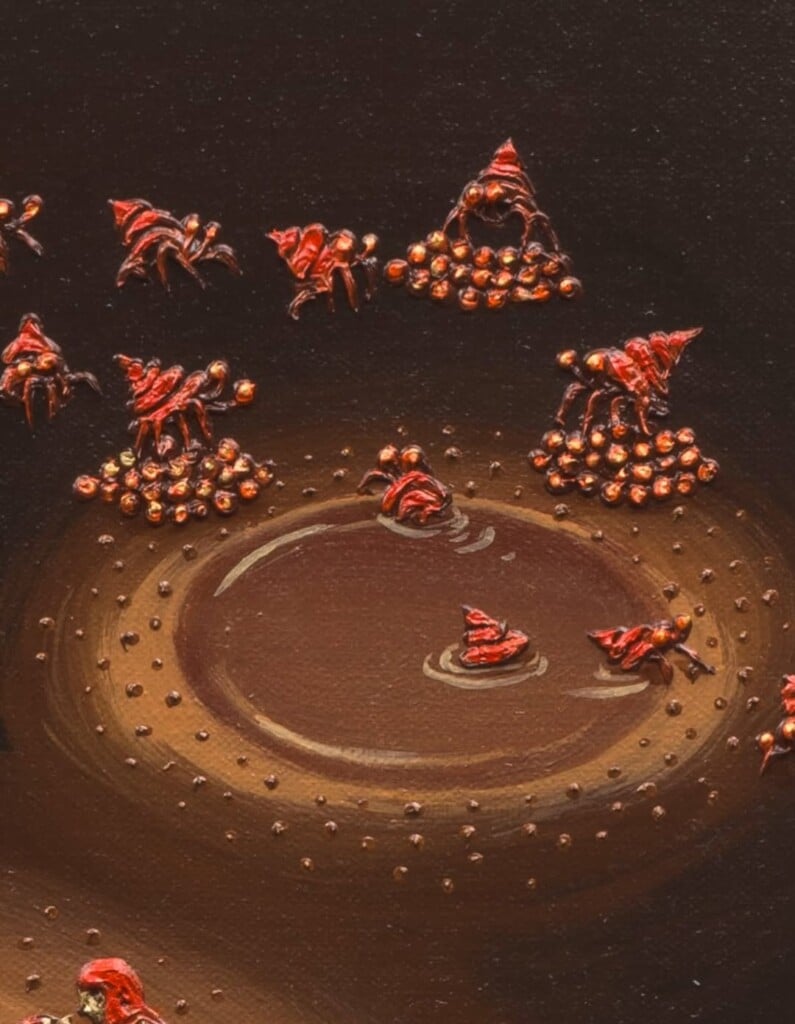
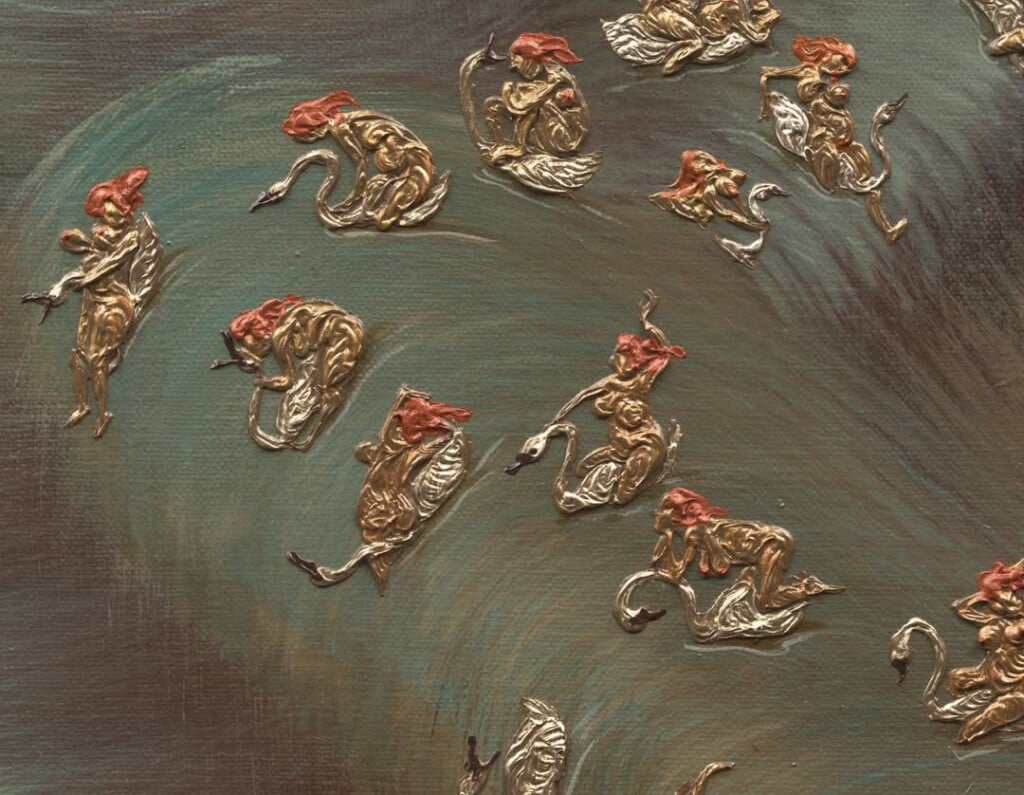
From the melancholic dance of the swan (Swan Lake, 2026) to a hymn in praise of the moon (O Fortuna, Velut Luna, 2025–26), Anastasiya sings of a return to life, transforming a traumatic event into the impulse to reject surrender and capitulation.
Within a dark, at times infernal and suffocating imaginary world, the ochre of Mother Earth and the blue of crystal-clear waters accompany and sustain a life hanging by a thread. From the swollen bellies of some of the repeated female figures to the visible lament of a swan surrounded as it lays its eggs, the artist’s brush illustrates the difficulties and sacrifices that accompany every pregnancy. Through the cathartic act of transforming lived pain into art, Anastasiya returns to herself—before even addressing the viewer—the steps of a journey that feels like a passage through an elsewhere impossible to capture.
Article by Floriana Savino