On June 2, 1946, a pencil on a ballot sheet moved our country from one form of state to another. Today, eighty years later, we no longer even pick up the pencil. In between lies a story about information, representation, and the way we may have stopped believing.
June 2 is one of those dates that school tries to make us love forever, and that adult life reduces to a long weekend: the Republic, the institutional referendum, universal suffrage. Twelve million women lined up at polling stations, under rules that would invalidate a ballot for lipstick left on the envelope. A detail that sounds like folklore, but one that tells us what voting meant back then: something fragile, physical, to be handled with care, because there was a real risk of ruining it.
That risk no longer exists. Not because we’ve gotten better at it, but because, for the most part, we simply don’t show up. In the last European elections, in June 2024, 49.69% of eligible voters cast a ballot. For the first time in the history of our Republic, in a national election, abstentions outnumbered votes. Twenty-four million Italians stayed home. It is the country’s largest political force, and it doesn’t even have a symbol.
This is where the question we want to ask ourselves comes from: do we still believe in the power of the vote?
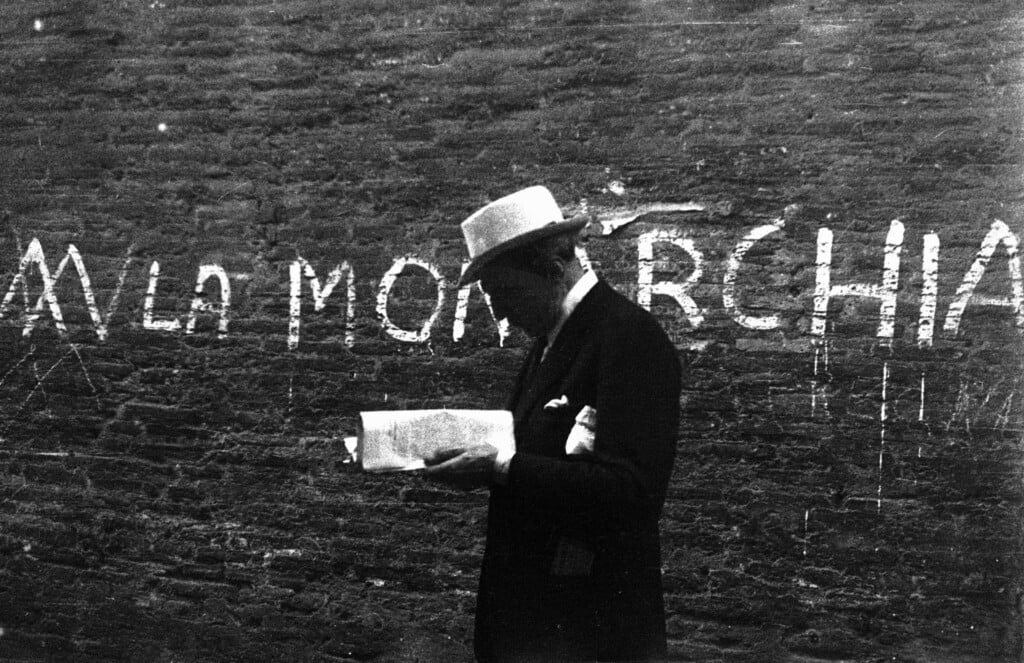
To answer — or to try — we first need to understand what has happened to voting over these eighty years.
There is something deeply twentieth-century about the way we are taught to think about it. The standard narrative hands us the right to vote as the happy epilogue of a conquest: the Resistance, the Constitution, suffrage, 1968, 1974 with divorce, 1980 with abortion.
A line that keeps rising.
In this narrative, voting is a full gesture — it means saying who we are, belonging to a side, accepting the compromise of numbers: “one head, one vote,” as the foundation of a society that decides together.
For our grandparents’ and parents’ generation, voting meant participating in the political life of the country, which happened everywhere: in factories and parishes, in universities and cinemas, and only at the very end converged onto the ballot.
Today, we experience voting as an acquired right, and as often happens with things we take for granted, we take it for granted. Not abbiamo combattuto per averlo. We never saw what it meant not to have it. And so we think, even if only unconsciously, that we can do without it.
The line has stopped rising.
The social fabric that gave voting its meaning has dissolved. So the vote remains, but it remains alone, emptied of the sense of what it means to exercise it.
It has stopped being a civic duty — individual and almost intimate — and has become hyper-politicized. People no longer vote out of civic spirit; they vote to fight someone.
Right against left.
Yes against no.
Us against them.
The paradox is that this no longer produces participation or social activism: it produces flare-ups. Politics ignites wildly for a few hours, with the same emotional intensity as a Sanremo finale, and, just like Sanremo, it goes out. It returns to hibernation until the next vote, leaving behind only the echo of conflict, without any of the constructive outcomes that voting is supposed to bring.
The result is an electorate split between those who don’t show up and those who show up only to say no to the other side. In both cases, civic spirit — that boring, necessary thing that holds a community together — has been gone for a while.
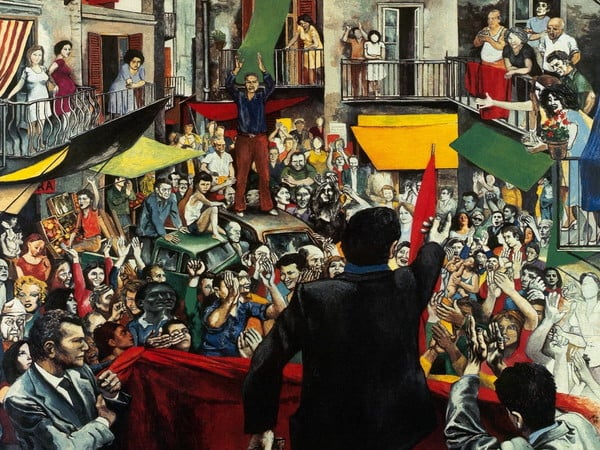
Making matters worse is a good part of the media. Another paradox, when you consider that its job should have been to provide the tools for finding answers — yet over the past few decades, it has done little but create a deep sense of disorientation and vertigo.
Three things in particular have changed.
Speed: a story is born, becomes a meme, is debunked and forgotten within forty-eight hours, forcing us to judge quickly — and judging quickly often means judging badly.
Fragmentation: there is no longer a shared public sphere; there are algorithmic niches where everyone reads their own version of the world confirmed ten times a day, and the same story, seen through two different feeds, is told in two opposite registers.
Impurity: the line between information and propaganda, between reporting and opinion, between fact and meme, has collapsed. When everyone declares which side they’re on, we stop believing anyone.
It is in this context that a question opens up that almost no one has the courage to address out loud.
The principle of “one head, one vote” is the foundation of modern democracy, and no one questions it as a right. The right to vote is universal and inviolable, and there is no going back on that. But the practice of voting — who votes, how they vote, why they vote — has ceased to be a homogeneous act. Someone who spends two hours a day reading political analysis and someone who makes their decision five minutes before entering the polling station after watching a TikTok video formally count the same.
Is that fair? The question is uncomfortable because any answer is dangerous.
If we say yes, it is fair, we accept that the quality of collective decision-making is disconnected from the quality of individual information, and that the average outcome of many heads will be (one hopes) at least reasonable.
If we say no, it is not fair, we slide toward property-based suffrage, competency tests, paternalistic guardianship — models that history has already tried and discarded, because they produce regimes, not democracies.
Perhaps we need to change the question, then, and ask ourselves: how do we make informed voting possible?

We don’t take the right away from those who don’t know enough: we work to make sure everyone knows enough. And it is precisely here that public administration, schools, public broadcasting, and the publishing industry have failed, creating a void that social media filled so quickly we didn’t even notice.
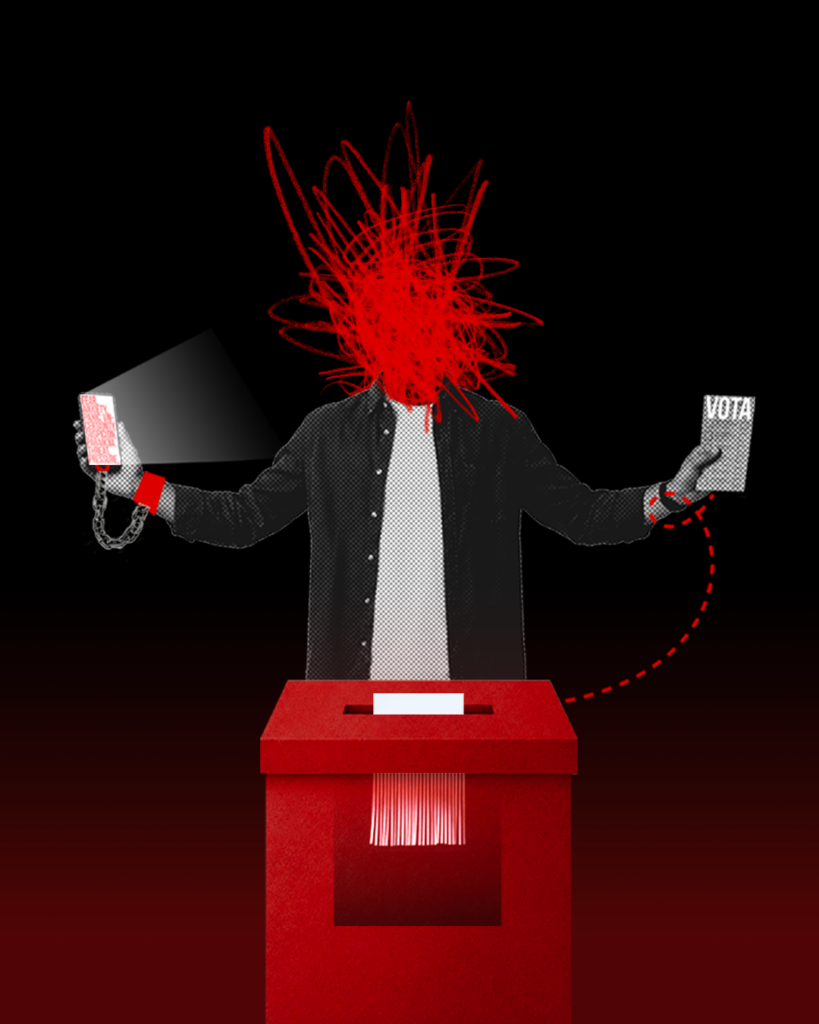
And so voting has turned into content. We post photos of spoiled ballots in protest, publish stories that say “Vote!” — in more extreme cases, telling people what to vote for — and turn political positions into bio slogans.
To be clear, none of this is inherently bad. For many people, especially young ones, political engagement is channeled precisely through visibility, through the aesthetics of belonging. The problem is when performance replaces decision. Politics as aesthetics, without politics as action, is nothing but self-serving entertainment.
And when politics becomes entertainment, our attitude shifts, and we feel entitled to change the channel, hit mute, or worse, turn off the TV altogether.
So let’s come back to the question. Do we still believe in the power of the vote?
Perhaps the most honest answer is that we’ve stopped believing in it because we’ve loaded it with the wrong kind of weight, more than it can bear. The idea has crept into our thinking that a cross on a ballot every few years can hold democracy together on its own. And when it doesn’t — when the candidate we chose disappoints, when the referendum changes nothing, when the world keeps turning exactly as before — we leave. Convinced that the problem isn’t us, but someone else.
But the vote is not a solution.
It is the tip of the iceberg.
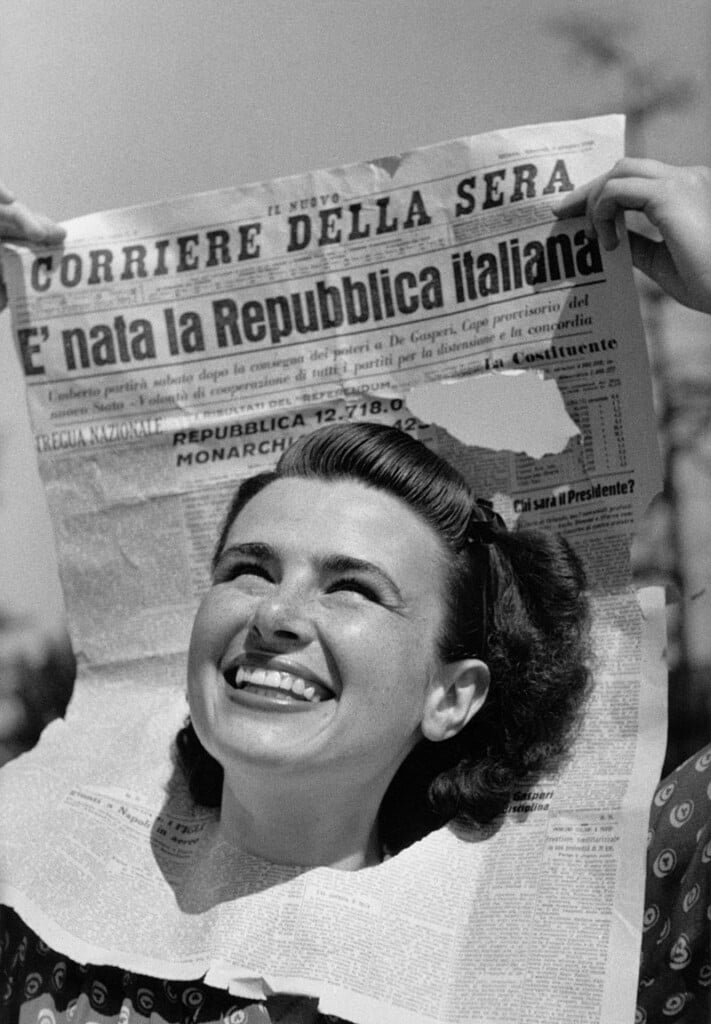
On June 2, 1946, the vote was only the final act of a long, collective process built on everyday participation. Today, that process is gone. All that’s left is the final moment. And we’re surprised it isn’t enough?
Below the surface, all the pillars that should come first are missing: knowledge, activism, civic spirit, social participation. The vote is not the first signal to read in order to understand the drift of our society, but the last of a thousand pieces that have already crumbled — that we have allowed to crumble.
We no longer believe in the power of the vote because we have stopped doing the work that comes before it.
And perhaps, to rediscover the first, we would need to start again from the second.