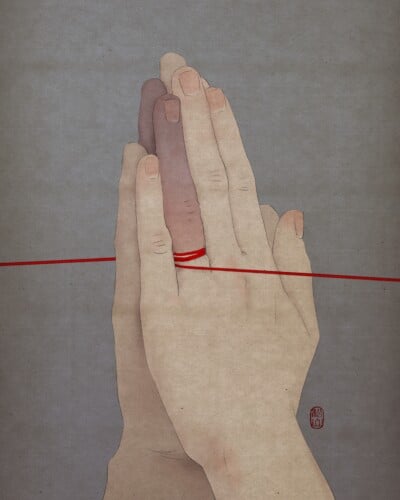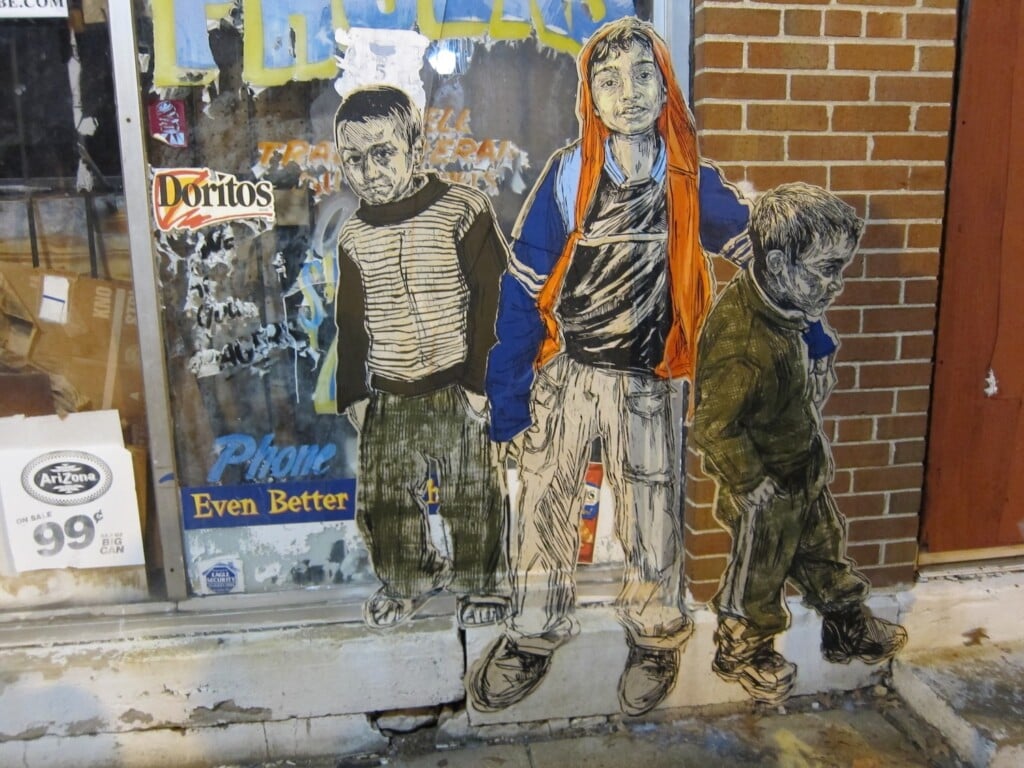
For decades, street art has been told as an adrenaline-fuelled, illegal practice, made of tags, speed and spray paint. A culture built around the idea of leaving a permanent mark on urban space — until the arrival on the scene of Caledonia Curry aka Swoon upended a code written, until then, almost exclusively by men, introducing an element into public space that had long been taboo: vulnerability.
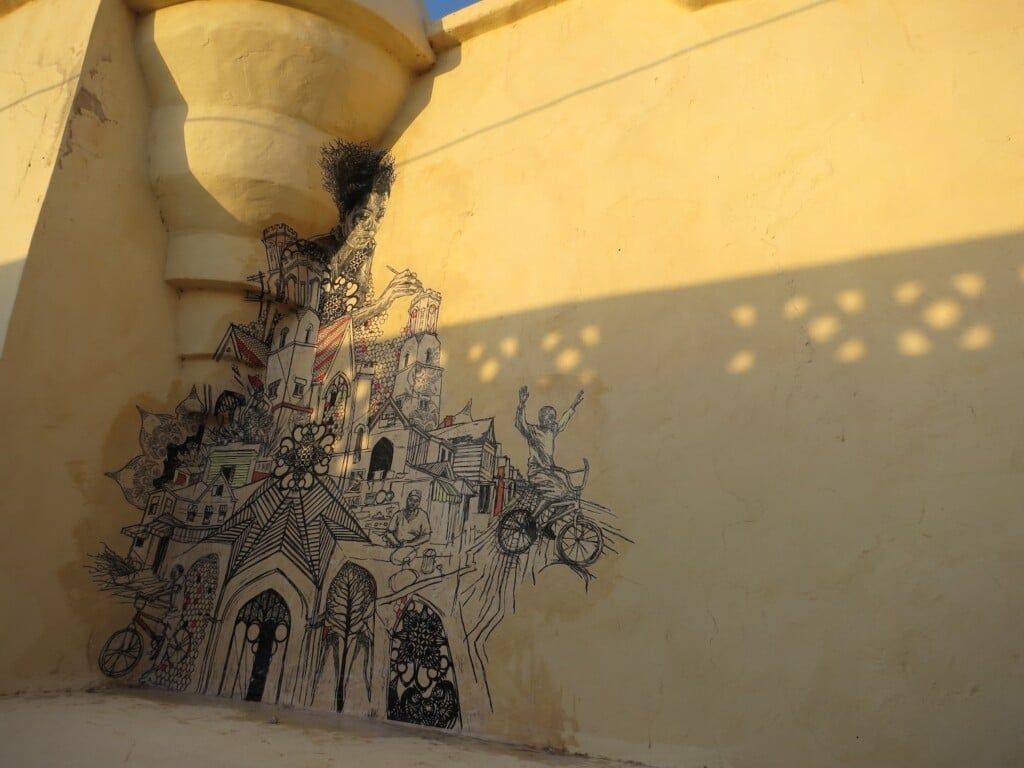
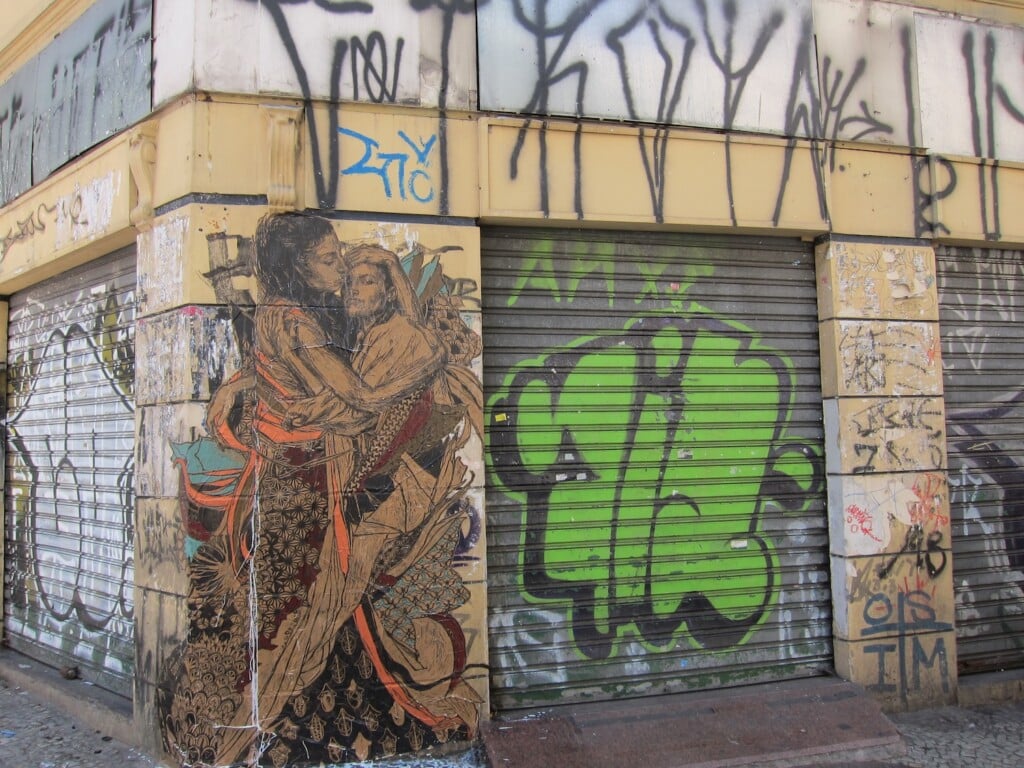
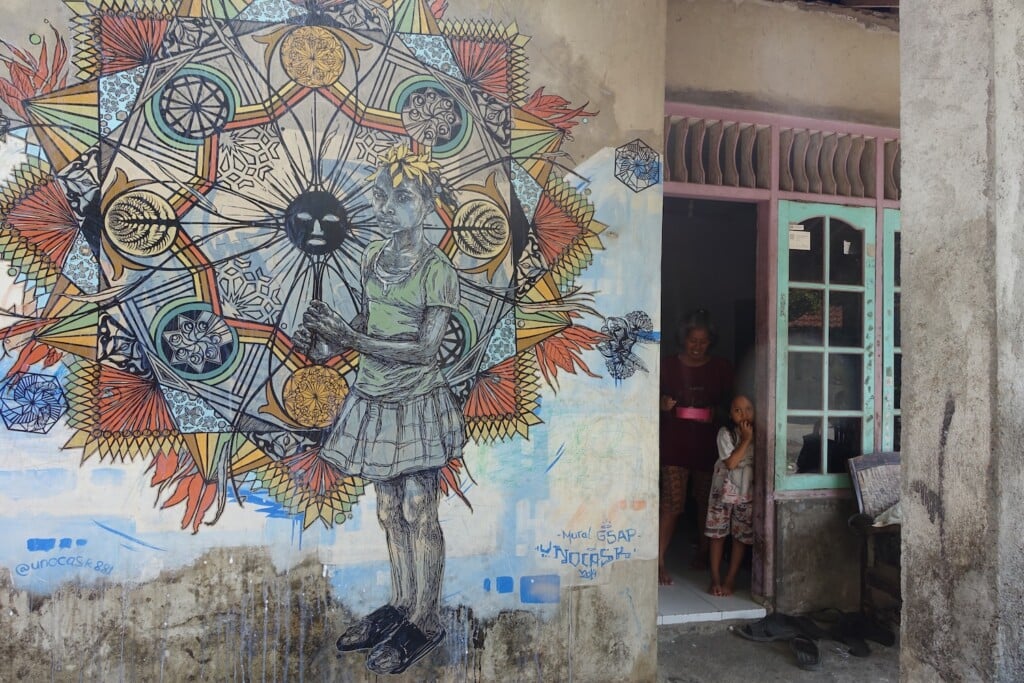
Swoon doesn’t build images to resist time, but to be traversed by it. Her urban interventions are made from common materials. The process often starts with an engraving: hand-carved wood or linoleum blocks, from which she prints the portrait onto salvaged paper, newspaper sheets, packaging, scraps of recycled paper. The drawing is then hand-cut along the contours of the figure, sheet after sheet, and enriched with touches of watercolour or gouache painted directly after pasting, so that even the copies born from the same block become, each time, unique pieces.
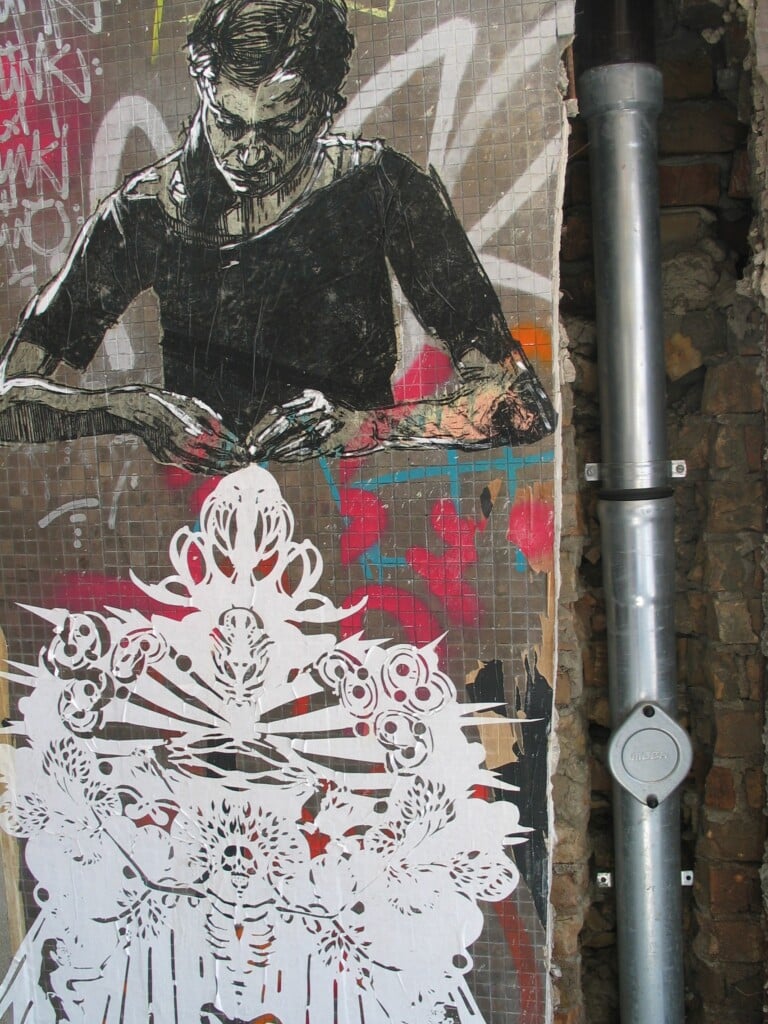
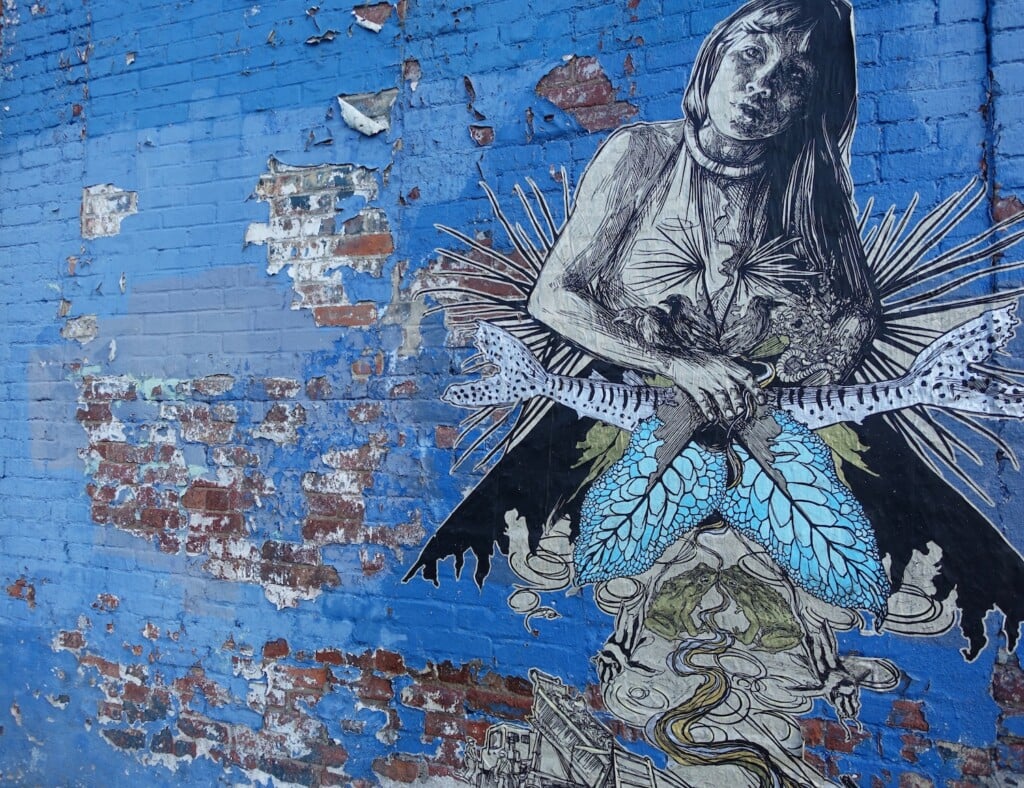
Hoisted onto walls, the figures bend to the imperfections of the surface, cling to bricks, curve over crumbling plaster, take on the grain of the wall as if they were part of it. As the weeks pass, the paper peels at the edges, the ink loses colour, the rain dissolves the outlines. They depict neither heroes nor symbols, but the lives of real people who normally go unnoticed on city streets, neighbours, strangers, people crossed by chance. Many of these portraits remain visible for only a few months. Others disappear within weeks, absorbed by the very surface that hosts them. The more Swoon works, the more her focus shifts from visibility to care, from signature to connection. Her artistic language doesn’t stem from a theoretical idea about vulnerability, but from an autobiographical need.
Having grown up in a family marked by addiction, Curry learned early that invisibility is the greater danger. Art, for her, has always been the opposite: a gesture of making visible, of resistance through care rather than aggression. Creating for those who are invisible becomes, in her case, a personal urgency before a political or social one. It’s not hard to understand why her portraits always depict ordinary people — they are the ones she didn’t want to go unnoticed.
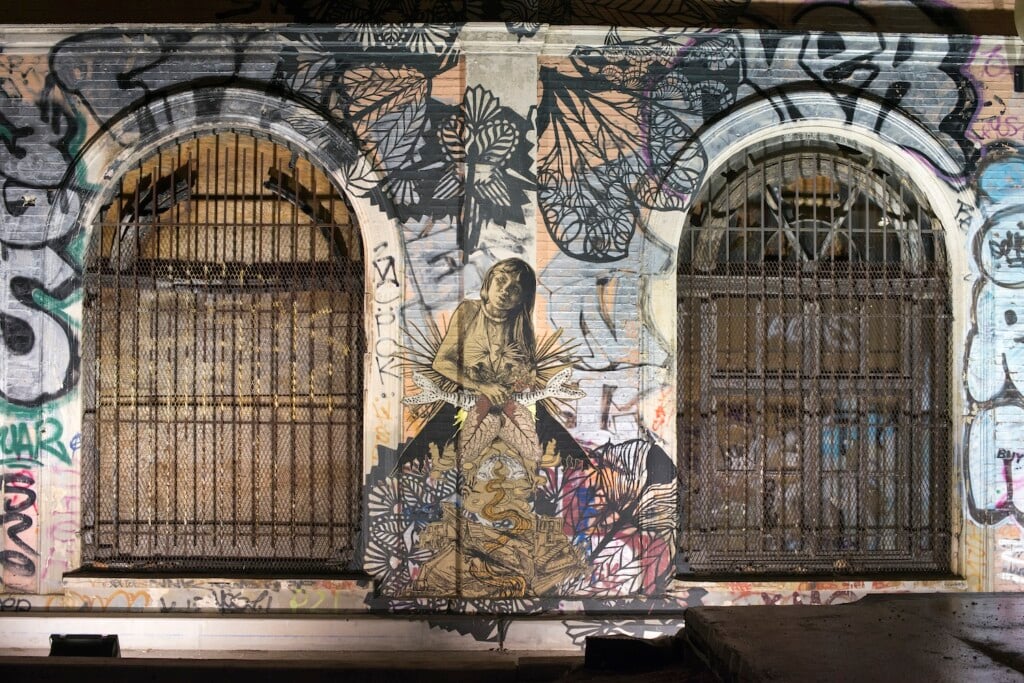
Starting out clandestinely on her own, among other anonymous creators, she has become one of the most important female reference points in the field today. But her legacy isn’t measured in terms of gender alone — she has broadened the boundaries of the discipline itself, shifting it from the terrain of provocation to that of public art as social commitment, paving the way, after her, for a generation of gender non-conforming artists in urban space. She has redefined the boundaries of street art’s gender codes, challenging at the same time the heavily male-dominated culture that has limited access, opportunities and recognition for women.
Her commitment hasn’t stopped at street art. In 2014 the exhibition Submerged Motherlands at the Brooklyn Museum marked a decisive turning point: it was the institution’s first solo show dedicated to a living street artist. But more than a recognition, it feels like a short circuit: how do you musealise something born to disappear? It’s a question that runs through all of street art, born in public space but often absorbed by museums — and in Swoon’s work it’s not a side effect, but the very heart of her practice. In 2015 she founded the Heliotrope Foundation, through which she intervenes directly in the crises she had until then only depicted: building earthquake-resistant homes in Haiti with the Konbit Shelter project, regenerating the industrial city of Braddock, Pennsylvania, and running an art-therapy programme in Philadelphia for communities hit by the opioid epidemic.
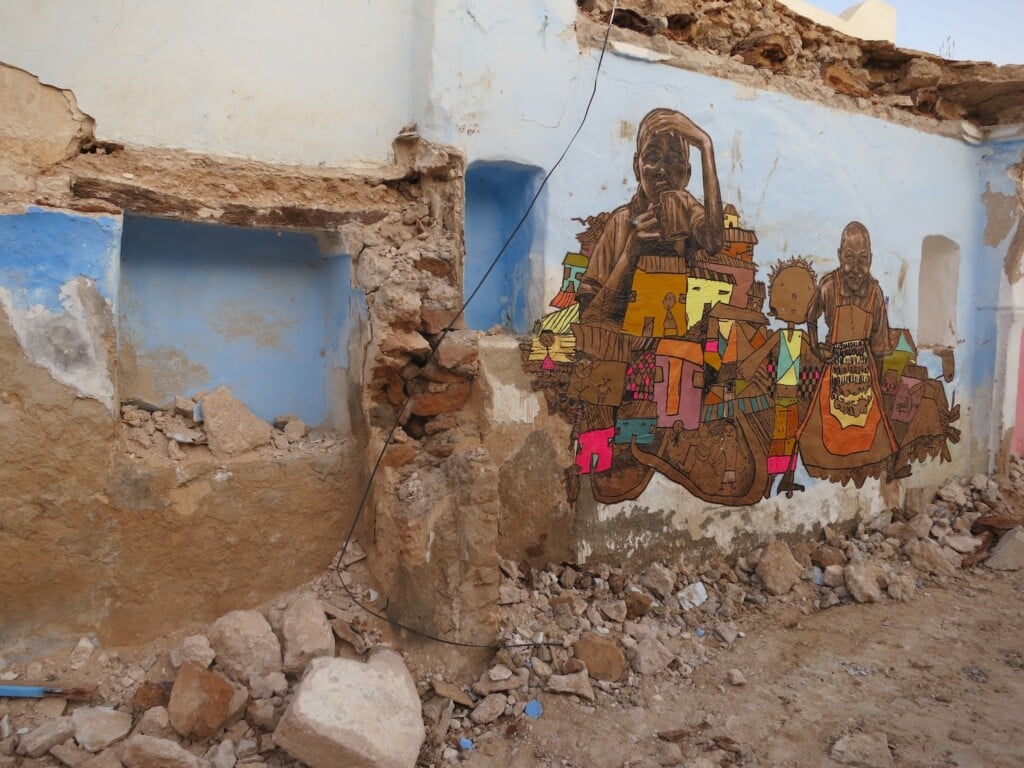
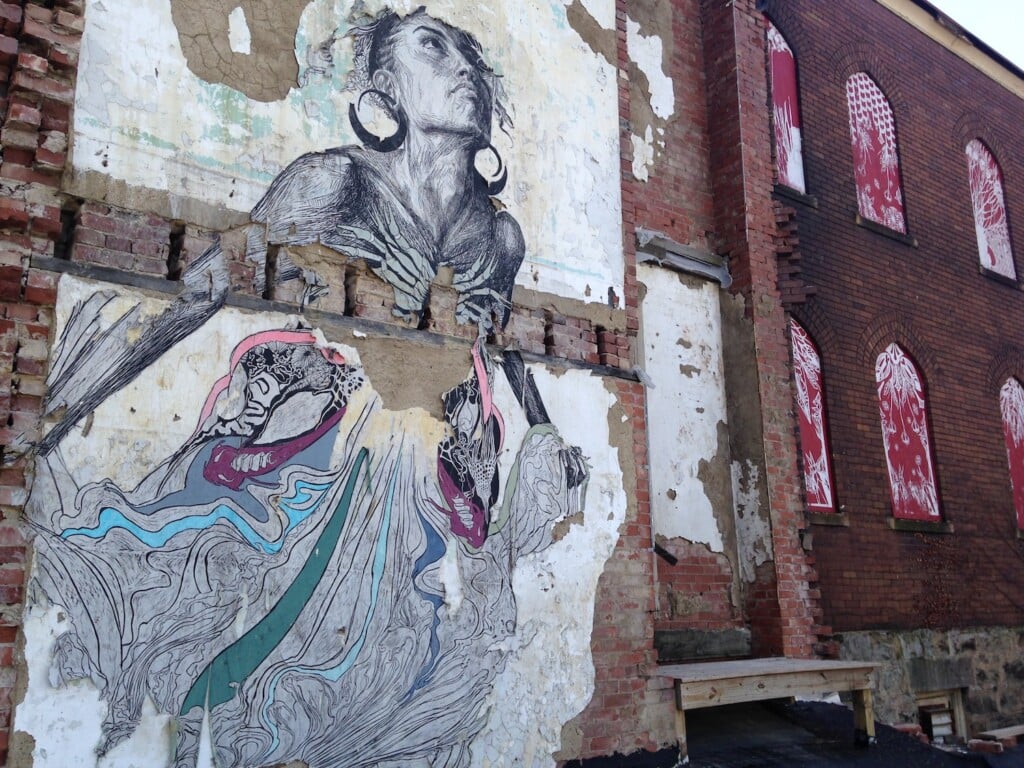
From those walls, her language has spread to the world’s leading museums, from MoMA to Tate Modern, without ever abandoning her starting point: art as fragile infrastructure, not permanent object. Recently she has added sculpture and animated film to her vocabulary, supported by the Sundance Institute, and is developing Sibylant Sisters, a fable inspired by her own childhood on the theme of addiction. In 2025 alone she has signed the main project for the Boston Public Art Triennial, her first solo show in Asia, and a residency in Wyoming: in her work, fragility has never meant standing still.
Swoon disarms street art. And perhaps that’s exactly what makes her work so relevant today: the idea that the value of a piece doesn’t depend on its durability or certification, but on the relationship it manages to build in the time it remains visible.