For decades the concept of artistic authorship stopped at a clear line: the artist’s conscious gesture, control over the material, the signature as a declaration of ownership. But what happens when the creative process is entrusted to another living being?
This isn’t about representing insects, as naturalistic entomology and scientific illustration have done for centuries. It’s about working with them, handing part of the work’s genesis over to non-human creatures. In the midst of the biodiversity crisis, as insect numbers collapse, some contemporary artists are collaborating with them, but who is truly the author of a work built by an insect?
Caddisflies are aquatic insects that live in the clear waters of rivers and streams. In their larval stage, they build small protective cases out of whatever they find: sand, plant fragments, shells, mineral debris. Light and precise, these shelters drift with the current like living relics.
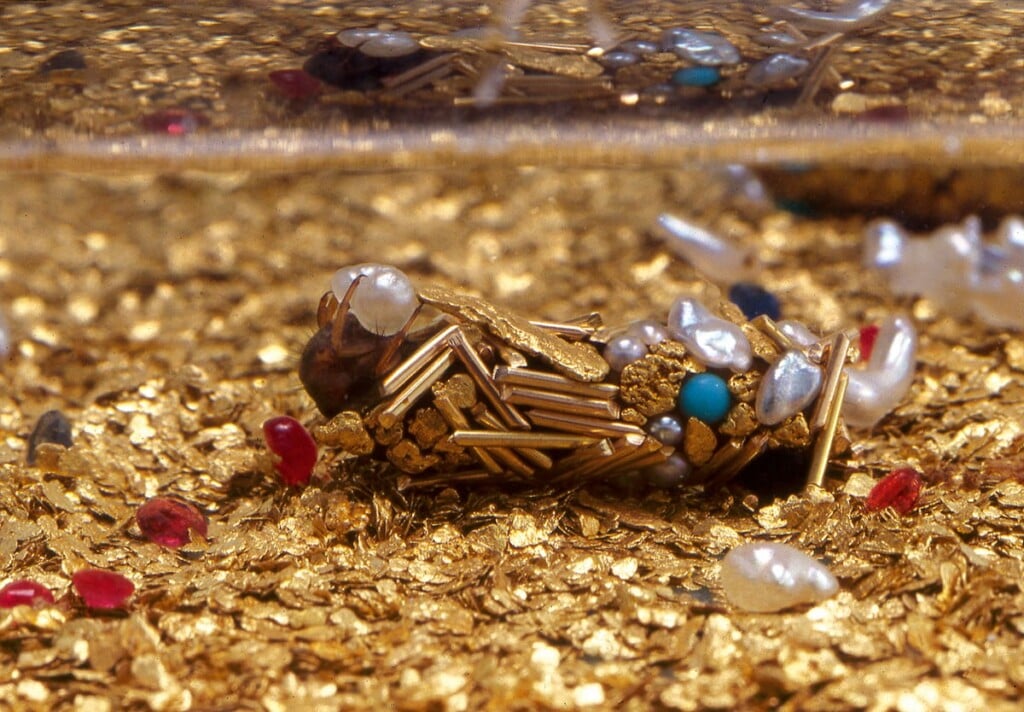
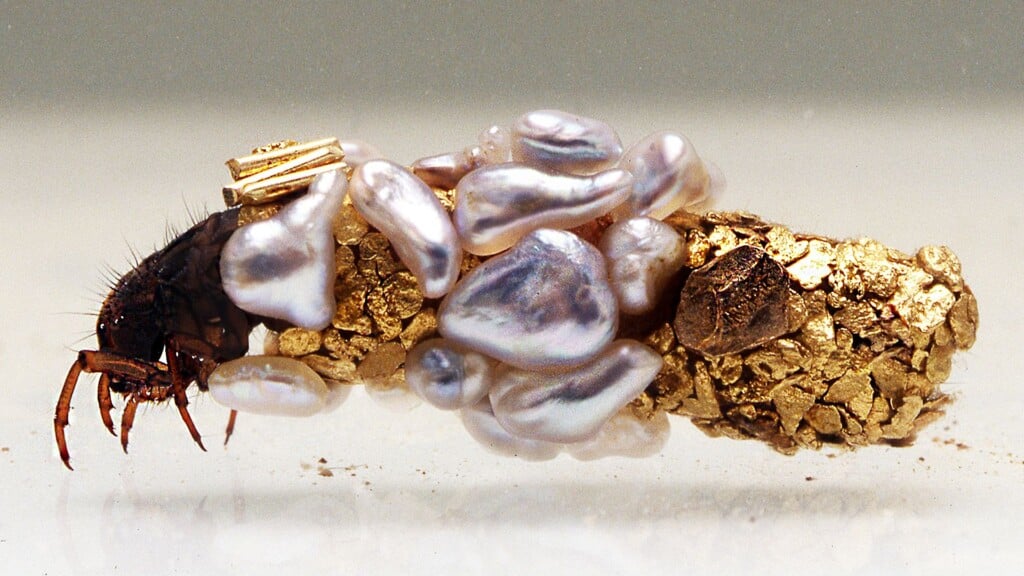
Hubert Duprat (France, 1957) began in the 1980s giving caddisfly larvae materials other than natural debris — gold, pearls, lapis lazuli, colored gems. The larvae incorporated them into their cocoons, creating objects of striking beauty, hybrids of nature and artifice, somewhere between biology lab and jewelry. “I’m not the one making these works, but I can’t say they aren’t mine. It’s shared labor, a collaboration,” Duprat has said. His gesture is one of invitation, not manipulation — he supplies the materials, then lets nature build. The alchemy is biological, the matter transformed through the work of another being. The work becomes process, metamorphosis, alliance.
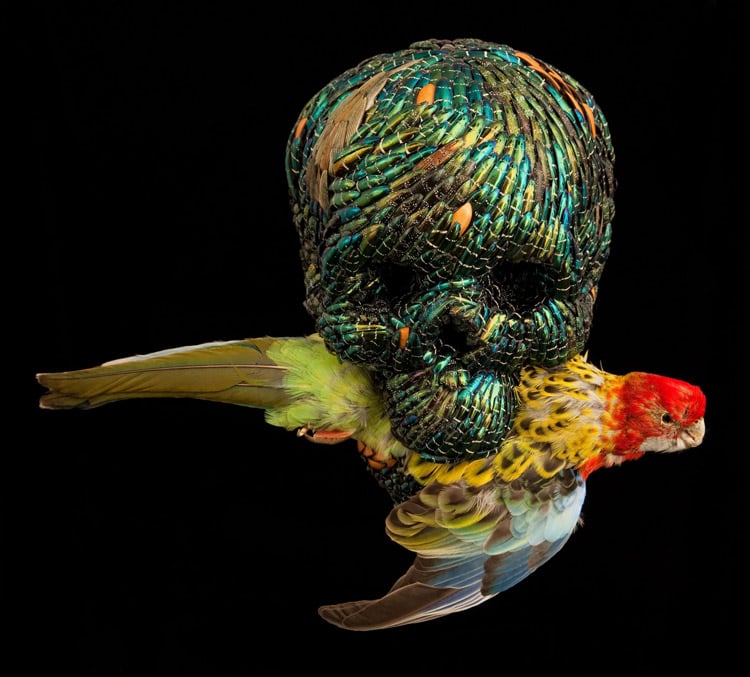
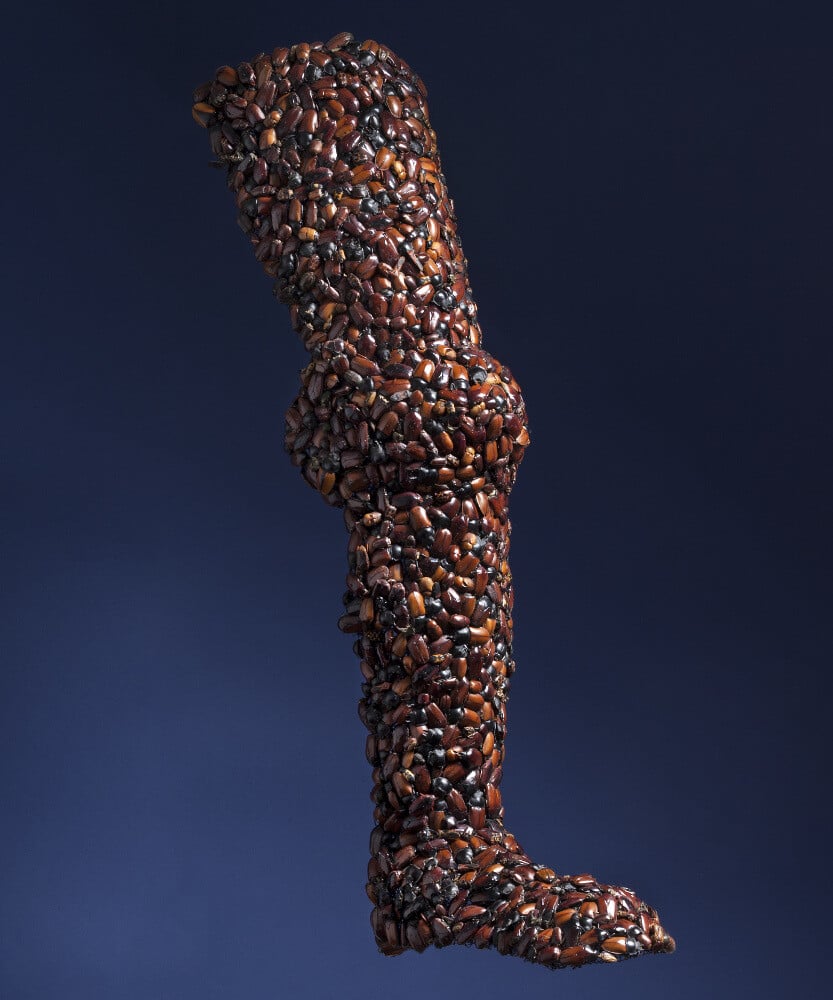
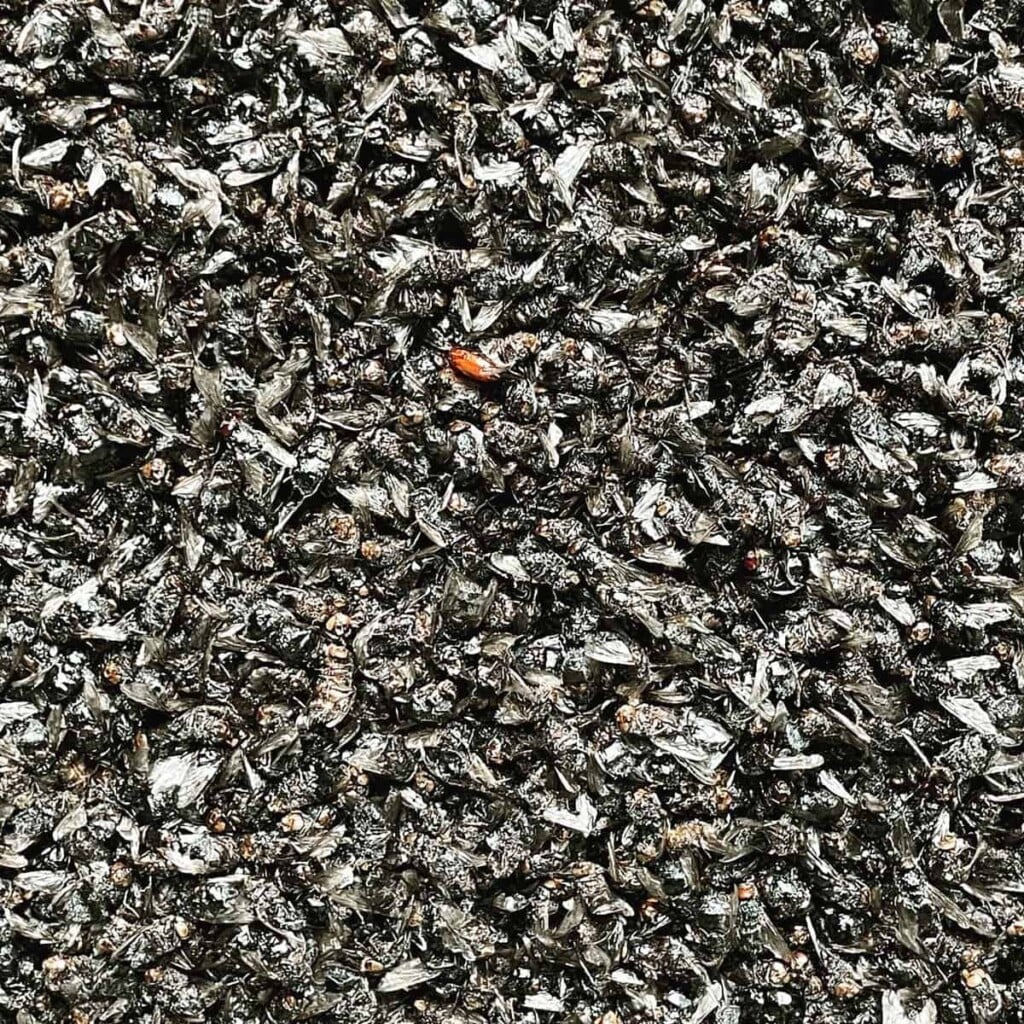
Where Duprat works with water and precious materials, Jan Fabre (Belgium, 1958) works with shimmer and color. His sculptures cover human forms, busts and skulls, with thousands of real beetles, their glossy shells creating a hypnotic armor effect. In the Scarab Heads, the beetles themselves become the primary material, not decoration. Fabre’s work highlights how, in contemporary art, the insect can be an aesthetic material capable of evoking beauty and disgust at once — a beauty that disturbs.
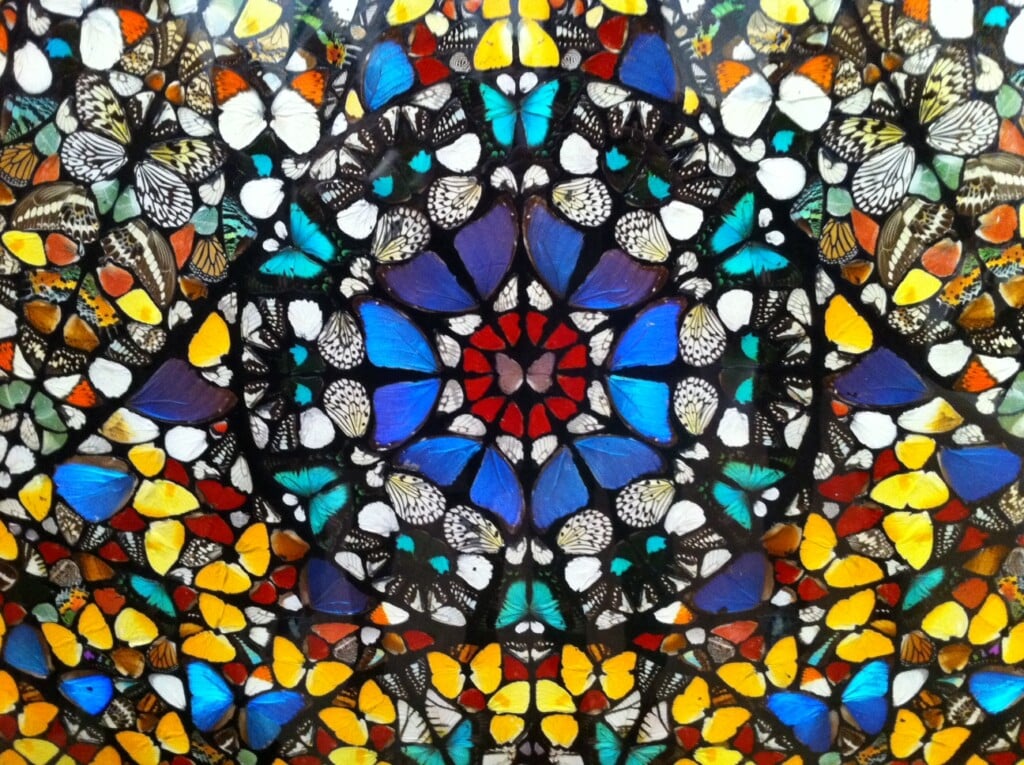
Damien Hirst has used butterflies, flies and dead insects as compositional elements across many series of works. In Butterfly Paintings, clusters of dead butterflies are glued onto colored canvases, creating a natural kaleidoscope effect. Here too the insect is a corpse — death becomes aesthetic matter. Unlike Duprat, Fabre and Hirst don’t involve the insect as a creative agent, but the choice of material still raises the question: where is the line between art and nature, between creation and appropriation?
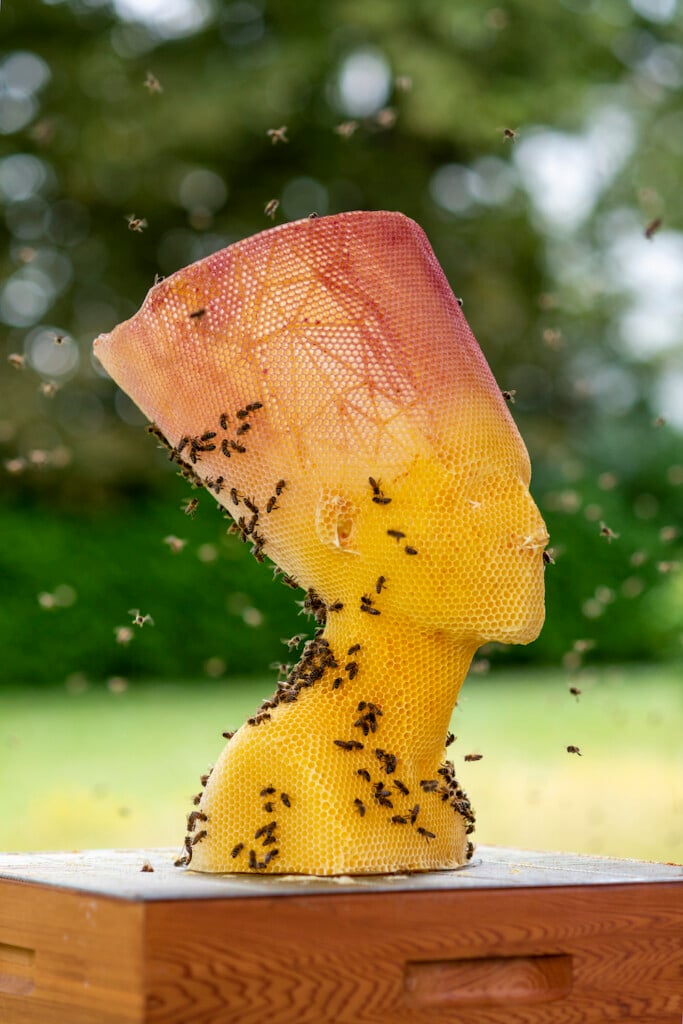
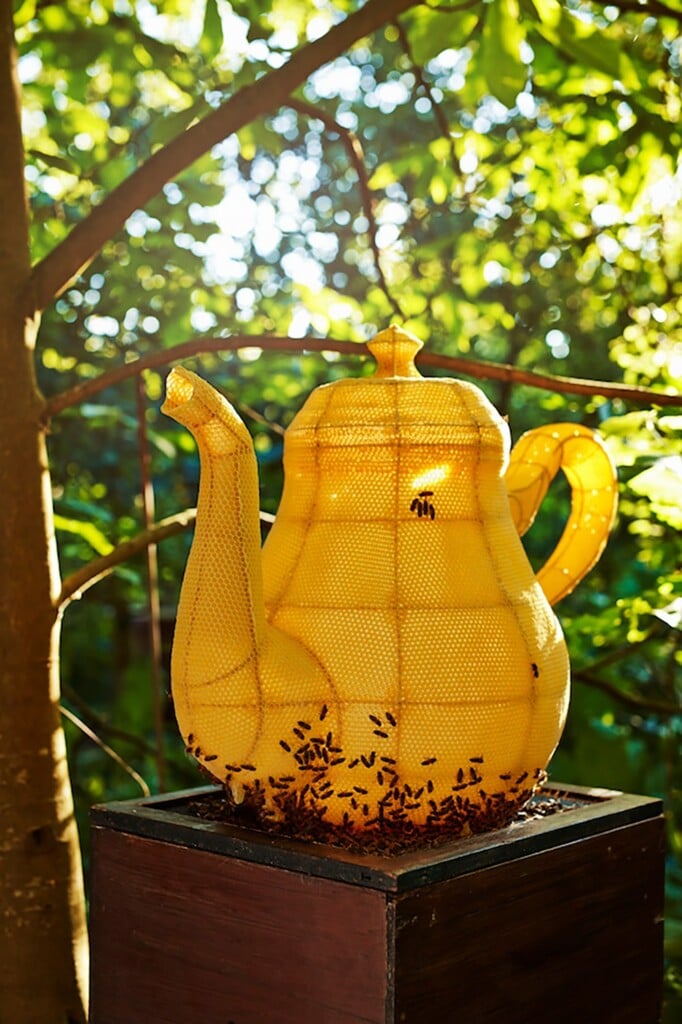
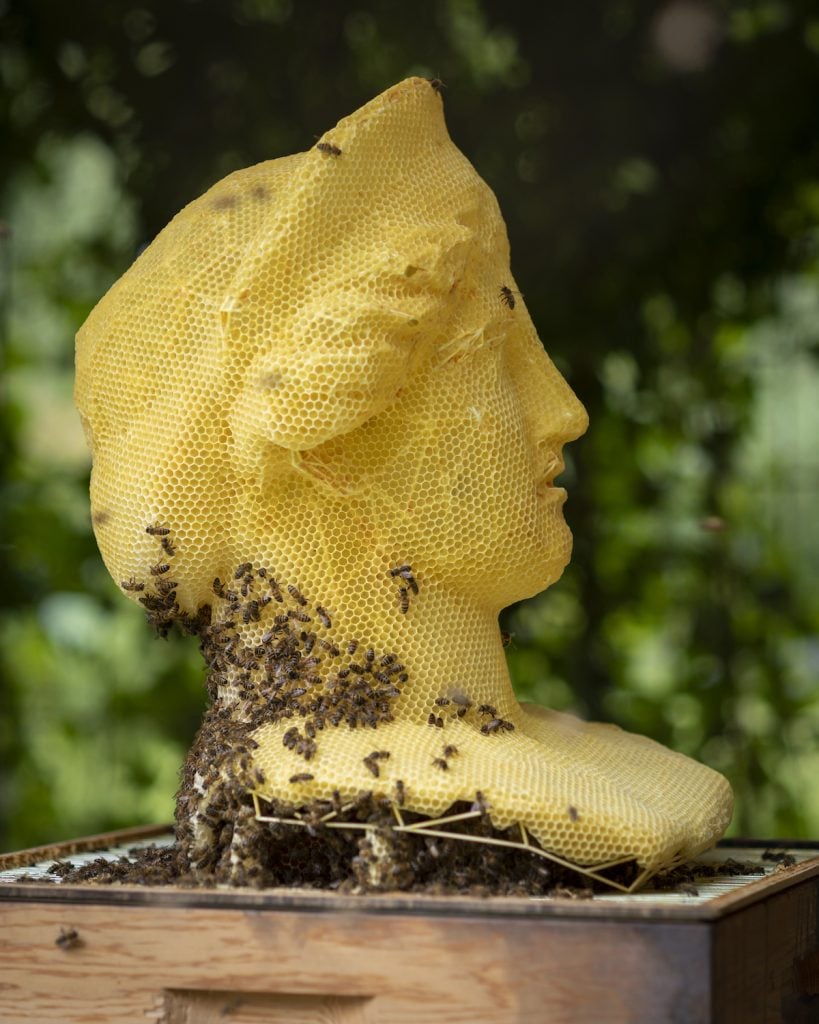
The most radical of these approaches belongs to Tomáš Libertíny (Slovakia, 1979). His sculptures are built entirely by bees, left free to move and construct. He provides the structure (frames, cages, empty forms) and they fill the space with wax and honey, following their own logic of construction. The bees aren’t controlled, aren’t dead, aren’t even aware they’re “making art”. And yet, the work exists. Libertíny’s poetry lies precisely in this total surrender — accepting that art can emerge from a non-human logic, from pure biological intelligence.
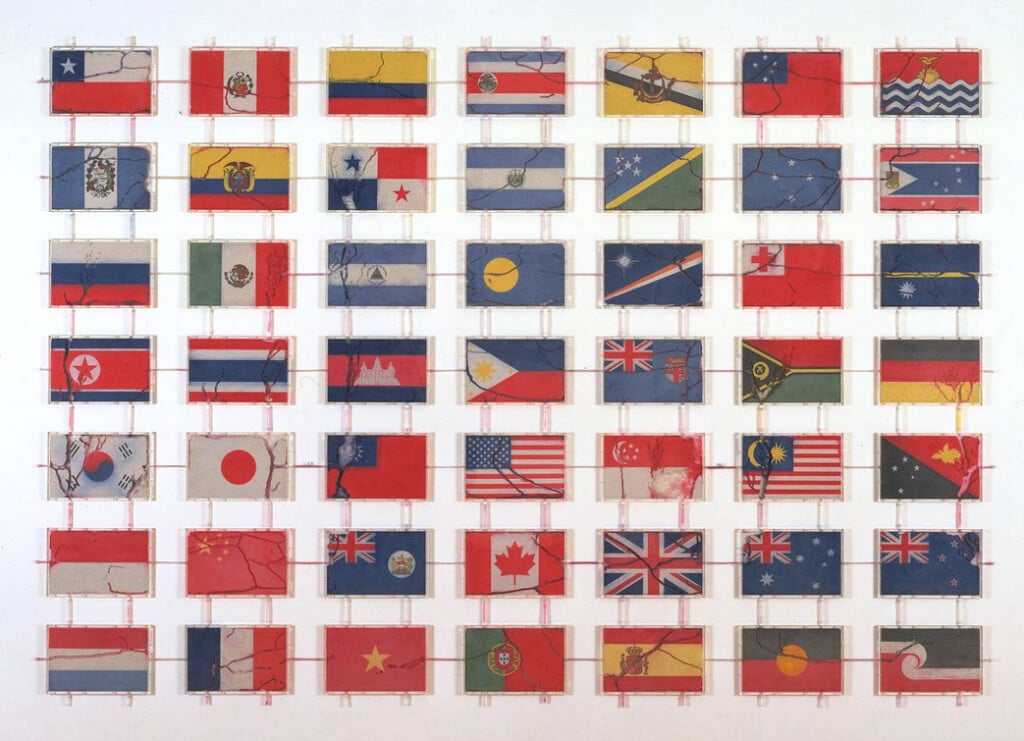
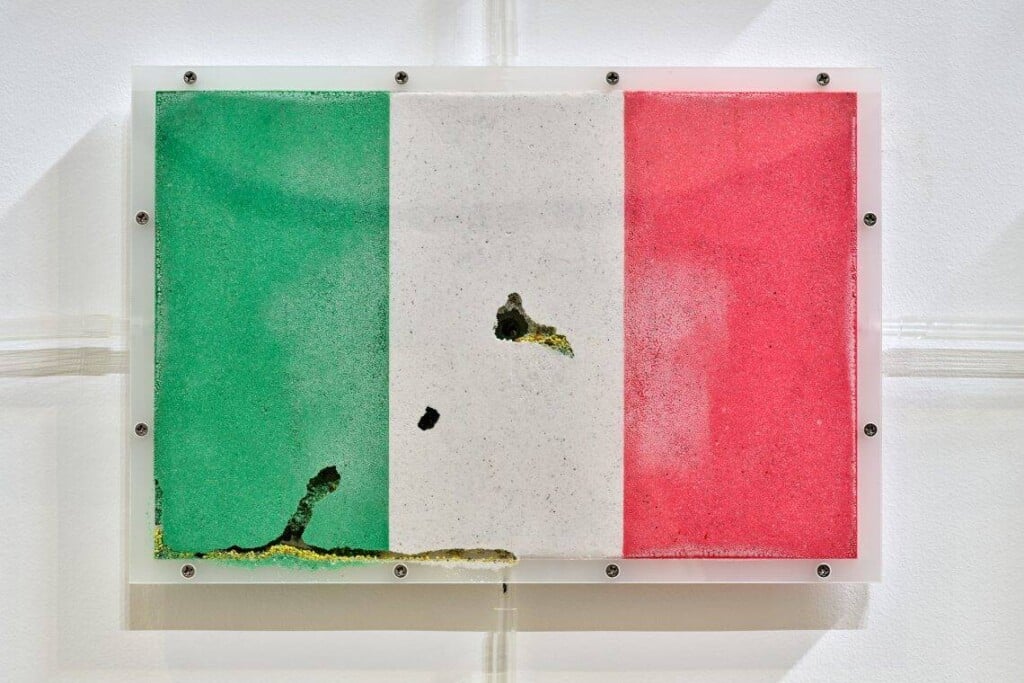
Yukinori Yanagi (Japan, 1959) works with live ants in site-specific installations. In The World Flag Ant Farm (1990), ants dig tunnels through structures of sand and glass, tracing paths that connect national flags, political symbols and colored pigments. The insects’ trajectories draw random maps, yet ones loaded with meaning: the precariousness of utopias, the irrelevance of our political borders in the face of nature’s collective labor. In Icarus (Pirelli HangarBicocca, Milan, 2025), the same process becomes a reflection on fragility and biological memory.
In all these cases, the insect isn’t a symbol — it’s an agent. It doesn’t represent nature, it acts as nature. This creates a fracture in the contemporary art system, which keeps searching for authorship, intentionality, signature. But what happens when we sign a work a bee has built? Or when we call art a cocoon studded with gold that a larva wove without knowing it?
Maybe the answer doesn’t matter. What matters is that these artists, working with insects, force us to rethink the boundary between creation and nature, right at the historical moment when that nature is disappearing. This collaboration across species suggests that art doesn’t belong only to conscious gestures. It also belongs to six legs, to membranous wings, and to a logic that isn’t ours but that, before our eyes, generates beauty.