Standing before Kevin Niggeler‘s canvases, you get the feeling of having arrived too late, or too soon. Something has just happened, or is about to — but the scene won’t tell you. A hand, a skull, a high-heeled shoe: precise details, chromatically dense, that build an atmosphere rather than a narrative.
Born to a Swiss-German father and a Mexican mother, Niggeler has lived and worked in Milan for over twelve years, with stints in South America — above all in Mexico, where he completed a residency in Oaxaca and worked on mural projects in Mexico City. A trajectory that reveals a composite cultural identity and shows how we are transformed by the contexts we inhabit. His practice moved through illustration and murals before opening onto something more intimate and reflective with oil painting.
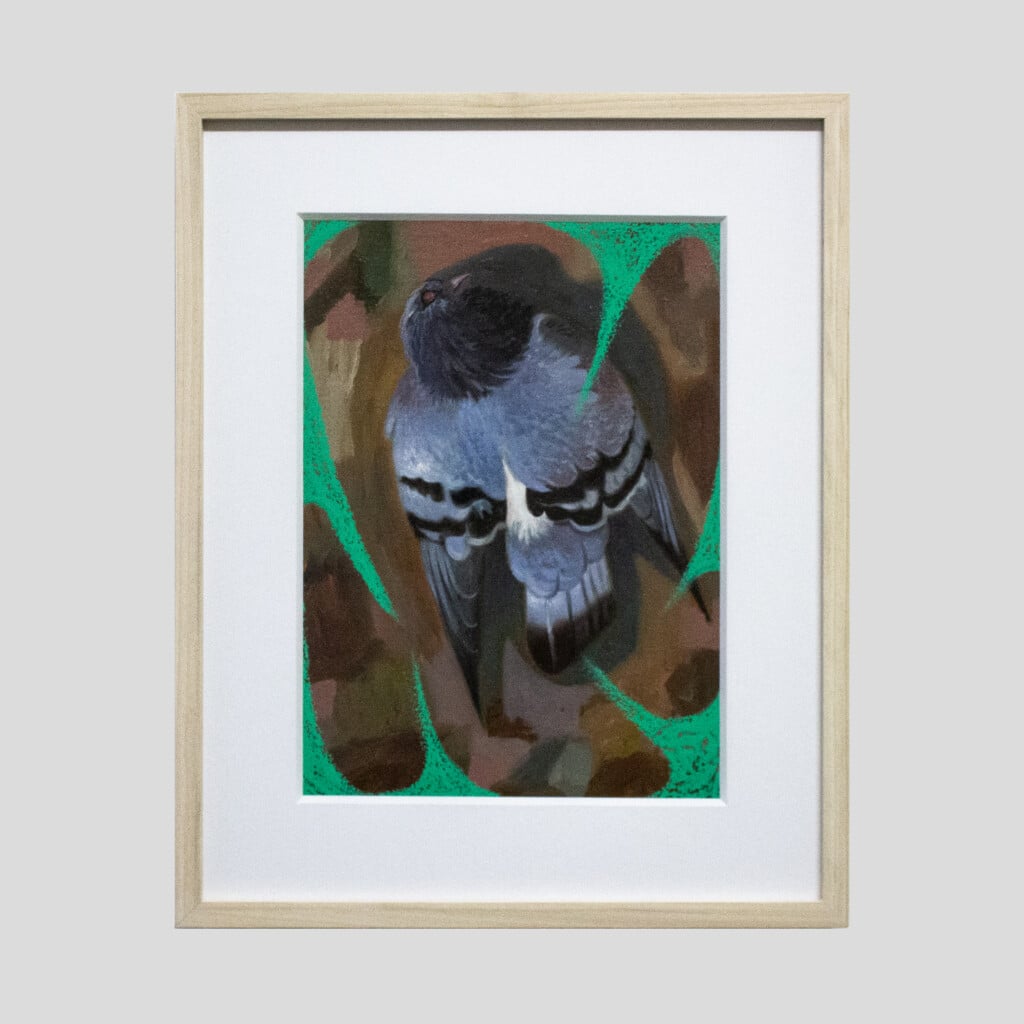
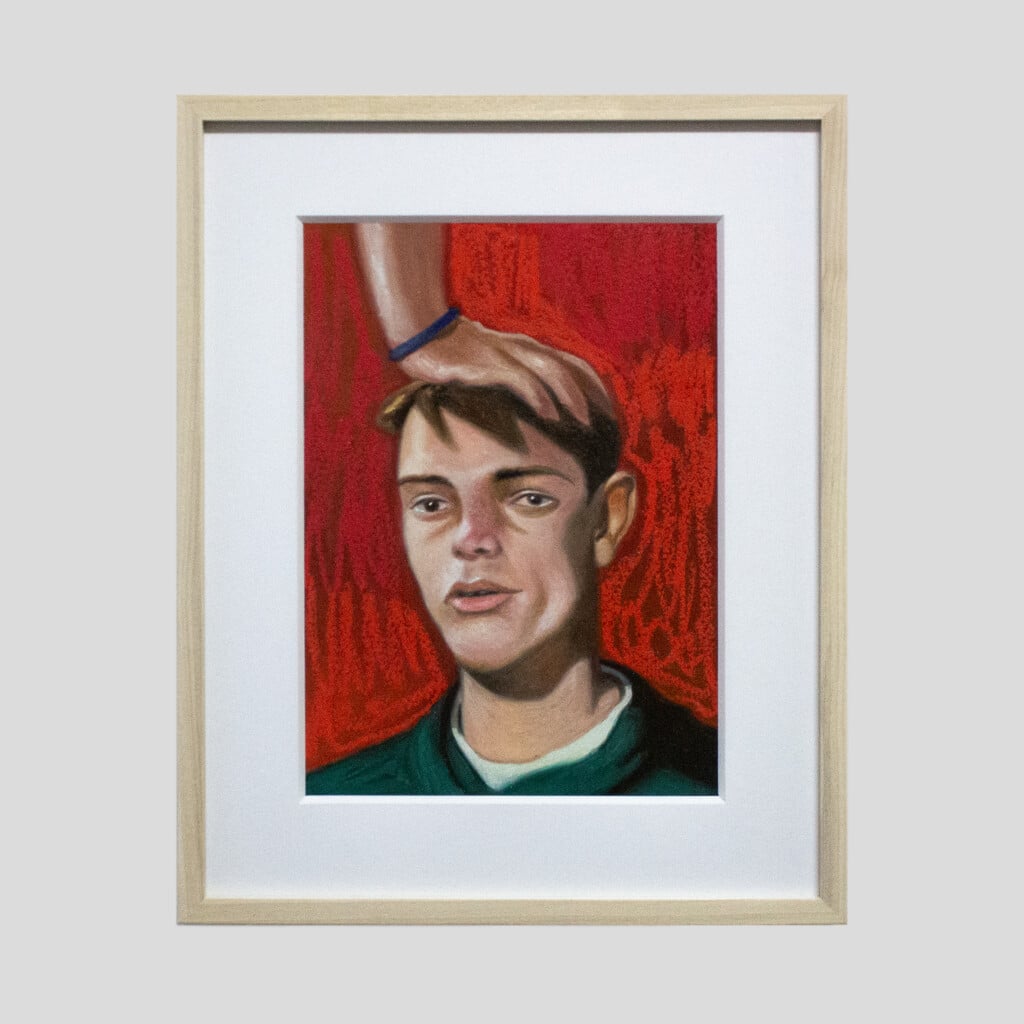
Death, memory, duality: on paper these are timeless themes in art history, but on Niggeler’s canvases they translate into images that push past their own generality. Credit goes to a precise chromatic construction — dense, tactile palettes in which subjects move mysteriously across the surface — and to compositions that never quite show everything, always keeping something just out of frame. Time in his works is deliberately suspended, belonging to an unsettling dimension of its own.
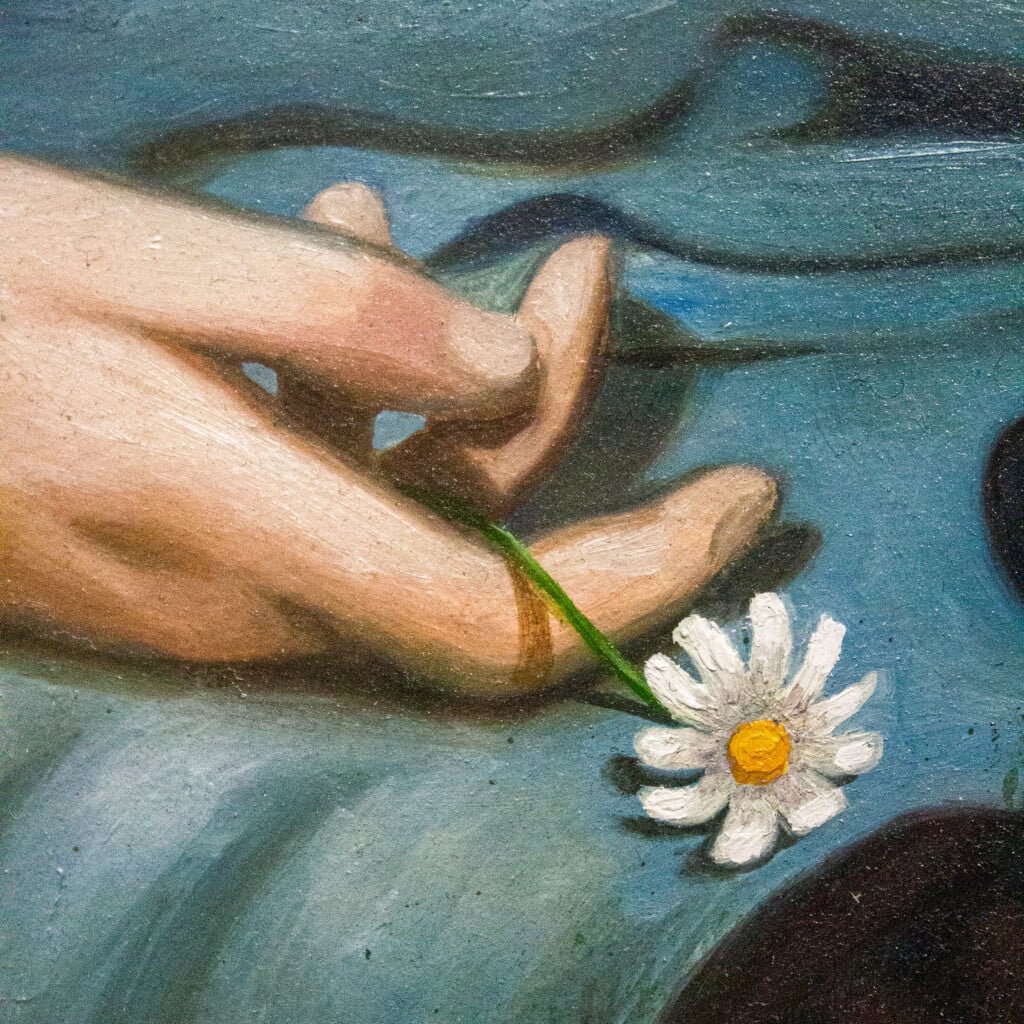
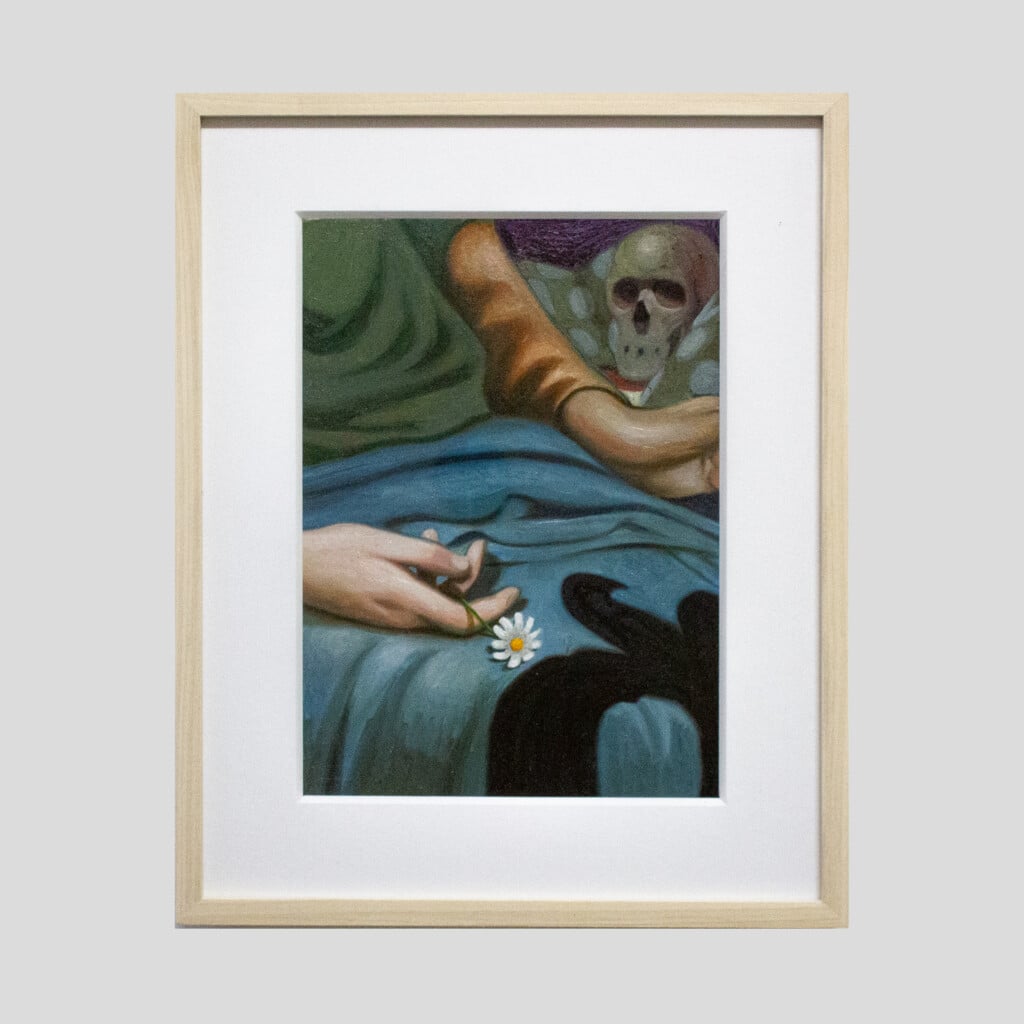
Memento Vivere is perhaps the work that best captures this tension. The title inverts the ancient memento mori, and the canvas enacts that reversal in a scene that feels dense, almost claustrophobic in its closeness. A hand loosely holds a daisy against a blue fabric; in the background, a skull looks on with something resembling strange serenity. The contrast between the delicacy of the flower and the presence of the skull is handled with an almost phlegmatic composure, as if the coexistence of life and death were simply something one cannot help but take for granted. His painting is dense and tactile, with a palette mixing ochre, dark green, turquoise, and violet — a chromatic confidence that recalls the Northern European tradition, Klimt among Niggeler’s own cited references, but also the intensity of Mexican Día de los Muertos culture, where death is not a taboo but a domestic presence.
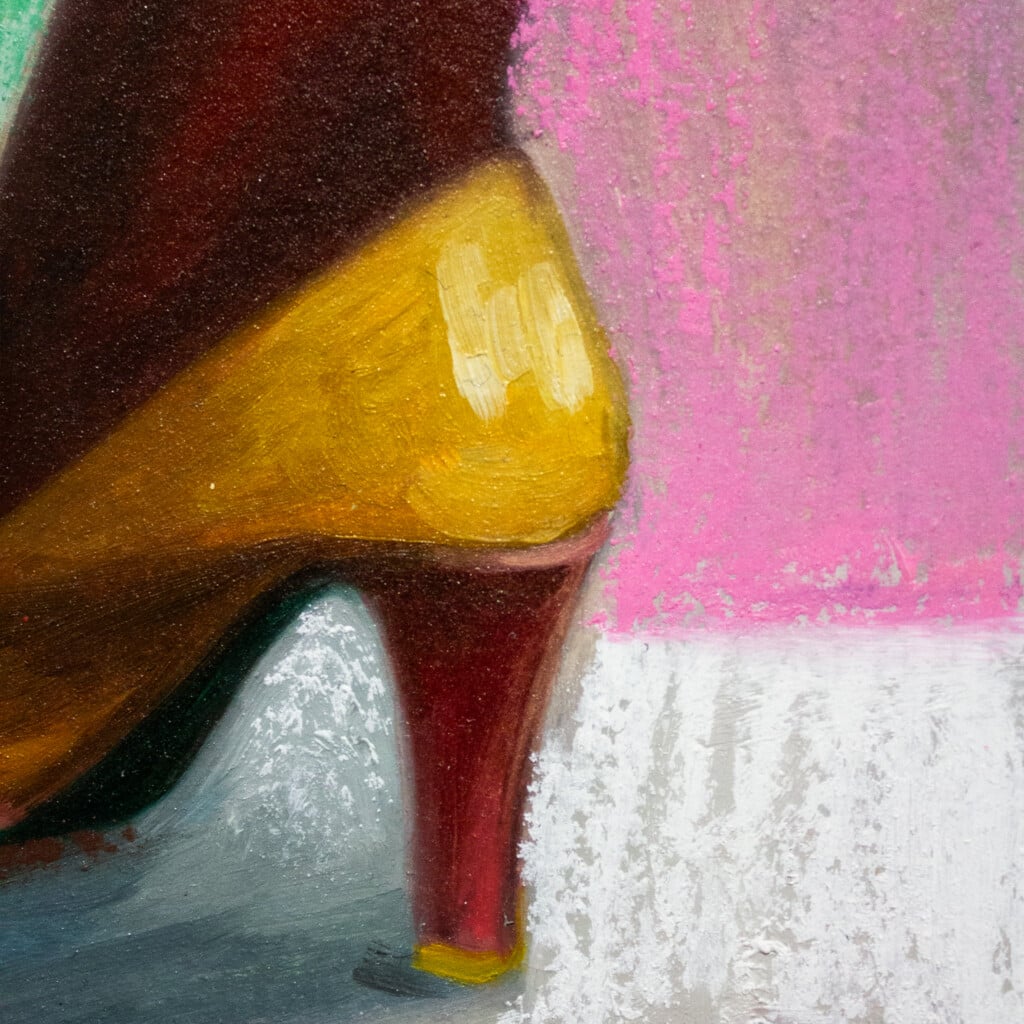
Ofelia al mattino carries its literary reference in the title: Shakespeare’s Ophelia, the archetypal figure of beauty consumed by grief. But Niggeler’s treatment is anything but elegiac. The detail of the high-heeled shoe — yellow and red, lacquered, full of colour — has something vaguely pop in its precision. His Ophelia is not floating: she walks, or has walked. The grainy background, somewhere between grey and pink, gives the figure a cinematic quality, suspended between the real and the remembered — one of those unsettling details that keeps asking questions precisely because it refuses to resolve.
In Ancora qui, the title becomes a vaguely stubborn declaration. The dark silhouette against a fractured blue ground is a presence that refuses to be defined: we see no face, know no expression. And yet it is there, immovable, asserting permanence. Niggeler, in short, manages to surface aspects of life we don’t always want to look at — or simply cannot avoid.
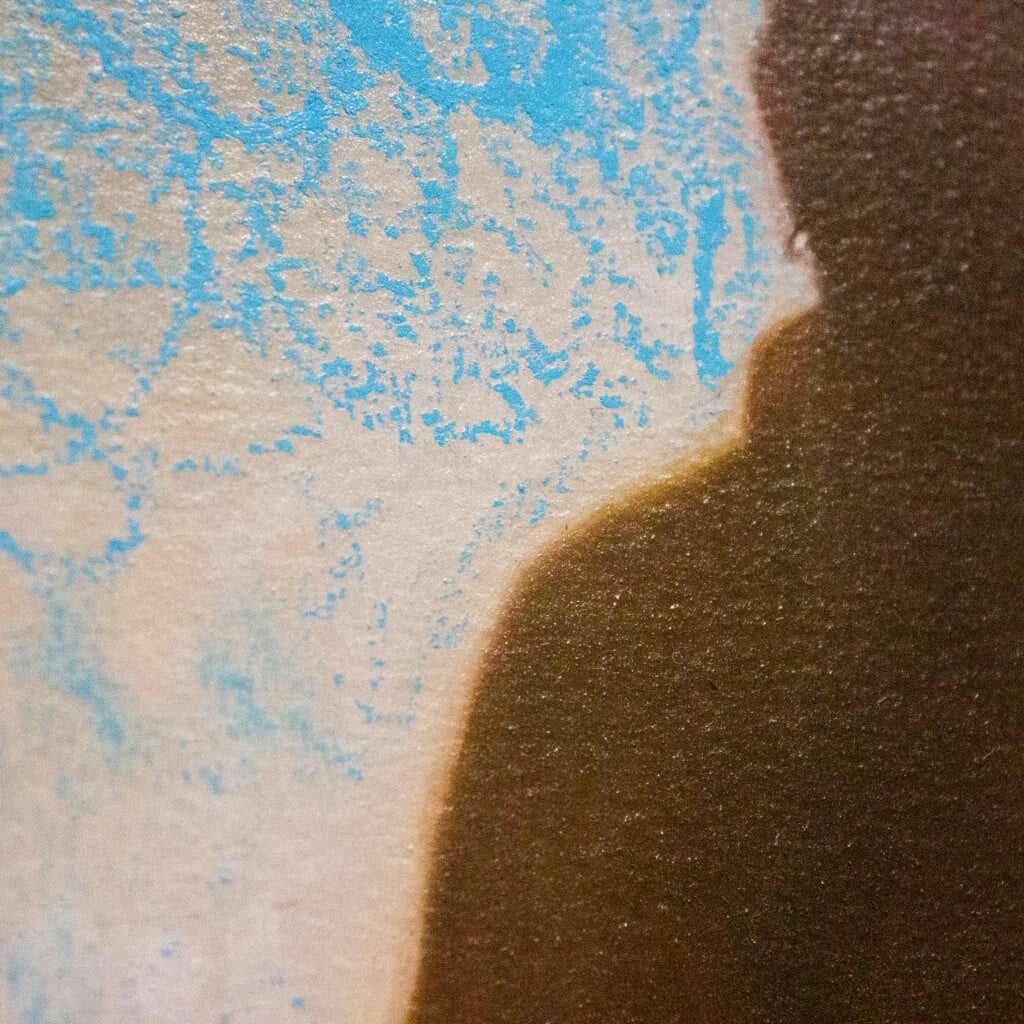
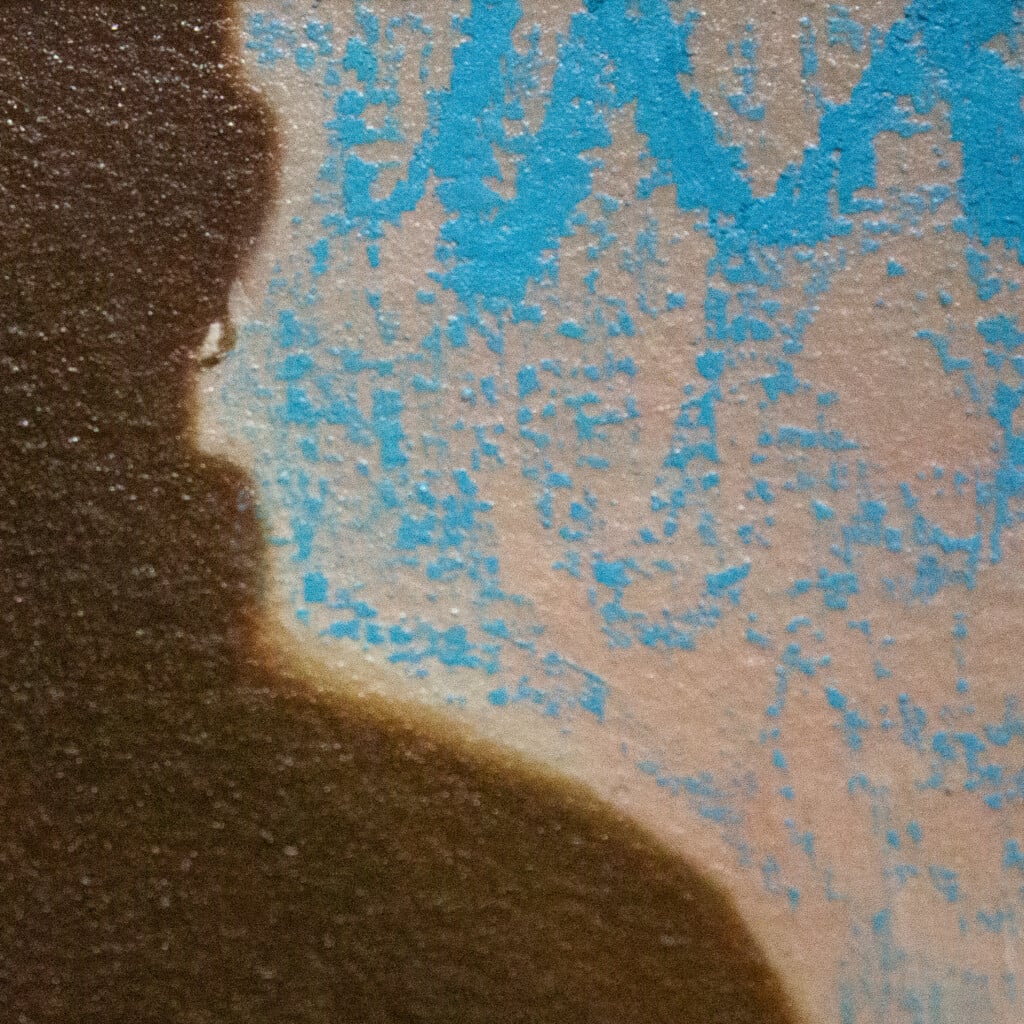
Ancora qui
Niggeler’s is a path still being built: three years of exhibitions behind him — including the Fabbrica del Vapore in Milan, which we covered here, and venues such as Galleria Bagnai in Florence — but with a coherence of vision already recognisable for being, without compromise, entirely his own.