For a long time, the distinction was simple: stores existed to sell, museums to display, and between the two stood a threshold, often with an admission ticket to pay. Today, that boundary is far less clear. You walk into a boutique to look at a handbag and find yourself standing in front of a Man Ray photograph, or you step inside a nineteenth-century building in the center of Milan and, moving from one floor to the next, transition from clothing to a room dedicated to contemporary imagery.
This is not an entirely new phenomenon. As early as the beginning of the 2010s, the design press was writing about flagship stores imitating art galleries, and in Milan, inside the Galleria Vittorio Emanuele, an Olivetti showroom hosted avant-garde exhibitions long before Prada. What has changed is the scale, and above all the declaration of intent: in 2025, as Wallpaper noted, stores stopped talking exclusively about fashion. Scholars call it “artification,” the process through which a luxury brand sets itself apart by aligning with art.
Yet beneath the formula lies a simpler question: why should a company display what it does not sell? One honest answer is that art offers luxury something the product alone cannot provide—a reason to step inside even without buying, and to linger a little longer. This is our interpretation, not a hard statistic, and it carries an unsettling side, as it suggests that even wonder can become a marketing tool. At the same time, it has a generous dimension, since visitors frequently encounter museum-grade exhibitions without paying a cent. Three very different cases help illustrate where the line between the two worlds is drawn.
Hermès: The Gallery Behind the Store
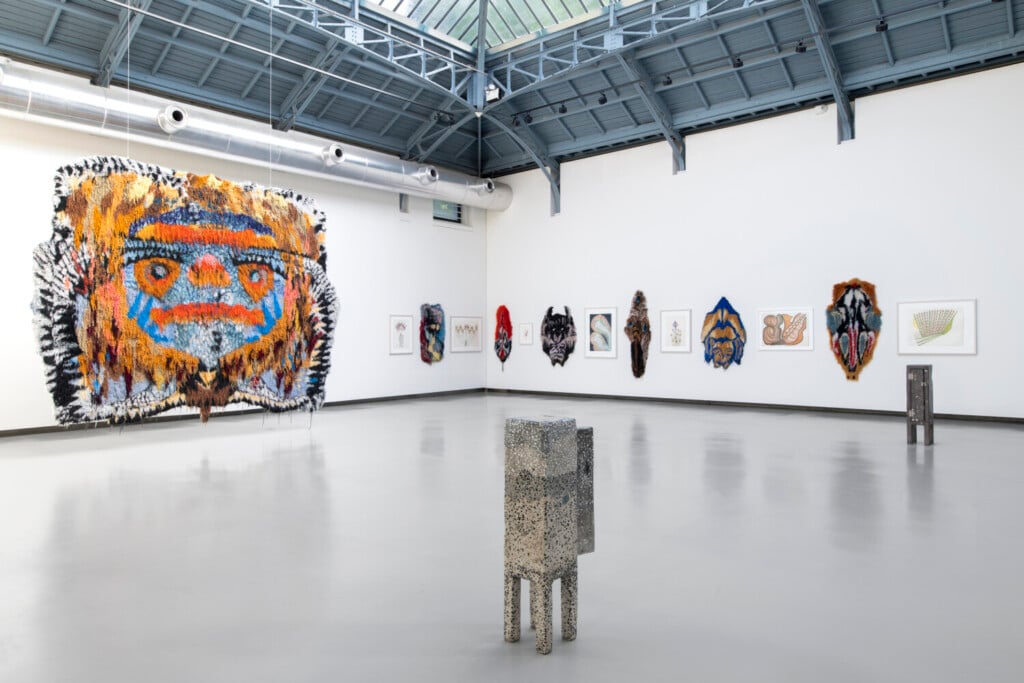
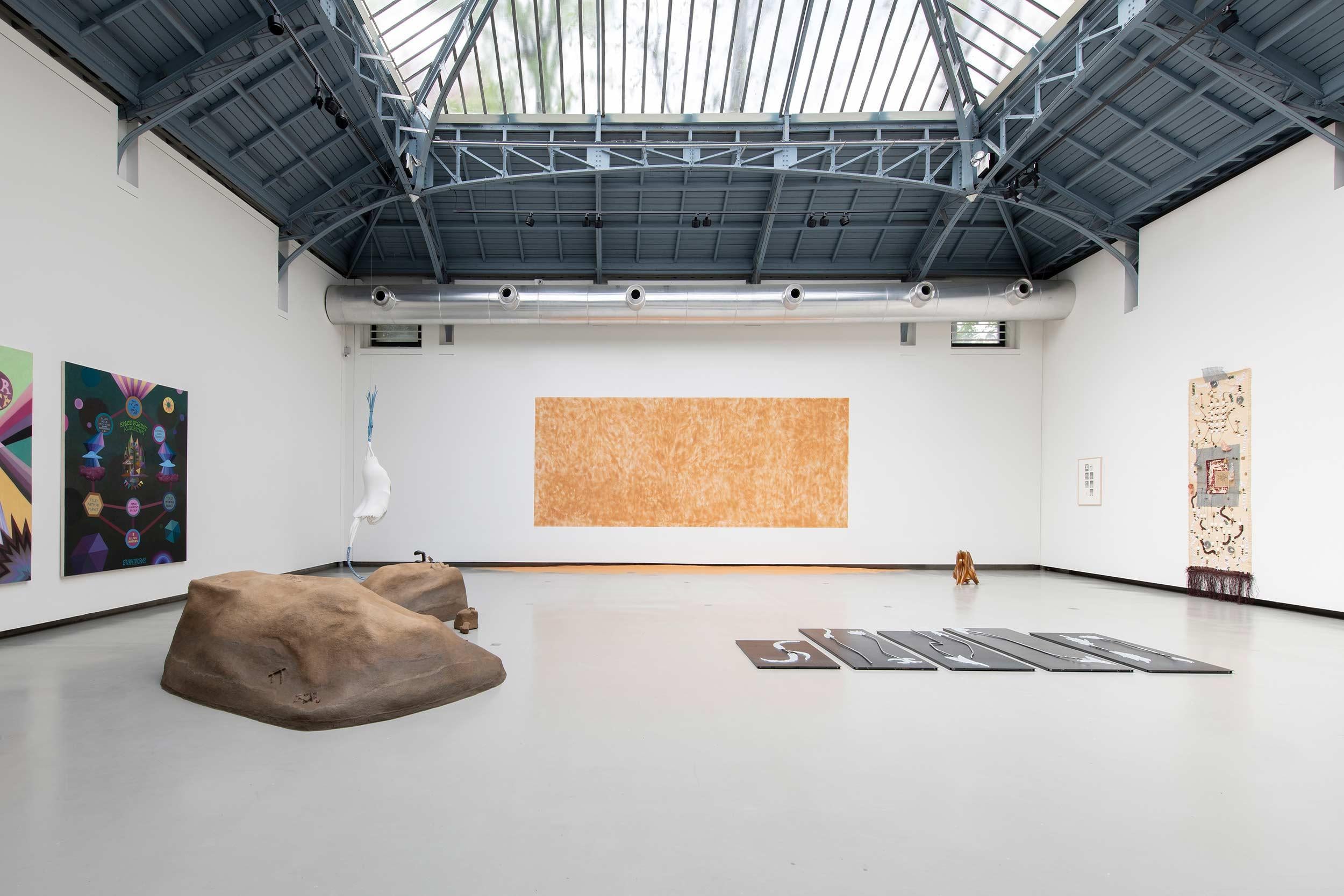
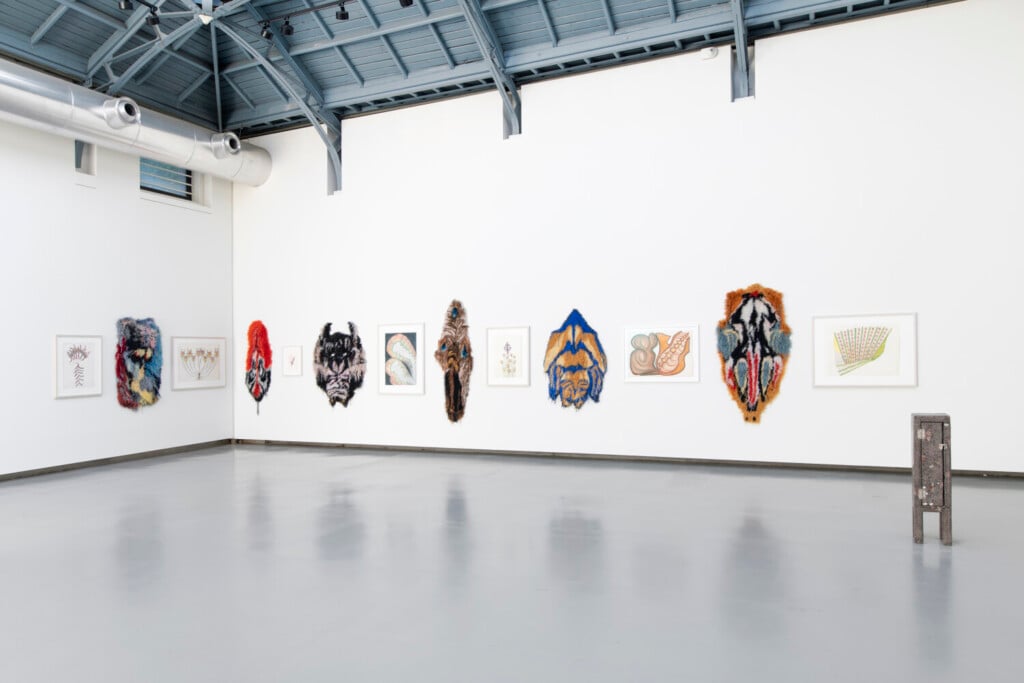
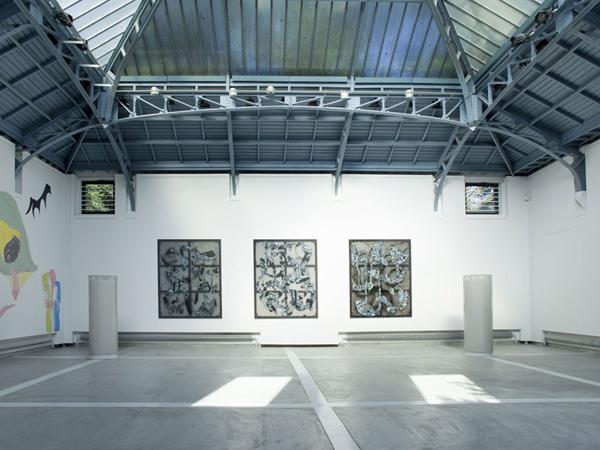
In Brussels, at 50 Boulevard de Waterloo, the Hermès boutique features an unusual annex. The space now known as La Verrière was originally a garage with an Eiffel-style skylight, built right next to the store, and since 2008 it has been part of the Fondation d’entreprise Hermès program. Admission is free from Tuesday to Saturday, from noon to 6 PM. Since 2023, the program has been entrusted to curator Joël Riff, who develops “extended” solo exhibitions dedicated to a single artist. The shop and the gallery share walls, yet the programming follows the logic of a cultural institution rather than a storefront window.
Saint Laurent: When the Creative Director Becomes Curator
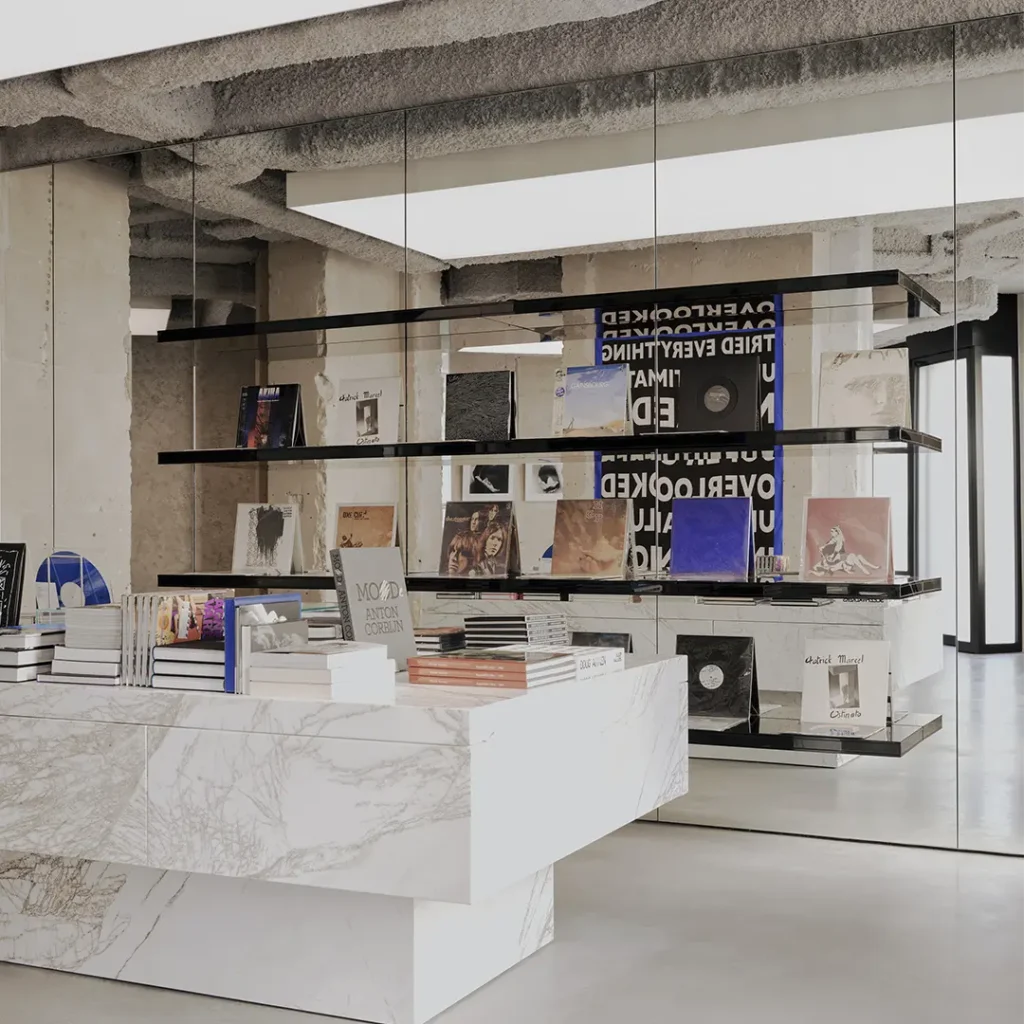
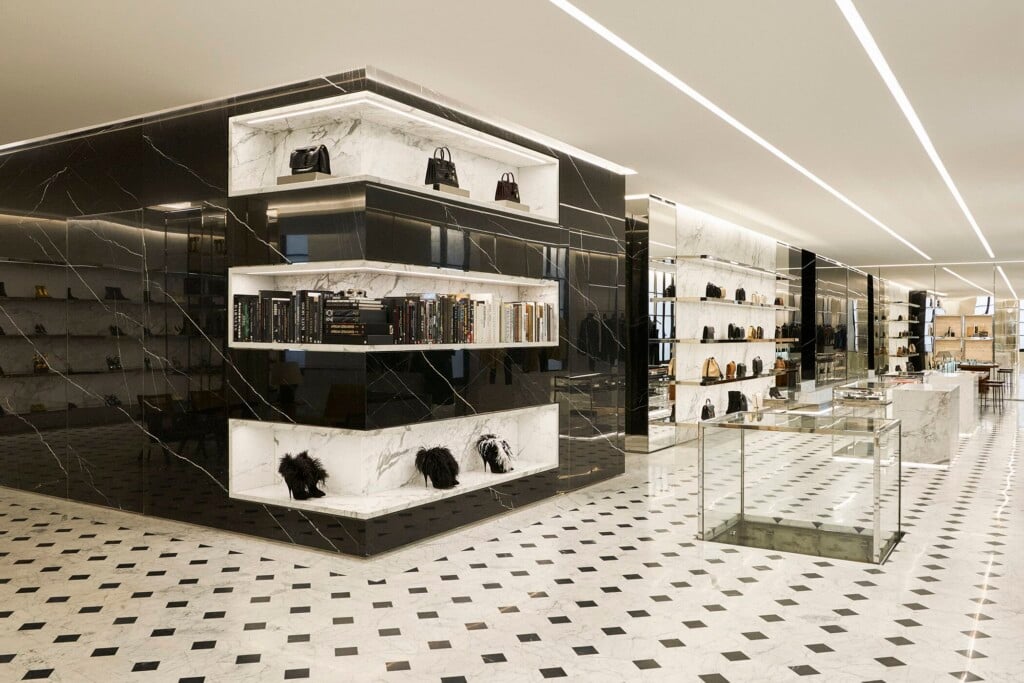
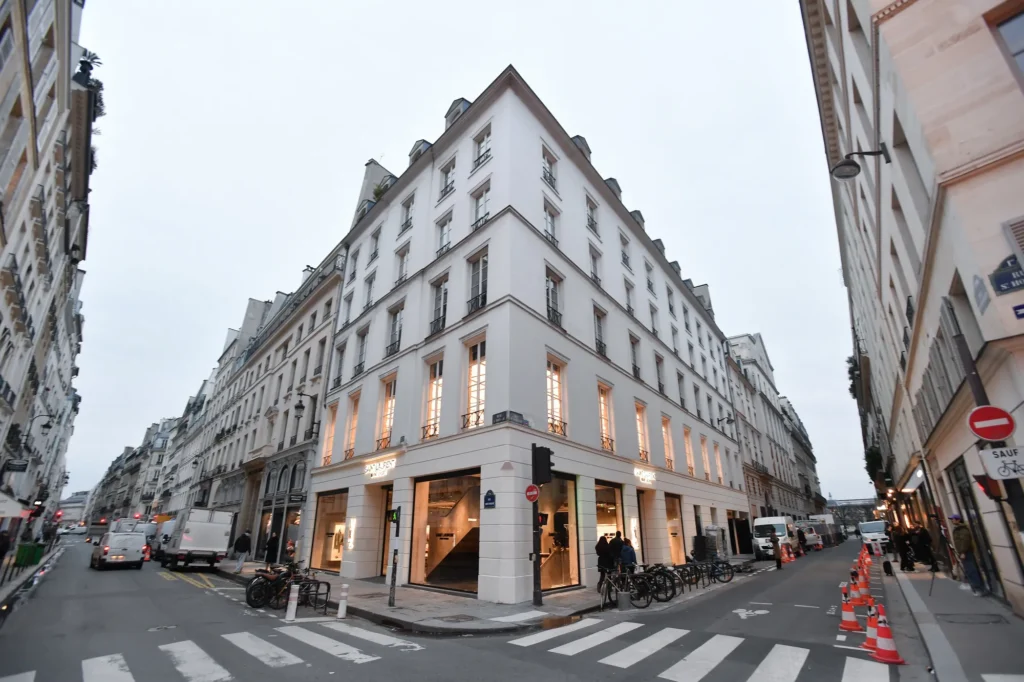
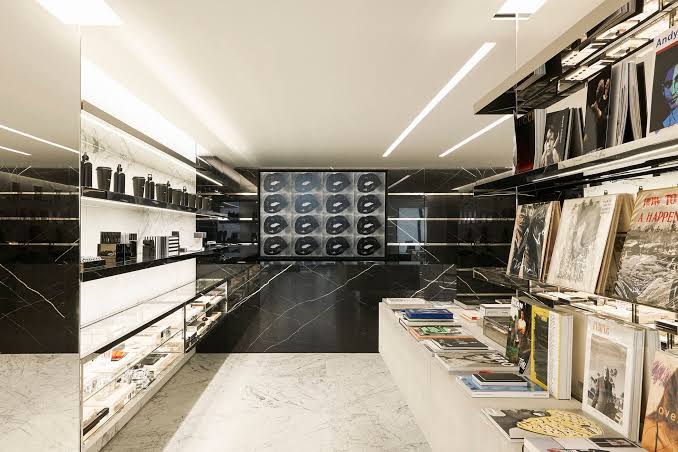
Since 2019, at 213 rue Saint-Honoré in Paris, Saint Laurent Rive Droite has operated as a hybrid space conceived by Anthony Vaccarello, where fashion, art, and design intersect. Here, he personally selects whom to exhibit: over the years, photographers such as Daido Moriyama, Jean-Loup Sieff, and Sho Shibuya have shown their work, followed by Robert Mapplethorpe in 2022 and Man Ray in January 2026.
The intriguing detail is that these exhibitions often have a commercial follow-up. For Mapplethorpe, a capsule collection was launched in the Paris and Los Angeles boutiques, while for Man Ray, Vaccarello reissued an emblematic sculpture, Square Dumbbells, originally created in the 1940s in solid silver. The artwork does not remain merely hung on the wall; it also becomes an object you can buy.
Inside the Stores: Four Artworks, Four Stories
So far, we have looked at spaces and strategies. Let us shift perspective: let us step inside and look at what is actually hanging on the walls. The question is no longer “why do fashion houses engage with art,” but “which artworks are really there, and who made them?”
We start in Milan, at number 5 Via Montenapoleone. The Gucci store has stood here since 1951, when Rodolfo Gucci first opened it, and following its closure in July 2022, it was completely redesigned from top to bottom. On the lower level are Lucio Fontana’s spatial concepts alongside works by Getulio Alviani, Franco Mazzucchelli, and Liliana Moro, while the ground floor features younger artists such as Nathlie Provosty and Jaime Poblete.
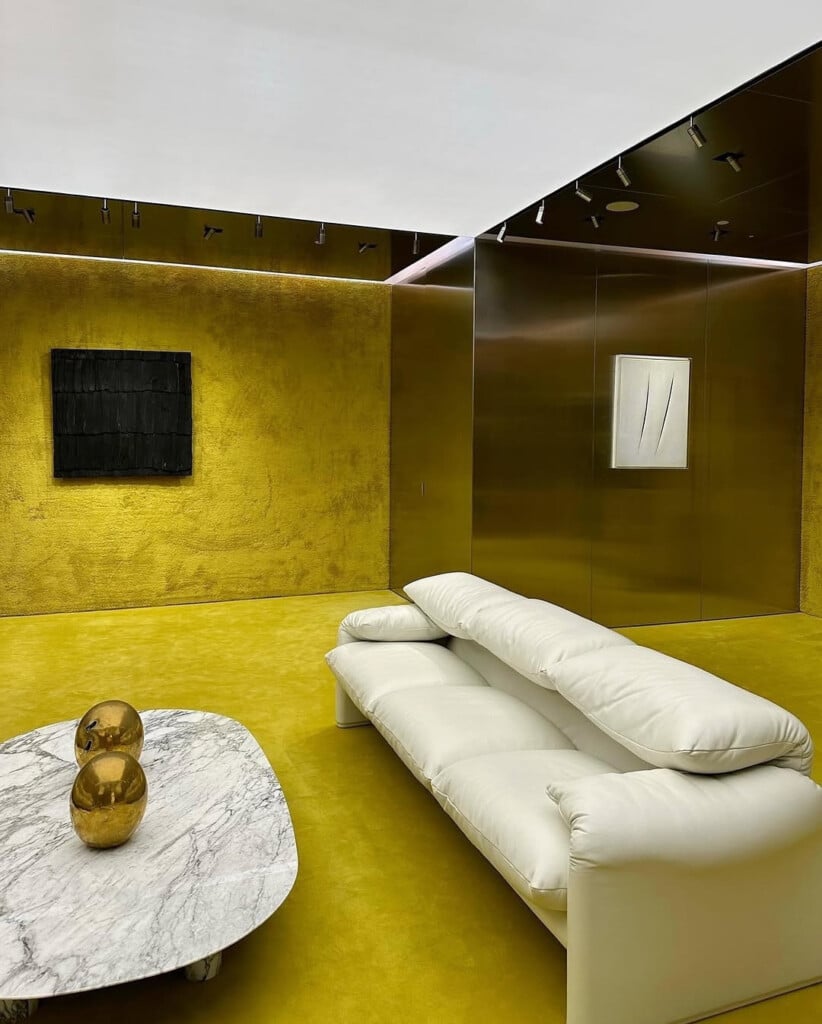
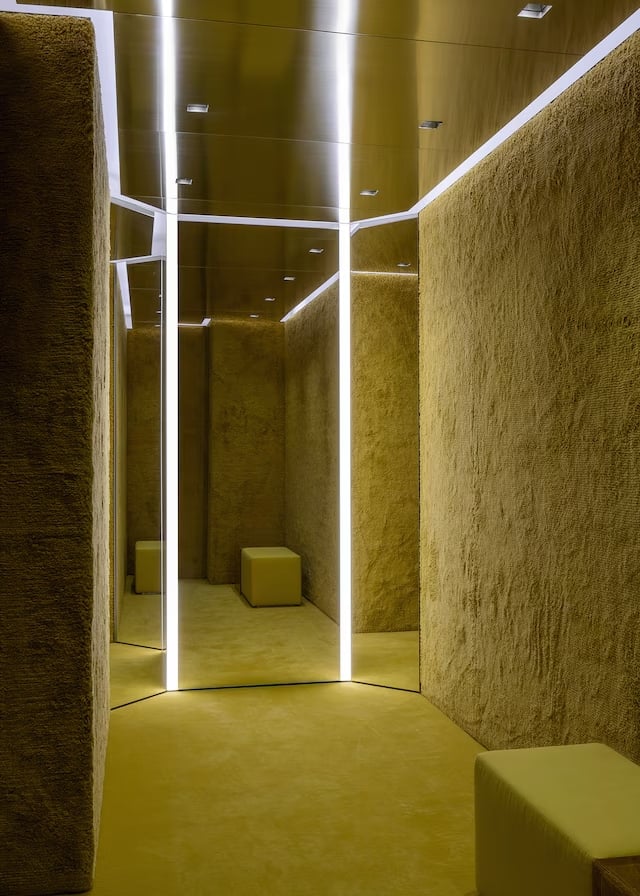
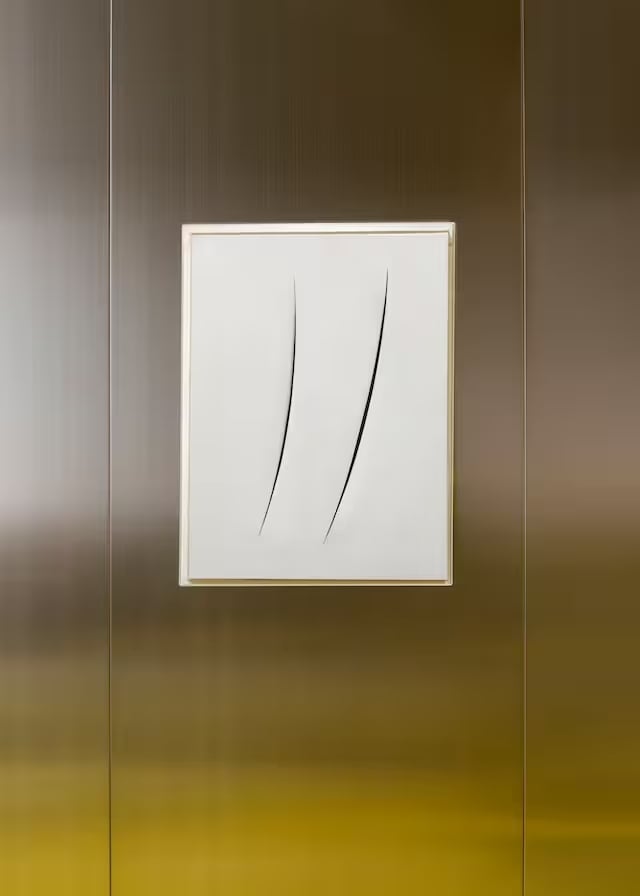
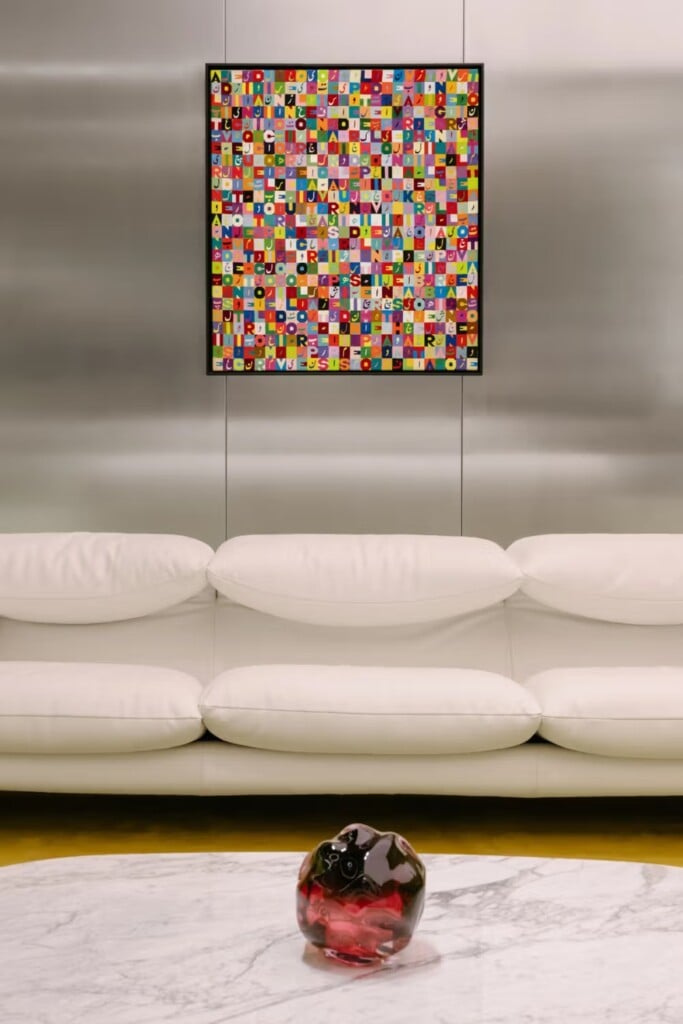
The same name reappears in Dubai, inside the Mall of the Emirates flagship, which reopened in November 2024. Here, Alighiero Boetti’s embroideries coexist with Fontana, Günther Förg, and Richard Prince, alongside regional artists including Chafa Ghaddar, Nasser Almulhim, Sami Hayek, and Sarah Almehairi.
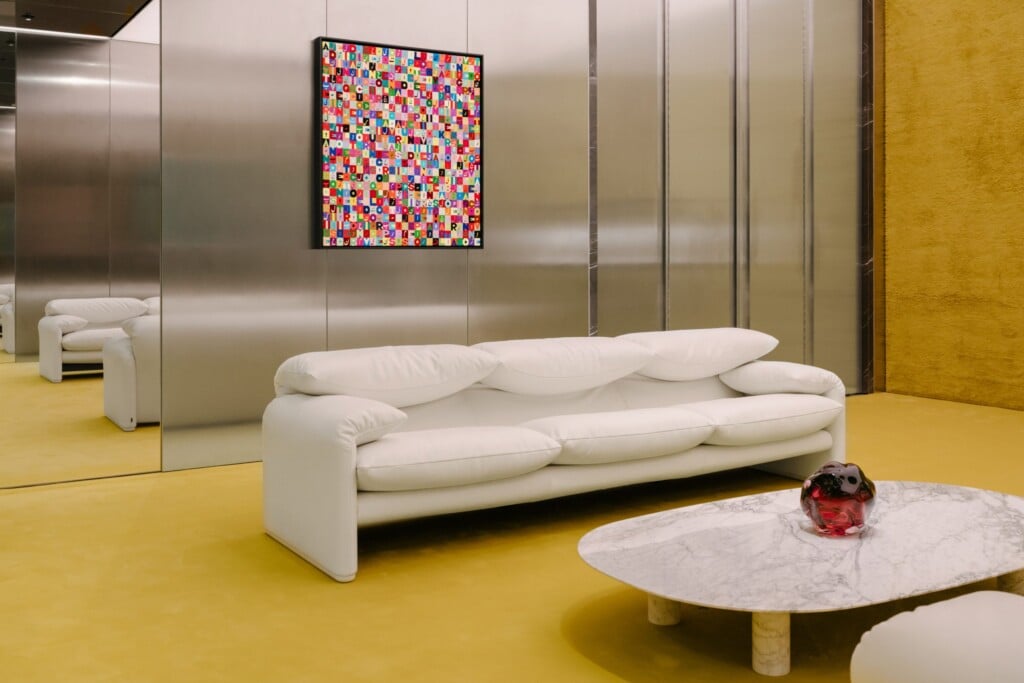
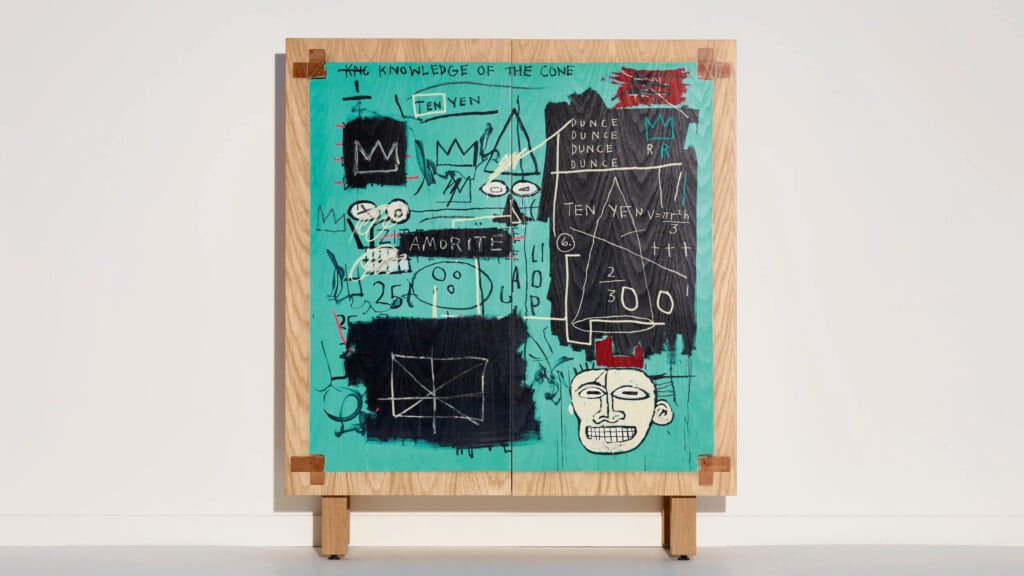
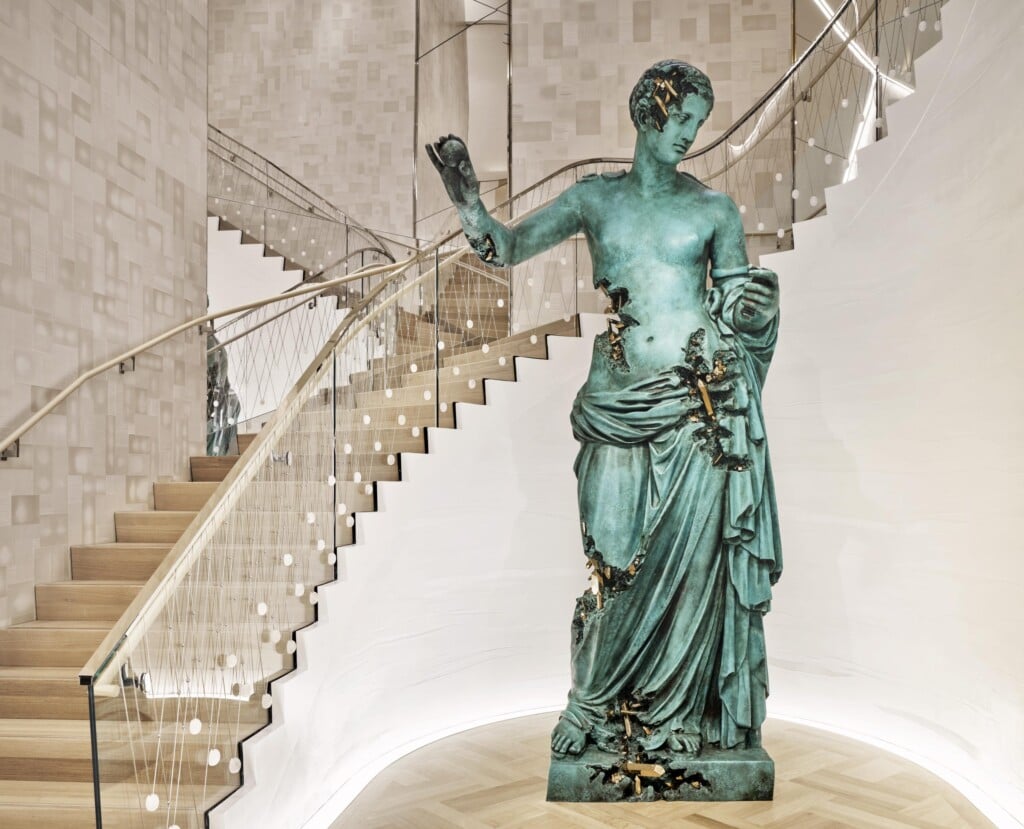
Crossing the ocean to New York, Tiffany’s Fifth Avenue Landmark reopened on April 28, 2023, after four years of renovation. Next to the ground-floor elevators hangs a Basquiat, Equals Pi (1982), painted in a shade of blue identical to Tiffany Blue. The canvas had previously appeared in the 2021 campaign starring Beyoncé and Jay-Z.
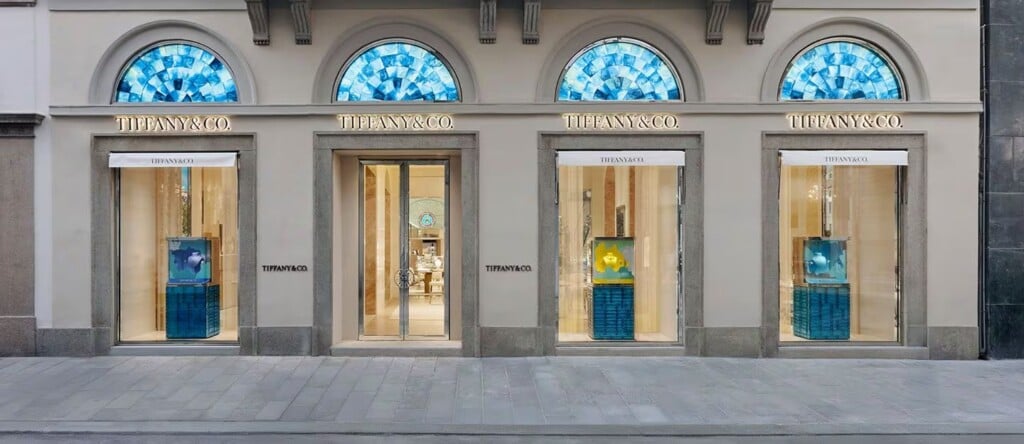
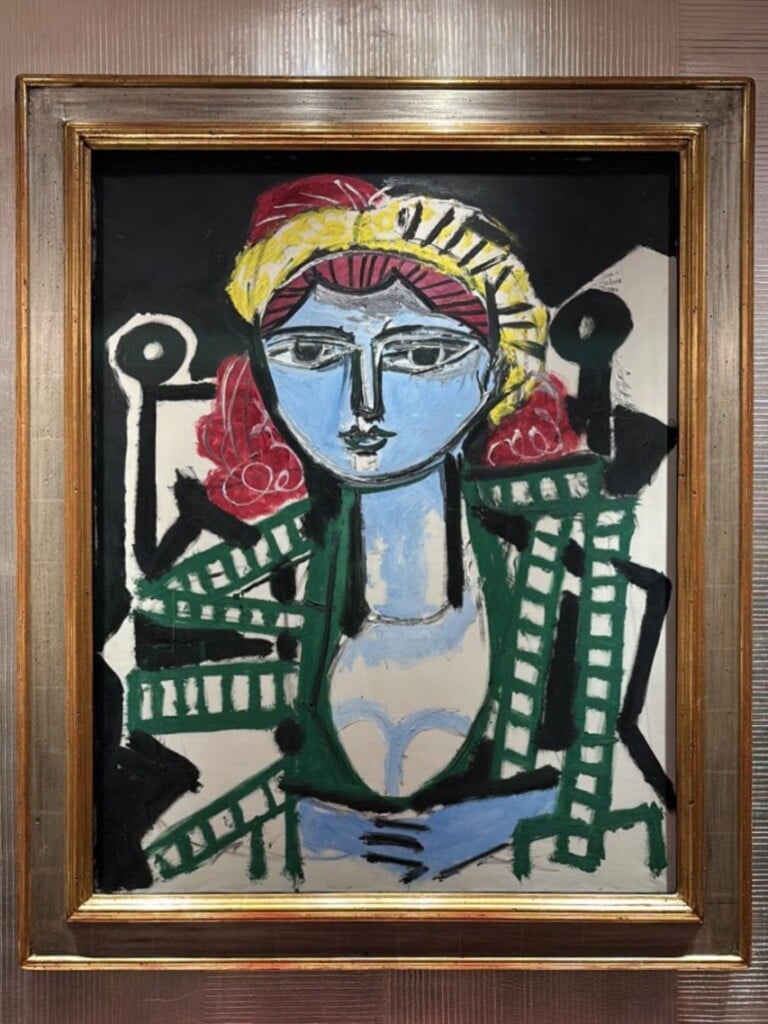
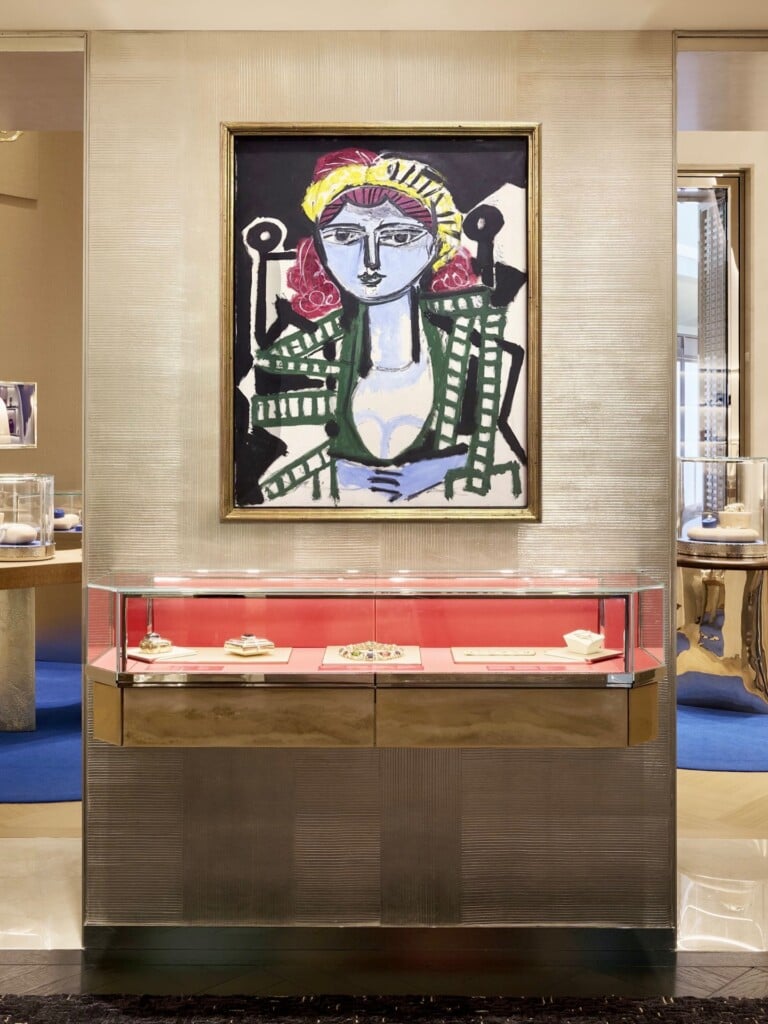
Finally, we return to Milan, where the story comes full circle. In April 2025, Tiffany opened its largest European store inside Palazzo Taverna, at 2 Via Montenapoleone. Inside the room dedicated to Paloma Picasso hung Femme à la robe verte (1954) by Pablo Picasso, on view for six months on loan from a private collection.
Lined up side by side, these four stories show that art inside stores is not a single phenomenon. Hermès offers free admission and independent programming, whereas at Tiffany and Gucci the artworks form part of the brand’s identity, and a Picasso might stay for just six months. For anyone walking through the door, the outcome is tangible: museum-worthy works to admire without a ticket. Yet in these rooms, art is also a way to make waiting more pleasant—and a return visit more likely.