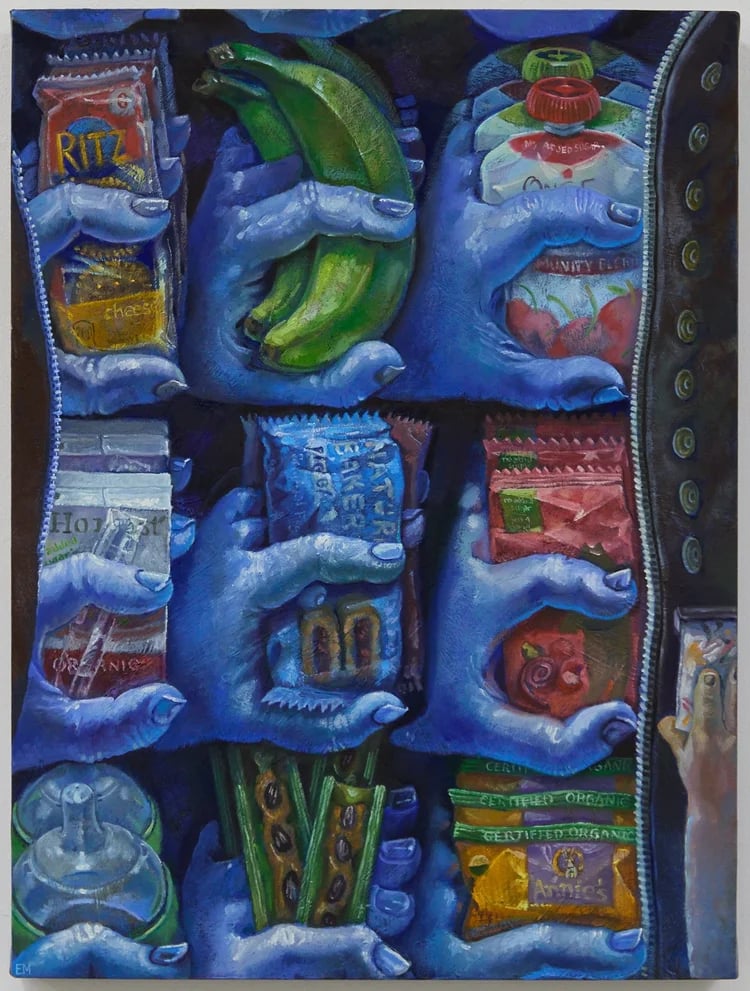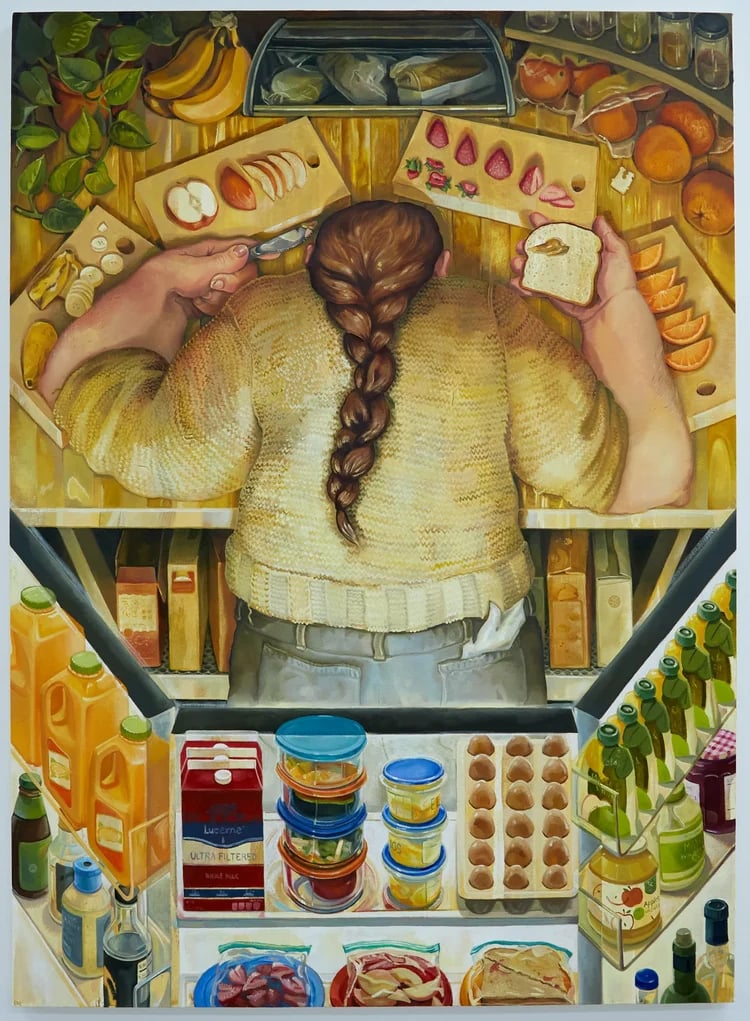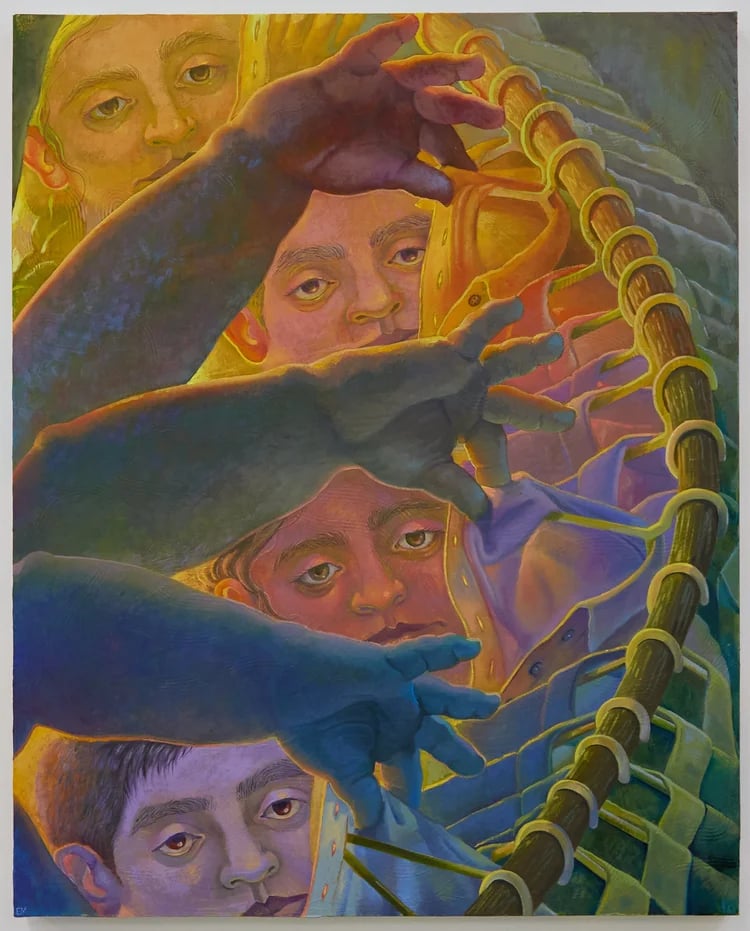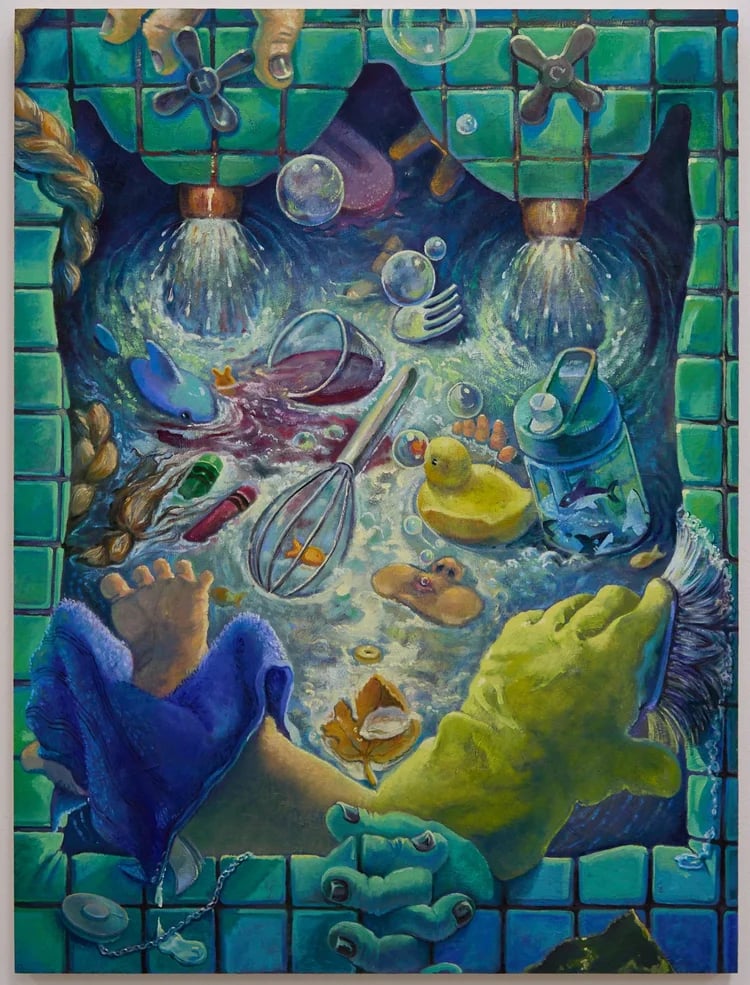
In a contemporary art landscape often dominated by conceptual abstraction or sterile hyperrealism, the painting of artist Erin Milez stands out for a rare freshness, grounded in a precise anatomical stylization and a disarmingly intimate sensibility. To look at her paintings is to step into a suspended domestic dimension, where the ordinary gestures of existence, an embrace, the care of children, rest, the contact between bodies, are transfigured into veritable choreographic compositions.
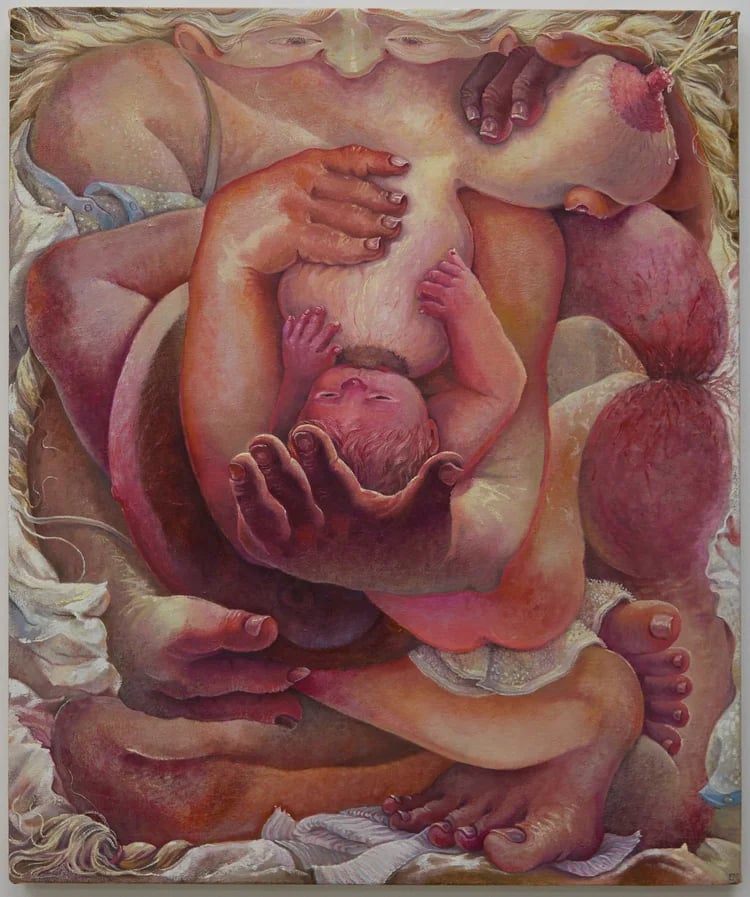
The most immediately recognizable trait of Erin Milez’s work lies in the rendering of human figures. Her protagonists are characterized by deliberately altered proportions: slender limbs, long necks, hands and feet that expand into space with an elegance recalling Mannerist atmospheres and early twentieth-century painting, from Modigliani to synthetic Cubism, but reinterpreted with a contemporary graphic sensibility.
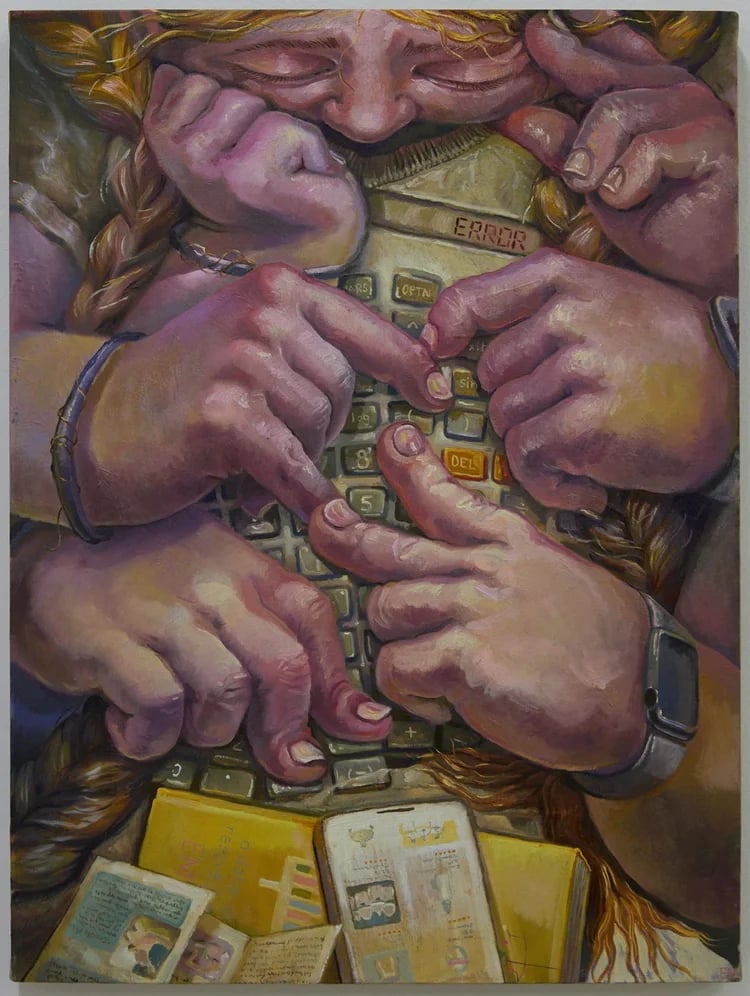
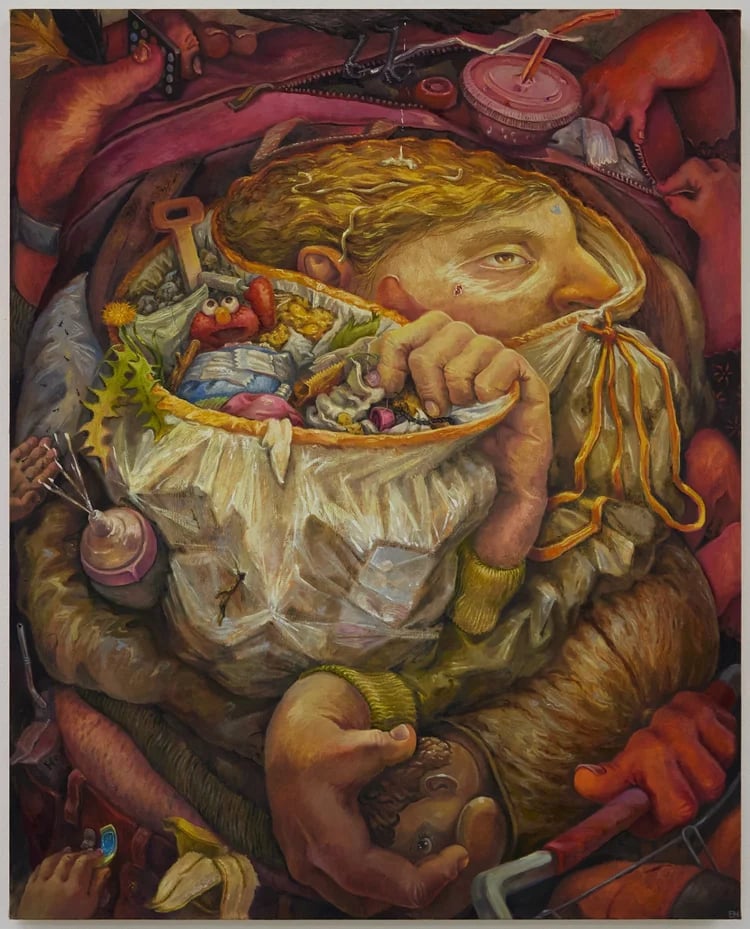
This distortion is anything but grotesque; on the contrary, it is the tool through which the artist amplifies the emotional charge of her subjects. The bodies do not simply occupy the canvas, but bend, intertwine and support one another, turning physicality into a silent dialogue. Skin-to-skin contact becomes the load-bearing architecture of every composition: arms wrapped around a shoulder or bodies resting on an armchair speak of a shared vulnerability, a primal need for connection and refuge.
Supporting this formal research is a sophisticated and controlled color palette. Milez works with earthy tones, desaturated pastel hues, warm ochres, rust and dusty blues, laid down in flat fields or delicately modulated. The background of the paintings often cancels out the visual noise of the outside world: the settings are reduced to the essential — a checkerboard floor, a drape, a chair, a minimalist interior — letting the emotional tension between the subjects fill the void.
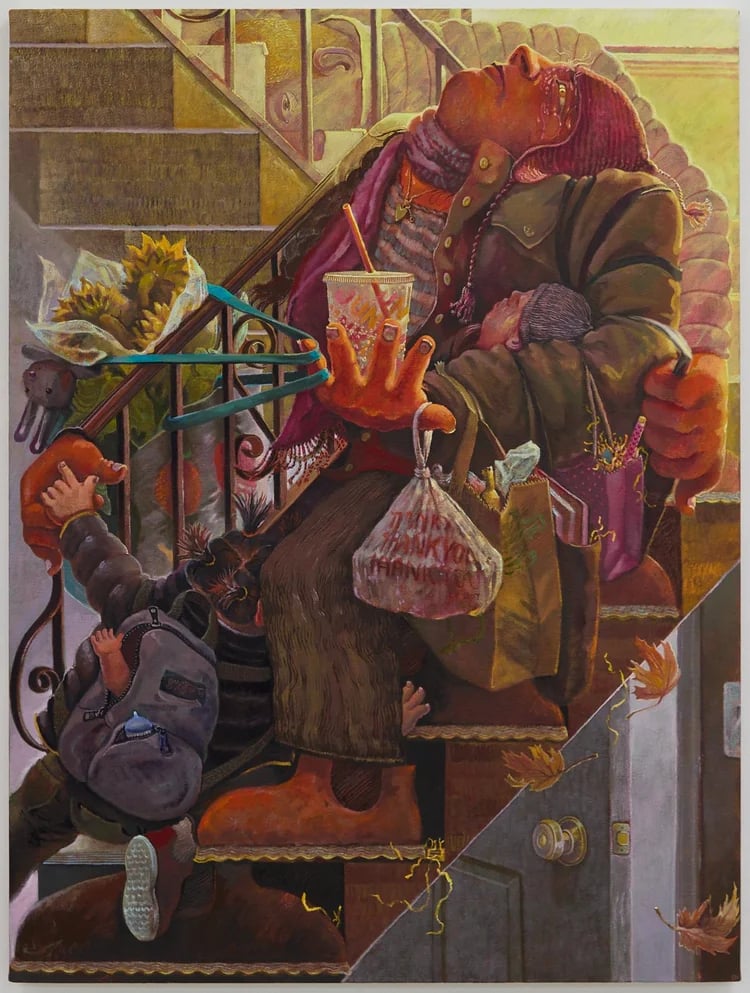
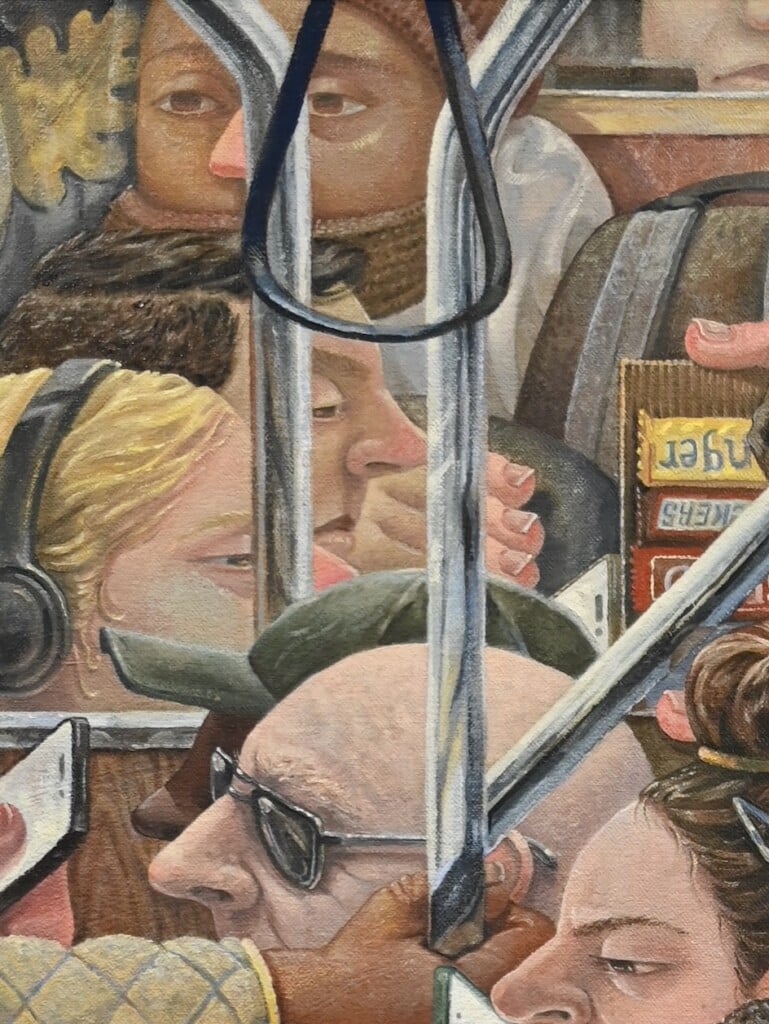
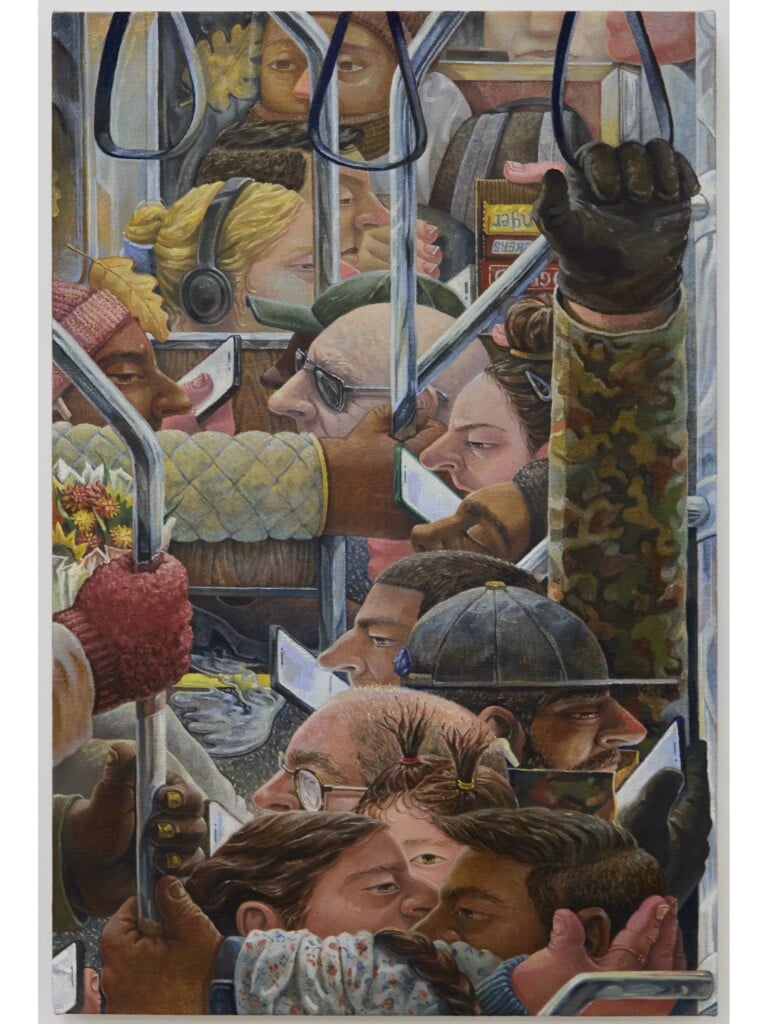
There is a magnetic calm in these canvases, a form of secular devotion to family and relational everyday life. The artist explores themes such as motherhood, living together, fatigue and tenderness without ever slipping into cloying sentimentality. Tenderness, in her works, is portrayed as patient labor, a geometry of weights and counterweights in which each figure finds stability only by leaning on the other.
In Erin Milez’s work, the canvas acts as a counterpoint to the visual frenzy of the present. Faced with digital overstimulation and the fragmentation of relationships, her scenes offer a space for slowing down and contemplation. There is no ambition to explain or denounce, but a desire to capture the poetry that dwells in private spaces, those fragments of time in which no role is played and all that remains is the simple, complex architecture of human bonds.