In São Paulo, an old colonial house is covered in silver thermal blankets. With 2878, the Portuguese artist Vhils intervenes on a building destined to disappear, turning its façade into a reflection on urban memory, gentrification and the way cities change their appearance.
Sometimes buildings disappear long before they are demolished: they continue to occupy a place in the city, keep their address and preserve the traces of their history, but gradually fall out of the field of vision of those who pass by them every day. It is from this form of disappearance, less obvious than a demolition but just as significant, that 2878 takes shape, the new work by Vhils created together with the Brazilian artist Marcelo Cidade in São Paulo.
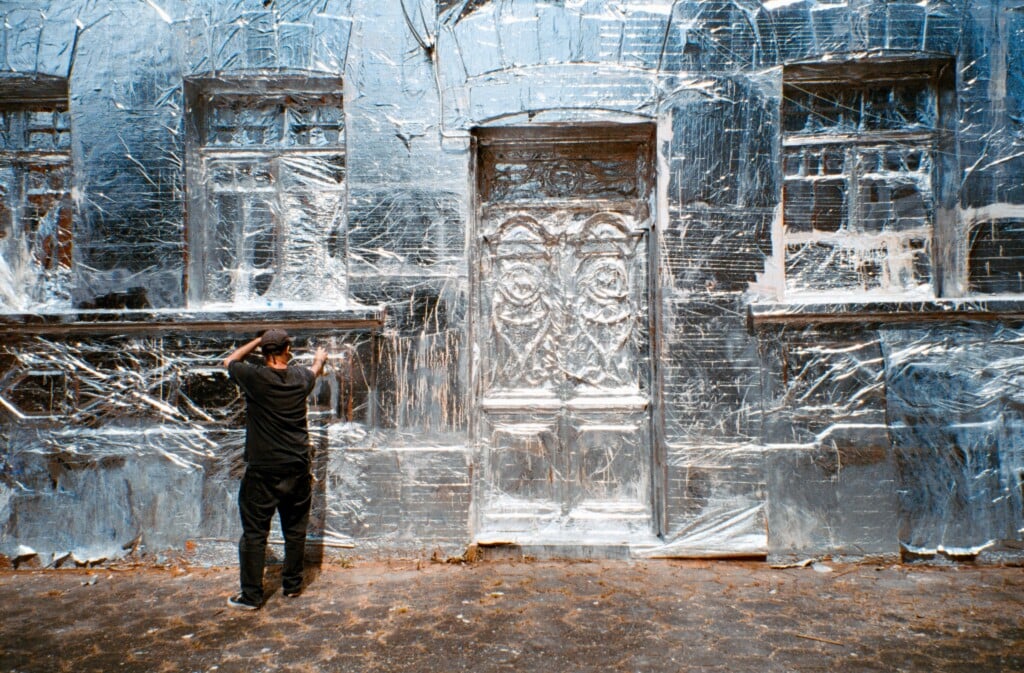
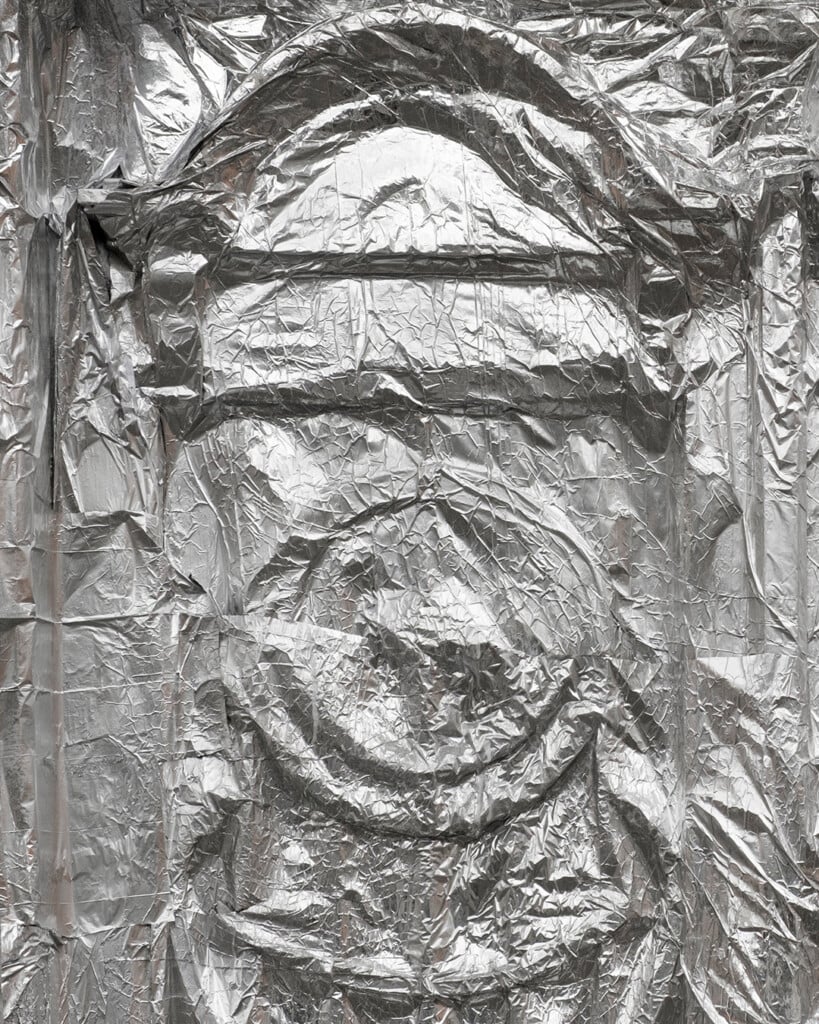
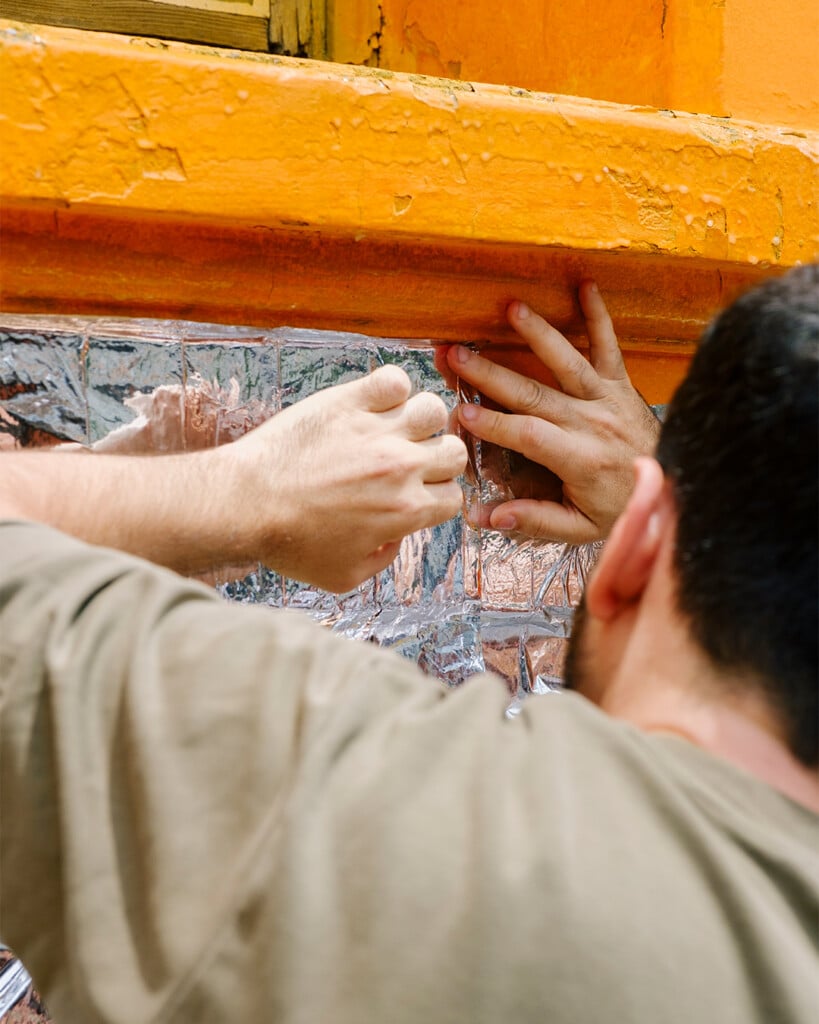
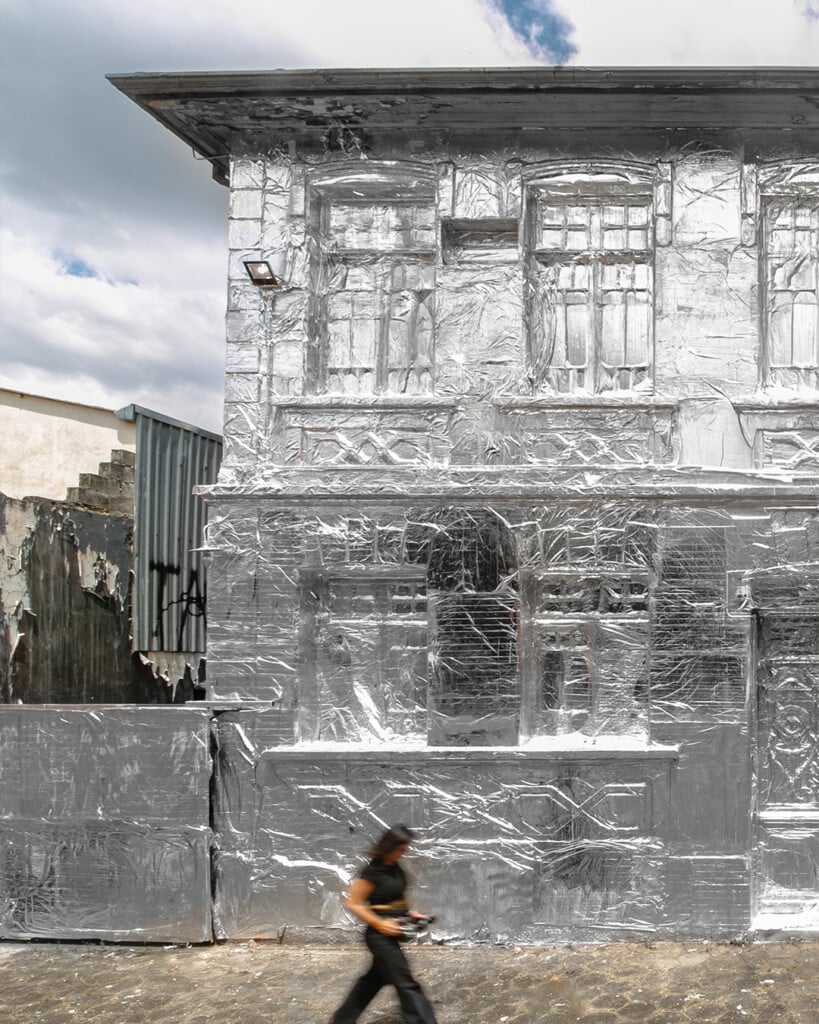
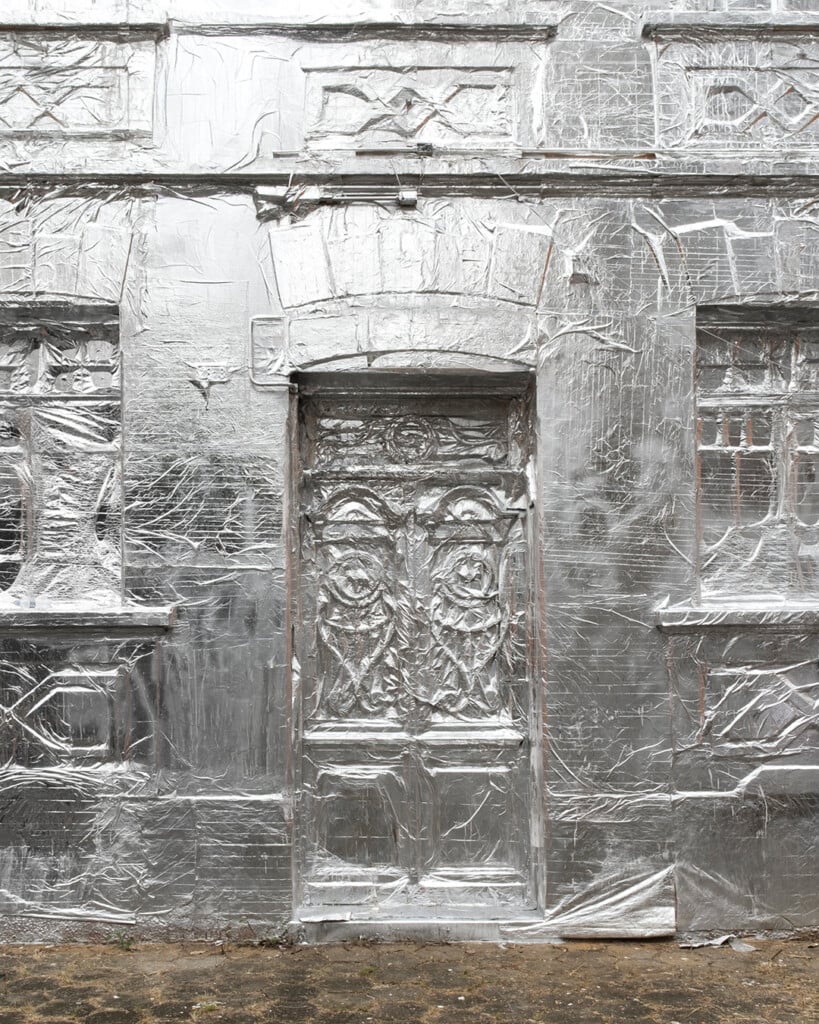
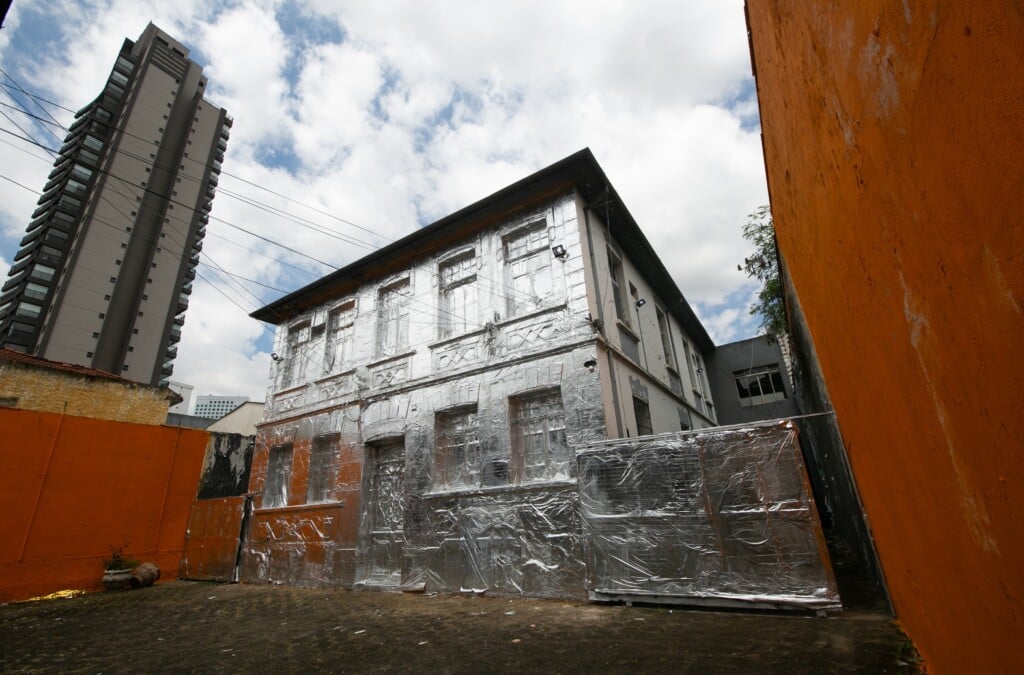
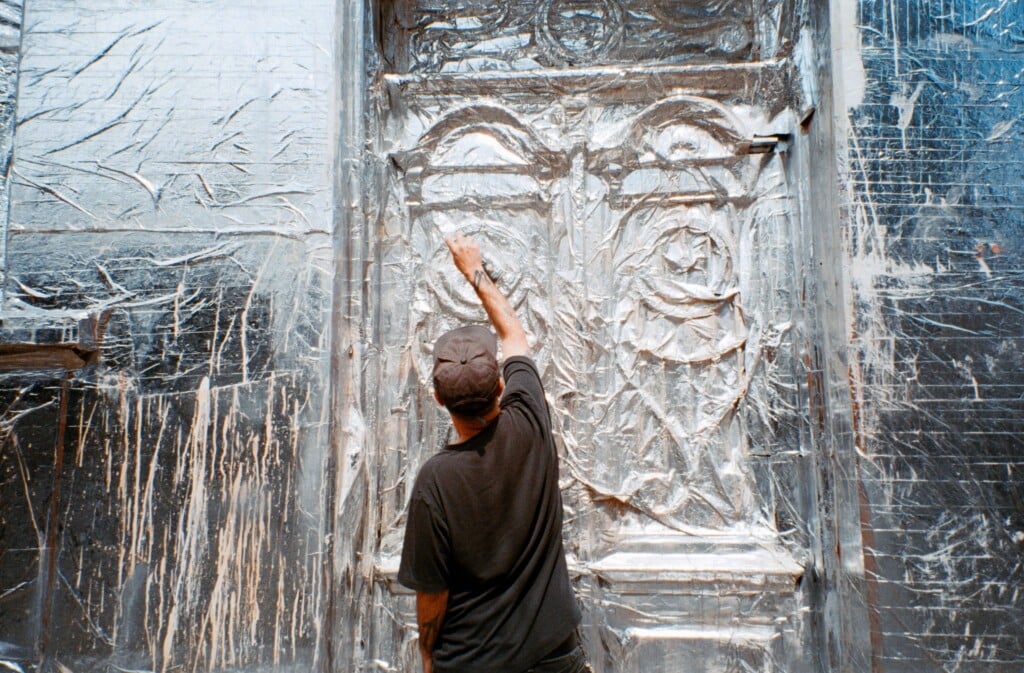
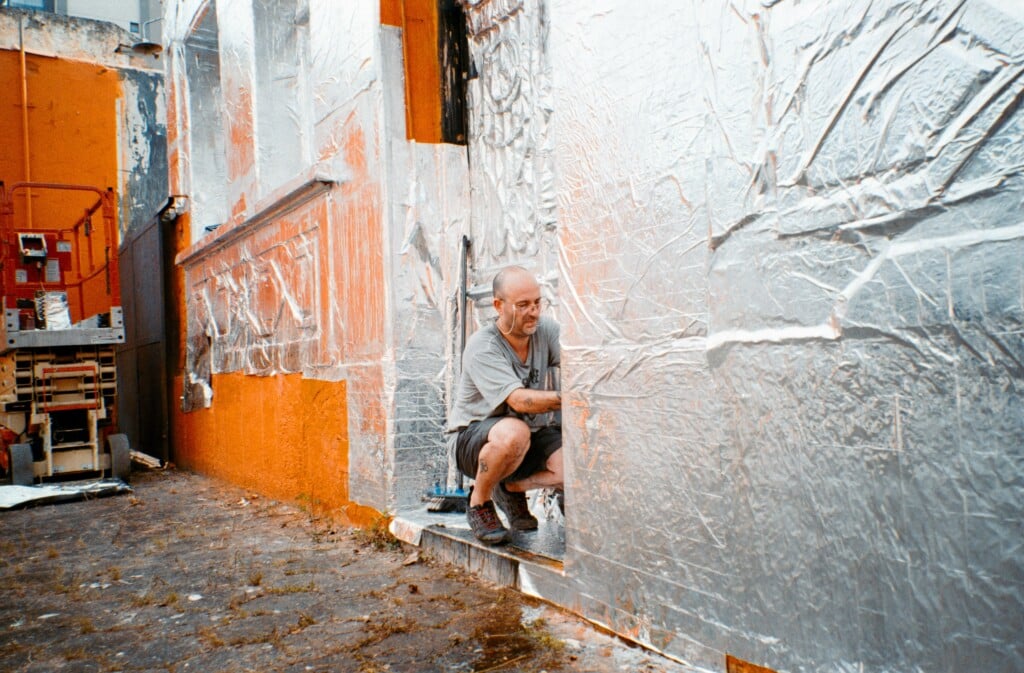
The title is no accident: 2878 is the street number of the building that hosts the intervention, on Rua Cardeal Arcoverde, in the Pinheiros neighborhood. Here, between 5 and 11 November 2026, Vhils and Cidade transformed the façade of a historic building through a gesture as simple as it is unusual: covering it entirely with sheets of silver thermo-reflective material, similar to the emergency blankets used to retain body heat. Applied directly to the architectural surface, these sheets follow the forms of the façade, highlighting its openings, decorations and details.
The result changes continuously in relation to the light. When the sky is overcast, the covering reflects duller tones and blends in with its surroundings; on sunny days, by contrast, the surface becomes mirror-like, captures the movements and colors of the street and gives the building an unexpected visibility. The very material that hides it thus ends up making it impossible to ignore.
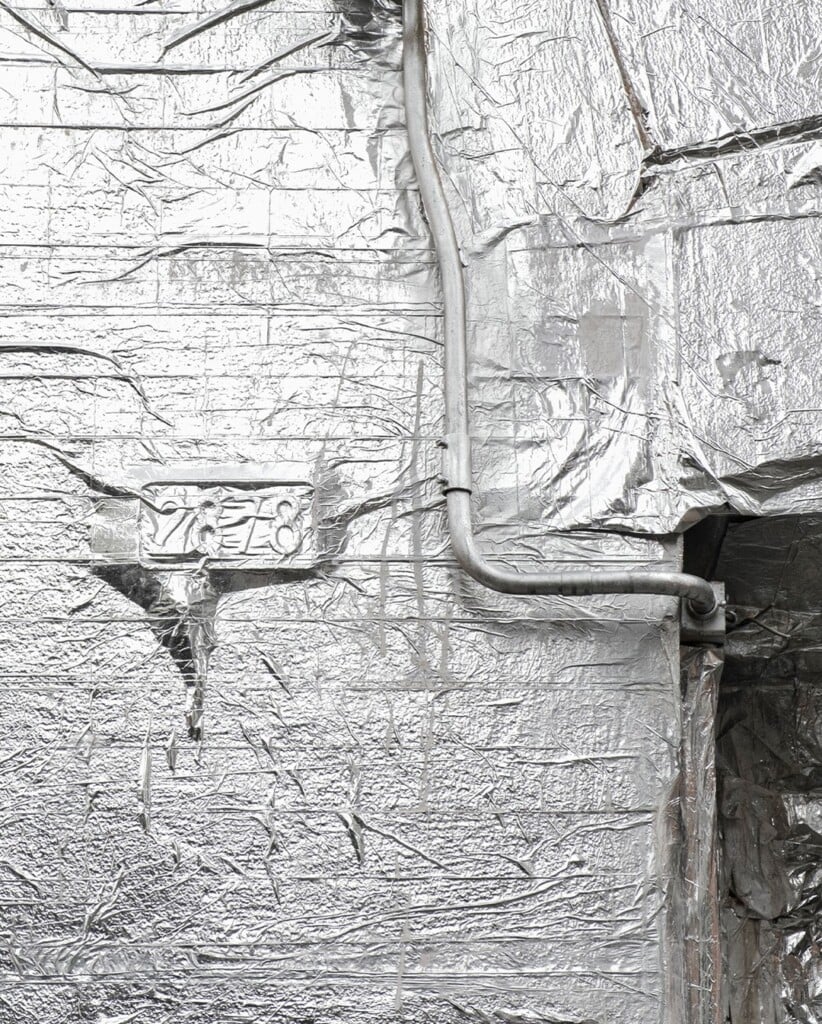
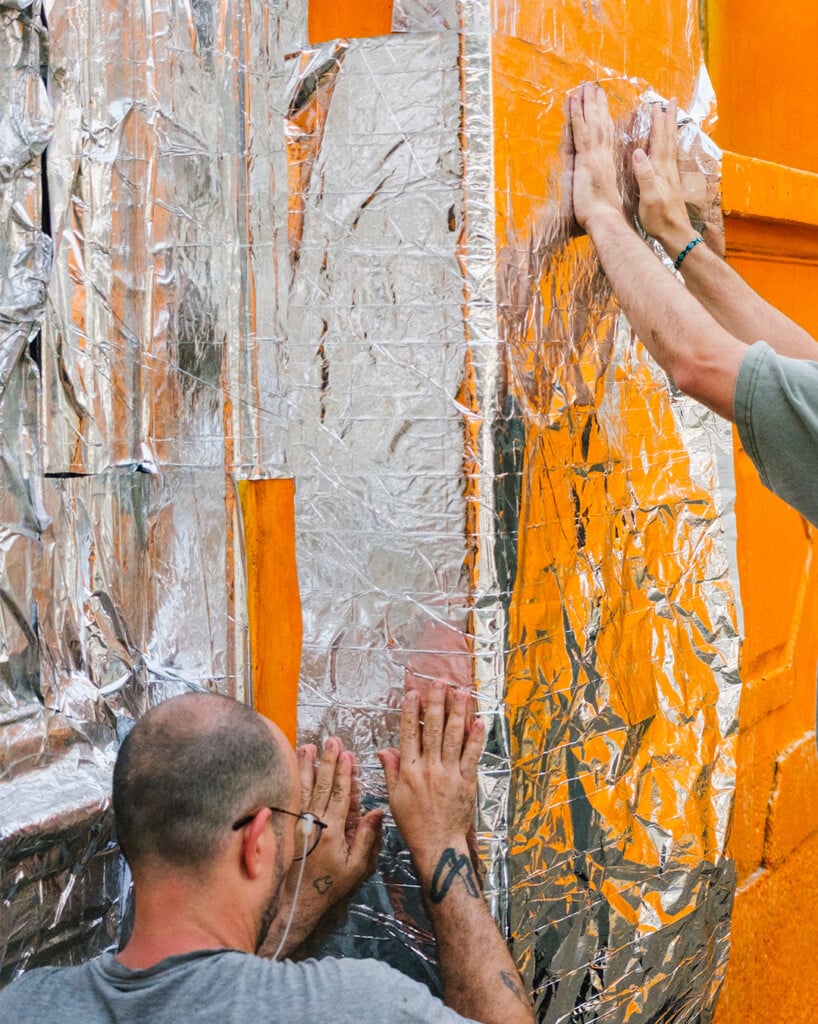
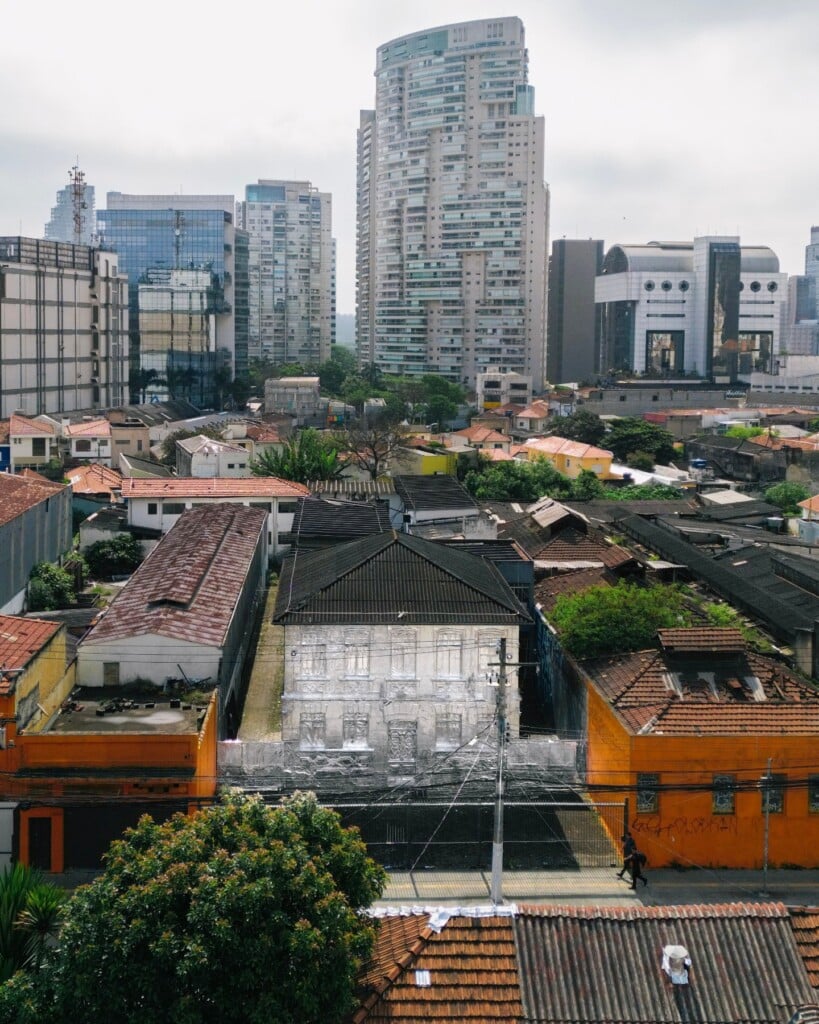
The building, once used as a tuberculosis dispensary, is slated for demolition to make way for a new construction. Its history is also documented by a 1953 decree of the government of the State of São Paulo, which declared the property to be of public utility precisely in order to house the Pinheiros health service. It is precisely this condition that gives the work its deepest meaning. The silver covering takes on almost the function of a second skin, a temporary protection applied to a building that does not seem to have an equally stable future. It does not restore it, does not rebuild its missing parts and does not try to bring it back to an original appearance. On the contrary, it radically alters its image in order to draw attention back to something at risk of being erased.
The choice of thermal blankets also introduces an interesting ambiguity: they are materials designed to protect, but here they become tools for questioning the fate of a piece of architecture. The façade is wrapped, almost as if it were a body to be preserved, while its future remains marked by demolition. In this sense, the work does not try to hide the problem, but makes it visible through a temporary transformation.
An intervention in dialogue with Vhils’s research
To better understand 2878, we must also look at the research that Alexandre Farto, known as Vhils, has been pursuing for years. Born in Portugal, the artist has built a recognizable language based on the relationship between urban surfaces, memory and transformation. His practice stands out for a creative process that proceeds by subtraction: instead of adding color to walls, he intervenes by removing layers of plaster, concrete and other materials using chisels, drills and unconventional tools, until images and faces emerge from the surfaces themselves.
This attention to what lies beneath the surface runs through much of his work. Walls become archives of individual and collective stories, while their imperfections and stratifications tell of the changes a place has gone through. With 2878, however, the artist temporarily moves away from his best-known technique. He does not dig into the material to bring something to light, but adds a covering that changes the way we are used to looking at a building. The principle nevertheless remains close to his research: intervening on what the city tends to take for granted, giving it a new meaning.
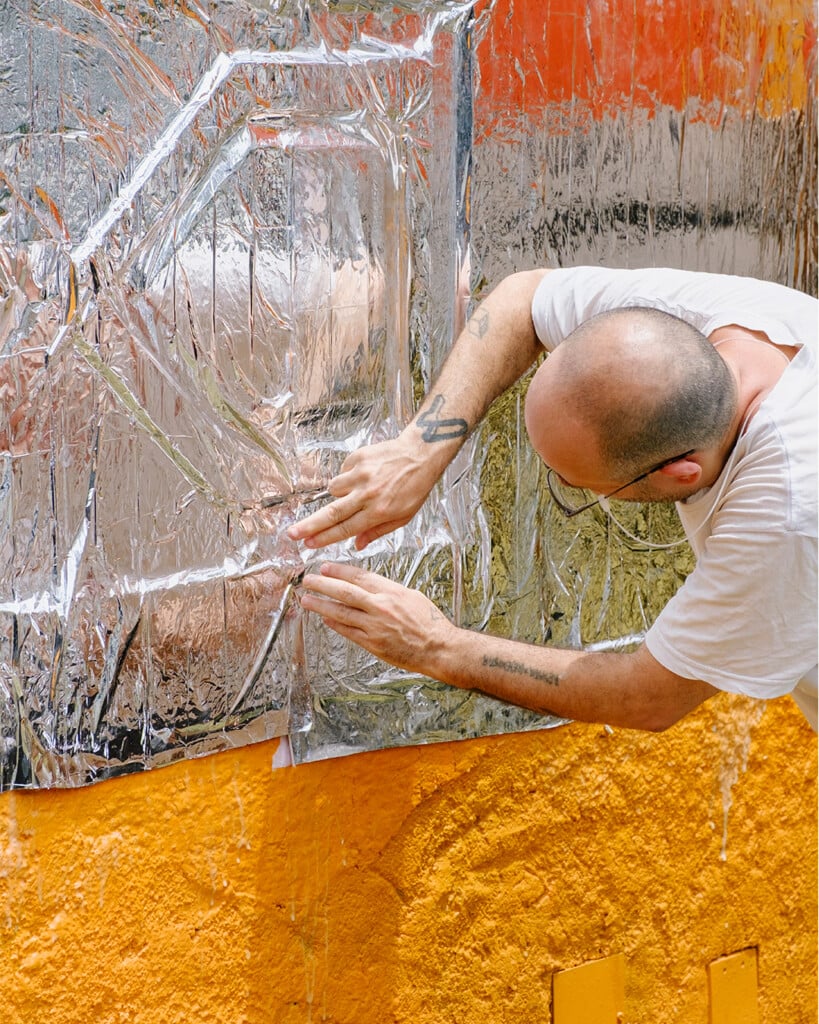
The work also marks his first collaboration with Marcelo Cidade, a Brazilian artist whose research engages with architecture, public space and the dynamics that govern urban life. An encounter that finds its common ground precisely in the façade, turning an everyday architectural element into a device for observation and reflection.
Disappearing does not mean being demolished
There is one detail that makes 2878 particularly interesting: its ability to oscillate between presence and absence. The building is always there, but its appearance changes depending on the weather conditions and the point of view of the observer. At times it emerges from its context, at others it seems to dissolve into it. It is a visual game that translates into concrete form a much broader question: how long does it take a place to lose its meaning before it even physically disappears?
In large cities, where the transformation of the urban landscape often proceeds through the replacement of buildings and the progressive homogenization of neighborhoods, what is lost is not only an architectural structure, but also a part of the memory tied to it. 2878 brings this contradiction directly into the street, without the need for proclamations or monumental interventions. For a few days, a building destined to make way for a new one becomes the protagonist of the very landscape from which it risked being forgotten.