For decades, the identity of Banksy has remained one of the great mysteries of contemporary art. His works, often appearing overnight on city walls, were able to travel the world and spark discussions wherever they appeared. Over time, a global community of spectators also formed—one that did not only wonder who was hiding behind that pseudonym, but also recognized and supported the social and political messages that Banksy managed to bring to the surface with an immediately recognizable style.

On March 13, a new journalistic investigation published by Reuters claimed to have identified the name and face behind the world’s most famous street artist. But perhaps the real question is another: did we really need to know?
The alleged Banksy has not released any statement and Pest Control Office, the organization that authenticates the artist’s works, has said there will be no official comment. His long-time lawyer, Mark Stephens, has also questioned the solidity of the investigation, urging Reuters not to publish its results. Once again, the issue of anonymity sits at the center of the story. An element that, especially for those who use art to intervene in social and political issues, has never been only a stylistic choice but also a form of protection.
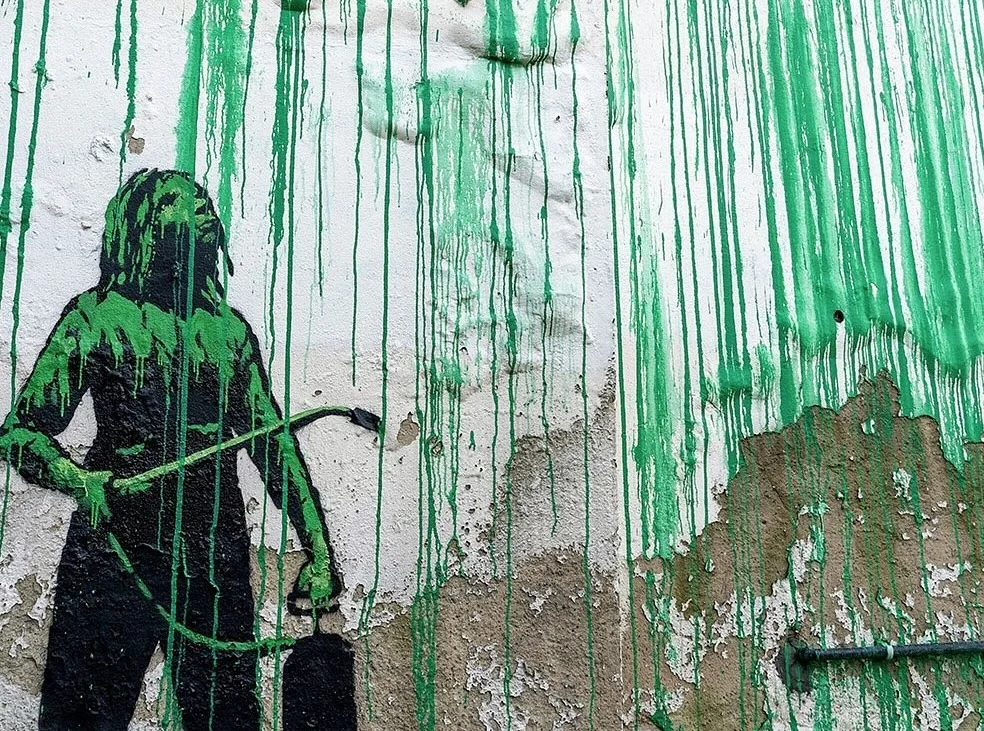
As often happens, the media play a decisive role. It is curious to observe how many of the articles reporting on the alleged revelation begin with the same premise: Banksy’s anonymity was essential. It served to protect the artist, of course, but also his work, often created on the edge of legality and built around the very idea of appearing and disappearing without leaving traces. Yet immediately after acknowledging this point, those same articles do exactly what they claim to question: they amplify the scoop, spread the name, and fuel the hunt. A paradox that says far more about the functioning of contemporary information than it does about the artist.
Today the news itself carries more weight than any other consideration. Being the first to publish—or even just adding one more detail—continues to drive the logic of the scoop. In this mechanism, the protection of the individual, the artist’s own will, or the cultural context that made that anonymity so powerful become secondary to the possibility of circulating the story.
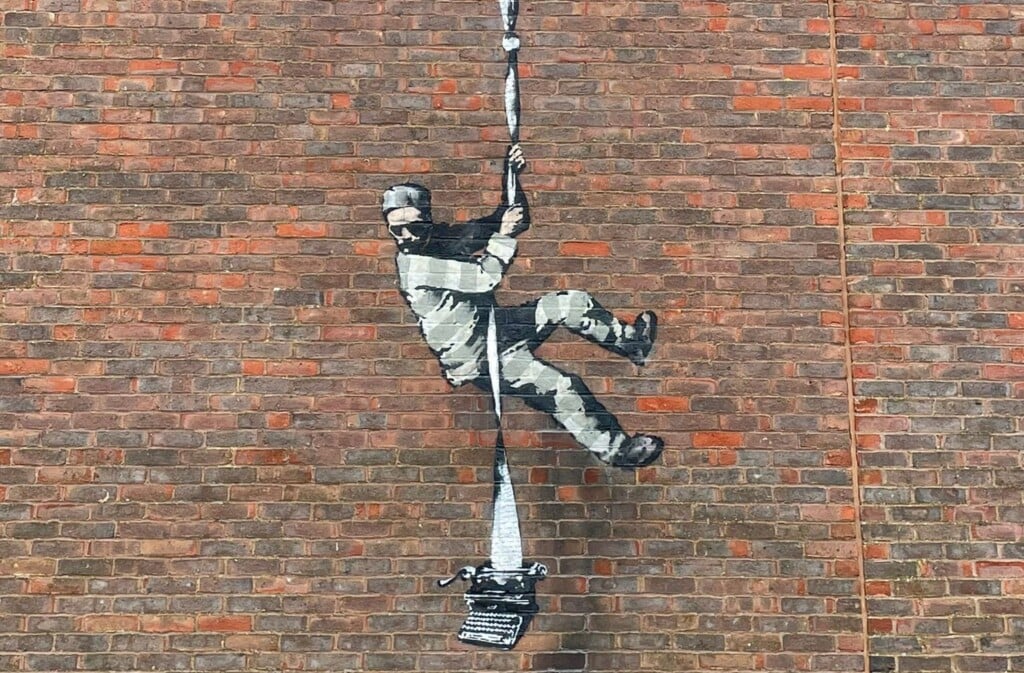
The Italian legal perspective
From a legal perspective, the issue is more complex. In an interview with Il Sole 24 Ore, legal scholar Eliana Romanelli recalled how copyright law explicitly recognizes artists’ right to use pseudonyms or remain anonymous. At the same time, however, this right must contend with another fundamental principle: personal criminal liability, which requires the certain identification of the author of any potential crime.
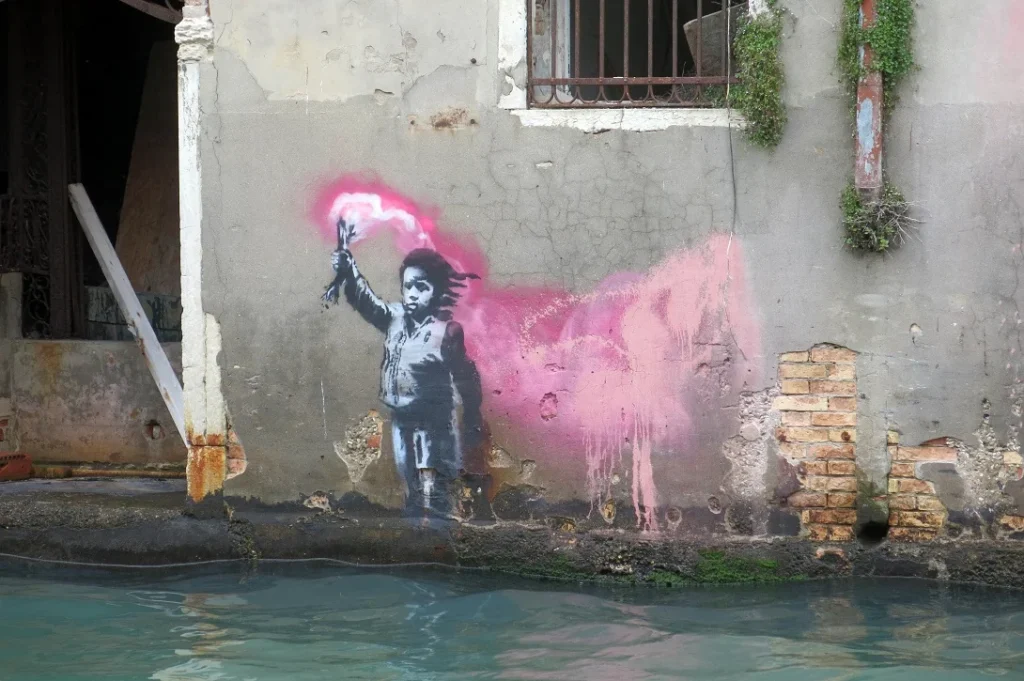
Street art is certainly no stranger to these scenarios. On one hand there is the creative and cultural value of the artistic intervention; on the other, the violation of rules that regulate the use of urban spaces. In Italy, for example, there are works attributed to Banksy such as the Madonna with a Pistol that appeared in Naples in 2010 or The Migrant Child, created in Venice in 2019 during the Biennale.
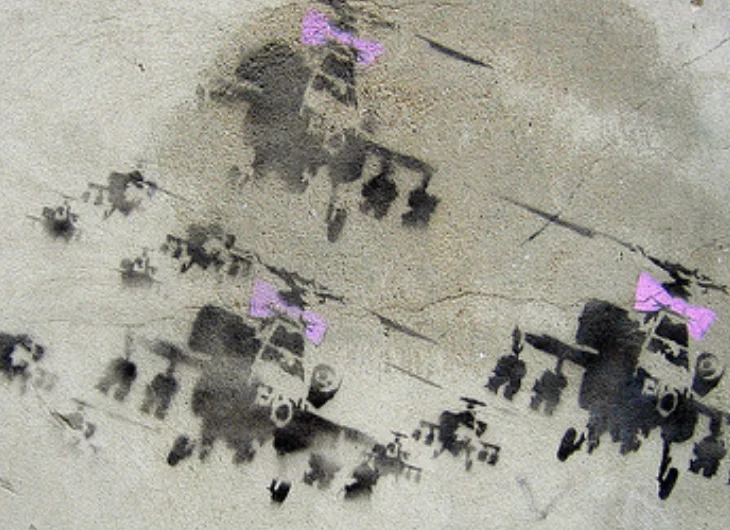
Cases like these show how thin the boundary between artistic gesture and illegality can be. In some situations, case law has begun to consider the cultural value of the work and its social function, recognizing forms of protection for works created without authorization. Interventions initially considered illegal have later been protected, restored, or even transformed into cultural attractions. In Venice, for instance, the mural of the migrant child was saved thanks to a restoration funded by private donors, while in Naples the Madonna with a Pistol has been protected by local citizens to prevent its deterioration.
Why do we feel such a strong need to know who is behind Banksy?
Setting aside the legal issue and returning to the media obsession surrounding the artist’s anonymity, the real question is not whether someone has actually managed to discover who Banksy is. At this point, the question becomes another: why do we feel such a strong need to find out?
Today, the conversation around artists increasingly shifts from their research to their persona. From the work to the controversies, from the creative process to the urge to diminish it with phrases like “I could have done that too.” It seems almost like an automatic reflex, as if every artwork had to be brought back to a simpler, more human dimension—and therefore one that is easier to attack.

In this sense, revealing Banksy’s identity risks becoming the ultimate expression of this mechanism. Giving a name to the most famous street artist of our time also means taking something away from the myth—reducing the distance between the work and its creator, transforming a nearly symbolic figure into a person that can be debated, mocked, or judged.
In the end, it may not even matter whether this latest revelation is truly the definitive one or if another will emerge in a few years. The point is not whether someone has actually discovered who Banksy is. The real question is why we feel such a strong need to destroy a mystery that fascinated us for so long. Because perhaps part of Banksy’s power was precisely that: for once, the artist was not the most important thing.