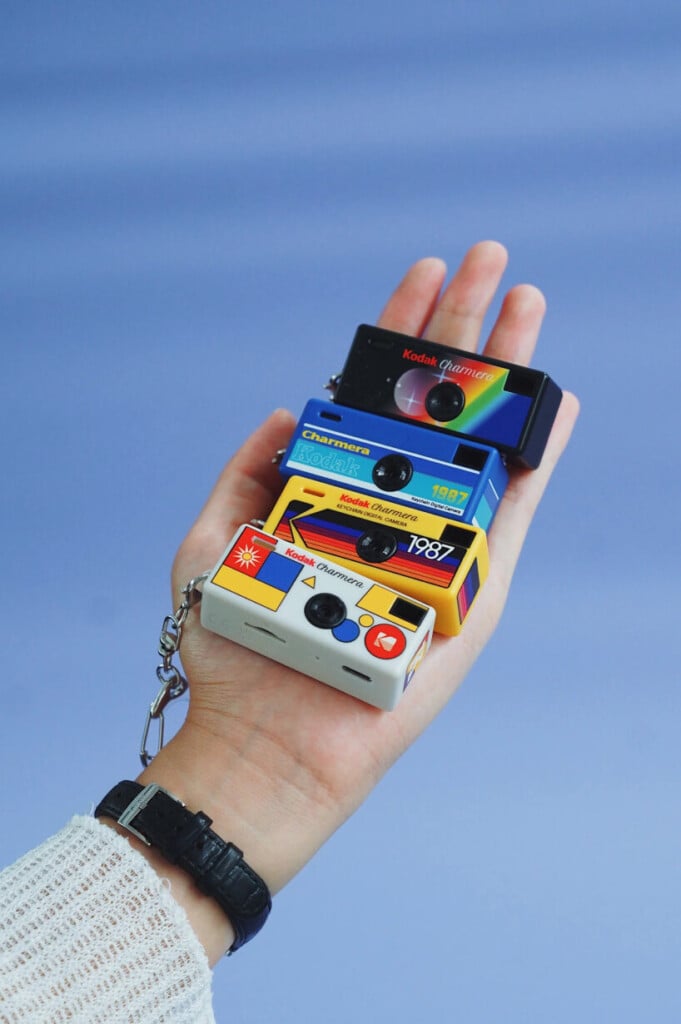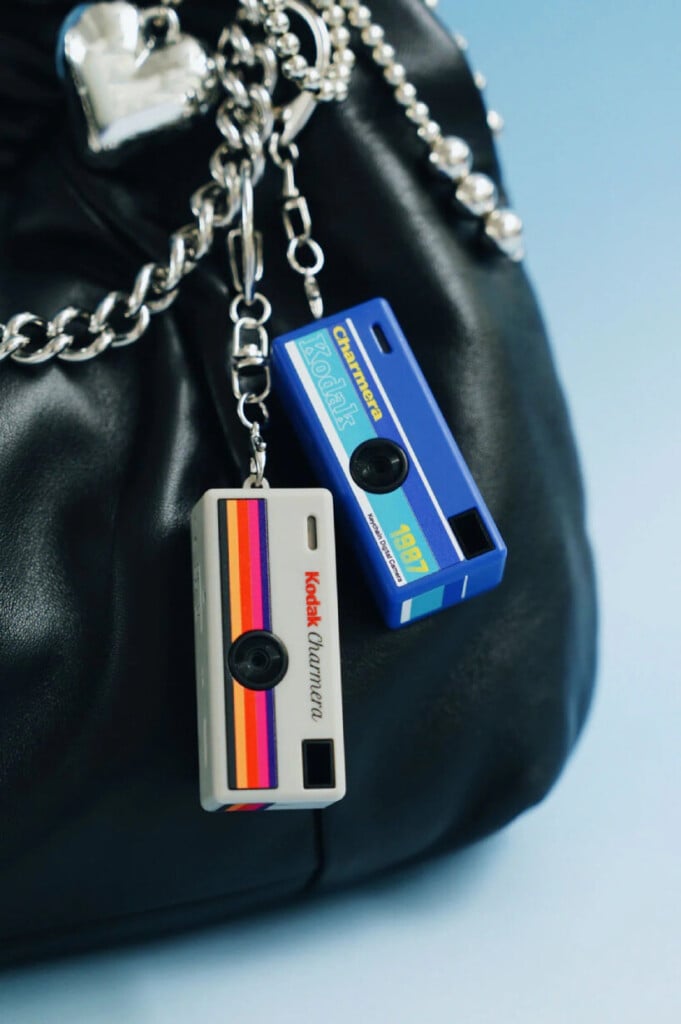
Kodak is back to playing with nostalgia, turning it into an object that looks like a toy but is actually a concentrate of aesthetics and memory. The Digital Charmera is a keychain-sized camera that recalls the disposable models of the 1980s—the legendary Fling—but in a digital key. No film, no lab: just a USB-C cable and a microSD, as if it were a small vintage treasure that’s survived into the present.
While everyone is going crazy for inexpensive point-and-shoots, the brand has decided to tap its historic catalog, a mine of icons long out of production. And the move paid off: the Charmera, launched on September 17 at a price of $30, sold out in just eight minutes according to USA Today. Not bad for a company that has been struggling to stay afloat for years.
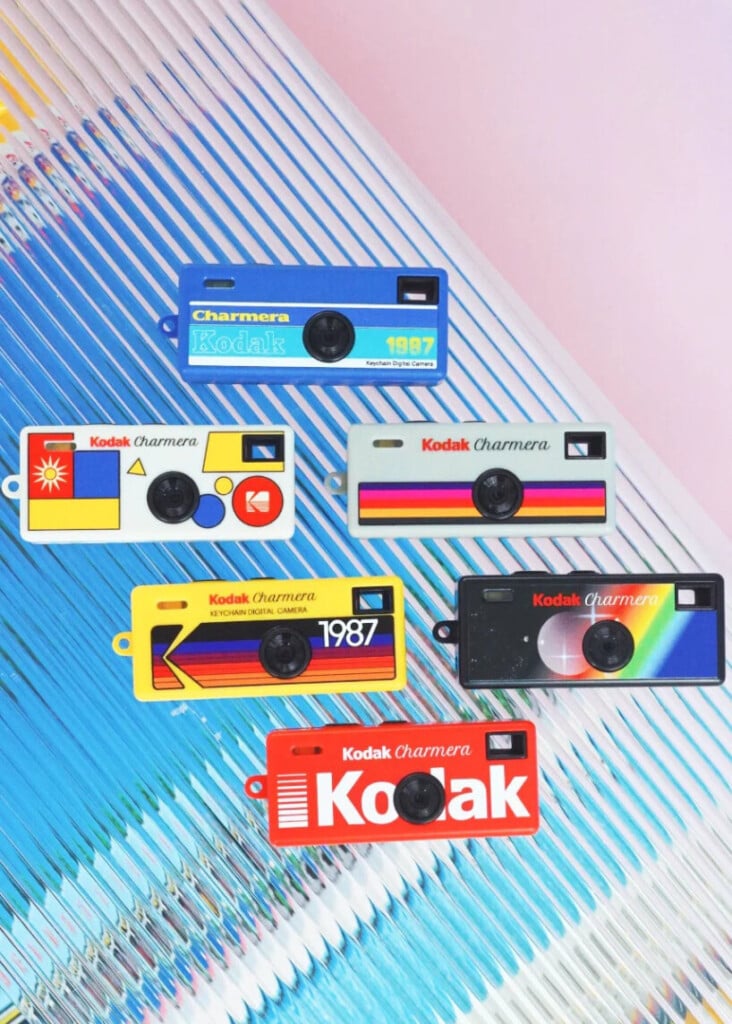
What’s striking isn’t so much the technology—a sensor that shoots photos and records video, processed instantly with retro filters and frames—as the ritual this Charmera brings with it. There are seven filters that emulate past film stocks, four Kodak frames with graphic details like film sprocket holes or typographic marks, and even a date stamp, that digital imprint that calls back to the look of 1990s family photos.
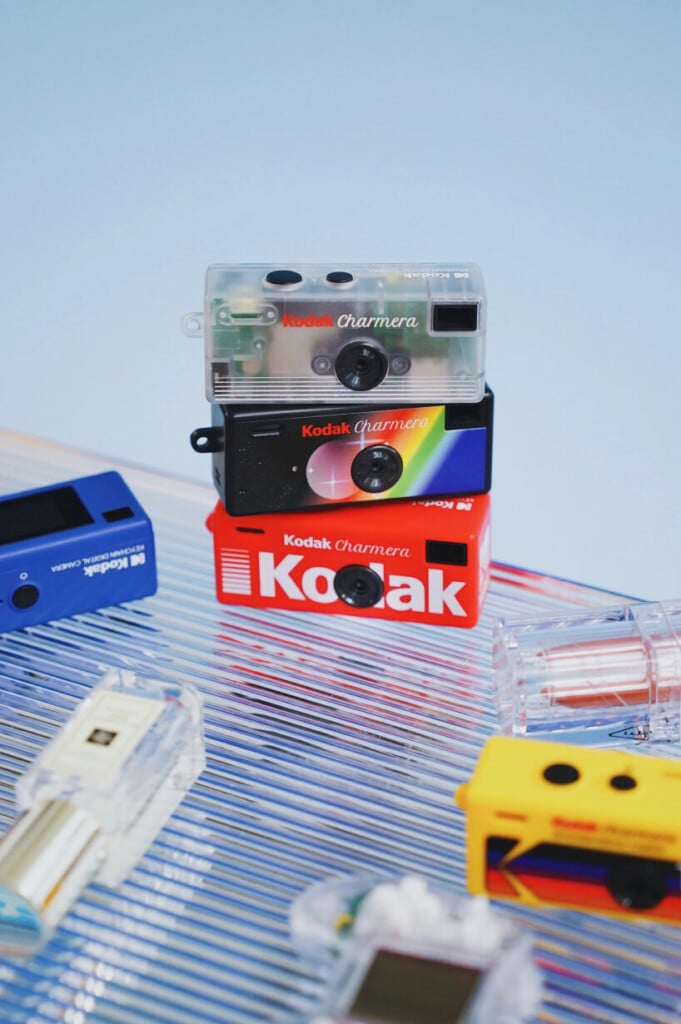
The logic is the same as the Labubu collectibles that became a viral phenomenon: small size, multiple designs, and blind box packaging that turns the purchase into a playful, unpredictable act. Kodak has understood that nostalgia works best today when it becomes collectible, with an aura of rarity and surprise. It’s not just a camera: it’s a fetish object, something to keep in your pocket, show your friends, and maybe photograph in turn.
With seven versions available—including a transparent one that reveals the circuitry—the Digital Charmera seems to speak more the language of cult gadgets than that of traditional cameras. And yet it all works: its blend of vintage aesthetics and digital immediacy taps into that craving for “retro-tech” that’s winning over new generations, always balancing between past and present.