Between botanical research, material experimentation and collectible design, the Polish designer Marcin Rusak rethinks the relationship between nature and everyday objects, giving new form to what is normally destined to disappear. What remains of a flower’s beauty when it wilts? For Marcin Rusak, the answer lies not in trying to preserve its form intact, but in the possibility of transforming it into something new. Faded petals, dried leaves and unsold flowers thus become part of tables, seating, decorative surfaces and installations, in which plant matter stops being a mere ornament and takes on a structural role. The result is a design that challenges the boundary between natural and artificial, but also the way we attribute value to the objects that surround us.
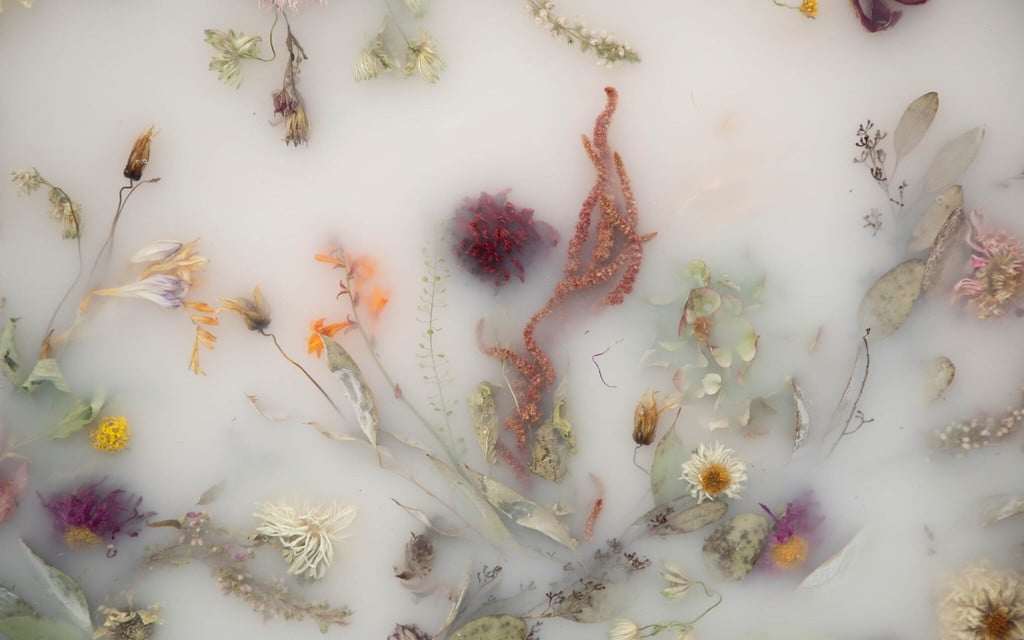
Born in Warsaw in 1987, Rusak grew up in a family connected to flower growing: a personal history that becomes the starting point of his research. After studying at the Royal College of Art in London, where he completed his master’s in Design Products, he developed a practice that combines design, art and material research. His interest in the floral world, initially tied to decoration, gradually shifts toward what is normally ignored: the waste of the supply chain, organic transformations and the traces left by time.
From unsold flowers to a new material
One of the projects that define this direction is Flowering Transition, developed starting in 2014. During research on London’s flower markets, Rusak confronted the amount of plant material discarded every day and began collecting unsold flowers to experiment with new possibilities for their use. This investigation gave rise to a path that includes objects, textiles, fragrances and experimental materials, also recounted in the publication of the same name from 2014.
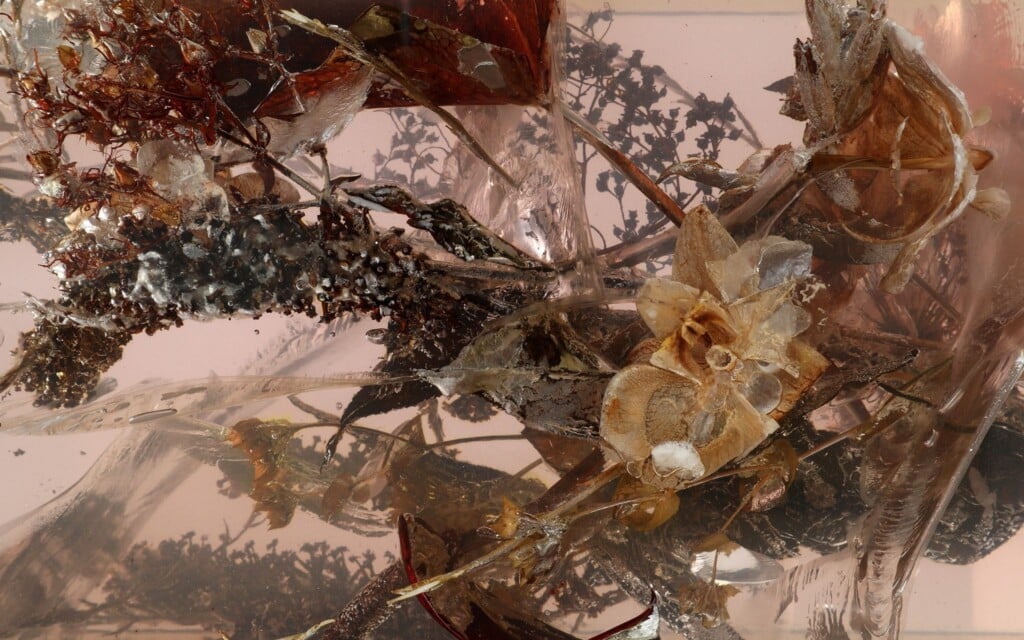
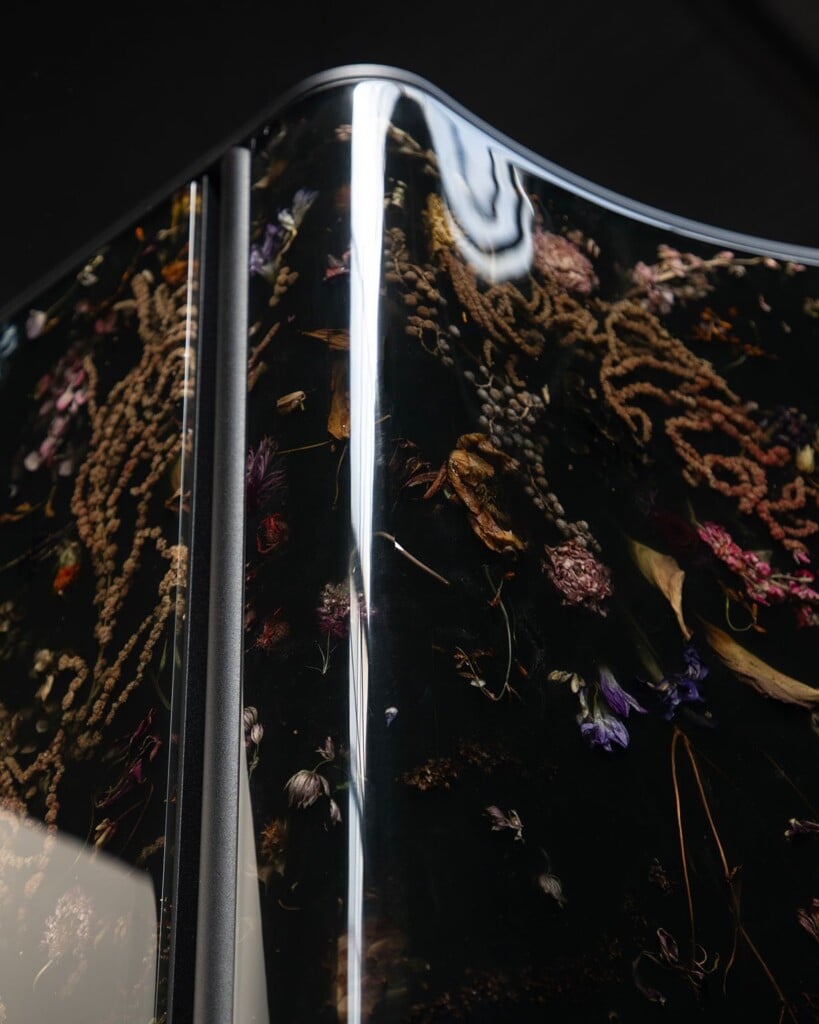
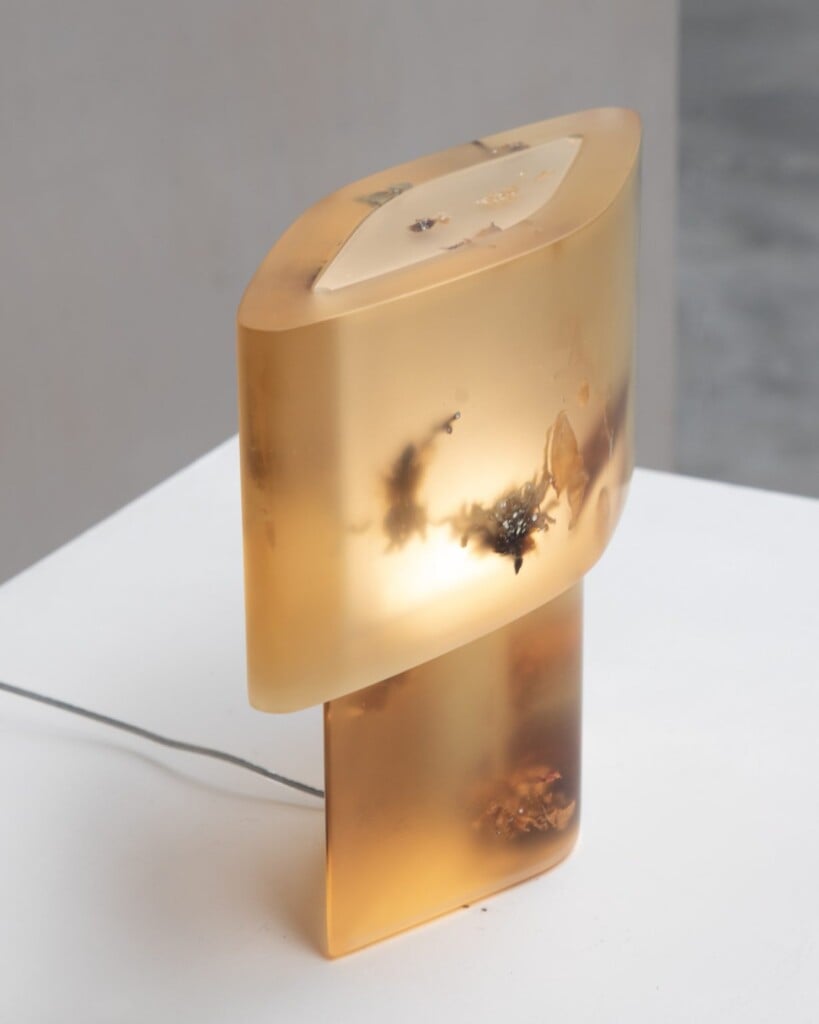
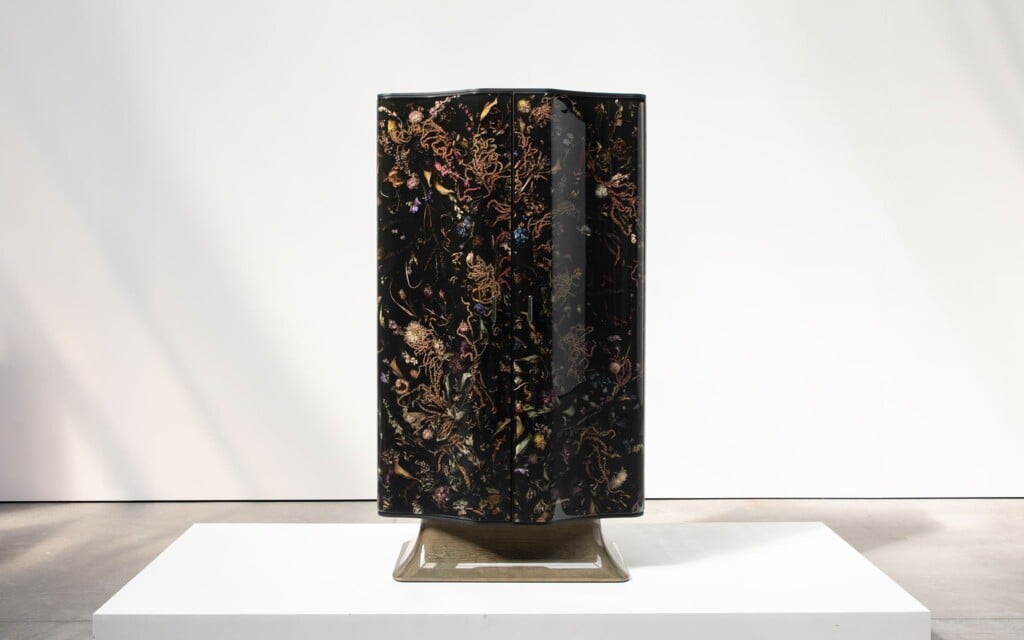
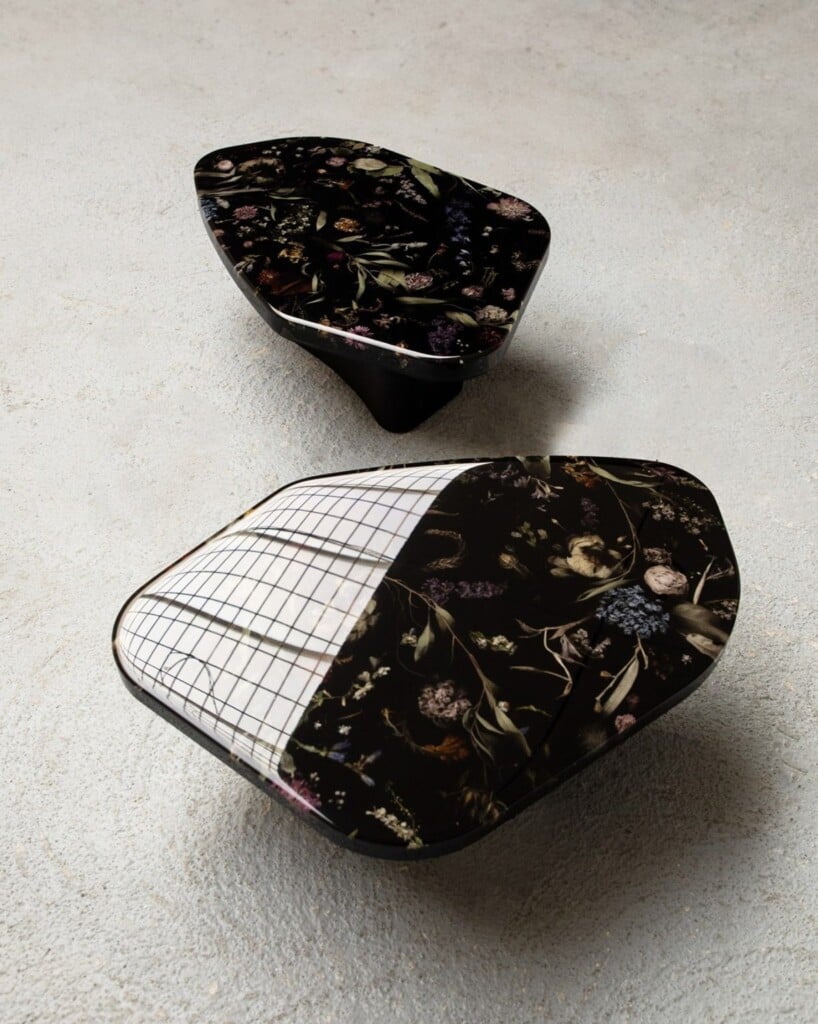
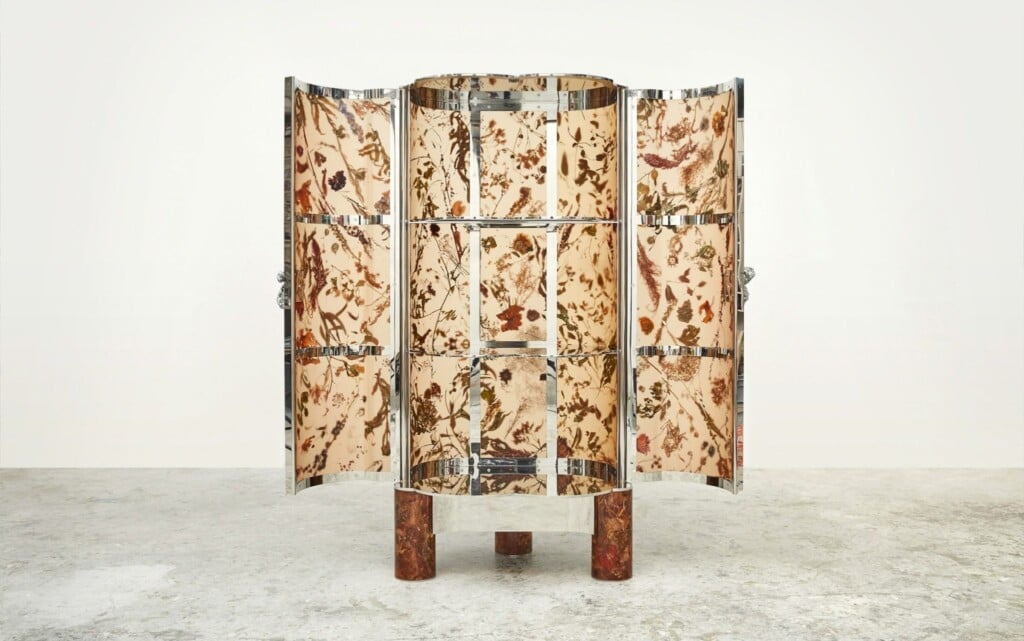
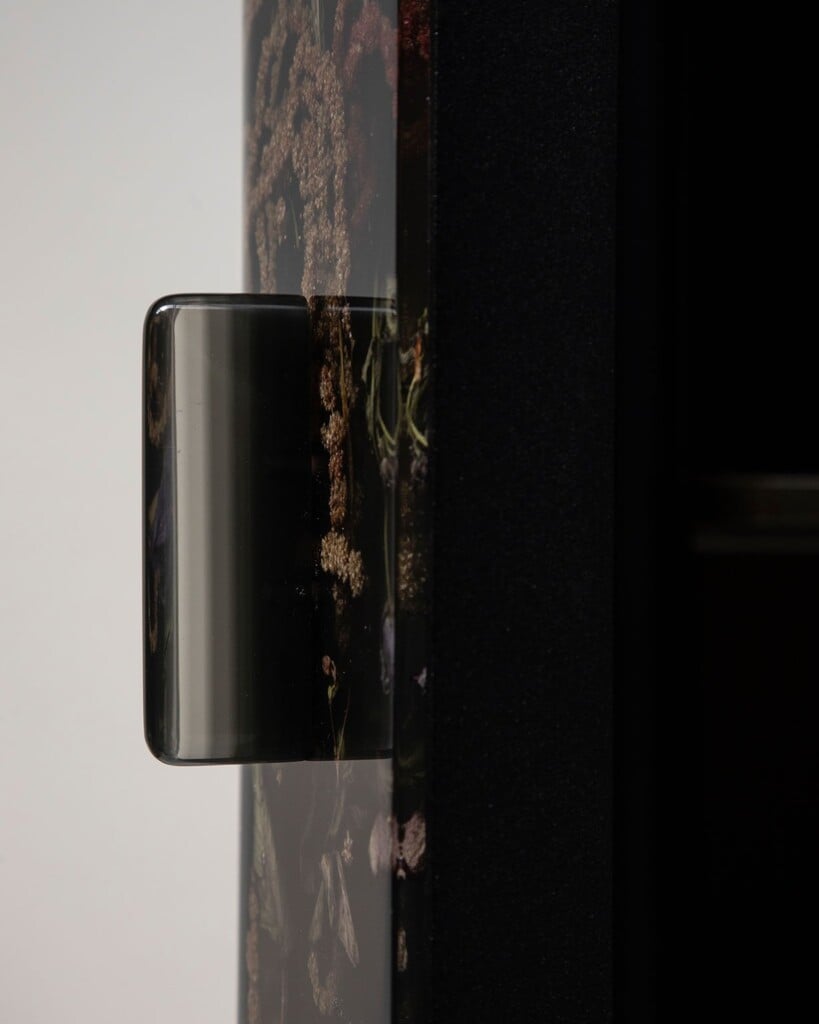
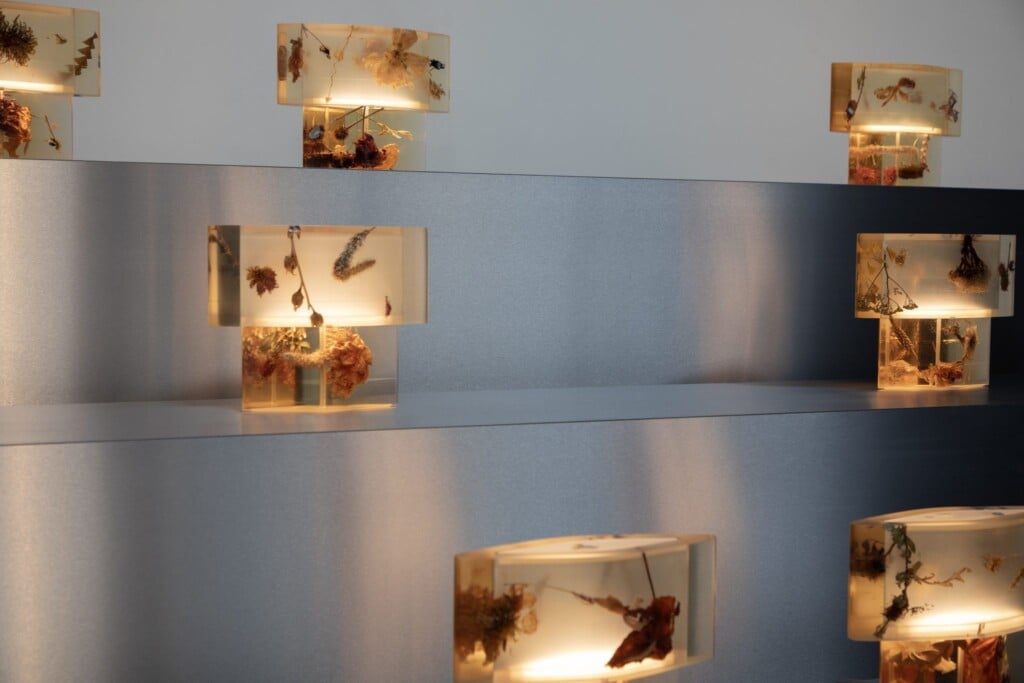
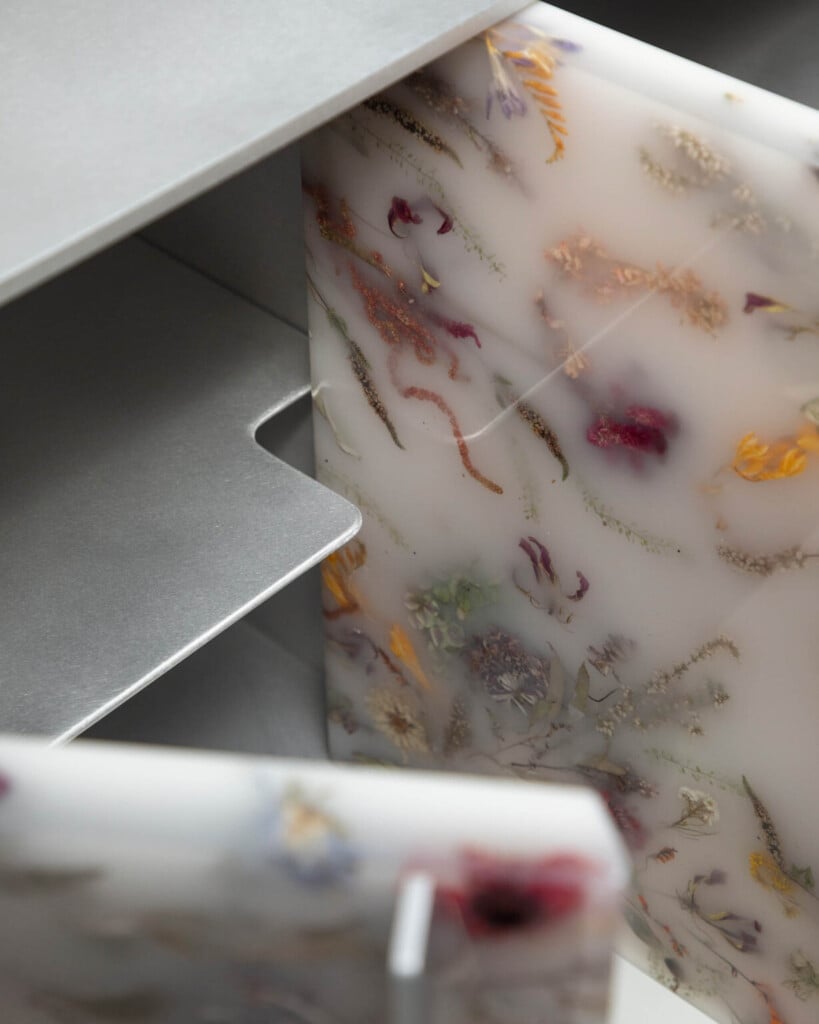
The Flora series represents one of the most recognizable evolutions of this research. Flowers are selected, processed and embedded in resin, becoming part of deeply toned surfaces crossed by petals, stems and plant fragments. By cutting and working the material, Rusak brings to the surface details reminiscent of fossils, mineral veining or landscapes observed under a microscope. What was once destined to be thrown away thus acquires a new presence, without completely losing the memory of its origin.
With Perma, the designer develops this technique further, applying it to furnishing elements and sculptural forms. Floral matter is not used to decorate an already defined object: it helps determine its visual identity. Each composition presents variations in color and in the arrangement of the fragments, making the process of transformation an integral part of the result.
Time is not a flaw to hide
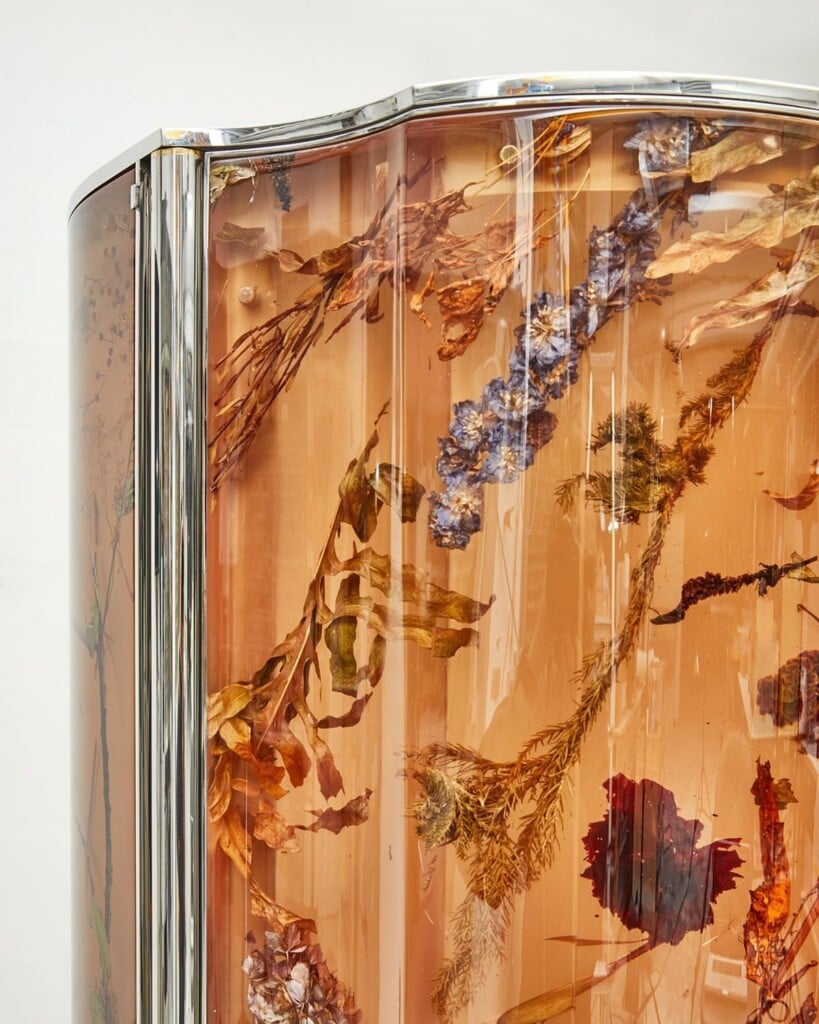
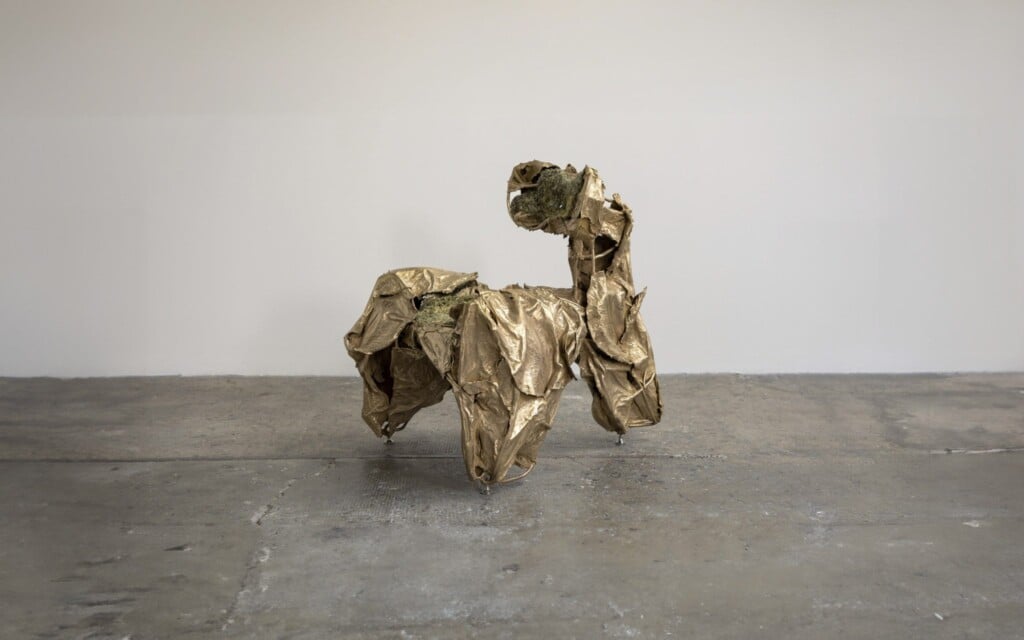
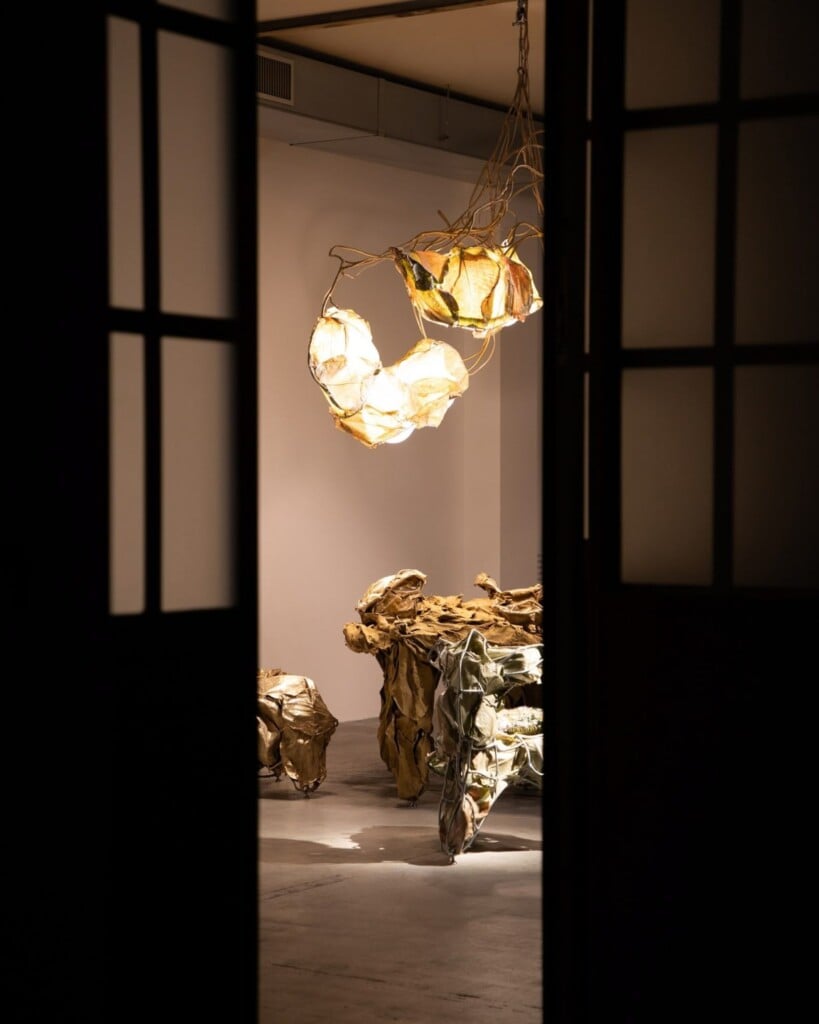
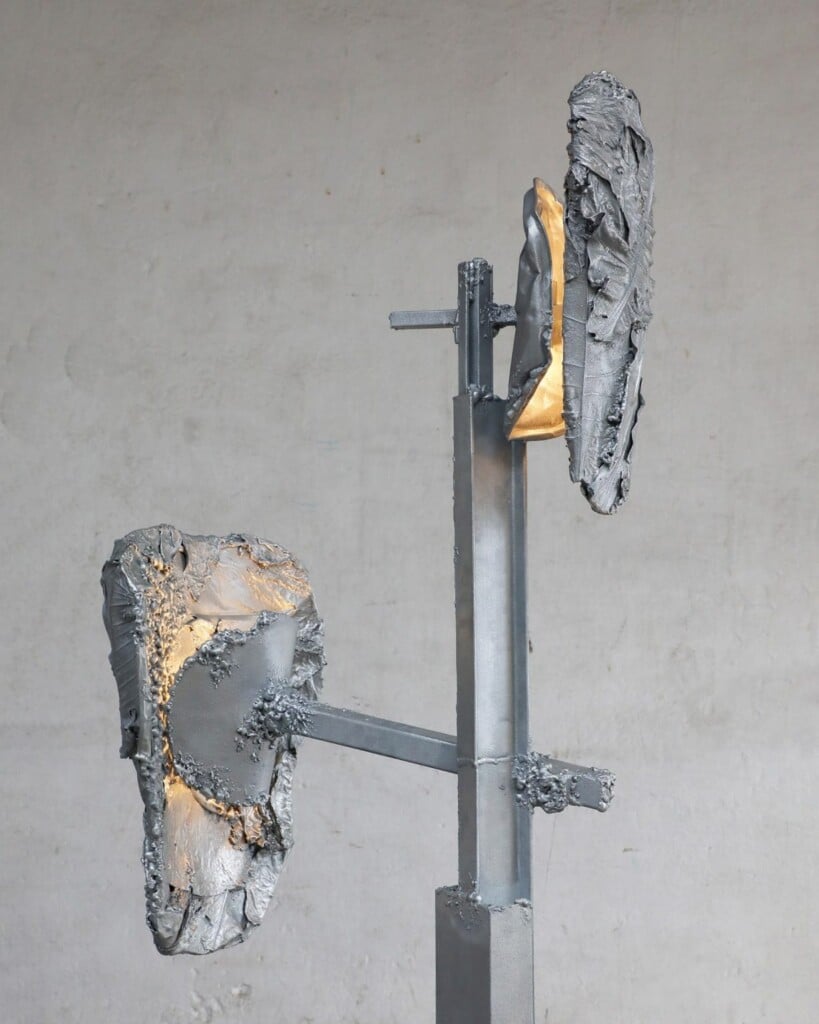
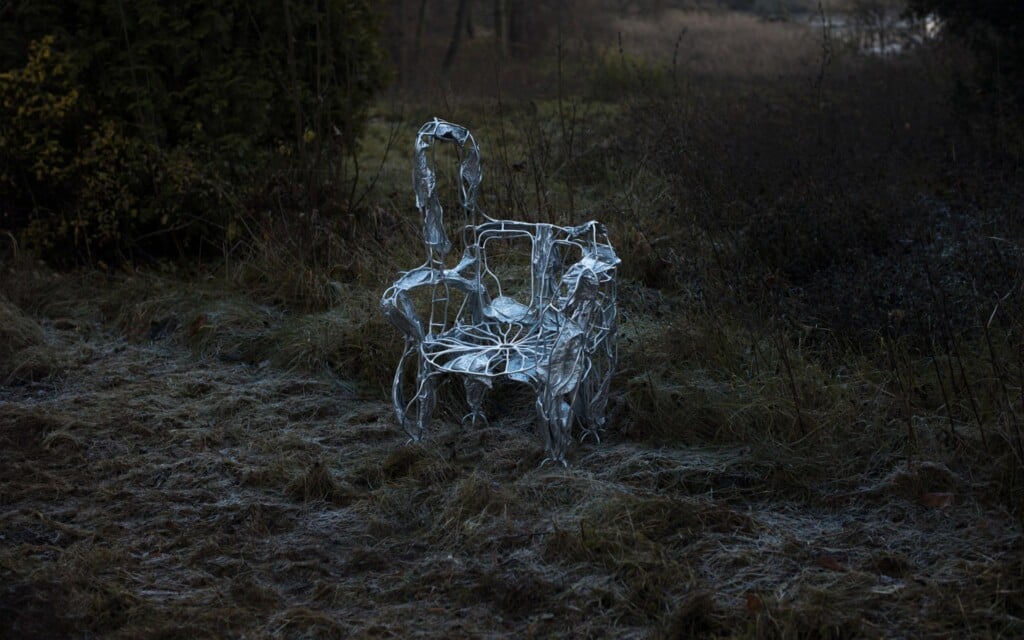
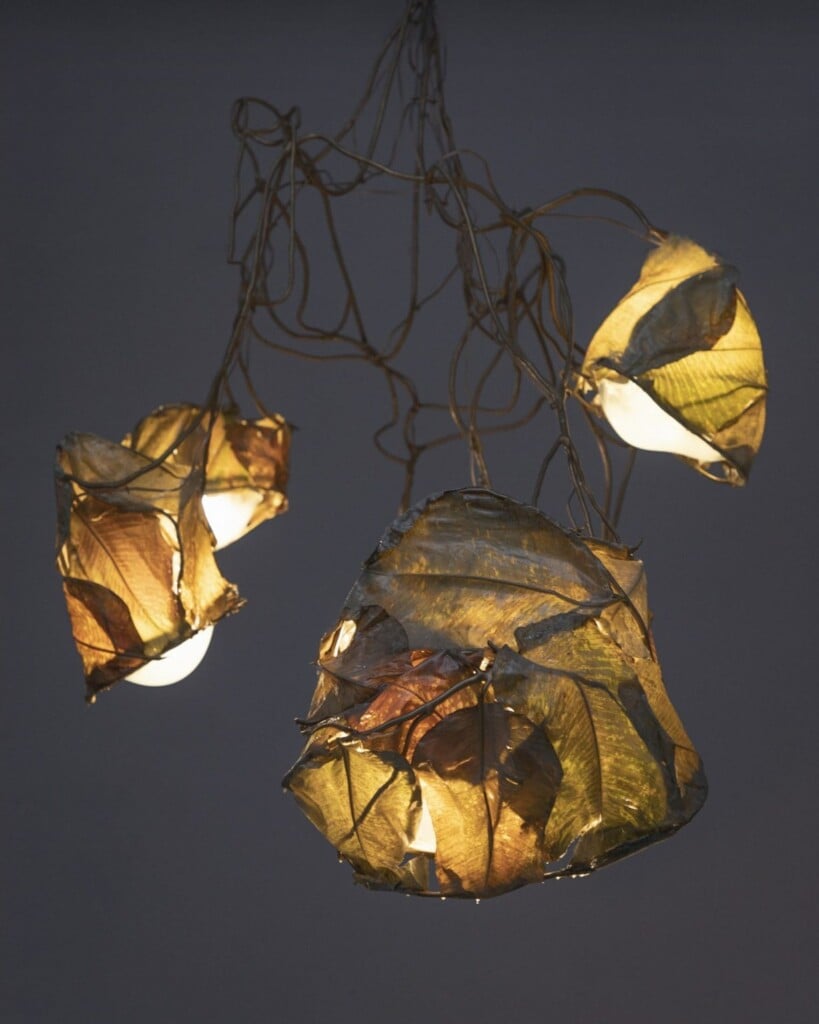
Rusak’s research is not limited to making what is perishable durable. In some projects, the designer explores precisely the possibility of letting materials change, showing how aging can become a quality of the object rather than a problem to be corrected. This is the case with Protoplasting Nature, a series that brings together metal structures and dried leaves. The plant components are shaped around a framework, forming surfaces that gradually change over the years. The object is not conceived as a motionless form, but as something that continues to evolve even after it has been made.
This perspective introduces a reflection on contemporary design: we are used to considering durability as a synonym of perfection, trying to avoid scratches, discoloration and change. Rusak instead proposes to look at these transformations as part of an object’s material history. Patina, color variations and imperfections become signs of time passed, capable of creating a more personal relationship between the owner of a piece and its evolution.
Designing from what is overlooked
In Marcin Rusak’s work, the recovery of waste is therefore not just a matter of reuse, but a way of questioning the mechanisms that establish what deserves to be preserved and what, instead, can be discarded. Flowers are a particularly significant example: they gain value for their appearance, they are grown, sold and admired, but they can become waste within a few days.
By transforming them into objects destined to last, Rusak alters this sequence and opens up new design possibilities. His practice crosses botanical research, craftsmanship and processing technologies, developing materials that are not mere alternatives to conventional ones, but carry with them a recognizable story. And while flowers continue to remind us how brief their existence is, Rusak’s design suggests that even what seems destined to disappear can find another chance, without entirely losing the memory of what it was.