There are collectors who accumulate objects because they cannot part with them, and collectors who accumulate them because they think that, sooner or later, someone should look at them. Public Collectors decidedly belongs to the second category, even if at a certain point the two things end up coinciding.
Founded in Chicago in 2007 by the artist and publisher Marc Fischer, Public Collectors is a project dedicated to everything that normally doesn’t seem important enough to be preserved: underground materials, personal archives, anonymous photographs, flyers, fanzines, recordings, administrative documents, online listings, newspaper clippings, found objects, private collections, and even those strange categories of images that nobody ever thought of turning into a collection.
The starting idea is simple. Museums, libraries and institutions collect a great deal, but they also collect according to precise criteria, and whatever falls outside those criteria risks disappearing. Public Collectors therefore tries to intervene right there, in the blind spot of the archive.
The result is hard to define. It is not exactly an archive, because it does not claim to be neutral, quite the opposite. It is not a museum, because it does not necessarily separate the object from its everyday use. It is not a publishing house, even though it has produced dozens of publications since 2007. And it is not even a simple private collection made accessible to the public. Public Collectors is a strange creature, a kind of permanent fanzine, in which collecting becomes propulsive and turns into a drive toward cultural production.
The interesting thing is that Fischer seems to take seriously one of the most fertile insights in the history of collecting. An object changes when the system of relations it is placed in changes. Walter Benjamin – a compulsive hoarder himself – understood that the collector removes things from their normal economic function and recomposes them according to a logic entirely his own. Public Collectors takes a further step, not limiting itself to building a private collection but making that gesture of recomposition public.
For Fischer the collector is no longer someone who owns things, but someone who sets connections between things in circulation, and this is where the project begins to get truly interesting.
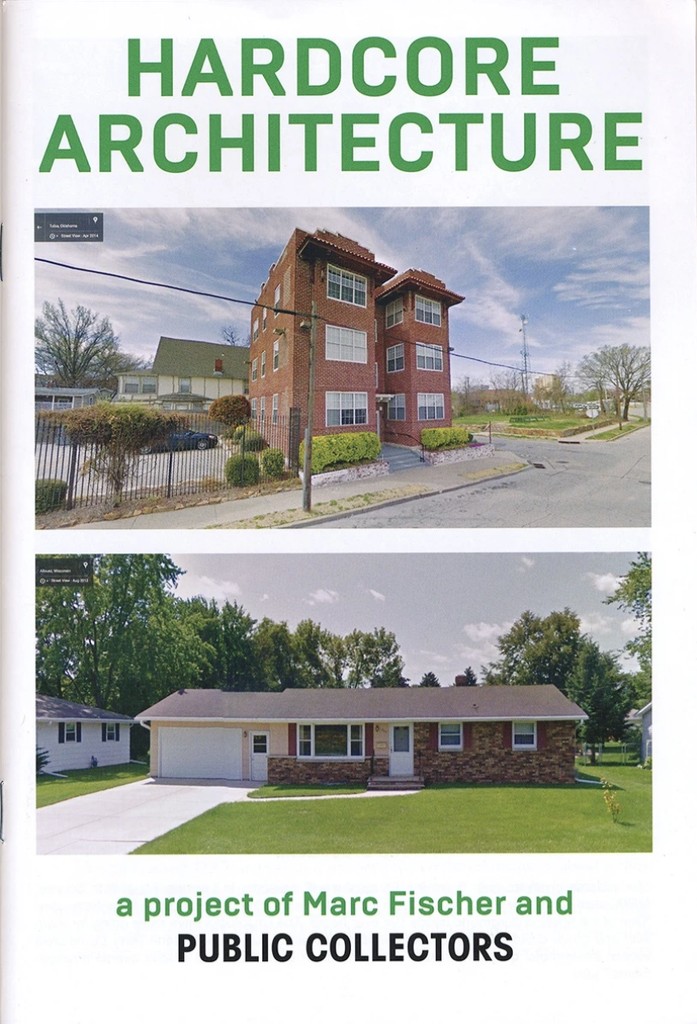
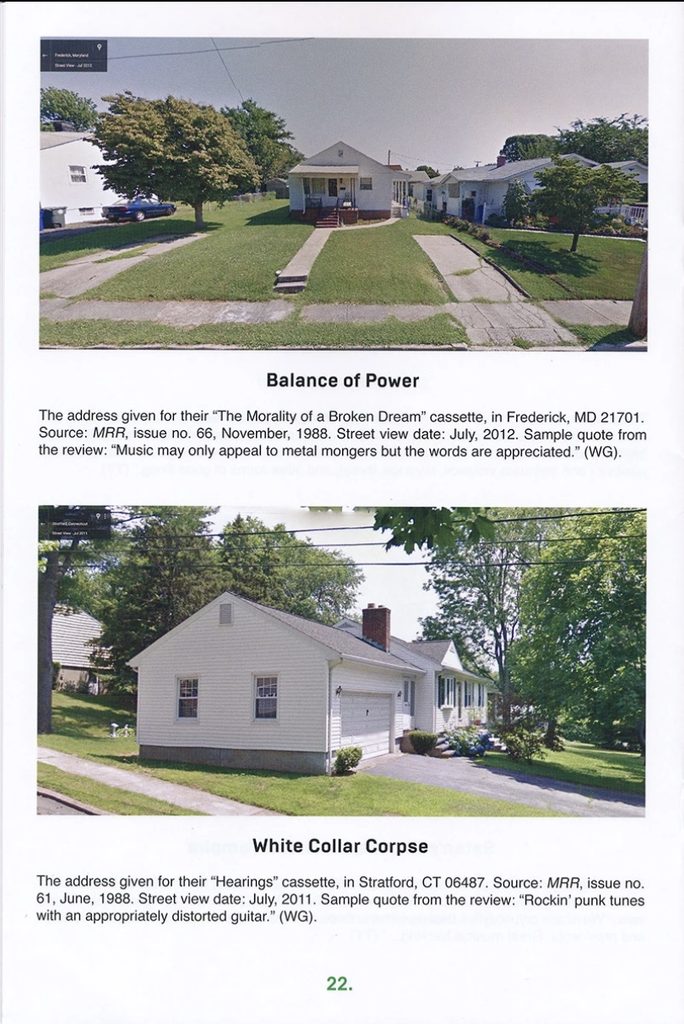
One of his best-known works is “Hardcore Architecture” (2008), born from an apparently absurd question. Where did American hardcore bands of the 1980s live?
Fischer started from the addresses published in the contact listings of Maximum Rocknroll between 1982 and 1989 and turned them into a sort of urban archaeology of the underground. The homes of groups such as The Crucifucks, The Didjits, Poison Idea, Pussy Galore, Sonic Youth, Capitalist Casualties or Murphy’s Law are photographed through Google Street View and recomposed in publications, exhibitions and online archives.
It is hard to imagine anything more anti-spectacular. There are no concerts, no famous musicians on stage, no rare records or legendary photographs, only their homes. The banal architecture of an American city suddenly becomes a map of the history of underground music.
Punk is removed from its usual iconography and relocated in its material infrastructure – the place where someone slept, rehearsed, organized concerts, printed flyers, received letters. It is a punk version of urban sociology, but without any pretense of being scientific.
The project also shows something further, that the interesting object is not necessarily the rare one, but the one that becomes interesting after being put in relation with something else.
The same logic appears in the series “Library Excavations” (2009). Fischer walks into public libraries and looks for materials that physically exist but, in practice, are consulted very rarely. Promotional photographs of musicians, illustrations from government manuals, materials linked to the prison industry, documents about Chicago artists. It is not a matter of discovering hidden treasures in the romantic sense of the term. On the contrary, the treasure is often precisely the thing that nobody ever thought of considering as such.
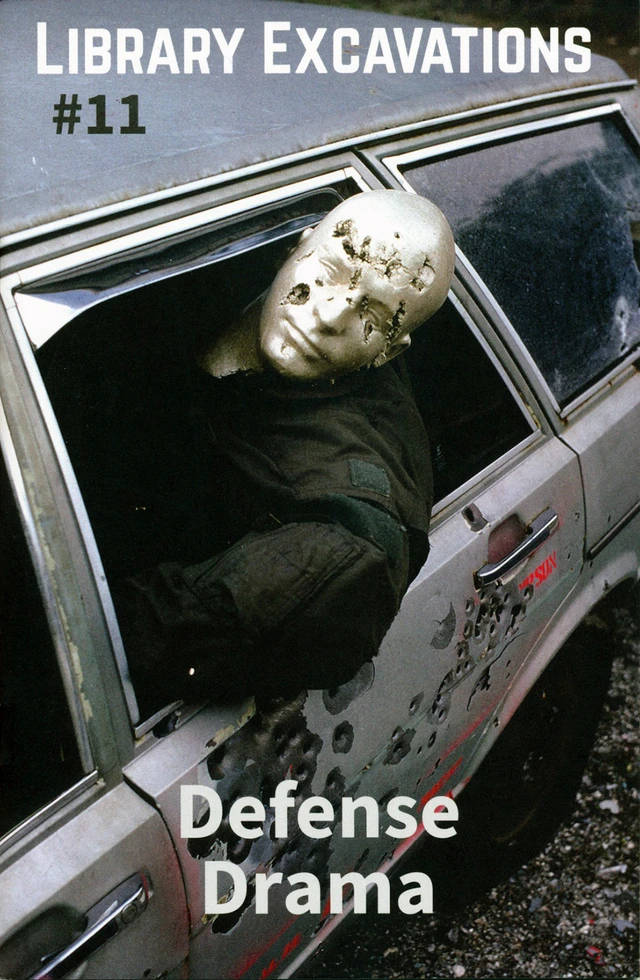
These examples describe the radical underground approach of Fischer’s project, because they show that there is neither interest in nor veneration for the original object. What matters is the trace it can leave along its unpredictable path.
Instead of being a vault, the archive becomes a potentially infinite chain of transformations, and naturally, sooner or later, this obsession was bound to reach the Internet.
One of the funniest and most unsettling series by Public Collectors comes in fact from eBay and Craigslist. “Grave Plots” (2019), as the series is called, collects listings by people trying to sell or swap family graves; “Sold as Blank/Possible Lost Media” (2019) looks at eBay listings for recorded videotapes sold as “blank” to get around the platform’s restrictions. “You Spat on Me By Accident” (2024) takes thousands of listings from Craigslist’s “Missed Connections” section and turns them into a small portrait of post-election America in 2024, in which people who crossed paths in a supermarket, in a shop, in line to vote, entrust the Internet with their hope of finding each other again.
I like to think of it as a sort of involuntary poetic language in which Fischer invents nothing. It is enough for him to observe, for long enough, what the Internet – and not only the Internet – normally considers banal or useless. A sales listing, a photograph uploaded by a stranger, a sentence left on a forum become editorial material. Like a post-digital readymade, but without the artist’s gesture declaring “this is art”.
One of his most recent projects, “Provisional Costumes” (2023), takes this attitude to the point of absurdity. Fischer goes through thousands of photographs sold on eBay and starts collecting images of people in costume, mostly from the 1970s to the early 1990s. Halloween, house parties, improvised disguises, ordinary settings, and the interesting aspect is that the theme emerges during the search, not before. In Fischer’s eyes the photographs begin to take on the look of book pages, and that is when one starts thinking about pairings, sequences, rhythms. The catalogues and makeshift archives we draw from, the ones we all visit with a certain regularity, change their original function through the subversion of rules and the search for a new perspective, becoming a Warburgian Mnemosyne, an endless iconographic archive or, without even stretching it too far, a curatorial device.

The image does not have to be beautiful, it has to be charged with possibility, and this is probably one of the most original traits of Public Collectors. Not by chance, within the same “constellation” there can coexist a photograph found online, the back of a subway card, an old advertisement, the plan of a house, a library card, or a person dressed as a monster in the living room of their own home. As if he had made his own the lesson of Maurizio Ferraris and his studies on Documanity and the leaving of traces, Fischer seems interested above all in the moment when an image stops being simply a document and begins to become a visual object.
“News Photo Back Views” (2025) is perhaps the most radical example of what I have called a new perspective. Instead of focusing on agency photographs, Fischer looks at their backs, with stamps, numbers, annotations, pasted captions, publication dates, codes, traces of processing. The side normally considered secondary becomes the main subject. The news image is turned over like a stone to look at what lies underneath. Fischer compares these backs to certain works by Rauschenberg and Basquiat, precisely because the system of annotations and erasures ends up producing an autonomous graphic surface.
Here the work of Public Collectors brushes up on one side against the practice of Mail Art, and on the other against the aesthetics of residual information.
Stamps, codes, corrections, stickers, numbers, handwritten notes, printing imperfections. Everything that should normally remain invisible because it belongs to the backstage of production suddenly becomes surface; an aesthetic that is born not from designing an image, but from observing the way images are used.
And perhaps this is exactly why Public Collectors works so well as an editorial project too. Fischer does not seem interested in publication as an elegant container for sophisticated content. Publication is a part of the research. A booklet can be small, cheap, printed in a few hundred copies, but precisely for this reason it can afford to be extremely specific. An entire publication can be devoted to the backs of newspaper photographs, to a Viennese amusement park, to people in costume or to Craigslist listings.
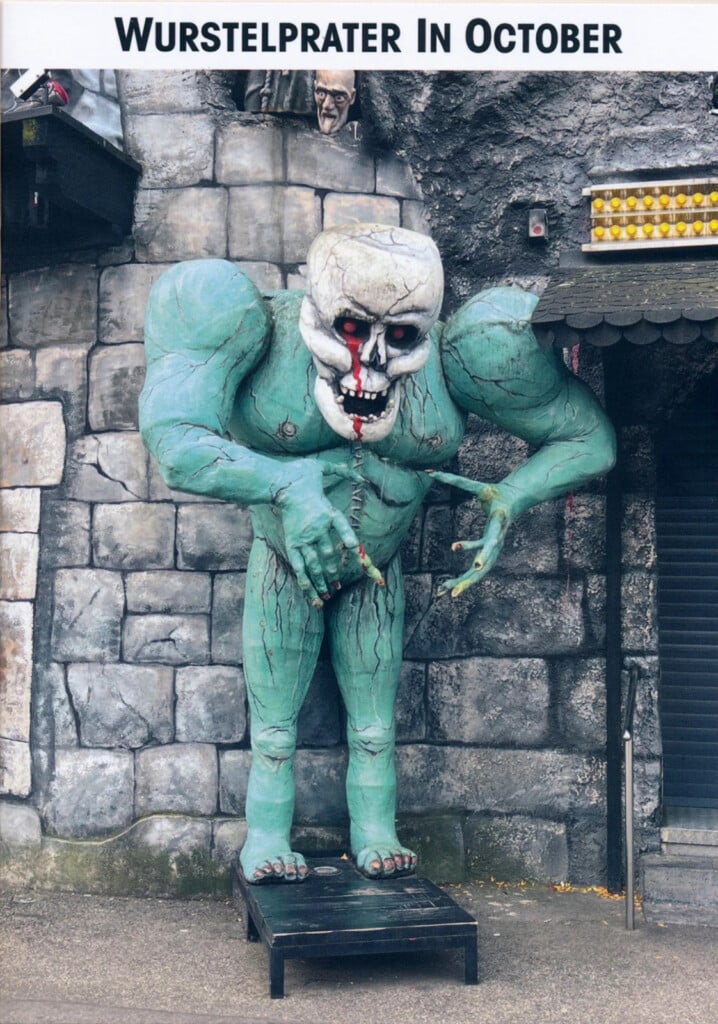
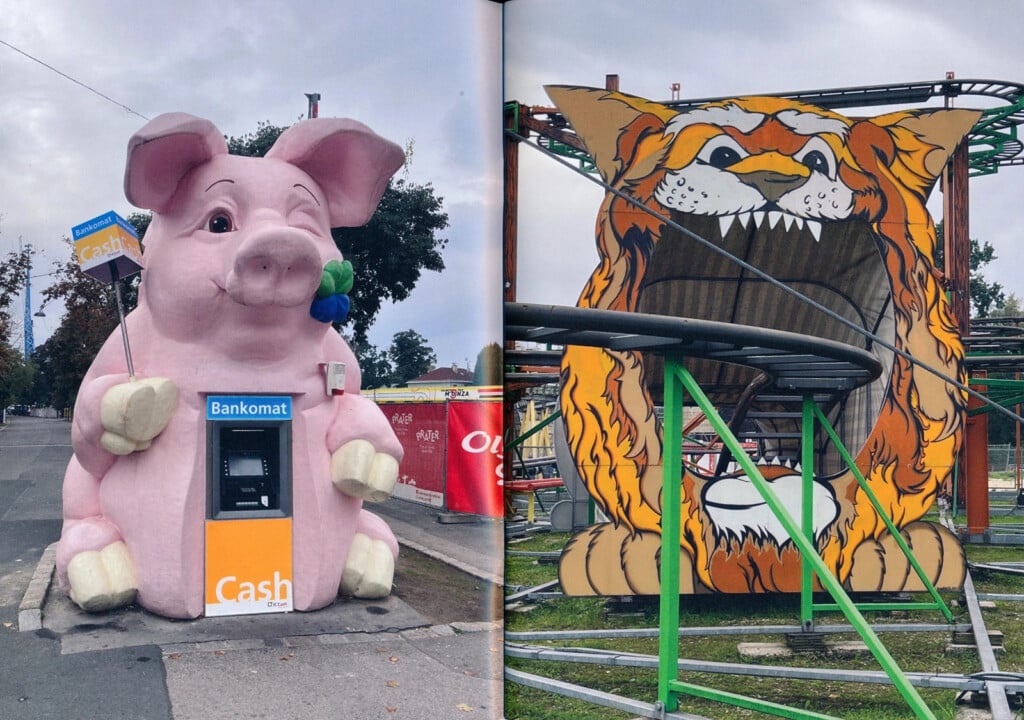
“Wurstelprater in October” (2015), for example, came about almost by chance during a trip to Vienna for an artist’s book fair. Fischer discovers the famous Viennese amusement park and starts photographing it in the days before its seasonal closing. The result is a small photo book devoted to monstrous facades, rides, signs, bizarre sculptures and details of the park. There is no grand thesis to prove, but in those pages you can savor the almost childlike pleasure of having found something very strange and wanting to share it.
I stress this underground approach because otherwise there is a risk of turning Public Collectors into an academic project about the archive, while Fischer’s method keeps something much freer, namely the curiosity of the collector who can lose hours in front of an apparently useless thing.
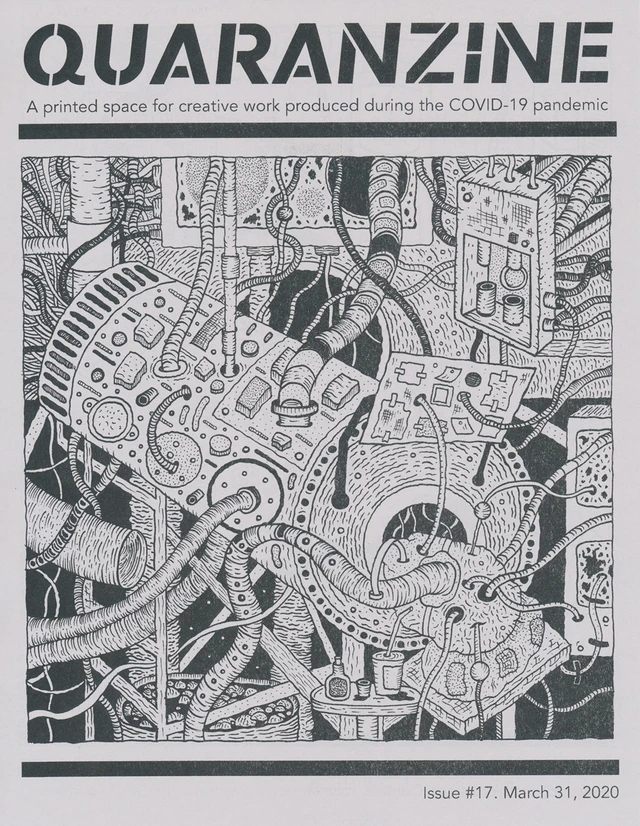
During the pandemic this curiosity turned into “Quaranzine” (2020), perhaps the project that best sums up the entire philosophy of Public Collectors. Fischer began producing almost daily a one-page publication, printed on both sides, involving different collaborators. In the end 100 issues were made in 100 days. “Worms in the compost”, loneliness, CB radio, memory, racism, protests, everyday experiences; every day could become a publication. Some copies were then stuck to benches, poles and dumpsters or slipped into fences.
The choice of the single page is anything but random. Reducing the book to its smallest possible form means asking how much publishing is really needed to create an editorial object. The fanzine thus returns to its original condition – not a cultural product in miniature, but a minimal cultural infrastructure, that is, one without rules and boundaries.
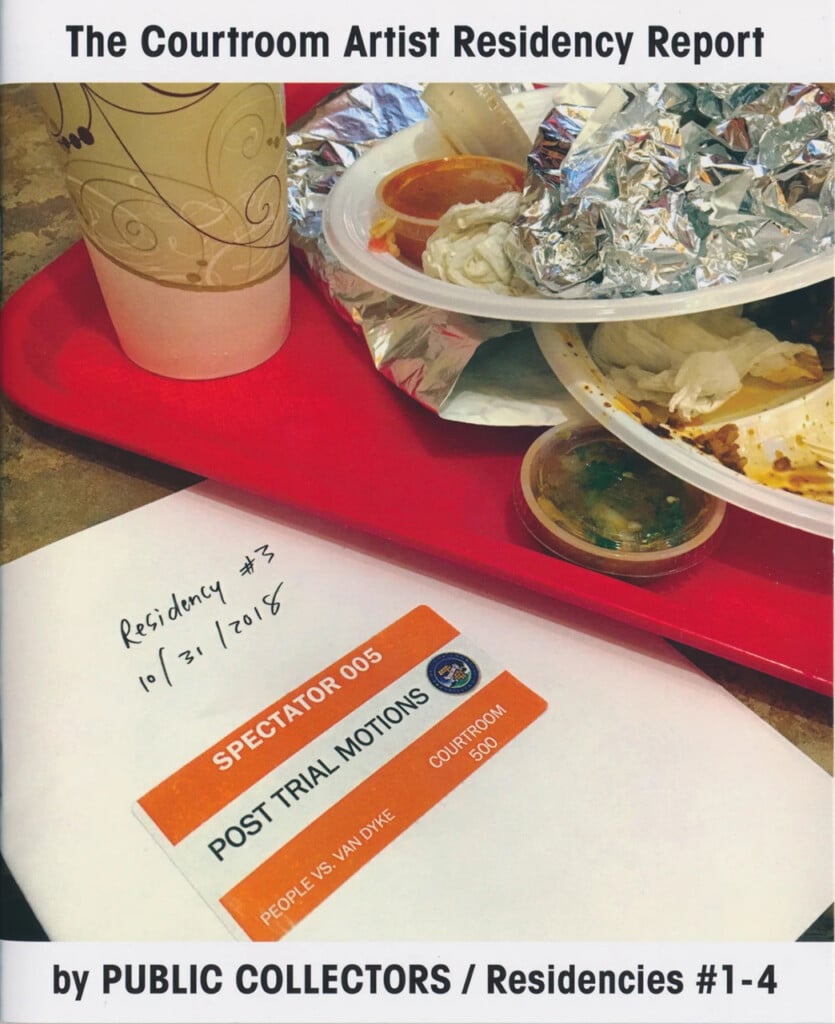
The project “Courtroom Artist Residency” (2017-2020) also starts from an idea so simple it almost seems like a gag. Fischer invites artists to spend about three hours watching hearings at the Cook County criminal court in Chicago. After the court he takes them to lunch at Taqueria El Milagro and talks with them about what they have seen. Those conversations then become publications. The lunch is not a folkloric detail; it is part of the work.
It is hard to find a better definition of an anti-artist residency. No studio, no creative isolation, no exotic destination; you observe a place and its codified dynamics and then you eat together. Experience turned into publishing.
Ultimately this is what makes Public Collectors so contemporary while being, materially, deeply analog. The project does not try to compete with the immensity of the digital archive and moves in the opposite direction, seeking the error, the detail, the deviation, the thing too specific to become an interesting algorithm.
And so, in conclusion, it is right here that the term “Public Collectors” acquires its most sincere meaning, because it transforms possession into access, collection into conversation and the archive into a form of publication. Even its aesthetic is born from this transformation, with graphics never entirely recognizable, never entirely classifiable.
Perhaps Public Collectors is, in the end, a project about the second life of things in which anything can become cultural material provided someone has the patience to look at it long enough. In an age when we have access to practically everything but less and less time to observe anything, this may be one of the most radical forms of contemporary collecting – not accumulating more, but noticing more.
Column by Francesco Ciaponi
Read also