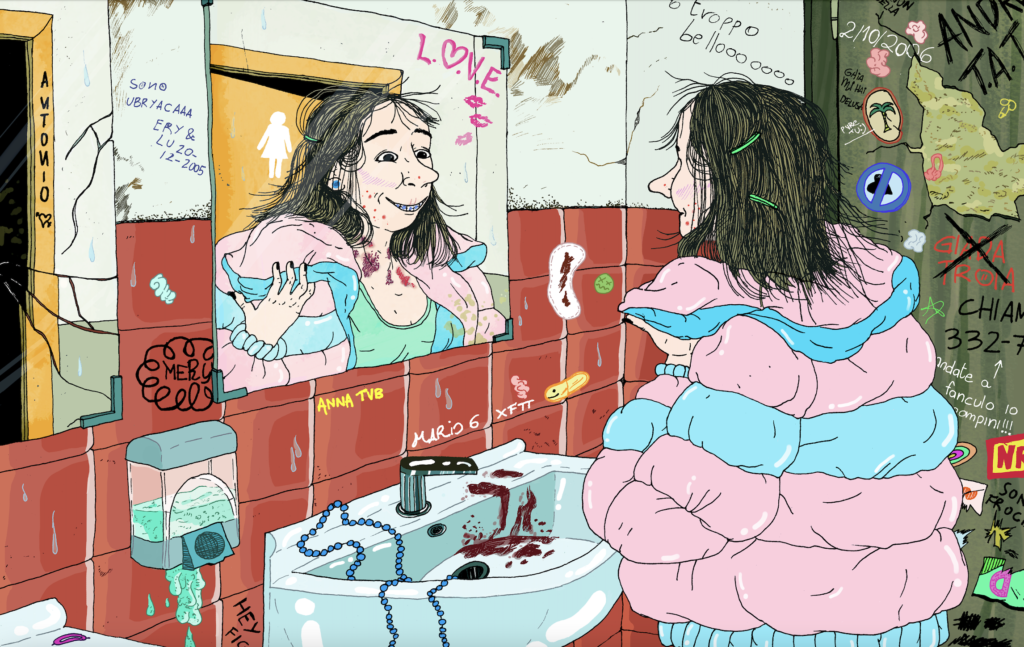
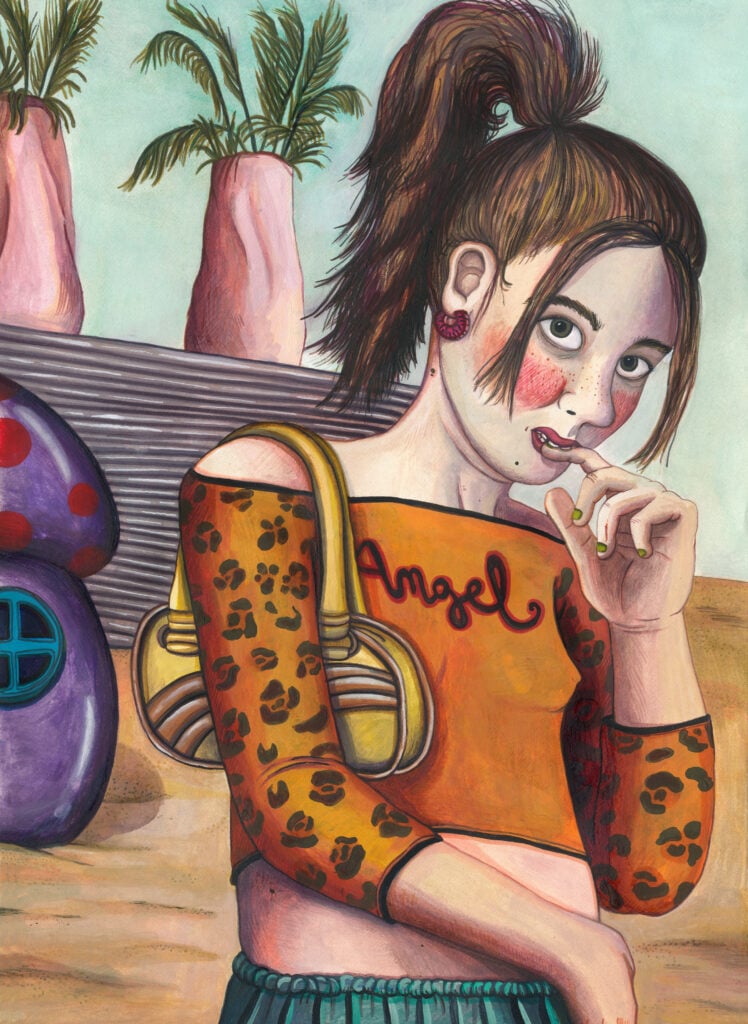
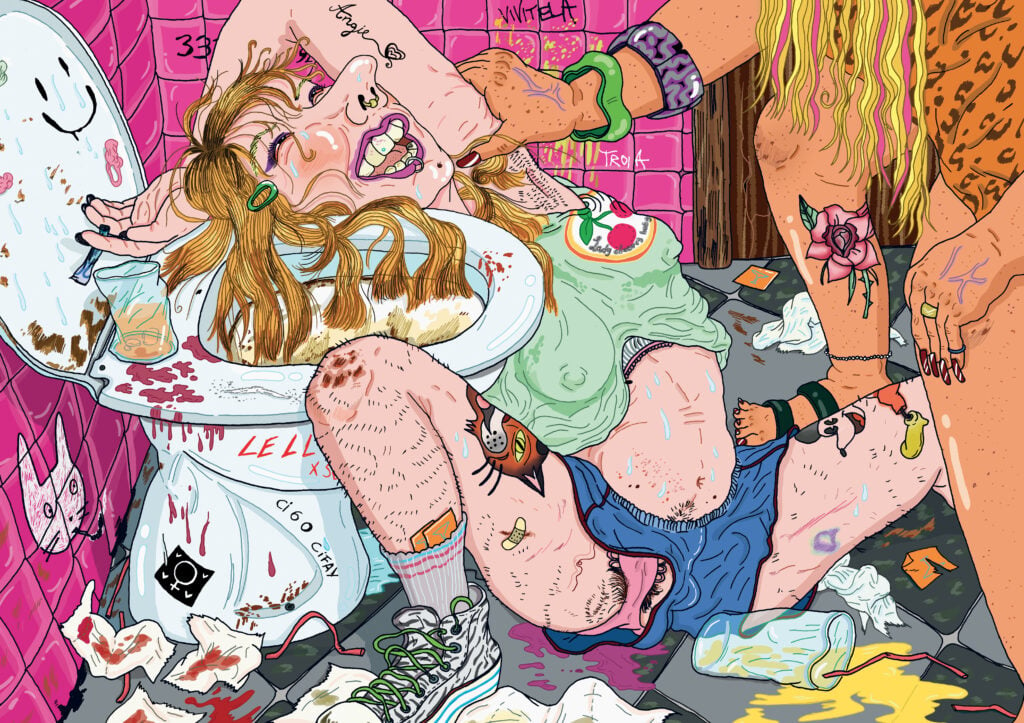
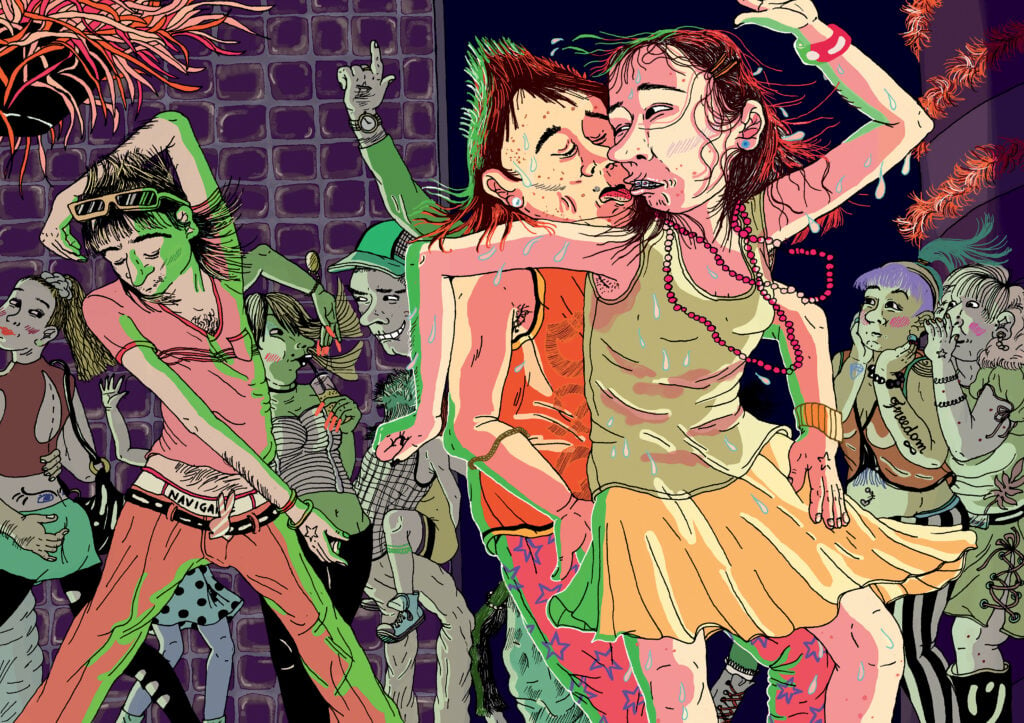
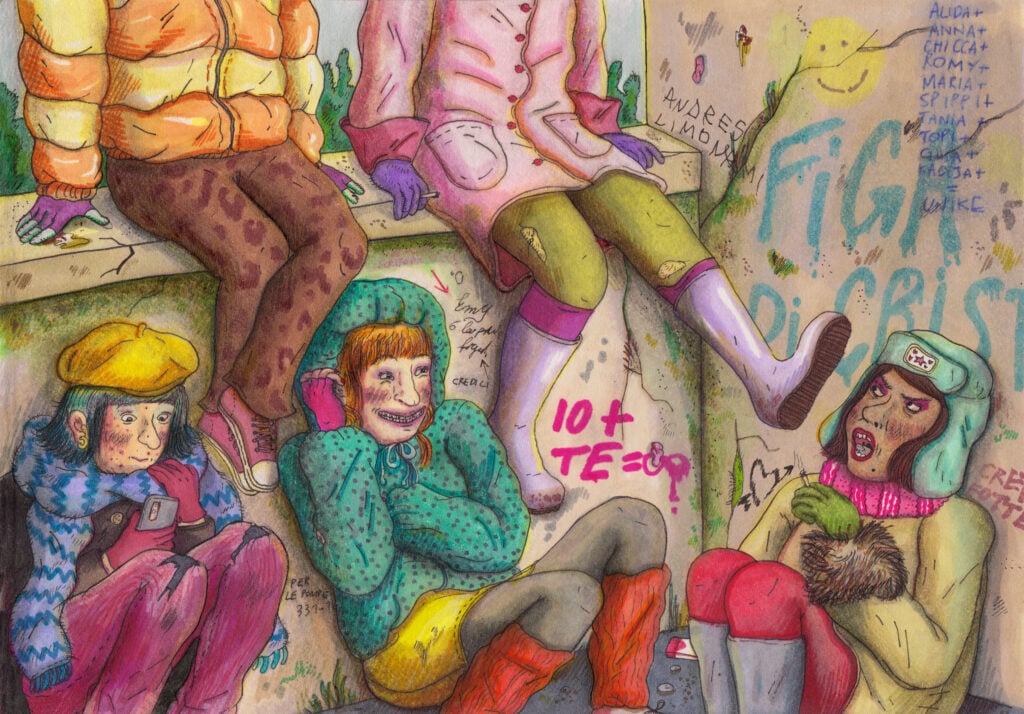
Classmates used to call her “the hyperbolic,” always too sensationalist or excessively dramatic according to them. Martina Sarritzu (Cesena, 1992) has turned her high school nickname into a profession. Her grotesque and tragicomic illustrations specifically look back at those adolescent years, investigating the complex emotions that characterize an equally complicated period. Time seems to stretch when thinking back to those years, a constant change to face, a succession of oddities, social pressures to manage, where everything – from peach fuzz to acne – seems to be an unsolvable problem. With her graphic novels, Sarritzu outlines an imaginary world as real as it is unconventional. Every detail is emphasized, dissected, and placed in front of the viewer, who easily recognizes themselves in the scenarios she presents. «It’s worth falling in love with the ugly,» Martina said in an interview with Artribune. «I began to find everything awkward and ridiculous around me fascinating and amusing. By telling it, I could make it splendid and legendary».
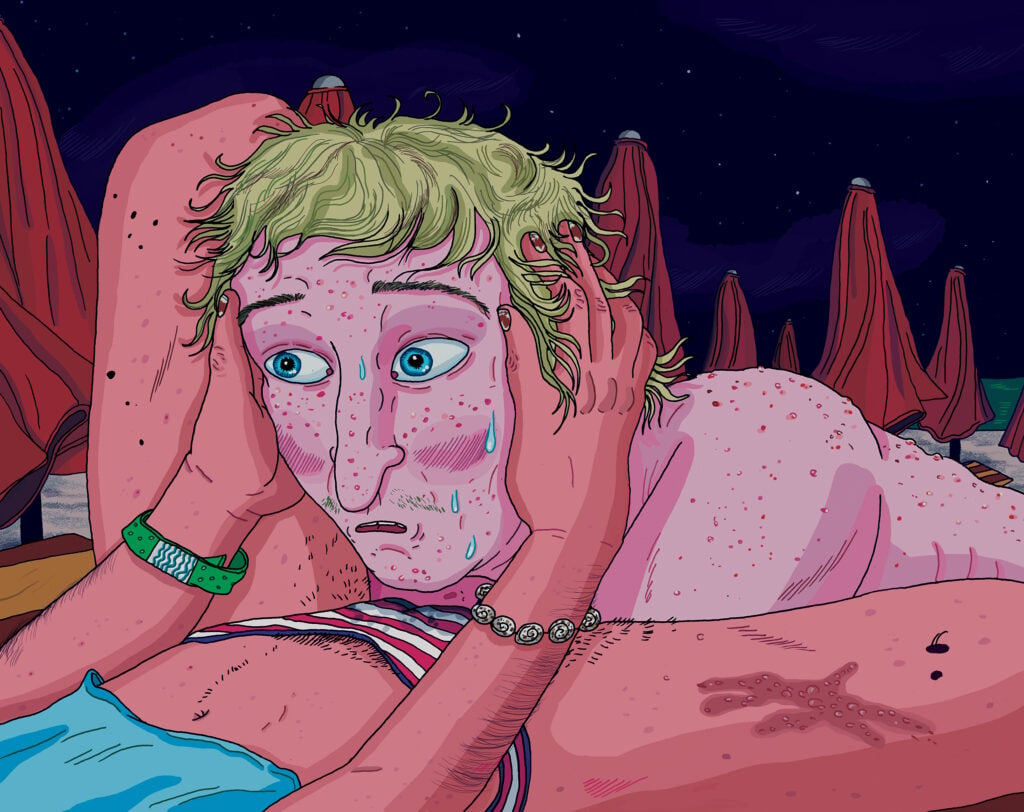
The sexual sphere is at the center of her exploration. The human body, the kitsch element, as well as the exaltation of the “imperfect” emerge forcefully, for the more modest, but with extreme naturalness to be able to break down, at least for the moment of observation, every taboo. Martina Sarritzu’s illustrations focus on deconstructing sexual and gender stereotypes, and, more generally, intentionally or unintentionally trigger a normalization mechanism so that those who look on breathe a sigh of relief. Collective identification and the sharing of initially personal discomfort can relax and alleviate potentially unresolved adolescent traumas. Everything is accentuated by the saturated colors, typical of cartoons that Millennials watched. In addition to the animated world, the fashions and trends of those years also inspire Martina Sarritzu. Brands like Onyx, Fornarina, and Guru enrich her imagination, creating strong references to a bygone era but one that resurfaces like a lucid dream.
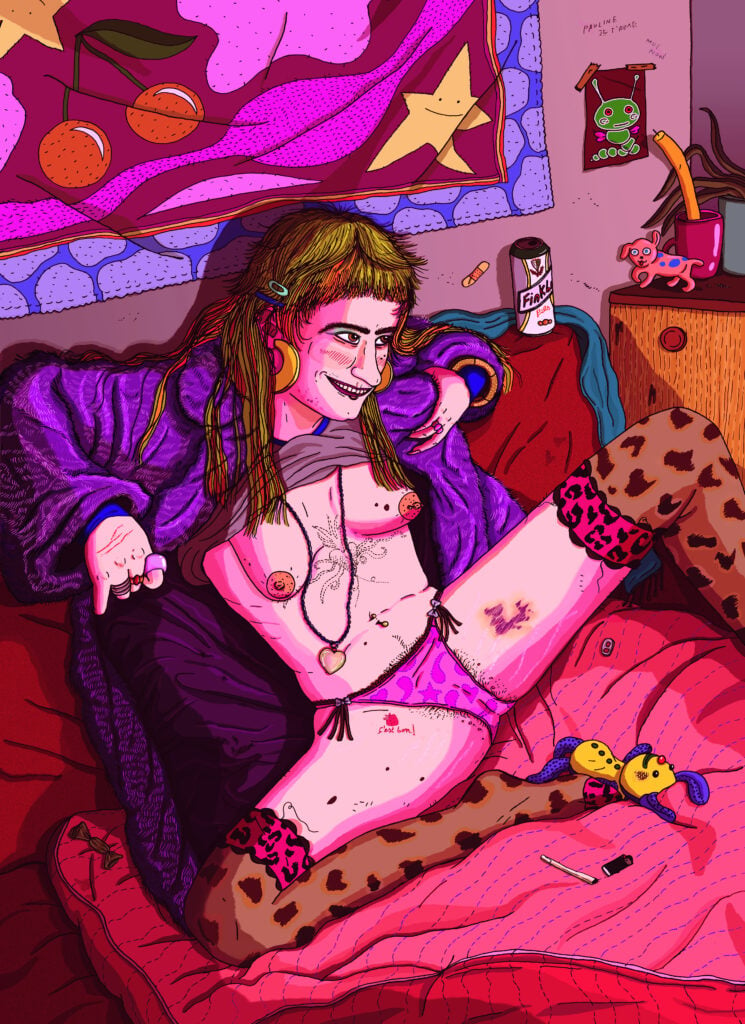
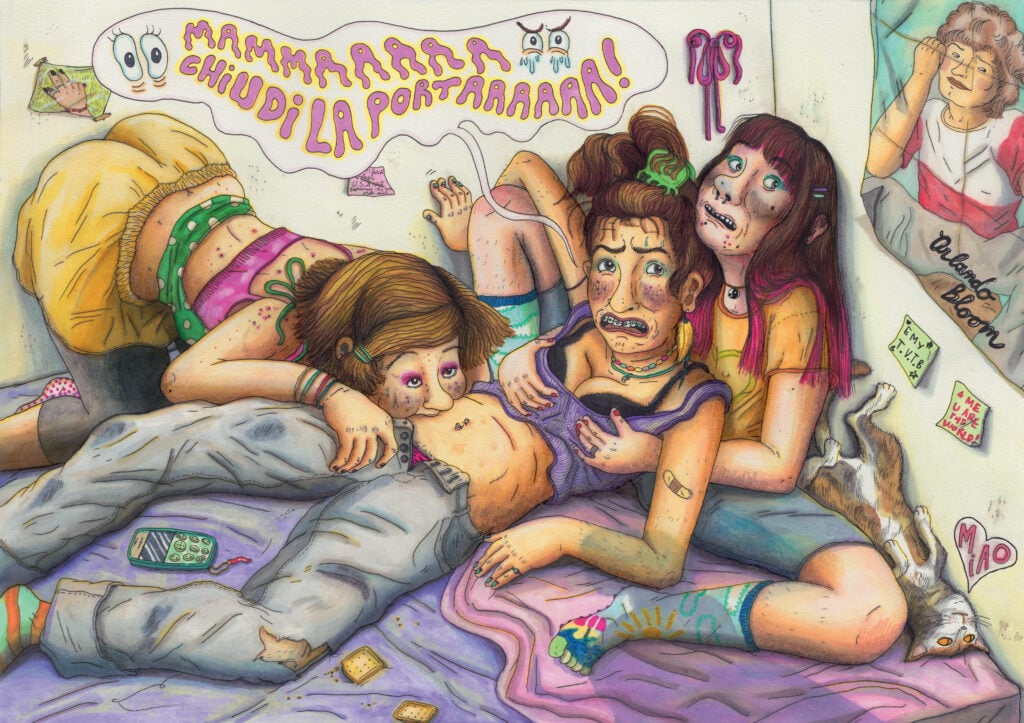
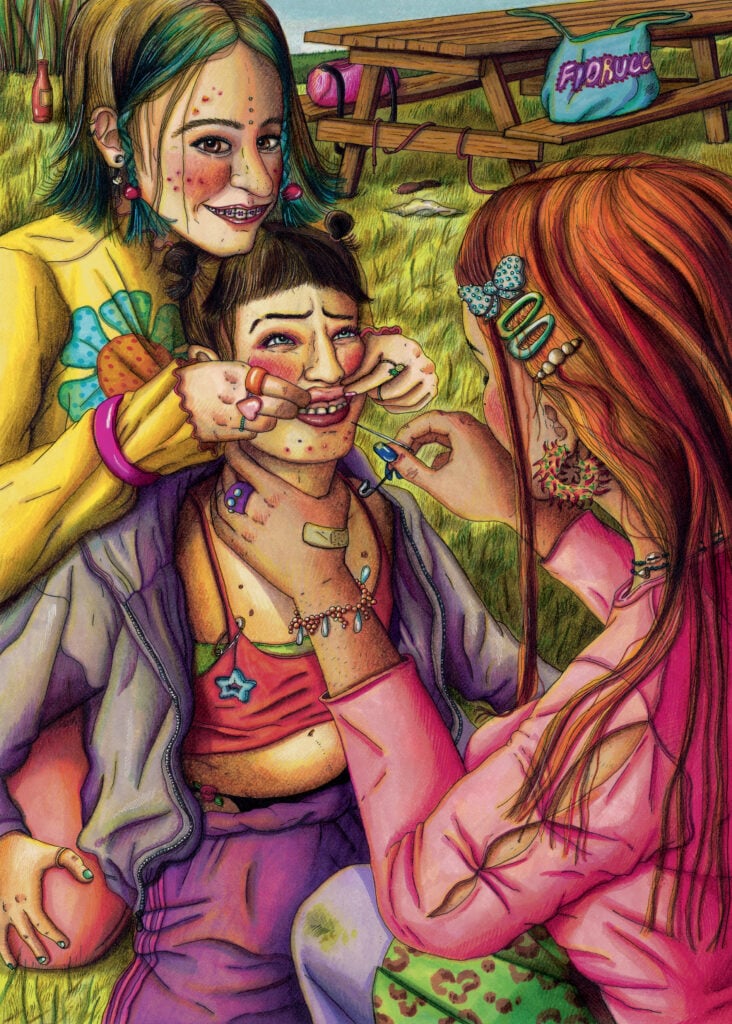
Courtesy & copyright Martina Sarritzu