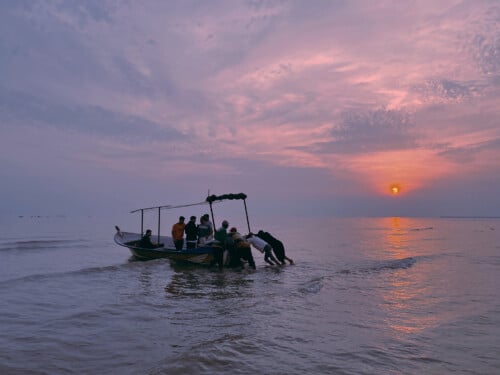
In Southeast Asia, the sea is not just a resource, but a lifeline. It is precisely from this fragile dependence that Overfishing in Southeast Asia was born, the new project by photojournalist Nicole Tung, winner of the 15th edition of the Carmignac Photojournalism Award, on view at the Bronx Documentary Center in New York until April 26. A nine-month investigation spanning Thailand, the Philippines, and Indonesia, it tells the story of an environmental and human crisis that is often invisible, yet increasingly urgent.

Southeast Asia produces more than half of the world’s fish, yet its waters are among the most exploited and contested on the planet. Tung’s photographs do not merely document overfishing, but enter the complex system that sustains it: industrial fleets, overcrowded ports, migrant workers, and coastal communities that are seeing their resources gradually diminish. It is an opaque industry, difficult to access, especially on the open sea, where much of the activity remains far from any form of public oversight.

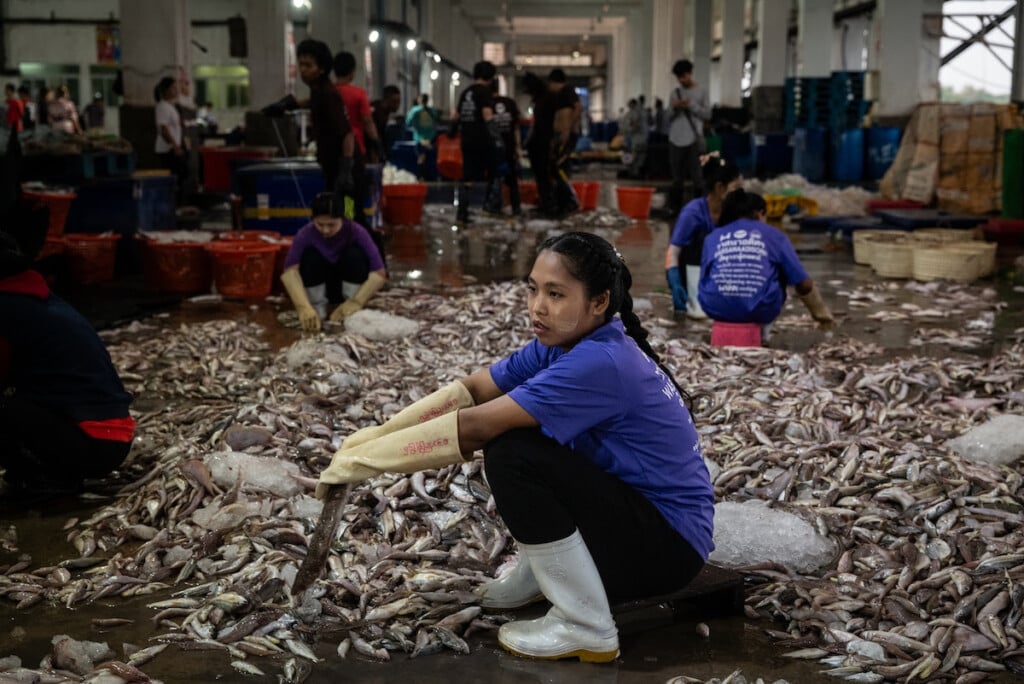
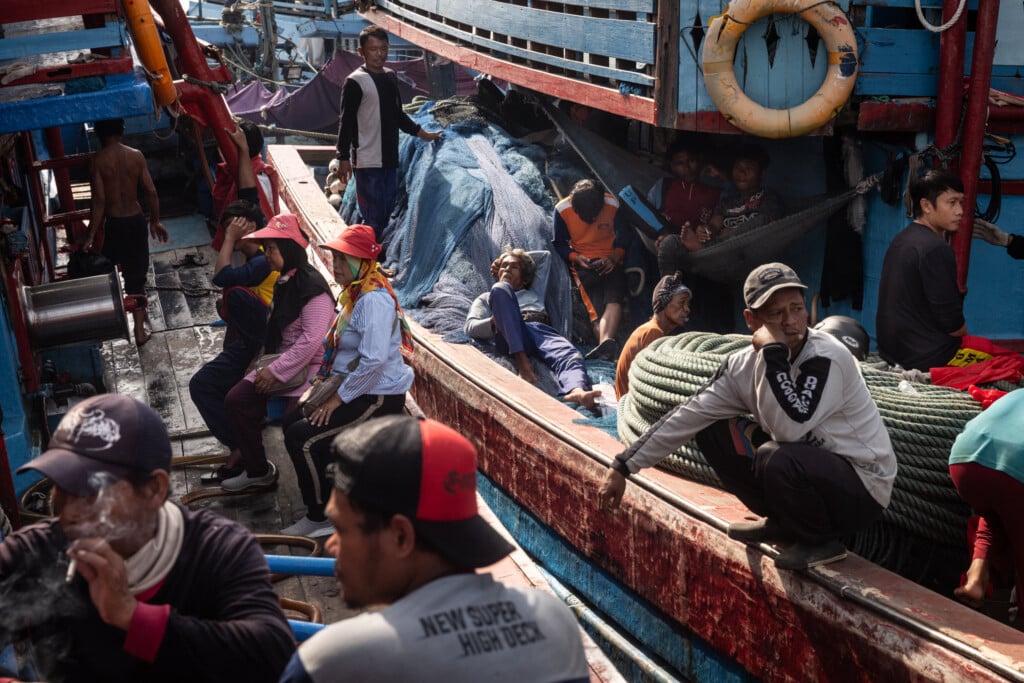
The images build a narrative that follows the path of fish from local ports to global markets, revealing the hidden human cost behind a supply chain that reaches dining tables all over the world. Fishermen returning after weeks at sea, workers sorting tons of catch, threatened species unloaded at dawn, Indigenous communities maintaining traditional rituals while their ecosystem changes rapidly. It is not only an environmental issue, but a social balance that is falling apart.
The report also brings out the contradictions of possible solutions: marine protected areas, local economic initiatives, and attempts at regulation. Necessary strategies, but often insufficient in the face of growing pressure from the global industry and the geopolitical tensions that influence access to marine resources.
Nicole Tung, born in Hong Kong and known for her work in contexts of crisis and conflict, turns her gaze here to a less visible war: the one for control of the oceans. Once again, her work focuses on the people most exposed, telling individual stories that make a global crisis tangible.
With Overfishing in Southeast Asia, photography becomes a tool for investigation and accountability. A visual narrative that questions the distance between consumption and production, between sea and city, between local crisis and global consequences. Because overfishing is not just a distant problem, but an invisible chain linking coastal communities, international markets, and our everyday habits.
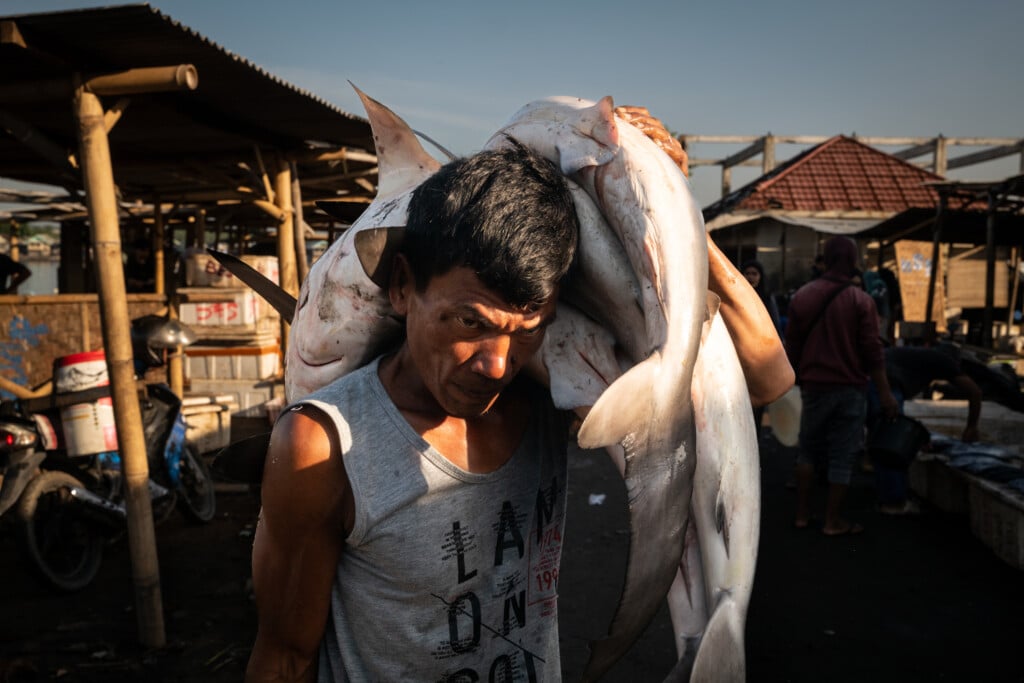
in cover: Various species of sharks, some endangered and others classified as vulnerable, are dragged ashore at dawn by commercial fishermen at the port of Tanjung Luar, Monday, June 9, 2025, in East Lombok, Indonesia. Tanjung Luar is one of the largest shark markets in Indonesia and Southeast Asia, from where shark fins are exported to other Asian markets, mainly Hong Kong and China, while the bones are used in cosmetic products also sold in China. Shark meat and skin, on the other hand, are consumed locally as an important source of protein.
In recent years, in response to strong criticism directed at the unregulated shark fishing industry, the Indonesian government has tried to introduce stricter controls on commercial shark hunting, in an attempt to balance the needs of fishermen with the need to protect shark populations that are steadily declining.
© Nicole Tung for Fondation Carmignac