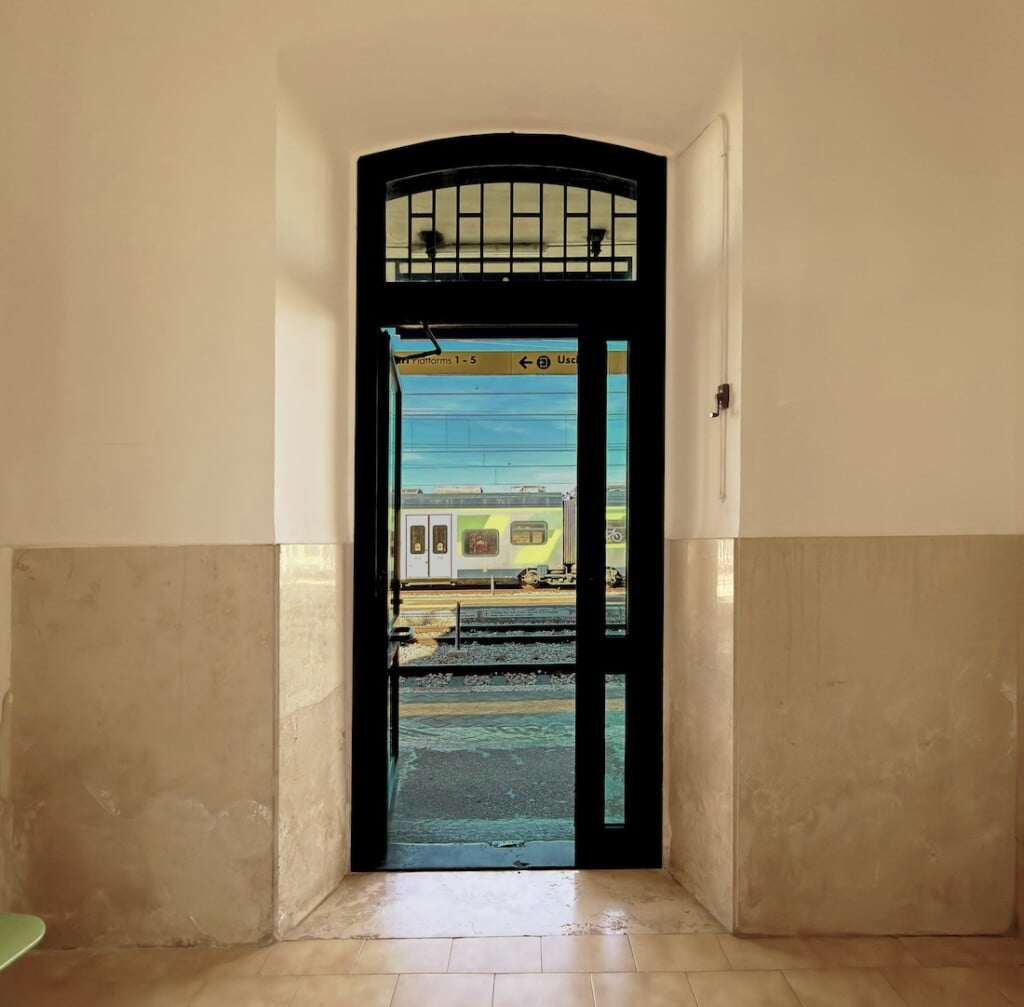
There is a category of spaces that contemporary architecture can barely name: not monuments, not ruins, not abandoned places. They are spaces in waiting.
Functional structures that, with dignity and silence, continue to serve the purpose for which they were built while bearing, at the same time, the marks of a time that no longer exists. The provincial railway stations of Puglia belong to this category.
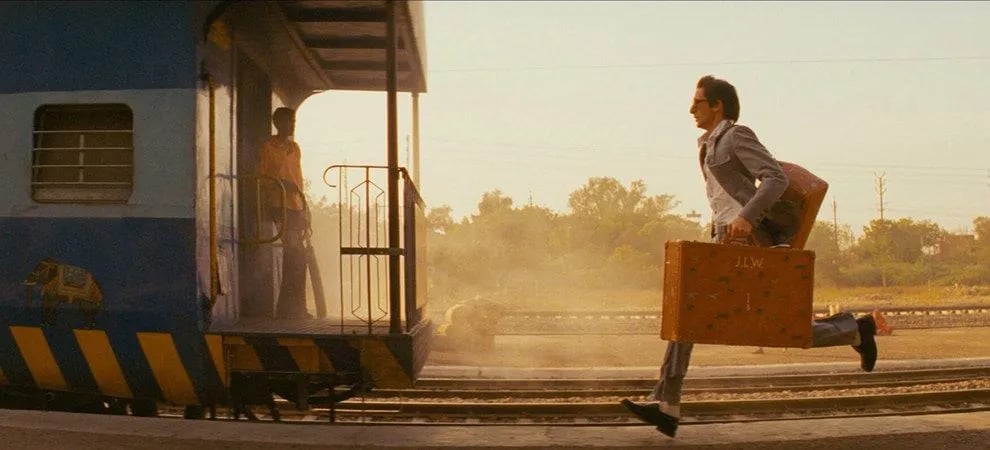
Among all his films, Wes Anderson made one set precisely on a train: The Darjeeling Limited. Three American brothers travel by train across India on a narrow-gauge railway passing colonial stations, vibrant colours, and a biting irony that doesn’t exclude pain.
The Darjeeling Himalayan Railway was built by the British between 1879 and 1881 and has exactly the visual quality Anderson speaks of: architecture as a kind of costume, travel as a way of working things through. Anderson chose it because it was already a set.
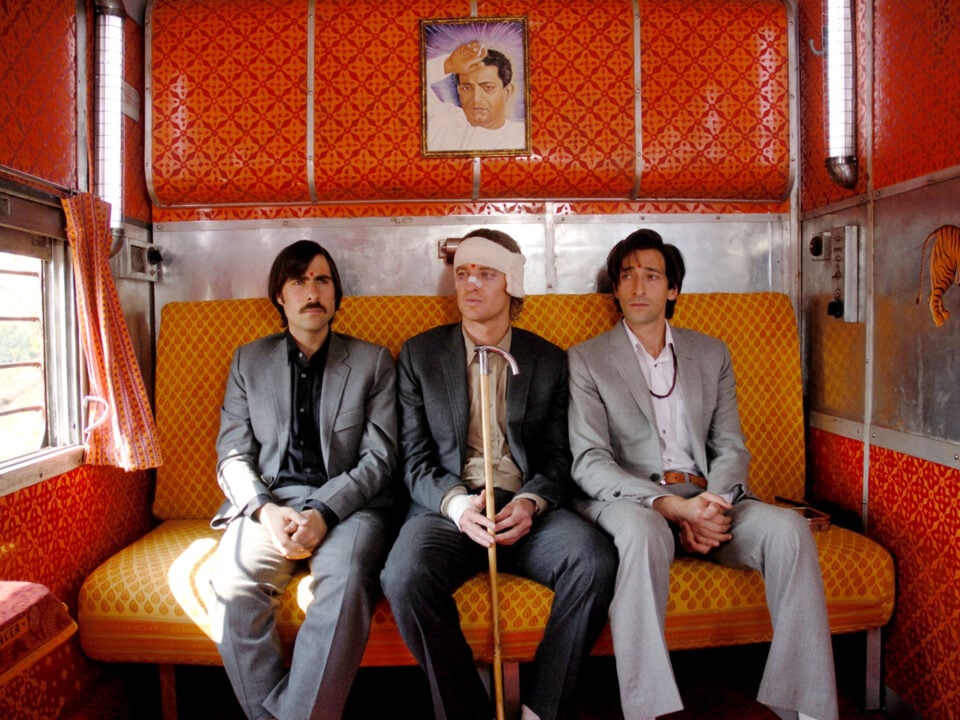
Wes Anderson always frames his shots with an almost obsessive precision: the central axis as compositional fulcrum, symmetry as visual grammar, colour as emotional storytelling before it is mere aesthetics. It is a stylistic choice that many read as artifice, but it actually encodes something intrinsic to human nature: order as a response to entropy, geometry as a way of controlling impermanence.
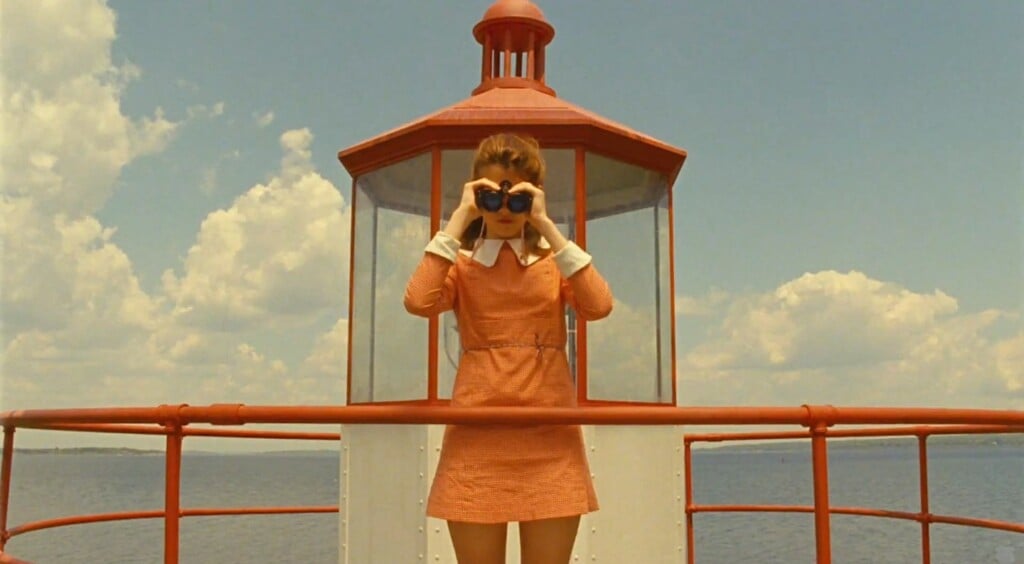
The stations of Puglia speak this same language.
Unconsciously — or perhaps even deliberately?
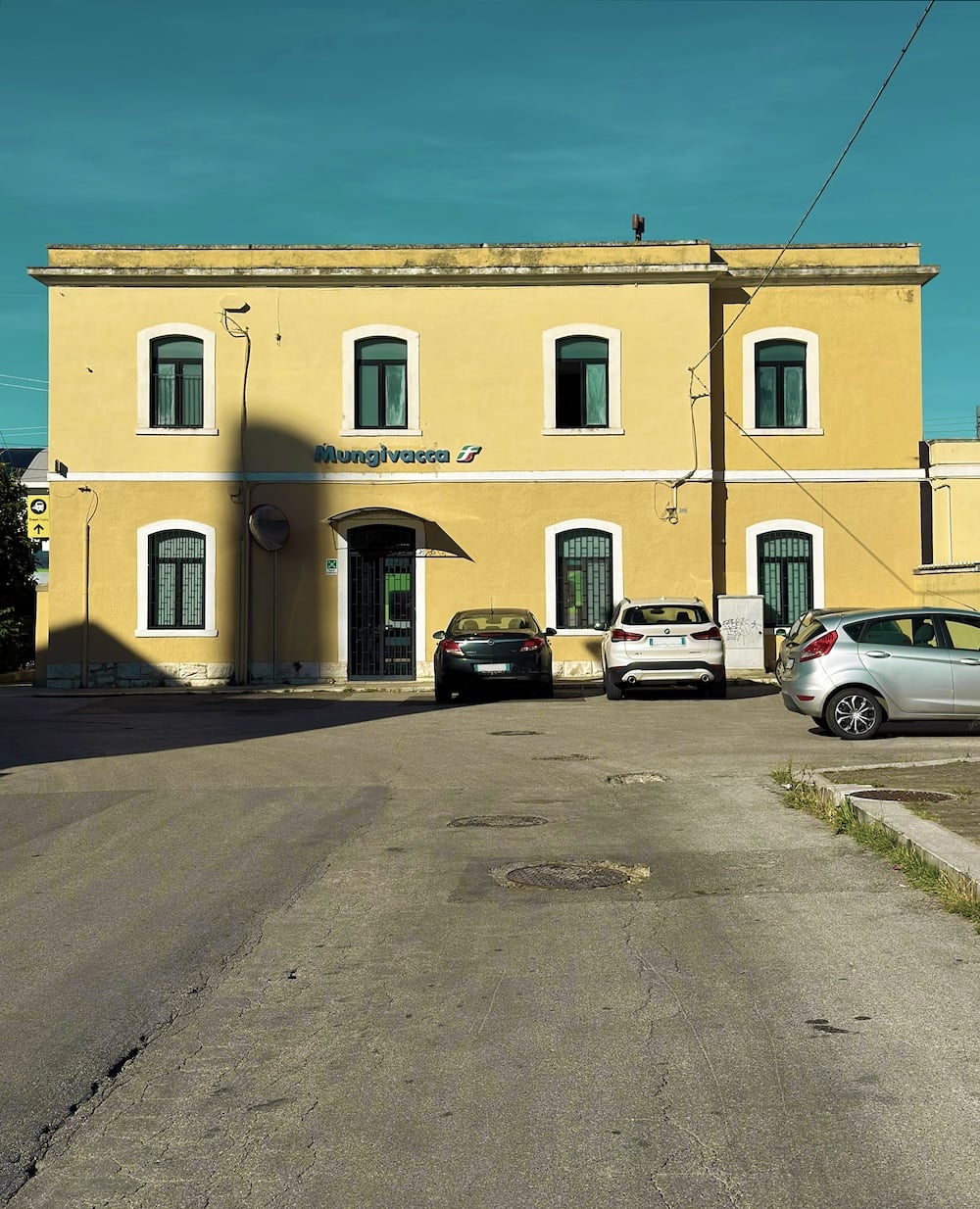
The structures symmetrical around their main entrance, the windows repeated at regular intervals, the platforms extending along the tracks with their own rhythm: everything follows a compositional logic whose effect today is an almost cinematic sense of déjà vu. And this is not a forced analogy.
Italian railway rationalism operated with the same tools: the grid, the module, the axis. The only difference is that Anderson renders them ironic and melancholy, while railway engineering used them to communicate state authority and order. The visual result is surprisingly similar.
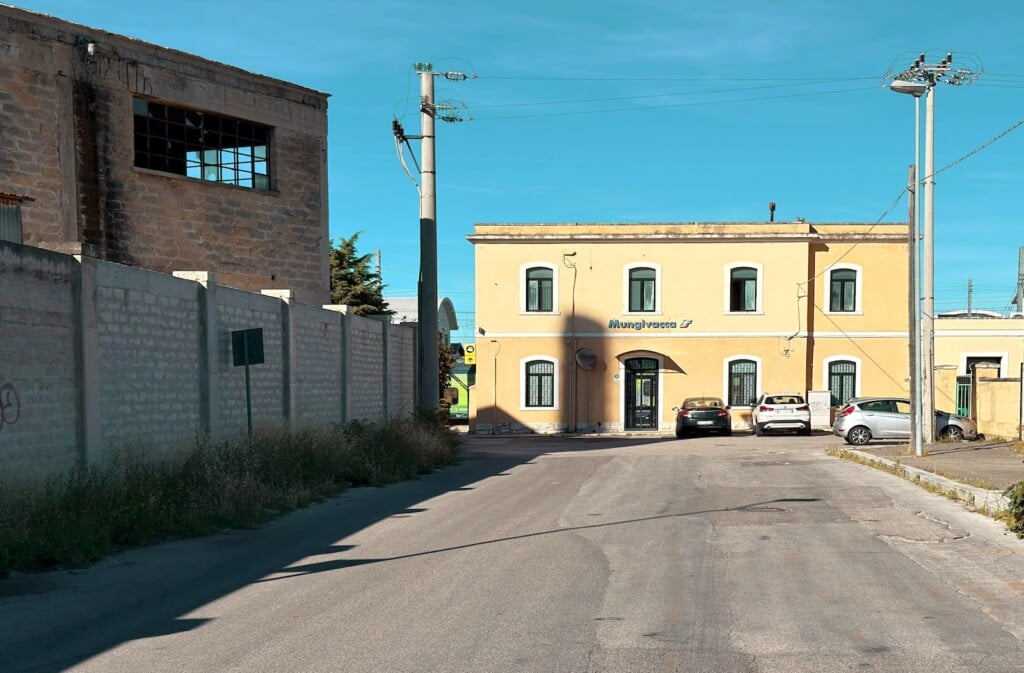
Colour is probably the most immediately recognisable element. The facades of these stations display a palette that was never deliberately designed. It is instead the result of accumulation: plaster fading toward ochre yellow, white cornices marking the rhythm of the openings, limestone plinths absorbing decades of moisture and light. We might call it controlled decay — or, more precisely, decay left unchallenged.
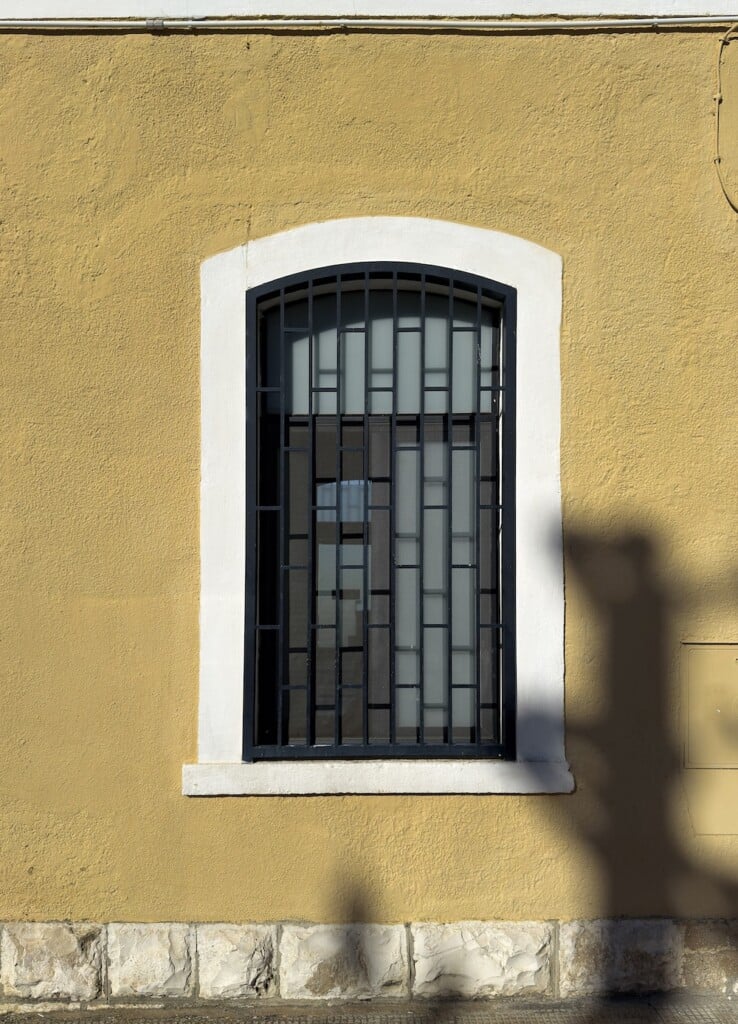
The original colours gradually lose their saturation until they settle into the pastel tones that Anderson artificially reproduces on his sets.
One detail that easily goes unnoticed is the cornice. In the stations designed along Puglia’s secondary lines, the cornice is never a neutral element. It is dentilled, shaped — a decorative flourish that railway engineering permitted itself as the sole ornamental licence on otherwise rigorous buildings. Against a blue sky, that jagged profile becomes almost unreal. Almost a set, rather than an infrastructure.
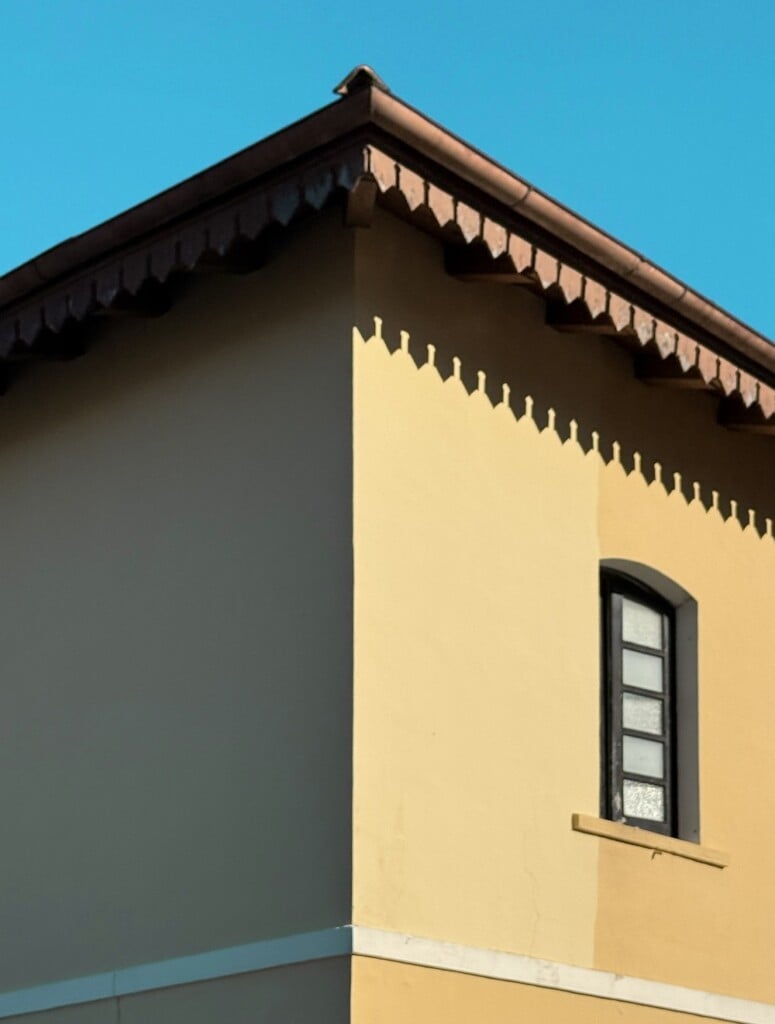
The stations of Puglia and those of the Himalayas do not share a route, but they speak the same language: both were conceived to connect distant worlds, and both have been left suspended in a time the rest of the world has stopped inhabiting.
There, there are mountains, tea plantations, fog rising from Bengal. Here, the light is flat, the walls are ochre yellow, and the tracks are silent at noon. Completely different geographies, the same melancholy — the melancholy of things built to last that, little by little, realise they have become landscape.
What makes some stations harder to read than their rural counterparts is the context in which they find themselves today. They are not isolated elements in a barely inhabited landscape. They are architectures that the city has often caught up with and then overtaken, leaving them trapped in a hybrid condition: neither centre nor periphery, neither historic in the traditional sense nor recent enough to be considered contemporary.
Around them, the urban fabric has evolved: warehouses, fences, car parks, palm trees and graffiti.
And the stations resist in the middle of all this, with their yellow facades and arched windows, as if they had noticed nothing. Or as if they had consciously decided not to take part in the change.
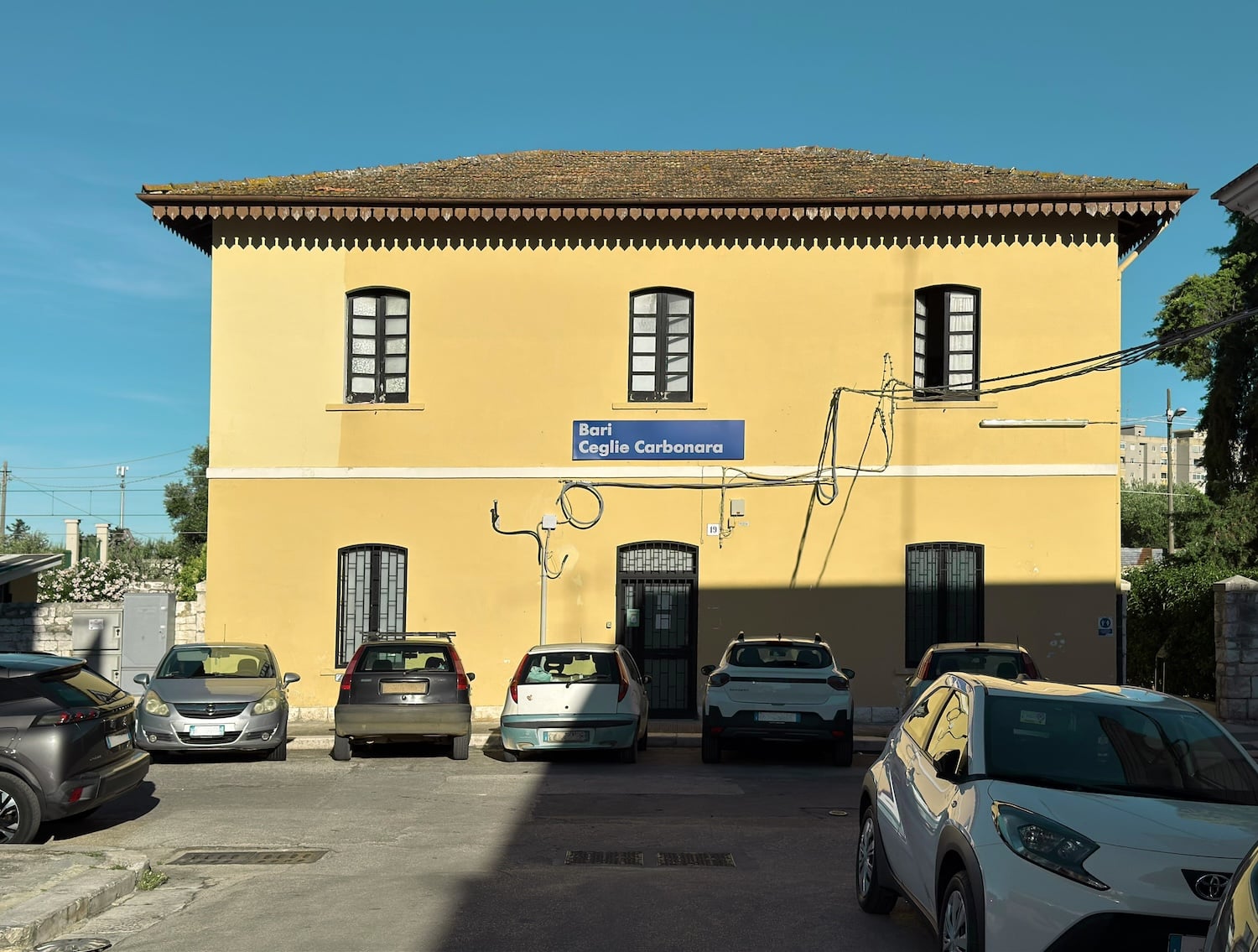
This passive resistance is what makes them interesting. Not the ruin, but not the protected monument either. Survival.
In the waiting rooms, the temporal layering is even denser.
Here, the architecture often stopped renewing itself around the nineteen-seventies: the worn travertine base, the vaulted ceilings connecting the rooms, the arched doorways with their wrought-iron grilles. Since then, it has coexisted with everything that came after.
The result is a series of stratifications that a restorer would call a “problem” while a photographer would call “material”. The interior spaces speak of a suspended temporality that becomes both an architectural and an emotional condition.
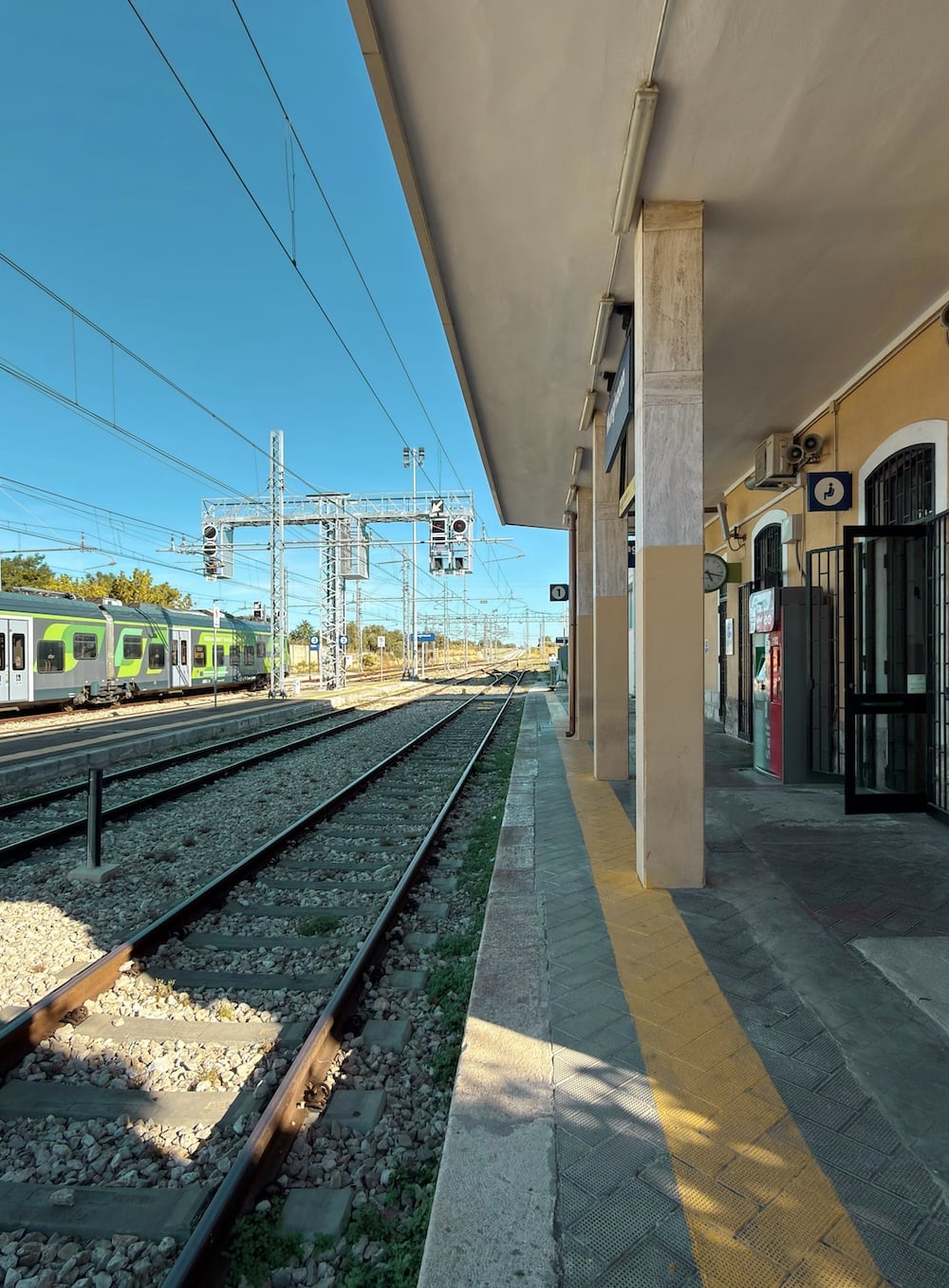
One image captures the poetry of all this better than any description: an arched doorway, a threshold, and outside, a train standing on the tracks. Inside, stone, silence. Outside, steel, movement. The station as a membrane between two times, two materials, two speeds. This is not something residual — it is a specific kind of landscape.
Anderson’s melancholy is a designed melancholy, structural, built by subtraction: it strips away dirty realism, chance, uncontrolled imperfection, and gives back a world where even loss has a precise form.
The stations of Puglia offer the opposite: a melancholy that was not designed, that accumulated, that was never intended.
And yet, this melancholy takes shape. It becomes legible, almost reassuring — the way a landscape can make you recognise something you have always known but never seen.
Article by Roberta Ruggieri