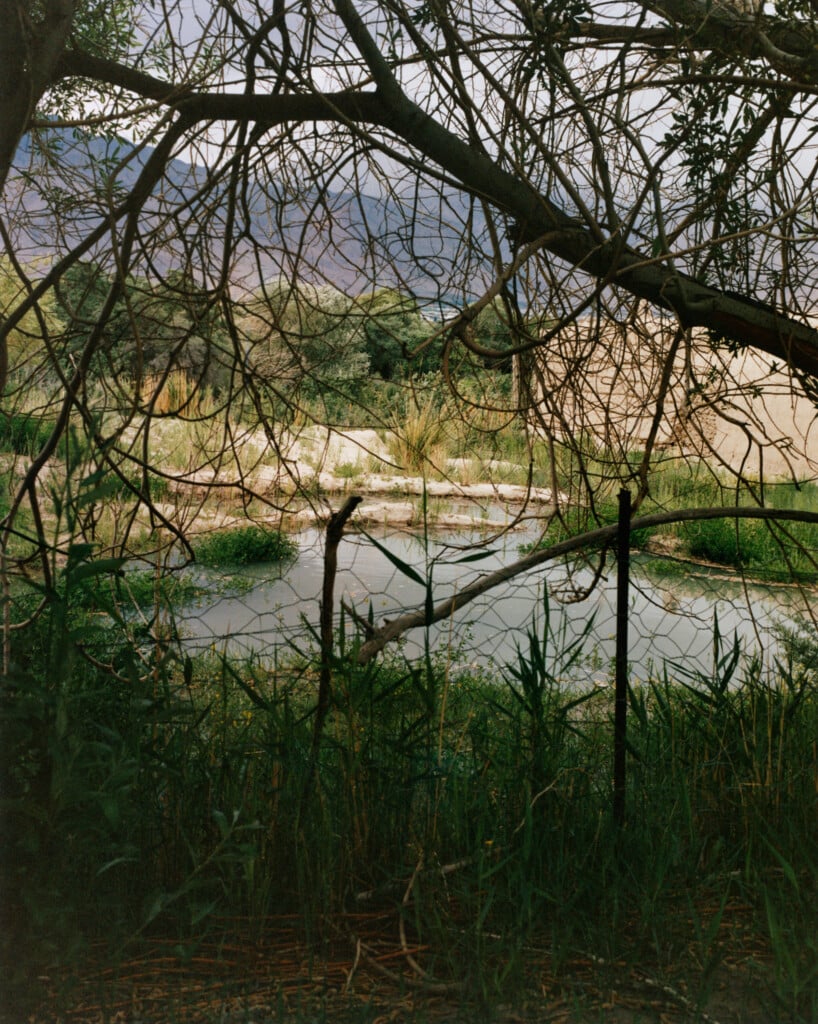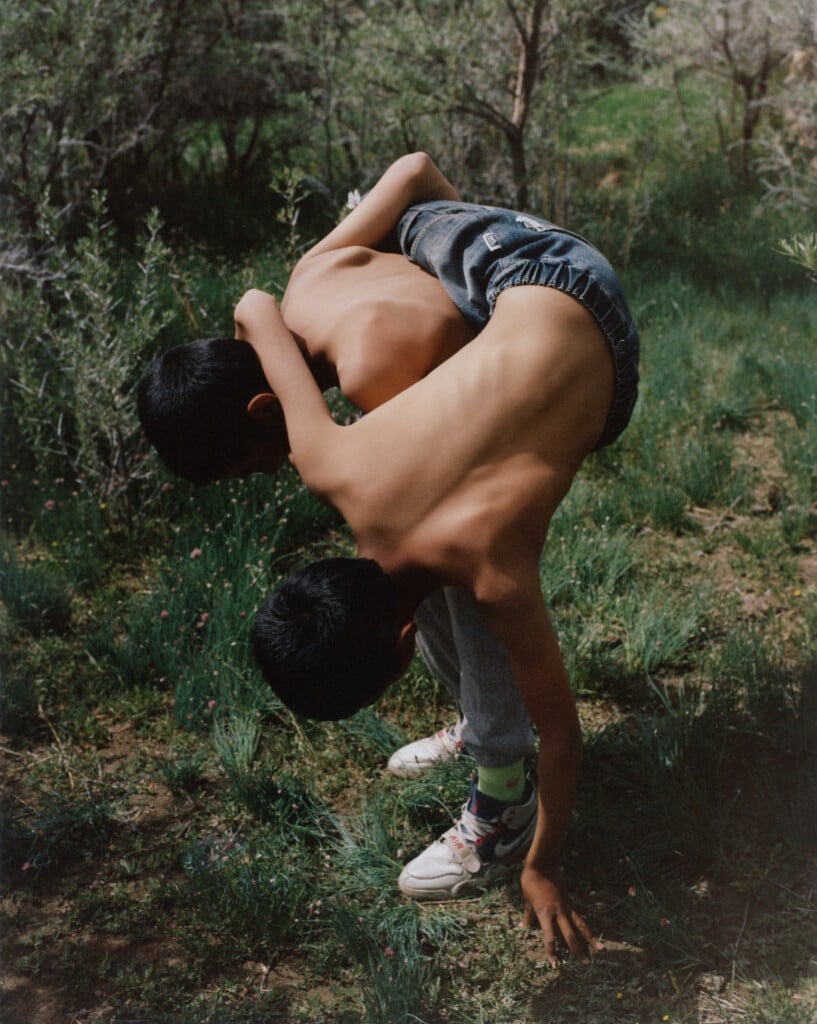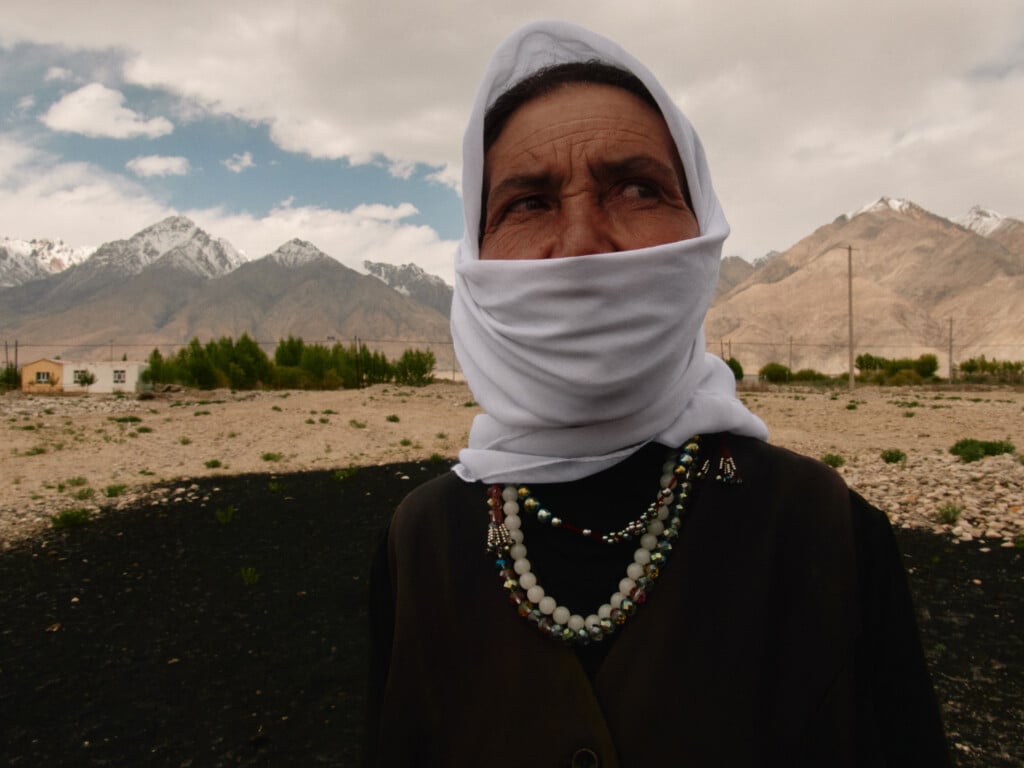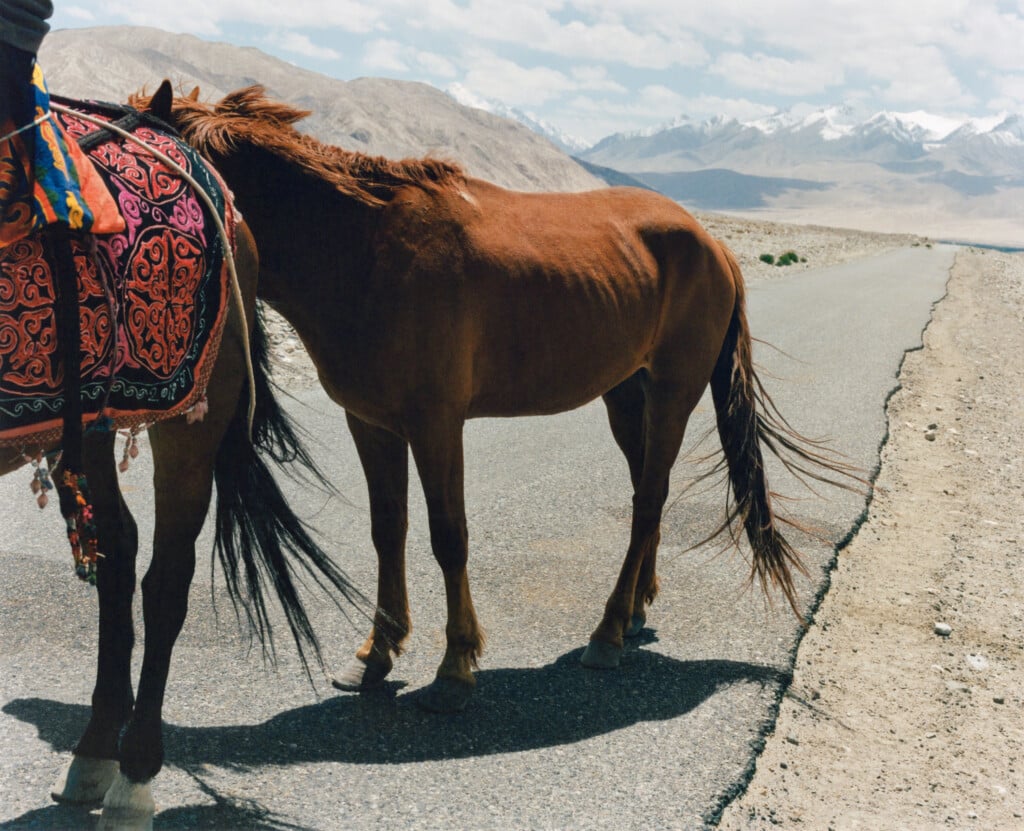
On the Pamir Plateau, the wind does not pass through: it stops. It settles into gestures, architecture, and the faces of those who inhabit one of the most remote and austere landscapes in the world. This is the intuition at the heart of Where the Wind Rests, a photography project by Shanghai-based photographer Yang Chen, dedicated to the Tajik communities of the region and the quiet bond that ties them to the land they live on.
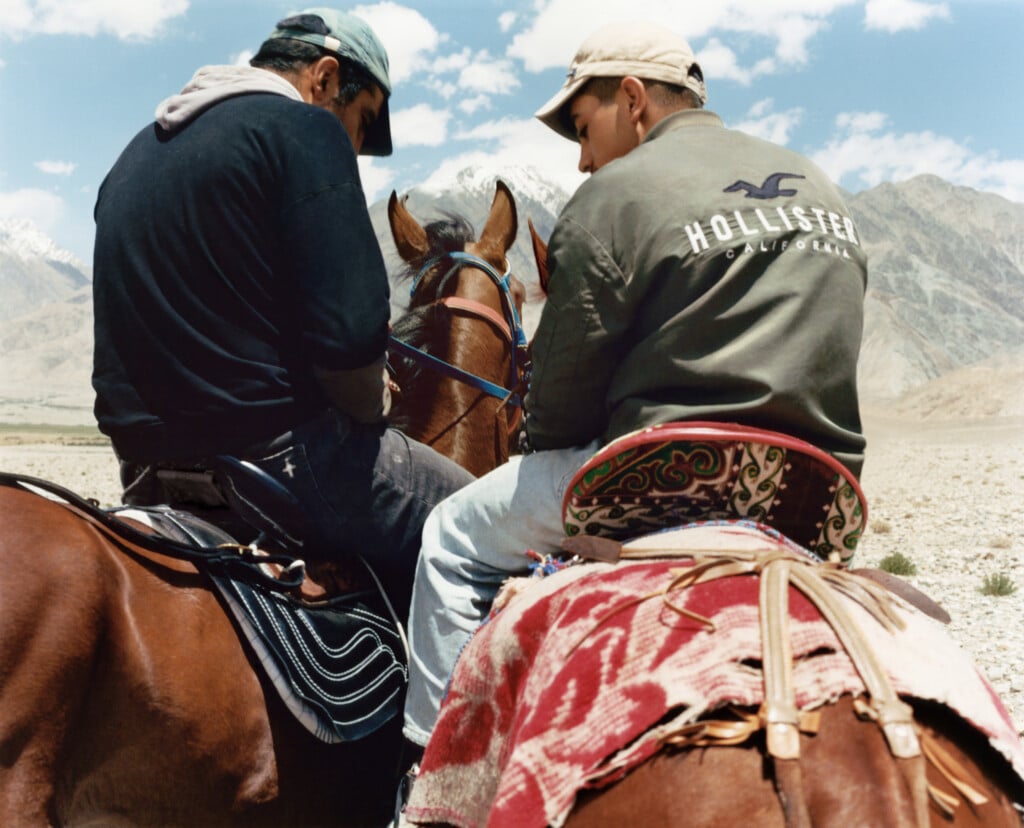
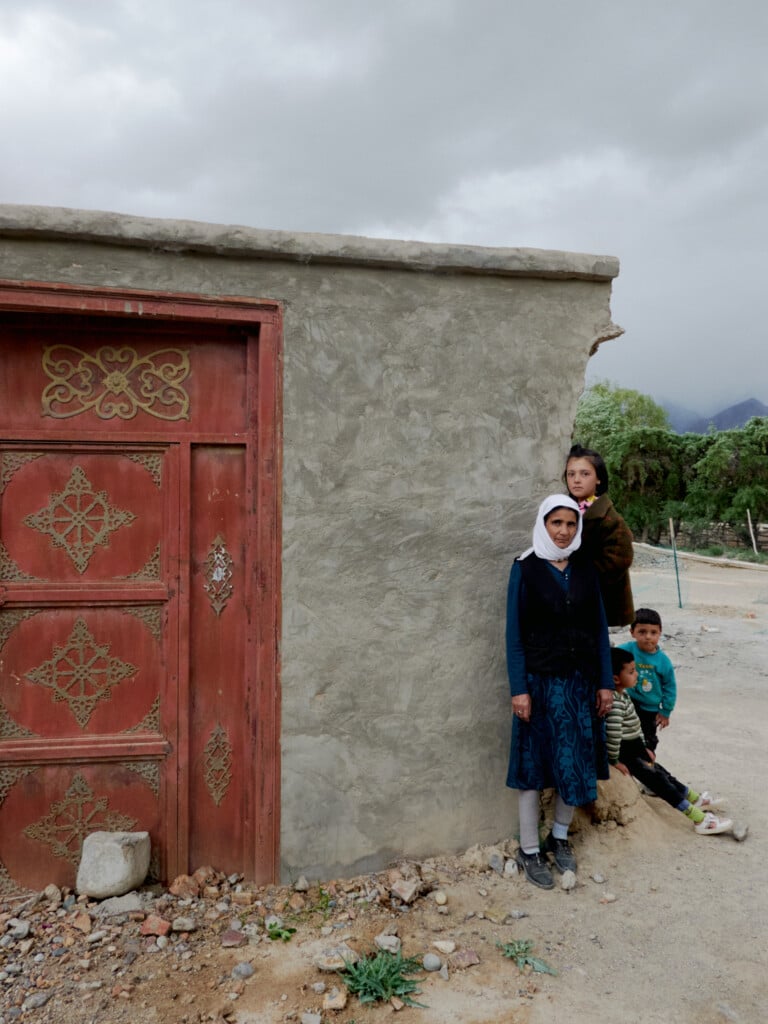
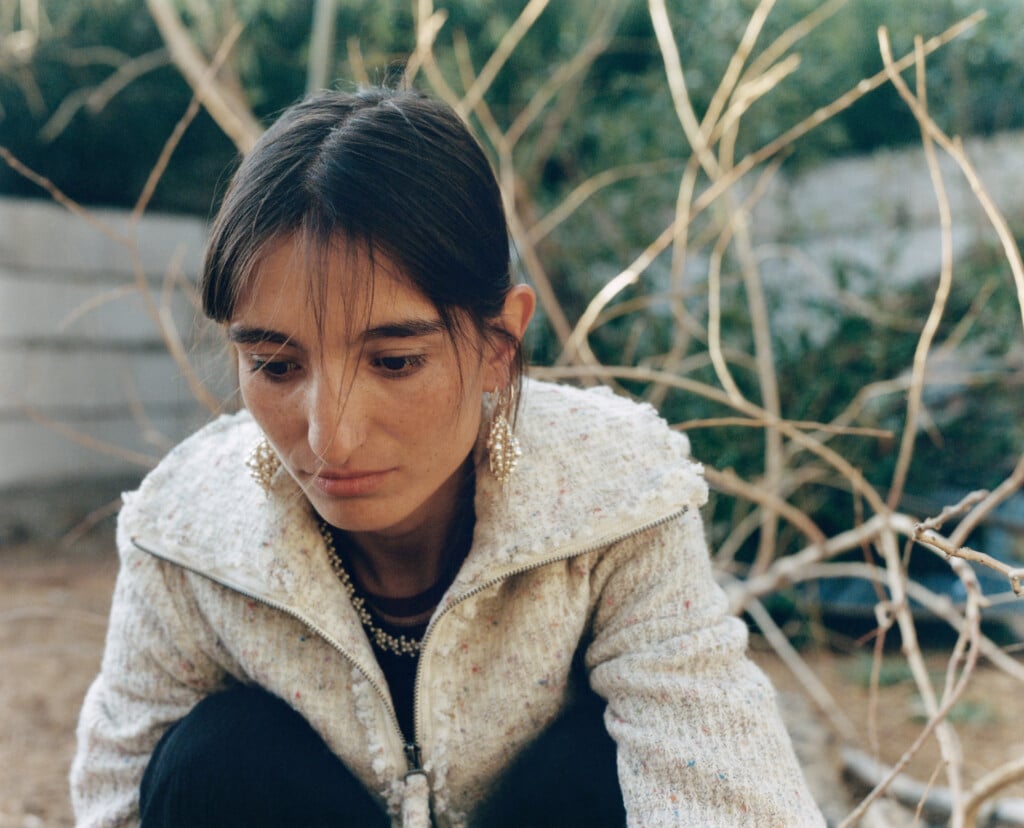
The work moves between documentation and poetry, never definitively choosing one over the other. On one side, images that render the everyday texture of a life shaped by slow rhythms: women in traditional dress walking across arid ground, a family standing still in front of an ornate door beneath a heavy sky, the quiet presence of bodies that inhabit space without imposing on it. On the other, photographs that introduce a more contemporary and oblique gaze: two figures in yellow against a rocky wall, a man asleep on a motorcycle beneath barbed wire, images in which landscape and human presence contaminate each other in unexpected ways.
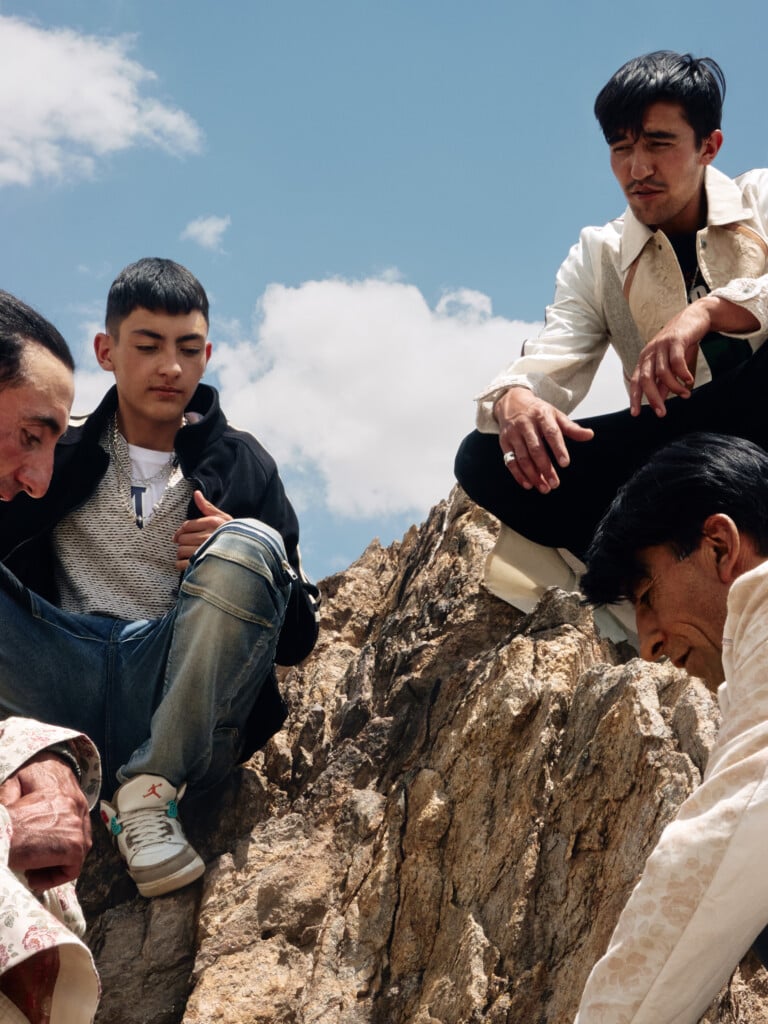
Chen does not construct a linear narrative. The project unfolds as a series of fragments, each carrying its own atmosphere, texture, and rhythm. Attention is never placed on the extraordinary gesture, but on the ordinary one: the posture of a body, light on a surface, the silence between a figure and its background. It is in these interstices that landscape and people cease to be separate and become a single expression.
Based in Shanghai and working across fashion, documentary, and fine art photography, Yang Chen develops projects that oscillate between observation and intuition, searching in the margins of the image for what words struggle to name. Where the Wind Rests is, in this sense, a work about thresholds: between interior and exterior, between presence and landscape, between what is seen and what is only felt.