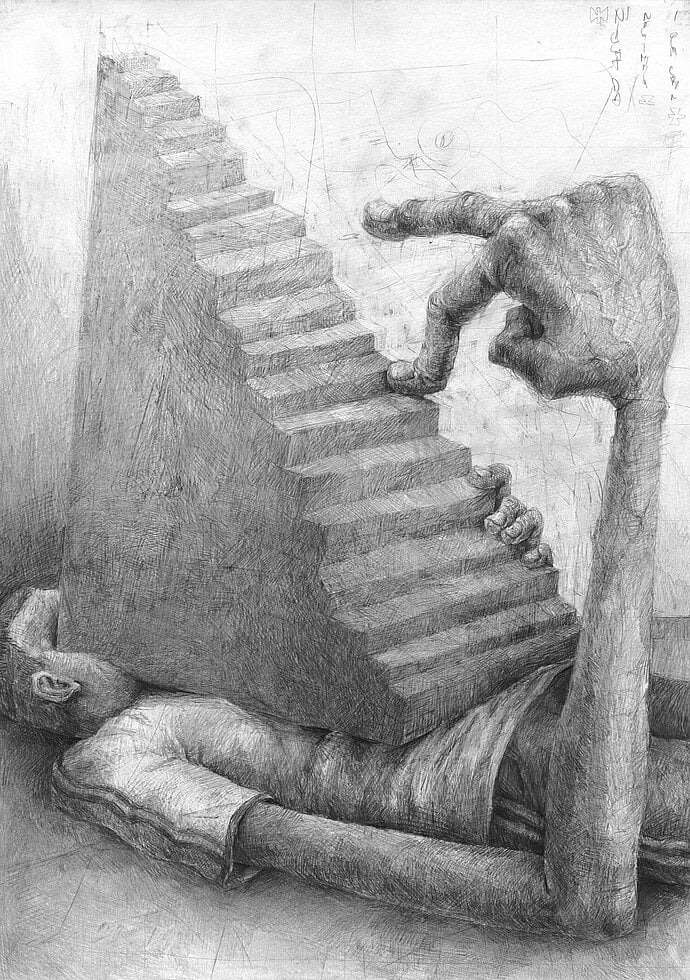
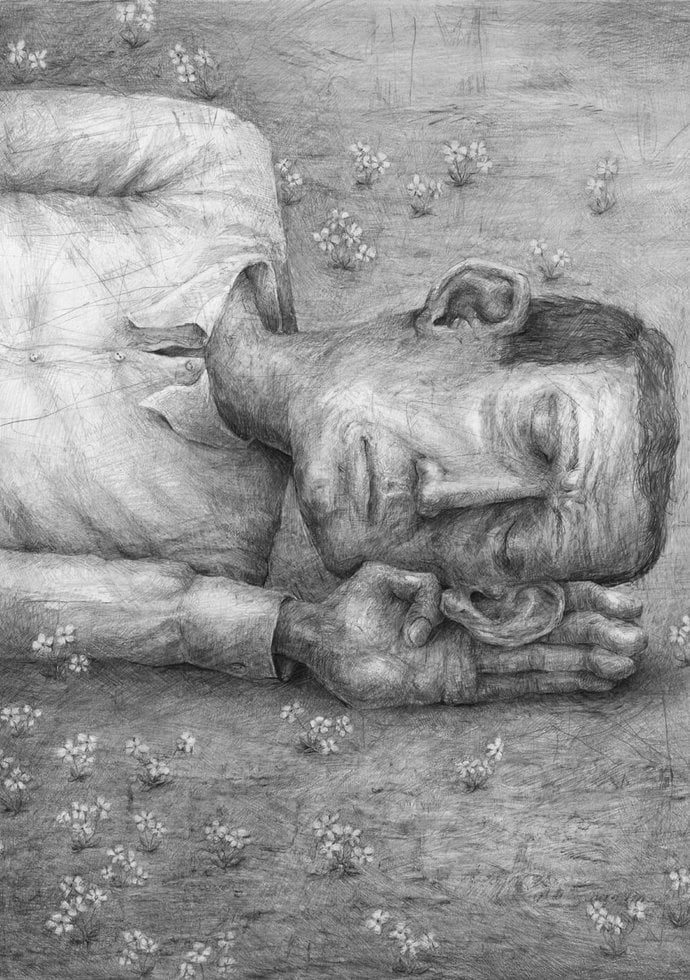
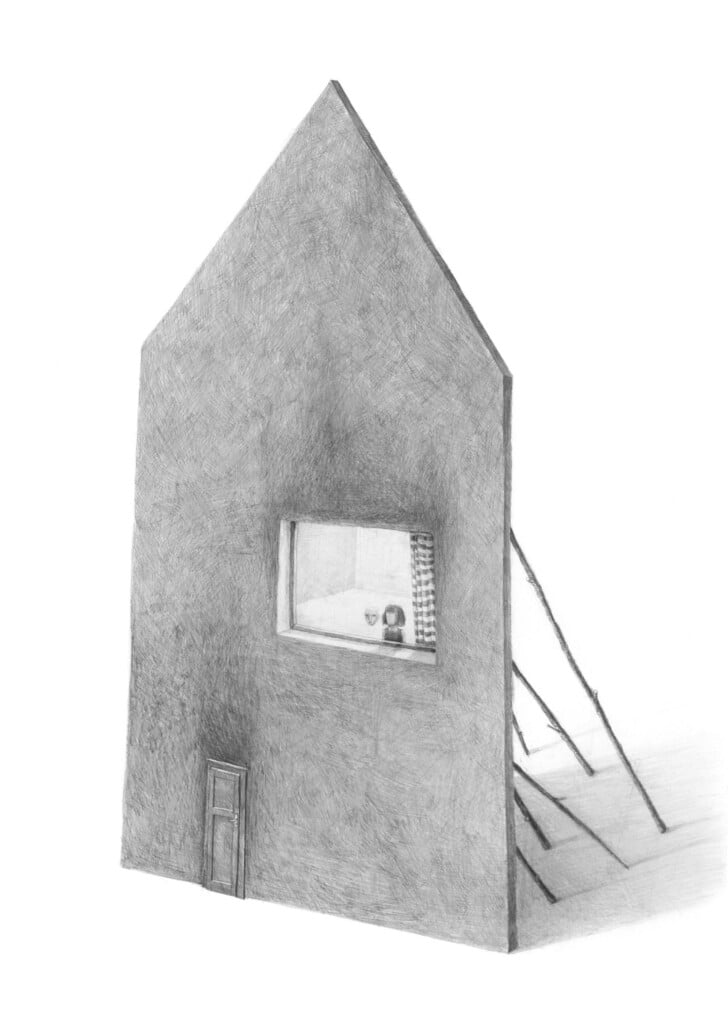
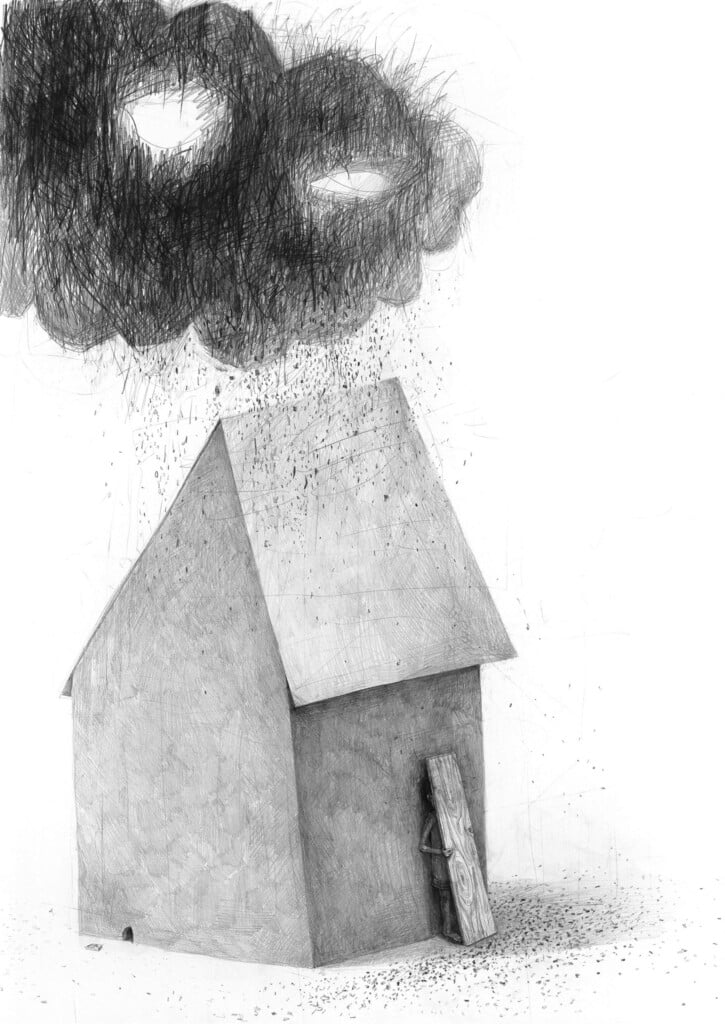
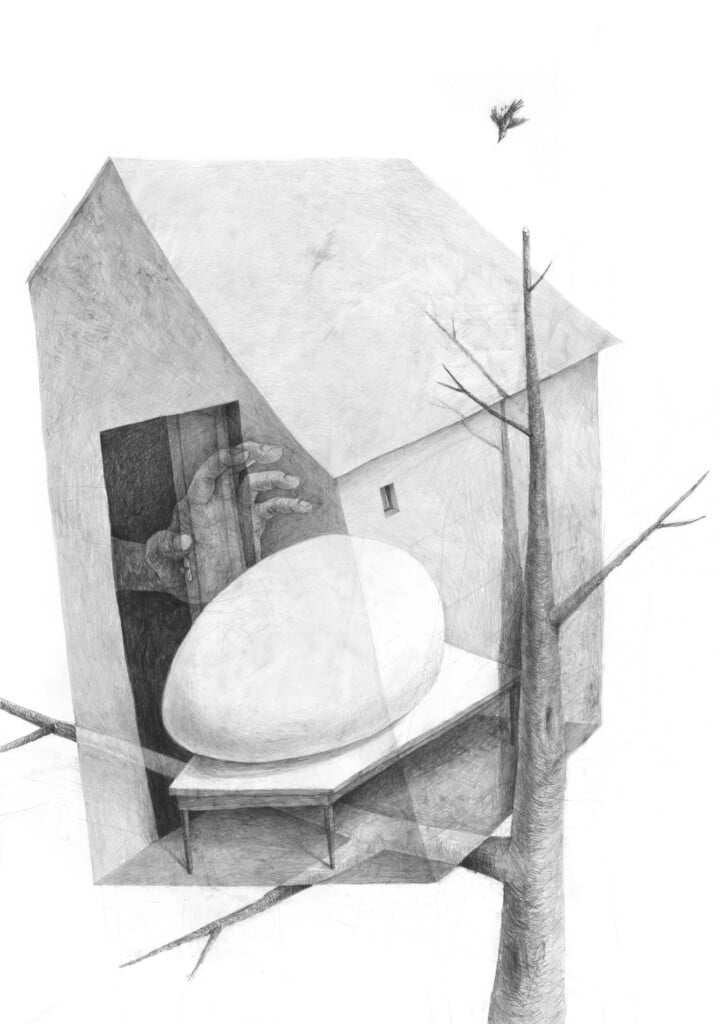
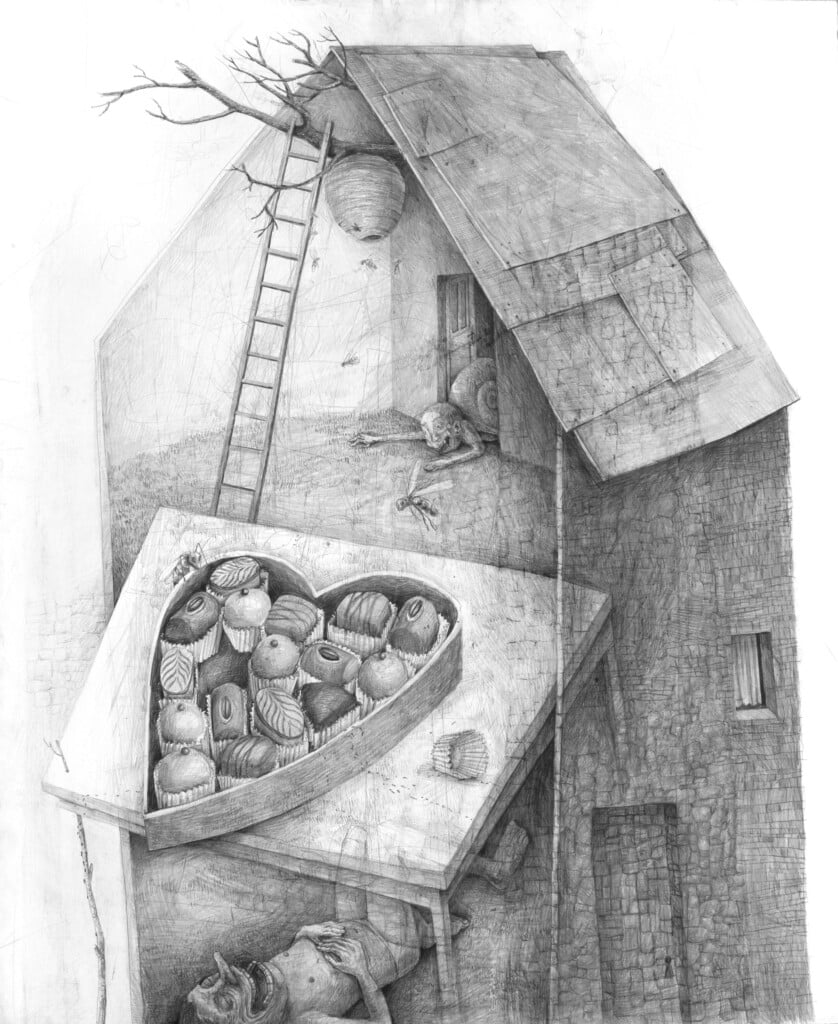
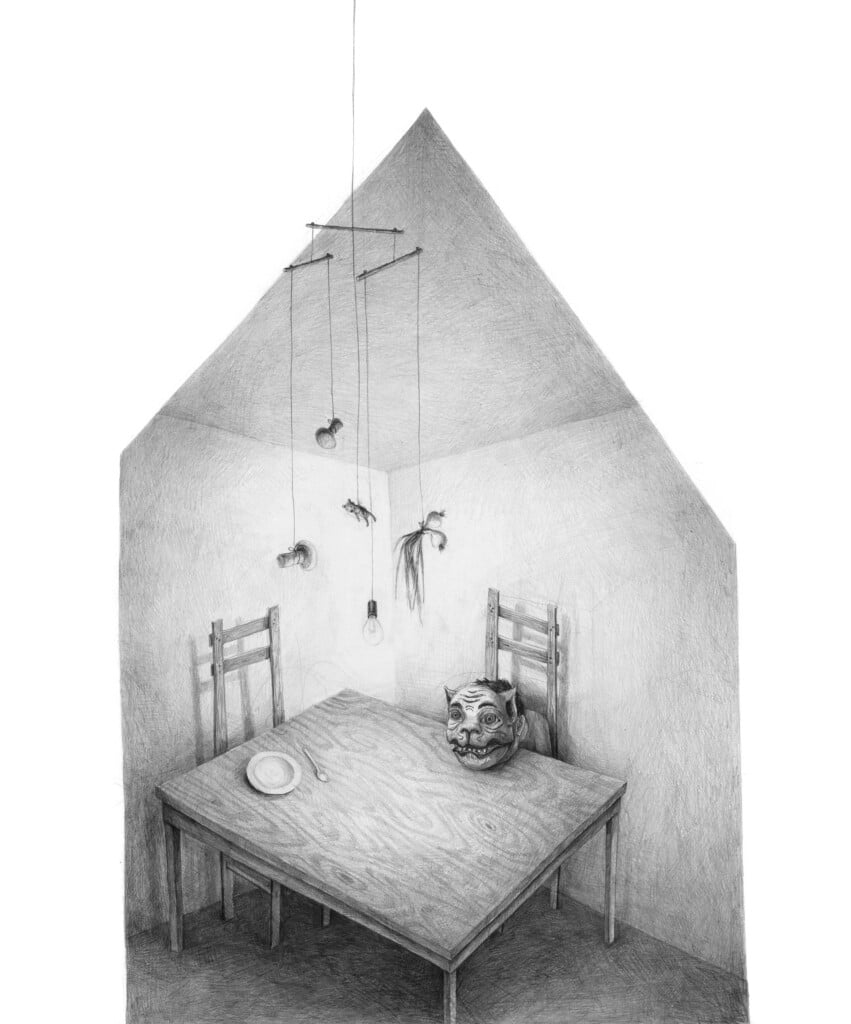
The childhood home – experienced as a primordial shell and the «spatial localization of our intimacy» – inspired some of the most beautiful pages Gaston Bachelard ever wrote, collected in The Poetics of Space (1957). Spanning a considerable gap in time, visual artist Stefan Zsaitsits (Lower Austria, 1981) arrives at the dreamy image of the domestic rooftop to build his own version of a space that feels like home, emotion, and life. «Streams of thought, traces of the unconscious, impressions of life and half-forgotten memories» travel across drawing paper – the faithful companion of his poetics and creative practice.
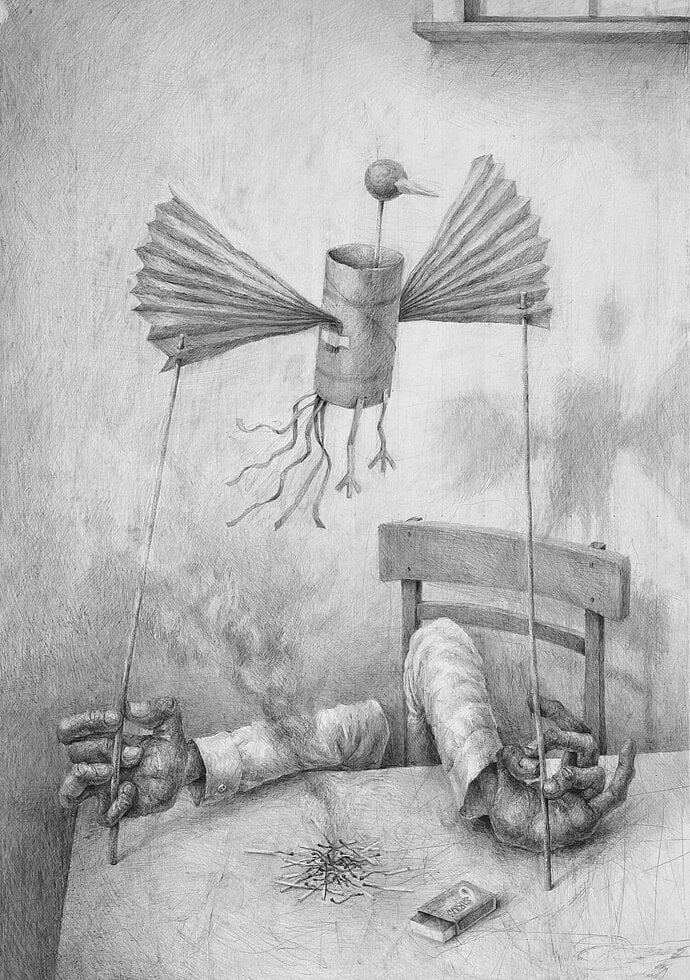
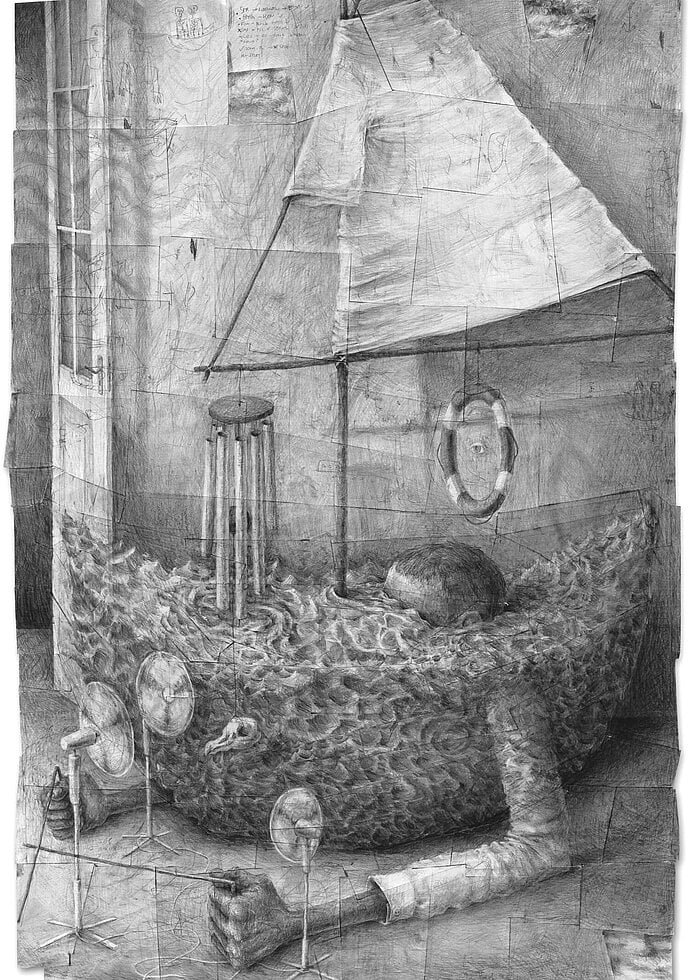
Drawing is for Stefan Zsaitsits the privileged ground from which to explore the necessity of artistic communication. Between paper, dream, and graphite, his hand traces emotions, feelings, and uncertainties tied as much to the world of adolescence as to adult life. The solitude of his most beloved character navigates – and the illustrative pull toward sailing and boats is no coincidence – between the precariousness of a palpable uncertainty and the desire to escape the gilded cage of a daily life surrendered to routine.
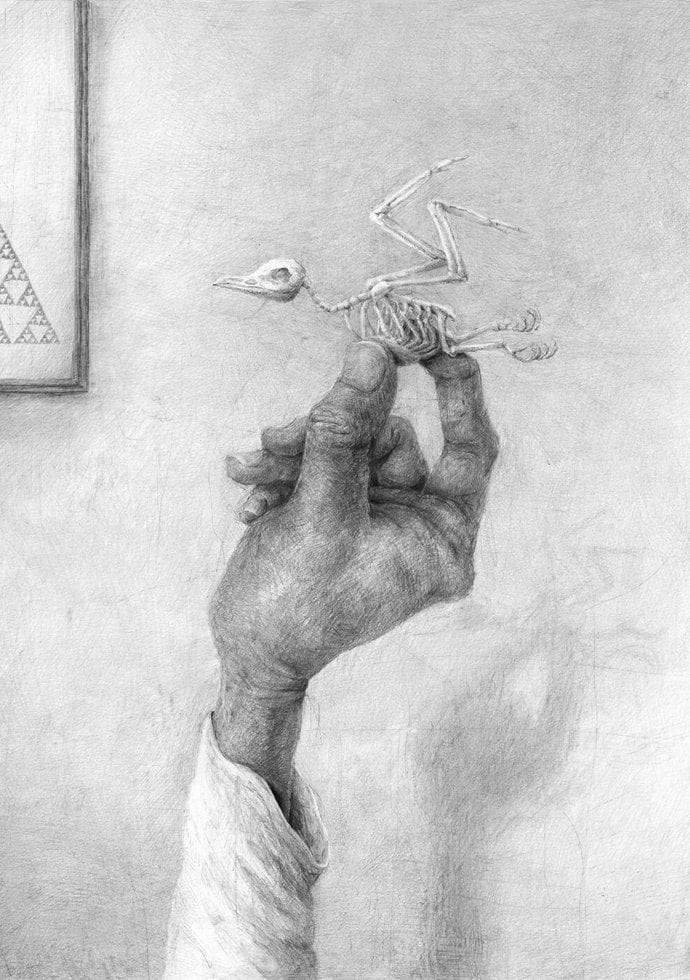
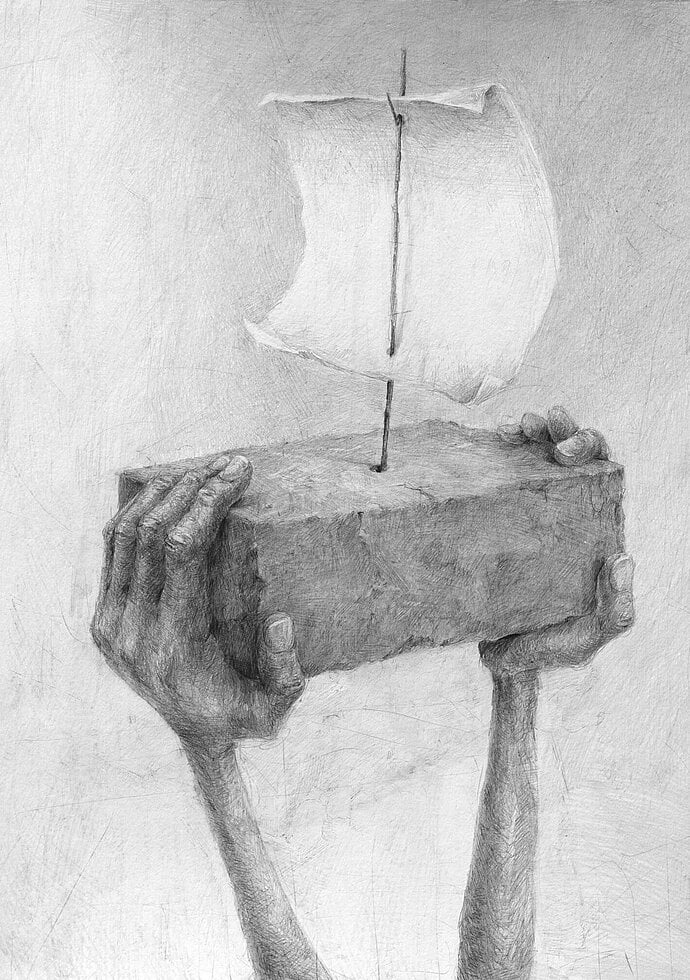
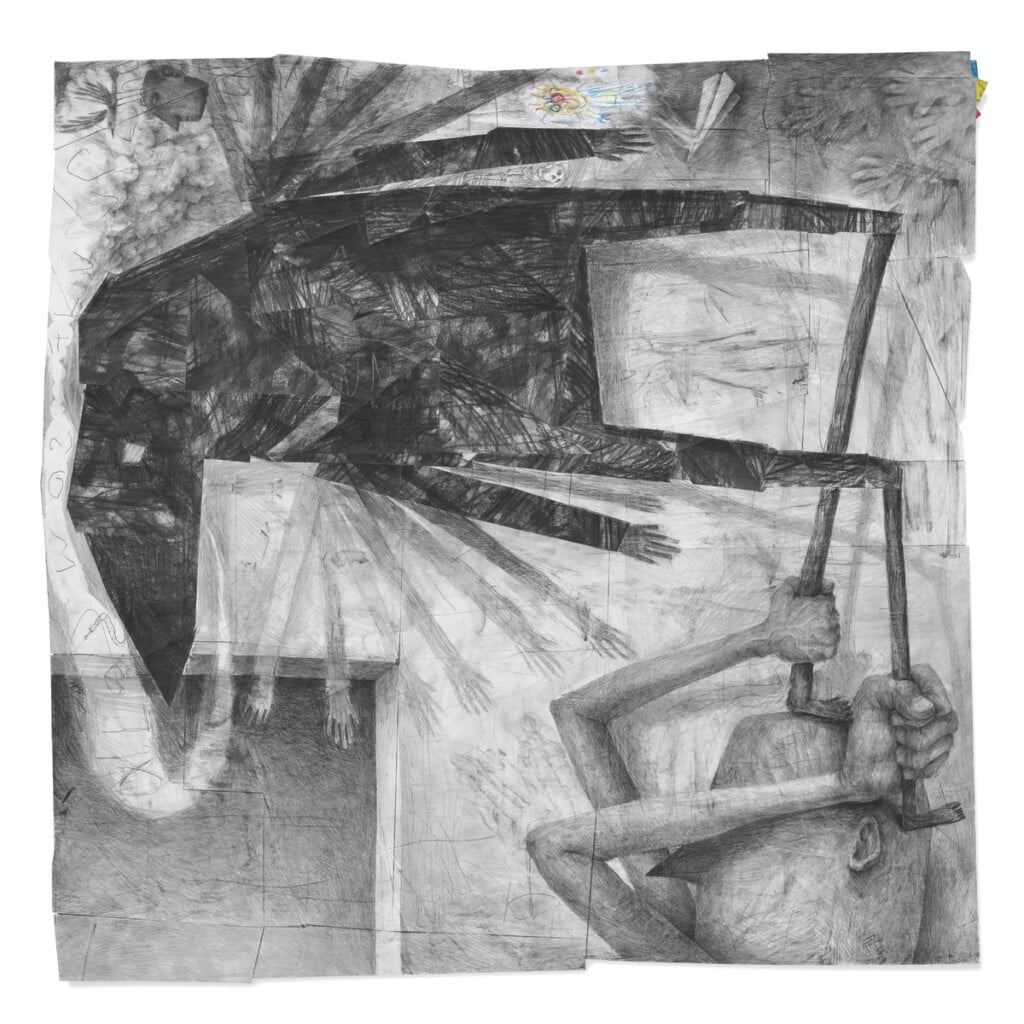
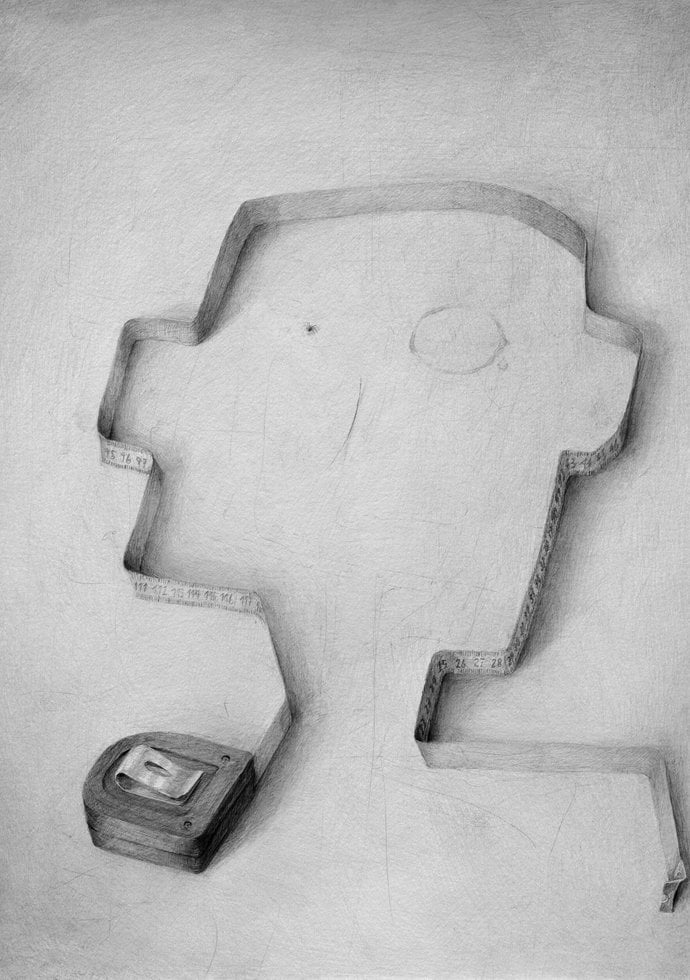
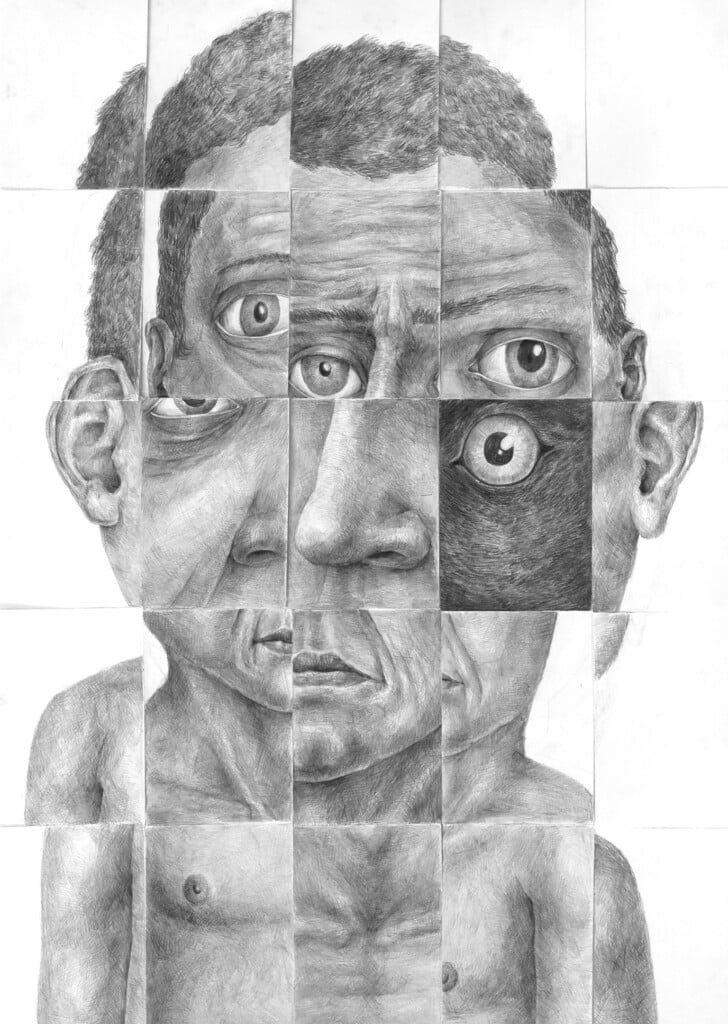
In the two-dimensional rendering of a space crowded with presences and objects, the flight of the spirit appears paralyzed: in the frail remains of a small bird unable to fly (Frattali, 2025), and in a hull illustrated as a heavy, alienating block of stone (Arca, 2025).
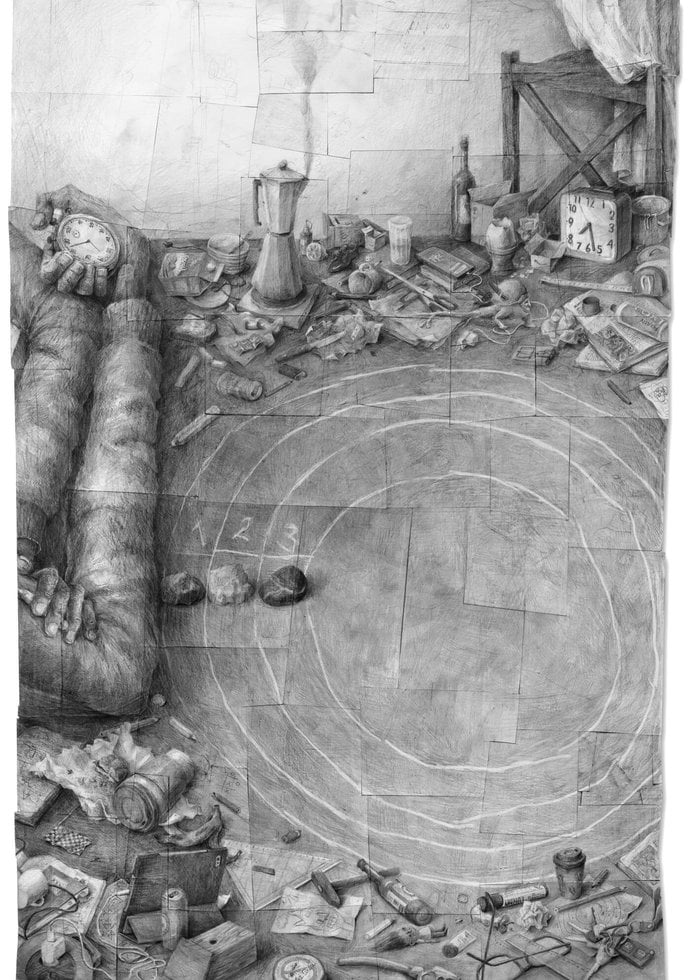
As the artist himself has noted: «If something similar to the unspeakable exists, if there are inner spaces or moments in life where words no longer find an answer and only images seem capable of expressing them, then I want my works to find a place there. Spaces between opposites such as reason and absurdity, rest and haste, sleep and waking. On the borders of these spaces I want to create my pictures. Pictures that often raise more questions than they can answer. Pictures that deal with vital and mundane matters. From confused thoughts to concrete ideas. Rationality and irrationality, order and chaos, real and surreal as a unity in my mind and in my drawings. But above all, these are pictures about absurdity as a condition and law of life.»
Inhabiting the space of the page and pulling reality away from passive consumption, evocations, marks, disillusions, and hopes awaken the perception of a space that stretches beyond the grid of an all-too-human desolation (Contorcersi e scomparire, 2025).
Article by Floriana Savino