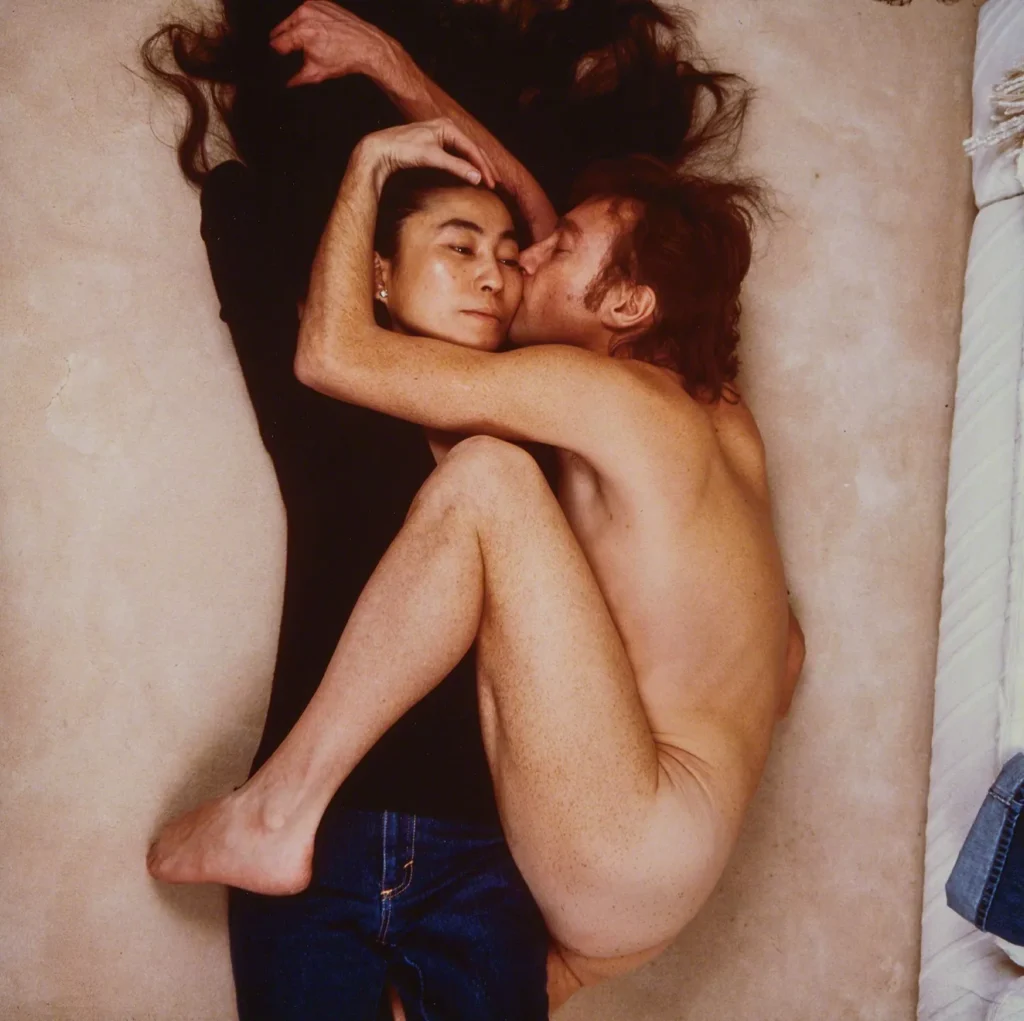
The famous photograph of Yoko Ono and John Lennon, taken on December 8, 1980, by Annie Leibovitz, has become one of the most iconic images in the history of contemporary photography. This image has gained symbolic and historical significance not only for its artistic beauty but also for the tragic event that followed just a few hours later: the assassination of Lennon.
Annie Leibovitz, known for her celebrity portraits, was commissioned to create a photo shoot for the cover of Rolling Stone. The initial plan was to photograph John Lennon alone, but the singer insisted that his wife, Yoko Ono, be included in the shot. This reflected the deep bond between the two. Leibovitz agreed and conceived an image that portrayed the vulnerability and intimacy of the couple. The photograph shows Lennon completely nude, wrapped around Yoko Ono, who is fully clothed. The pose, reminiscent of a gesture of protection and affection, conveys a strong emotional connection between the two.


The image has been celebrated for its visual impact and for its ability to capture the essence of the relationship between Lennon and Ono. Lennon’s nudity contrasts with Yoko’s sobriety, creating powerful symbolism: Lennon appears vulnerable and open, while Yoko is solid, almost distant. Interpretations vary from those who see the shot as a reflection of Lennon’s emotional dependence on Yoko, to those who perceive their relationship as a fusion of love and art, in which their differences become their strength. Beyond its aesthetic value, the photograph took on historical significance as it was the last portrait of John Lennon before his death. Only a few hours after being photographed, Lennon was tragically killed outside his apartment in New York. This coincidence gave the photo an almost premonitory aura and transformed the image into a silent testament to their love.