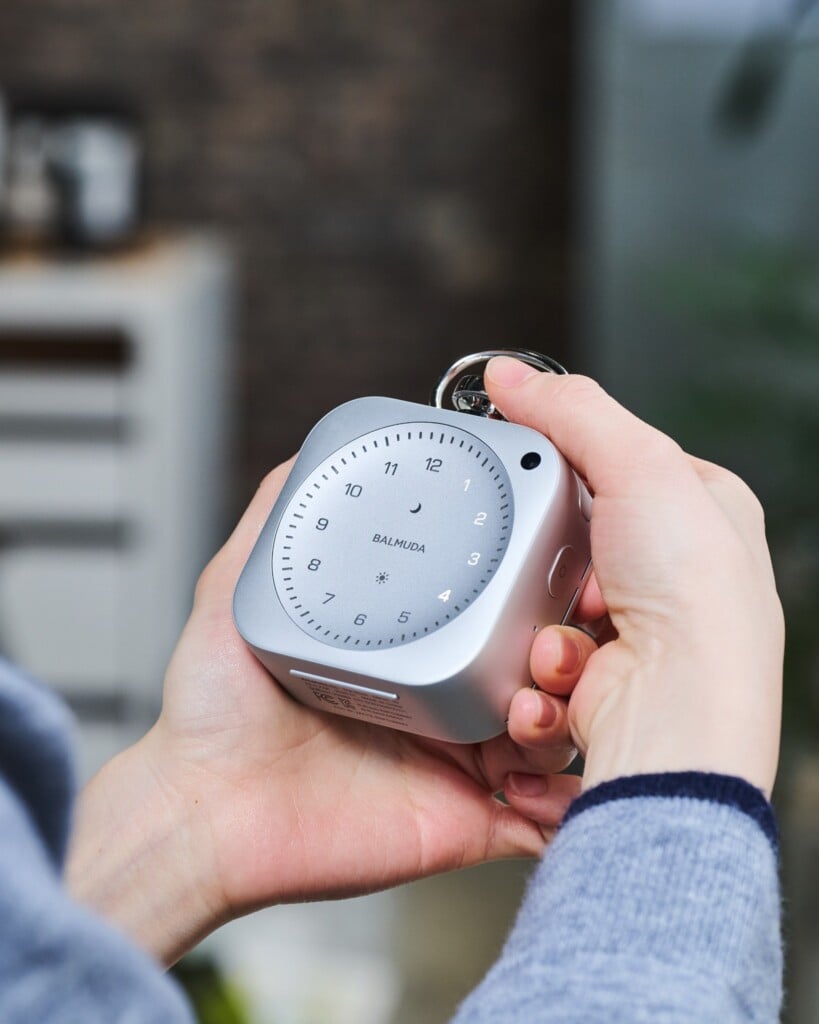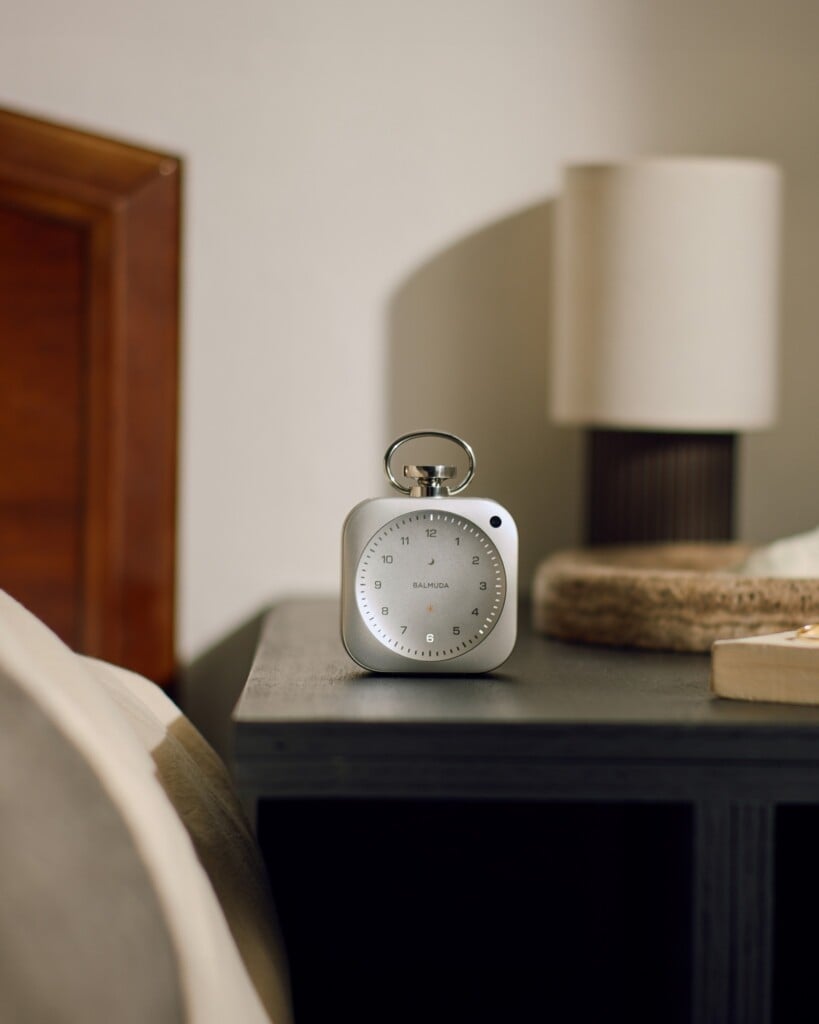
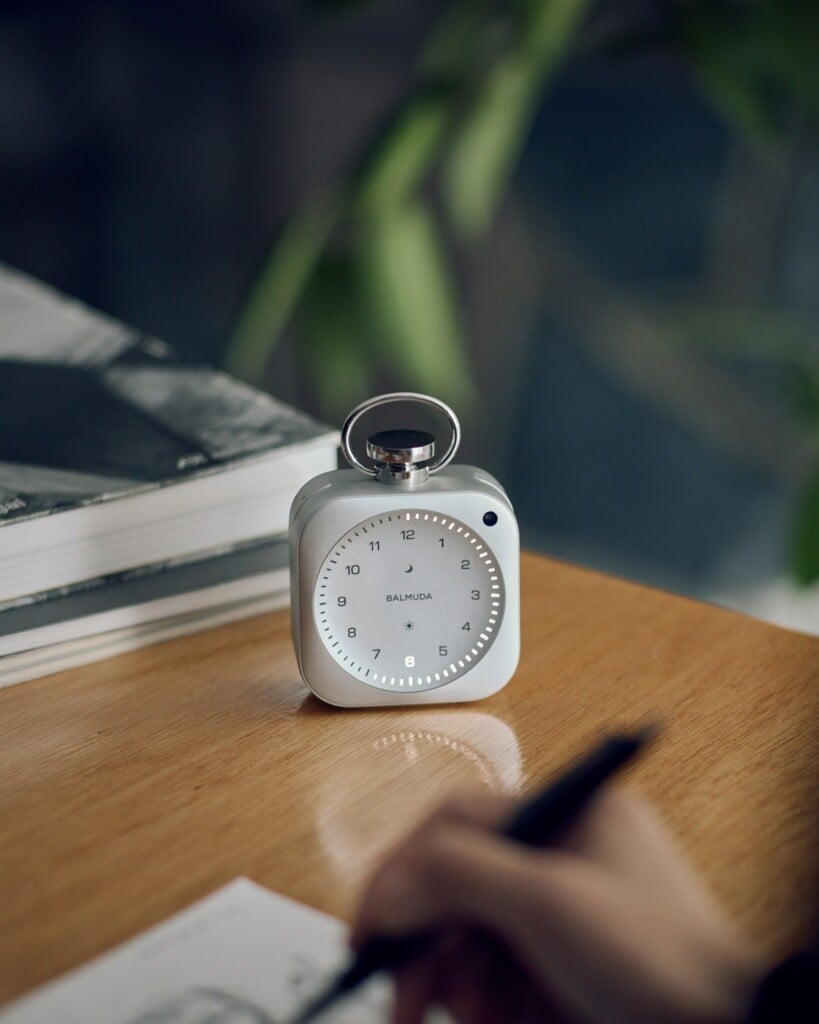
The body is machined from a solid block of aluminium (200 grams, USB-C charging) and comes with a cloth carrying bag. An object to hold in your hand, not hang on a wall. Inside, three functions. Relax Time mode plays seven original sound recordings — rain, river, fire — produced in-house and with outside musicians. They begin three minutes before the alarm, with the volume rising gradually: by the time the alarm sounds, the room is already filled with sound. Then there is the focus timer, running from one to sixty minutes, with white noise underneath. Everything is controlled through the Balmuda Connect app via Bluetooth or Wi-Fi.
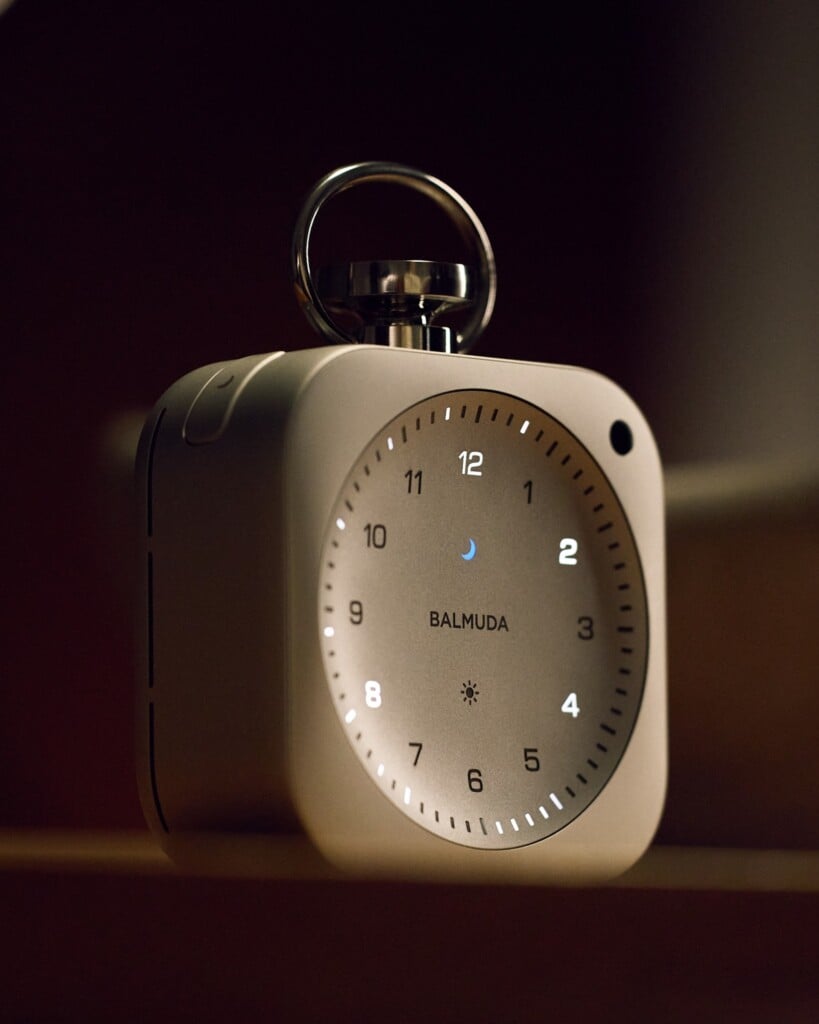
But the heart of the project lies elsewhere. The phone on the nightstand is not just a source of light — it is a source of constant distraction: notifications, scrolling, the permanent feeling of needing to be reachable. The Clock is built to take the place of that screen. It gathers all the functions we use at night as an excuse to keep the smartphone nearby and puts them into an object that doesn’t illuminate, doesn’t notify, doesn’t connect to anything except rest. Sound without light. Time without urgency. The phone stays in the other room, The Clock on the nightstand: an act of design that is also, quietly, an act of digital hygiene.