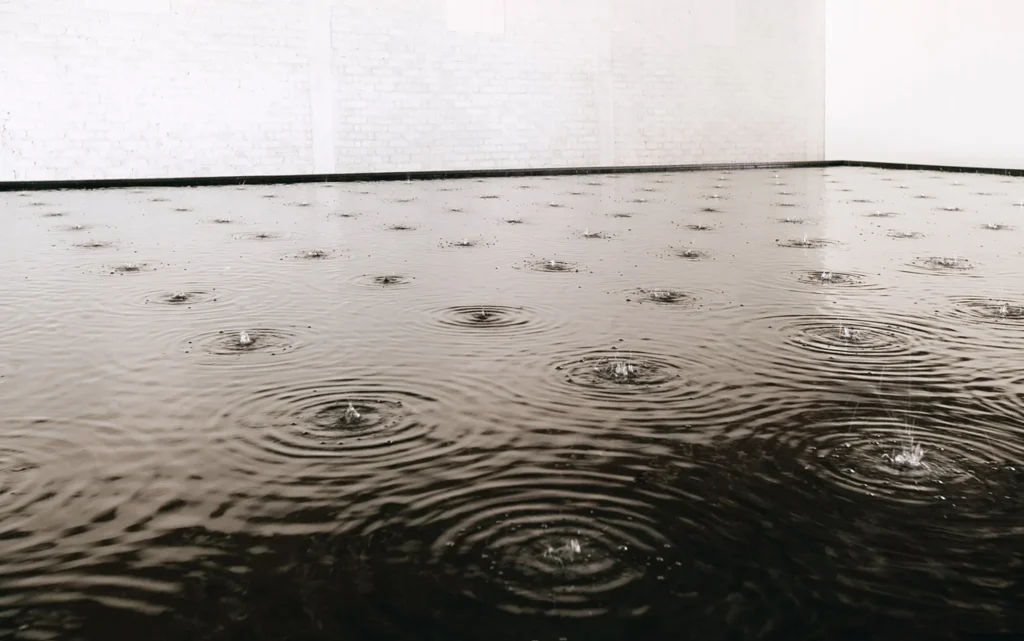
Water has always been a measure of life. Rivers, lakes, and seas are not merely natural resources: they are complex systems that shape landscapes, cultures, and cities. Humanity has observed them, crossed them, and narrated them through literature and the visual arts, because water reflects deeper dynamics: change, adaptation, and the relationship between different systems.
This is the common thread running through the new episode of Cantiere Scandurra, the podcast by Scandurra Studio in collaboration with Collater.al, in which Alessandro Scandurra explores water not as a decorative or scenic element, but as a tool for thinking about and designing spaces. Water teaches flexibility and attentiveness: anyone observing its movements quickly understands that no flow follows a fixed trajectory, that rigidity is often useless, and that the most effective design emerges from observation and adaptation.

Every river, lake, or canal is a living organism in motion, interacting with people, cities, and the environment. Its unpredictability is a lesson: architecture can learn from natural flows, integrate with them, and transform constraints into design opportunities.
Water is also a cultural metaphor. Western literature has often turned it into a measure of life itself: Joseph Conrad in The Shadow-Line describes navigation as a rite of passage, an experience that shapes character; Herman Melville, in Moby-Dick, makes the sea a lens through which to observe human desires and ambitions; Ernest Hemingway, in The Old Man and the Sea, transforms the ocean into an ethical experience: what matters is the gesture, not the victory. These authors remind us that water is not merely matter, but a measure of adaptation, resilience, and attentiveness to context.
From an ecological perspective, water is the beating heart of the planet. Rivers, lakes, ponds, wetlands, and groundwater systems host complex and interconnected ecosystems that are fragile and delicate. Every local change can resonate on a broader scale. Observing water means understanding connections, flows, and relationships that are not only natural, but also cultural and urban.
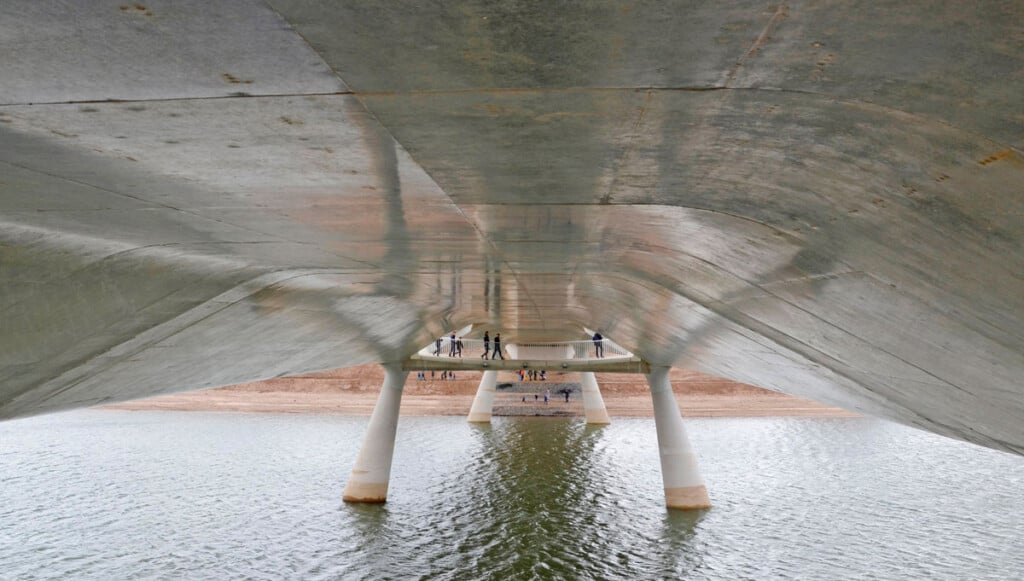
Within this framework, architecture becomes a tool of mediation. Designing with water does not mean opposing its nature, but translating its flows into concrete, functional, and coherent spaces. On Lake Iseo, Scandurra Studio designed a house that enters into dialogue with the lake: its spaces breathe with its variations and adapt to its movements. It is an ethical and ecological approach, a tangible example of architecture that learns from the environment instead of dominating it.
When applied on a territorial and geographical scale, this approach opens strategic perspectives for urban and ecological planning. Rivers, lakes, and seas can be conceived as natural infrastructures capable of guiding design choices, risk management, and sustainable urban planning. From this perspective, Scandurra Studio conducted research on the Neris River and the Baltic Sea region, using these areas as a first experimental ground for a model of Ecometropolis: cities capable of integrating natural flows into the urban structure, transforming ecological constraints into design opportunities and spaces for sustainable coexistence. Parks, ecomuseums, and multispecies spaces become urban laboratories applying the same strategy: observing flows, respecting the rhythms of different species, and creating connections without forcing nature. Architecture becomes a learning device, a way of making complex systems visible and navigable that would otherwise remain invisible.
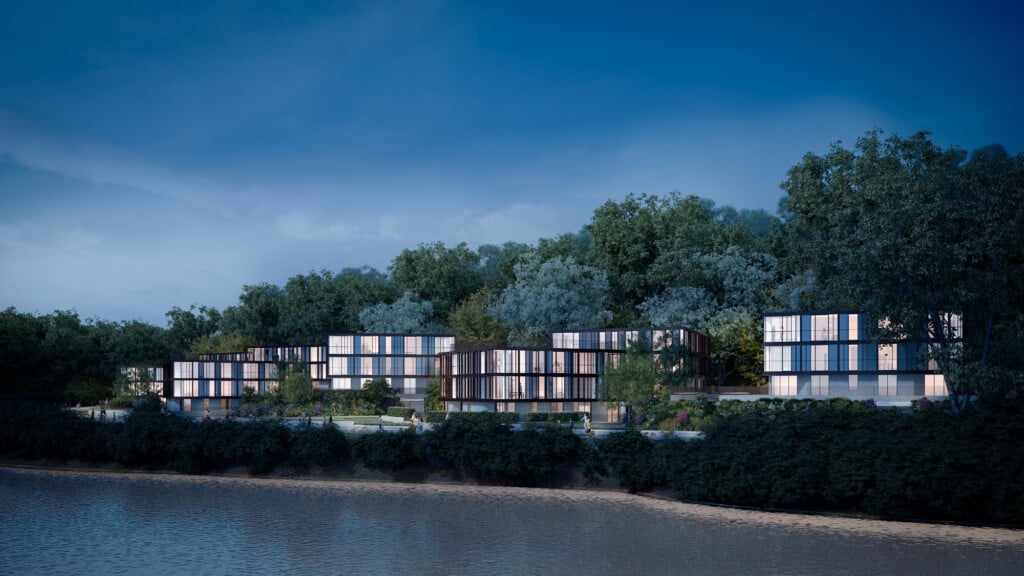
Thinking like water means rethinking the role of the designer: from a commanding figure to an intermediary between natural, cultural, and urban systems. It is a pragmatic position that requires observation, analysis, and the ability to transform complexity into living, functional, and coherent forms. In a world where unpredictability is the norm, fluidity becomes a design criterion. In this sense, water is not only matter or metaphor: it is an operational paradigm. Designing by learning from water means creating spaces and cities capable of adapting, enduring, dialoguing, and becoming concrete models of ecological and conscious planning.