You’re done. Delivered, closed, published, dismantled. And yet, the relief and satisfaction you imagined never come. In their place arrives a kind of emptiness, an uncomfortable emptiness to inhabit. You wake up not quite knowing where to direct your attention, you struggle to focus, you feel tired, drained, maybe even a little sad. As if, for weeks or months, something had occupied every room in your head and then vanished without even leaving a note.
It’s not a clinical diagnosis, but it’s a feeling many people recognise. We can call it a creative hangover.
And, from a neuropsychological perspective, it’s not hard to understand at all.
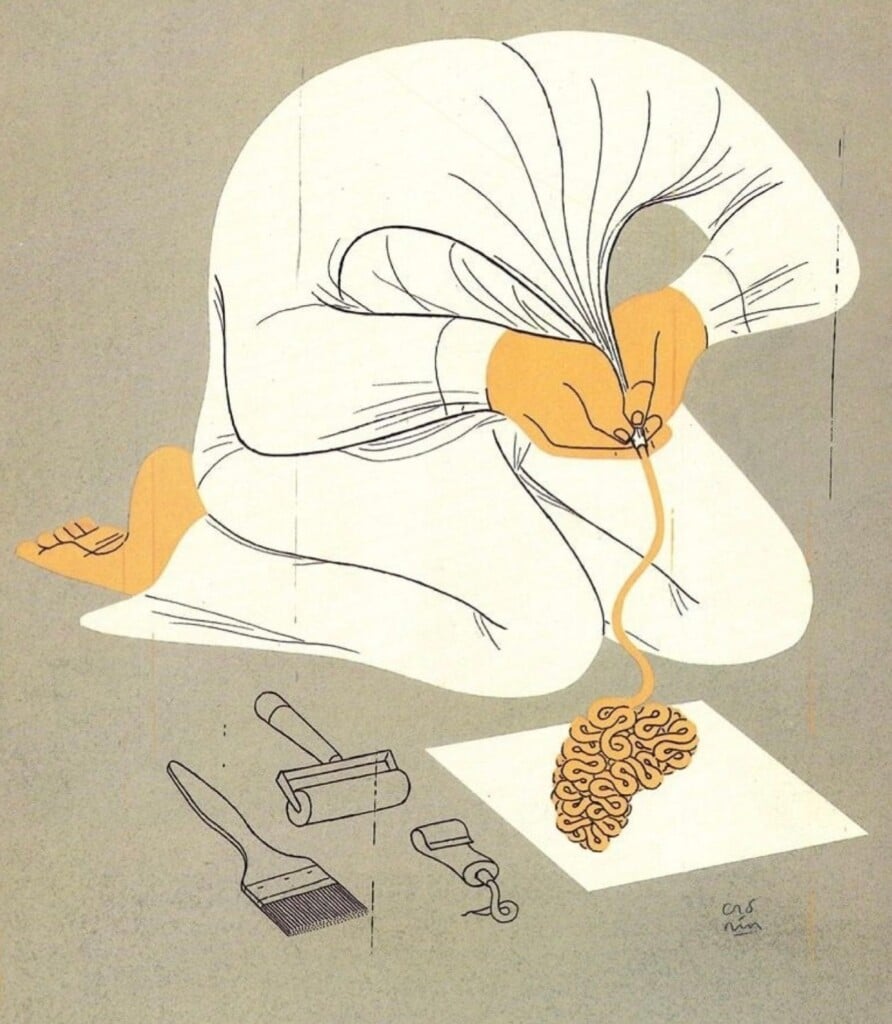
Creativity doesn’t originate from a single point in the brain, nor from some mysterious inspiration that shows up whenever it pleases. It’s the result of a continuous conversation between different networks, which must do very different things and yet learn to work together.
There’s the Default Mode Network, the network that activates when we let our minds wander: when we retrieve memories, imagine scenarios, make unlikely associations, build possible worlds, or return obsessively to a phrase, a scene, an intuition. It’s the part of us that lets the chaos in.
Then there’s the Executive Control Network, the one that has to give the chaos a shape. It kicks in when we need to choose, cut, hold the pieces together, meet a deadline, make decisions, turn a fragile intuition into something that can stand on its own outside our heads.
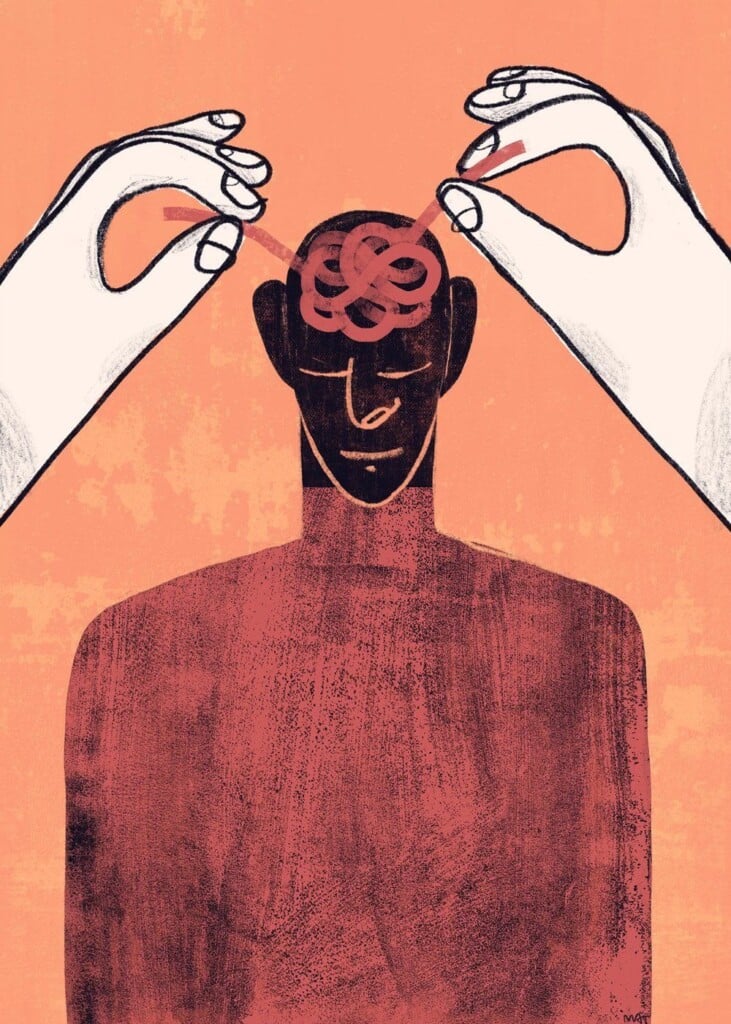
Coordinating this transition is the Salience Network: a kind of internal director that decides what deserves attention, what can be let go, and when it’s time to shift from imagination to control. In practice: that invisible function that tries to stop ideas from remaining just ideas.
During an intense creative phase, these networks work together with barely a real break. Joining them are the reward circuits modulated by dopamine, the attention systems, working memory, emotional regulation. We’re not just “doing a thing”: we’re keeping many windows open at once, often for a long time.
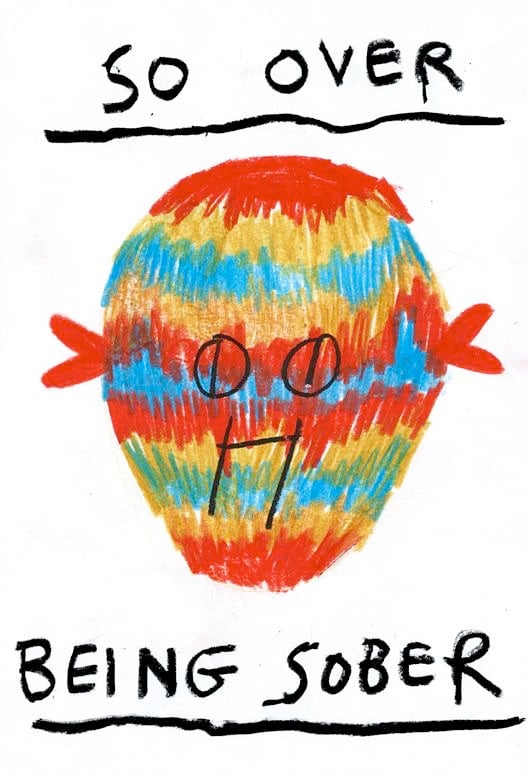
This is why, when we finish, that feeling of being hollowed out can arrive. Not because we’ve lost our creativity, and not because the project wasn’t important enough to leave something behind. Rather because we’ve spent real cognitive, emotional, and imaginative resources. We asked the mind to stay switched on for a long time. Perhaps what we call a block, then, isn’t always a failure. Sometimes it’s simply a decompression phase. The moment when the brain stops producing in order to restore order, consolidate what it’s been through, make room.
The creative brain is not a light switch: it doesn’t stay on forever, nor should it. It alternates between surges and silences, accumulation and release, images that arrive all at once and days when nothing seems to arrive at all.
And perhaps the hardest part isn’t going back to creating. It’s accepting that, after giving shape to something, we have the right not to be immediately ready to fill the void that remains.