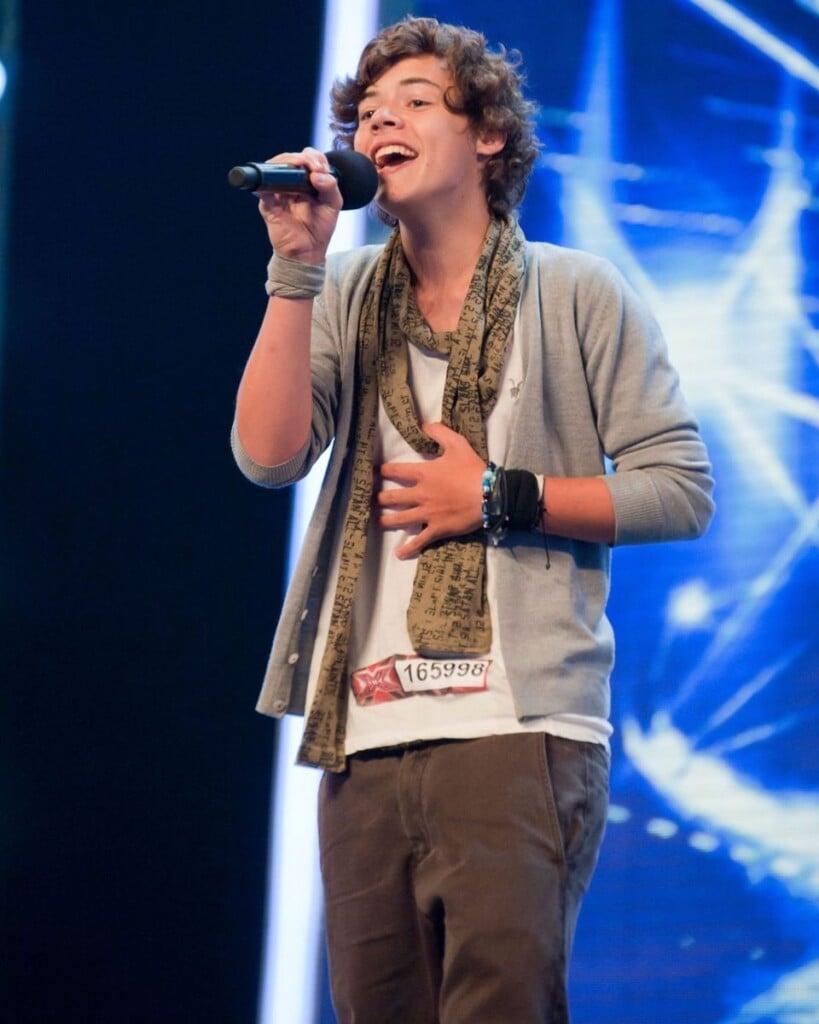
When in 2010 Harry Styles showed up to the X Factor auditions wearing a long cardigan, a deep scoop-neck t-shirt, and a thin scarf tied around his neck, no one could have imagined that awkward sixteen-year-old—who worked in a bakery and served “cakes in the shop bit”—would go on to become one of the most influential style icons of our time. The aesthetic was pure early 2010s: casual layering, symbolic accessories, a British high-street taste whose epicenter was more a small-town Topman than the fashion world. Then something shifts, and the Harry Styles phenomenon starts to become more complex. Let’s see how.
Leaving the One Direction dimension—born from the X Factor machine—wasn’t an abrupt break, but a gradual transition. The sonic shift toward a more rock-driven, auteur-leaning imaginary found its counterpart in the way he dressed and presented himself to the world. Even in the band’s final years, you could already spot signs of a departure from the group’s coordinated image: the long hair (later evolving into more mature cuts less tied to the “teen idol” idea), the gradual appearance of his tattoos, increasingly visible, all disrupted the initial uniformity we associated with the boy band. Over time, these details proved to be clues of a kind of quiet distancing—an attempt to assert an individual presence within a collective project that would eventually dissolve.
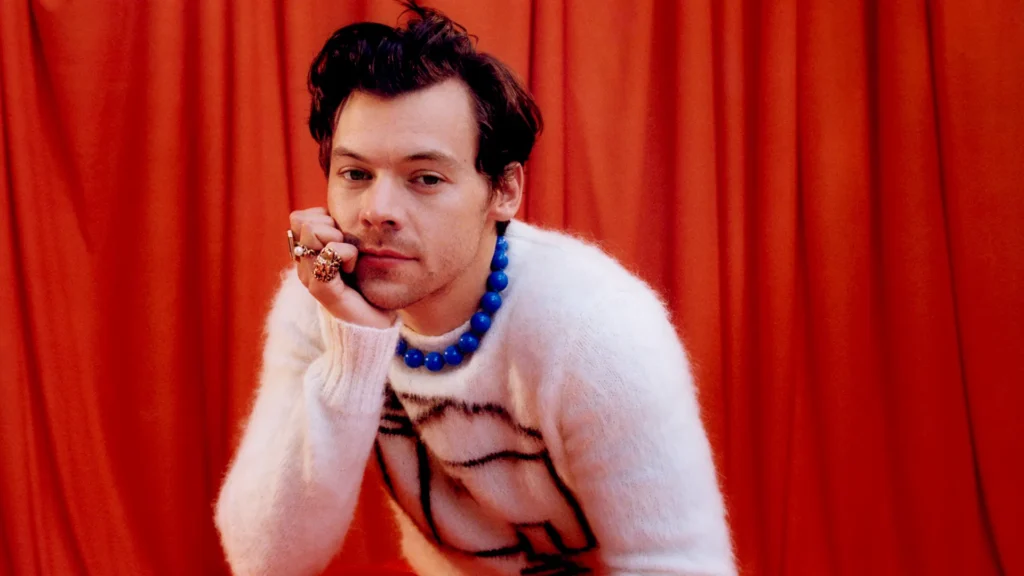
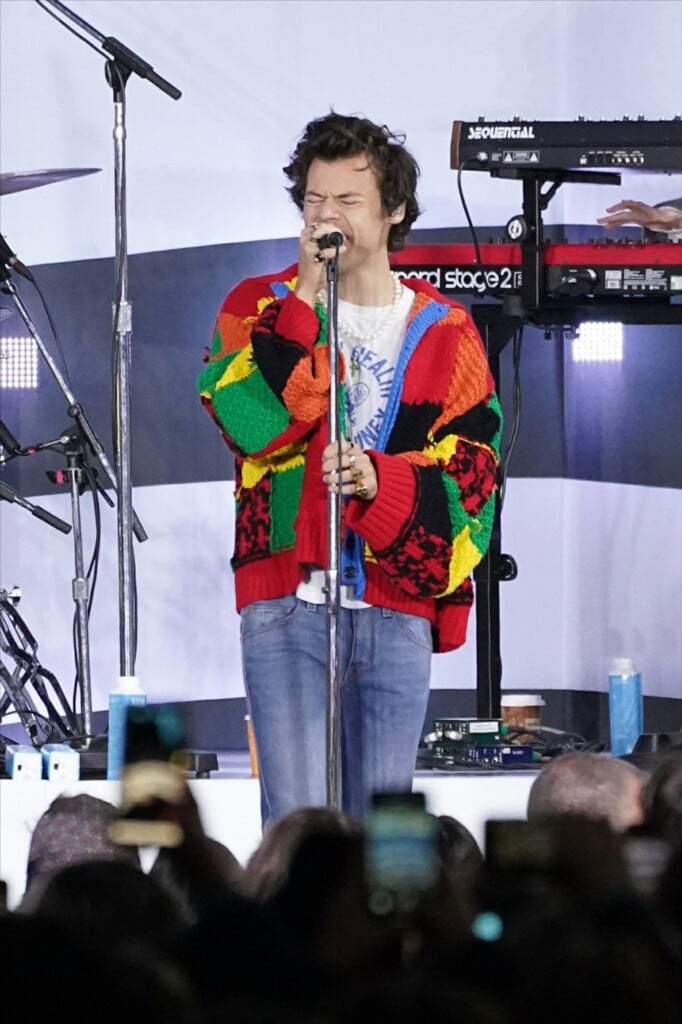
With the start of his solo career, the process becomes even clearer. Harry Styles stops chasing trends and begins defining a recognizable language. The slim suit gives way to softer silhouettes; colors turn pastel; shirts open up; trousers widen. The wardrobe fills with seventies references, glam rock, and theatrical tailoring. Those nuances return on the cover of his latest album too, where he wears a knitted sweater made by Patrick Carroll. Unforgettable, too, is the JW Anderson patchwork cardigan, worn in 2020 on the Today Show and during several concerts: a garment that became a cult object, to the point of entering the collection of London’s V&A Museum after the brand even shared on YouTube the instructions to recreate it.

At a certain point, it becomes clear that Harry Styles’ style has transformed into something more layered. Pearls, jumpsuits, feathers, high-waisted trousers, ostrich boas: on stage and on red carpets, masculinity becomes fluid, playful, and unmistakably performative. The 2020 Vogue US cover—where he became the first man to appear alone on the magazine’s cover—marks a decisive symbolic turning point.
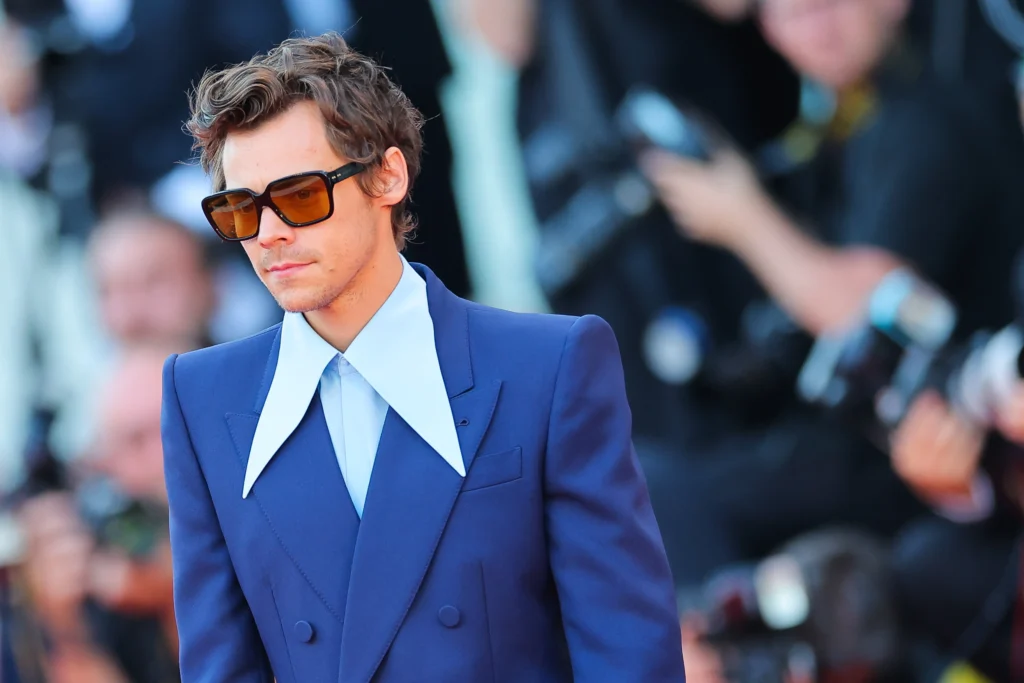
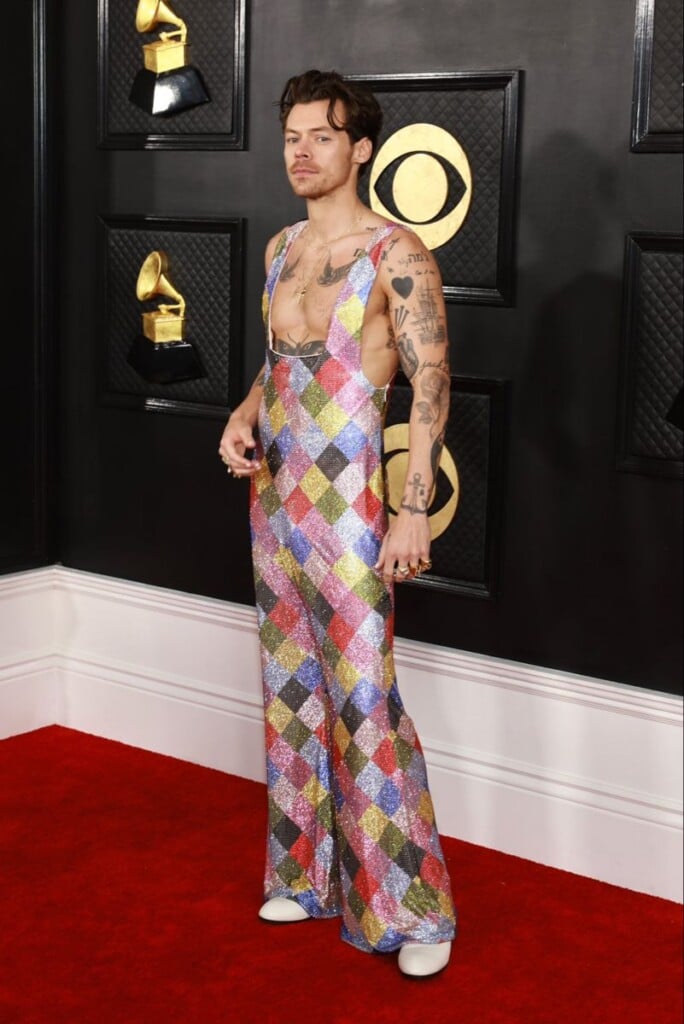
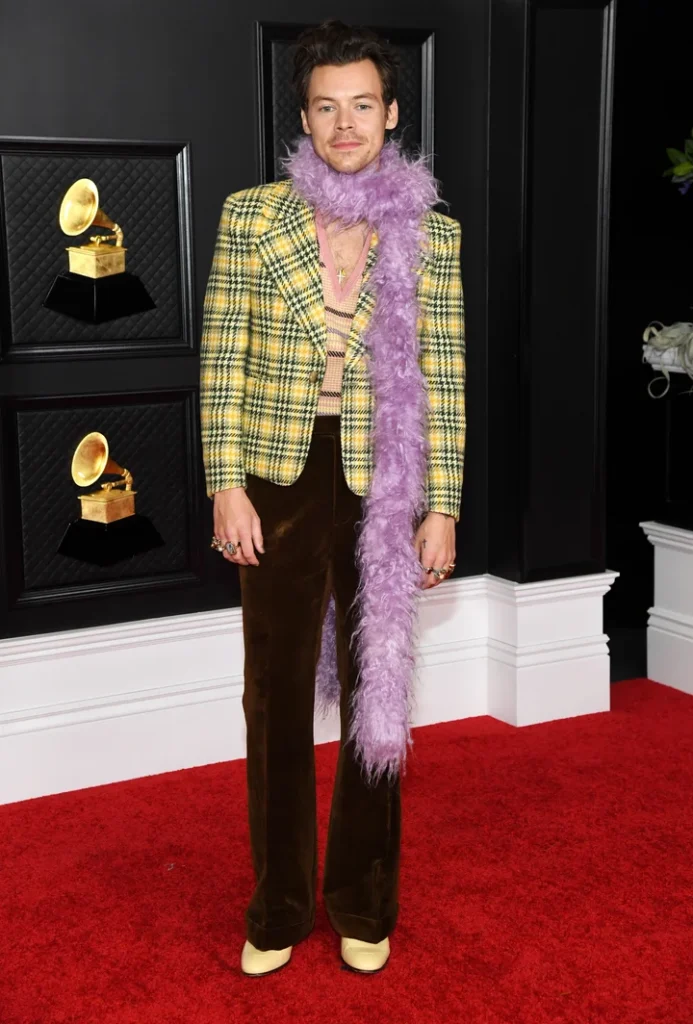
Key to this evolution is his collaboration with stylist Harry Lambert and with Gucci during Alessandro Michele’s creative direction, which helped define a romantic and eccentric aesthetic. But the strength of Harry Styles’ image isn’t only about big names: every look is in dialogue with the music, with stage presence, and with a direct—almost theatrical—relationship with the audience.
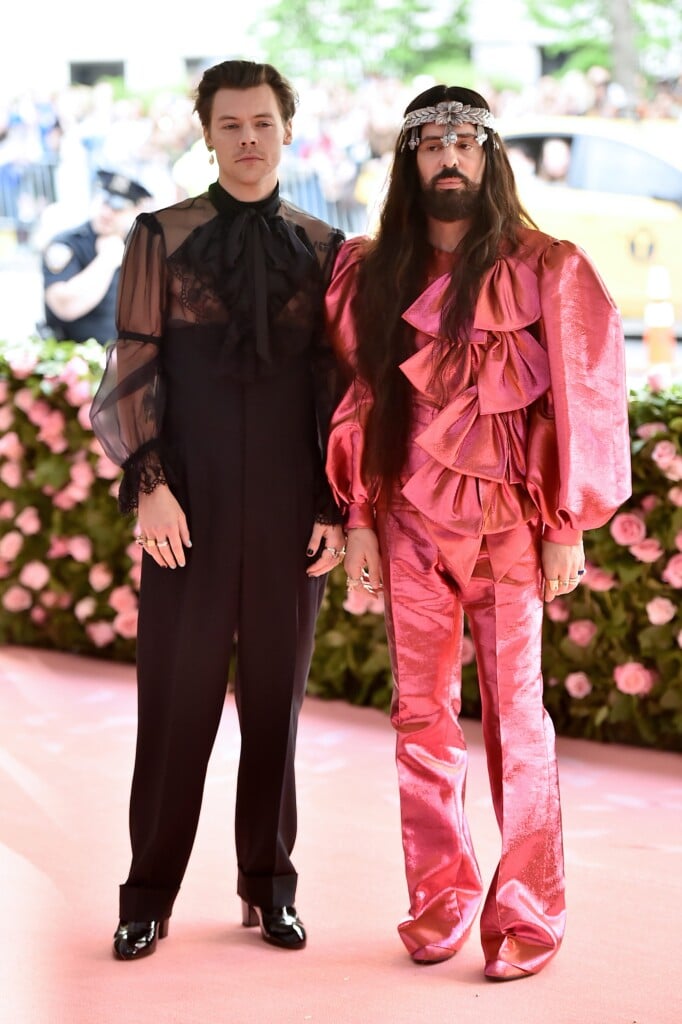
On tour, outfits become an integral part of the performance. Sparkling bodysuits, custom-made jumpsuits, and psychedelic prints amplify his hold on the crowd and unleash the collective energy we associate with a pop star. As a result, even the merchandising moves away from traditional concert logic, shifting toward an aesthetic closer to fashion than to a simple gig product.
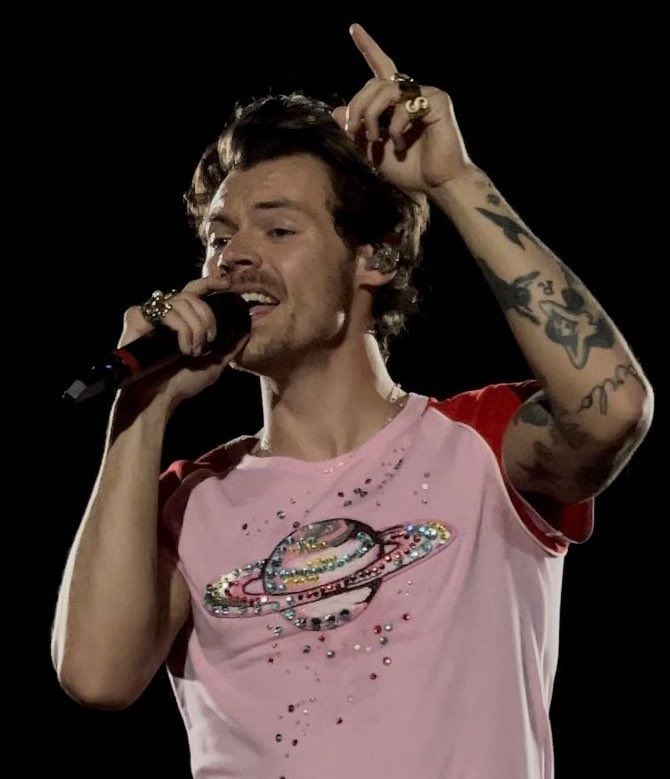

In less than ten years, Harry Styles has gone from being a teen idol dressed according to the codes of his time to a cross-cultural reference capable of influencing Gen Z and the luxury industry. His trajectory reflects a broader shift: that of a generation that questions rigid categories and uses clothing as a space for personal expression.
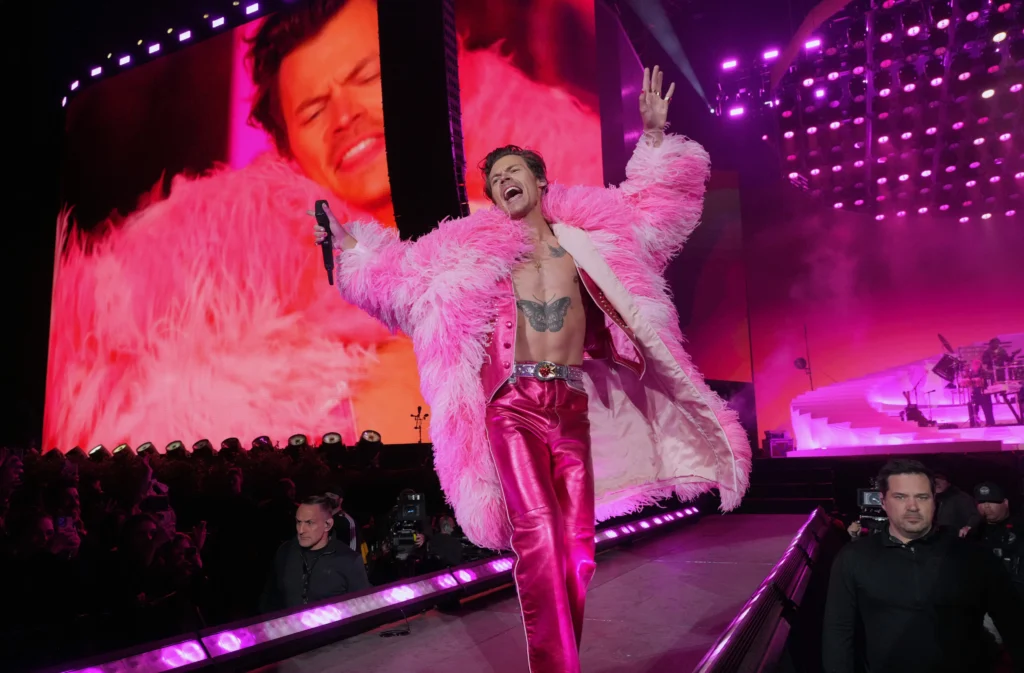
Today, his wardrobe isn’t just a collection of iconic outfits, but the result of a path of identity-building that has accompanied every stage of his artistic growth. And it’s precisely this continuity—more than any single look—that has turned Harry Styles into something that goes far beyond the simple pop star born out of X Factor.