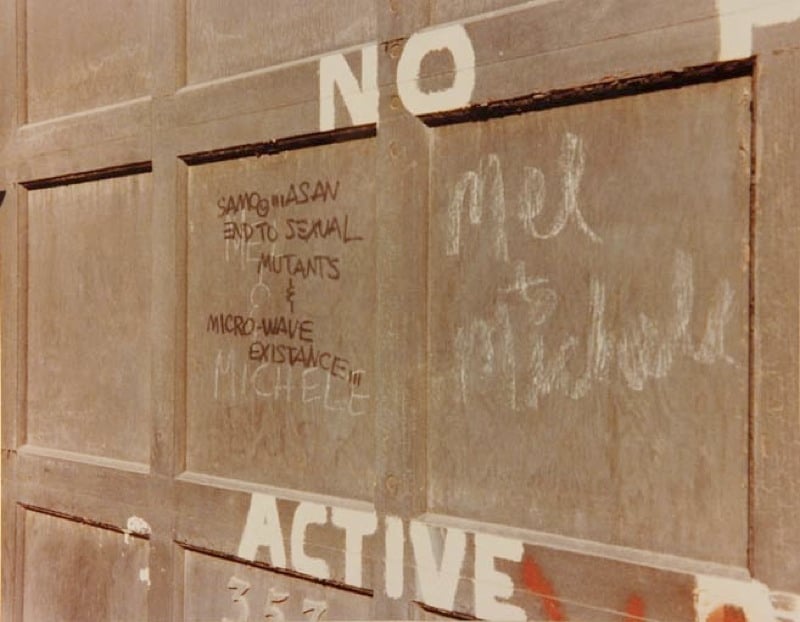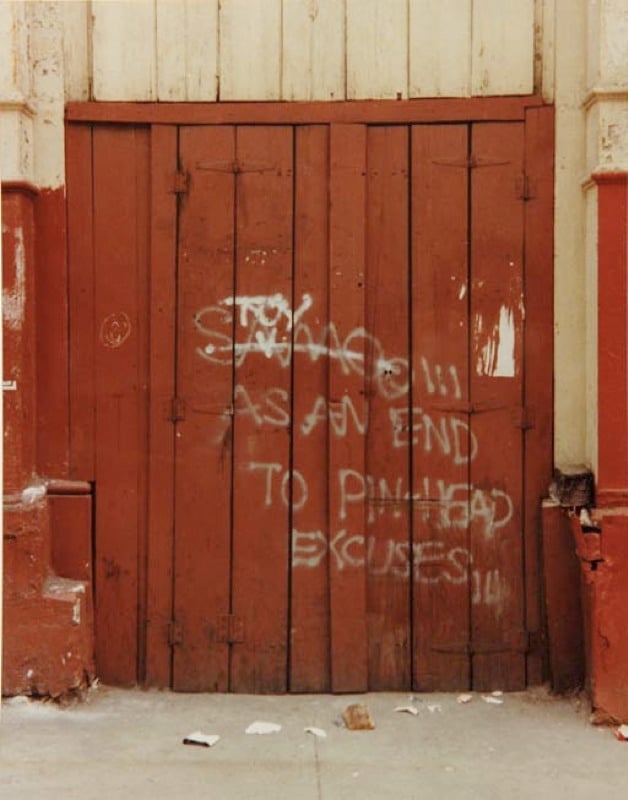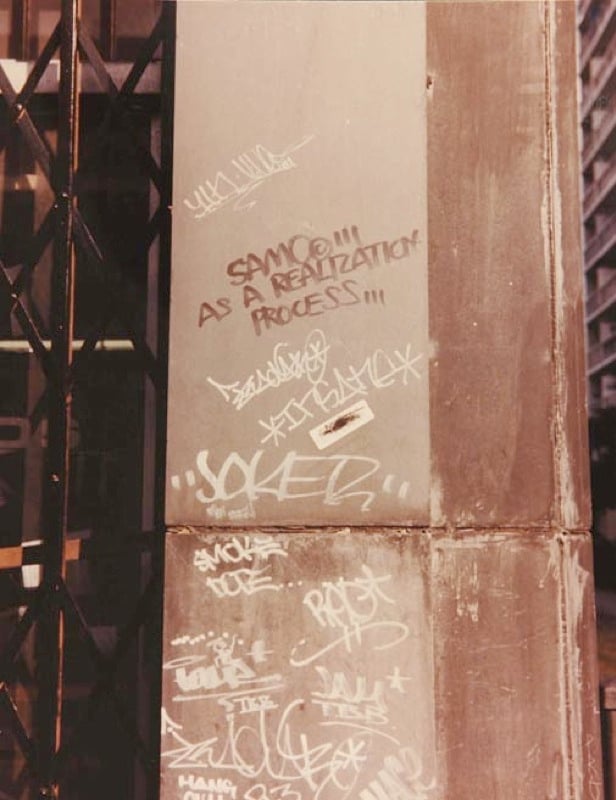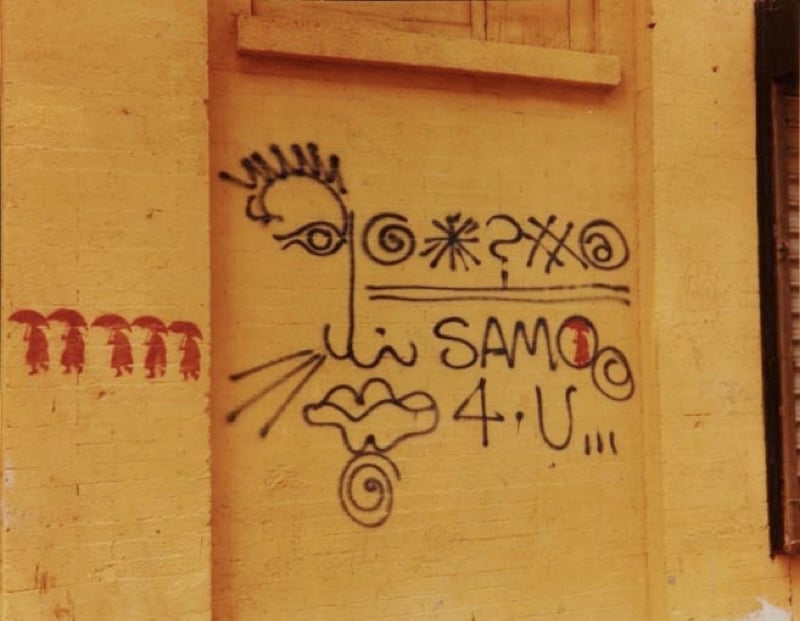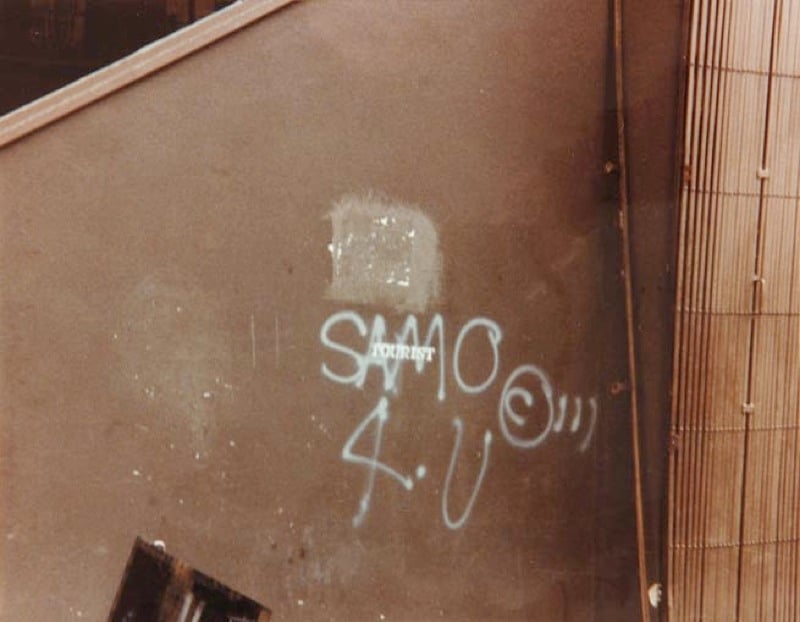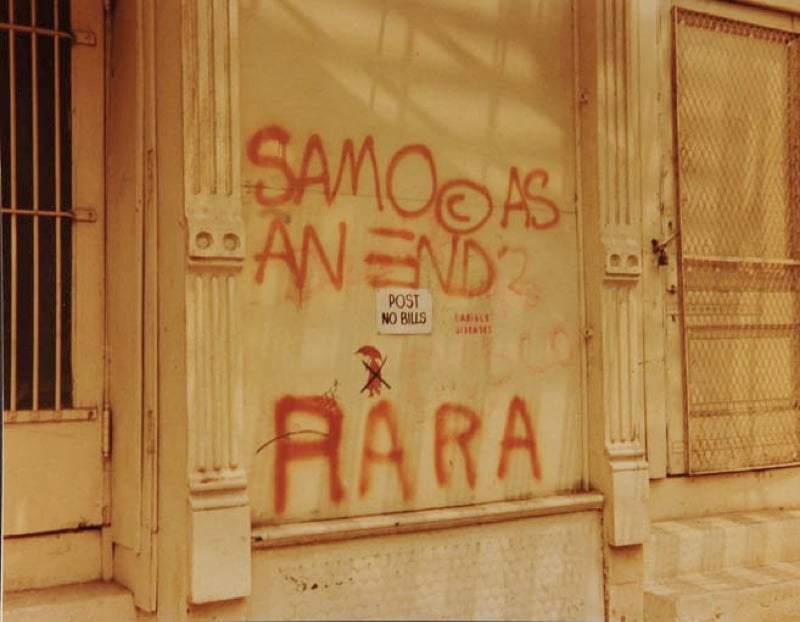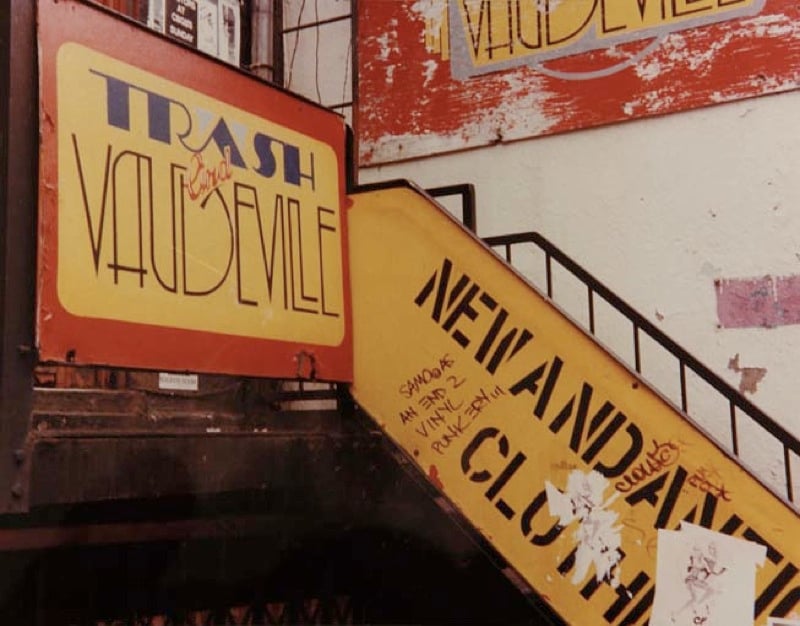
Before it became a recognizable aesthetic, a scrawl on the walls of New York could be a way to interrupt the rhythm of the city and catch the attention of anyone passing by. This is the idea behind SAMO©, the project developed in the late 1970s by Al Diaz together with Jean-Michel Basquiat. Today, almost fifty years later, those words are still in circulation, this time through a capsule collection created by Diaz with the British studio DARKCIRCLE® for D’Stassi Art.
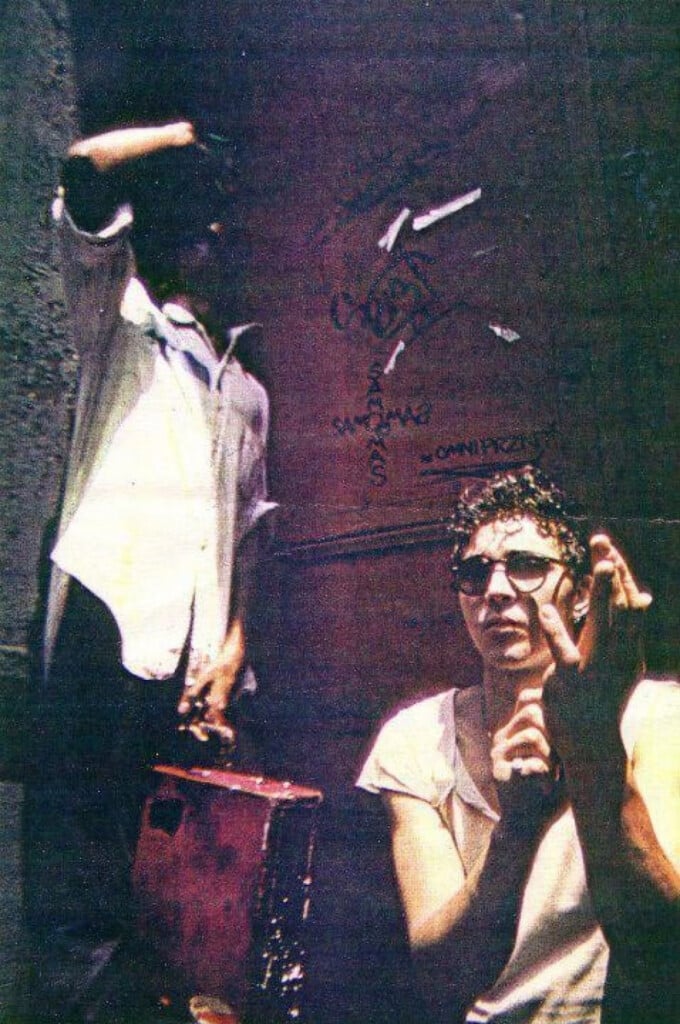
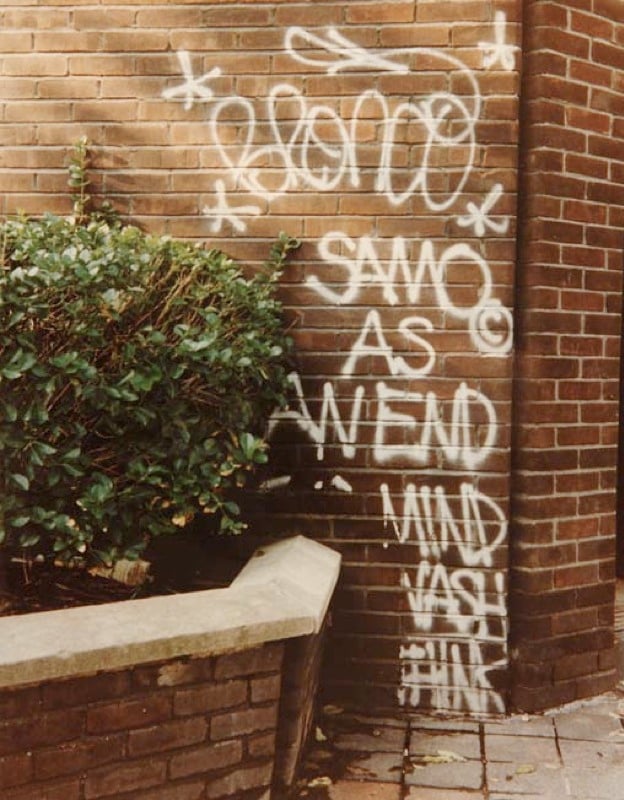
A sweatshirt can bring to light a story that for too long has been told only halfway. That is what happened when Kid Cudi, about to play Jean-Michel Basquiat in the film JEAN, shared a photograph of himself wearing a SAMO© sweatshirt signed by Al Diaz. A seemingly simple image that brings attention back to the past.
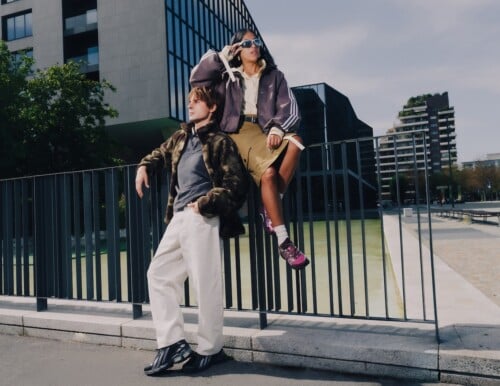
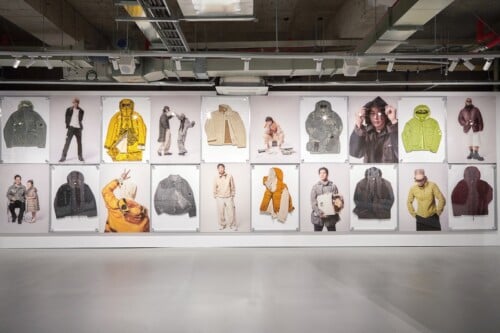
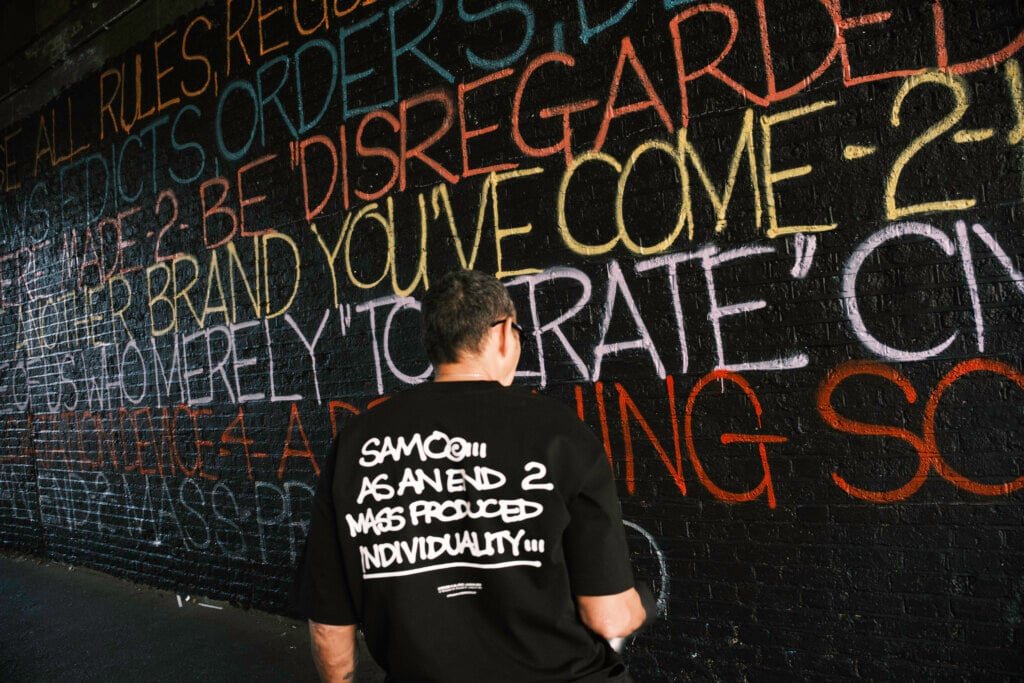
The collaboration accompanies SAMO: TRANSATLANTICATION, Diaz’s first solo exhibition in the United Kingdom, which opened on September 25, 2026 in London. The project brings his imagery to T-shirts, sweatshirts, a chore jacket, tote bags, prints and tapestries, without simply turning the artworks into wearable graphics. At its center are the phrases that made SAMO© a recognizable experience: short, enigmatic and provocative messages, designed to reach a much wider audience than the writer community. Among them is AS AN END 2 MASS PRODUCED INDIVIDUALITY, a statement that still retains its critical edge toward conformity and identity built through consumption.
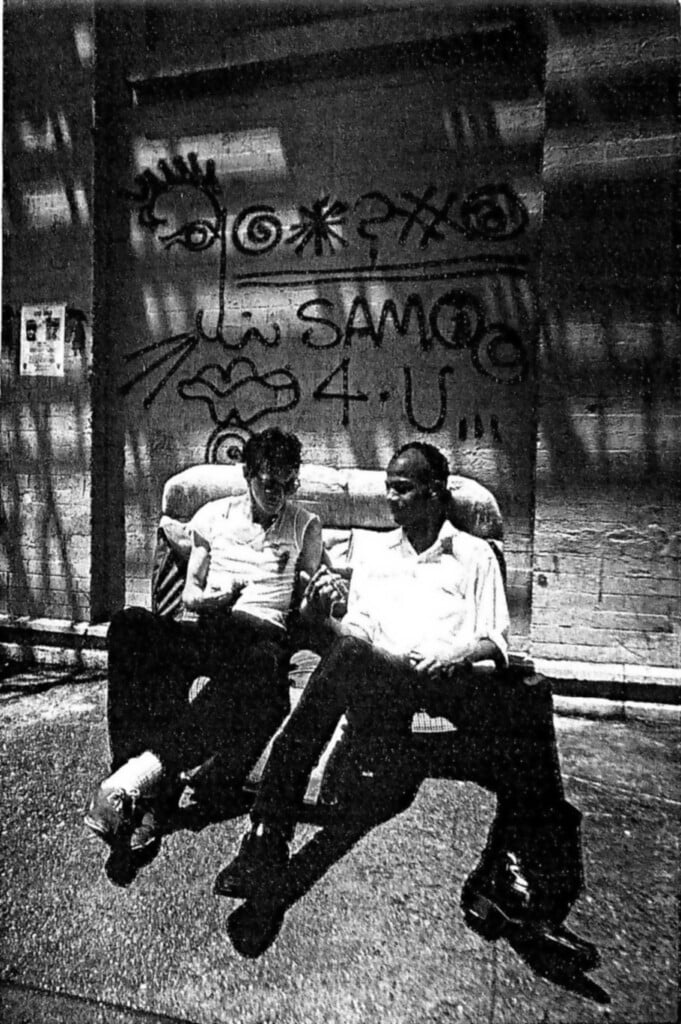

In the late 1970s, New York was going through a season in which many of the most interesting art forms were coming to life far from traditional institutions. Walls, subways and public spaces became surfaces on which to experiment with new languages, often in contrast with the more conventional idea of an artwork. Graffiti, music, photography and performance helped build a visual culture that did not necessarily need to enter a gallery to be recognized. In this scenario, SAMO© stood out because it shifted attention from the author’s signature to the content of the message: not just a sign to be recognized, but a phrase capable of provoking, ironizing and questioning what seemed to be taken for granted.
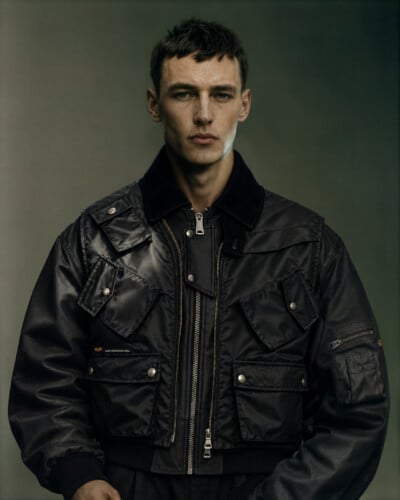
The relationship between art and clothing becomes even more direct in the pieces individually worked by Diaz. The chore jacket, produced in an edition of just five, and the white Intervention T-shirt, available in 25 pieces, carry the artist’s hand-made intervention on the surface of the fabric. Alongside the garments, two large tapestries reinterpret two symbols of the collection: the Individuality message and an American flag transformed through skulls, crossbones and fragments of lettering. There are also three photographs taken during Diaz’s visit to Shoreditch, documenting his time in London and the link between his work and urban space. The capsule thus becomes an extension of his practice, able to move from the wall to the canvas, from the street to the wardrobe.
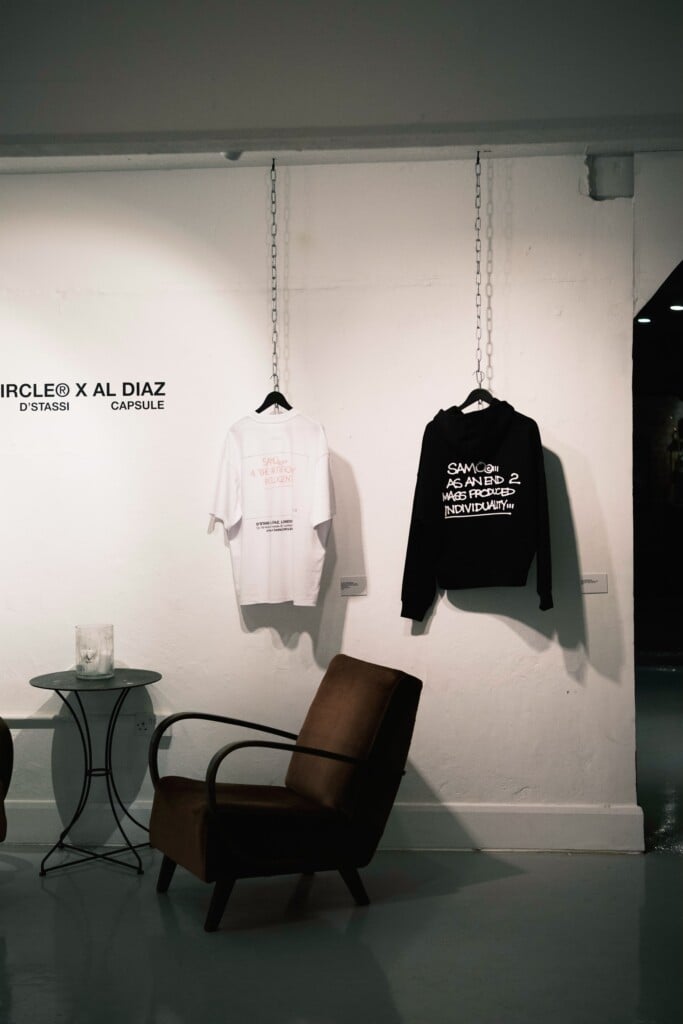
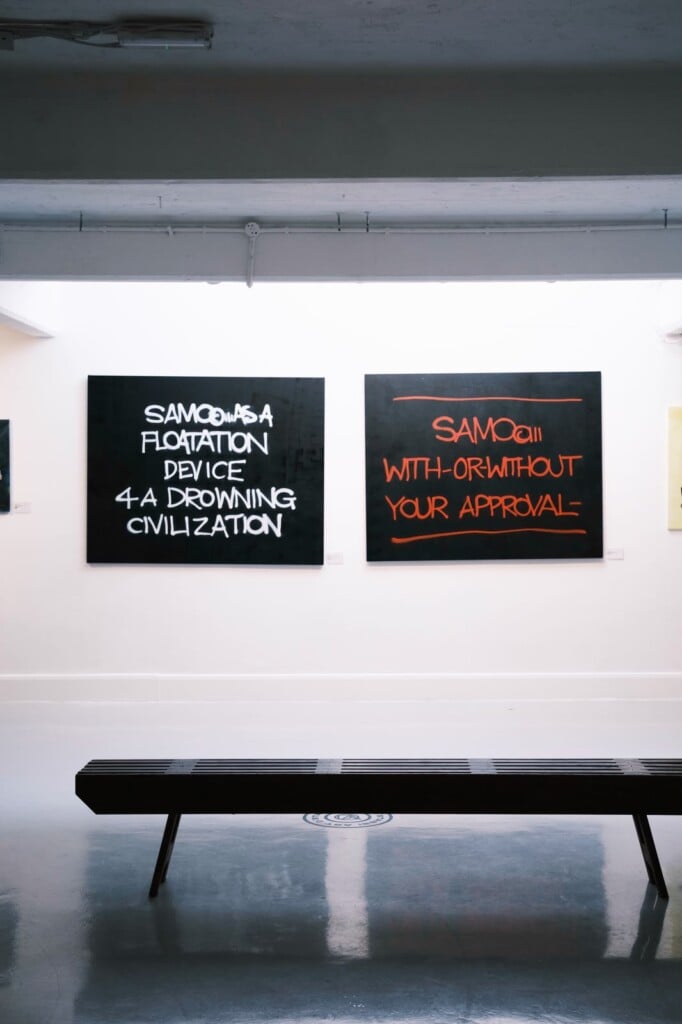
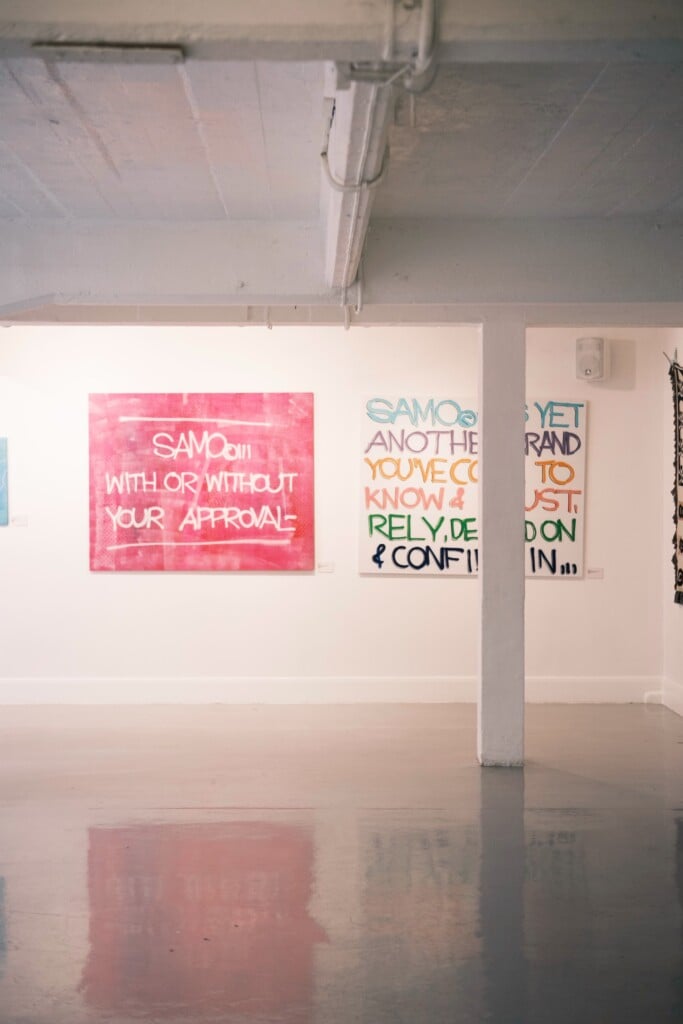
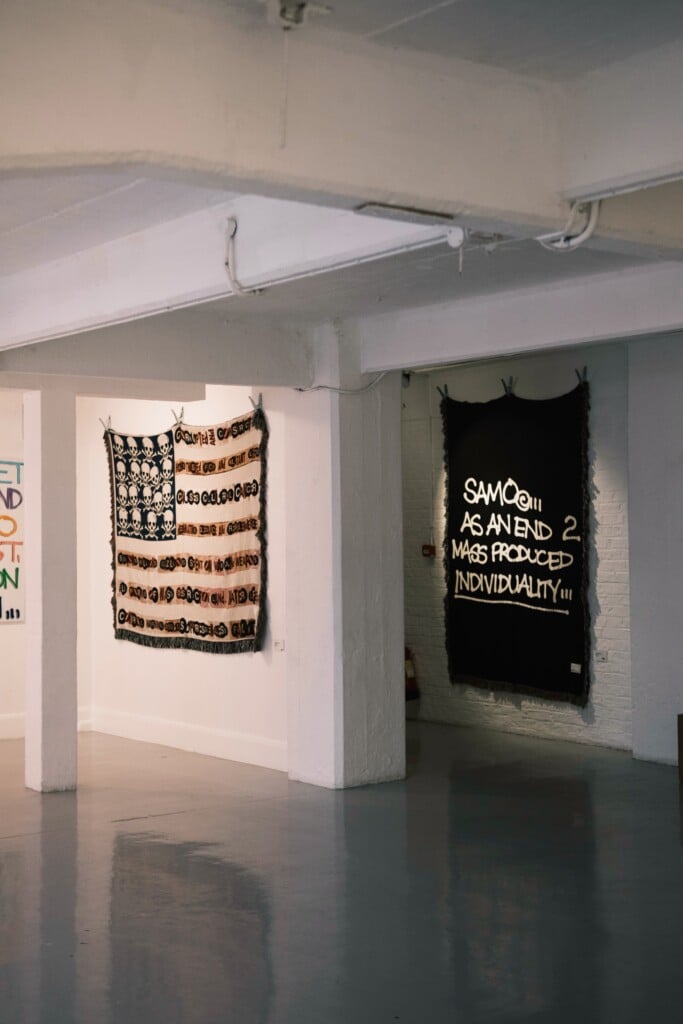
To understand the meaning of this collaboration, we have to go back to the very nature of SAMO©. Diaz and Basquiat did not simply want to leave a signature on walls: they built phrases that could be read and interpreted by anyone, using the city as a space for communication. Diaz has described the project as an “imaginary product,” something that did not exist but was presented as a possible alternative. It is an insight that also runs through SAMO: TRANSATLANTICATION: in the exhibition, the new canvases dedicated to SAMO© are in dialogue with works made using New York subway signage, while a mural and a number of public interventions take the work out of the gallery and into the streets of Shoreditch. The capsule with DARKCIRCLE® also follows this direction: it does not merely recover an aesthetic tied to the history of street art, but reactivates a language that was born to be shared, read and discussed in public space.