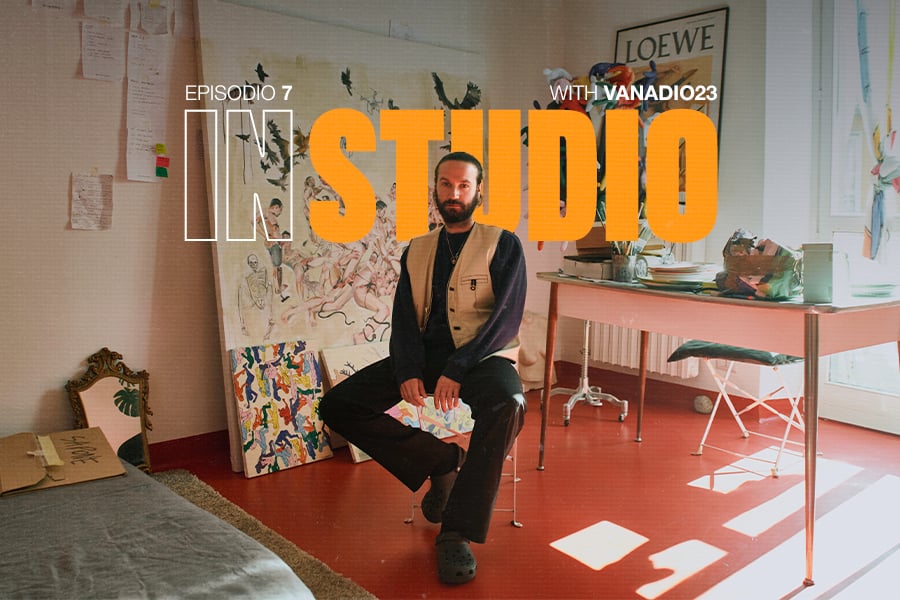
For the seventh episode of IN STUDIO, we ventured into NoLo, a neighborhood in Milan experiencing a revival thanks to numerous artists who’ve chosen it as their living haven. Among them is Andrea Semeghini, known as Vanadio23 in the art world, who has made this neighborhood his home studio. Vanadio23 is an eclectic artist at the forefront of advocating for the LGBTQIA+ community through a blend of fashion, painting, and illustration. His creations are unique pieces explicitly representing his intention: embracing sexuality with both irony and freedom.
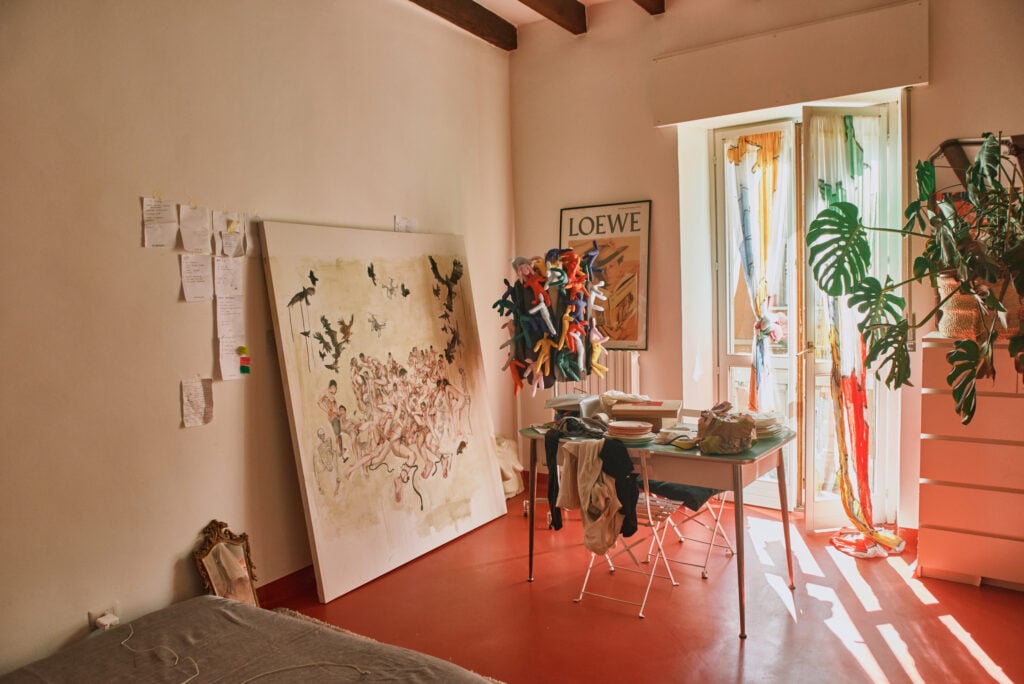
The studio
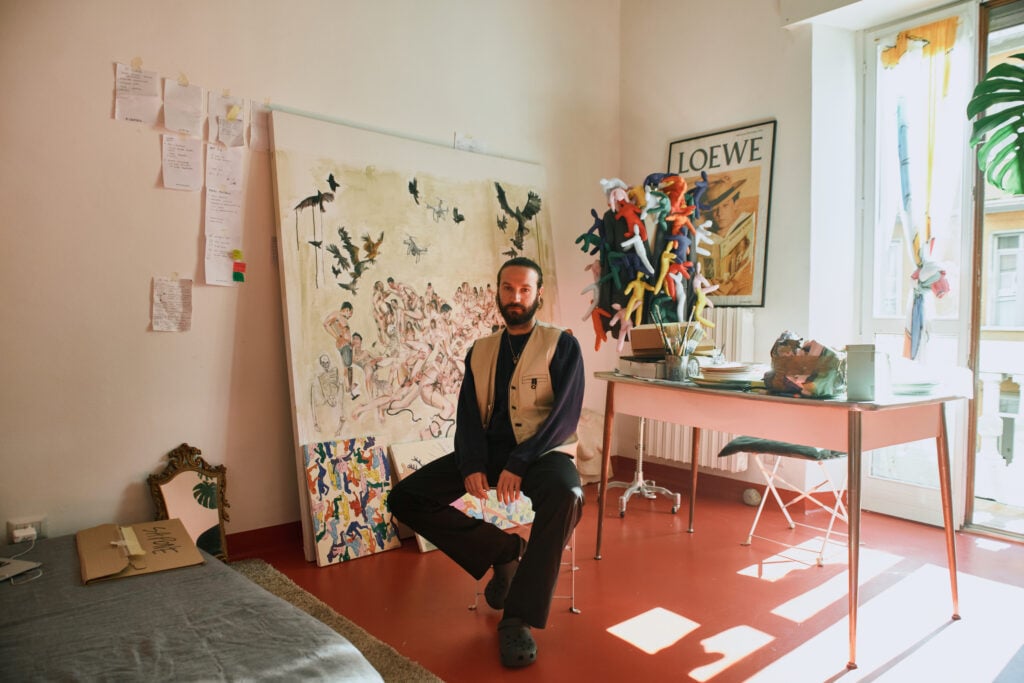
We’re halfway down via Padova. Climbing a few floors, we enter Andrea Semeghini’s home studio. The space bursts with colors, vividly expressing his eccentric personality. Walls and curtains are painted by him, and where there isn’t color, you find canvases and post-it notes with scribbles. His dishes are scattered around, accompanied by plants that lend a cozy vibe. The artist’s creativity permeates his private space, making it a seamless extension of his artistry. But let’s start with a few questions to get to know him better.
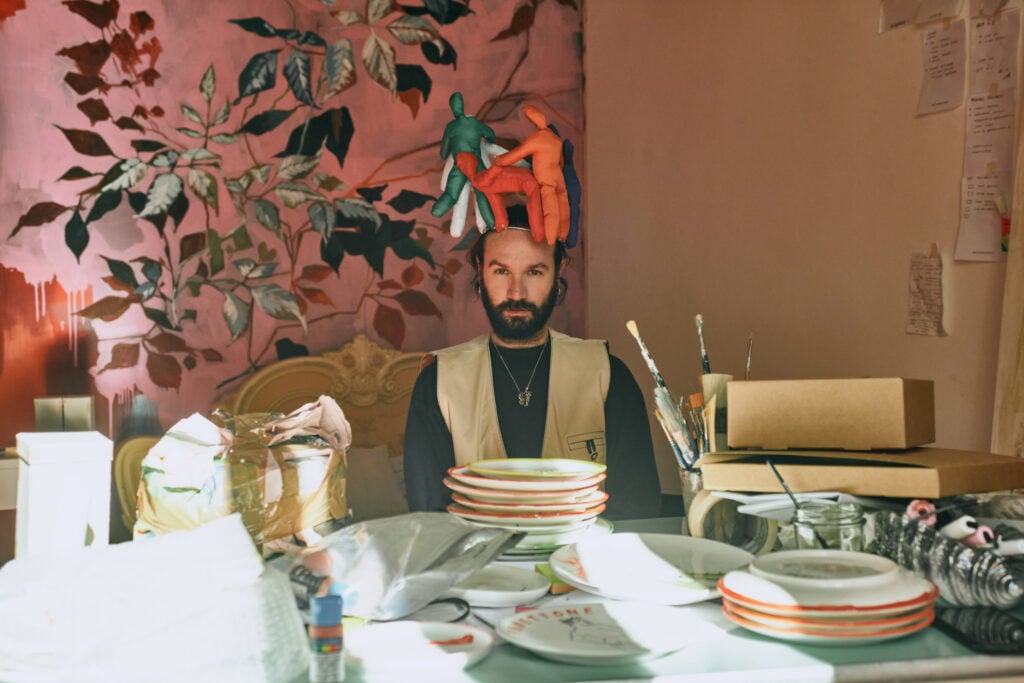
Let’s begin with curiosity, where does the name Vanadio23 come from?
Vanadium is an element in the periodic table, labeled as V23. It’s a type of rose quartz used in making screwdrivers and wrenches, essentially for work tools. It’s a metallic alloy. What interests me is its etymology. Vanadium comes from Vanadis Rea, the Scandinavian goddess of beauty. Moreover, Vanadium’s color is pink, this baby pink shade that I really like.
You’re a highly versatile artist, from dishes to paintings, fashion collections to soaps. Some label you as an artist, others as a fashion designer. How do you like to think of yourself?
Certainly not a fashion designer, I don’t identify with that label. In general, even to me, it’s not entirely clear; let’s say I don’t seek a specific definition. Often, I wake up with an idea for a project and just go for it. I live my art very freely. From plate collections to soap, to projects for exhibitions or Pride. It all stems from the desire to experiment and amplify the voices of certain minorities. The media I use adapt to how I want to tell things or simply, I exploit their functionality to convey a message that’s crucial to me. For instance, plates work really well, so why not utilize their reach to communicate with a broader audience? I also greatly enjoy collaborations, seeking the convergence of parallel projects that align in the message being communicated.

Speaking of your studio, how do you inhabit this space?
I experience this space in a multifaceted way. There are days I don’t leave and lose track of time entirely. I oscillate between creating hand-drawn dishes and working on my collections. And when I have nothing else to do, I work on the house itself.
The fusion of home and studio, what’s it like working where you live? Does it sometimes feel isolating?
The decision to merge my home with the studio definitely arose from necessity. There’s a future plan to separate work from personal life and move to a dedicated studio. Currently, truth be told, there are no boundaries, and I don’t even try to set them. Although this space isn’t vast, I always manage to adapt and get everything done here. My art expands and entirely encompasses the space. Every piece in this house is crafted by me, from the painted walls to the bathroom tiles. The idea is for this house to serve as a sort of showroom.
This aspect, I imagine, involves frequent visits from friends and others. Do you enjoy having them?
Yes, exactly. I often have visitors. I actually quite like this because I’m an insecure person, so any external feedback influences me, both positively and negatively. However, what I’m confident about is the goodness of the project I’m working on, so I manage to stay on the path I’ve set for myself.
Do you think if you had an external studio, you’d still bring work home?
Actually, yes. I never really stop working. I don’t have set hours; when I dive into a project, I’m completely immersed. Maybe it’s also because I don’t have a space to contain my work, so work never really leaves me. Often, I don’t sleep at night and end up developing ideas.


Let’s talk about your Christmas plates, considering the season.
The set of Christmas plates – which we call “Il Pacco di Natale” – was created in collaboration with a brand that produces tablecloths and placemats, called Distoffa. We make a Christmas box with a placemat, napkin, and plate. The plates are very ironic. There’s one with Santa Claus, the Christmas tree, gingerbread cookies, pandoro, and, of course, the panettone, which is my bestseller. All these subjects are graphically interpreted in a humorous way.
How does your design process happen? Digitally or on paper?
It’s always been quite analog, actually. The classic paper and pencil. Recently, I’ve started experimenting with the iPad, which, unlike the graphic tablet, is more intuitive and liberating. The language is very different from paper, and the process doesn’t suit me much; I like getting my hands dirty.
So, what would you give up if you had to choose? Paper or digital?
Without a doubt, I’d give up digital. Materiality is crucial to me. Paper and pencil, I don’t need anything else.

Where does your research originate from?
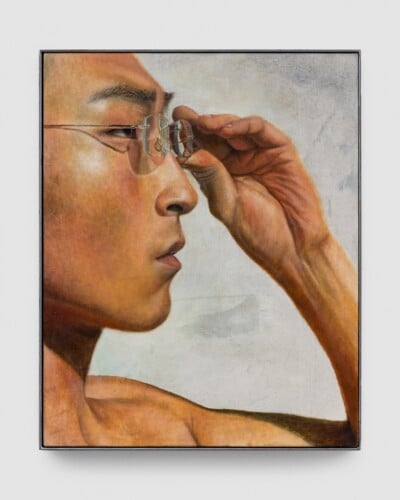
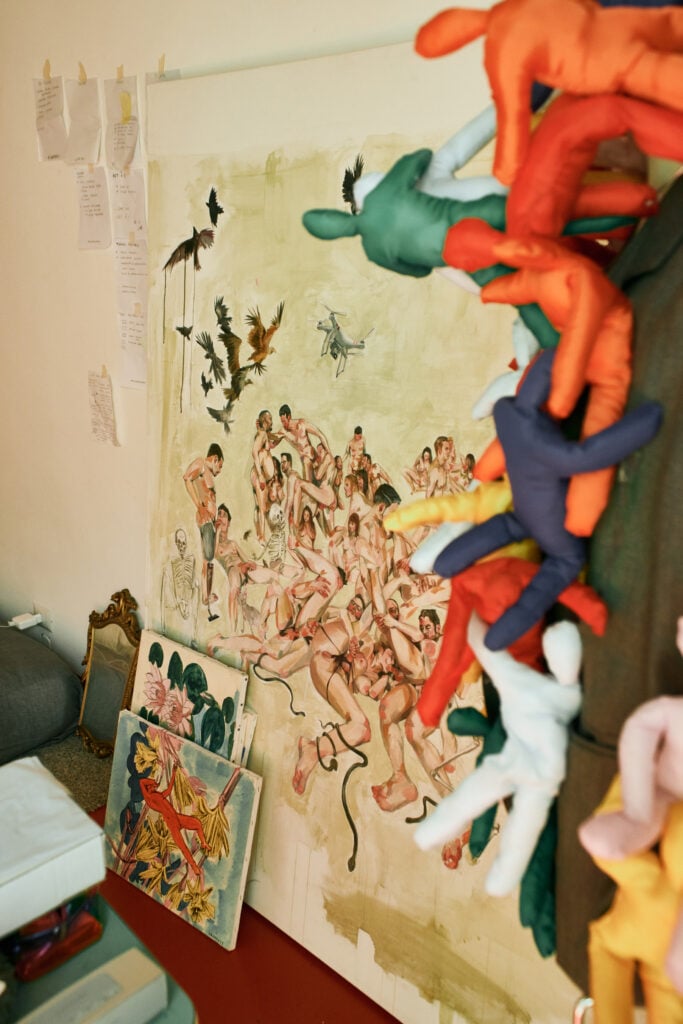
My art studies led me to delve into anatomical studies, specifically, I’m very interested in the nude. One of my favorite artists is Jenny Saville, who uses the body in a massive way, seeking imperfection. For me, what characterizes the body is imperfection, and that’s what I’m interested in painting. My interest in these types of artists sparked my desire to explore the body and nudity. I apply all of this to the message I seek, which I often communicate with irony.
It’s clear that irony, but also self-deprecation, are fundamental to you. Why is that?
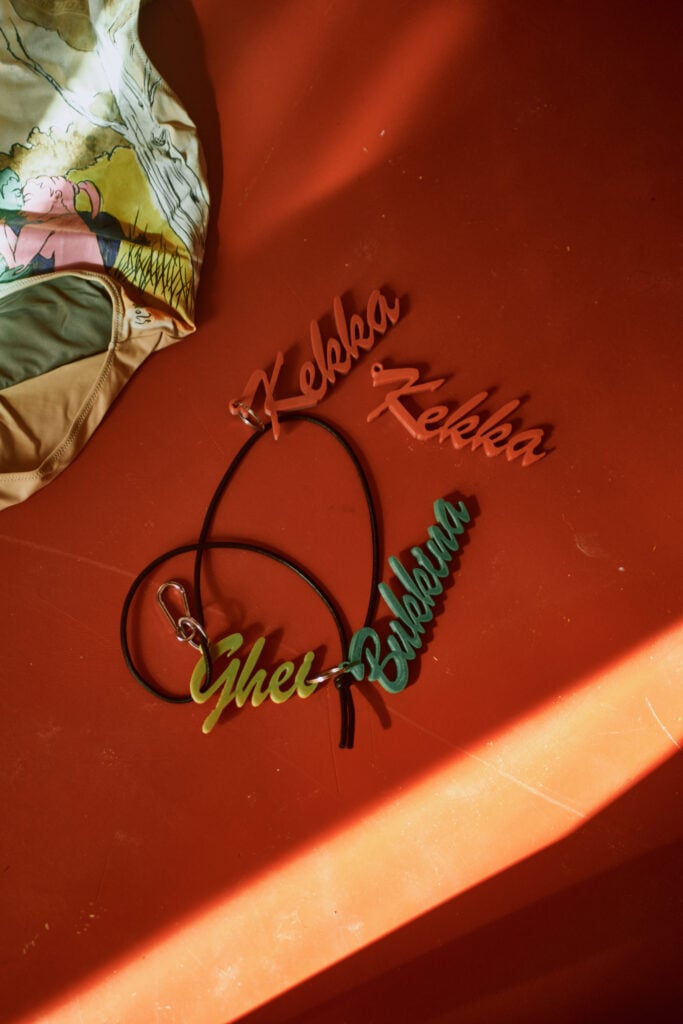
Yes, irony and irreverence are the main aspects of my work, and it bothers me a lot when they’re not understood. I’m quite sensitive to external criticism. My work is risky; for instance, many people – particularly influencers – didn’t want my “Finokkio” plate because they feared it might be misunderstood. For me, it’s essential that there’s a reappropriation by the community of this derogatory language because if we don’t, we’ll always be slaves to these insults. By doing so, we show others that this term can’t hurt us anymore, that it’s ours. Language holds a strong psychological power. There are many LGBTQ+ youth who commit suicide due to homophobic insults. Another crucial aspect for me is investigating the etymology of words. For example, do you know why the word “finocchio” is used to insult a gay person? It’s believed that the word “finocchio” is linked to the burning of homosexuals in the Middle Ages, where fennel seeds were thrown onto the pyres to try to mask the smell of burning flesh. This is one of the chilling explanations, although in reality, it has many derivations.
Is the word crucial in your research?
I willingly include it because the word becomes a game that, excuse the tricky phrase, but it’s part of the game. Or rather, as I said earlier, I want to close the circle. I want there to be a journey of understanding and acceptance, to the point where that offensive word loses importance and becomes a joke, to the extent that I wear it around my neck as a necklace or see it written on the plate I eat from.
Besides words, there’s often a recurring theme of the human figure, which sometimes transforms into a simplified little man. Such as in your collection for Pride 2023. Explain this aspect.
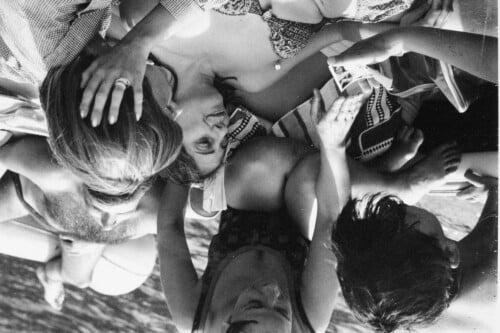
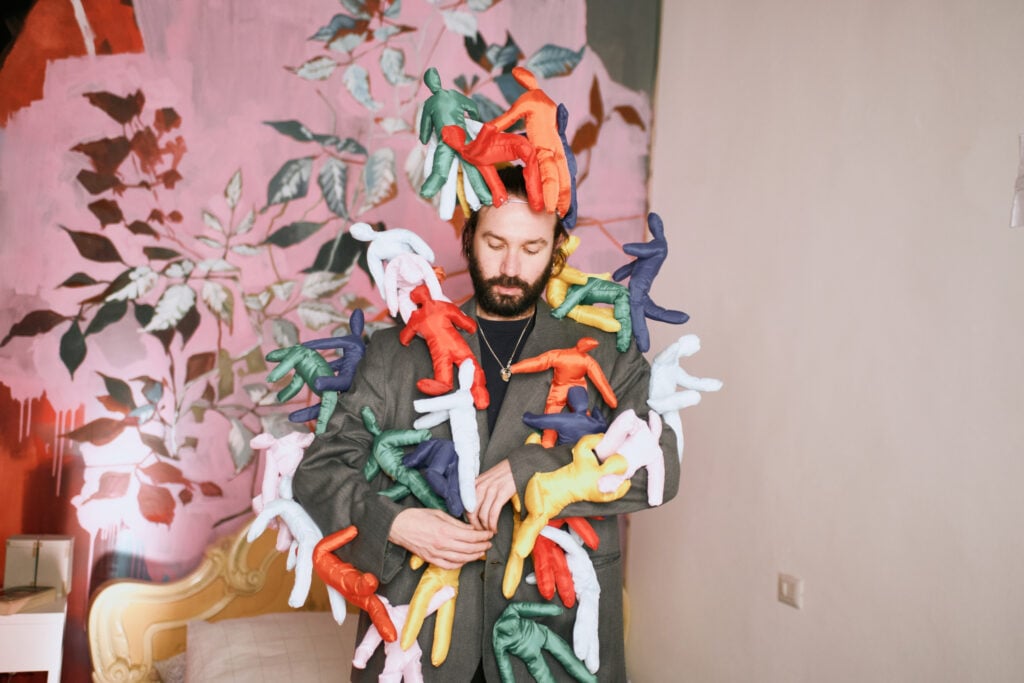
The little figures are an evolution of the idea of celebrating the body. What interests me is representing the human body, and for me, its celebration is in the act of sex, especially in a group context. For me, an orgy is the ultimate celebration of the body. Many human bodies together and free. For many, this representation can be uncomfortable, but for me, it’s entirely natural. Integrating this aspect in a more simplified way, even in the field of fashion, is almost a challenge for me. This is because fashion hardly ever wants the body; let’s say it prefers flowers. They’re much safer, and they don’t take risks.
As a final question, can you give us a spoiler? What are you working on?
The project I’d like to realize is undoubtedly linked to the upcoming Pride. I want to create a new collection but above all, I’d like us to organize a proper festival with a series of meetings, talks, exhibitions, performances, and events.
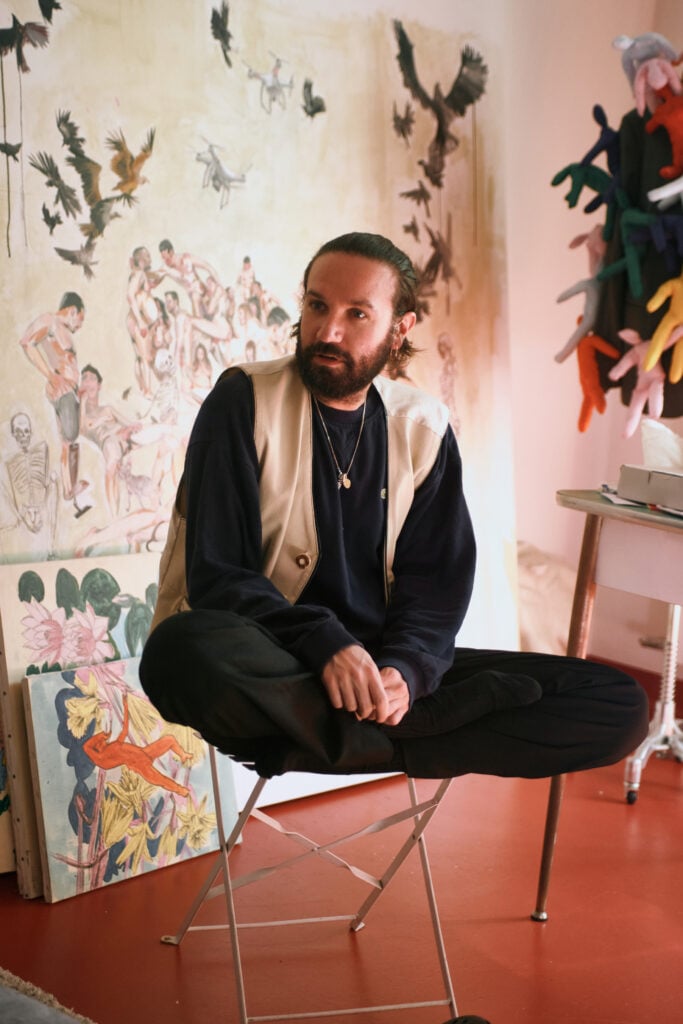
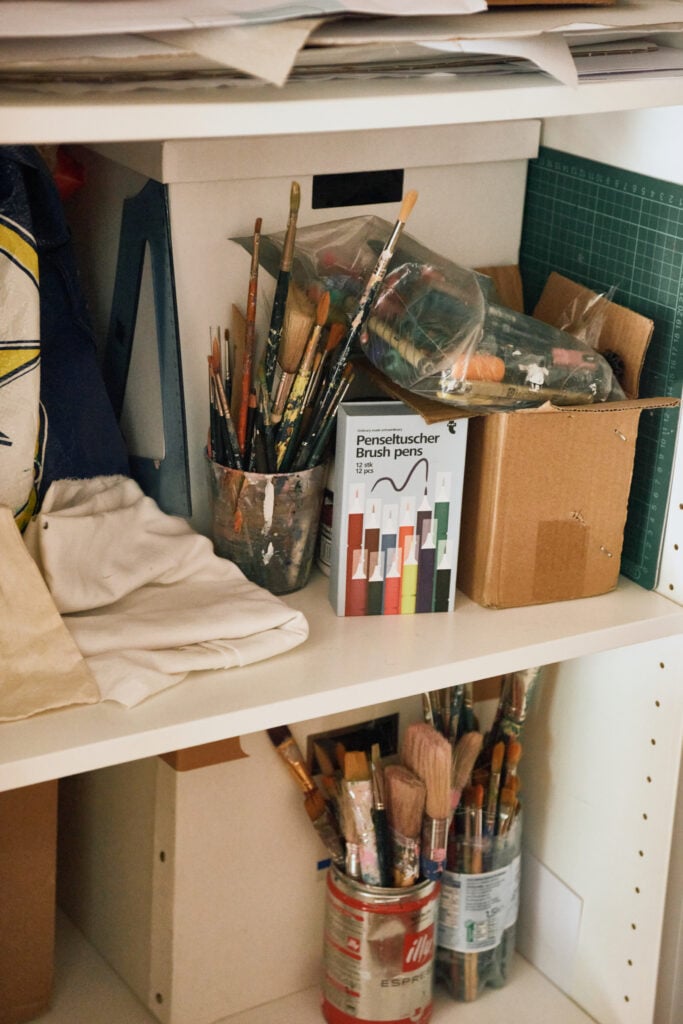


Photo Credits Andrés Juan Suarez