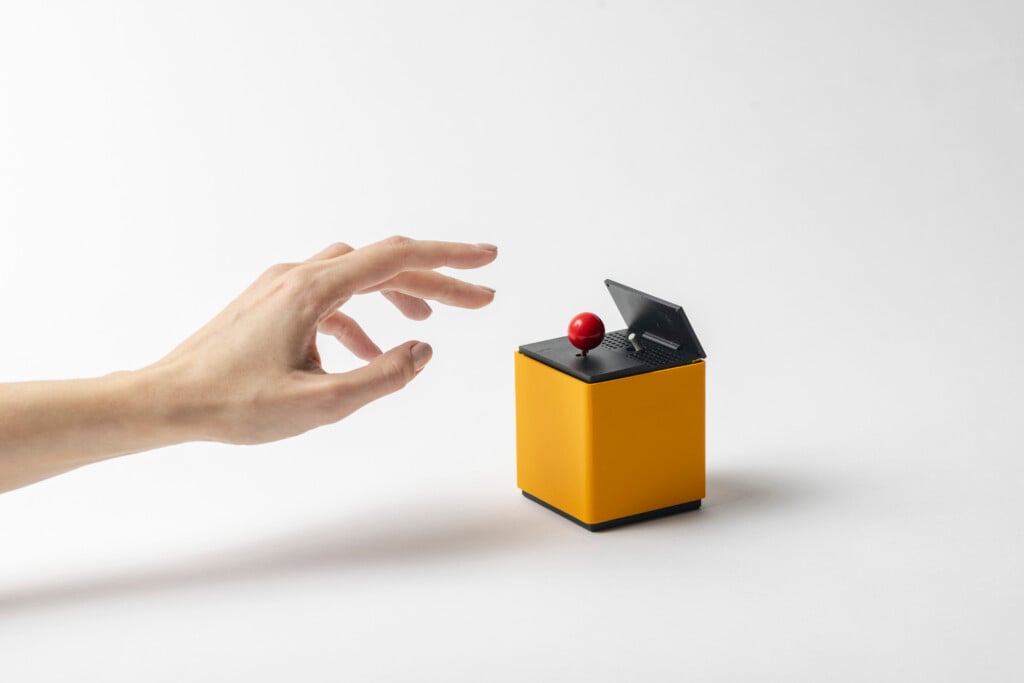
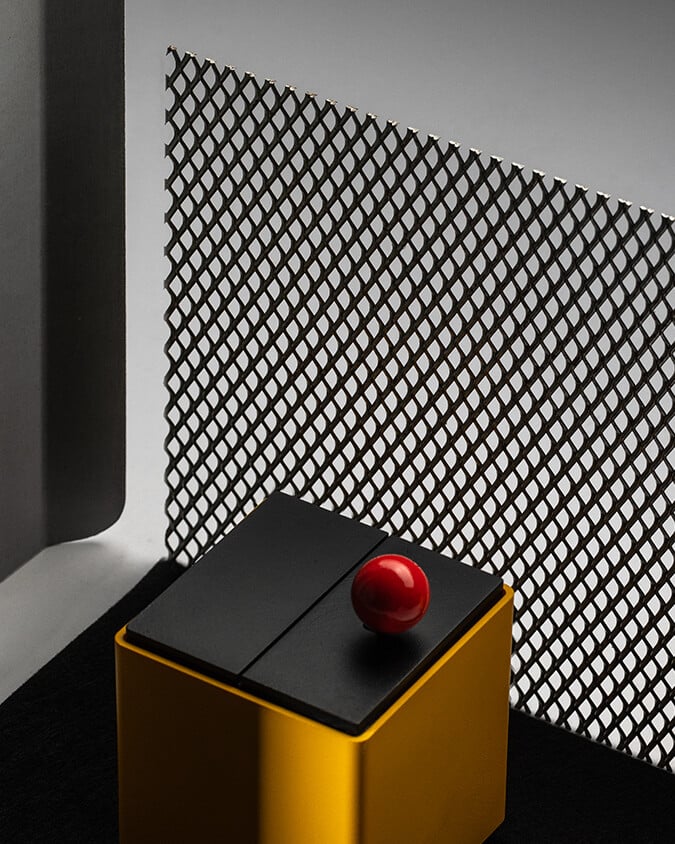
La Machine – produced by Multiplié – is a small geometric box that, once activated, emits random sounds and improvises unexpected choreographed movements. It serves no purpose, except to surprise us. Each activation generates a unique combination of gestures and sounds, created from real objects, thanks to an internal algorithm that gives every unit a different personality. No two react the same way, and none is truly predictable.
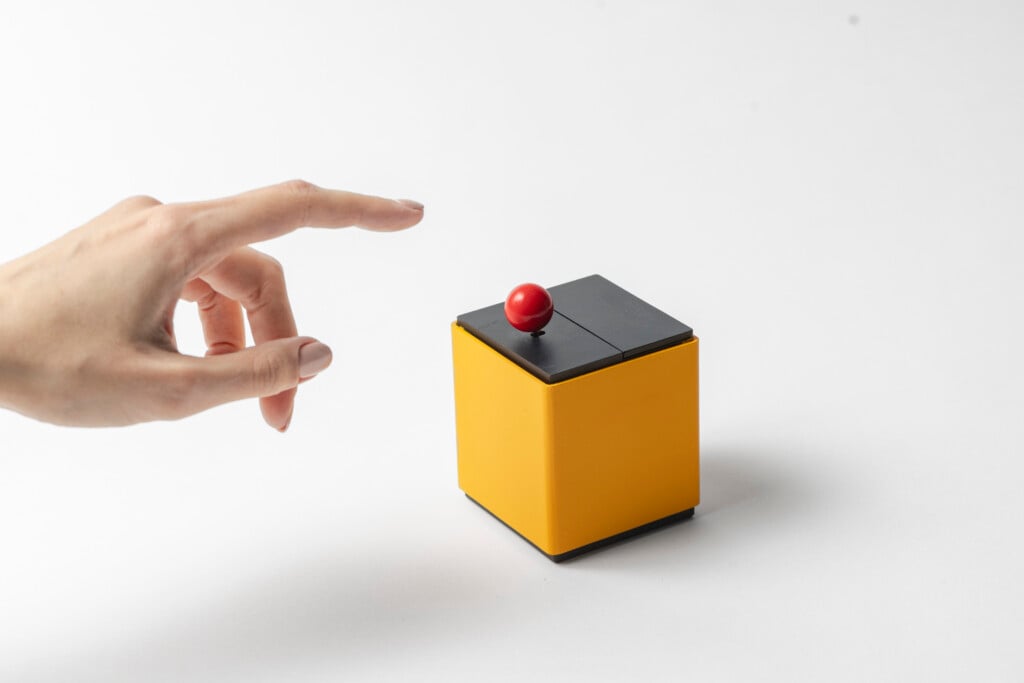
The aesthetic openly echoes the radical spirit of Ettore Sottsass: essential volumes and vibrant colors. Made entirely in France, La Machine is a peculiar object: its architecture is 100% open source—electronics, software, and mechanics—compatible with Arduino, and therefore reprogrammable, customizable, and repairable.
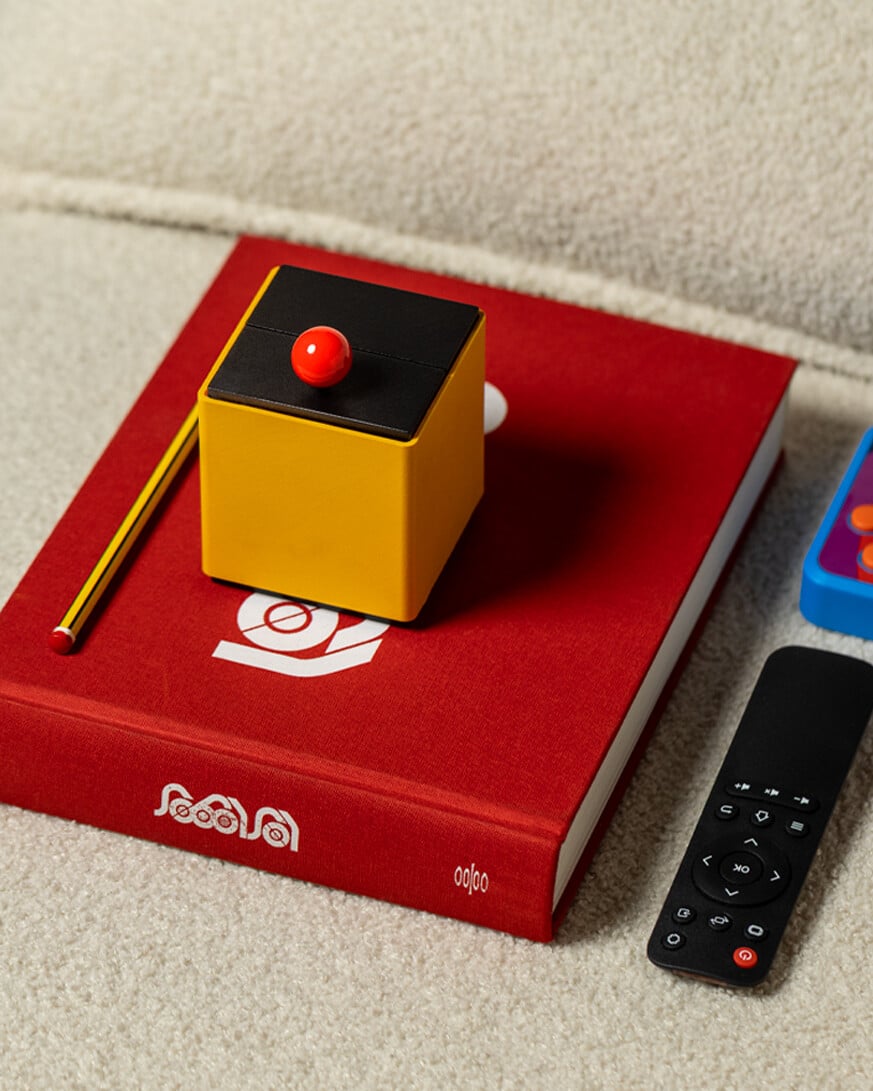
But it’s in its behavior that La Machine becomes truly interesting. If you forget about it for too long, it gently stretches out its little arm to remind you it’s there. If it’s not in the right mood, it can even “refuse” to cooperate, making you doubt it still works—before coming back to life with a mischievous air. It’s almost moody, deliberately impertinent. And it’s in this unpredictability that it builds its identity.
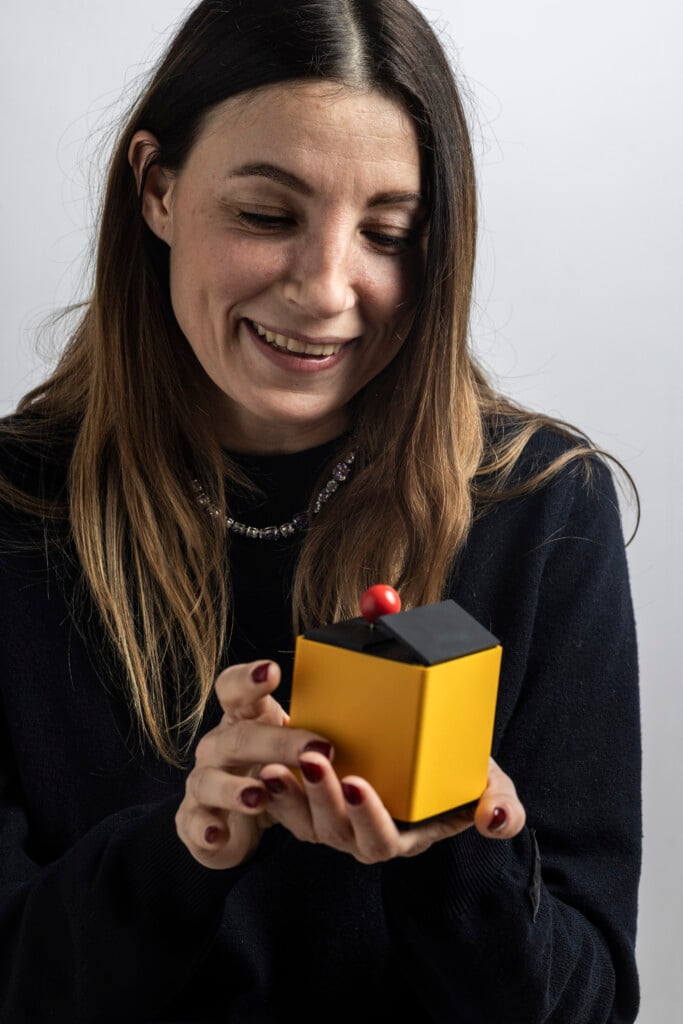
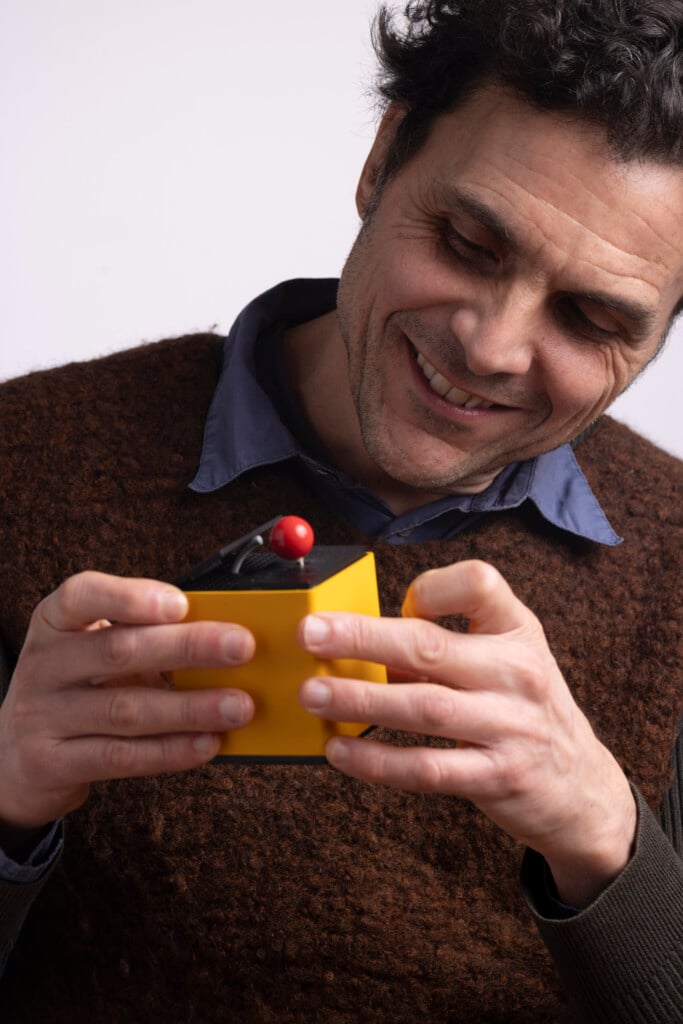
The inspiration traces back to an idea by Marvin Minsky, who in 1952 designed the Ultimate Machine, a device built for the sole purpose of turning itself off. A conceptual provocation that today translates into a poetic object. In an ecosystem dominated by devices that track, notify, optimize, and monetize attention, La Machine chooses the opposite path: it collects no data, sends no alerts, and doesn’t chase engagement. It exists to create a moment of wonder.
In short, La Machine isn’t a nostalgic gadget, but an object that rejects the logic of usefulness as the only measure of value. In an era where every technology has to prove it’s indispensable, it chooses to be free, pointless, unbound. And perhaps that is its most radical gesture: reminding us that not everything has to work for something. Sometimes it’s enough that it works for us.