Imagine a place that manages to blend late nineteenth-century New York with the national parks movement. It sounds impossible, yet it just became reality in the heart of the Big Apple, in the SoHo neighborhood.
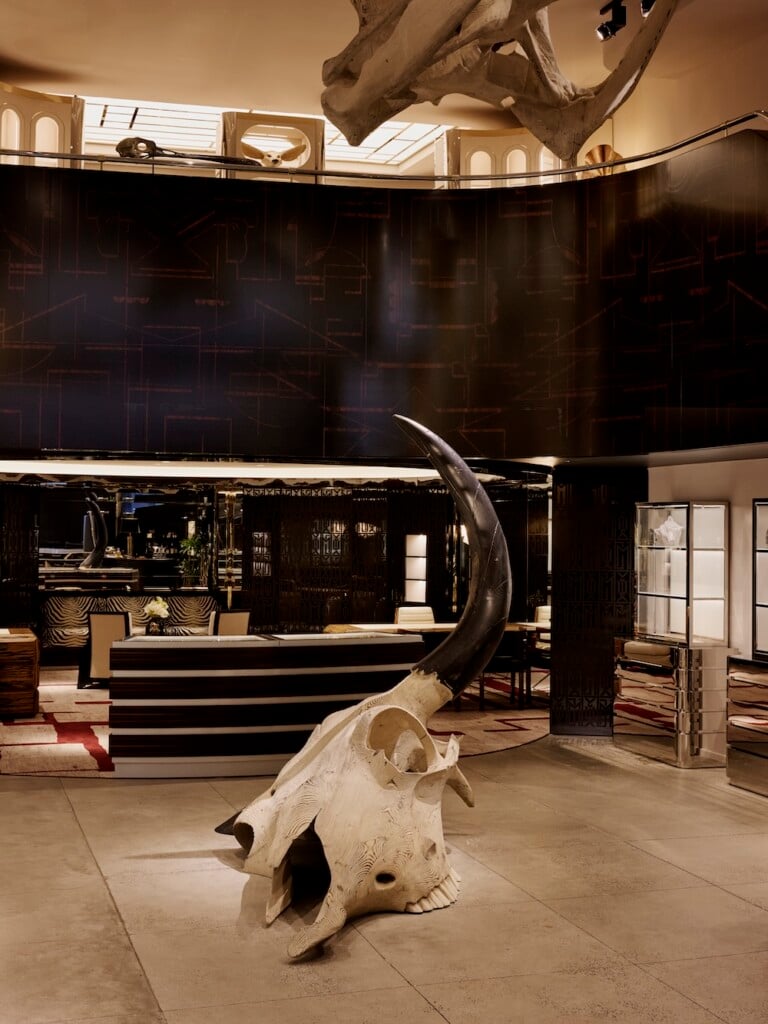
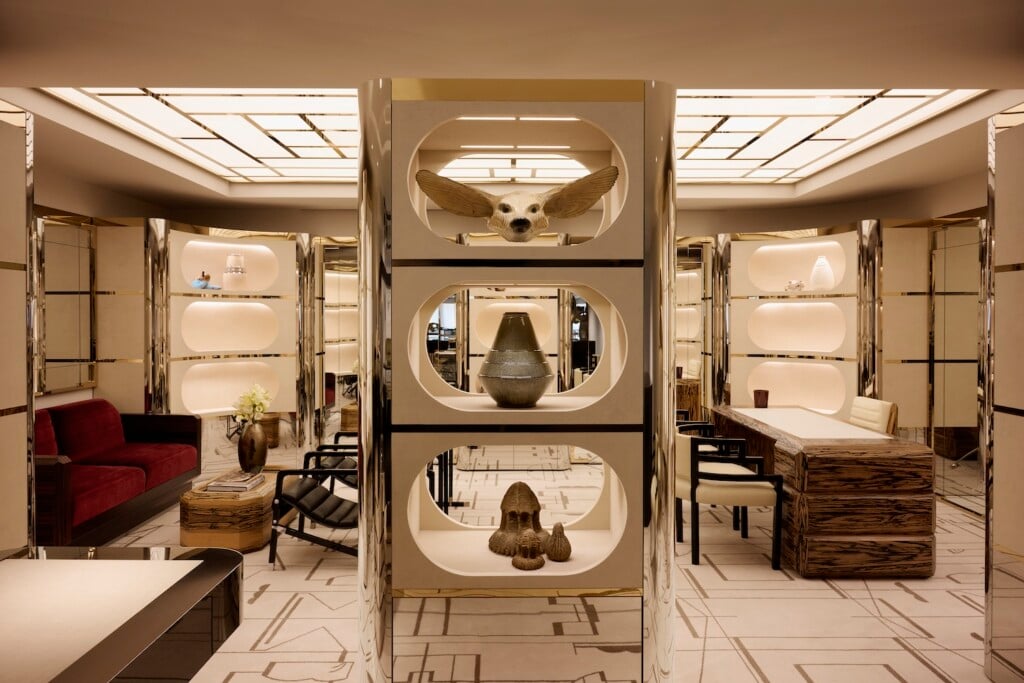
At 140 Wooster Street, Jacques Marie Mage has opened its first New York gallery: nearly 200 square meters spread across multiple levels, conceived as a hybrid space between boutique and contemporary wunderkammer.
Founded in Los Angeles in 2014 by French designer Jérôme Mage, the brand has built its identity on extremely limited runs (we’re talking a few hundred pieces per colorway) and on Japanese acetate frames handcrafted in the artisanal district of Fukui, each tied to a precise cultural reference: a historical figure, a subculture, an era. It’s an approach that has turned eyewear into a collector’s object, earning JMM nicknames like “the Rolls-Royce of sunglasses.”
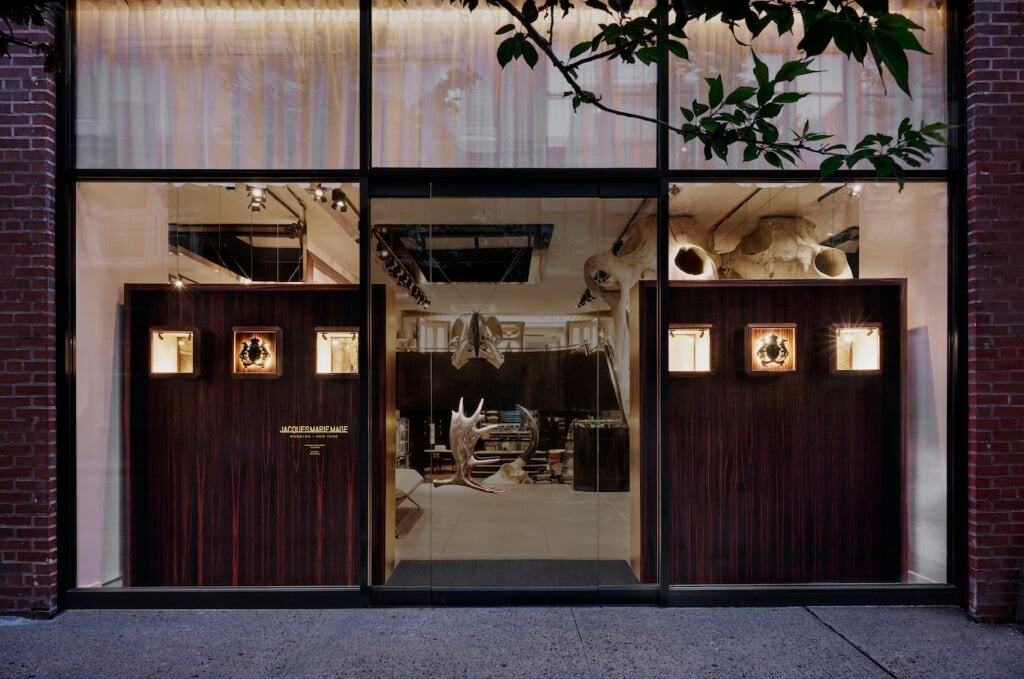
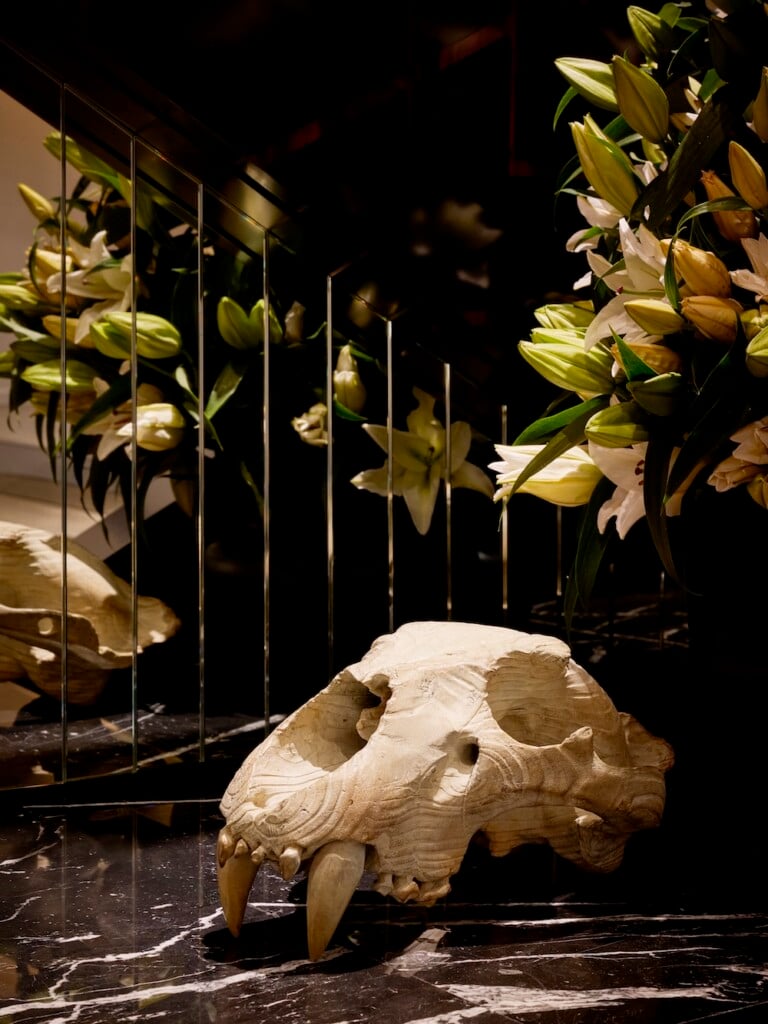
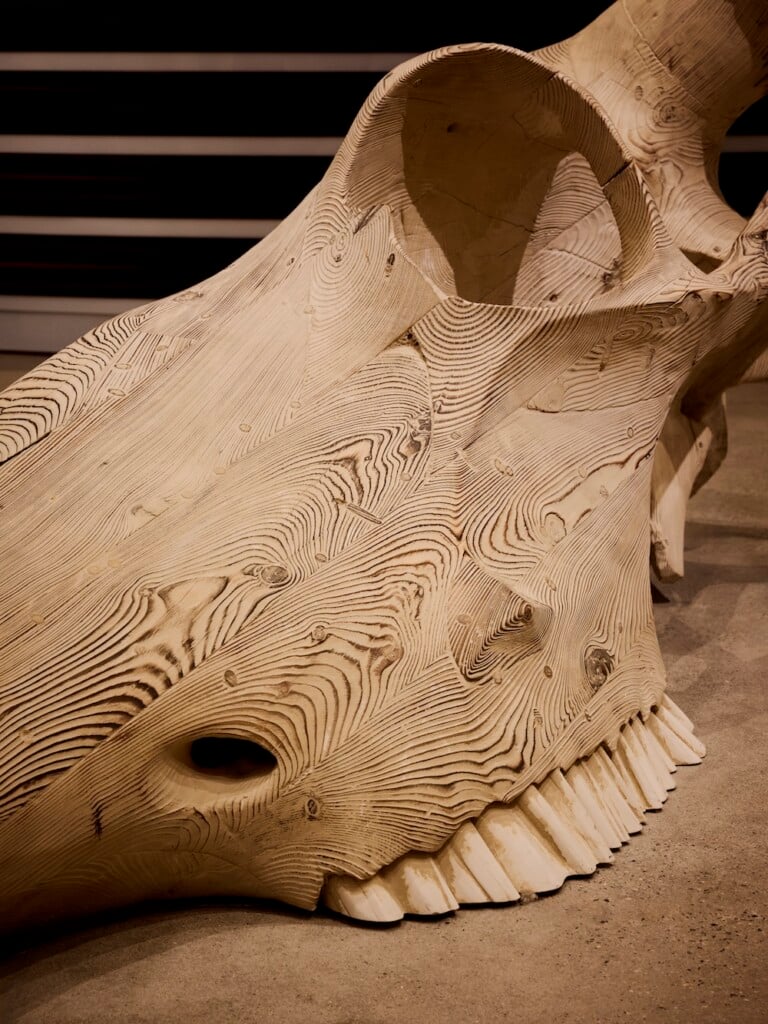
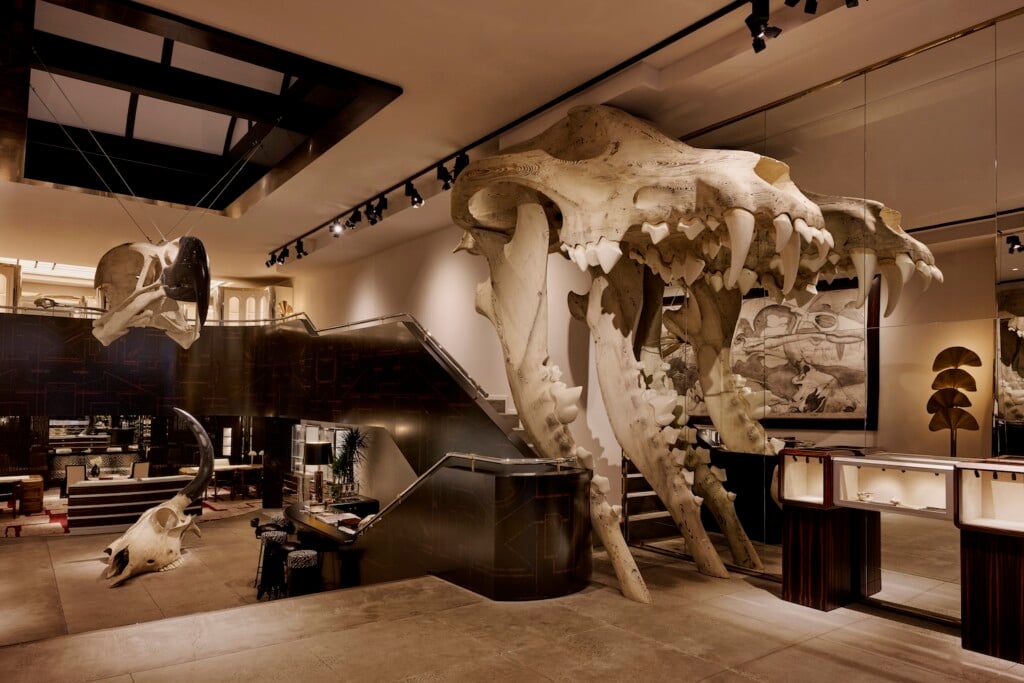
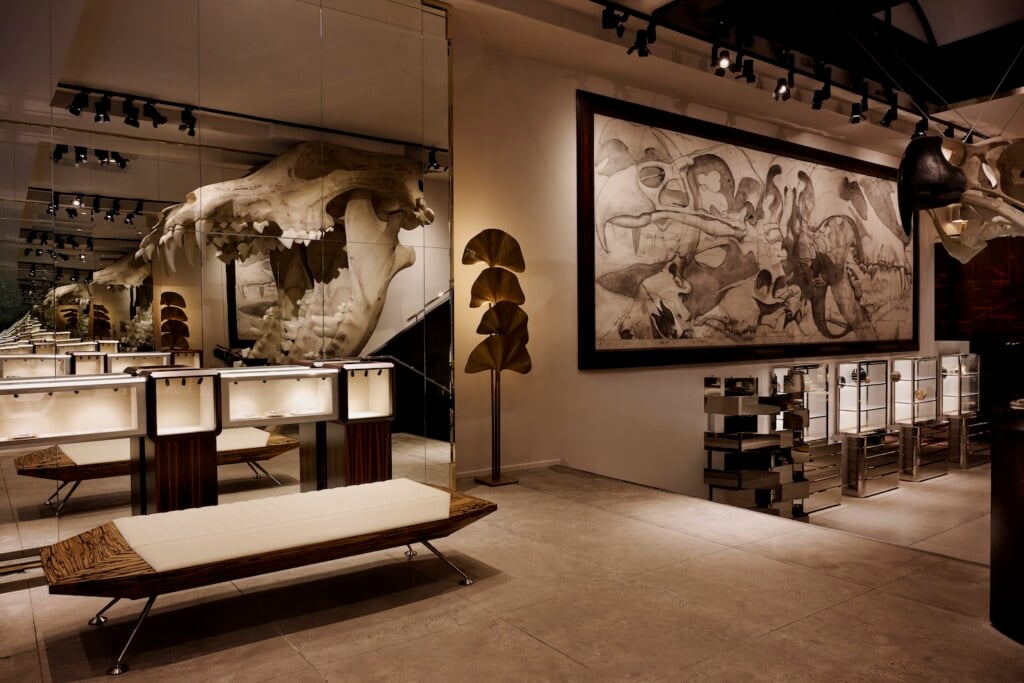
At Wooster Street, eyewear, leather goods, jewelry and limited-edition artifacts coexist with three monumental sculptures by French artist Quentin Garel. A wolf, a bison and an eagle skull dominate the space like totems of an American West more evoked than represented.
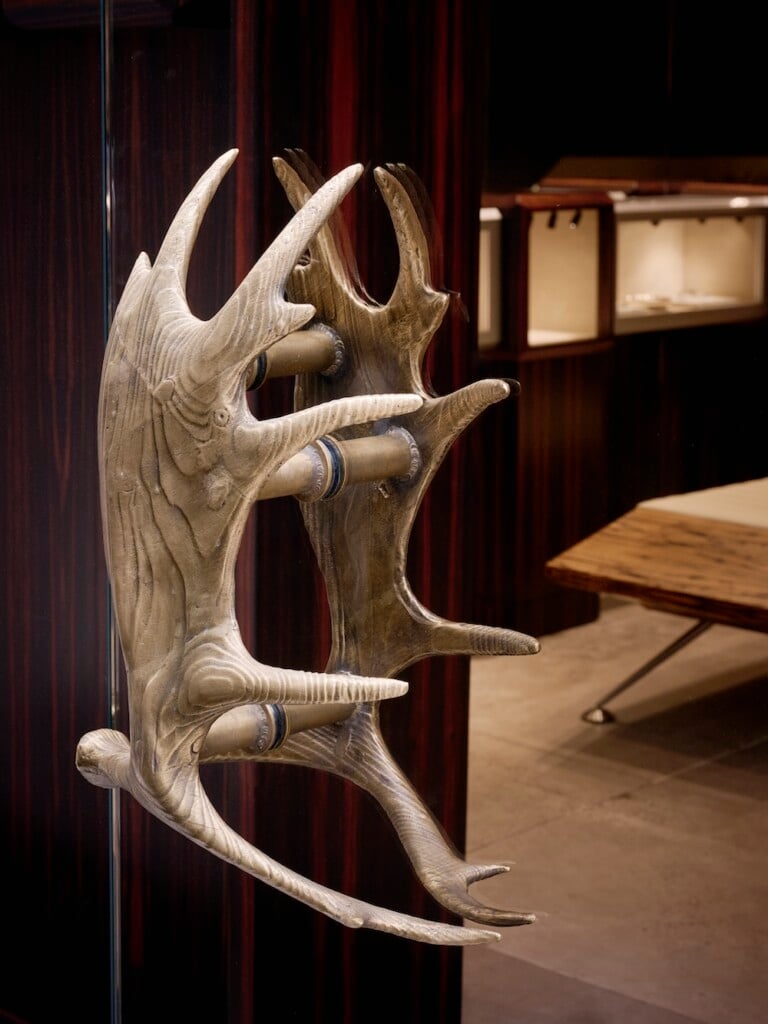
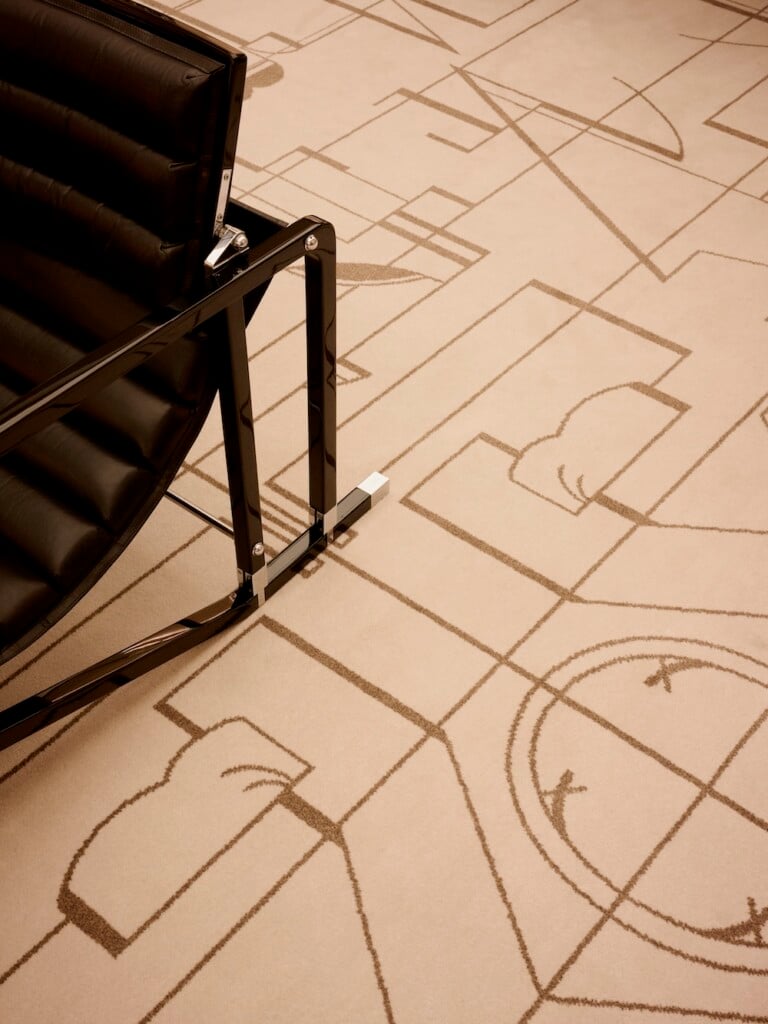
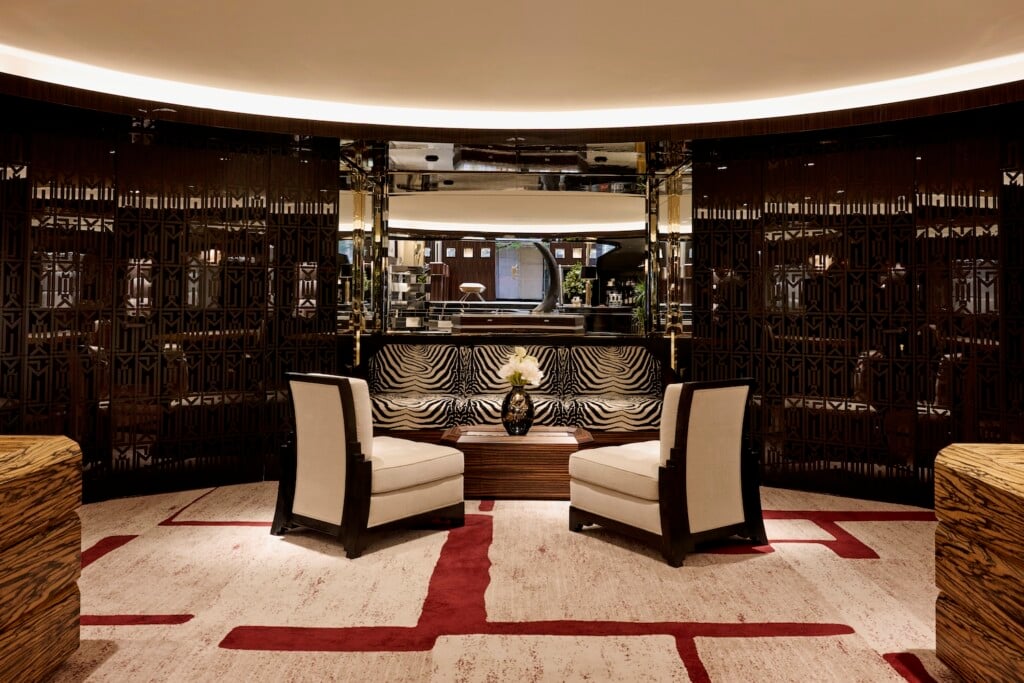
The project is signed by Jacques Garcia, French architect and interior designer born in 1947, one of the most authoritative names in luxury hospitality worldwide. His work includes the atmospheres of Hôtel Costes and Royal Monceau in Paris, La Mamounia in Marrakech and The NoMad in New York. His style stands out for its use of velvets, fine woods and warm light, giving life to spaces where a taste for the past is reread in a contemporary key. For JMM, all of this translates into a modern Art Deco that clashes, and merges, with the organic rawness of Garel’s sculptures.
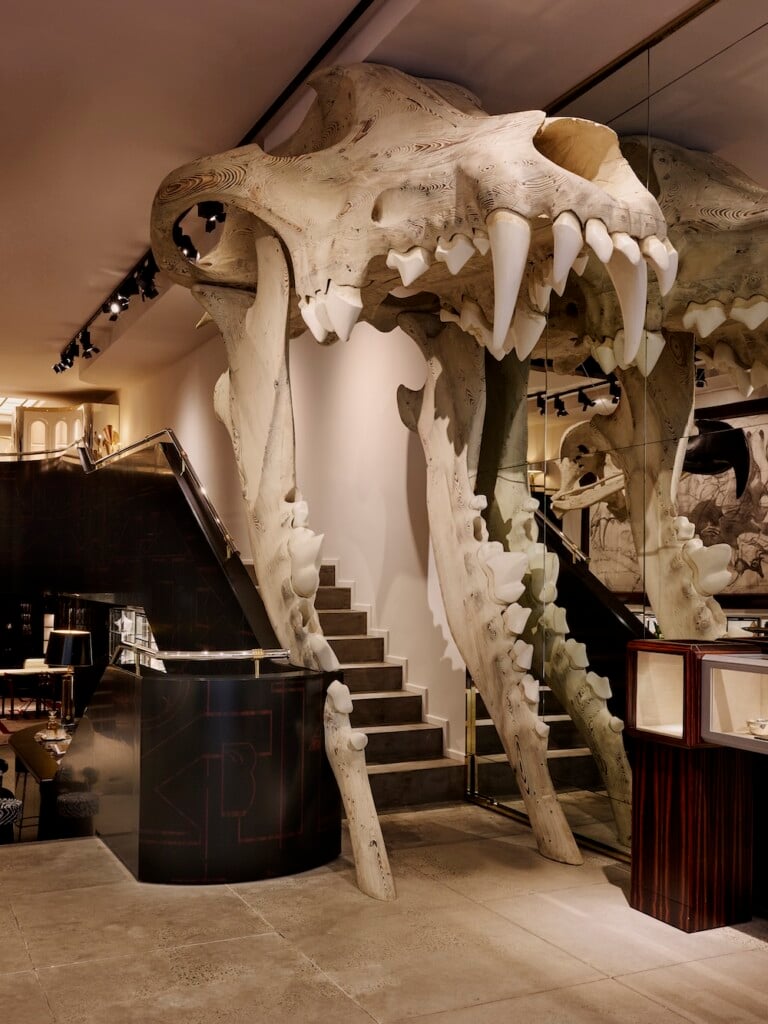
Born in 1975 in Paris, where he trained at the École des Beaux-Arts under Jean Clos and Giuseppe Penone, Quentin Garel has always built his work around the animal world: anatomy, skeletons and archaeological remains translated into wood and bronze sculptures with hybrid forms, which at first glance appear to be authentic vestiges of a vanished fauna. In the polished context of the gallery, oversized bones and skeletons stop being remains and become almost relics, objects of devotion.
The wolf sculpture, in particular, is not merely a decorative element but a genuine architectural device. Its open jaws become the threshold to cross to reach the second level. Passing through them means literally entering the animal — a gesture that turns shopping into a kind of rite of passage, visceral before it is symbolic.
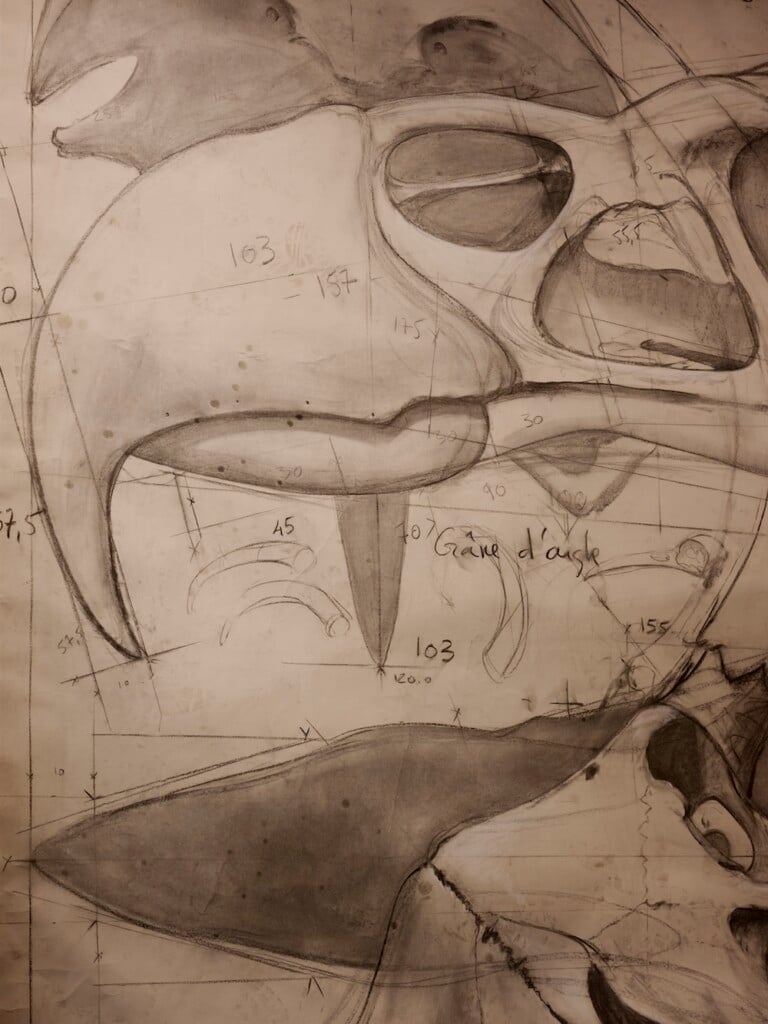
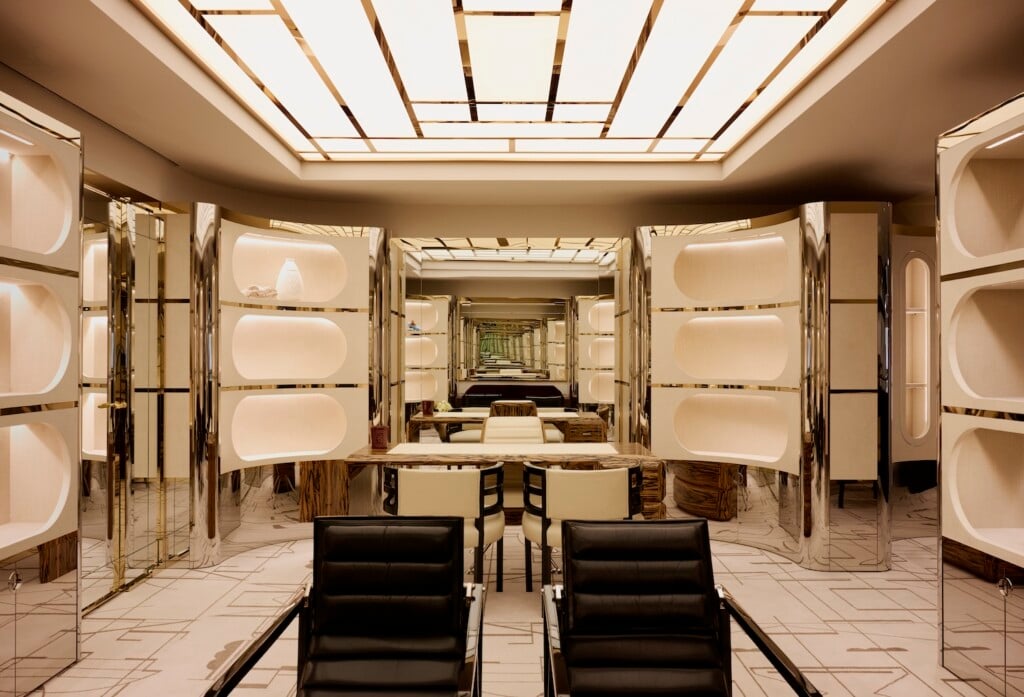
On the upper floor, a large charcoal drawing by Garel covers the entire wall, depicting animal skulls that overlap and intertwine in a composition that recalls both an anatomical study and a fragment of cave painting. Below, mirrored cases and polished steel volumes hold small objects, from shells to ceramics, treated with the same care reserved for museum artifacts.
The result is a space that rejects any clear-cut opposition between natural and artificial, between wild and refined. The Wooster Street gallery functions precisely as a habitat, a visual ecosystem where contemporary luxury and American natural imagery face each other in the mirror.
With this opening, Jacques Marie Mage continues its global gallery program, conceived as autonomous cultural and architectural expressions, each rooted in the context that hosts it. In SoHo, the brand chooses to tell America’s story through its bones.