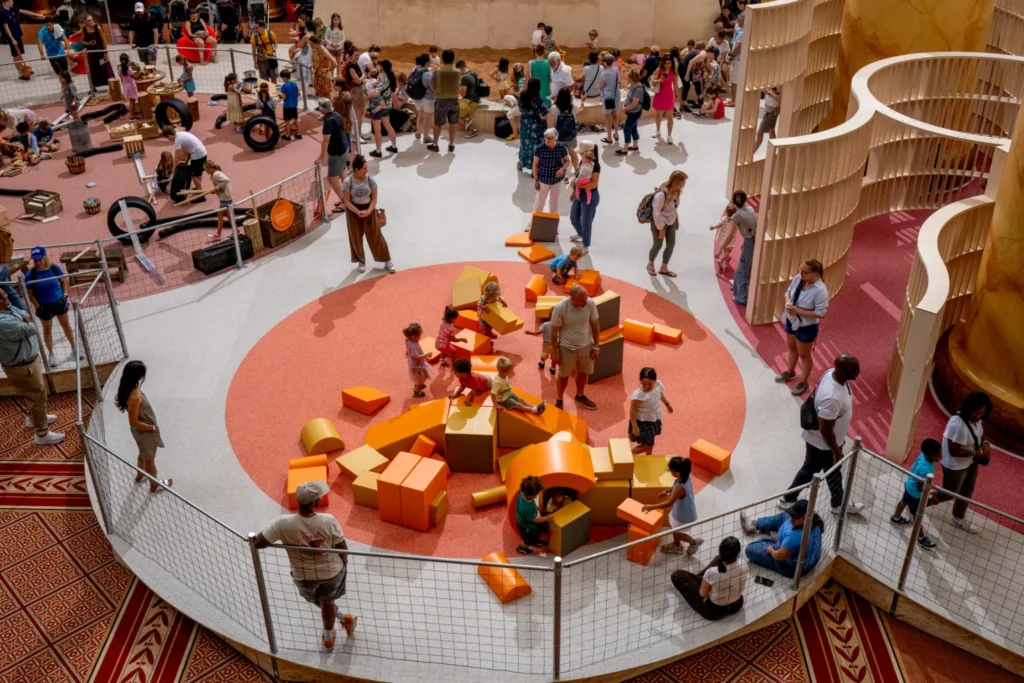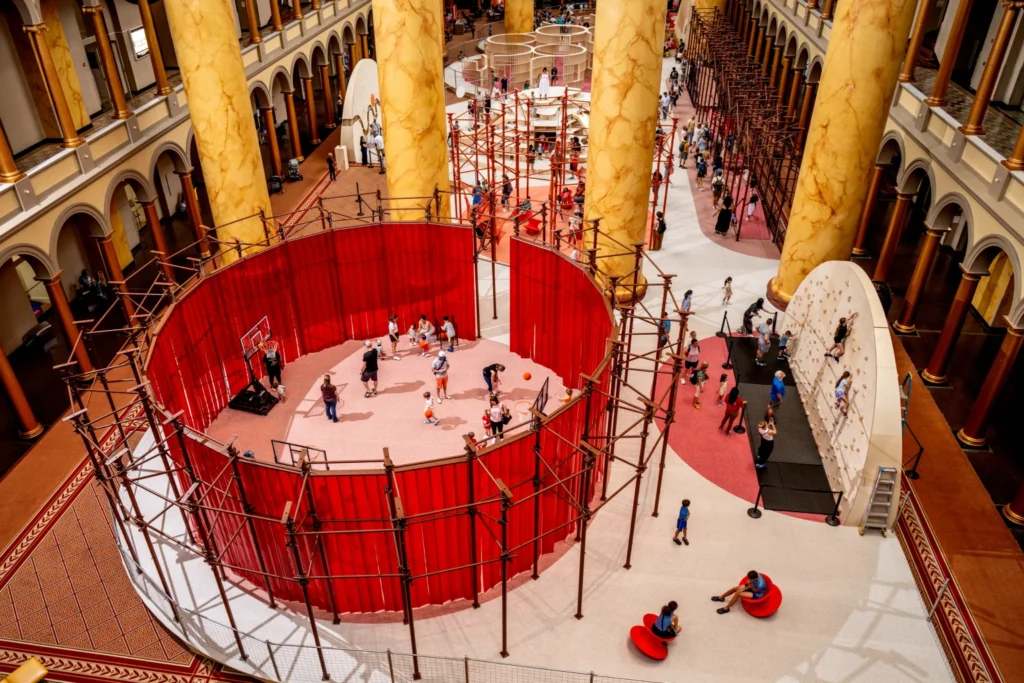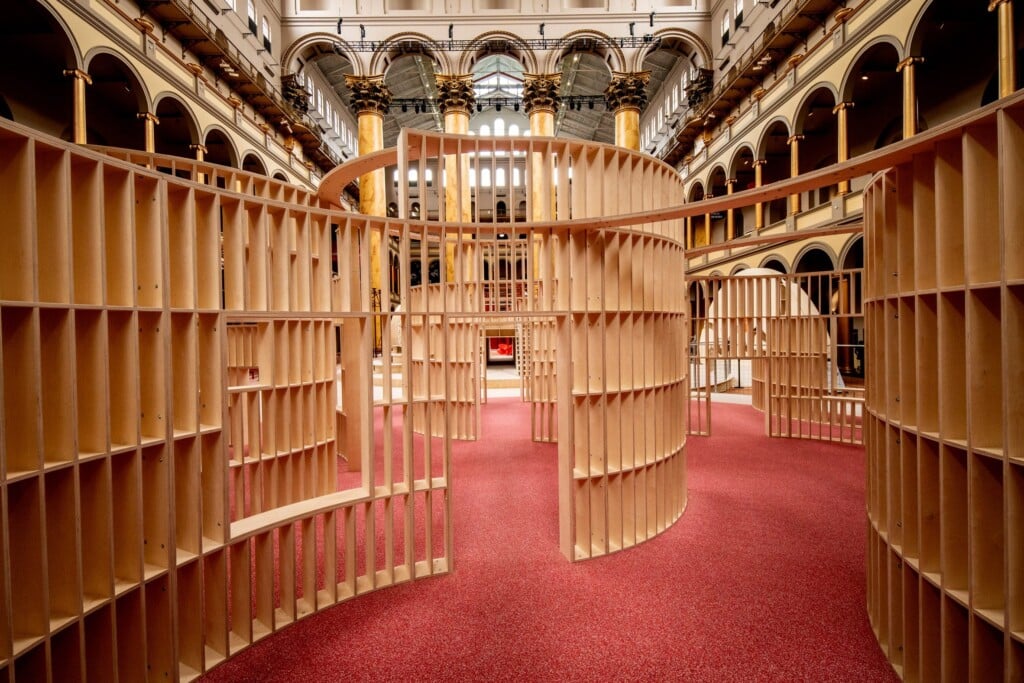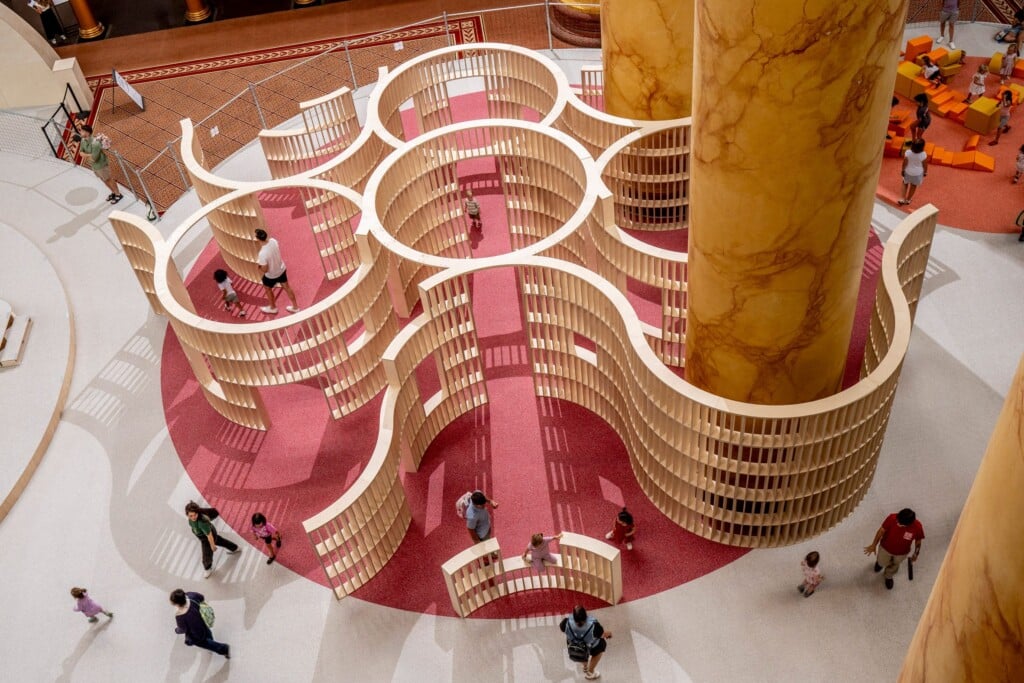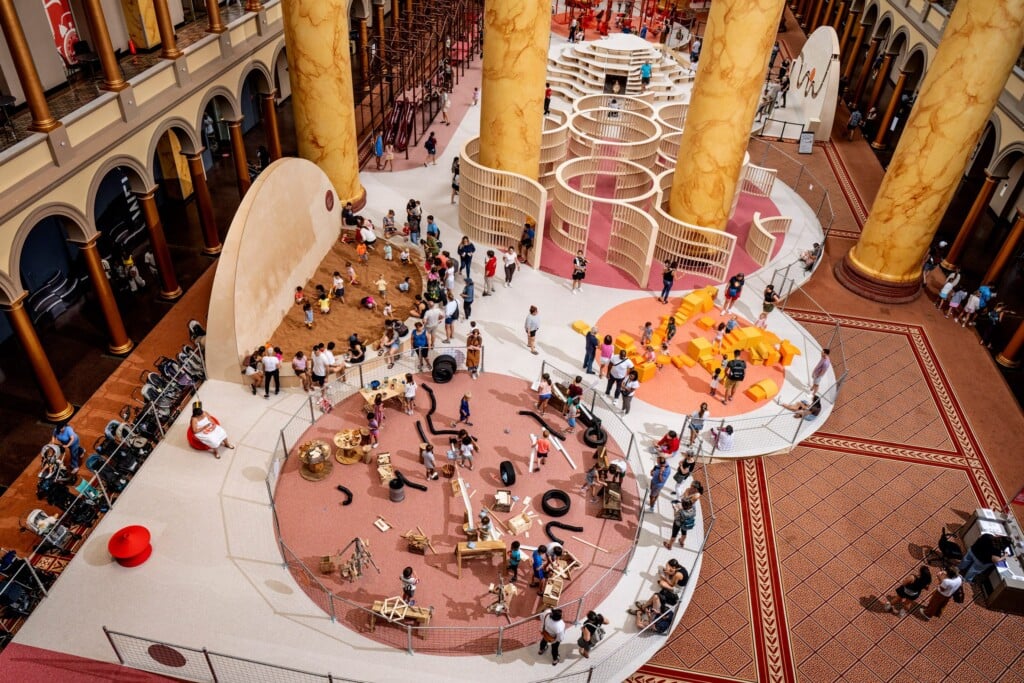
For the past few days, the Great Hall of the National Building Museum in Washington DC has been more than just one of the most scenic exhibition halls in the United States: it’s a playground of roughly 1,300 square meters. The project is called The Playground, designed by Snarkitecture, the New York studio that has spent years redrawing the boundaries between art, architecture, and design, and it’s the largest indoor installation the museum has ever produced.
Founded by Alex Mustonen and Daniel Arsham, the studio specializes in experiential installations that challenge how we perceive everyday space, and it’s back with another project that plays with materials and space to create a playful place for experimenting with creativity.
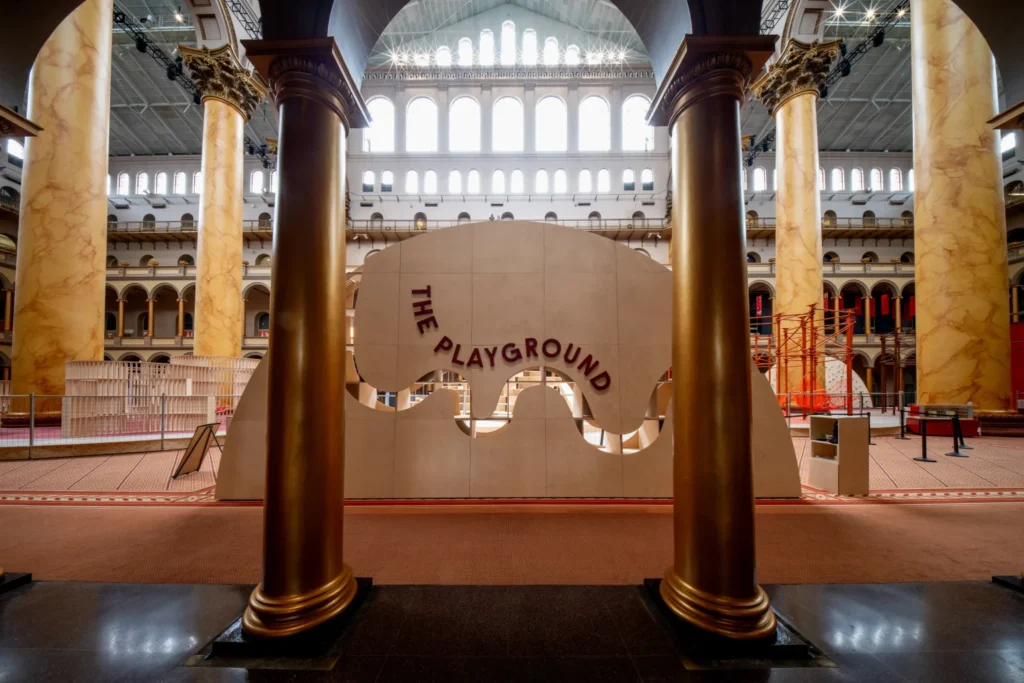
After The Beach (2015) and Funhouse (2018), The Playground arrives to complete an ideal trilogy of site-specific interventions for the museum. The project flips the language of the construction site into an intergenerational play experience. Scaffolding, birch plywood, cork, and rope become the protagonists of nine themed areas spread across the hall.
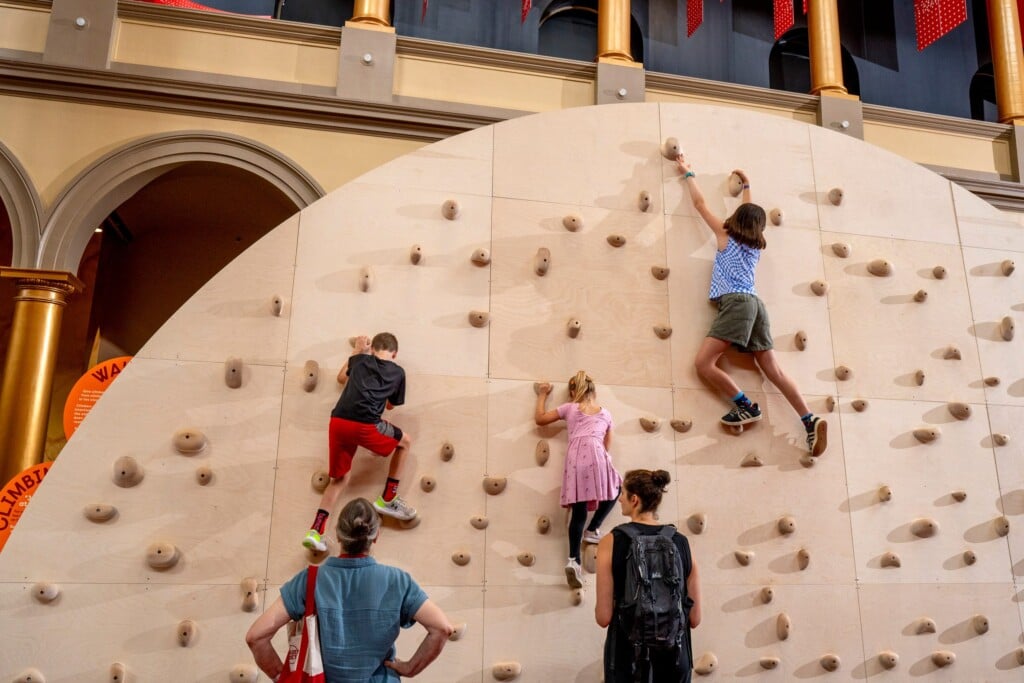
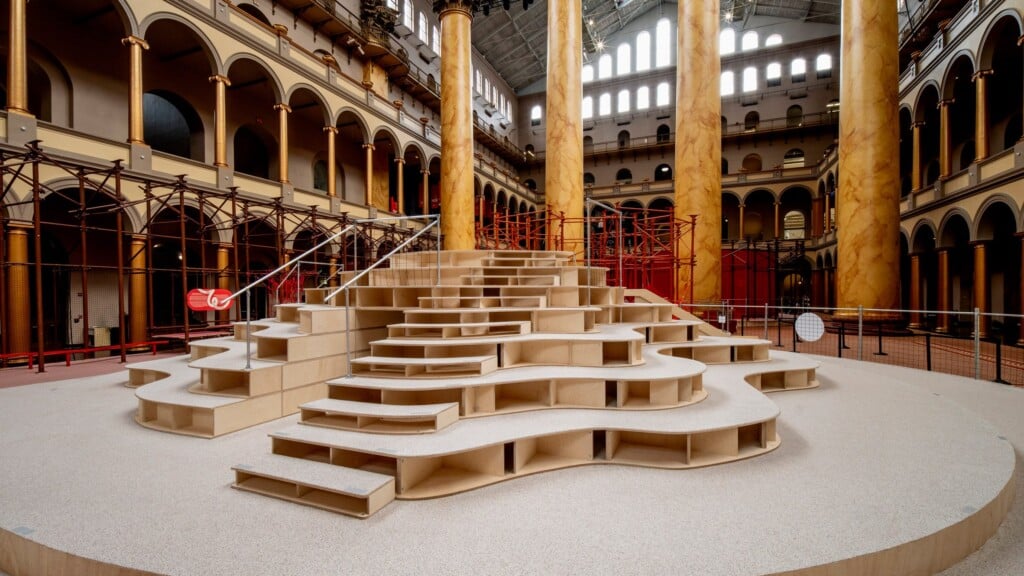
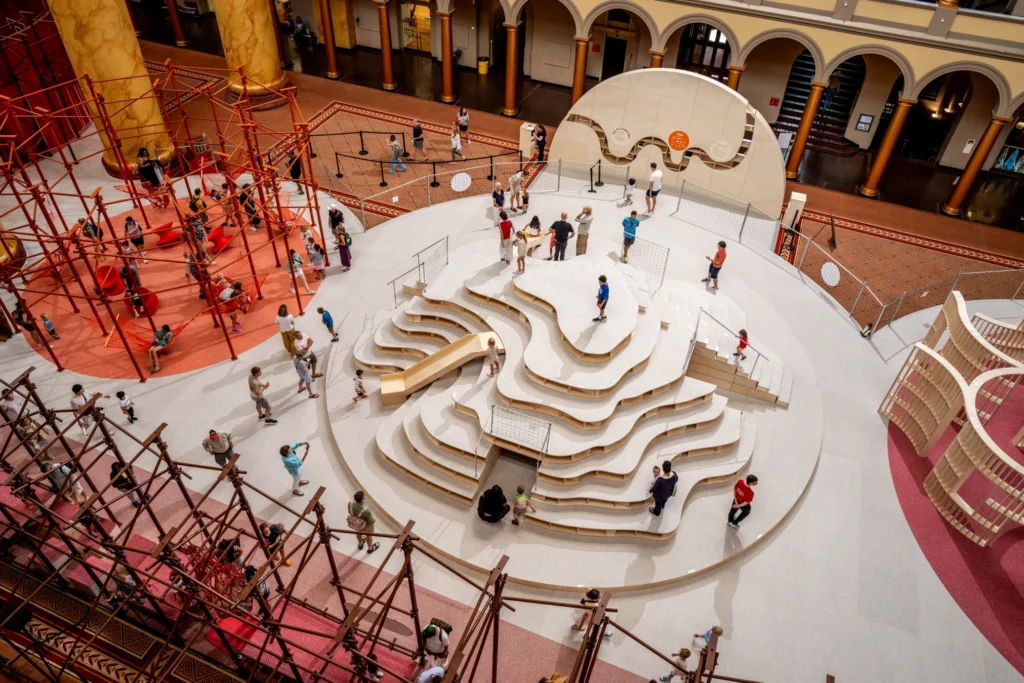
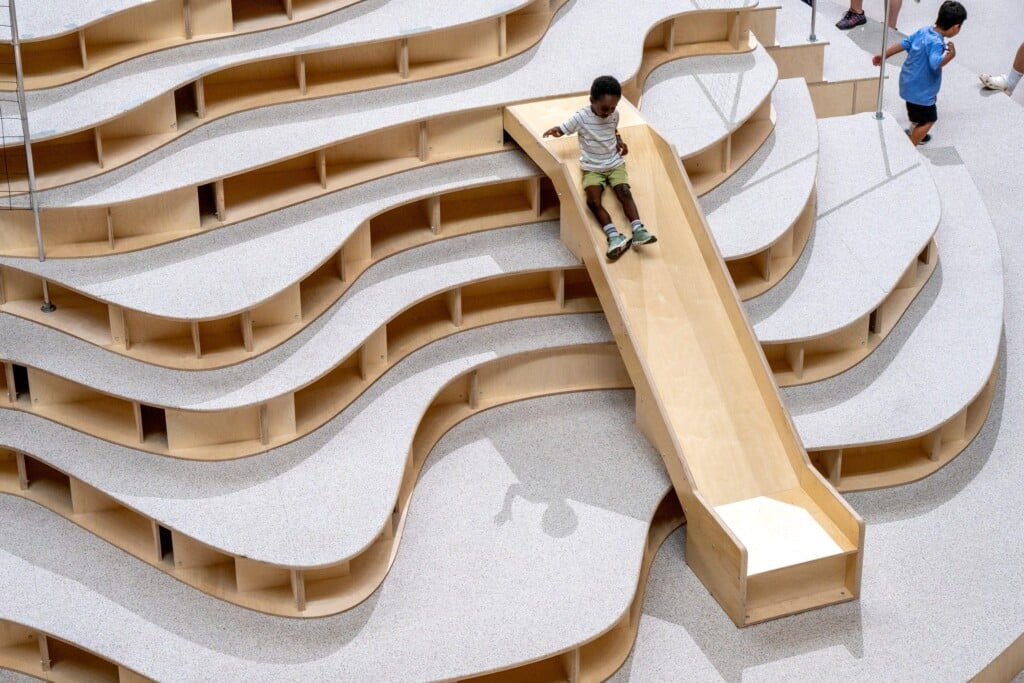
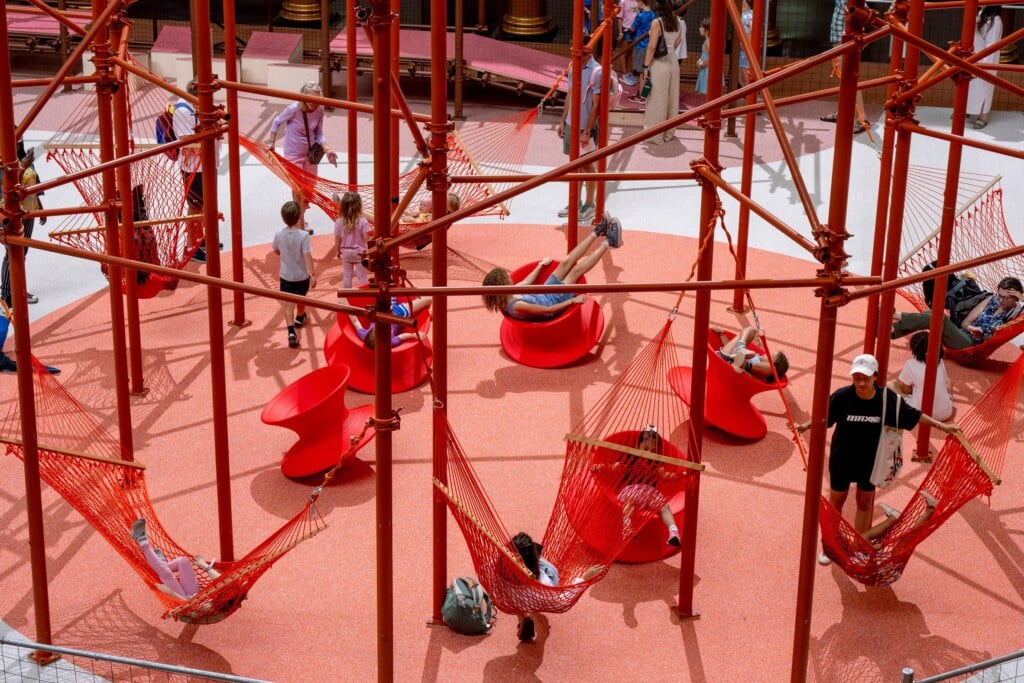
At the center is The Hill, a sculptural mound made of layered birch plywood with slides, tunnels, and seating. Around it unfold a thirty-meter obstacle course, a climbing wall over four meters tall, rope hammocks hung from red-painted structures echoing construction scaffolding, a basketball court, the Wavy Walls maze, and the Dig Pit, an excavation pit filled with natural cork in place of sand.
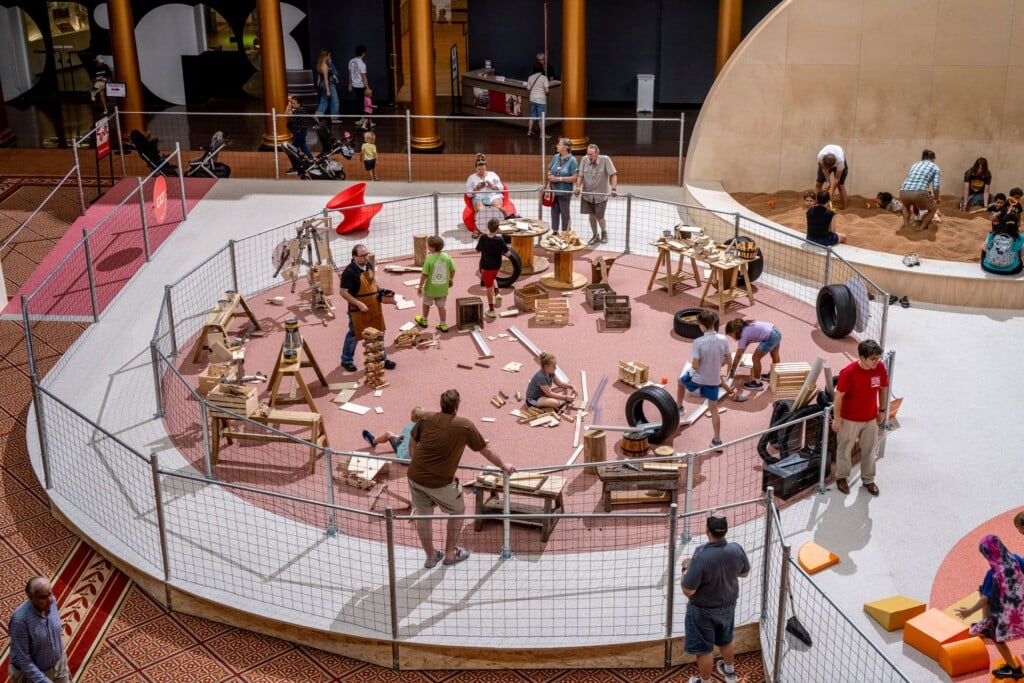
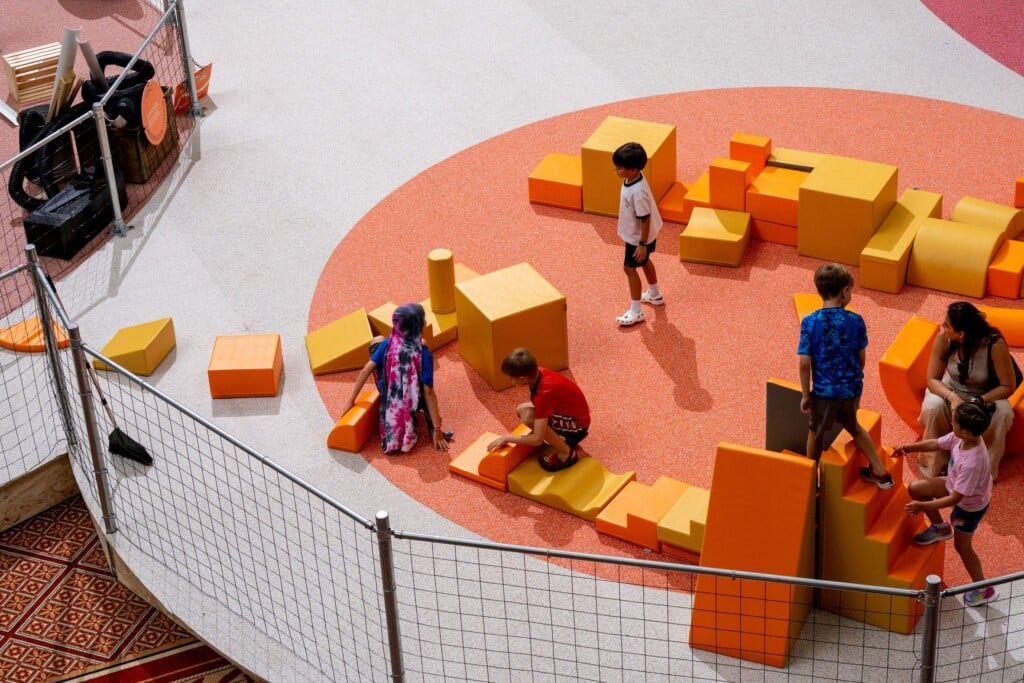
There’s also a more conceptual layer: the Adventure Yard draws on active-learning movements that let kids build their own play environment using real materials and tools. For the youngest visitors, there’s the Tot Spot, an area sized for preschool-age children.
As Alex Mustonen, the studio’s co-founder, explains, Snarkitecture has always worked to make the familiar unfamiliar, and The Playground applies that logic to the playground itself, reframing it as an invitation to free play for every age.
The choice of materials follows a precise logic too. The flooring is made from recycled material, and most of the elements used in the installation will be recovered or recycled once the show closes, in keeping with the museum’s focus on sustainability in the built environment.
The Playground’s program rounds out with workshops, readings, and themed evenings open to the public that will keep the community company through the end of summer.