What can a strand of hair, or the luminous embroidery of the most beautiful braids woven by hands across millennia, stand against History written “by would-be masters, never truly masters”? The dream of the hair of Laetitia Ky (Abidjan, Ivory Coast, 1996) makes its way into the youthful imagination of a small room in Abidjan, illuminated by aspiration and strong creativity.
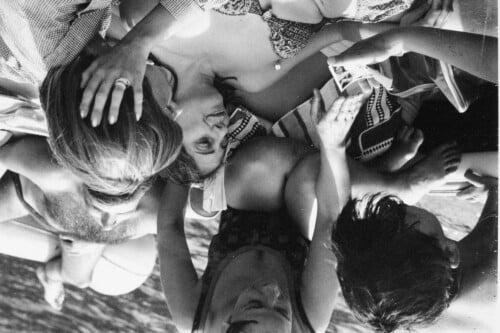
Reflecting on the rich history of hairstyles, before the arrival of European traders and armies, Laetitia has over time observed black-and-white images that highlight ingenuity and remarkable grace. In the 1960s, Nigerian photographer J.D. Okhai Ojeikere (Ovbiomu-Emai, Nigeria, 1930 – Lagos, 2014) was himself the author of a precious collection of hairstyles and the symbolism tied to them, within the living weave of a centuries-old African tradition.

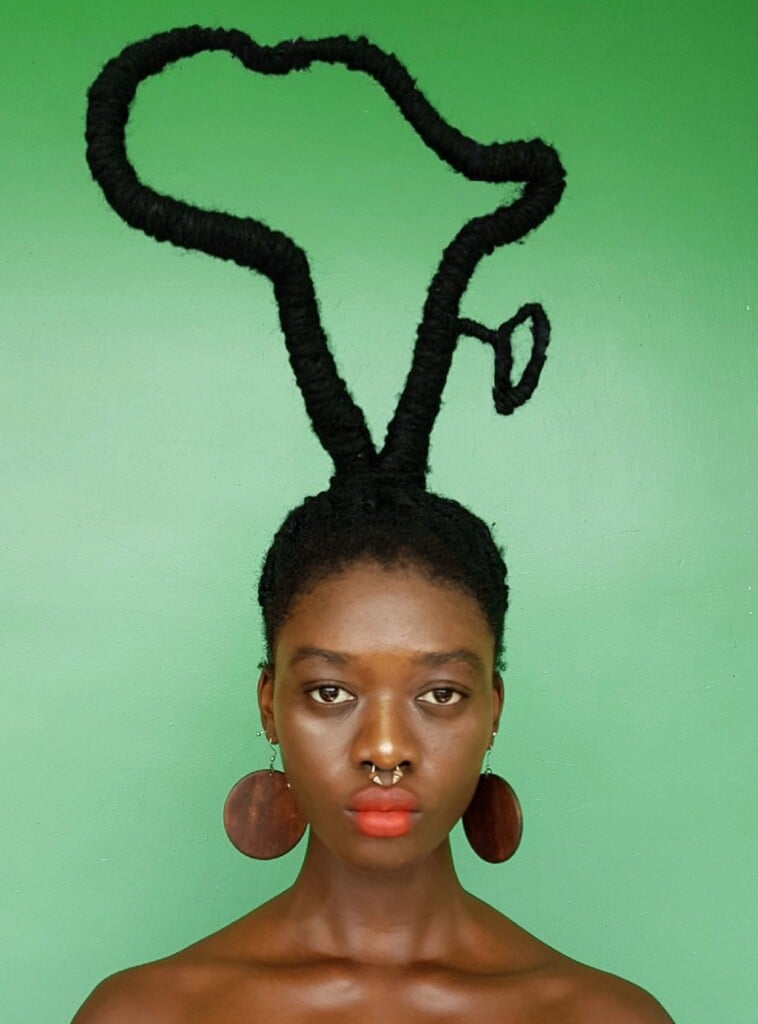
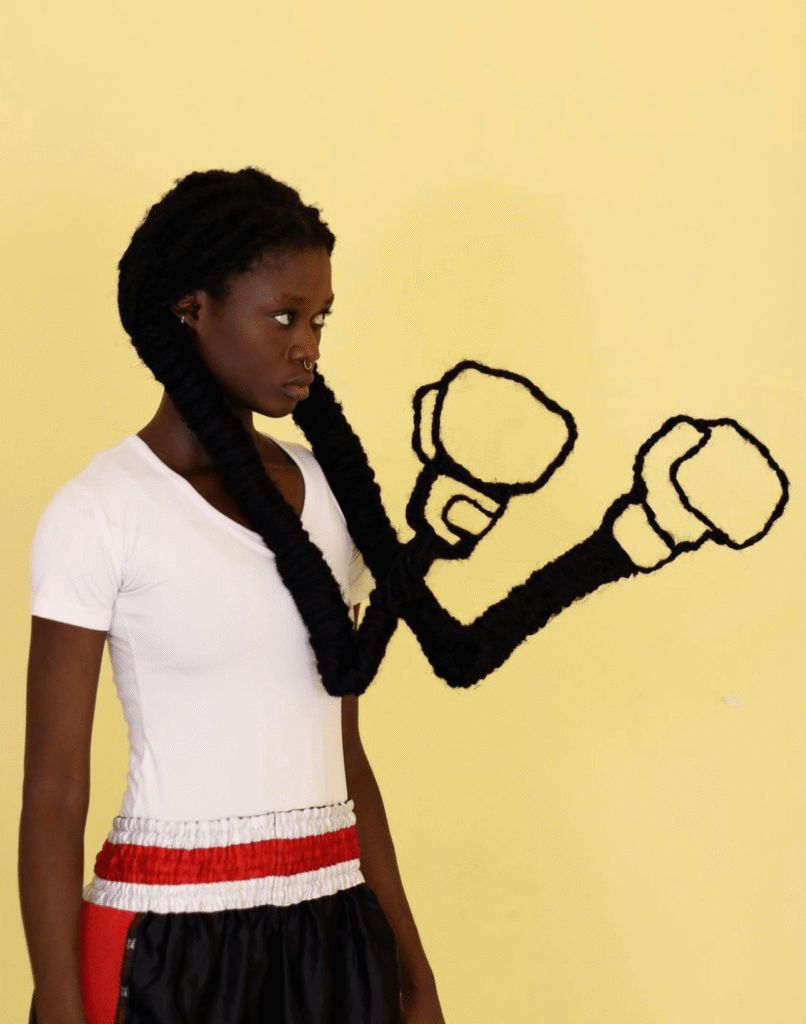
After a brief period spent studying communication strategies within a distant, capitalist horizon, Ky clearly understands that her path is taking other directions, following a force of roots that her art seeks to activate through further gestures and in a decisively counter-current way. Reworking in her own way the aesthetics of an indigenous form of communication rooted in a long hairstyling tradition, Laetitia Ky transforms her hair into a form of dialogue and into a powerful feminist and Third Worldist claim.
As she recounted in an interview given in 2023 to the staff of the Imago Mundi Foundation: “[…] before colonization […] those hairs were sculptures, abstract sculptures. Through my research I learned that in ancient African societies hair was not only meant to make a person beautiful but was a tool for communication. People could use hair to say, for example, ‘I am a married woman’ or ‘I am single’, or ‘this is my religion’; ‘this is my tribe’.”

If, as Alice Borgna wrote in the essay Tutte storie di maschi bianchi morti (2022), Afro hair, subjected to the ipse dixit of the Western aesthetic canon (rigid in its now outdated idea of professional decorum), becomes a residue of the glory dreams of fallen nationalist empires, then the aesthetic claims of the Black Panthers restore to the imagination the force of a clear identity affirmation.
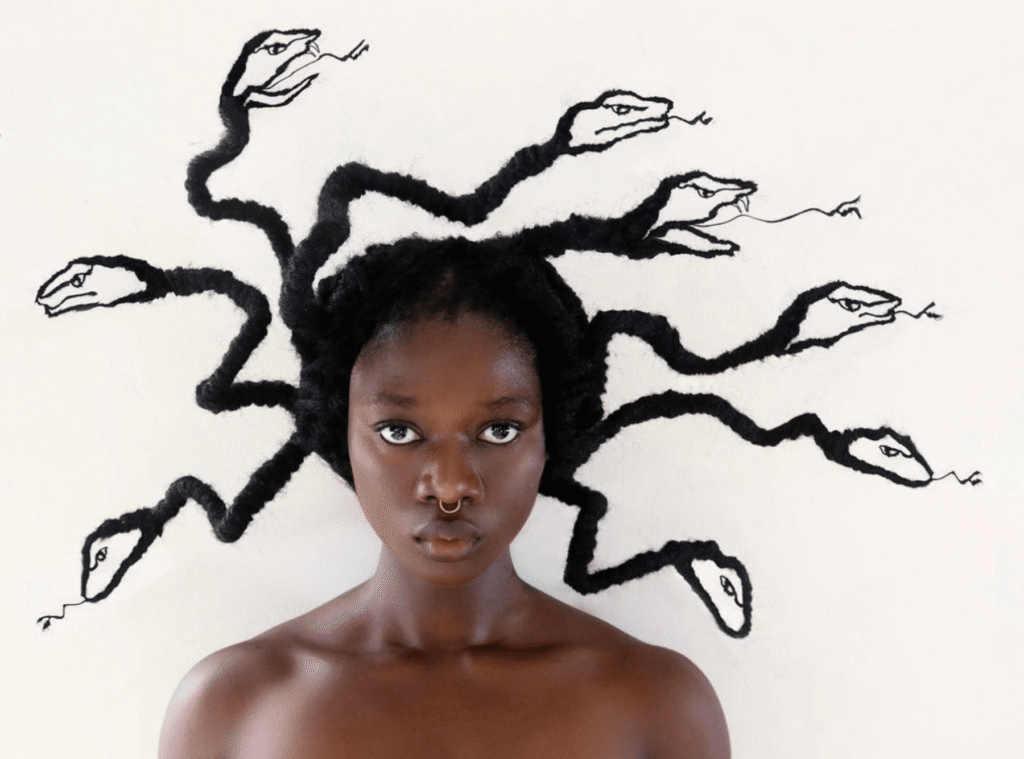
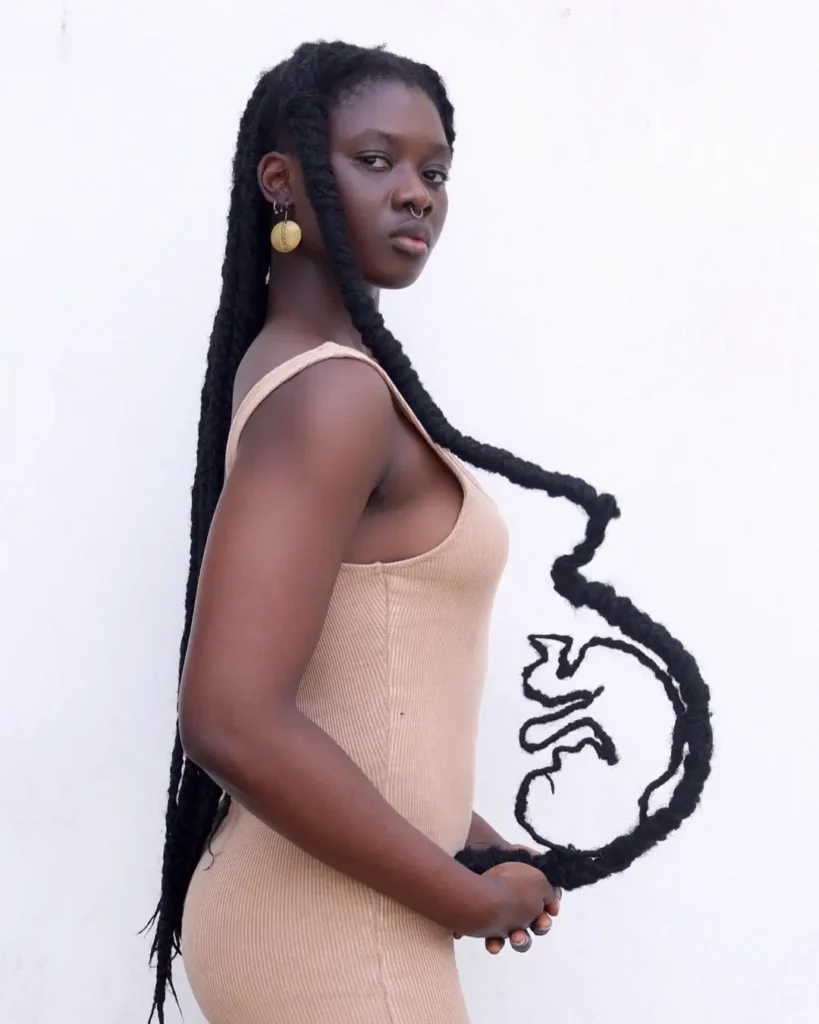
Within the tradition of struggles and street demonstrations in the United States during the 1970s and 1980s, tight, deep black curls—dense and profound like the night—channeled an imagery still vivid today. By choosing to place the body at the center of continuous experimentation, Laetitia Ky has for years transformed her hair into the raw material of a dynamic and constantly mutating sculpture. From the gesture of anti-colonial struggle, through turmoil and a motherhood as intense as blood at the end of a symbol-laden imaginary, her art continues to produce powerful images of a female presence moving between gaze and action, between form and word. The feminist bestiary that emerges constructs the coordinates of a research that intertwines painting and performance, in a claim of presence, gesture, and constant, unsilenced speech.


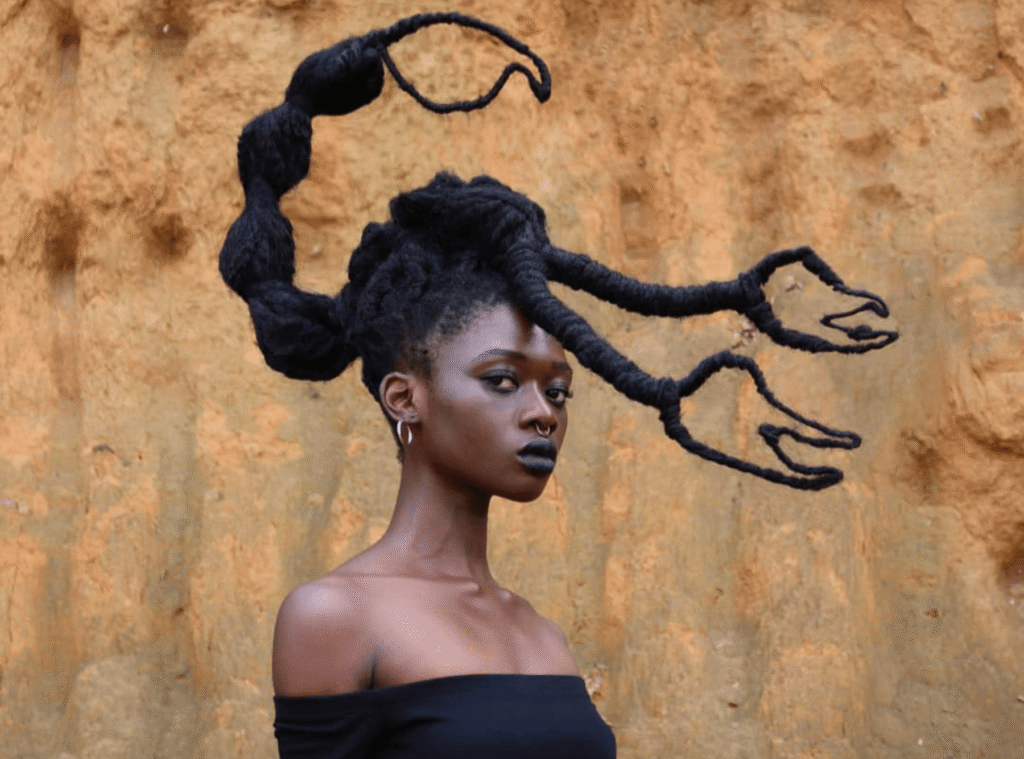
In memory of days of coercion and the violence of imprisonment, the Kurdish artist and journalist Zehra Doğan (Diyarbakır, Turkey, 1989), using her hair and against a background linked to menstruation, created the powerful silhouette of a scorpion woman with half-closed eyes, delivered to dreamlike lands. Between black and white, the scorpion figure opens a reading that points toward the concrete possibility of change. The burning ice that runs through this image holds together fear and transformation, between the call of a possible pharmakos and a deep impulse toward an original form of belief.
The Scorpion Head of Laetitia Ky, cathartically immersed in the depth of a raven gaze, dense and layered like lips tinted with the same aura, puts into tension a double and multiple presence that, for the viewer, will always convey the need for enigma and the most powerful, unavoidable intellectual cry.


Article by Floriana Savino