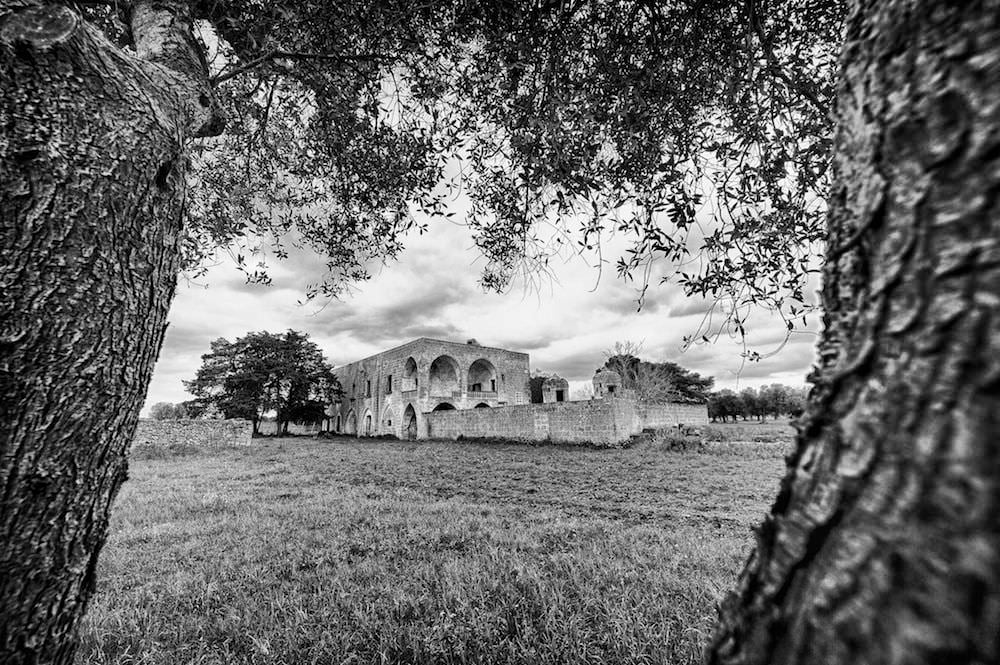
There is a precise moment when, while driving along the white roads of inland Apulia, a stone fortress emerges from a sea of silver olive trees. For many years, Apulian photographer Roberto Sibilano had been searching for that moment, following its traces with the patience of someone who does not simply want to see, but to truly understand.
The result is the exhibition “Masserie di Puglia”—on view until May 20 at the Municipal Library of Gioia del Colle (Bari)—a visual investigation that confronts us with a piece of history we are likely forgetting and no longer fully able to comprehend.
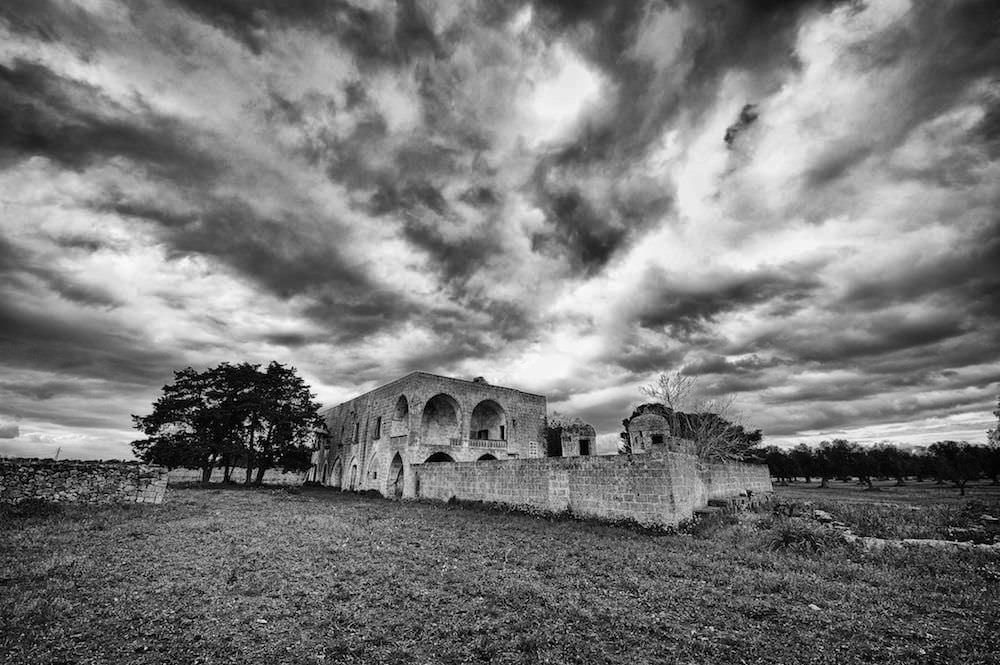
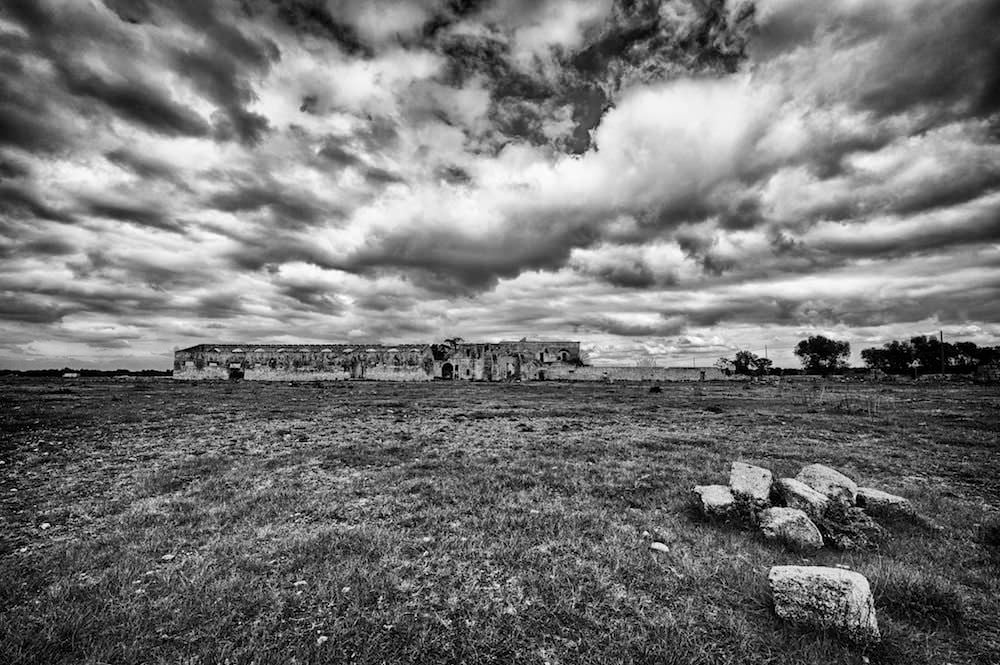
Looking at Sibilano’s photographs, we see more than simple buildings. We encounter structures that escape the romantic rhetoric to which we have relegated them today: farmhouses as a brutal and pragmatic response to a difficult landscape, defensive outposts before they were agricultural centers.
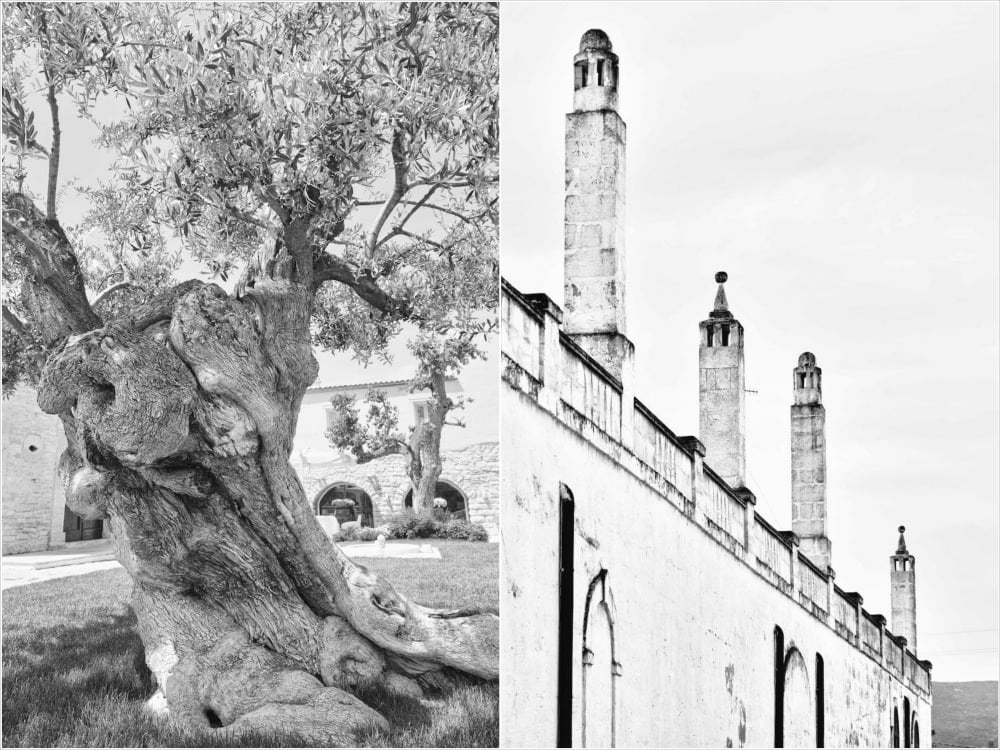
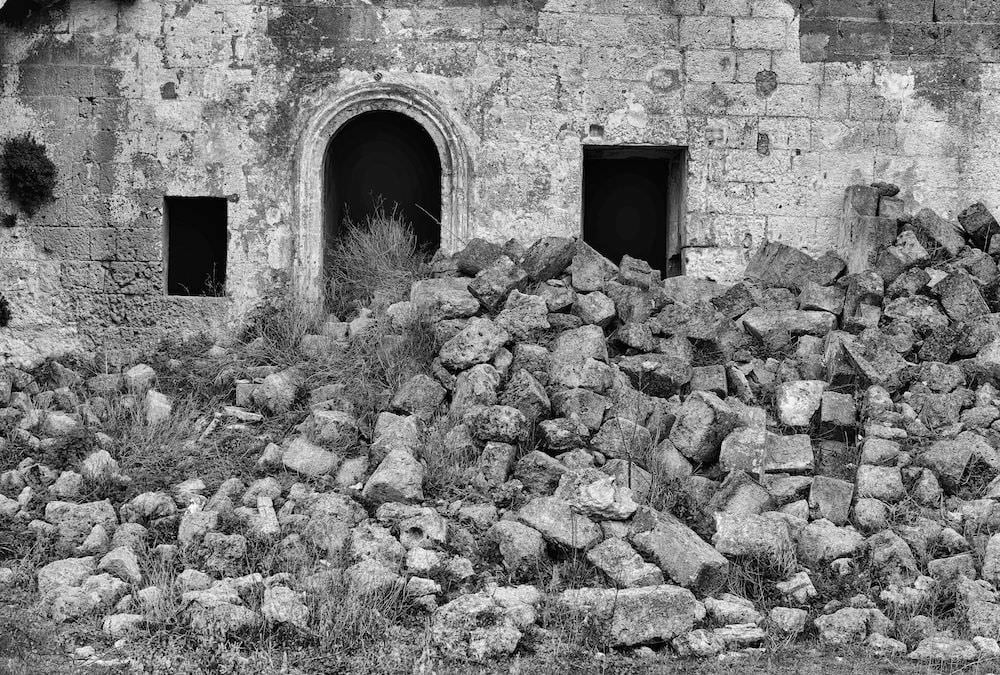
In these images, enclosed volumes, high perimeter walls, and inner courtyards emerge with striking clarity—spaces designed to protect both crops and people from attack. In these photographs, architecture is observed without the need to trace it back to individual architects: an ante litteram system of functional, self-sufficient structures. There was nothing luxurious here; every stone obeyed a strict law of necessity.
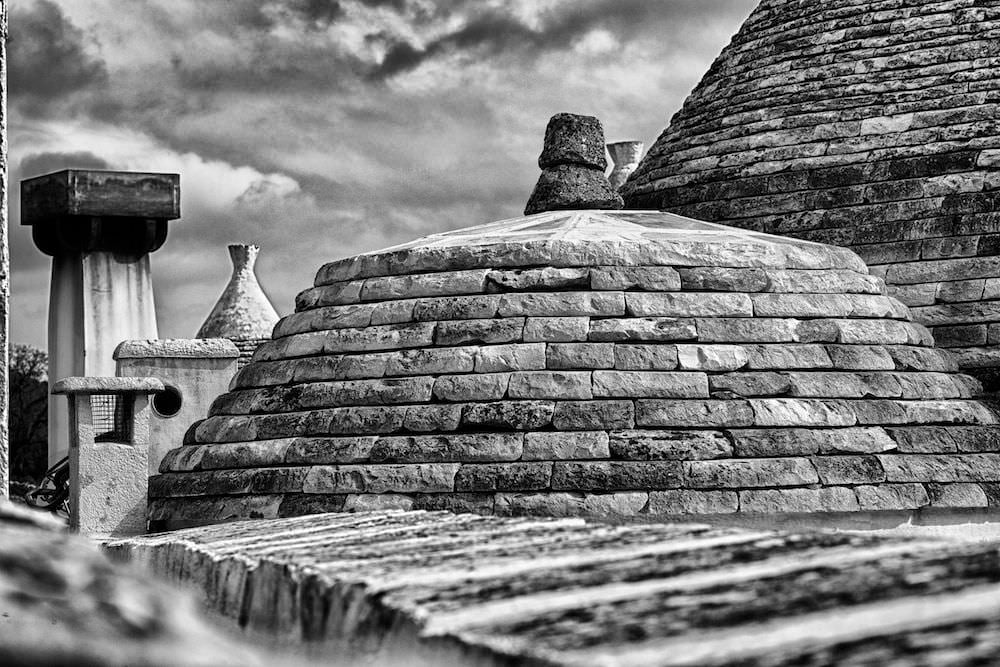
These photographs isolate a compelling dualism: a dialogue between geometries, a sharp contrast between formal clarity and vernacular ingenuity. On one side, the rigorous linearity of the main building and the adjoining structures, often including churches. The church here was not merely a religious space, but above all the center around which the social and emotional order of the rural community revolved. On the other side, the organic and primitive forms of the trulli, originally built as shelters for farm workers and later incorporated into the main complex.
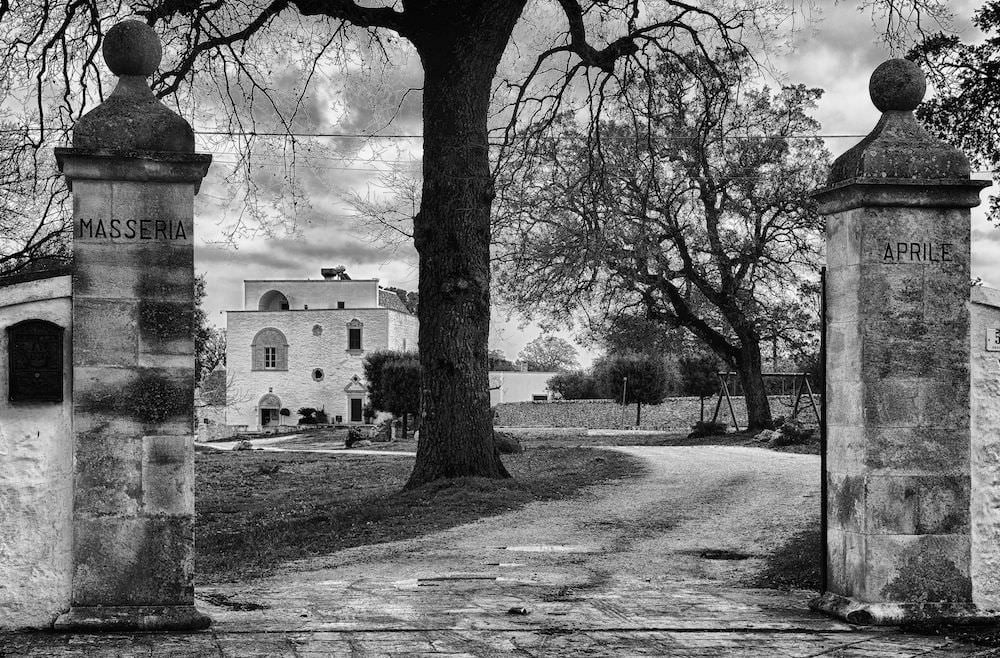
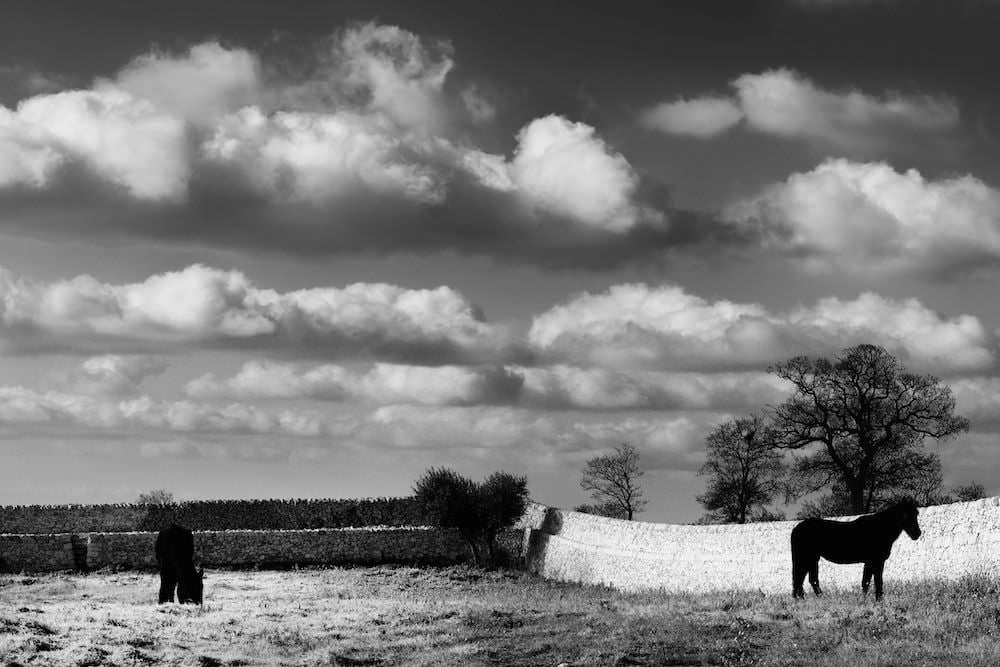
Sibilano’s black and white photography functions like an X-ray. Renouncing color in a region as vividly chromatic as Apulia is a radical choice. By removing the reassuring blue of the sky and the green of the olive trees, the photographer compels us to look at the skeleton of the buildings. Architecture becomes what it is in its essence: a masterful interplay of volumes, matter, light, and shadow. Walls and arches stand out against heavy, storm-laden skies.
Roberto Sibilano’s work is a mirror.
It is neither pure documentation nor sterile nostalgia. It is a statement.
To look at these images is to remember our origins: they urge us not to consume rural heritage as a mere backdrop, but to recognize the austere, silent dignity of our history.
Article by Roberta Ruggieri