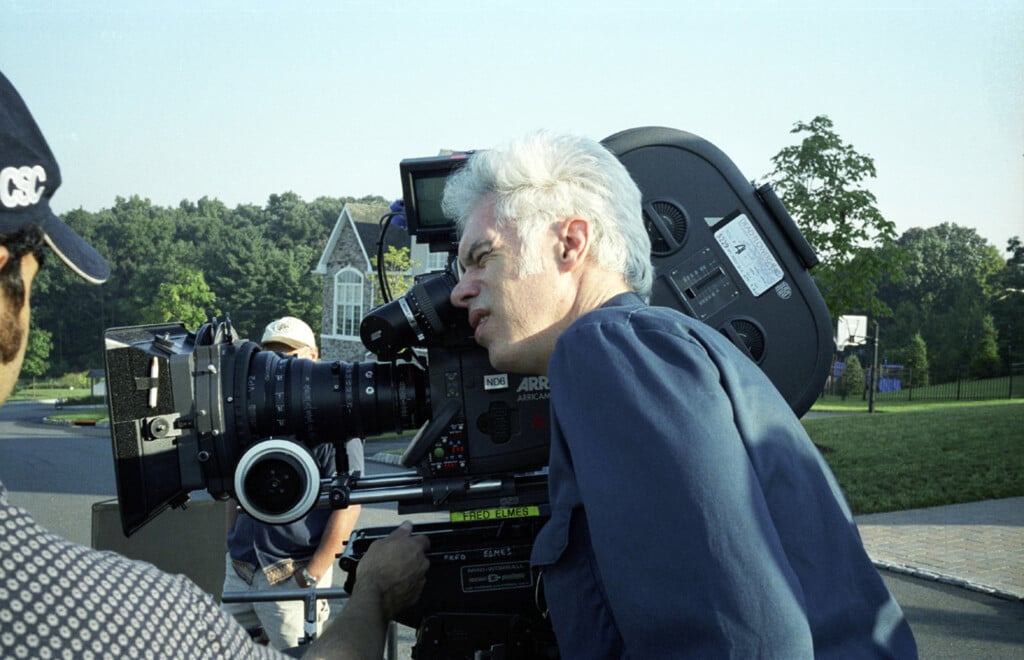
“For me, making a film is a musical activity: during shooting and editing, time flows in a visual form, just as listening to music makes you physically feel time.”
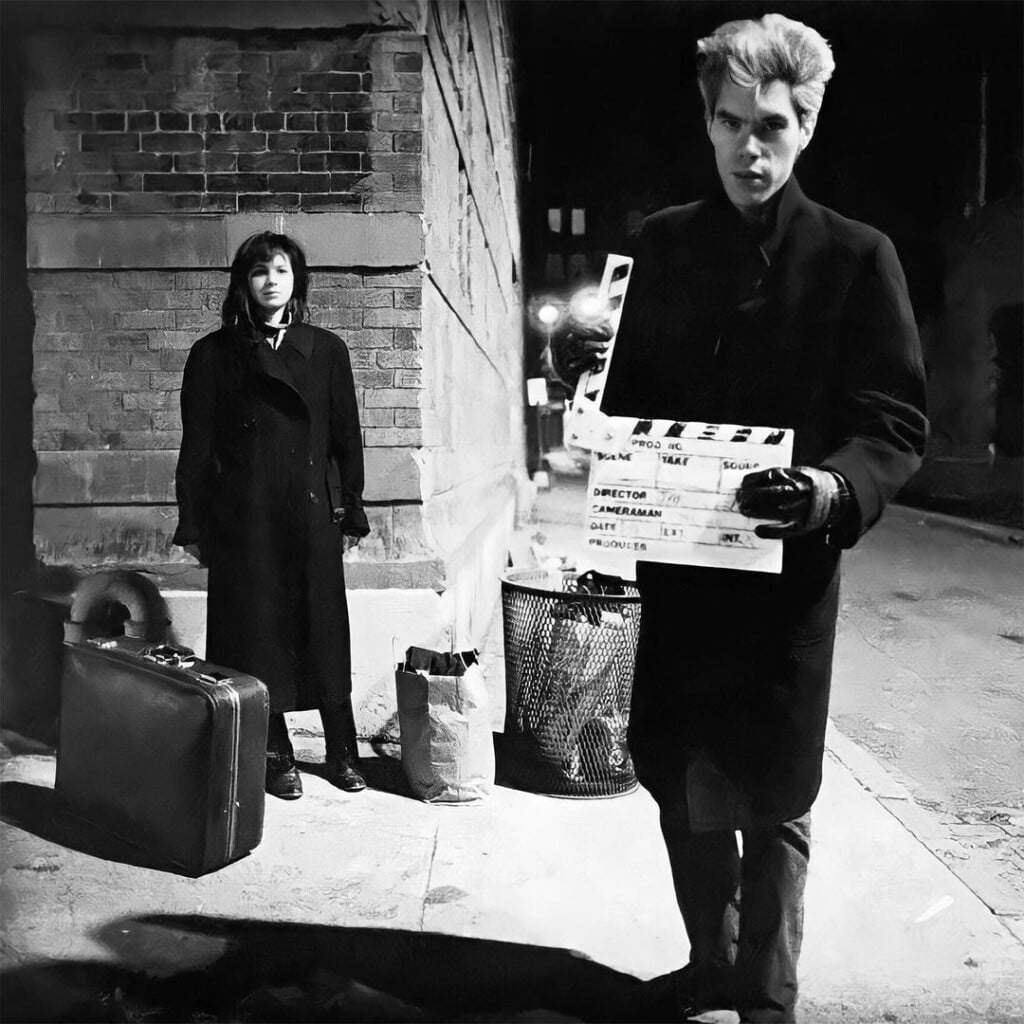
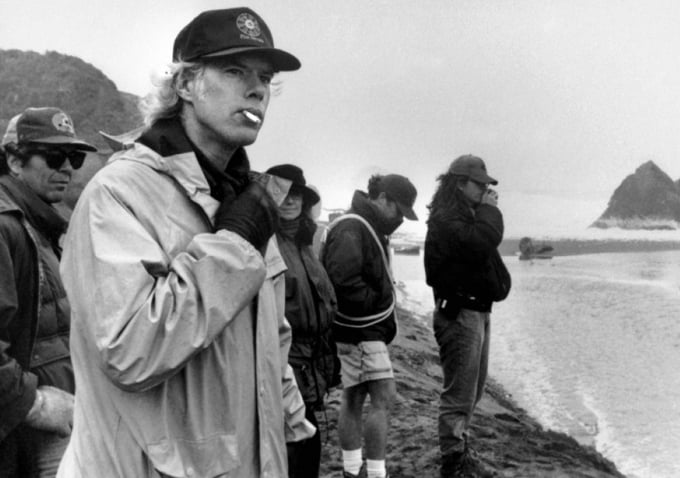
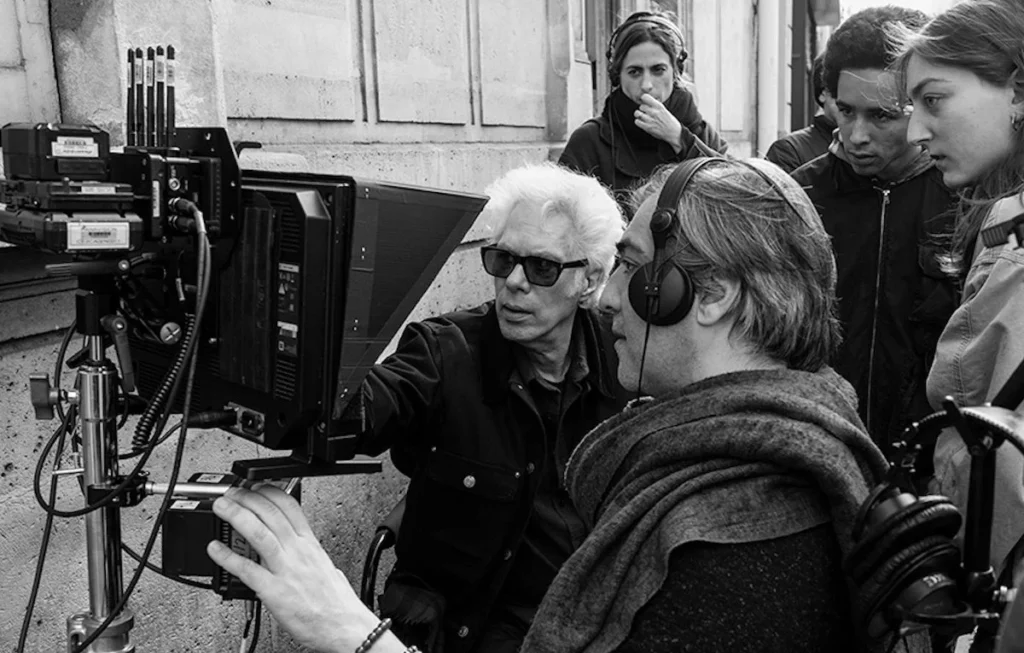
Jim Jarmusch, 72 years old, with unruly hair and the gaze of a beat poet, is the first director of Off Screen whose parallel artistic practice is music. Not painting like Lynch, not storyboards like Columbus, not notebooks with preparatory drawings like Del Toro. But not decorative music, like a soundtrack: rather, something conceived as an integral part of his cinema, defining its rhythm and atmosphere. A kind of music that also exists outside films, in albums and concerts.
Jarmusch is not only a director: he is a musician, composer, performer. He plays electric guitar in the band SQÜRL, has released several albums, and performs live by scoring surrealist silent films. Music runs through his entire filmography: in the titles (Mystery Train, Only Lovers Left Alive), in collaborations with Tom Waits, Iggy Pop, Neil Young, RZA, and in his choice to cast musicians instead of professional actors.
For Jarmusch, cinema and music have never been separate languages. They are two ways of sculpting time.
The minimalist from Akron who discovered cinema in Paris
Born in Akron, Ohio, on January 22, 1953, Jarmusch did not seem destined for cinema. After graduating in Literature from Columbia University, he moved to Paris where he discovered European cinema at the Cinémathèque Française. “I never left the theater because I couldn’t afford tickets, so I hid between the seats,” he said at Il Cinema Ritrovato in Bologna. “When director Henri Langlois discovered me, he took pity and told me I could watch all the films without any problem.“
Back in New York, he enrolled at the Tisch School of the Arts where he became an assistant to Nicholas Ray during the shooting of Lightning Over Water. “My main mentor was Nicholas Ray, my favorite among the American romantics,” he said. “I also owe a lot to Sam Fuller and Wim Wenders. Among women, even more fundamental than the male figures, are my friends Patti Smith, Thelma Schoonmaker, and Tilda Swinton.“
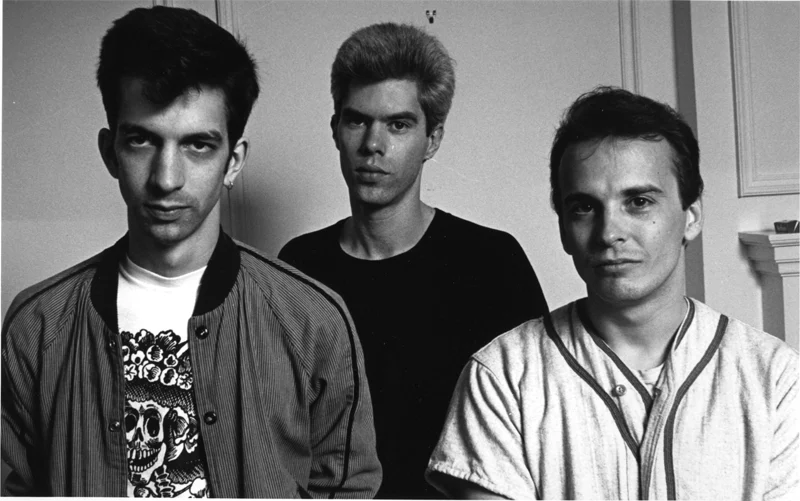
His musical training came first. In the 1970s, Jarmusch played in a post-punk band called The Del-Byzanteens. A brief but formative experience: it taught him minimalism and repetition.
Down by Law: when music takes center stage
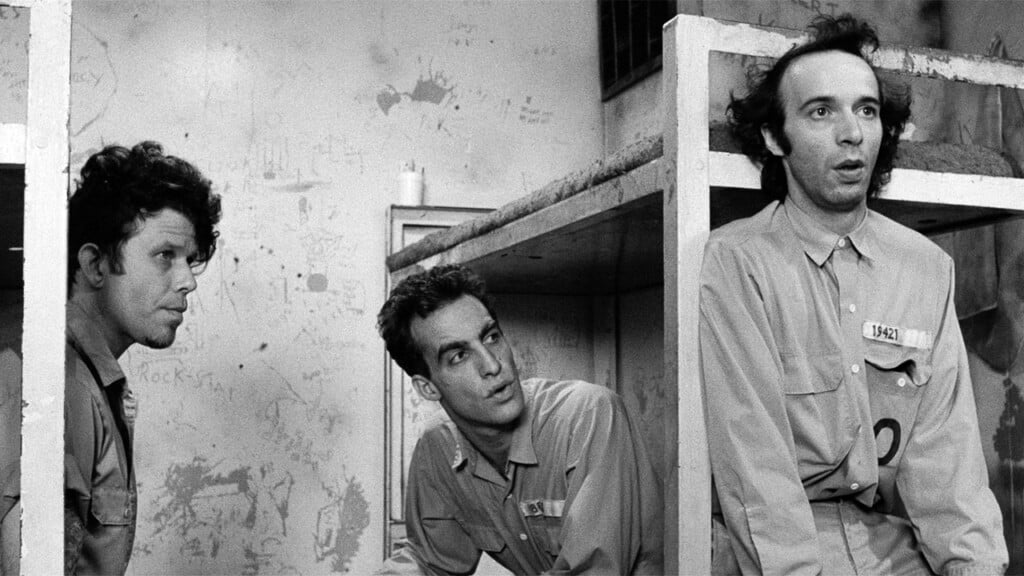
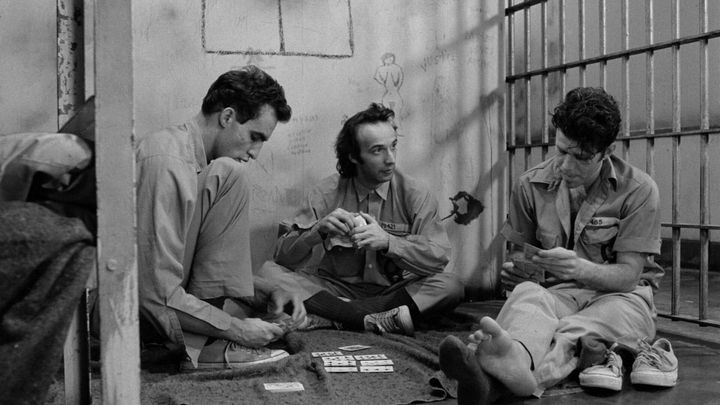
His debut was Stranger Than Paradise (1984), shot in black and white with static shots, but it is with Down by Law (1986) that music takes on a leading role. The film brings together Tom Waits, John Lurie (leader of the Lounge Lizards), and Roberto Benigni in a prison cell in Louisiana. Waits and Lurie are not just actors: they are musicians lent to cinema. The scenes are punctuated by songs and improvised jam sessions.
As Álvaro Enrigue wrote, “if it feels artificial, it’s because for Jarmusch the plot seems like a gentle concession to the audience.” But it results in one of Benigni’s best performances and marks the first realization of Jarmusch’s filmmaker-musician project: to have his musician friends do what his film friends usually do.
Mystery Train: pilgrimage to Elvis’s city
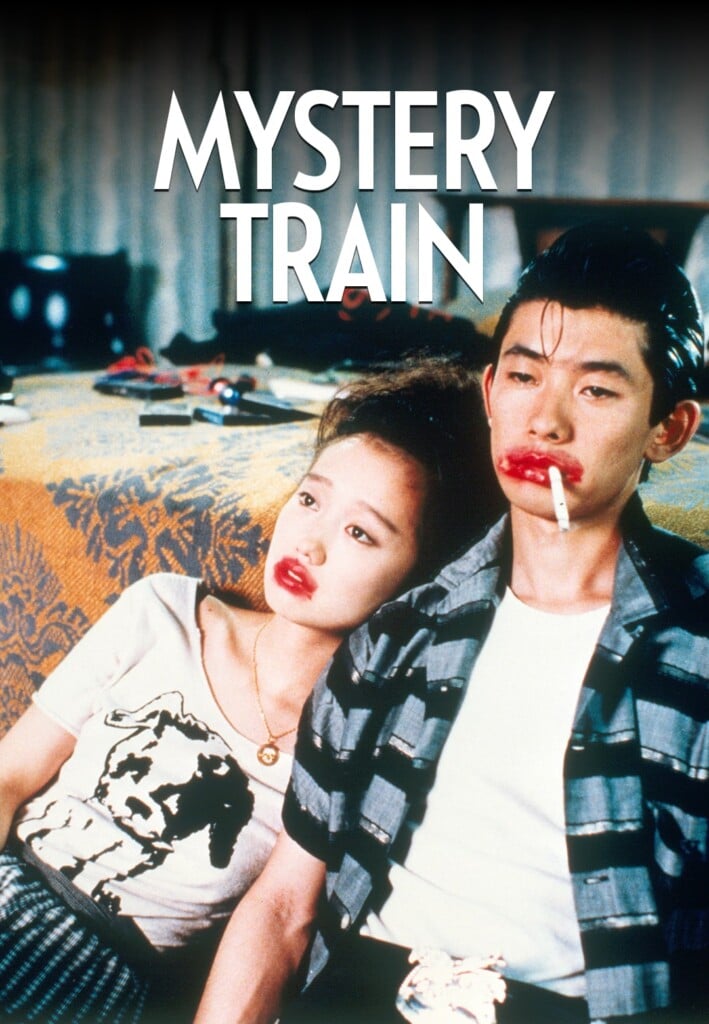
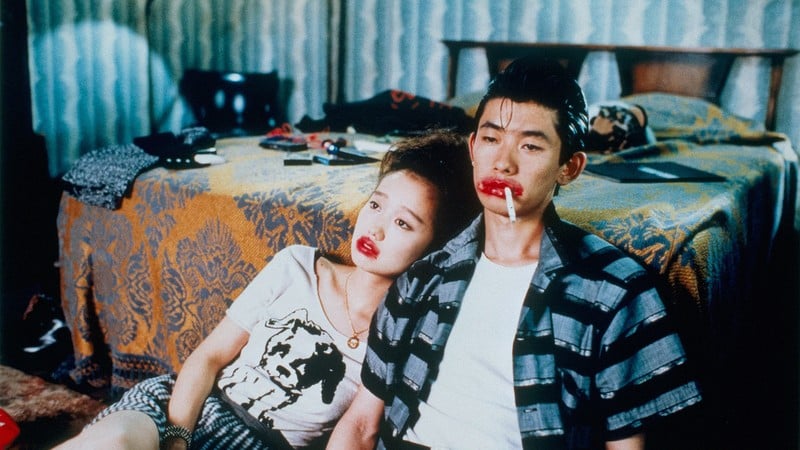
Mystery Train (1989) is an explicitly musical film, as suggested by its title taken from the song by Junior Parker and Sam Phillips, most famously performed by Elvis Presley, a constantly present ghost. Set in Memphis, the stories of three non-American characters intersect to the sound of the “King of Rock and Roll.”
The celebration of American music comes through a foreign gaze: a young Japanese couple from Yokohama on a pilgrimage to Elvis’s city, an Italian widow traveling with her husband’s coffin, and an unemployed British man recently abandoned. Jarmusch revisits this cultural exchange multiple times: the samurai of Ghost Dog (2000) with a rap soundtrack by RZA, or the katana-wielding mortician in The Dead Don’t Die (2019) played by Tilda Swinton.
Dead Man: Neil Young’s improvisation
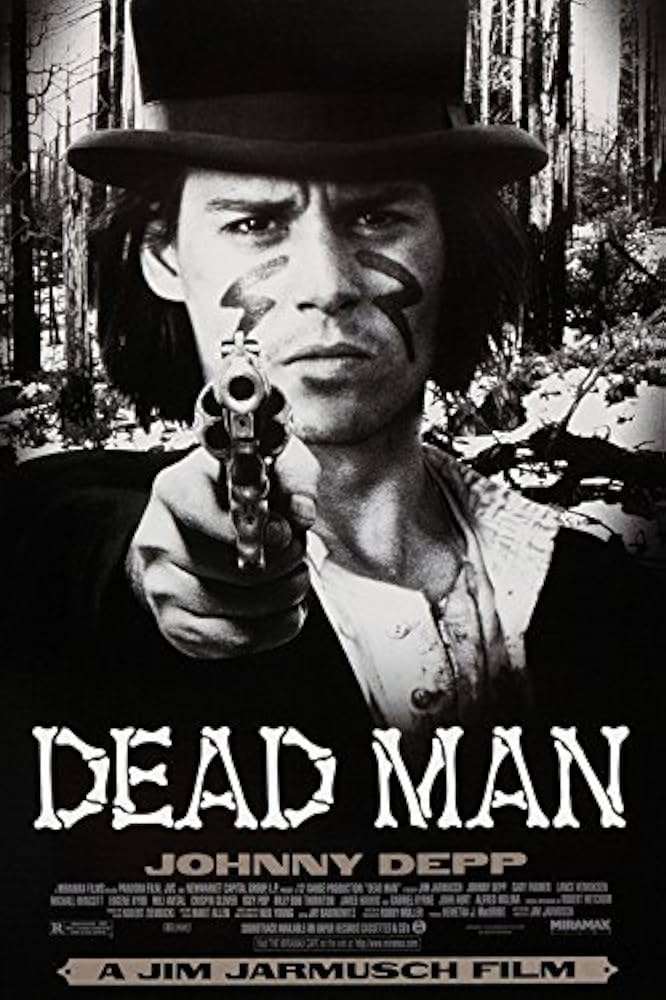
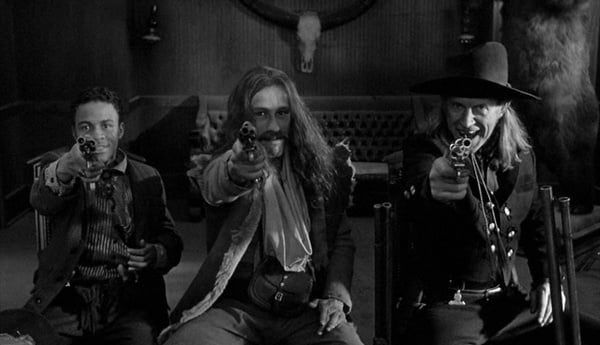
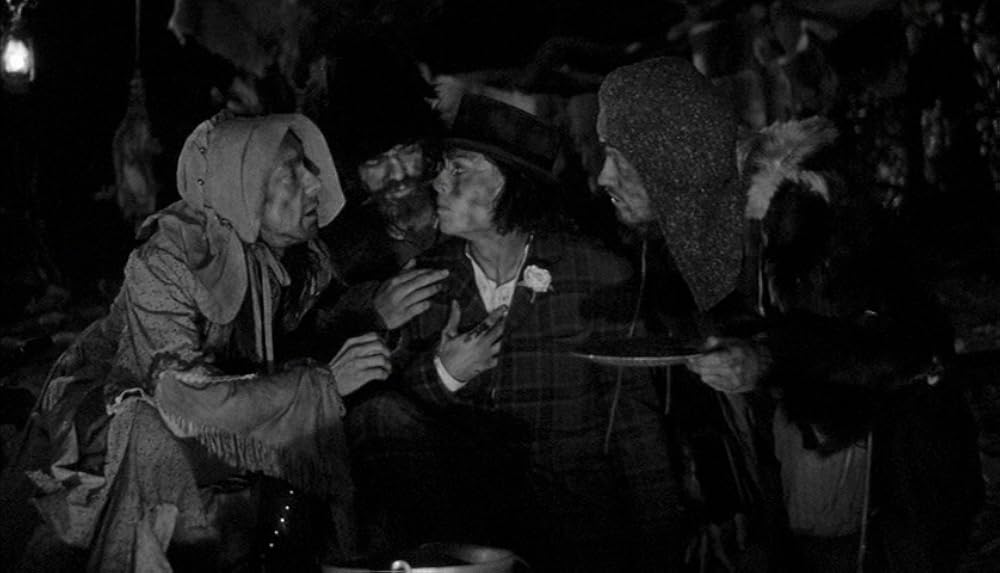
A key milestone is his collaboration with Neil Young for Dead Man (1995), an experimental western starring Johnny Depp. The soundtrack was improvised by Young in the studio while watching the final cut. A continuous rearrangement of the same piece marks the journey of William Blake, an accountant from Cleveland hunted in the West.
“Neil came into the editing room, watched the film, and recorded everything in a couple of sessions,” Jarmusch said. “I wanted him to be completely free, to react emotionally to the images. It’s pure improvisation.” The result is one of the most radical soundtracks of the 1990s: monotonous, hypnotic, perfectly aligned with the film.
Iggy Pop also appears in the film. He returns in Coffee and Cigarettes (2003), a collection of shorts. In one of the most “Jarmuschian” moments of his filmography, Iggy Pop and Tom Waits smoke a cigarette because, having quit smoking, they can finally have one. A paradox that won the Palme d’Or at Cannes in 1993 as a short film, later expanded into a feature.
Only Lovers Left Alive: vampires and lutes
Only Lovers Left Alive (2013) tells the love story of two bored vampires, Adam (Tom Hiddleston) and Eve (Tilda Swinton). Hiddleston fills his centuries on Earth with his passion for guitars: he owns dozens, including some that belonged to the greatest musicians of the past.
Music is omnipresent and represents Adam’s last lifeline. A haunting piece performed by Lebanese singer Yasmine Hamdan transports him into a passionate dimension that keeps him tied to life and to Eve.
The film marks the beginning of the collaboration with Dutch lutenist Jozef Van Wissem. The two met by chance on a street in New York in 2006, began playing together, and in 2012 released their first album, Concerning the Entrance Into Eternity. For the film, Van Wissem composed the lute pieces, while Jarmusch and SQÜRL added distorted guitars, drums, and synths.
The result won the Cannes Soundtrack Award: baroque lute intertwined with psychedelic fuzz. “Jim makes his films like a musician: he has music in his head when he writes the screenplay,” said Van Wissem.
Since then, Jarmusch and Van Wissem have released other albums: The Mystery of Heaven (2012), An Attempt to Draw Aside the Veil (2019), American Landscapes (2023). They perform live in museums and galleries, confirming that their collaboration has its own artistic autonomy.
SQÜRL: the cheerfully marginal rock band
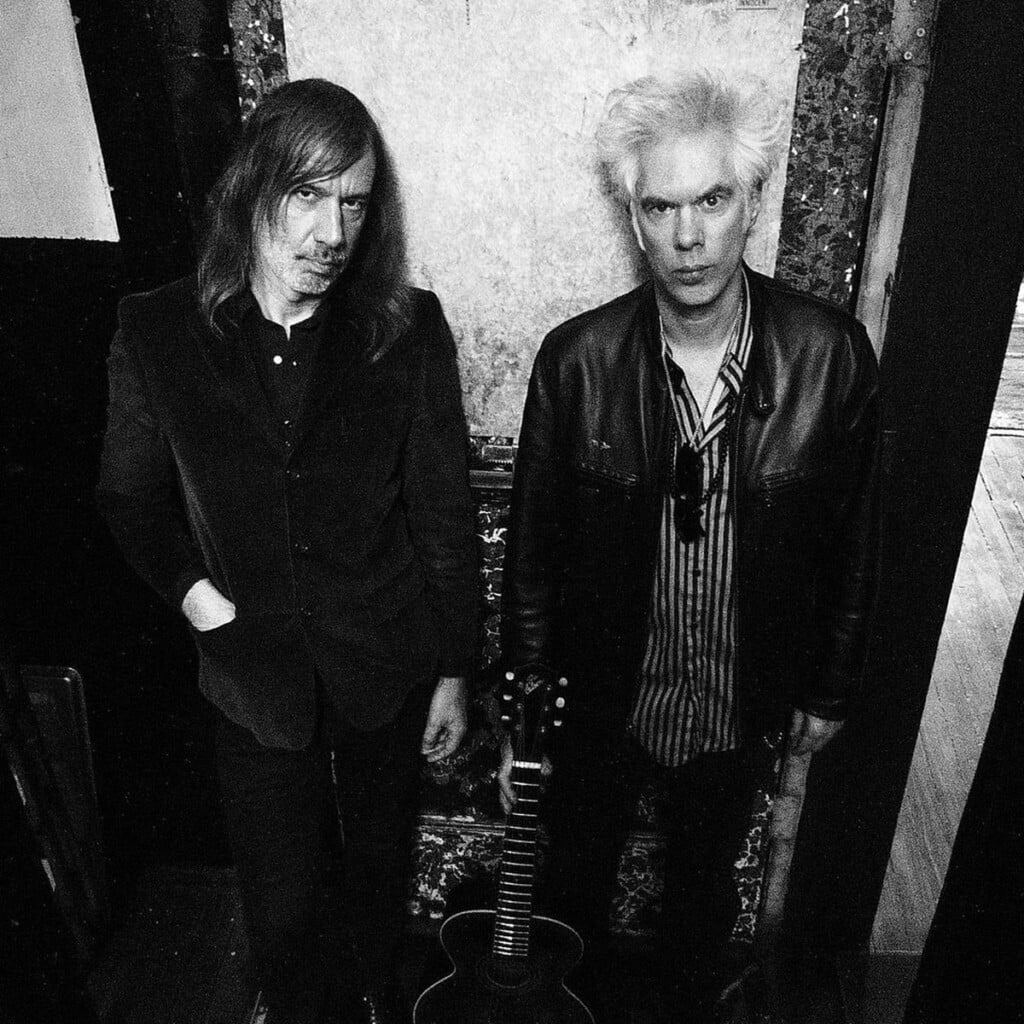
In 2009 Jarmusch founded SQÜRL together with Carter Logan and Shane Stoneback. They describe themselves as “a cheerfully marginal rock band from New York City that loves big drums and distorted guitars, cassette recorders, loops, feedback, sad country songs, molten stoner core, chopped & screwed hip-hop, and imaginary soundtracks.”
The band was born to compose music for Jarmusch’s films, but it became an independent project. In 2016 they composed the soundtrack for Paterson, a film about a poet-bus driver (Adam Driver). Ambient and psychedelic music accompanies the protagonist’s everyday melancholy.
In 2019 came The Dead Don’t Die, a zombie movie starring Bill Murray, Adam Driver, Tilda Swinton, Chloë Sevigny, Iggy Pop, Tom Waits, and RZA. SQÜRL’s soundtrack pays homage to horror classics: John Carpenter, Morricone, Tangerine Dream, Goblin.
In 2023 they released Silver Haze, their first true studio album not tied to a film. It features collaborations with Anika and Charlotte Gainsbourg.
Four Films by Man Ray: live cinema
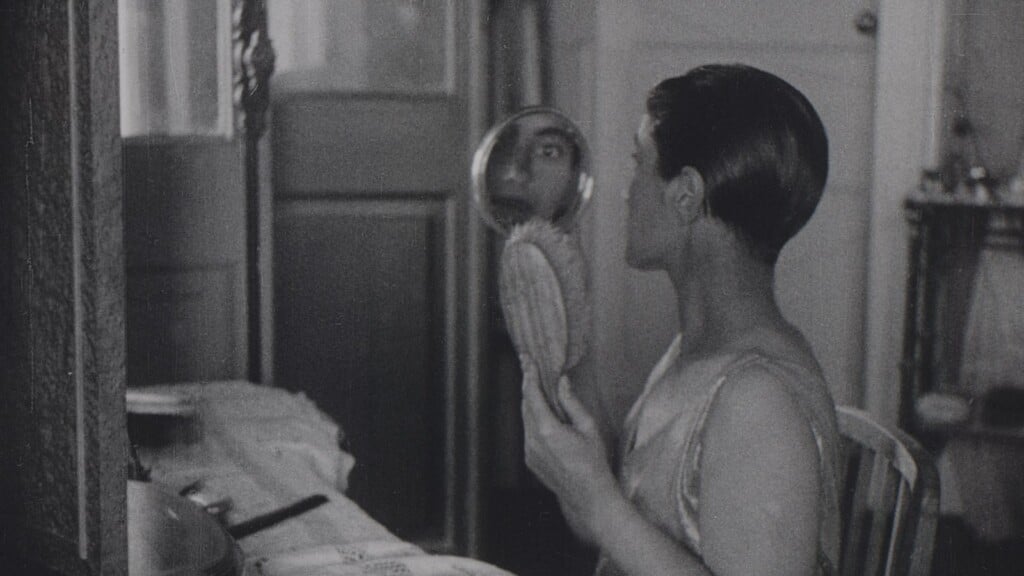
One of SQÜRL’s most fascinating projects is the live scoring of four silent films by surrealist artist Man Ray. Jarmusch and Logan perform semi-improvised scores based on loops, synths, and effected guitars.
“There are moments in those films that are very narrative, but others more purely about the image, which invite you to step in and create your own interpretation, possibly through music,” explained Carter Logan. “Jim and I gravitate toward texture.“
The show has been performed at the Andy Warhol Museum in Pittsburgh, the National Cinema Museum in Turin, and the Art Institute of Chicago. A tribute to early cinema, when silent images were accompanied live.
At 72, two films and a new screenplay
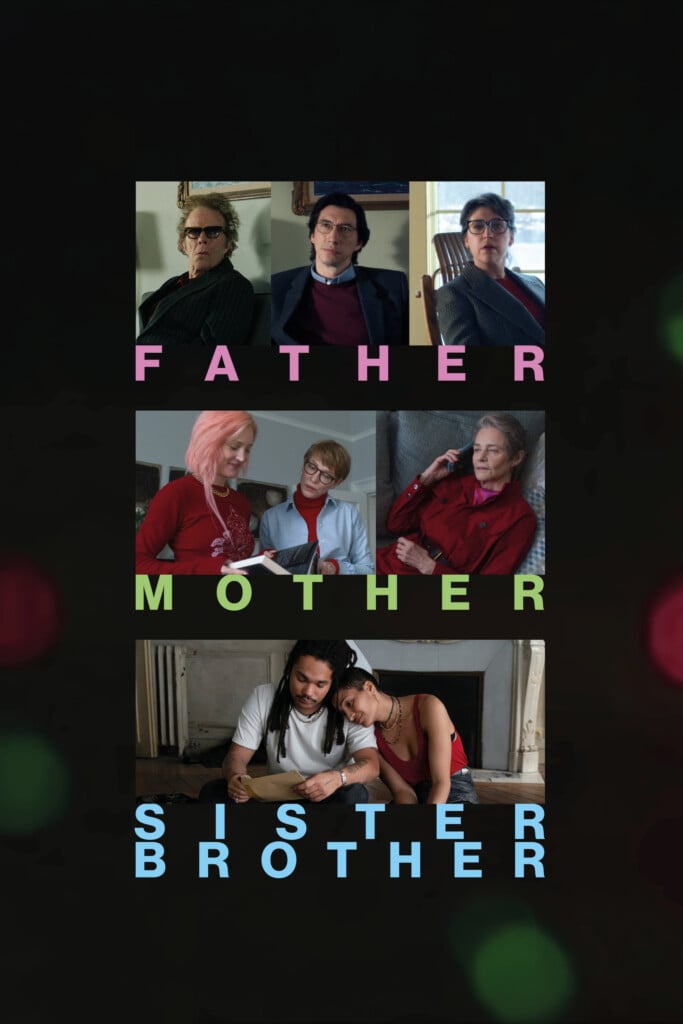
In the summer of 2025, Jim Jarmusch appeared at the Venice Film Festival with Father Mother Sister Brother, an episodic film starring Cate Blanchett, Adam Driver, Vicky Krieps, Tom Waits, and Charlotte Rampling. The film won the Golden Lion. It is a comedy woven with threads of melancholy that explores family relationships.
At the masterclass at Il Cinema Ritrovato in Bologna, Jarmusch announced that a new screenplay is already on his desk. At 72, the Akron-born director has no intention of stopping. Thirteen films in 45 years: never part of New Hollywood, always faithful to independent cinema.
“The money from big companies is all dirty,” he said, “but it allows me to make my films.“
Time as a shared substance
What connects cinema and music for Jarmusch? The management of time. “When you watch a film, the film unfolds within its own time frame. It’s very close to listening to a piece of music, since its time frame is its time frame. They are so closely related.“
In his films, this correlation is total. Long takes function like sustained notes. Silences are musical pauses. Dialogues have the rhythm of a jam session. In Paterson, the poet protagonist writes verses that share the same cadence as SQÜRL’s soundtrack. In Only Lovers Left Alive, vampires live immersed in the music of centuries because music is the only thing that can fill infinite time.
Jarmusch has spent fifty years proving this idea. His films are visual scores, his songs are films without images, and the boundary does not exist. There is only time flowing, shaped by an artist who uses both languages. Everything is interconnected, everything is time sculpted into different forms.