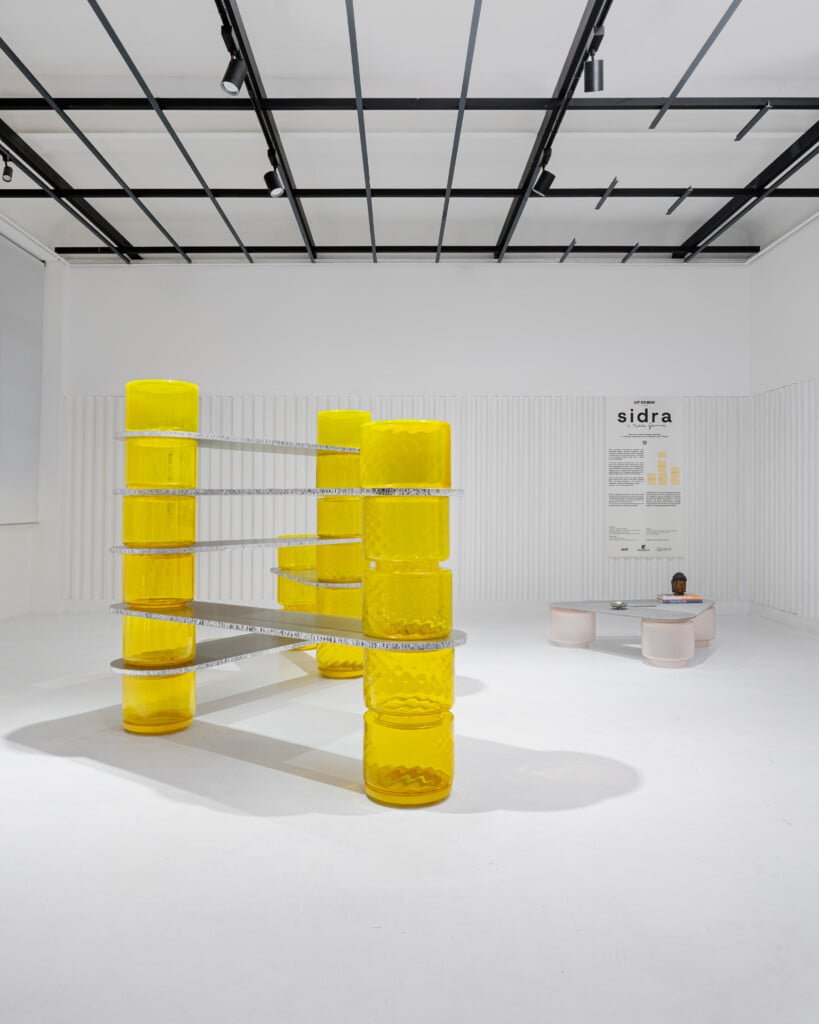
During Milan Design Week 2026, Rudy Faissal and Riccardo Boccia, the duo behind LIT STUDIO, present Sidra: A Modular Grammar by centering a simple idea: transforming a single module into a composable system, capable of evolving through space.
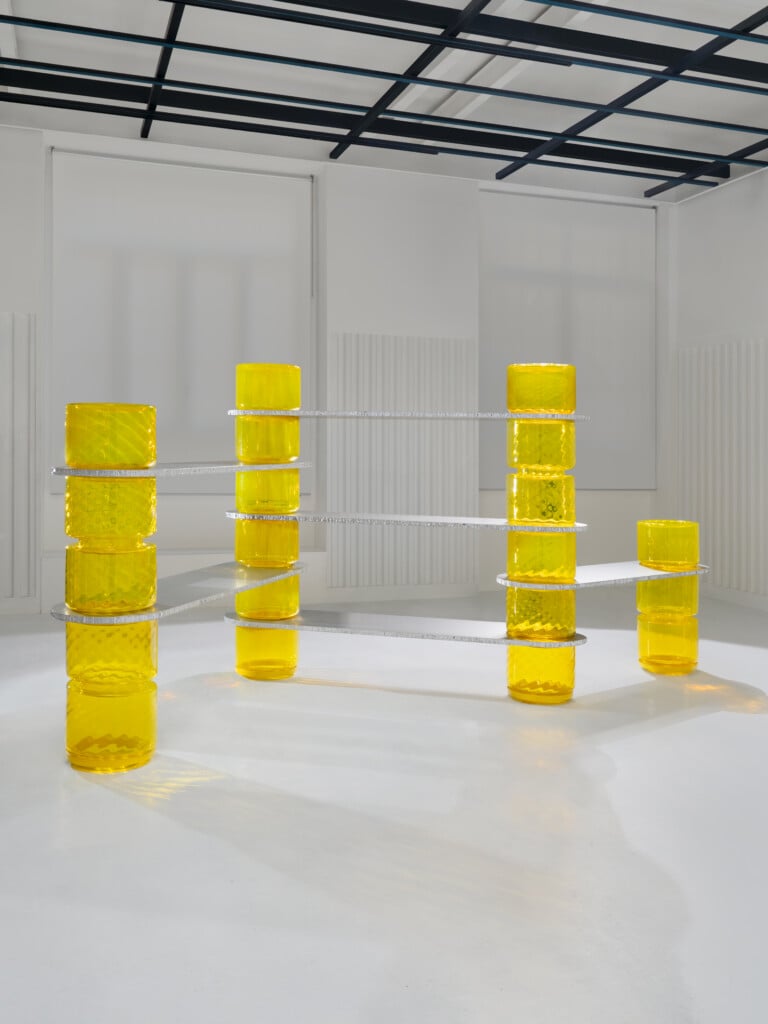
Sidra develops a language built around an element in blown Murano glass that becomes a unit of measure, the starting point for configurations that expand without losing coherence. The bookshelf, the coffee table, and the lamp are not isolated objects, but variations on the same principle. The reference is that of an organic branching structure, also evoked by the name: Sidra in fact recalls the lotus, a symbol of growth and continuity. The repetition of the module does not generate monotony, but rhythm and possibility.
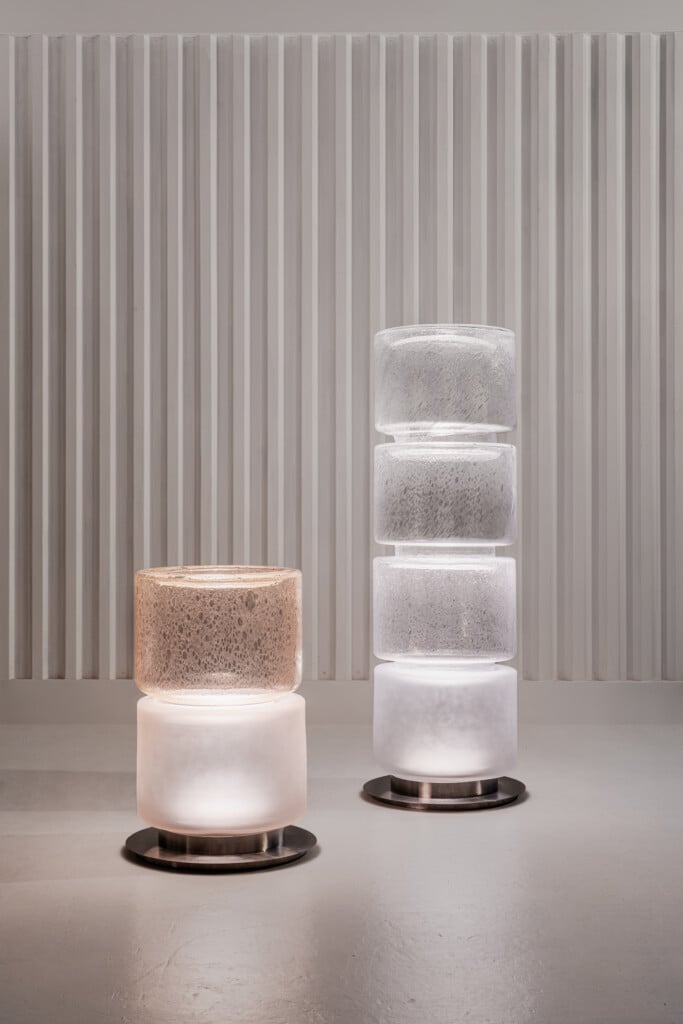
The project works on the tension between materials and meanings. Murano glass, traditionally decorative, is used here as a structural element, while honeycomb aluminum—usually hidden—remains visible. A choice that reflects a fascination with the unfinished and with controlled error, understood as the authentic space of human creativity.
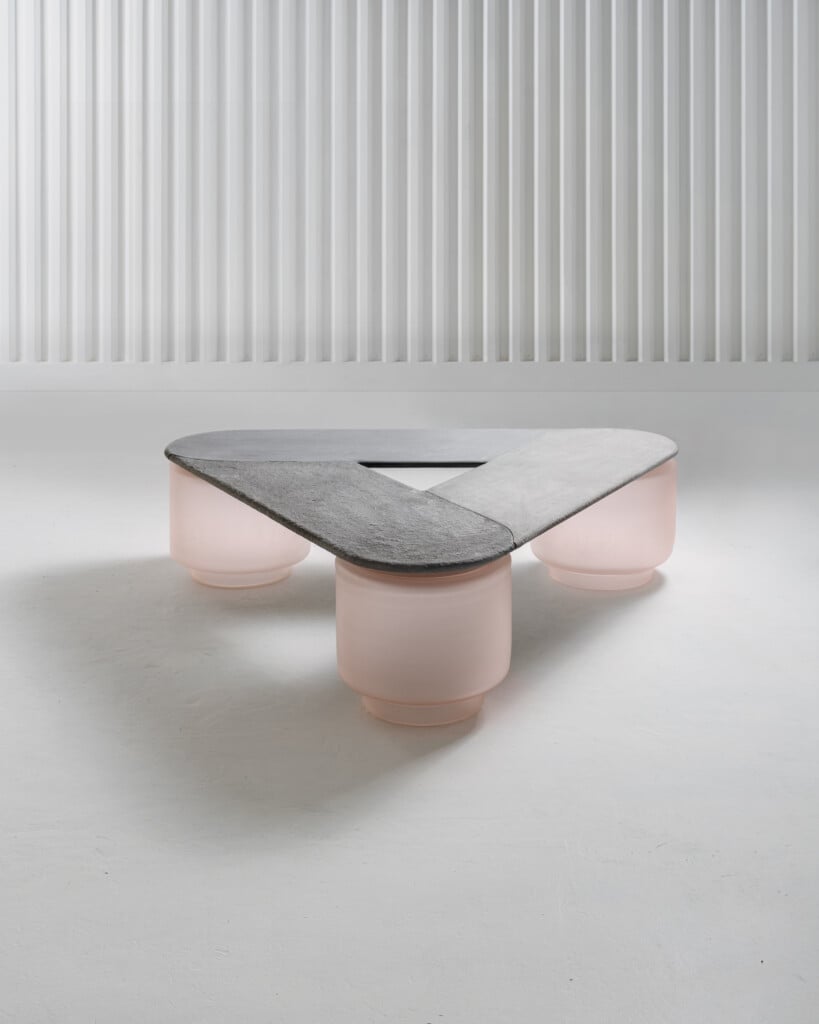
Each configuration develops the system further: the bookshelf, with yellow glass modules and aluminum shelves, is conceived as an adaptable element; the coffee table combines satin pink glass with a stone top; the lamp integrates light into the structure, transforming the module into a luminous device. Here, transparency builds rhythm, defines heights, and modulates perception. Glass stops being a surface and becomes a frame.
The essential display lets the project’s logic emerge, presenting itself as a constantly evolving system that rejects the idea of a definitive form. With Sidra, LIT STUDIO strengthens a vision of design as an open field, where modularity becomes a spatial strategy capable of accommodating transformations and new usage scenarios.
ph. Lorenzo Piovella