A car can tell us much more than a journey: it can speak of an era, a model of consumption, an idea of progress and, above all, of what remains when all of this stops working. This is the perspective behind the work of Zoer, a French artist also known as Zoerism, who has turned industrial objects and materials destined to be discarded into the main subjects of his artistic production.
Frédéric Battle first came to the world of graffiti, before developing a language that combines painting, design and interventions in public space. His training in product design profoundly influences the way he observes objects: he does not limit himself to considering their function, but studies their forms, surfaces, proportions and potential for transformation.
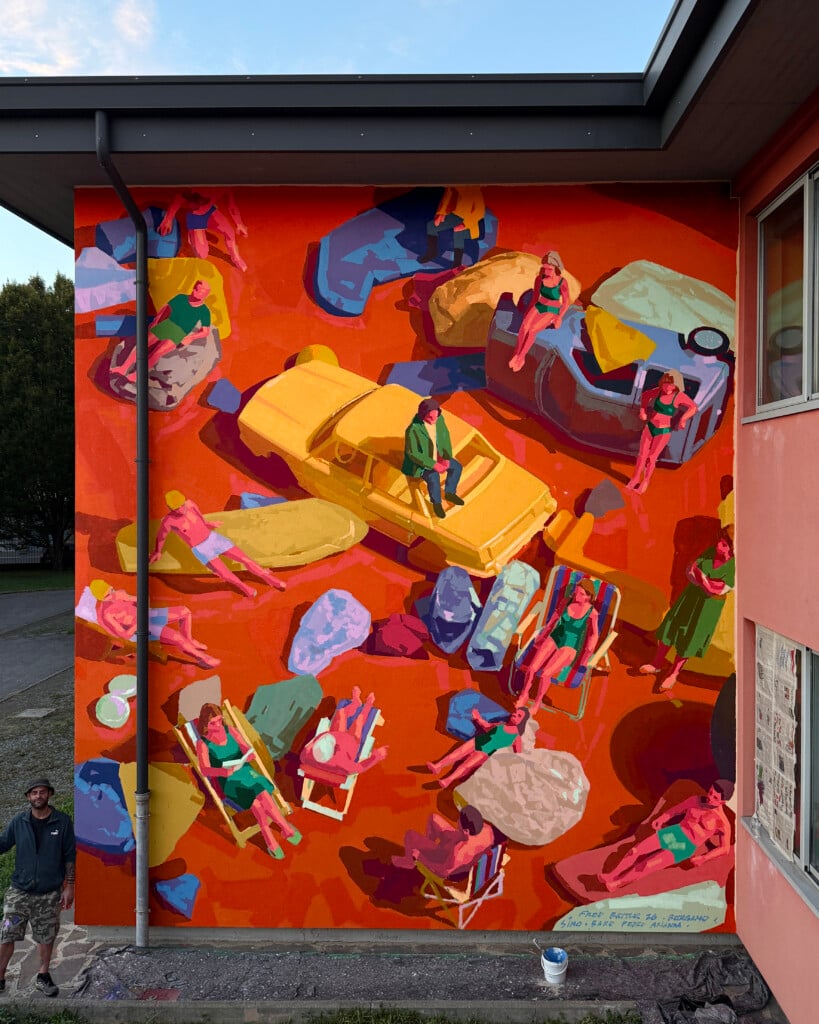
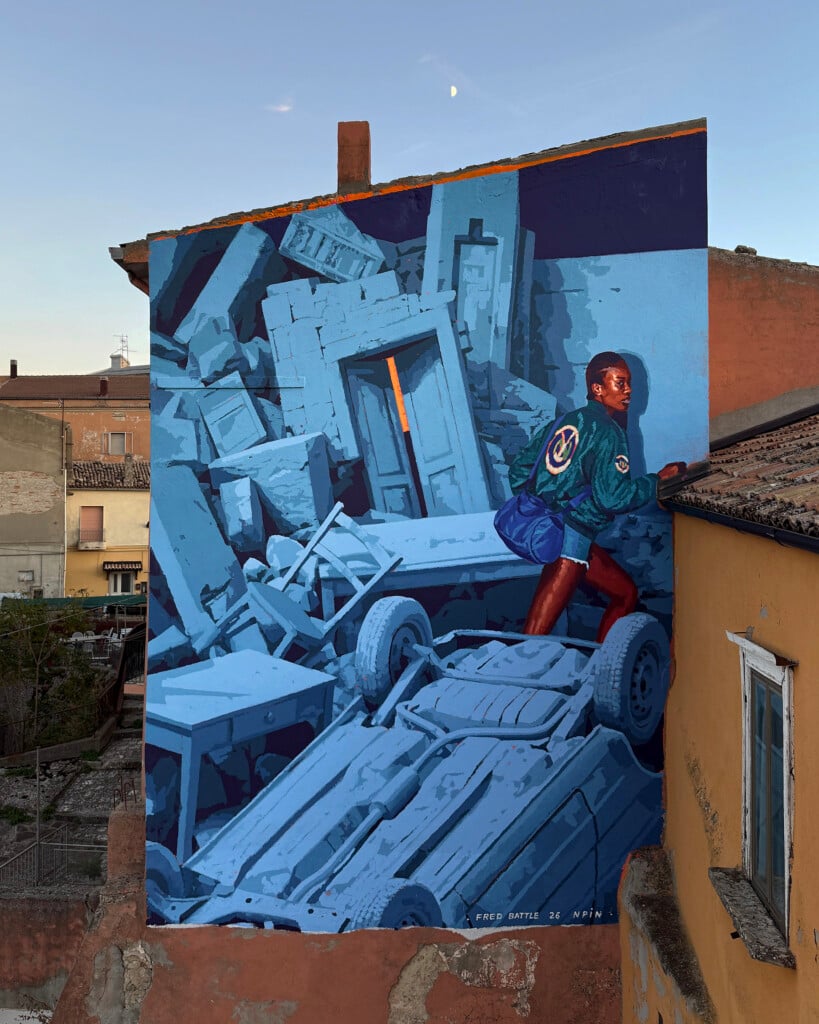
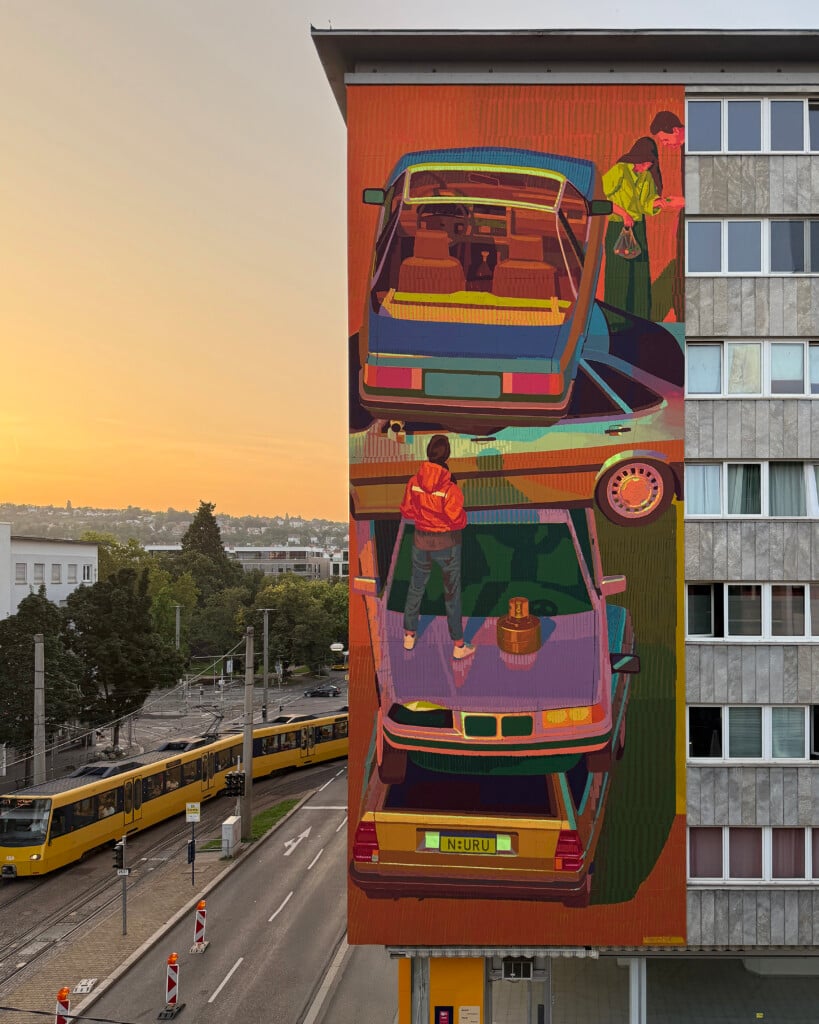
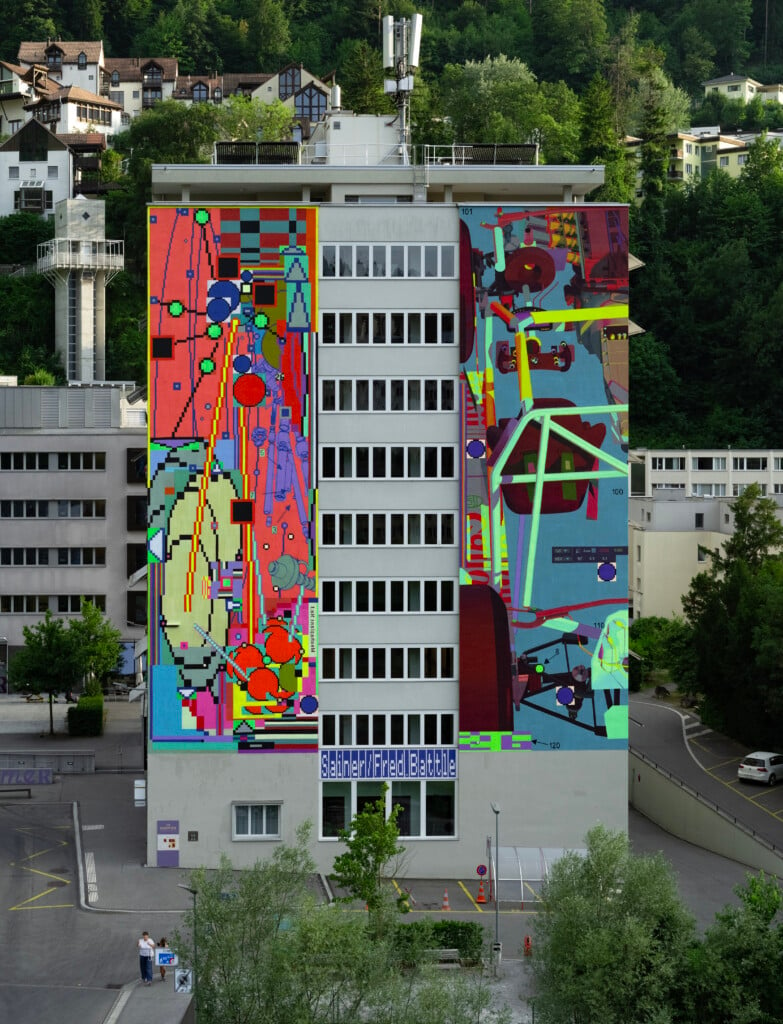
In his works, cars, metal carcasses and industrial components gradually lose their original identity. What was once designed to be useful becomes visual material, while what seemed to have lost all value acquires a new presence. The relationship with the car is one of the common threads of his research. Since childhood, Zoer has been fascinated by car bodies and mechanical components, which he observes, draws and mentally recomposes into new configurations. This passion can be found in his murals, where elements linked to the industrial world are extracted from their context and turned into compositions with an almost abstract character.
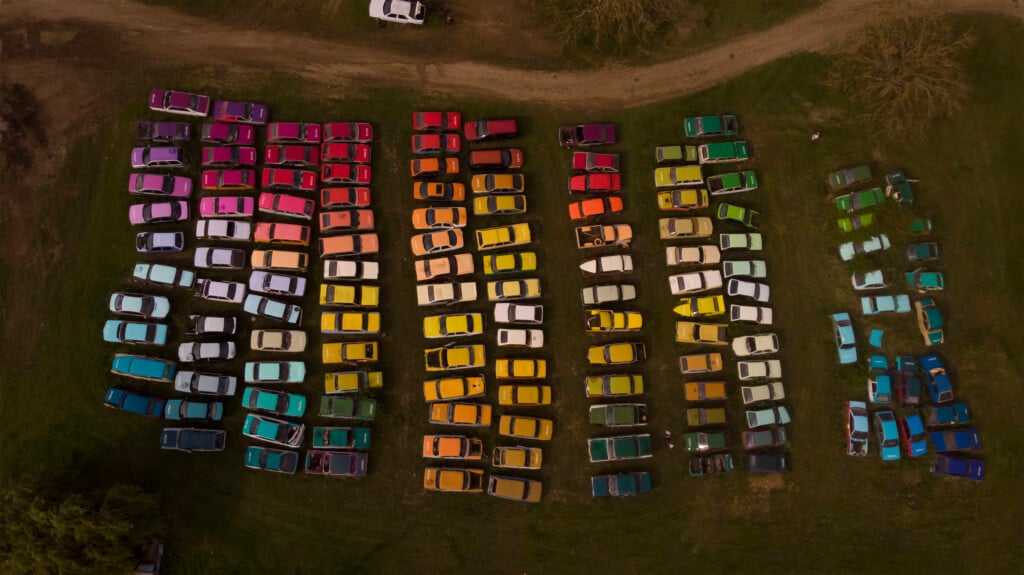
A significant example is Solara, a project in which the artist salvaged 144 cars destined for demolition, turning them into a kind of three-dimensional palette. Each vehicle was painted a different shade, thus keeping its form but acquiring a new chromatic identity. The intervention challenges the boundary between waste and heritage, showing how much an object can still tell us even after it has lost its function.
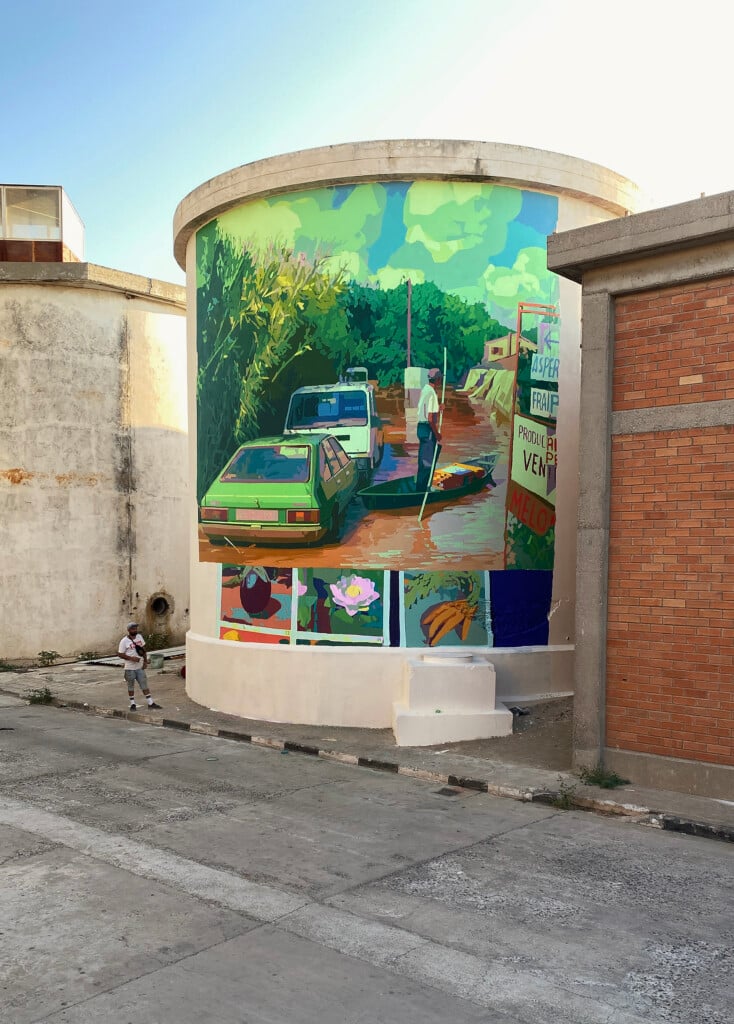
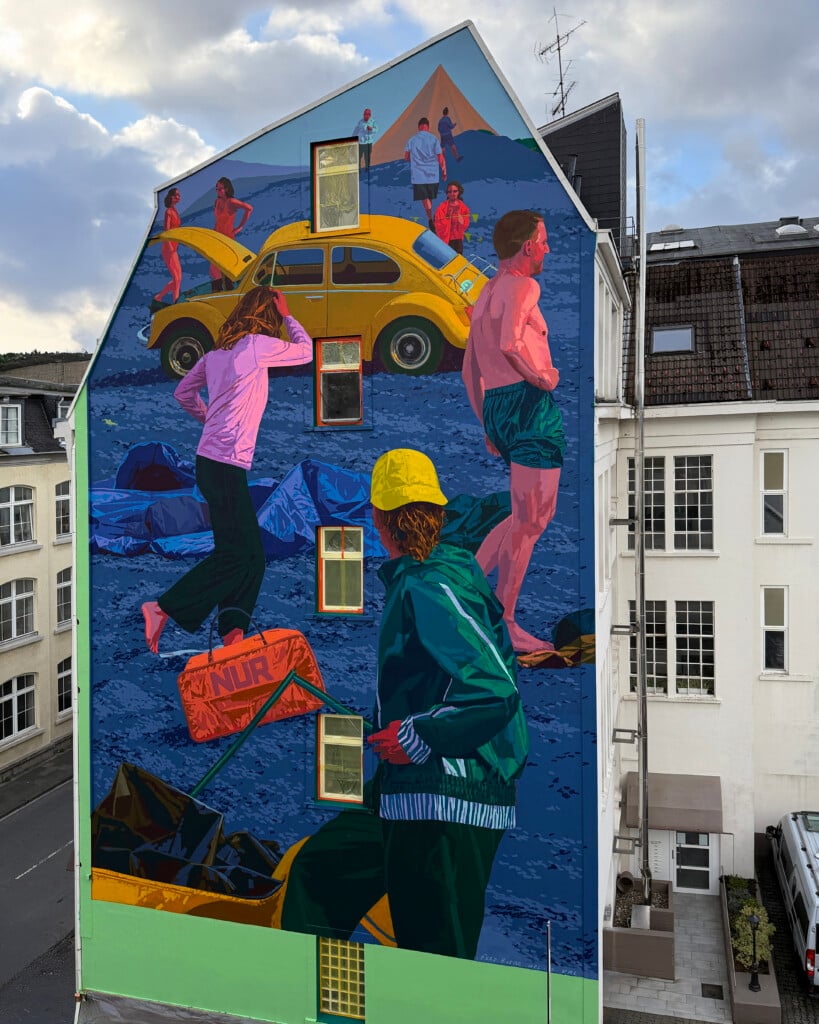
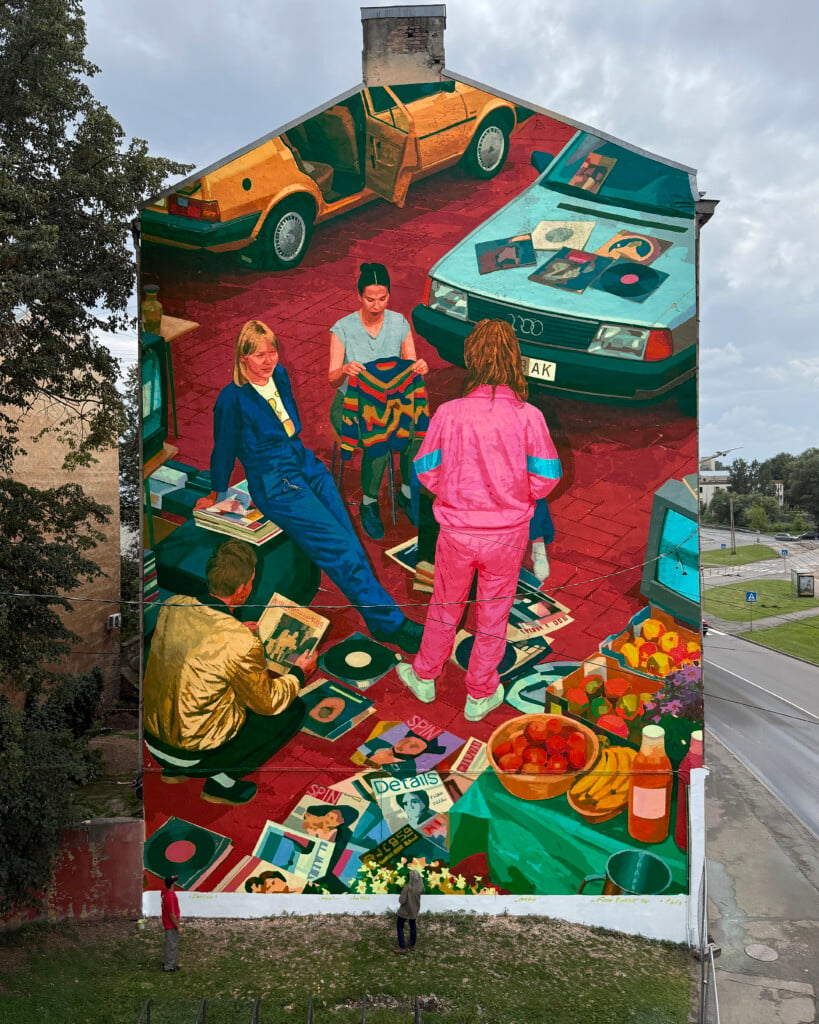
It is above all in the urban space that this research finds a particular dimension. Zoer works on façades, buildings and industrial surfaces, adapting each intervention to the characteristics of the place. His murals do not seem simply applied to a wall: they exploit the proportions of the architecture, perspectives and visual distortions to give the impression that the depicted objects could emerge from the surface. The use of colour is striking too. Intense greens, oranges, pinks and almost fluorescent tones coexist with metallic forms and technical details, creating a contrast between the precision of the drawing and the often untidy nature of the subjects. Painting thus becomes a way of restoring volume to what appears worn out, transforming materials and objects into something new without erasing their history.
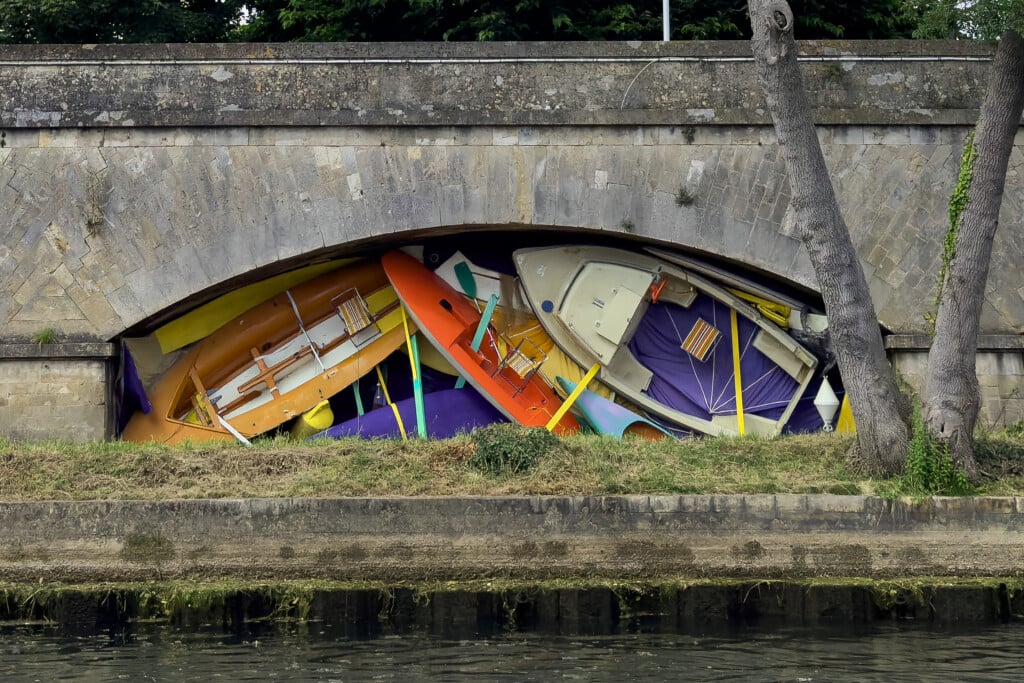
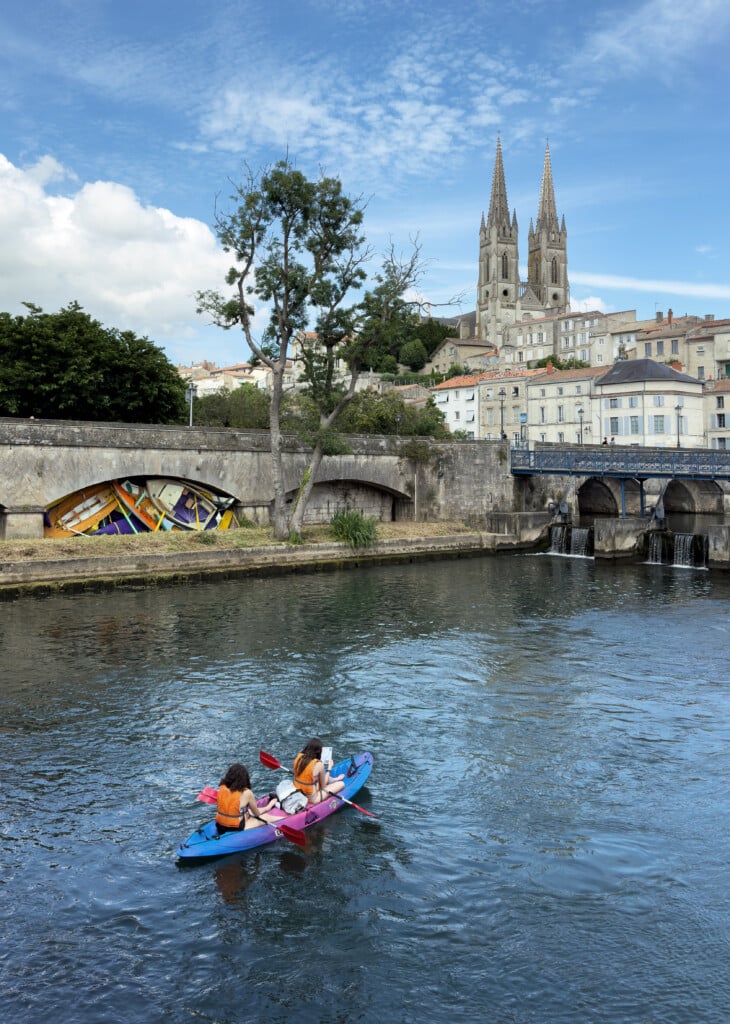
In a work created in Boulogne-sur-Mer, for example, the artist placed two boats within a composition reminiscent of a still life, setting them on top of tables and alongside a chair of unusual proportions. The reference to the port and the local fishing tradition is thus reworked through a surreal image, in which the objects seem suspended between reality and imagination.
Zoer’s street art therefore does not seek merely to make the spaces we pass through more colourful. His work invites us to look differently at what we are used to considering ordinary, useless or outdated. His images give objects a second chance, but above all remind us that even the most familiar forms can change meaning when they are removed from their context. All it takes is a shift in perspective to discover that, even in an abandoned wreck, a new form of beauty may be hiding.