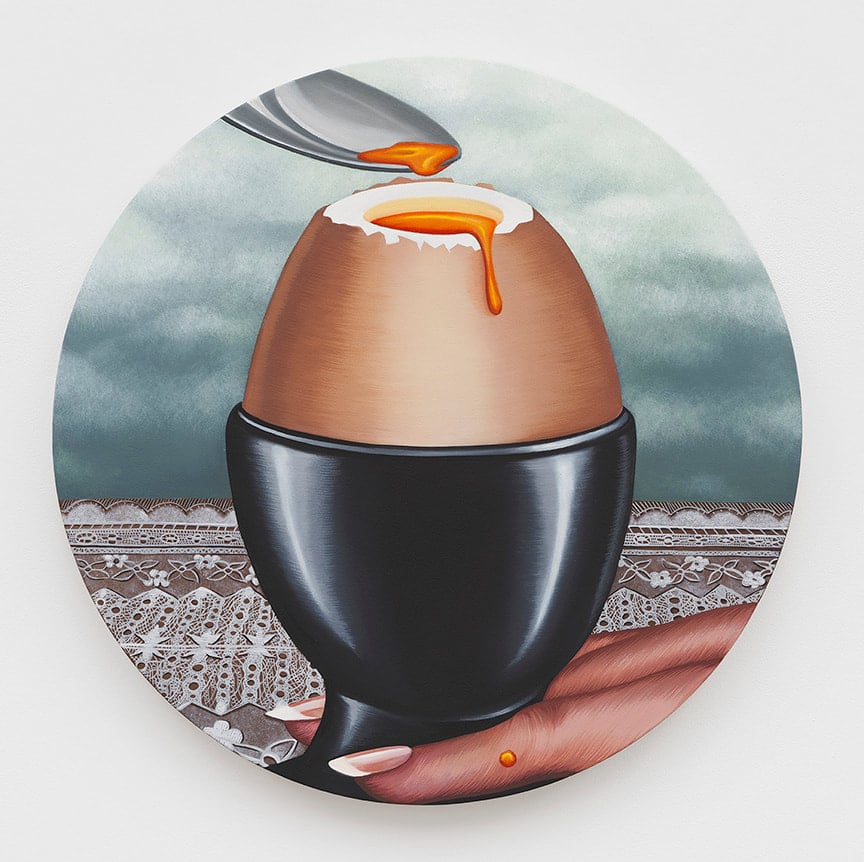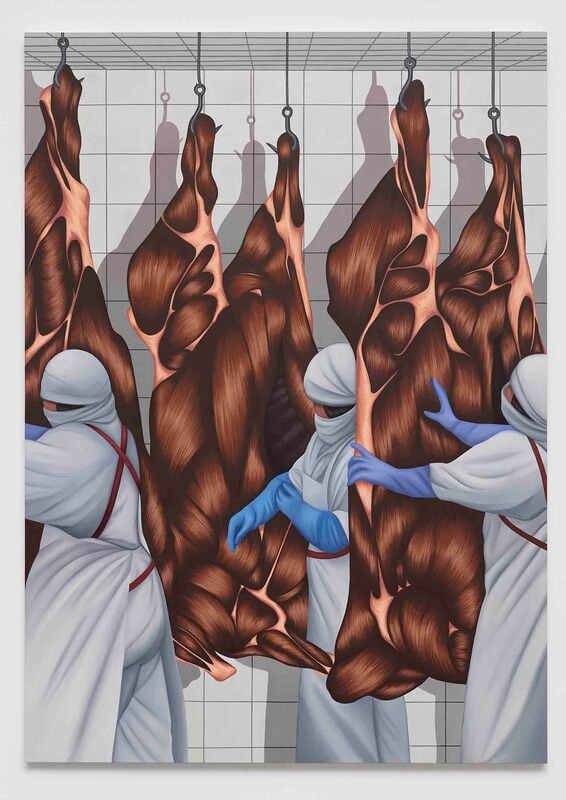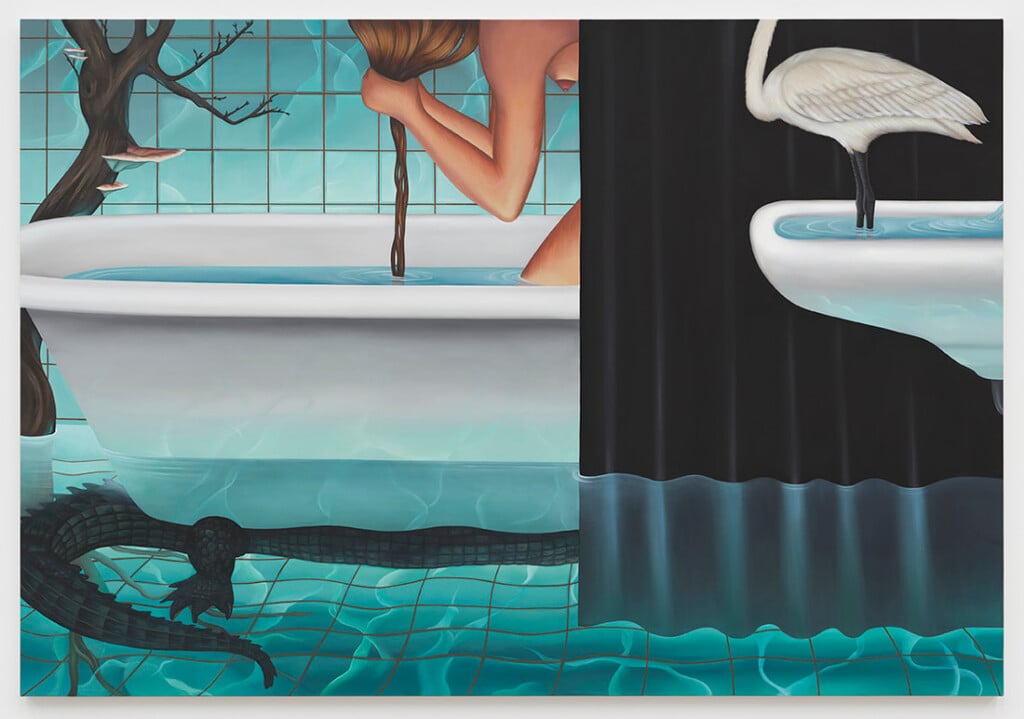
Artist Julie Curtiss builds worlds in which everyday life gradually loses its familiarity. A faceless woman, a head of hair that seems to turn into a living organism, a household object that takes on an unexpected shape: in her works, shifting a single detail is enough to turn an apparently ordinary scene into something enigmatic. Born in Paris in 1982 and now based in Brooklyn, the artist develops a painterly language in which surrealism, irony and pop imagery meet, giving rise to images as seductive as they are unsettling.
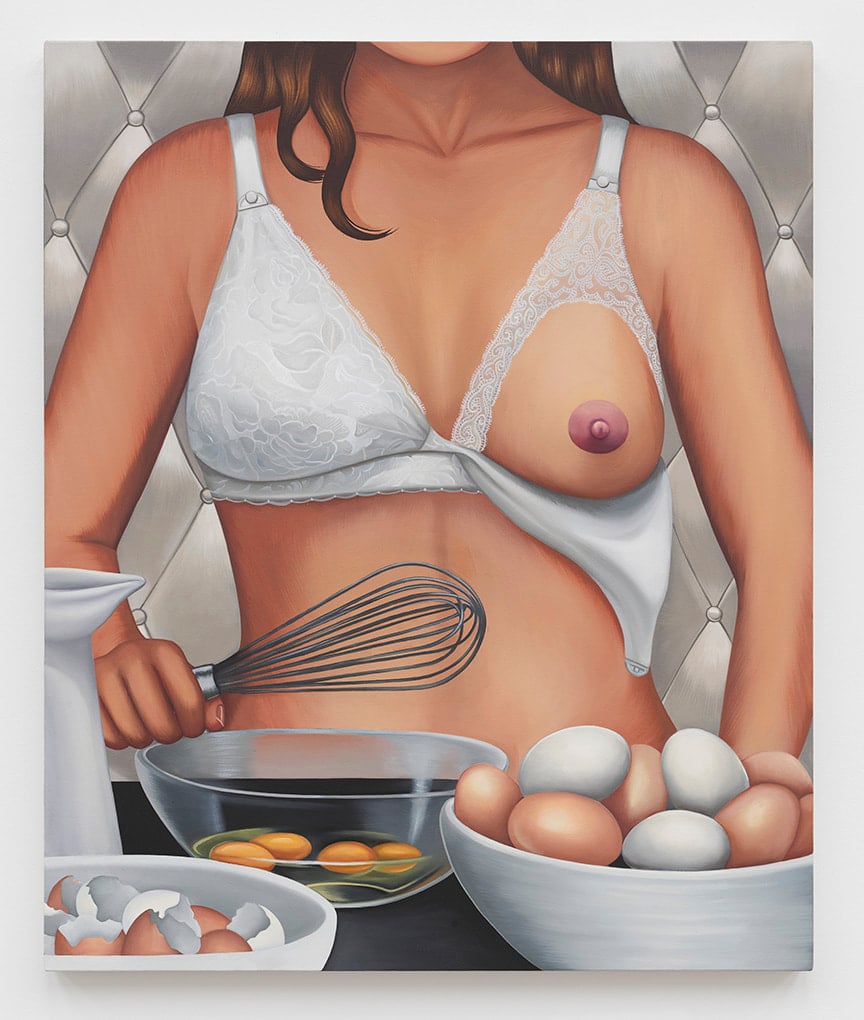
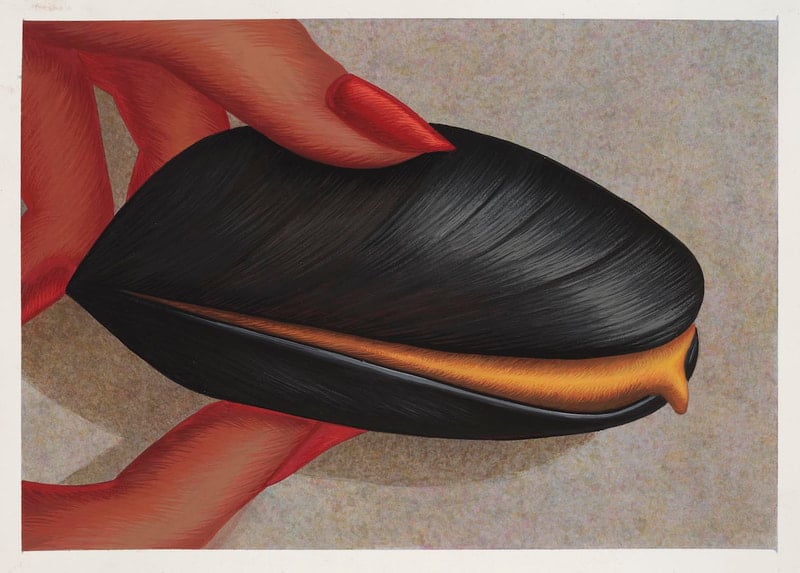
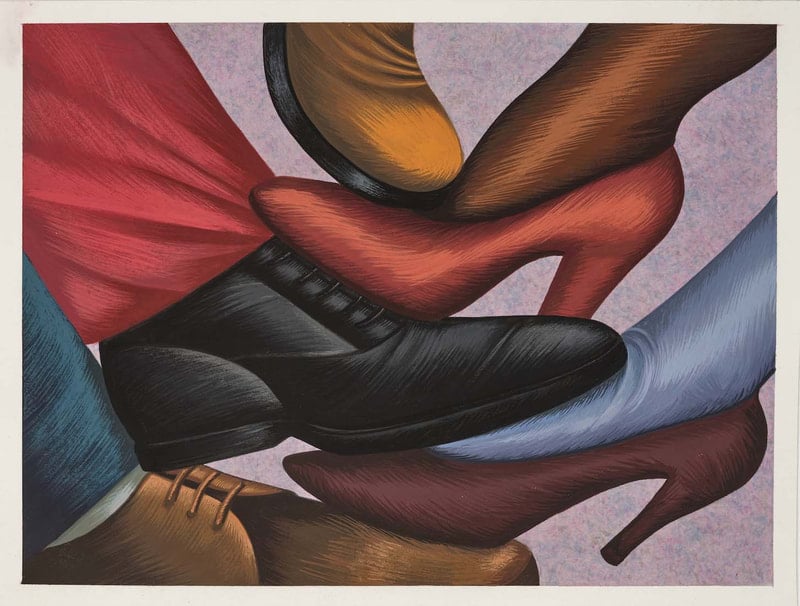
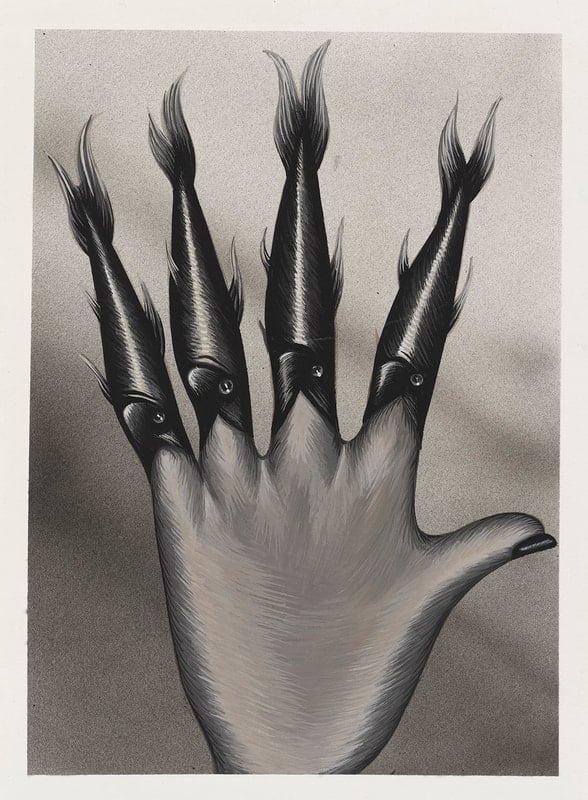
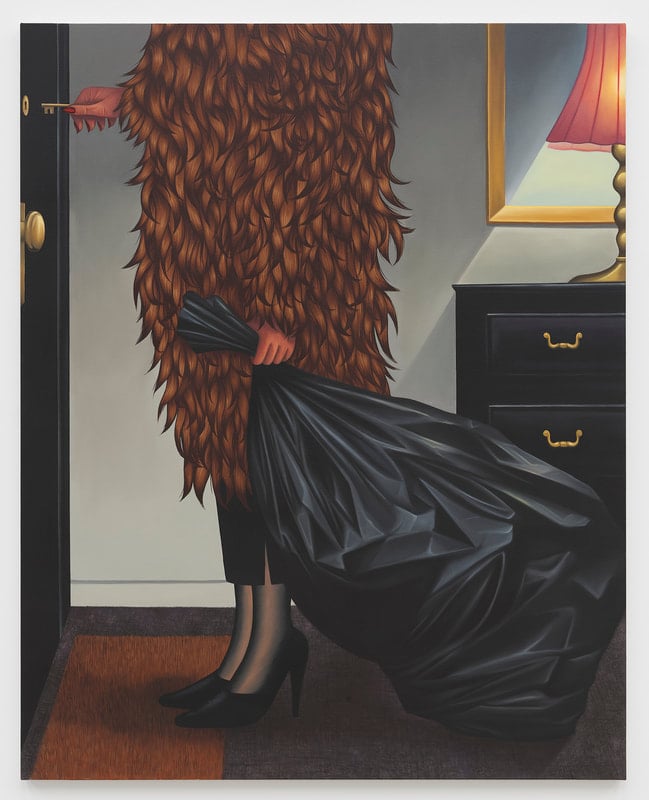
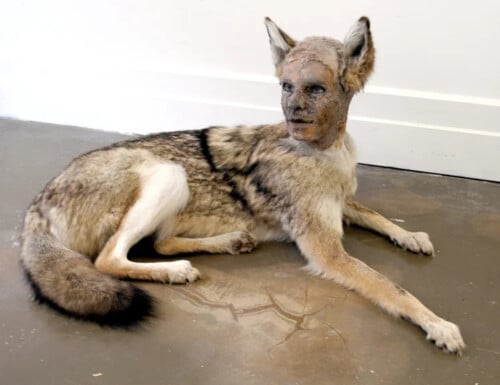
Her canvases often seem to freeze a moment from a story we do not know. The subjects are close-up, cropped out of the frame or stripped of certain details, leaving it to the viewer to reconstruct what is happening. The female body is one of the recurring themes in Julie Curtiss’s works, but it is rarely depicted in its entirety: hidden faces, isolated legs, hands with exaggeratedly long nails and hair that becomes autonomous forms challenge conventional images of femininity.
The distinctiveness of her work also lies in her technique. Curtiss mainly uses oil and acrylic on canvas, as well as gouache on paper, combining compact fields of color, sharply defined outlines and surfaces with an almost illustrative precision. Her painting alternates vivid tones and strong contrasts with more delicate textures, creating a balance between the cleanness of the drawing and the strangeness of the subjects. The compositions, often built through close-ups and unusual framing, seem to draw close to the language of comics and cinema, without giving up the complexity of figurative painting.
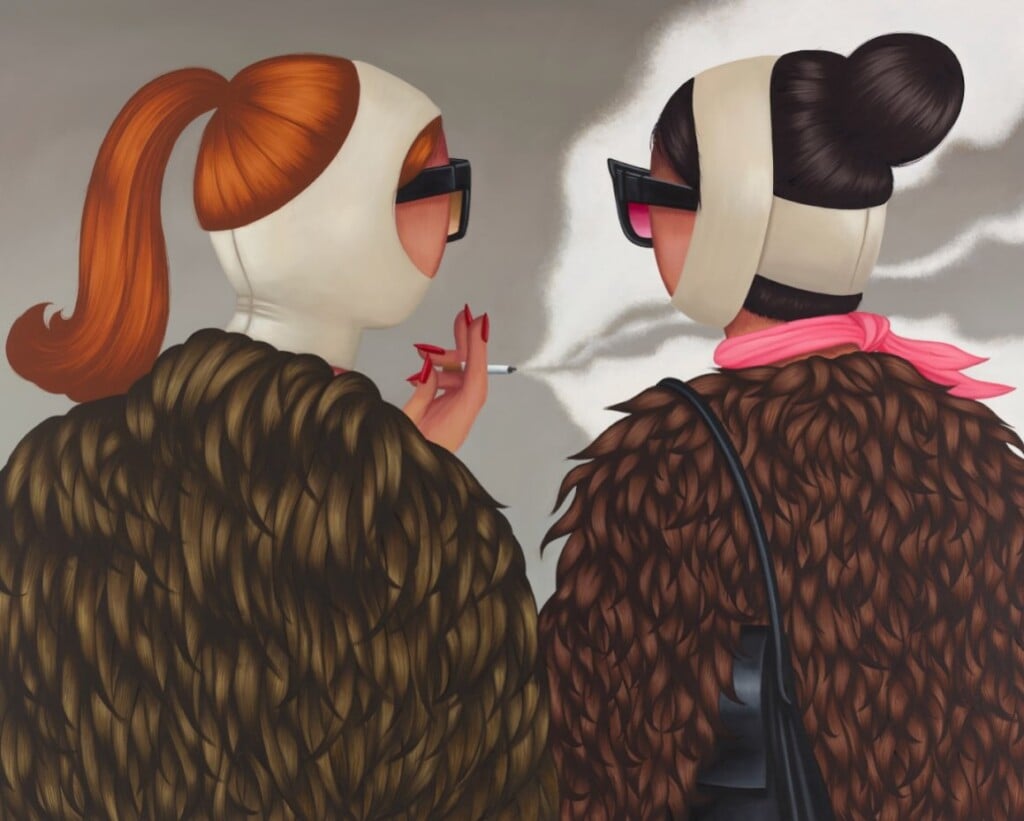
Her references include Surrealism, Japanese pop culture and the Chicago Imagists, an American art movement that blended popular imagery, figurative distortions and dreamlike suggestions. These influences emerge above all in the way the artist places seemingly incompatible elements side by side, turning common situations into small visual riddles. Irony also plays a fundamental role: her images can be amusing at first glance, but almost always conceal something unsettling.
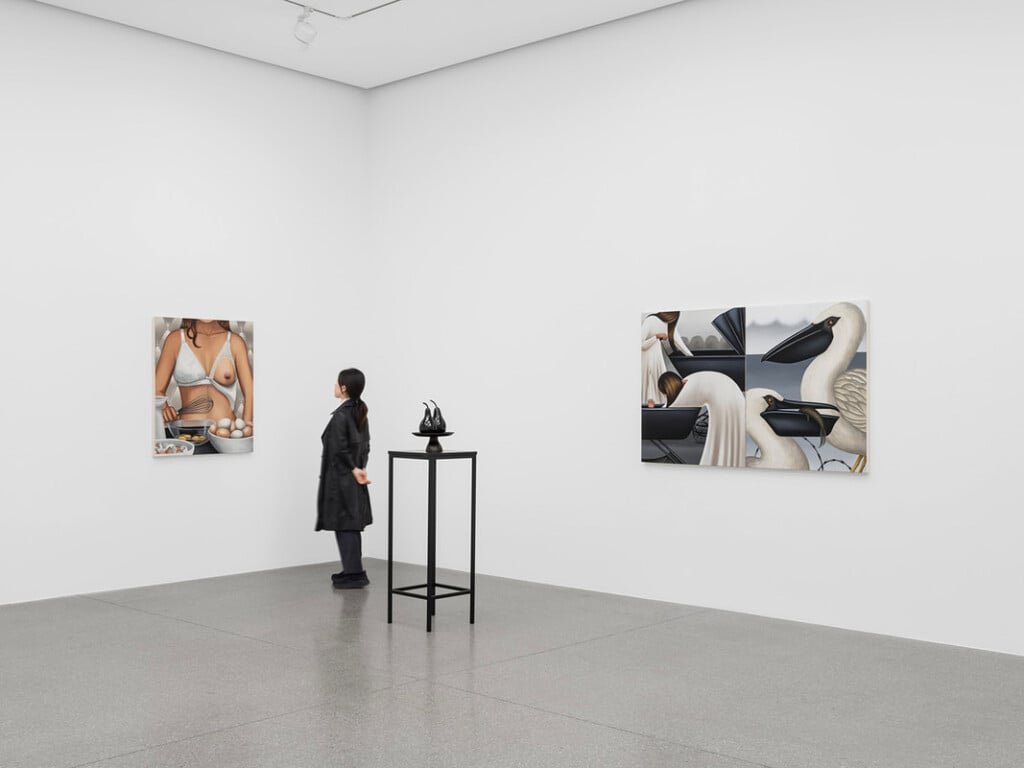
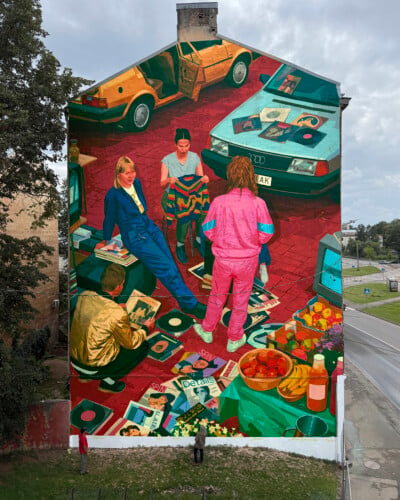
In her most recent works, Curtiss also seems to be expanding the space of her narratives. Whereas in many earlier works the focus was on single details or isolated figures, the more recent compositions introduce more articulated environments, urban scenes and everyday situations in which characters and objects coexist in an unstable balance. It is no longer only what is represented that generates estrangement, but also the way each element relates to the others. Julie Curtiss does not try to make what she paints extraordinary, but to show how much that is absurd, grotesque and unpredictable already lies hidden in the things we know. Her works play with perception, leaving the viewer suspended between attraction and unease. And it is precisely in this ambiguity, where the ordinary meets the inexplicable, that her painting finds its identity.