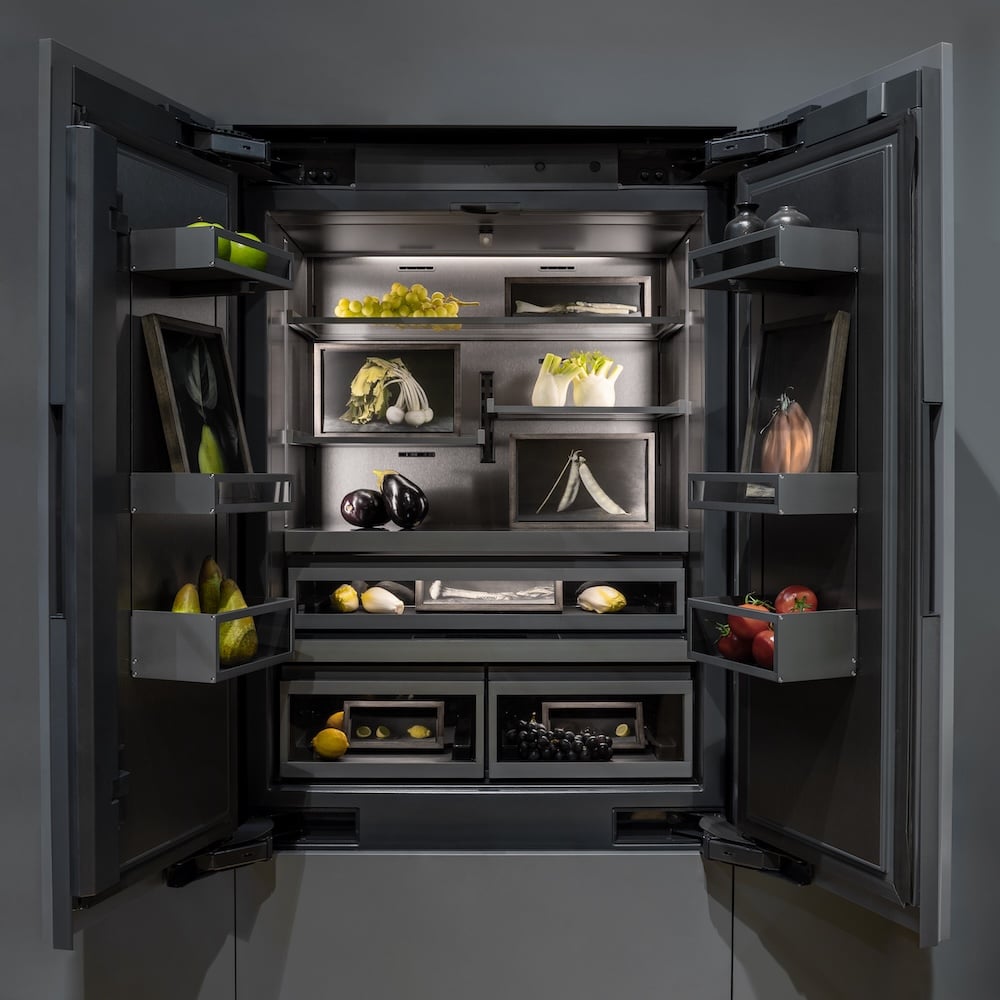
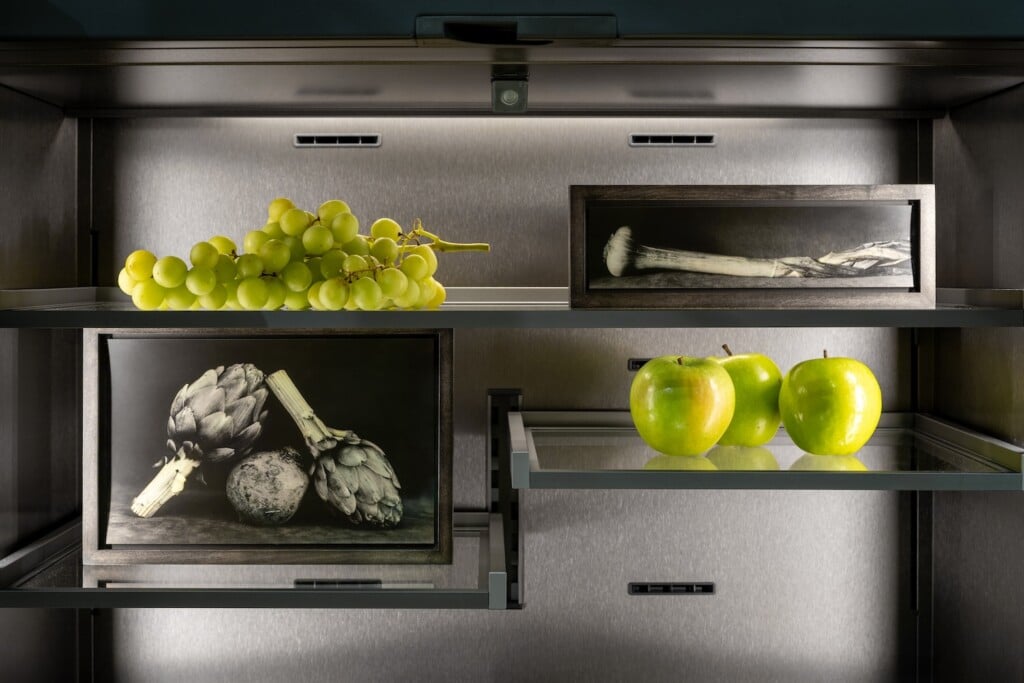
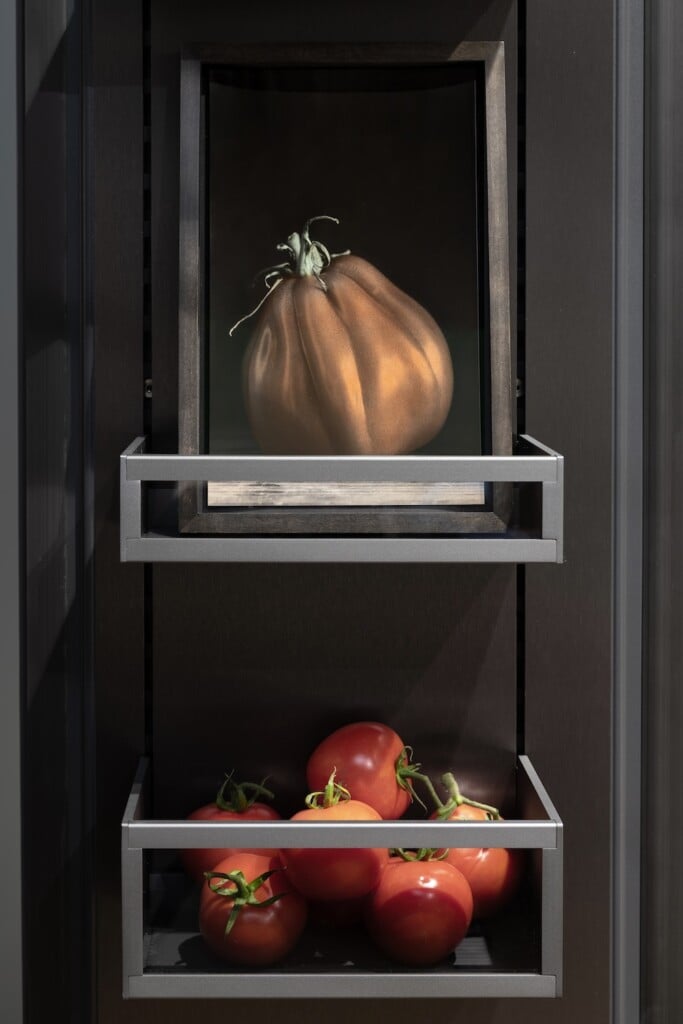
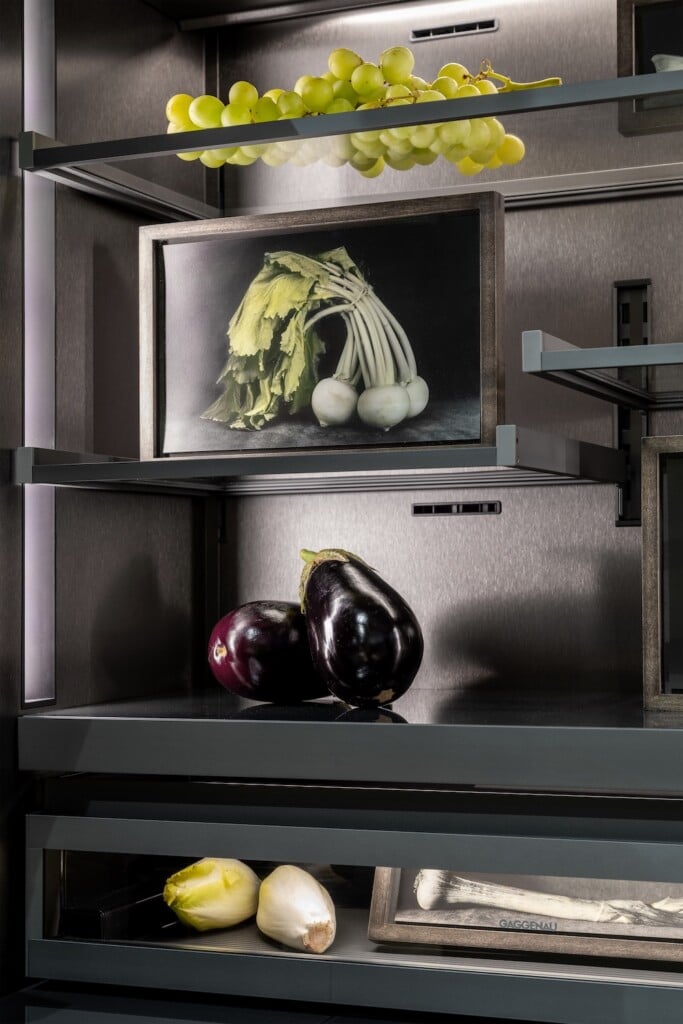
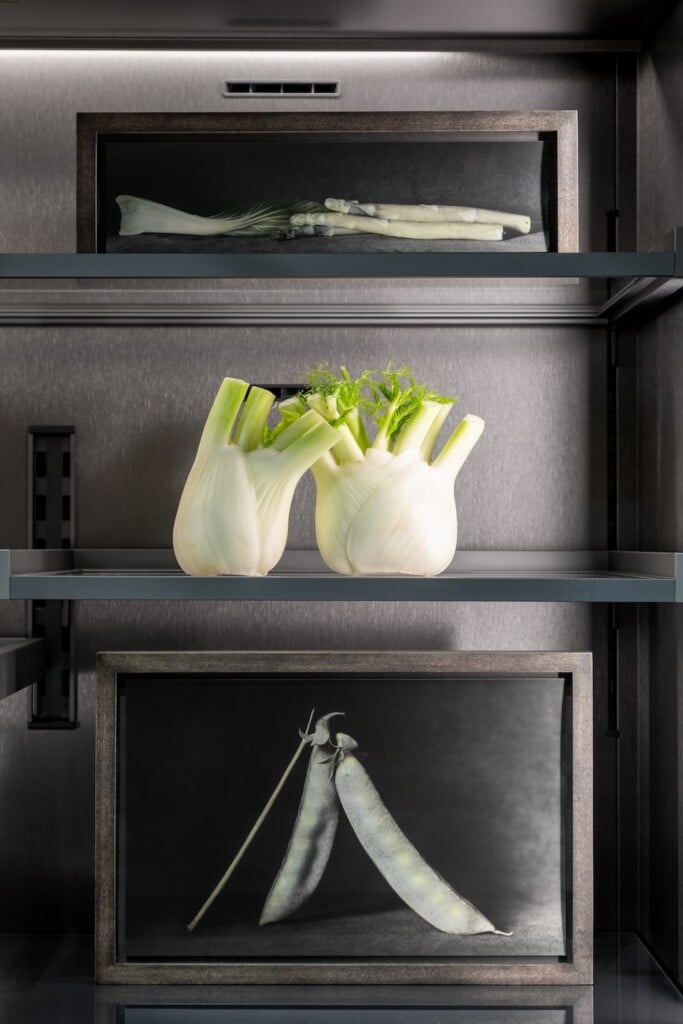
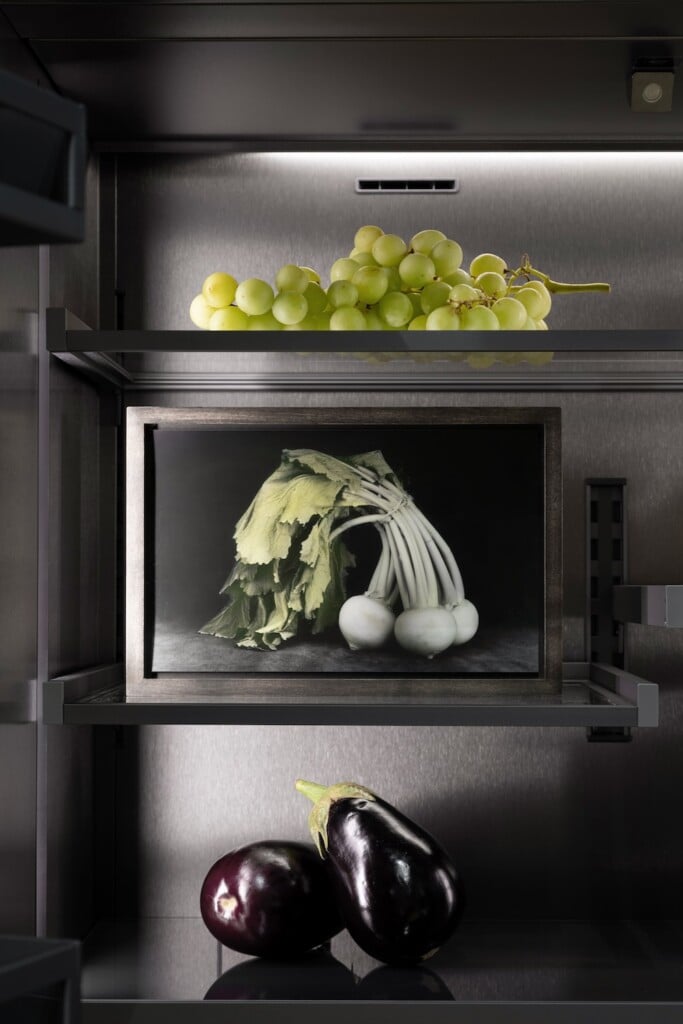
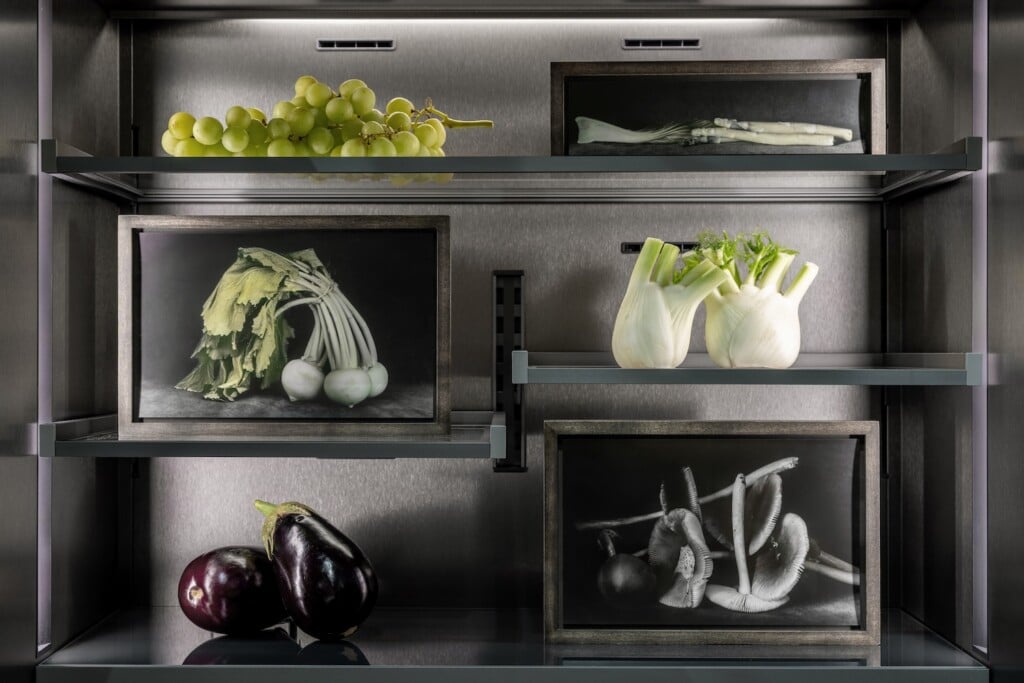
On October 30 and 31, 2026, on the occasion of Artissima Fair, Gaggenau and the DesignElementi Studio showroom in Turin presented D’ENTRO, a project created in collaboration with CRAMUM and curated by Sabino Maria Frassà, which brings the photographs of German photographer and artist Ingar Krauss into a place where we usually look for something else: the fridge, the symbol par excellence of a modern age changed forever by the myth of utility and by new ways of living.
An essential appliance, born to keep food cold, becomes a container and a setting for art, a whimsical display case from which to observe, at leisure, the eye and the hand of the creator. Between representation and reality, the visitor comes into play, curious to find out what hides inside an anonymous and elegant fridge, and their path turns into a multilayered game around Ingar Krauss’s favorite subject.
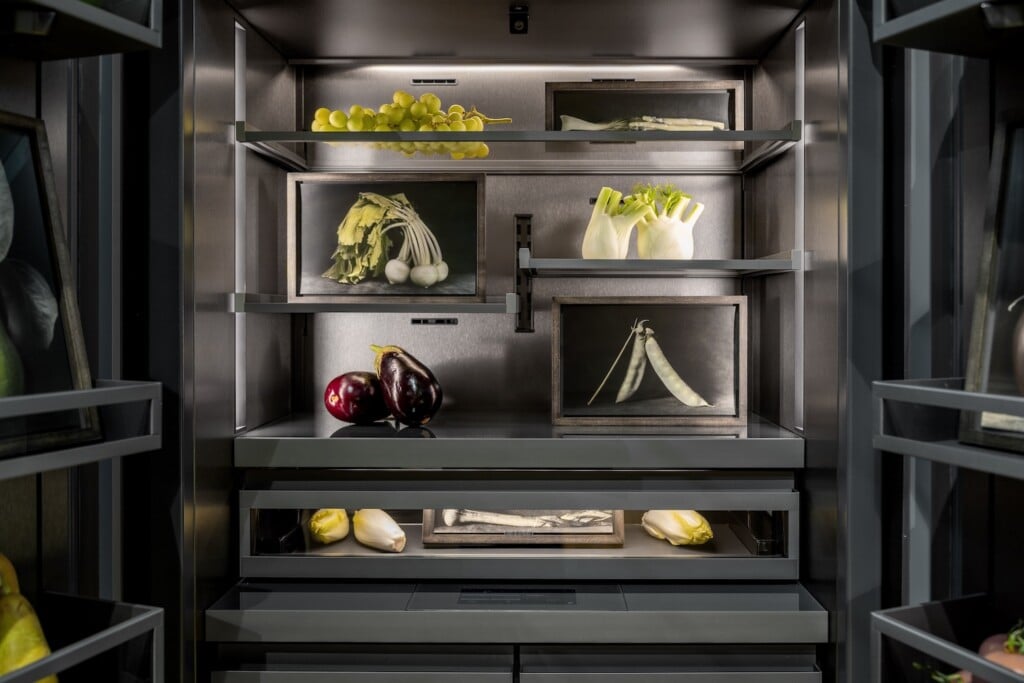
Born in East Berlin, a self taught artist and a firsthand witness to years and decades marked by great change, Krauss has devoted much of his research to still lifes: images full of pathos and handwork, a tribute to art and to a vivid perception of what we feel and see.
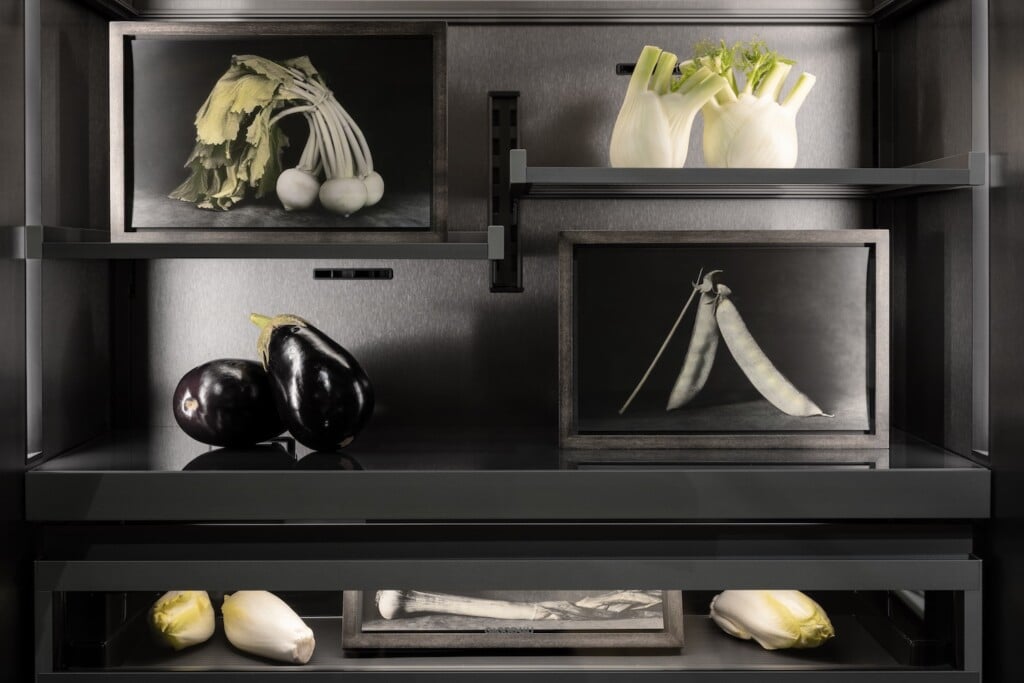
He shoots in black and white, in fact, and then in the studio adds tiny touches of color by hand, with an almost painterly finesse. The result is an analog shot that becomes one of a kind, filtered through gesture and choices that are anything but neutral. Between glazes and an emotional nod to the dark, deep backgrounds of Caravaggio, Krauss makes his own the luminosity and the manual mastery that recall the famous Flemish lesson on the use of color.
The space of photography and the way each shot is taken create an encounter with representation that looks to the past but feels perfectly at home in the present, suspended between the images of contemporary research and the richness of an alternative.
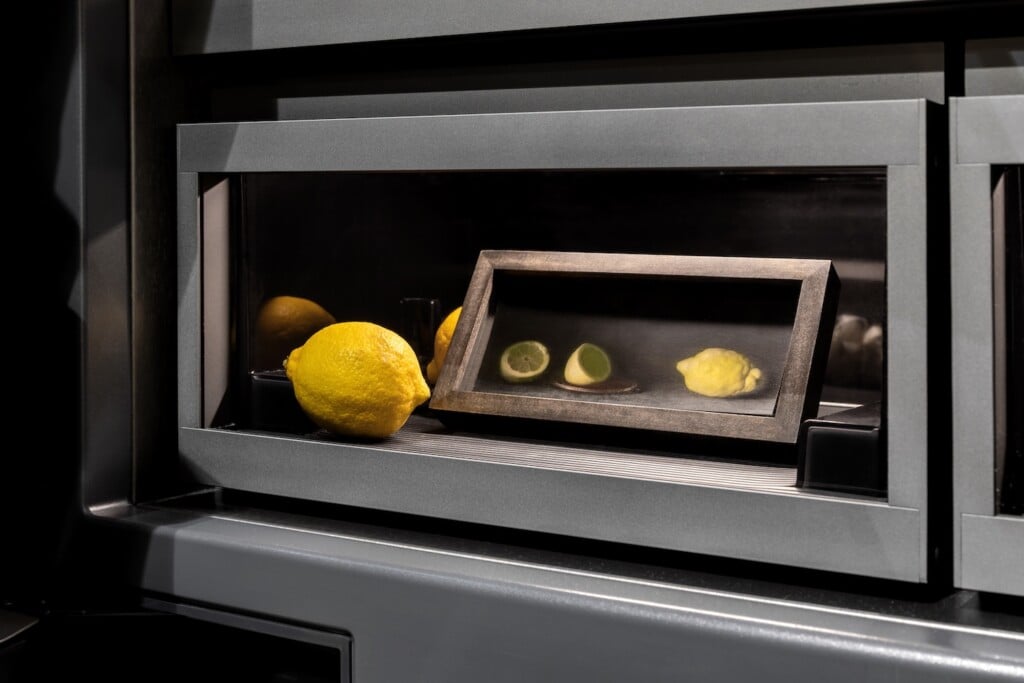
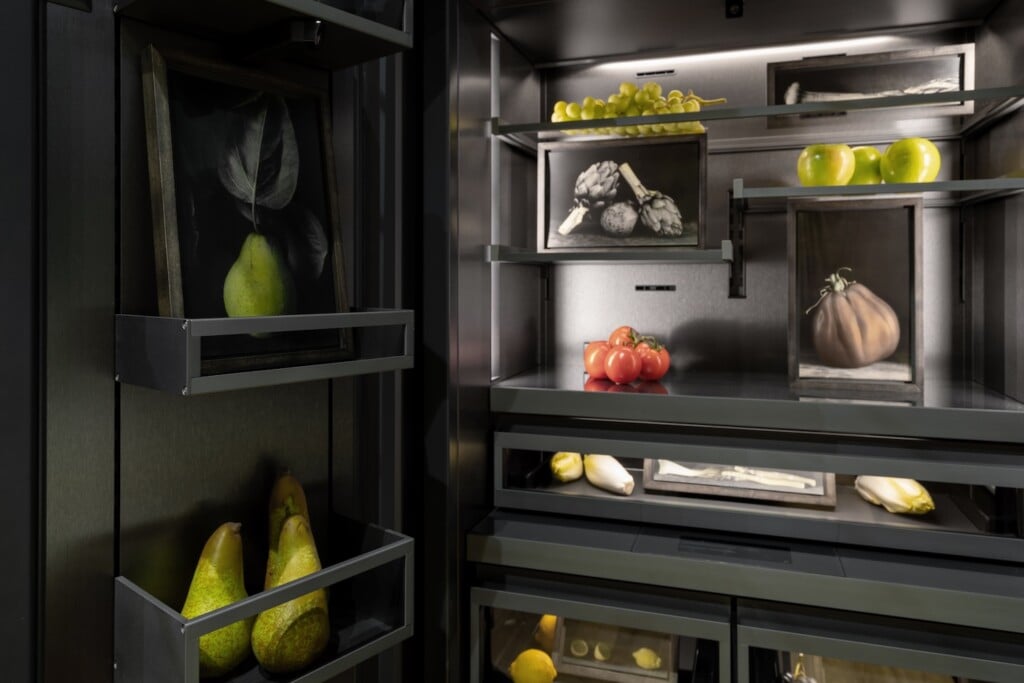
In a context devoted to design and planning, this multilayered game of representation tests the possibilities of an art installation, one that sets out to tickle our timeless fascination with the ever lively and brilliant trick of illusion.
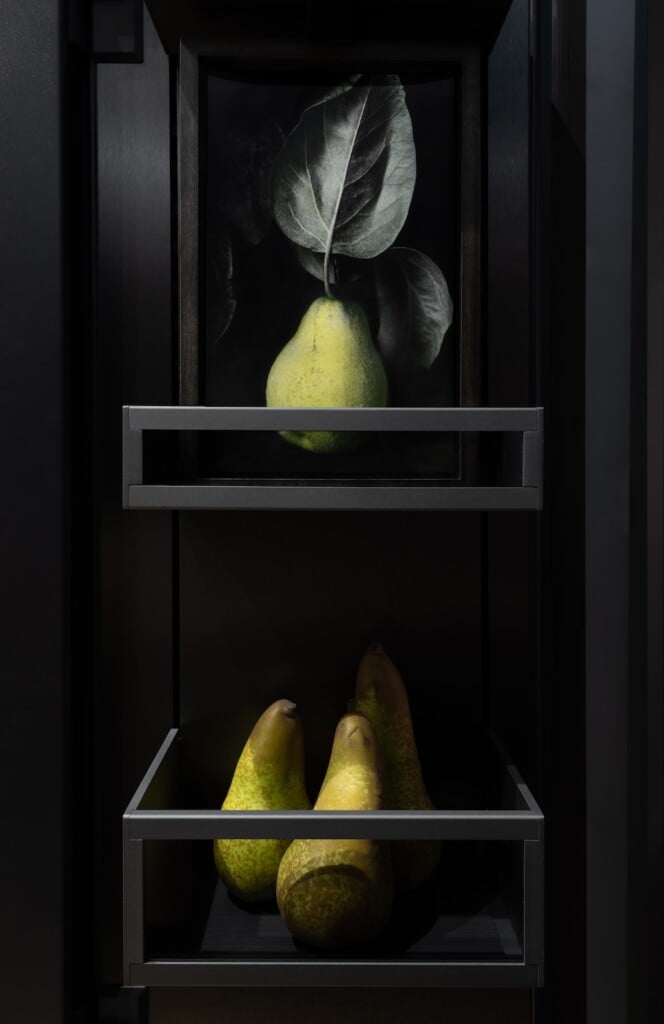
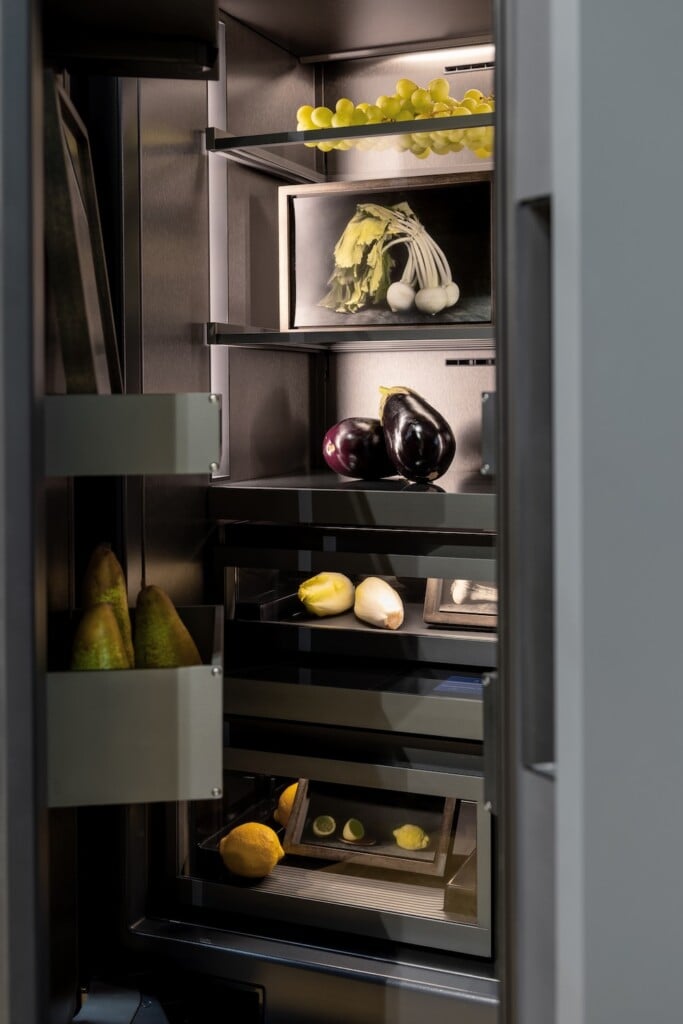
In the raking light typical of his photographs, where the protagonist is always and only a natural element pulled out of its most visceral context, the various objects arranged on the different shelves of the fridge/display case/wunderkammer (a cabinet of curiosities, deliberately bare and minimal) guide the gaze and every personal interpretation into a suspended territory, frozen in the emphasis of an unexpected encounter.
Also read: