It is difficult to find a single word to define Raimondo Rossi.
Of Perugian origins, Raimondo, also known as Ray Morrison, is followed above all for his artistic versatility.
Thanks to his personal styling he has been mentioned several times as a personality to follow for men’s fashion, he has collaborated with several magazines working both as Fashion Editor and as Art Director and, last but not least, he has distinguished himself as a photographer.
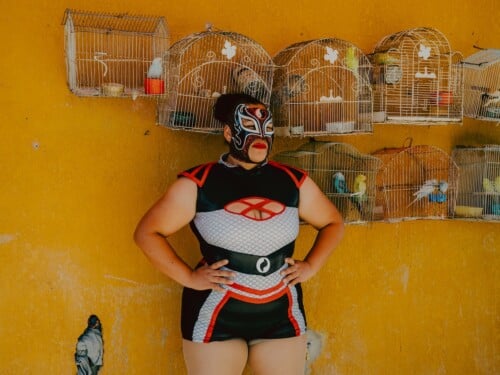
We wanted to focus on this last aspect, captured by his portraits that blend fashion photography with a more intimate and deep photography. In fact, don’t think you’re in front of classic shots, where the focus is almost always on the product and styling, but Raimondo Rossi brings the attention back to the person, to the individual.
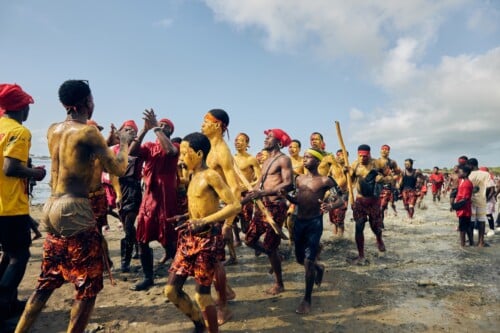
Through his photographs and portraits, we rediscover the beauty of diversity.
To better discover his style, we had the opportunity to ask him a few questions. Don’t miss the interview below!

Tell us about your background, how did you approach photography and is there a particular moment you remember?

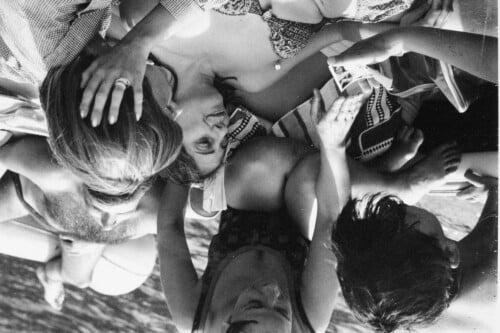
I grew up in Umbria and during the summer vacations, my family and I would travel around Europe in a camper. It was on those occasions that my mother delighted in taking photographs with the legendary Rolleiflex, a film camera. I have always witnessed the process of creating memories through photographs and just a few years ago I decided to enroll in specialized courses. After the theory, I started to practice making reportages backstage of fashion weeks. Today my photography has evolved so much that I’m more dedicated to portraits or fashion editorials.
Even a quick glance at your work shows that you don’t set yourself any limits. You range from fashion to the world of cinema, to photography. But which of these fields do you feel is more yours?
I am sincere. I don’t have any preference because when I shoot I concentrate on the person I want to portray or on the situation I want to tell at that moment. Therefore, whether the person or the situation relates to a fashion or cinematographic event makes no difference to me because I am going to portray a subject or rewrite an atmosphere that strikes me at that moment. I don’t just chronicle but try to tiptoe behind the scenes of stories, sniffing them out. Although these are all three very interesting areas, I feel I have more experience in fashion.
Lately, you’ve been taking shots that pay homage to diversity, photographing the faces of men and women from different cultures. What do you want to tell with these photographs?
Discrimination and injustice are now the order of the day and we artists have a duty to raise awareness and convey important messages. That’s what I try to do with my photography. In my shots, I have often told about discrimination and diversity to make people understand that regardless of skin color we are all equal. I hope that certain values can be received authentically by society, institutions, young people and their families. Today, unfortunately, even some magazines tend to want to turn the spotlight on a particular problem and end up making the opposite mistake.


In your opinion, what is the most important thing to consider when taking portraits?
Each photographer has his own style and his own way of experiencing photography. In my work, I never lose sight of the subject in front of me. At the end of the service, I always explain to the person portrayed that what they will see is an image filtered through my eyes and reinterpreted in an artistic key. It will be his figure, but also mine.
What equipment do you use to shoot? What tools do you take with you when you shoot and why?
I usually use a 3400, a minimal and lightweight camera that offers a good compromise between quality and portability. I have also equipped myself with a pair of LED lights with which I can have fun creating games of shadows and particular images by emphasizing what catches my eye.

Obviously I also have other equipment, such as flashes, but I’m gradually abandoning them because they do not give satisfactory results in portraiture.
Which artists inspire you and which photographers have influenced your work?
I don’t have any particular artists from whom I can say that I have drawn the most inspiration. I appreciate the photographers of a few decades ago, such as Arbus or Bresson, who had theorized photography that was undoubtedly more authentic, real and less polluted by technology. For example, Diane Arbus’s “Man with Curlers” is for me a photo of the century. A true masterpiece.
Last, but necessary question, especially given your range between areas in which aesthetics has a fundamental role. What is beauty for you?

I believe that beauty is the equivalent of wearing magic glasses that allow us to have a special relationship with the things or people around us, without envy and jealousy. Beauty is freedom. Following this perspective we could break with the aesthetic canons established over the years and we could talk about real revolutions. This is what has happened recently with curvy models.
A plus-size body can be enhanced and become harmonious and the same can happen with a more angular face. The aesthetics of David no longer stand out as an absolute truth but become one of the many forms in which the body expresses itself. Aesthetic canons have undergone evolution for some time now and not without controversy. Just think of Armine, a model used by Gucci for commercial purposes and victim of body shaming through insults on social networks.