Noris Cocci moves along a border between landscape photography and advertising, with Brandscape. The Invisible Tragedy of Brands, a photographic project that observes the way brands have progressively stopped interrupting the landscape in order to become part of it.

Cocci, a photographer from the Marche region who has worked for years across photography, communication and social research, doesn’t set out with the intention of photographing brands. In the Brandscape project, he explains that he photographed the world and only later realised that brands were already there: inside the streets, in habits, in objects and in everyday rituals.
Brandscape is neither a catalogue of signs nor a simple critique of consumerism; photography instead becomes a tool for making visible something we normally no longer see, precisely because we have grown used to it.
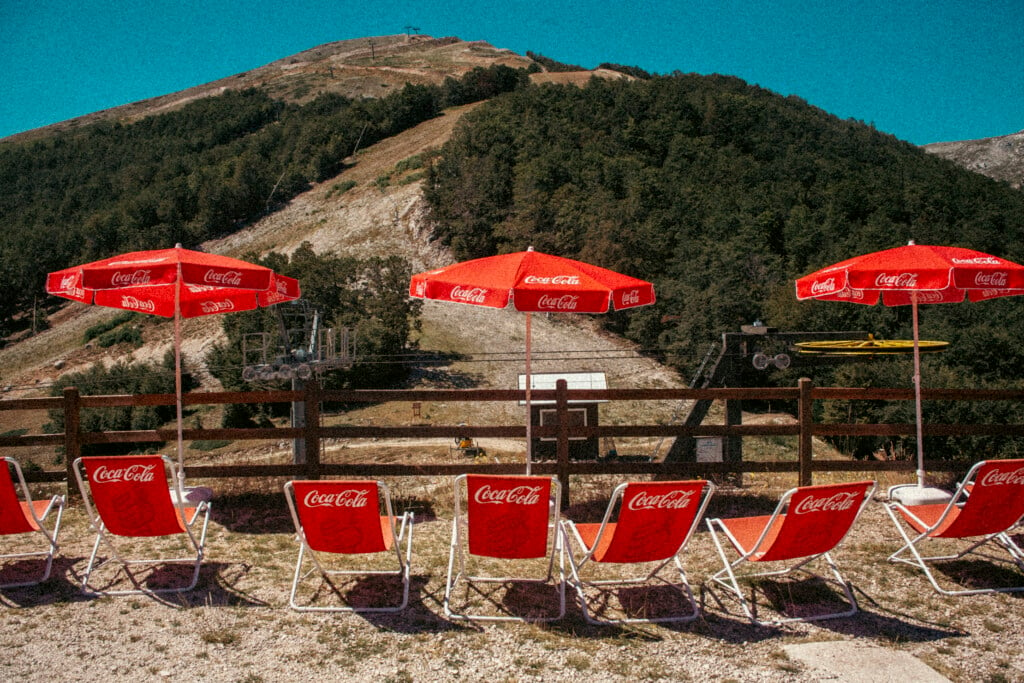
One of the project’s most immediate images shows Coca-Cola umbrellas and chairs set against a mountain landscape. The brand’s bright red cuts across the green and stone of the mountain, appearing almost natural, as if it belonged there. This is the paradox that interests Noris Cocci: we don’t need to see a bottle to recognise Coca-Cola, because the brand has by now attached to itself ideas such as summer, leisure, conviviality and free time, to the point of being able to occupy a place without ever having to show the product directly. In the project, the Scanno photograph is in fact read as a “presence through absence,” where the product disappears while its imagery remains.
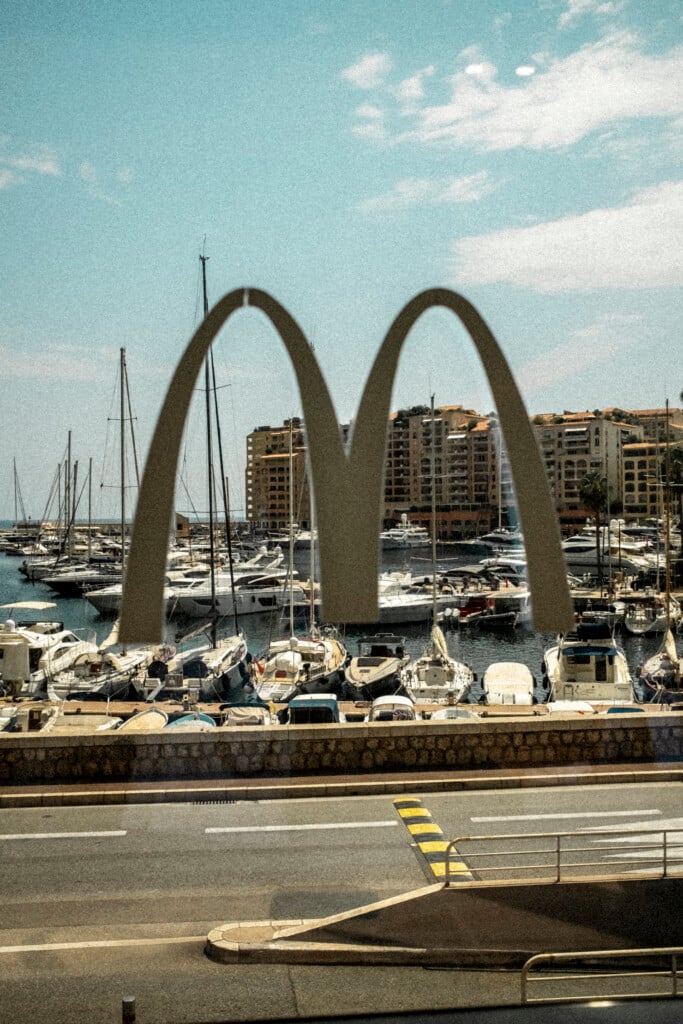
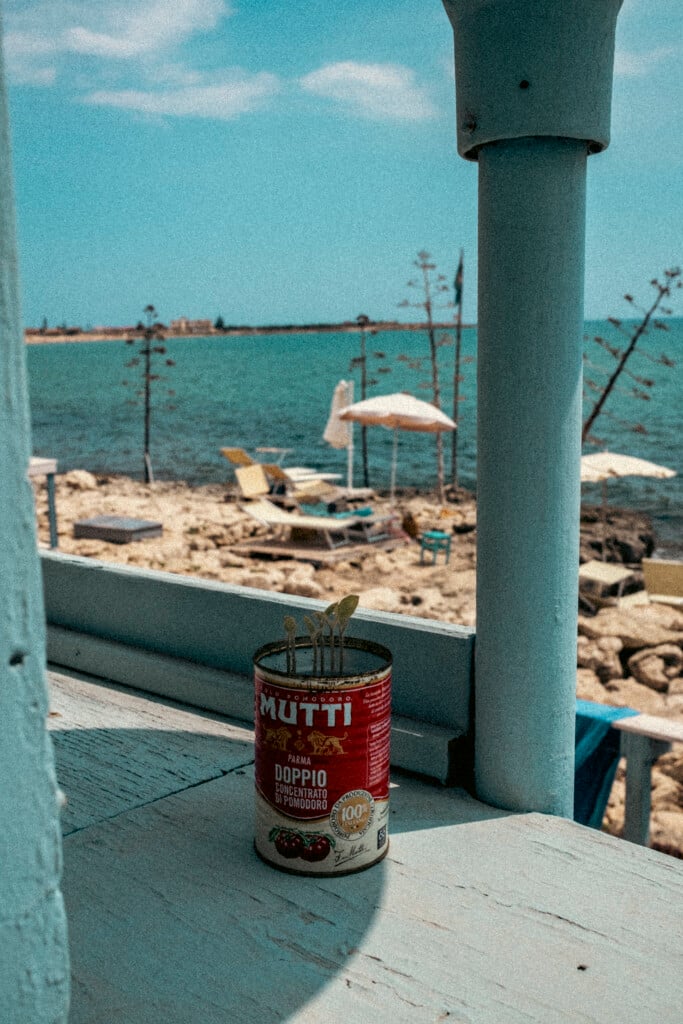
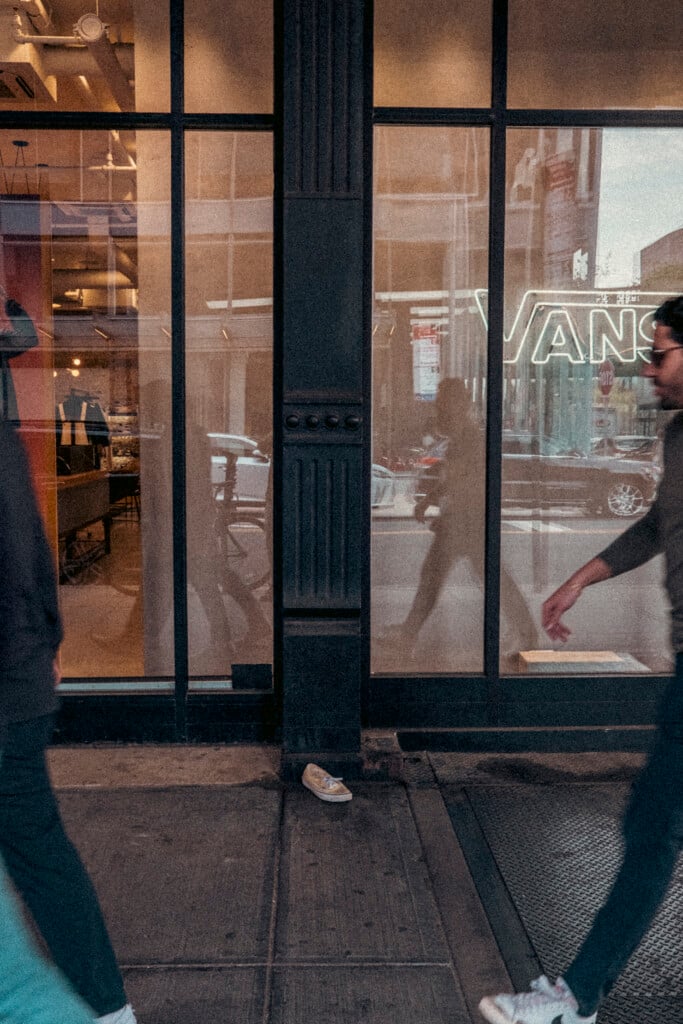
The same dynamic takes on different forms in the other photographs of the series: in Monte Carlo, for instance, the McDonald’s logo becomes almost a frame through which to view the harbour and its yachts. In New York, a shoe abandoned in front of a Vans store places, within the same frame, the promise of the product and what remains once that promise has ended. In Sicily, meanwhile, an empty Mutti tin is reused as a plant pot, and the packaging is no longer advertising but an object that has entered domestic life.
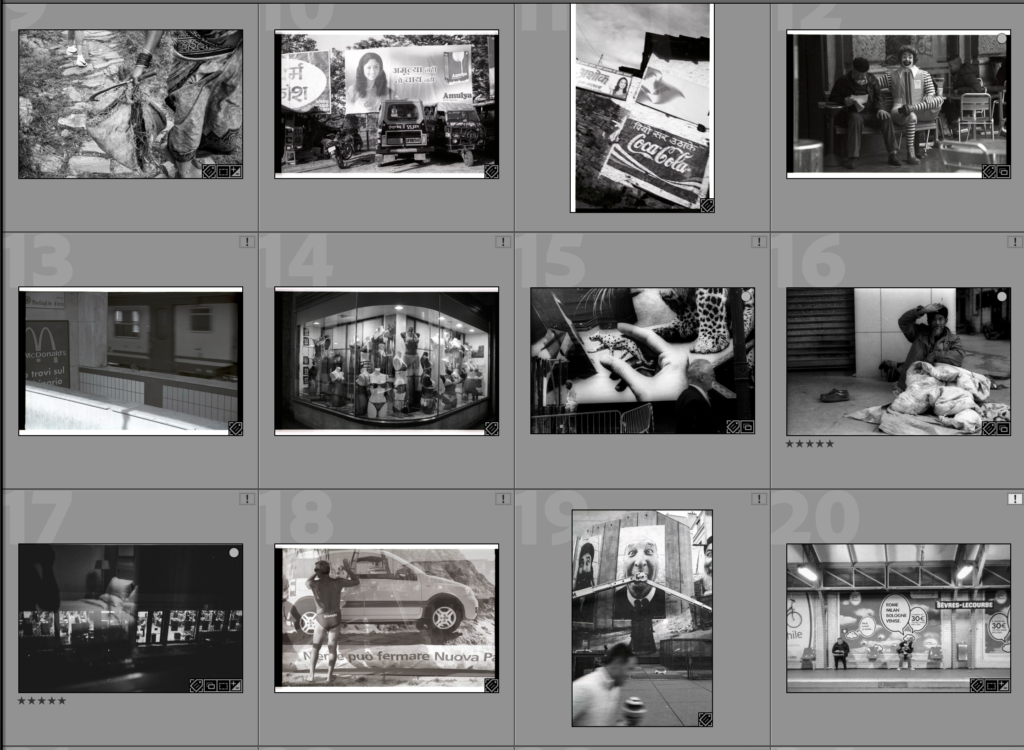
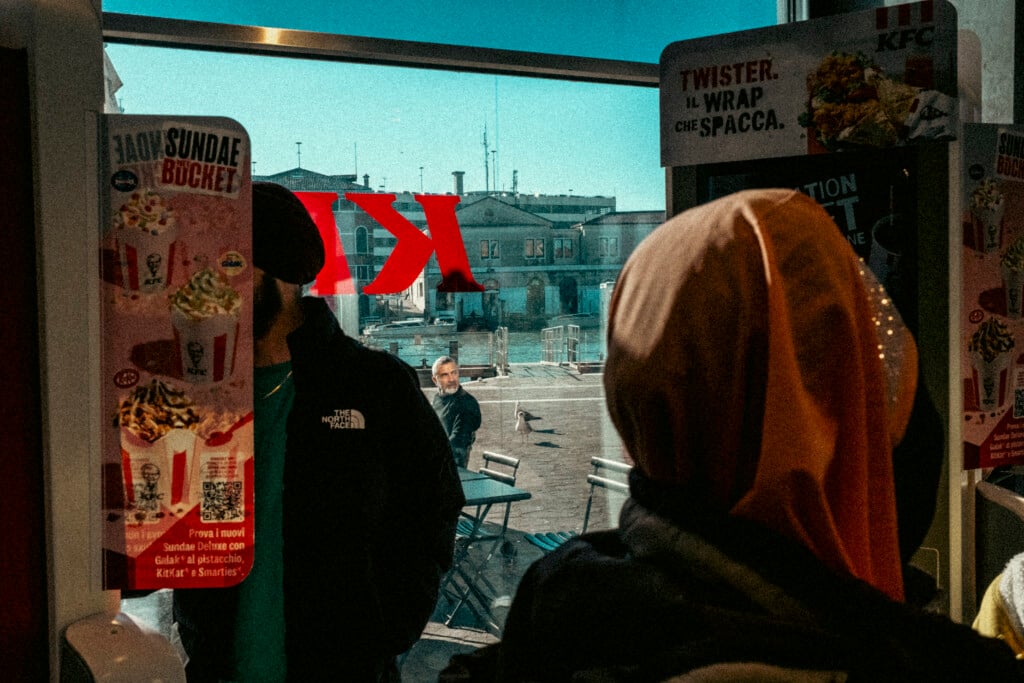
The photographer doesn’t necessarily look for the spectacular logo or the constructed image; on the contrary, he often works with the ordinary, situations we might pass through without paying attention, but which photography manages to isolate and make strange again. The project moves through New York, Monte Carlo, Scanno, Sicily, Chicago and Venice, connecting very different places through a shared presence: that of brands as elements capable of organising space, behaviour and even memory. The commercial and the everyday thus end up sharing the same visual plane.
This inevitably leads to a question that is anything but simple: how much of the imagery through which we interpret reality still belongs to places and communities, and how much has been progressively produced and occupied by brands? In our contemporary moment, one of the most interesting things a photograph can do is not show us something new, but force us to see differently something we thought we already knew.