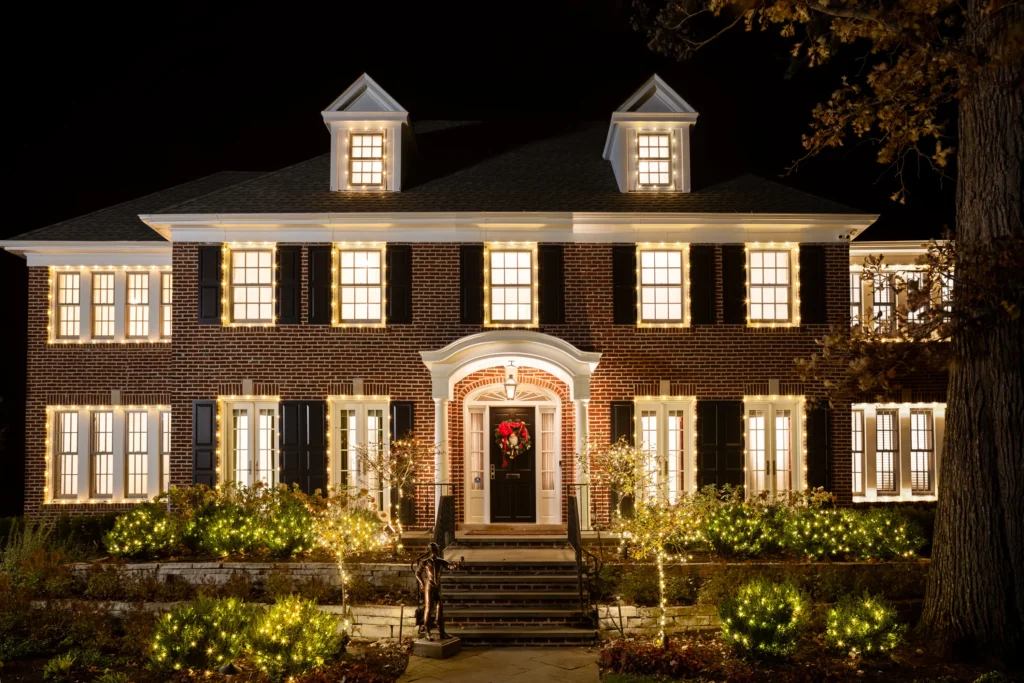
Carrie Bradshaw’s apartment, the Friends living room, the Goonies’ villa, or the two-story house with a garden where Kevin from *Home Alone* defended Christmas. A recent study by Clever on new real estate trends raised a seemingly simple question: Could the characters from our favorite films and series afford the homes they live in today?
In most cases, the answer is no. Yet, those homes helped define the archetype of the “ideal home” for an entire generation. A generation now facing an increasingly inaccessible housing market. But the desire hasn’t faded. On the contrary: it has transformed.
The first episode of Cantiere Scandurra, the new podcast by Scandurra Studio for Collater.al on the behind-the-scenes of the changing city, starts here. Alessandro Scandurra, architect and founder of Scandurra Studio, offers a perspective suspended between what we wish to inhabit and what we actually live in. And investigates a phenomenon that’s becoming increasingly evident: real estate voyeurism.
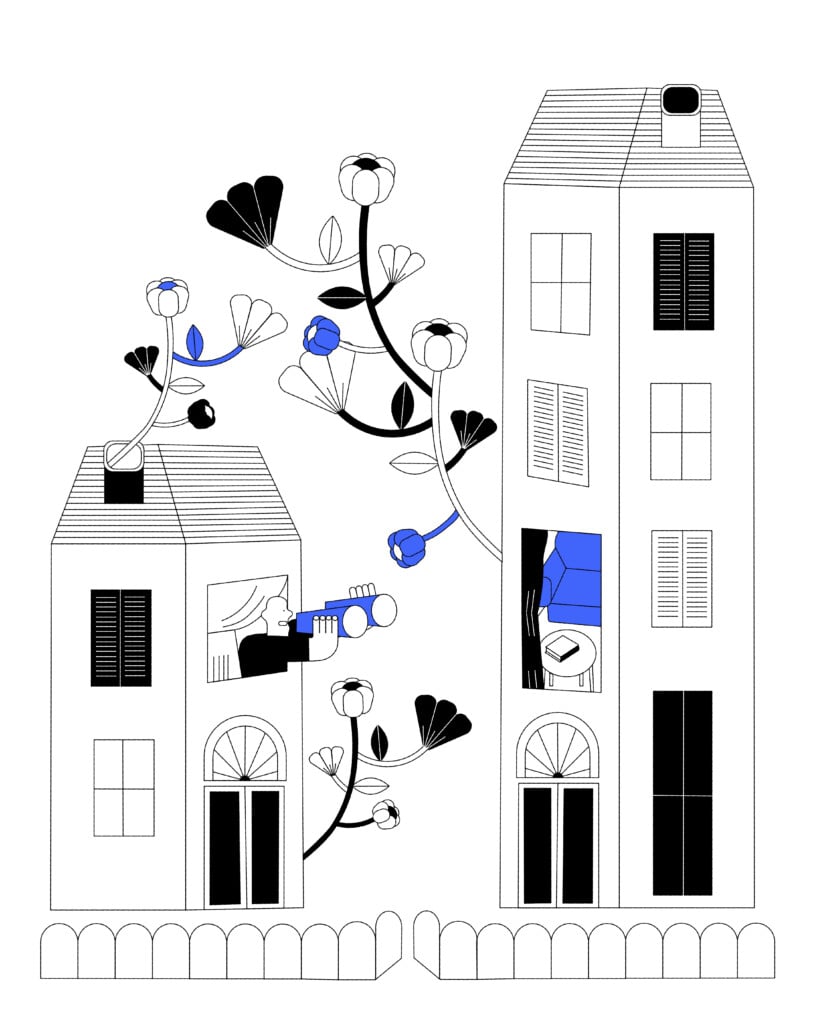
In recent years, so-called property shows — programs showcasing dream homes, miraculous renovations, and flawless interiors — have captured an ever-growing audience. In Italy alone, home-related TV channels saw a 42% increase in average viewership between 2020 and 2024. On platforms like TikTok or YouTube, real estate tours are among the most clicked content. What are we really looking for when we lose ourselves in the excess and details of impossible homes?


Looking Inside: An Ancient Instinct
Think of Hitchcock’s Rear Window or Edward Hopper’s paintings. In that lit window, in that life observed from afar, there is something that captivates us. It’s a quiet desire, pushing us to imagine a possible elsewhere. Scandurra calls it “a silent desire to belong to another way of living.” For the architect, it’s not just voyeurism: it’s also nostalgia, projection, recognition. It’s the same impulse that leads us to scroll through other people’s lives on social media, while unknowingly exposing our own.
In Italy, for decades, the home has symbolized security, identity, and achievement. Bricks as investment, inheritance, certainty. Today, however, for many young people, the home is no longer a destination, but a temporary, mobile, often precarious condition. And so, the meaning of living changes too: it’s no longer about owning a space, but feeling welcomed, even if only for a while.


From Ownership to Belonging
The key, for Scandurra, is “To belong, more than to own.” To recognize oneself in a color, in a mess, in repeated gestures and everyday rituals. To build a sense of home that is no longer fixed or final, but fluid and personal. It’s a silent but profound cultural shift.
And he adds that today’s paradox is clear: cities attract more and more people, but the way we design and inhabit homes remains anchored to a past that no longer exists.
Housing types are still designed for stable, owning, resident families, while real lives are often made of transitions, cohabitations, returns, and new beginnings.
Meanwhile, the housing market struggles to find the right language: on one side, the spectacular dream of property shows; on the other, a reality of limited budgets, shared spaces, and new forms of living together.

Spaces That Activate Possibilities
At the studio, says Scandurra, projects are emerging to address this complexity. New student housing and temporary residences, conceived not just as places to live, but as relational ecosystems. Spaces that encourage encounters, the unexpected, exchange. Where home is no longer a private refuge, but a social device, akin to a plaza or community. It’s no longer (just) about comfort, but about possibility.
Property shows depict static perfection: silent, empty, often unattainable homes. But life is made of rooms that are too small, walls that can’t be torn down, noisy roommates, shared bathrooms. Yet we keep watching and desiring.
Not out of naivety, but because that aspiration keeps a question alive: what do we really want from a home?

A research department within Scandurra Studio, founded by the architect, seeks to answer this question. It’s called Backstage, because, just like behind the scenes of a big show, the research focuses on the dynamics, mechanisms, and phenomena driving the major changes in the city — to propose new solutions.
Perhaps the perfect home doesn’t exist. Or maybe, it exists every time we feel at ease within an imperfection, in what Scandurra calls “an alchemical space”: a place where we mix with others and, in doing so, open ourselves up to new perspectives starting from our personal space.

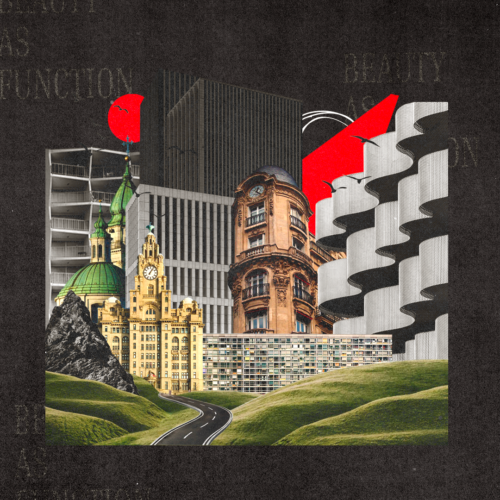
Cover image by Chiara Palandri aka @chi_illustra