Article by Floriana Savino
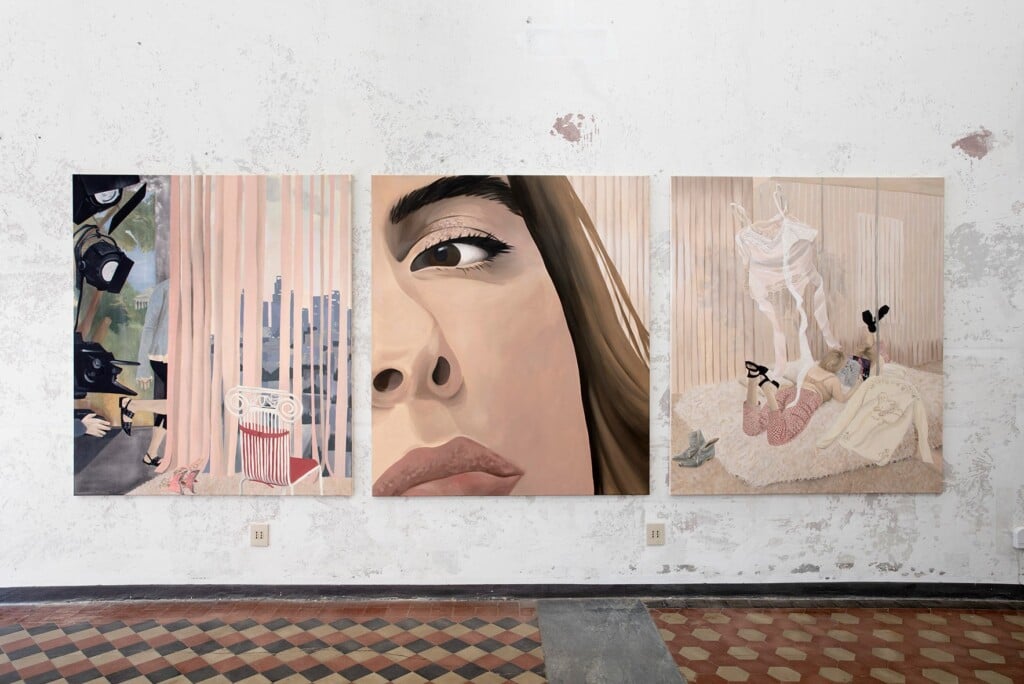
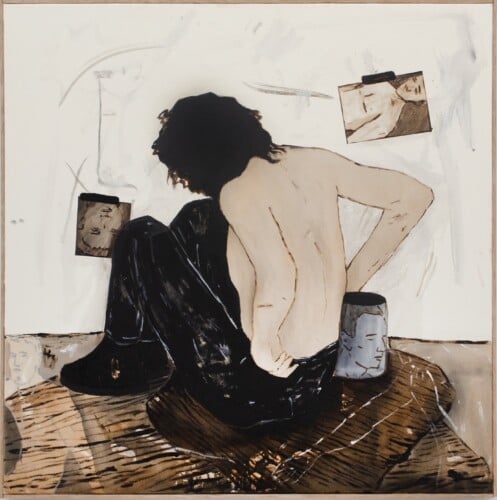
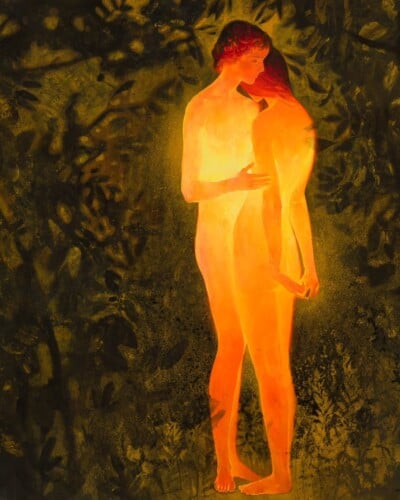
On the occasion of Milan Art Week 2026, the visual artist Romane de Watteville (Lausanne, 1993) arrives in Italy for the first time with her solo exhibition I’ll miss you when I scroll away at the Istituto Svizzero, on view until July 4, 2026.
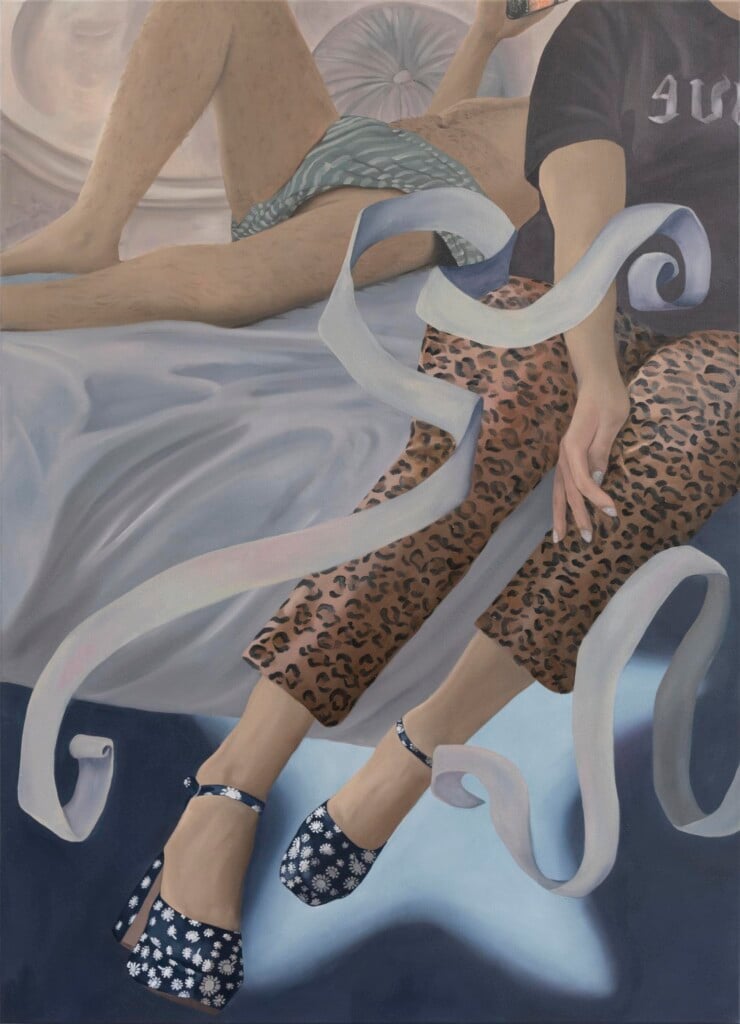
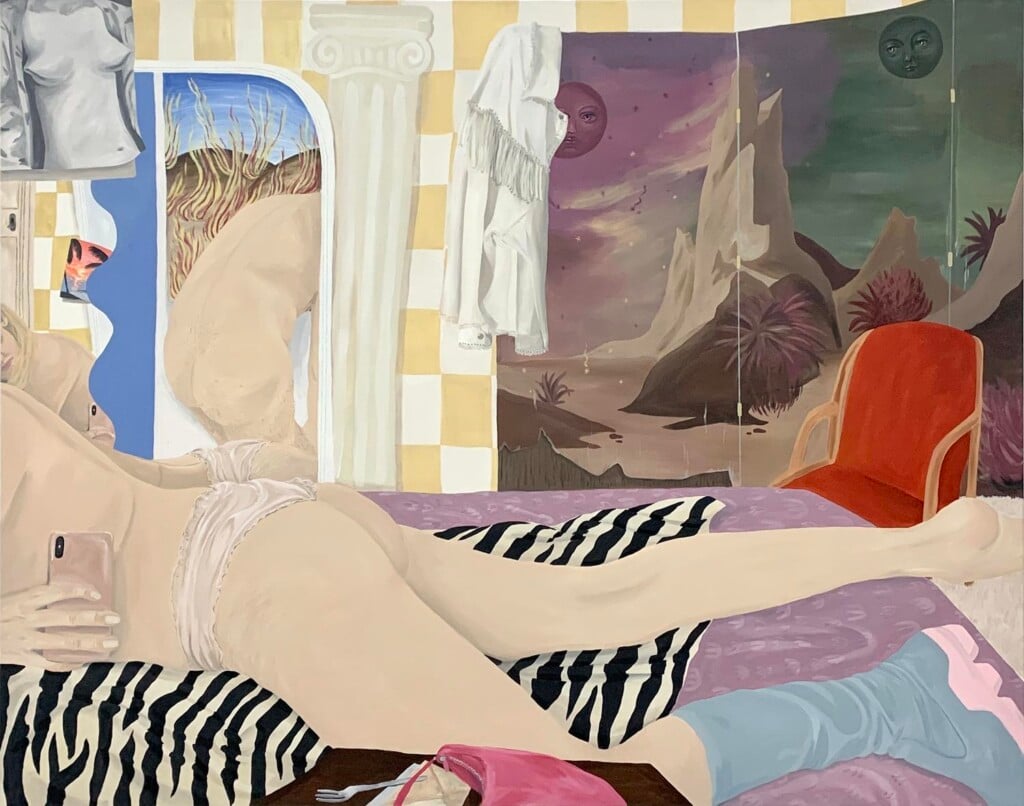
As sarcastically anticipated by the chosen title, the exhibited works engage with an increasingly dominant and invasive virtual and social reality. The influx of a vast amount of information, sounds, and images that overwhelms an hyperconnected everyday life offers an opportunity to investigate feelings of loss, joy, nostalgia, and distress characteristic of our immersive present time.
In an interview given in 2011 to critic and journalist Richard Capes, the great Mark Fisher had, in this regard, perceptively observed:
Depressive hedonia was […] an expression I used to reflect on the form taken by depression in a world where stimulation is always available […] depression is usually described as a case of anhedonia […] I, on the other hand, had the impression that for those kids it was almost the opposite case, where pleasure is so readily available that […] it is precisely this availability of pleasure that causes depression. […] a model of pleasure […] consumerist, which does not increase people’s self-esteem, sense of well-being or […] sense of engagement with things. Instead, there are only small repetitive bursts of pleasure. And one of the consequences produced by such a situation is the disappearance of so-called productive boredom. […] In twenty-first century culture, the availability of constant low-intensity stimulation precludes a certain kind of boredom and precludes a certain kind of alienation, but I think it also produces a general feeling of unconscious disengagement.
Along the trajectories of a time increasingly marked by AI, the melancholic and colorful “end of the party” offered by Romane de Watteville questions the viewer about the true condition of the most authentic emotions, as we are immersed within a transparent and powerfully suffocating bubble.
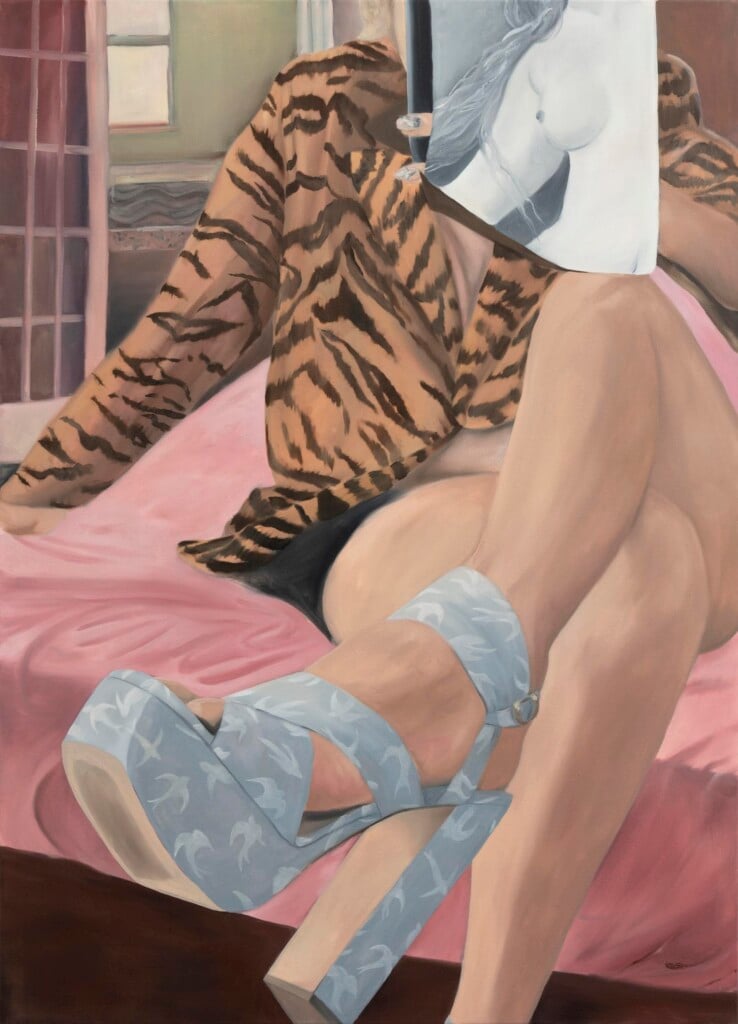
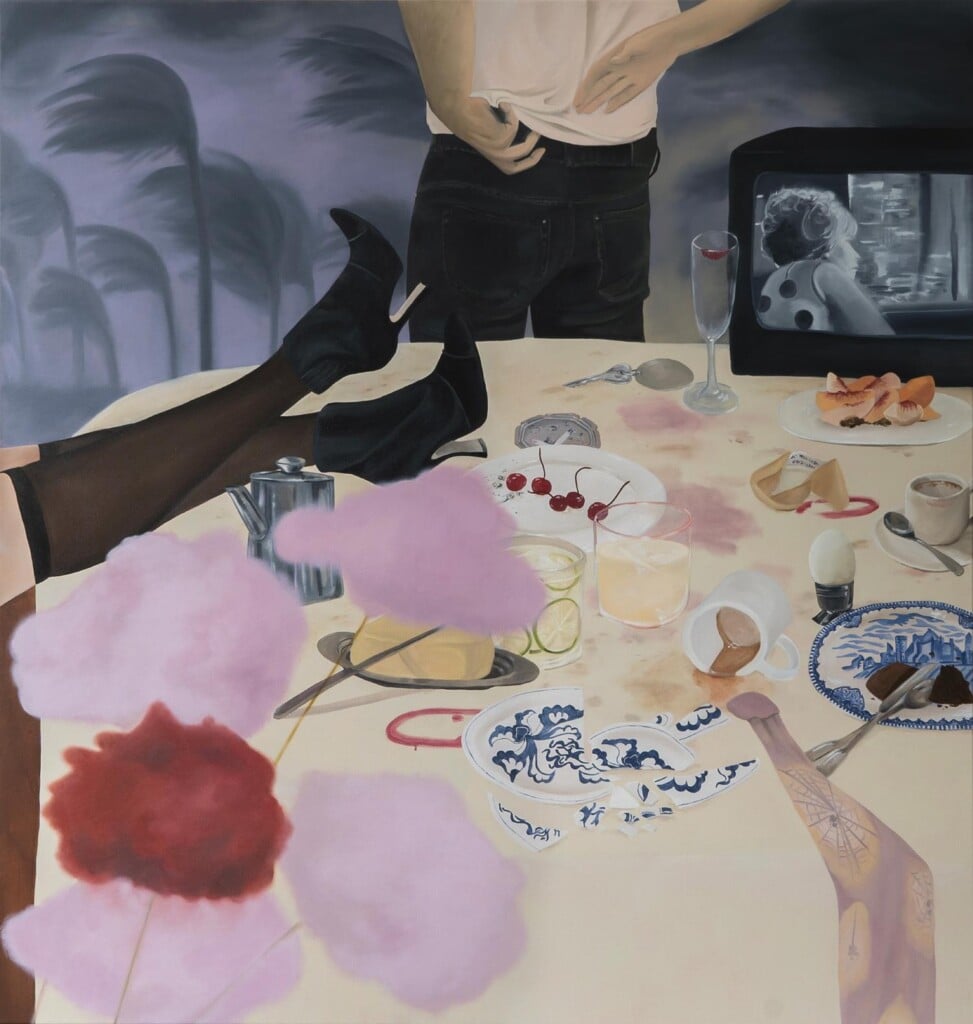
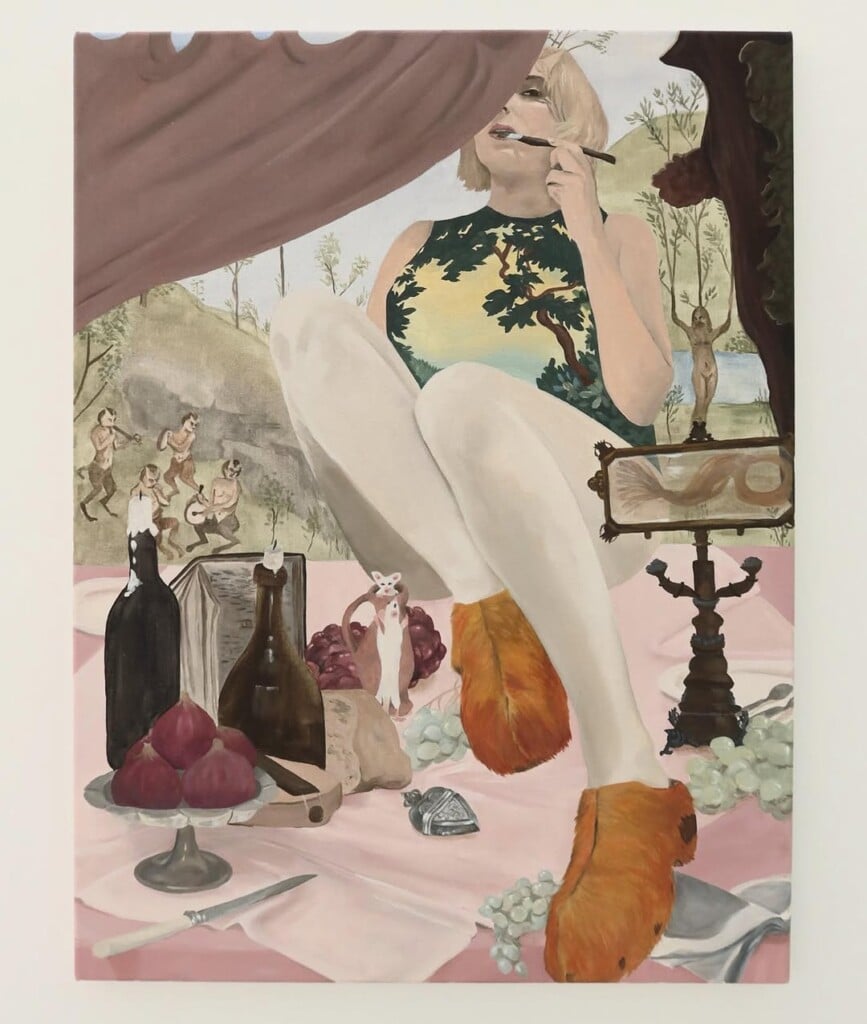
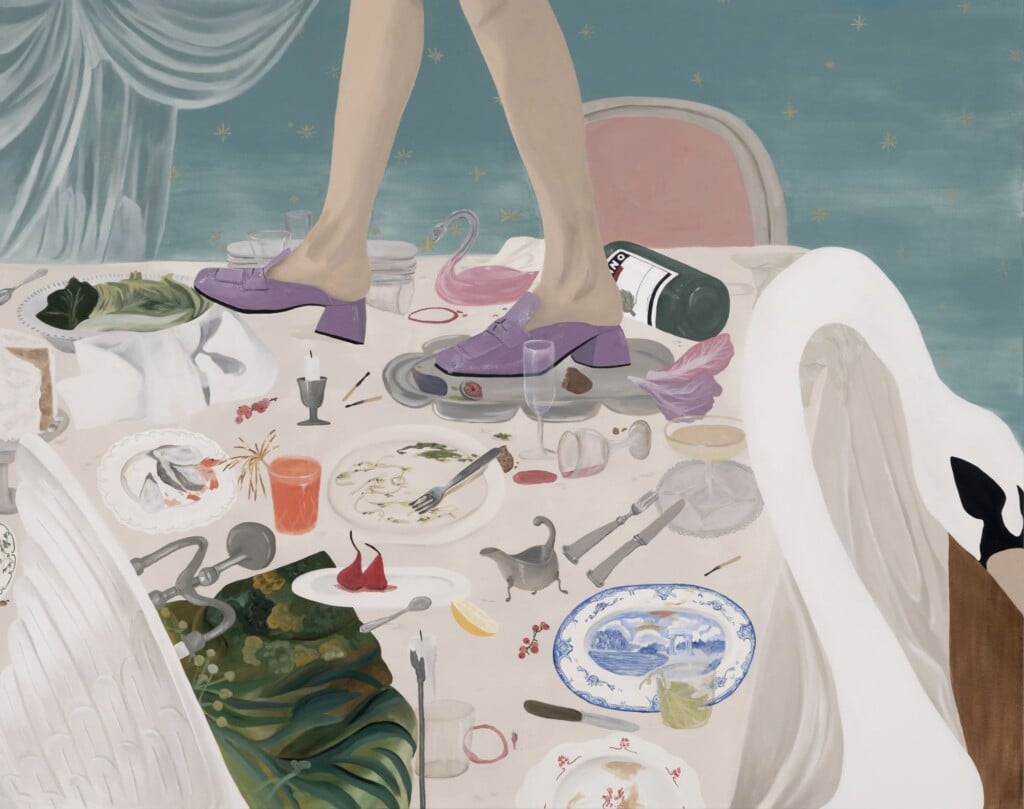
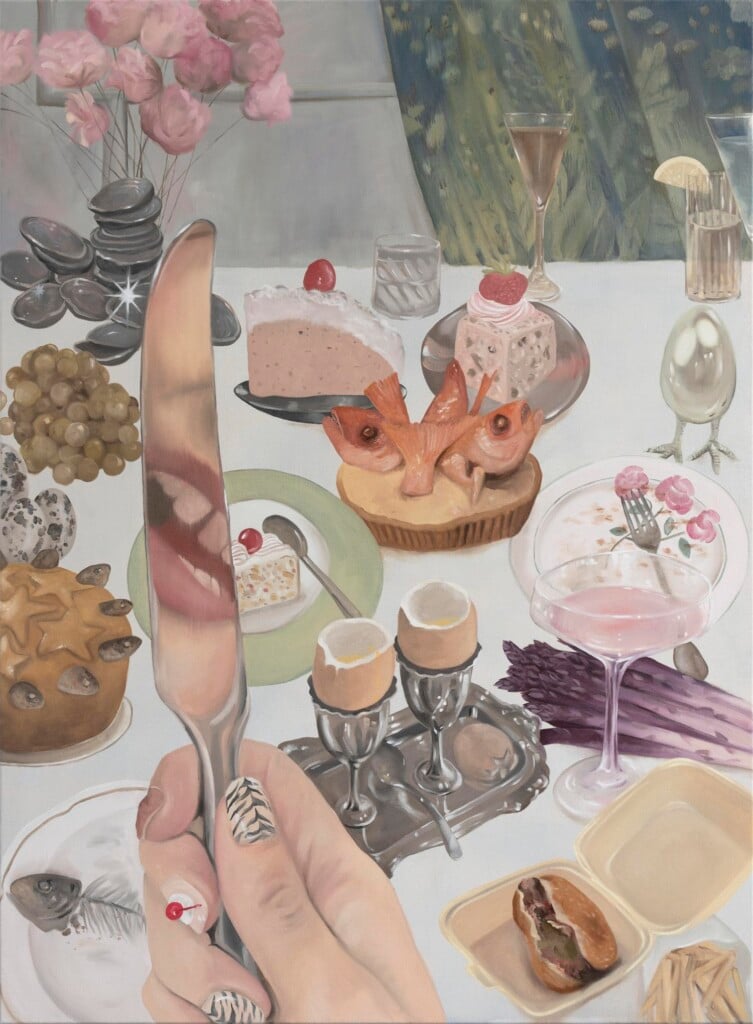
In the hyperrealistic paintings, the opulence of the remnants of consumer society emerges. The social media universe, populated by the most famous or improvised influencers of a brief and once-authentic time, with its leftovers and titanic relics of a smoky and disoriented golden age, gathers the crumbs of a melancholy tied to the end of an event—one that will soon be followed by many others.
Among what remains of a banquet lingers the nauseating fear that a given time may ultimately bend to the mere existence of its commodities. Romane de Watteville’s gaze and imagination thus operate on the fragile margins of a sentimentalism that, in no time, will give way to the indifference and distraction of the most ordinary daily life.
Through objects, through one or more still presences left on a table or slipped onto the floor, the Swiss-French artist stages the ruthless temporality of a bulimic and uninterrupted consumption, always plated in gold and diamonds.