If there is anything interesting about aging, it is the shift in perspective. At a certain point, almost suddenly, we stop looking at things from within and begin to see them as a whole. Not because we know more, but because we have lived through them long enough to recognize their patterns.
This is what happens after twenty years of Design Week.
Twenty years in which we have watched Milan change its skin, distort, accelerate, and slow down while maintaining its ever-recognizable identity. In an urban landscape in constant transformation, shaped by Expo, wars, pandemics, momentum and economic crises, Design Week has continued to grow relentlessly, expanding along with the city: an autonomous organism, an unstoppable blob that, once a year, stretches until it coincides with Milan itself. And in twenty years, the city—with its vital and neuralgic nodes—has expanded considerably.
If it was once possible to orient oneself—if not to cover everything, at least to intercept the truly relevant moments—today everything is relevant and everything is everywhere. Everything is hype. Everything is necessary, essential, unmissable.
FOMO is not a side effect: it is the grammar that regulates the flows of this week. A continuous marathon of invitations, queues, openings, overlapping appointments. Milan, which already performs itself during its “weeks,” reaches perhaps its most extreme form with the Salone del Mobile: a perfect device for networking, an unparalleled relational accelerator. But increasingly less, perhaps, a real space for cultural processing.
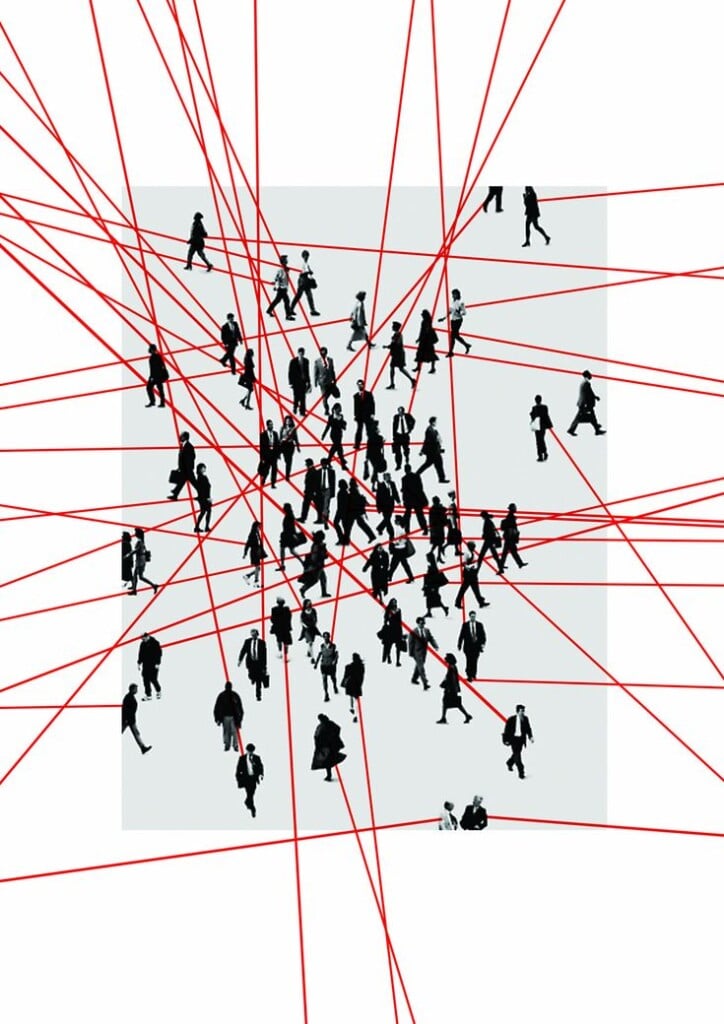
Because a multiplication of events cannot correspond to a multiplication of meaning. It is not—except economically—humanly sustainable to think of building so much at the level of excellence. On the contrary: the more the surface grows, the more meaning thins out. It fragments, disperses, sometimes disappears.
It is also, quite simply, a cognitive issue for the audience: in a system that offers everything, choosing becomes more difficult. Not because options are lacking, but because there are too many. The dominant feeling is always the same: that of missing something. And it is not an accidental sensation—it is structural, part of the system, one of the mechanisms that powers it.
At this point, then, the question is no longer “what to see,” but why be there.
What are we really looking for in Milan Design Week?
Without an answer, the system tends to choose for us. It overwhelms us.
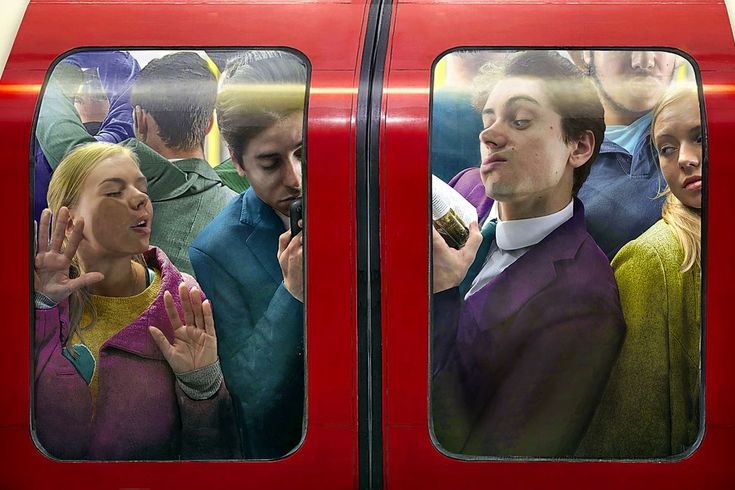
There is another effect of this uncontrolled growth, perhaps less evident than FOMO but closely related and equally interesting: the total dissolution of value hierarchy. If there were once places, moments, objects that imposed themselves as central—anticipated events, projects capable of catalyzing attention—today everything coexists on virtually the same level. Every district is relevant. Every installation is “a must-see.” Every opening is unmissable. Every brand, if it has the resources, can—must?—carve out its own piece of the stage.
And as already noted, when everything is unmissable, nothing truly is. It is not just a matter of quantity; it is a deeper transformation: the loss of a center, of a shared canon, of a recognizable criterion that allows us to say this matters more than that. Milan Design Week is no longer a hierarchical system; it is a continuous surface. And on a surface without hierarchies, value is not found—it is learned, if not constructed.
Responsibility inevitably shifts to the viewer. We can no longer fully delegate judgment to the system; there is no longer an implicit path, a pre-made selection.
It becomes necessary to exercise a gaze. To be curious, first and foremost. To keep asking questions: what truly interests me? what moves me? what do I enjoy?

Ultimately, it is an exercise in curation. Not of objects, but first and foremost of oneself. Of one’s time, one’s path, one’s way of being within things. And like any form of curation, it requires awareness—of one’s taste, sensitivity, and the ability to choose.
Because the risk, in systems this complex, is always the same: to delegate. To let others—the flow, algorithms, lists, trends—decide for us. But if we stop choosing, we also stop truly seeing.
And so yes, even partial, provisional answers are fine—for this year, for this Salone. Because without this tension, without this desire for wonder, everything tends to slip away: we experience a lot, but retain very little. At the Salone, as in life.
It is here that Milan Design Week can truly become an exercise of the spirit, an invitation to a shift in perspective: it is no longer the place where we discover whether what others have defined as unmissable and important truly is, but an open space in which each person chooses what, for themselves, is.