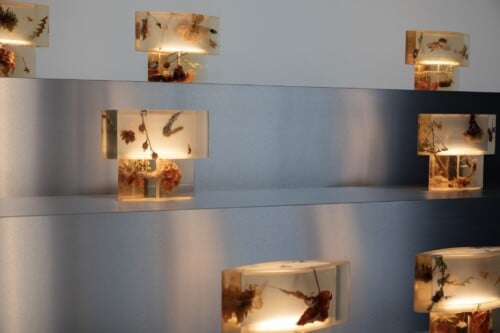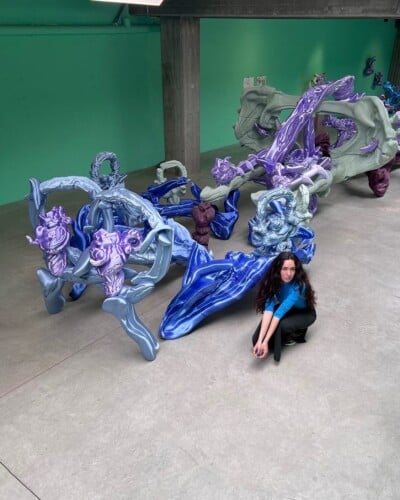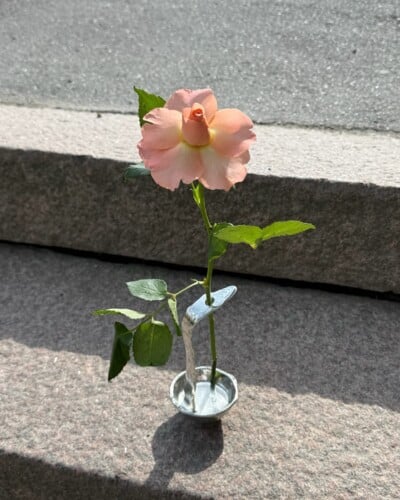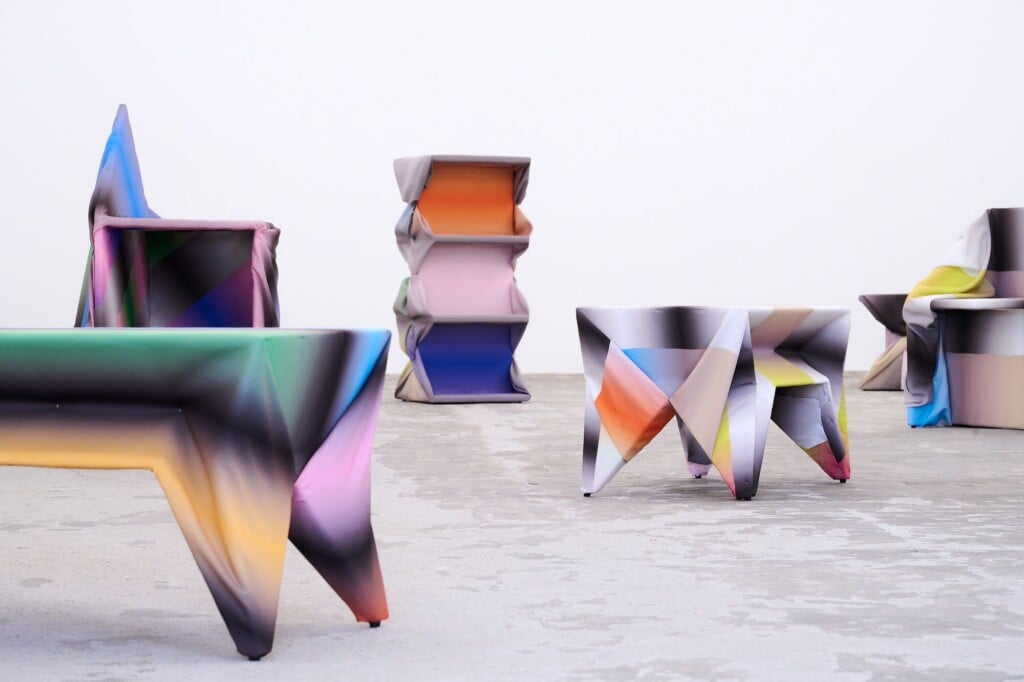
An object is never just what we see: it changes depending on the light that reaches it, the distance from which we observe it, and the way it relates to its surroundings. This is where the work of Saki Takeshita takes shape, a Japanese designer working across furniture, lighting and installation, who explores how materials and structures can alter our perception of things.
After graduating in Interior Design at Musashino Art University and working at the Misawa Design Institute of the Nippon Design Center, Takeshita founded her own independent studio. Her practice moves between fields that are often considered separate: craft and industrial production, function and sculpture, planning and chance. Rather than seeking a definitive synthesis, the designer seems interested precisely in what happens at the meeting point between these elements, when a minimal variation is enough to change the character of an object.
The HERE HERE project: color is never still
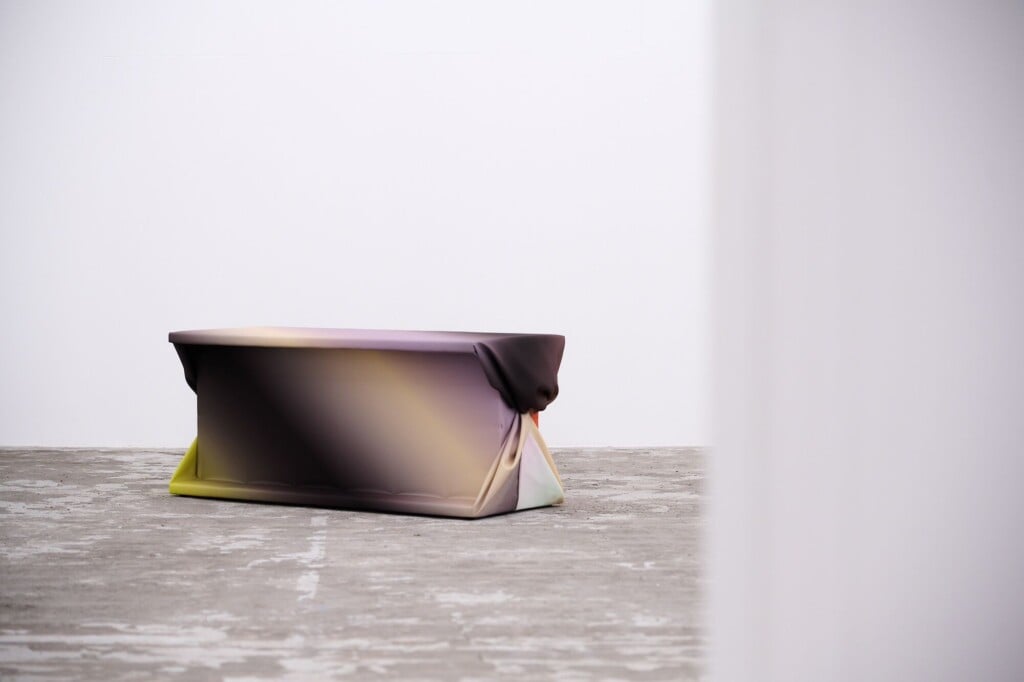
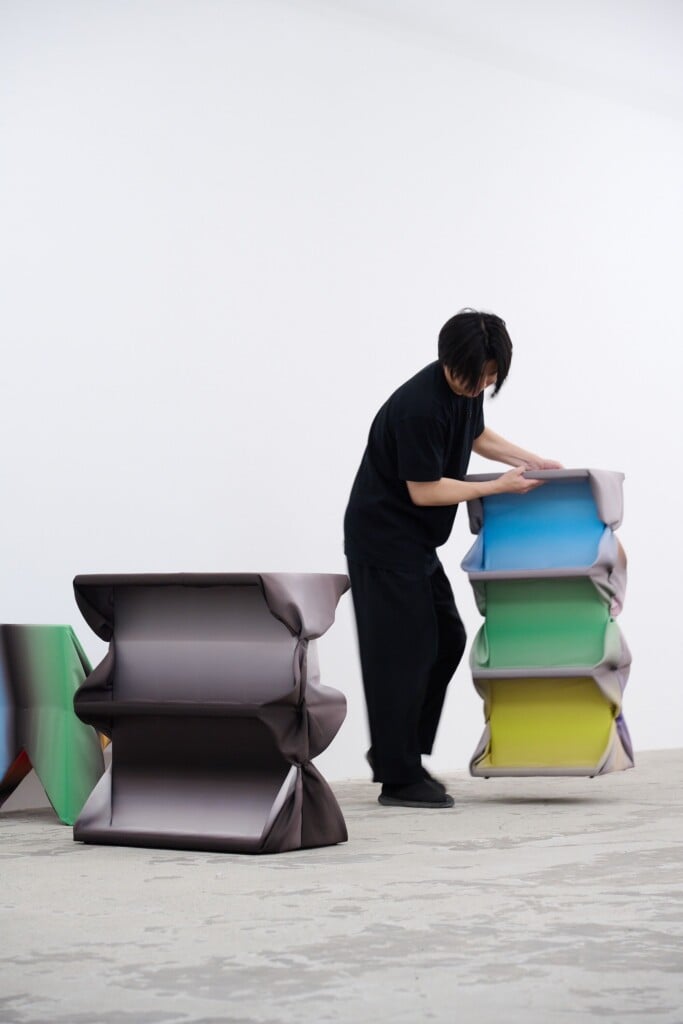
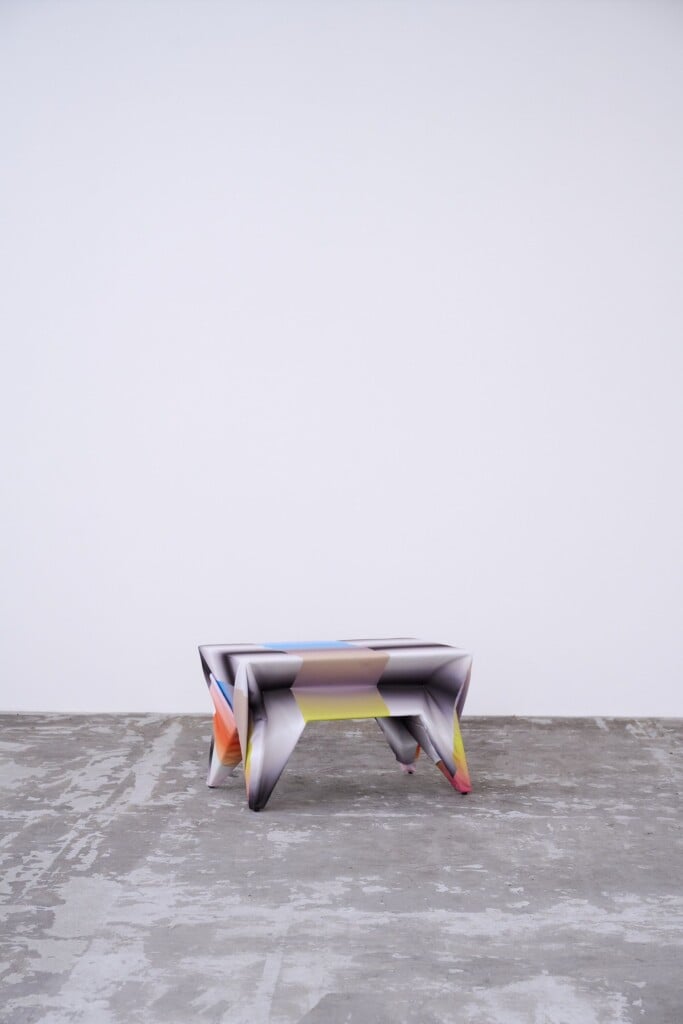
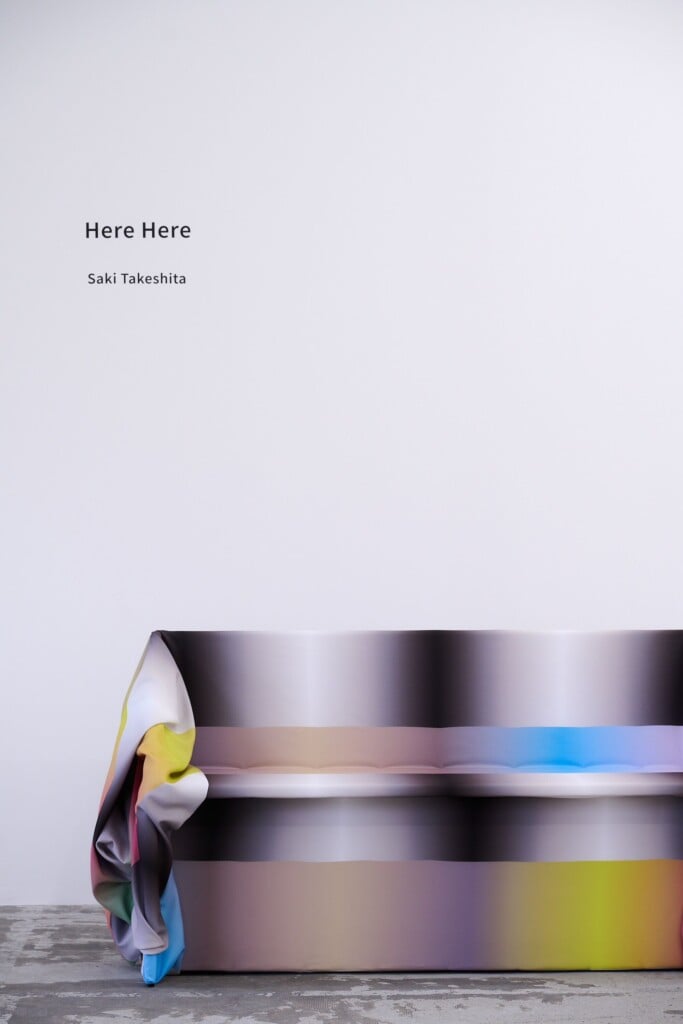
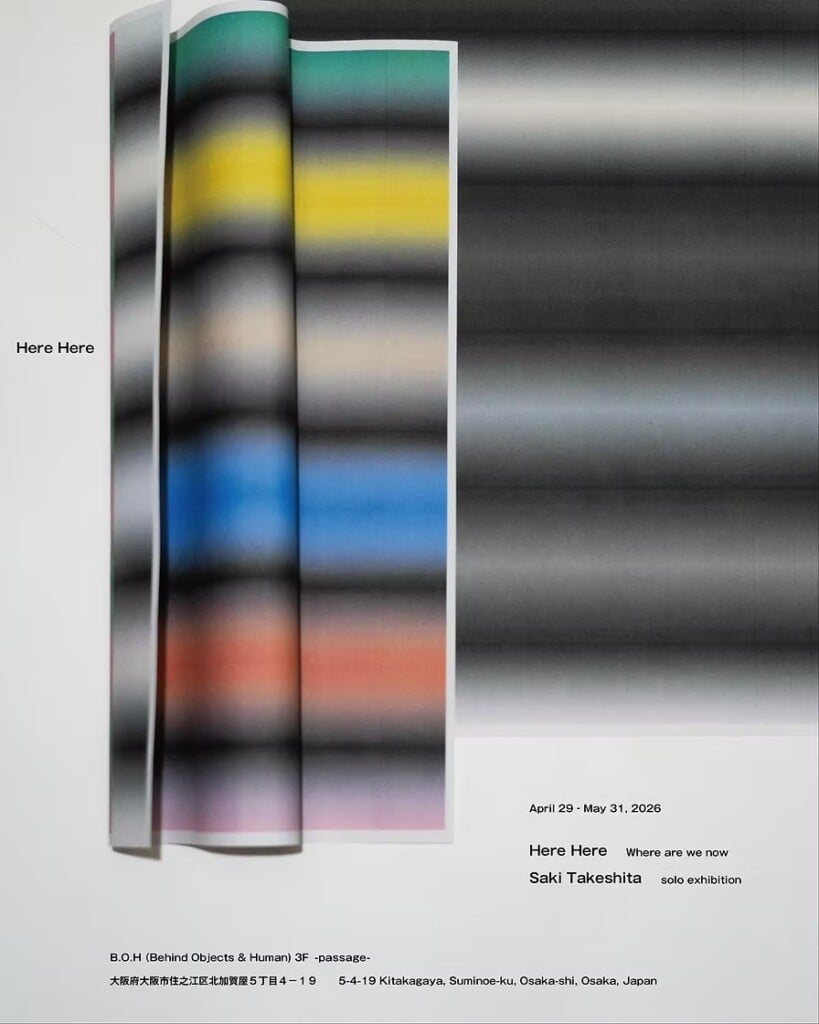
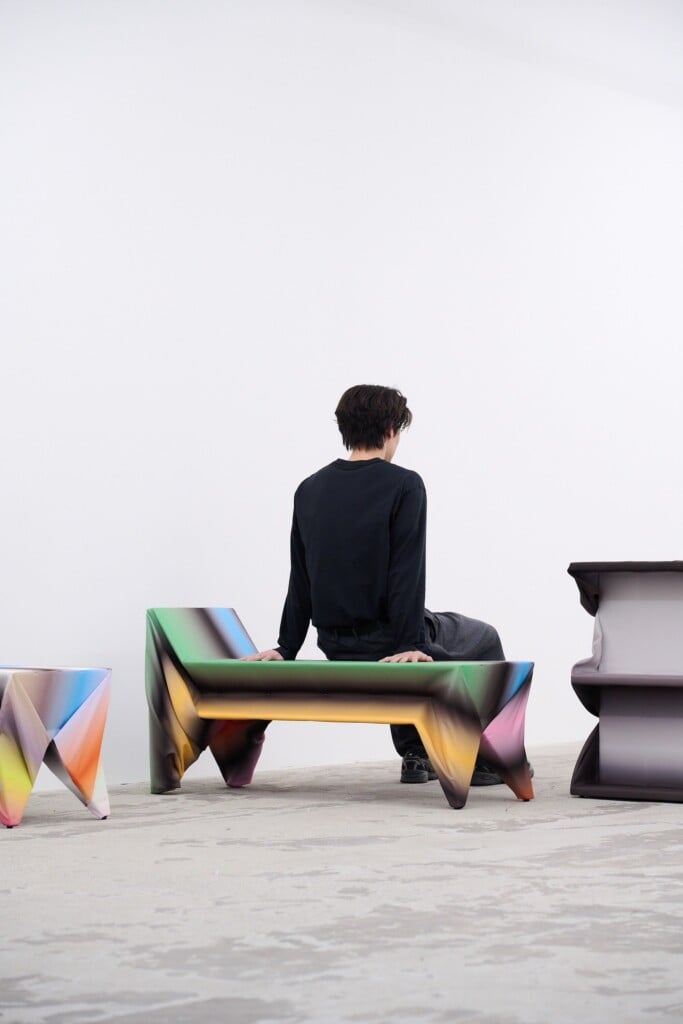
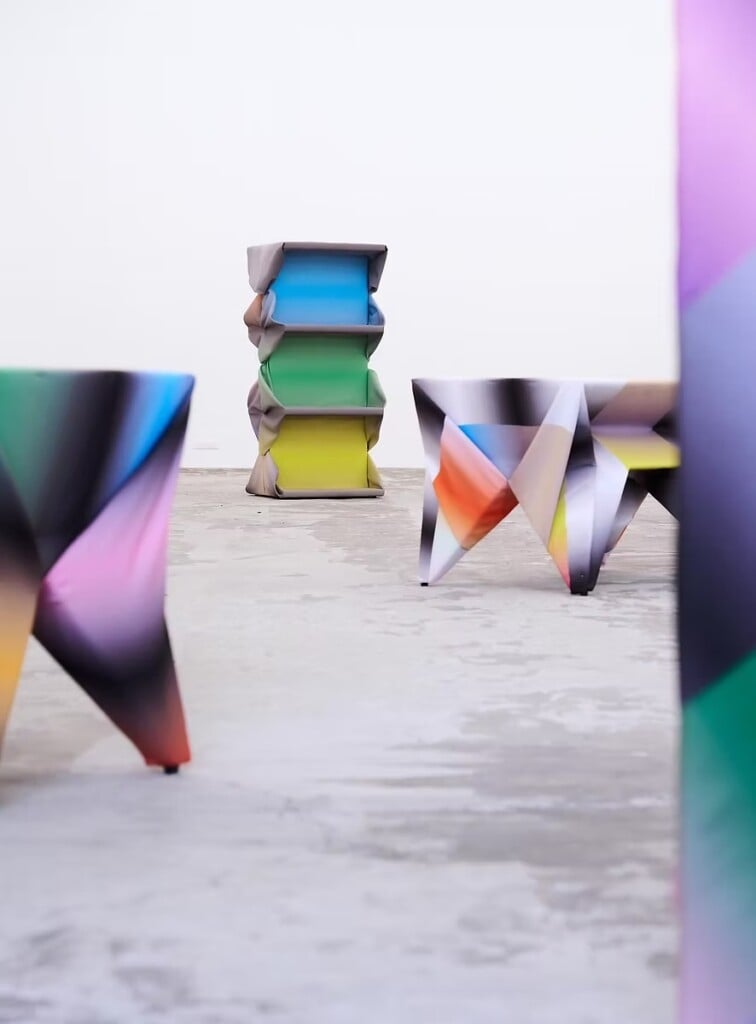
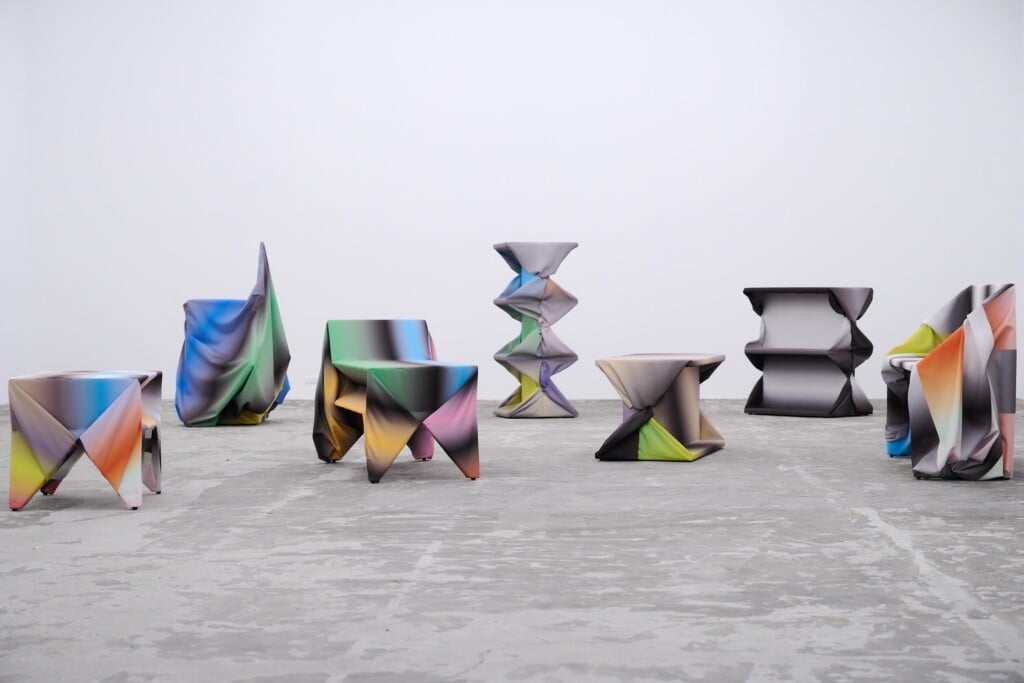
Ahead of her participation in Isola Design, the project HERE HERE offers an effective key to approaching her work. Presented on the Isola Design platform and created for an exhibition in Osaka in 2026, the project uses fabrics characterized by chromatic gradients to investigate the relationship between color, objects and space.
The title plays on a seemingly simple word: here. An indication that appears to identify a precise point, but actually changes meaning depending on who says it and what surrounds them. In Takeshita’s project, “here” does not correspond to a fixed position: it is redefined through the presence of people, the arrangement of the elements, distance, and the way the space is traversed.
The gradient fabrics thus become tools for observing how color acts on the environment. The works can appear different depending on their arrangement and their relationship with the viewer. Even the contrast between monochromatic and chromatic conditions helps change how the whole is read. Color, then, is not merely a surface quality to be added to an already completed form: it becomes an element capable of influencing the perception of space and the way we orient ourselves within it. It is an approach that shifts attention from the isolated object to the relationships it produces. What matters is not only its form, but also what happens when it meets an environment and a human presence.
Between function, material and the unexpected
This attention to perception runs through the designer’s other works as well. In Eeyo, for example, Takeshita experiments with balsa wood, a particularly light material, dyeing it and exposing it to hot air to alter its color. The result depends on the interaction between wood, dye and heat: the gradients and patterns that emerge are not entirely controllable, but arise from the material’s response to the process.
This experimentation shows how the material is not a passive surface on which to apply an already defined idea, but an active part of the creative process. In other works, Takeshita instead intervenes on the very structure of objects. The interest does not end with the visual effect. It is precisely in these variations that her design finds a recognizable direction: not necessarily to overturn familiar forms, but to introduce an element capable of making them appear in a different light.
With HERE HERE, this research shifts from matter to space as a whole. The project suggests that the place where we find ourselves is not a fixed reality, but an experience built through what we see, how we move, and the relationships we establish with objects. A way of understanding design that does not limit itself to solving a function, but invites us to pay attention to what we normally take for granted.