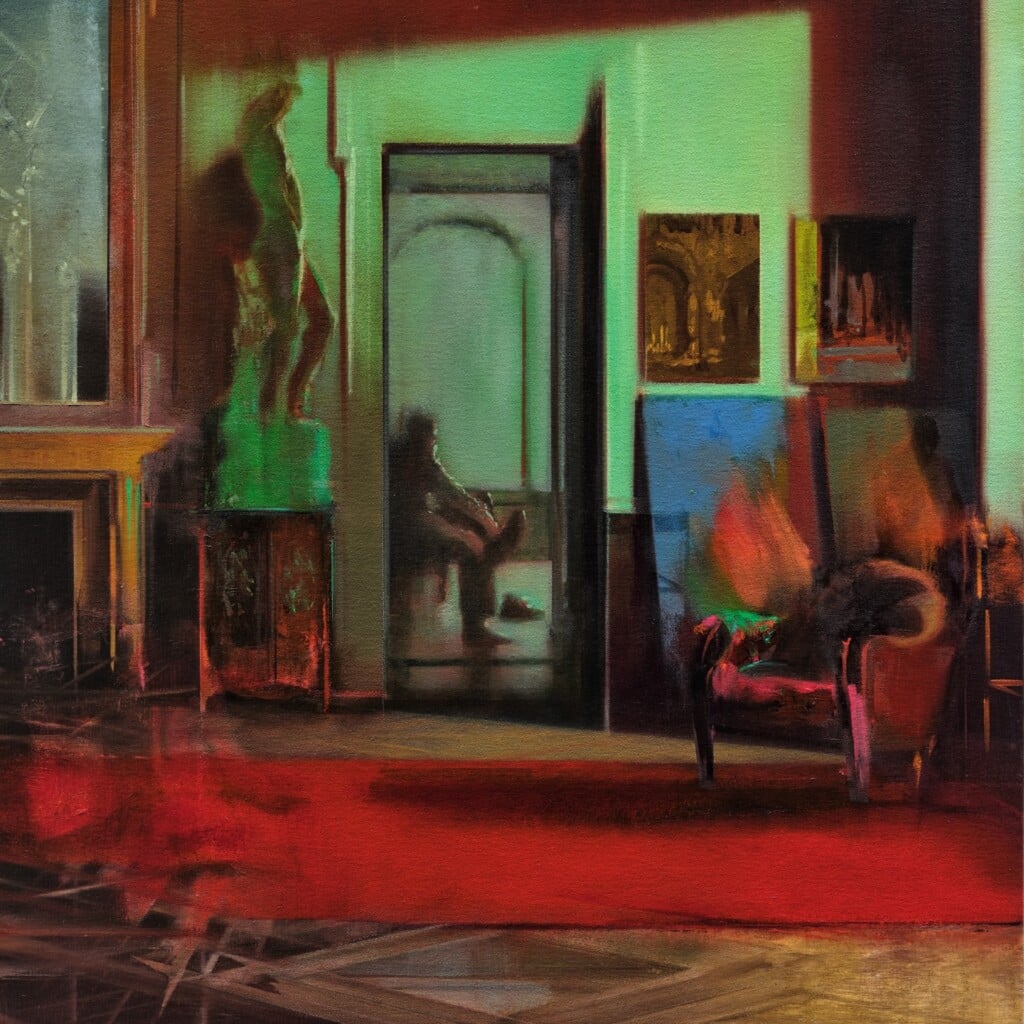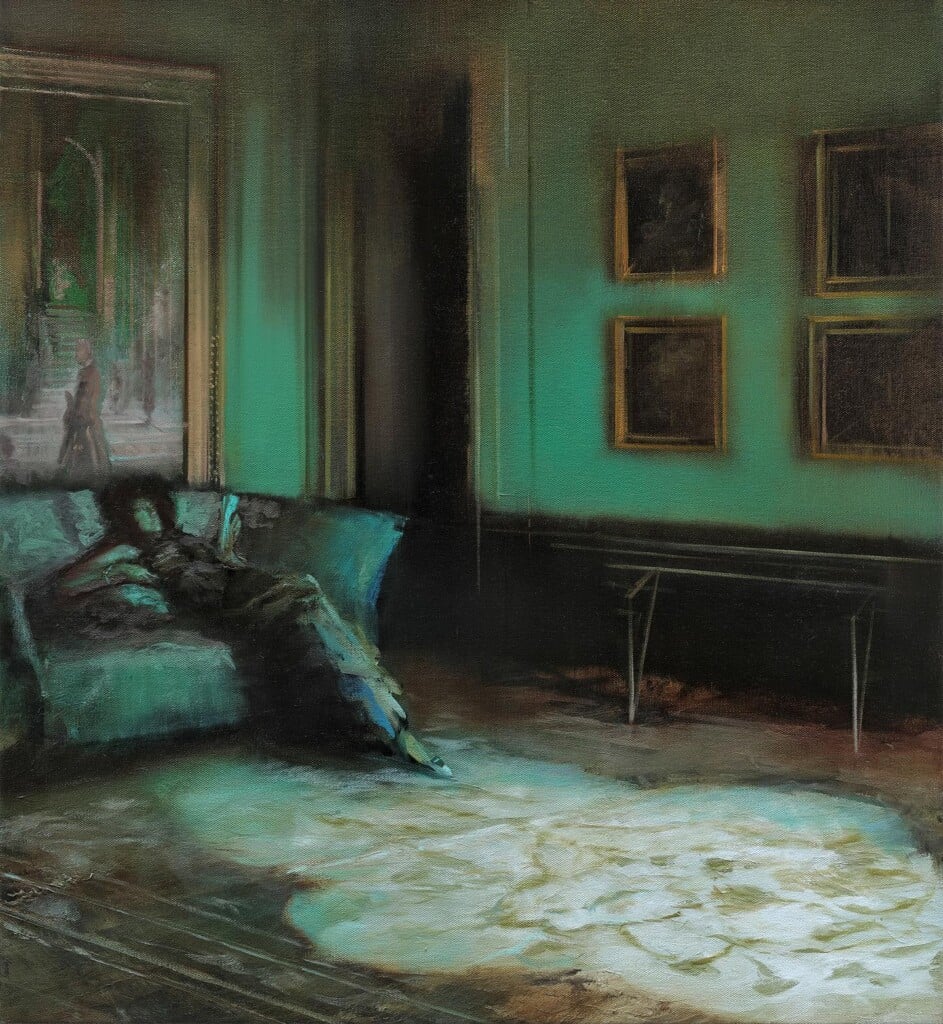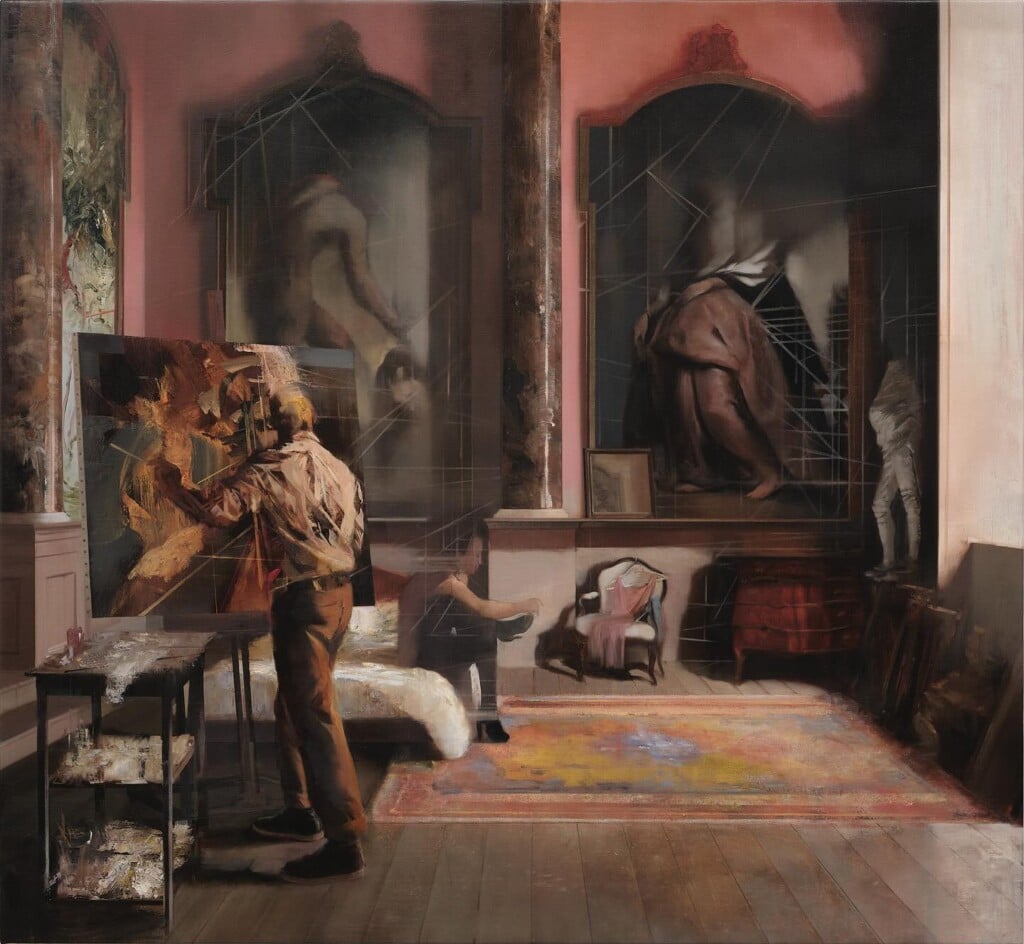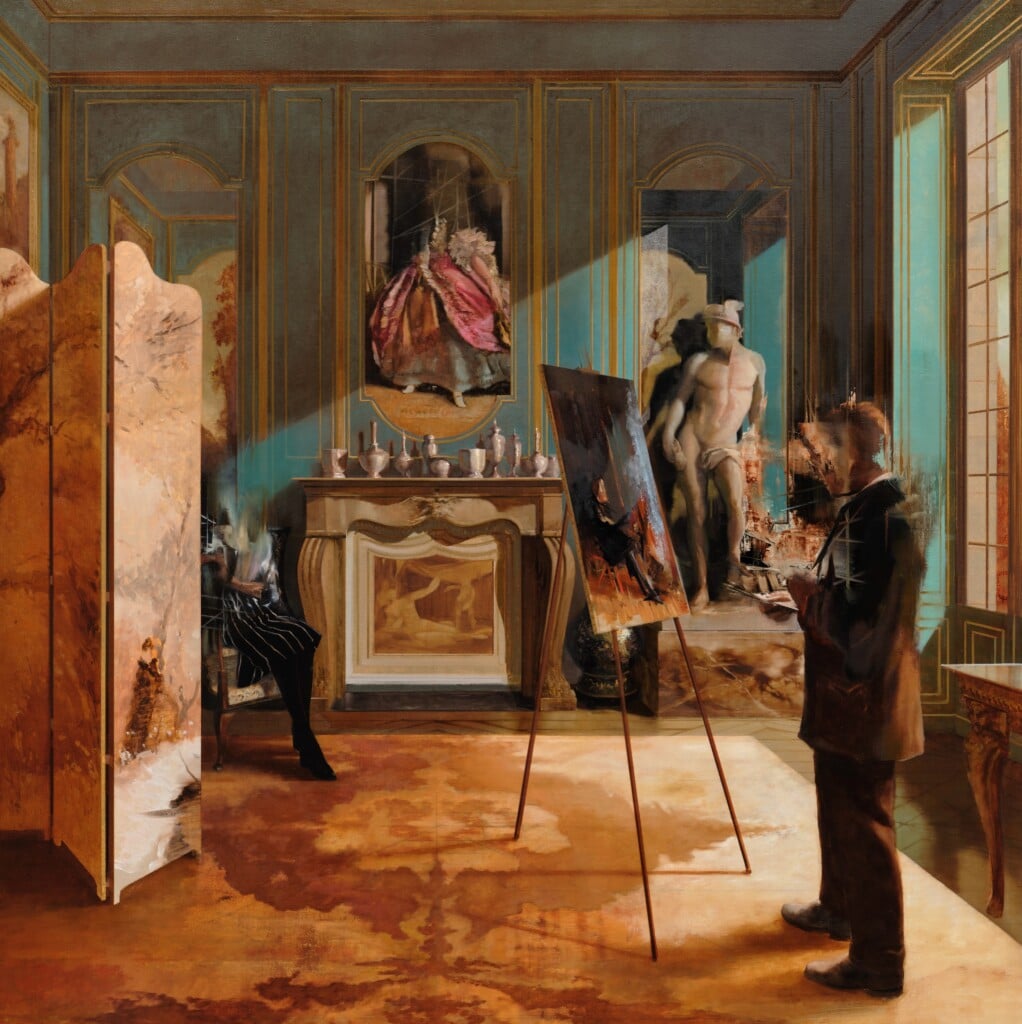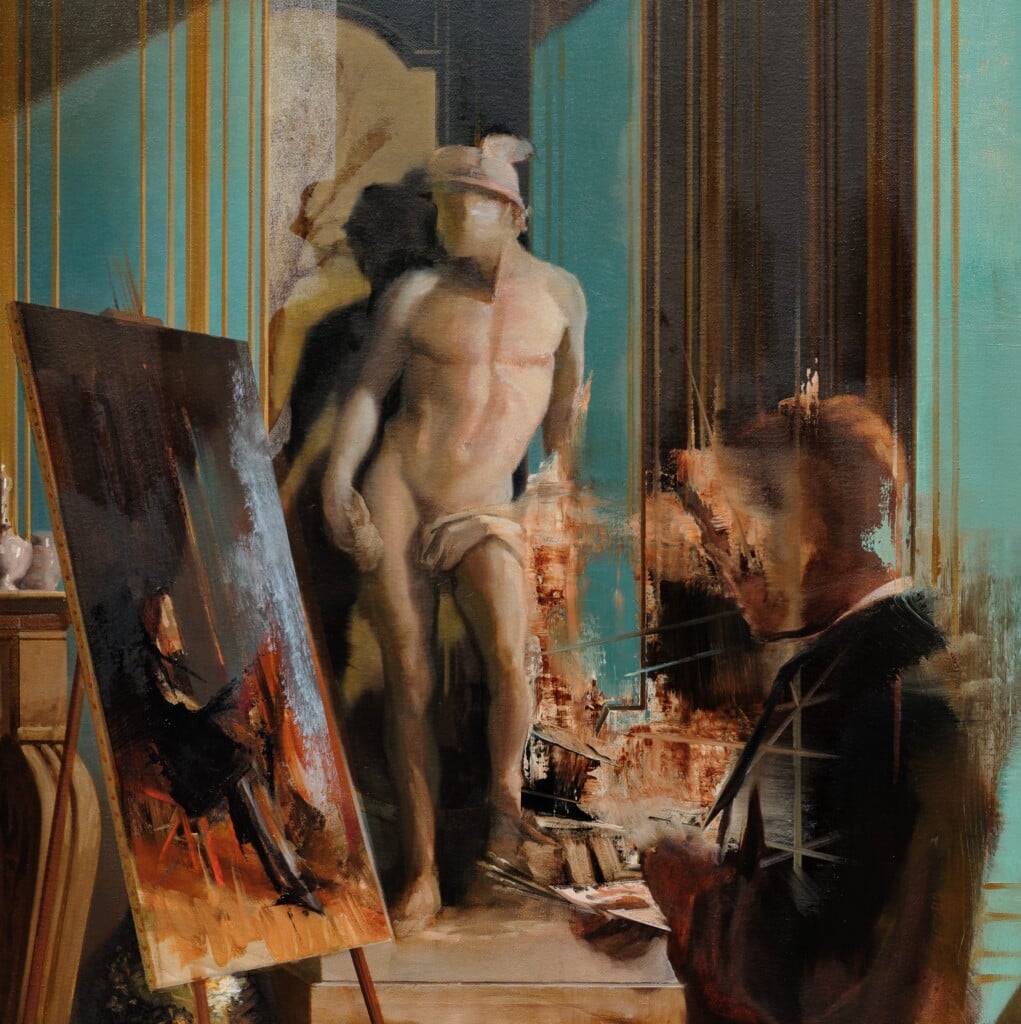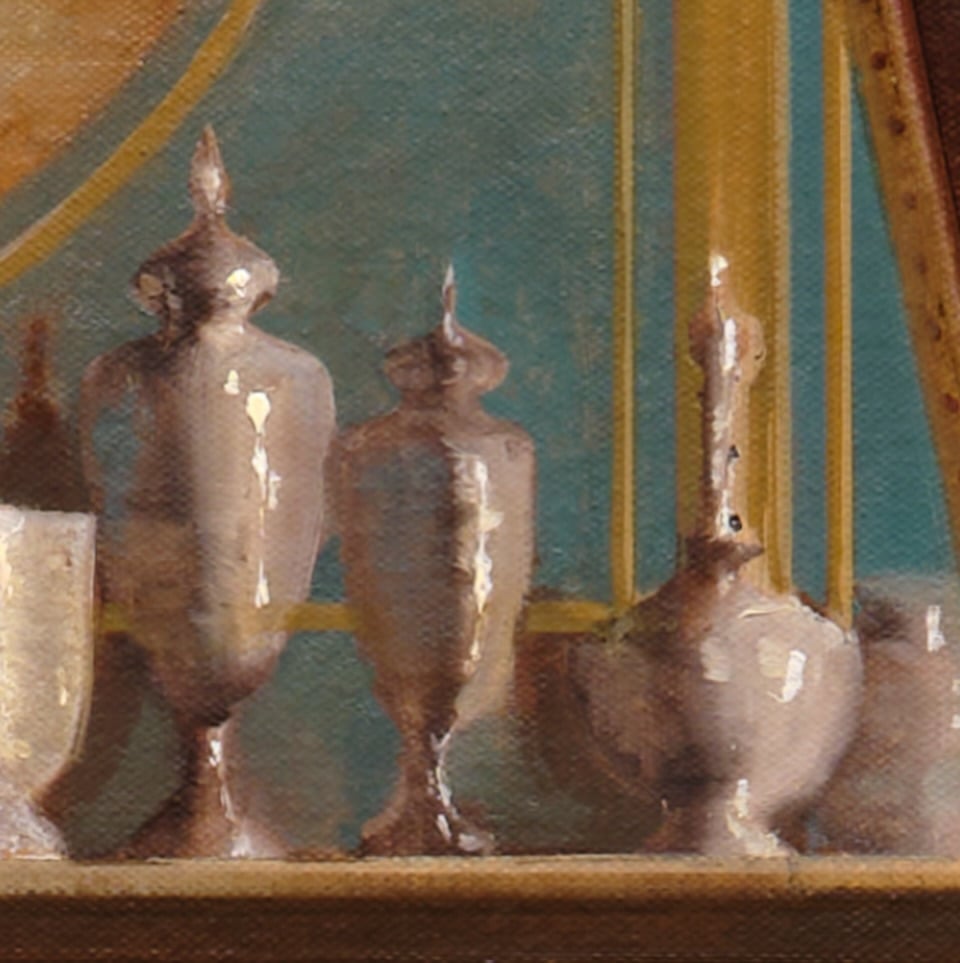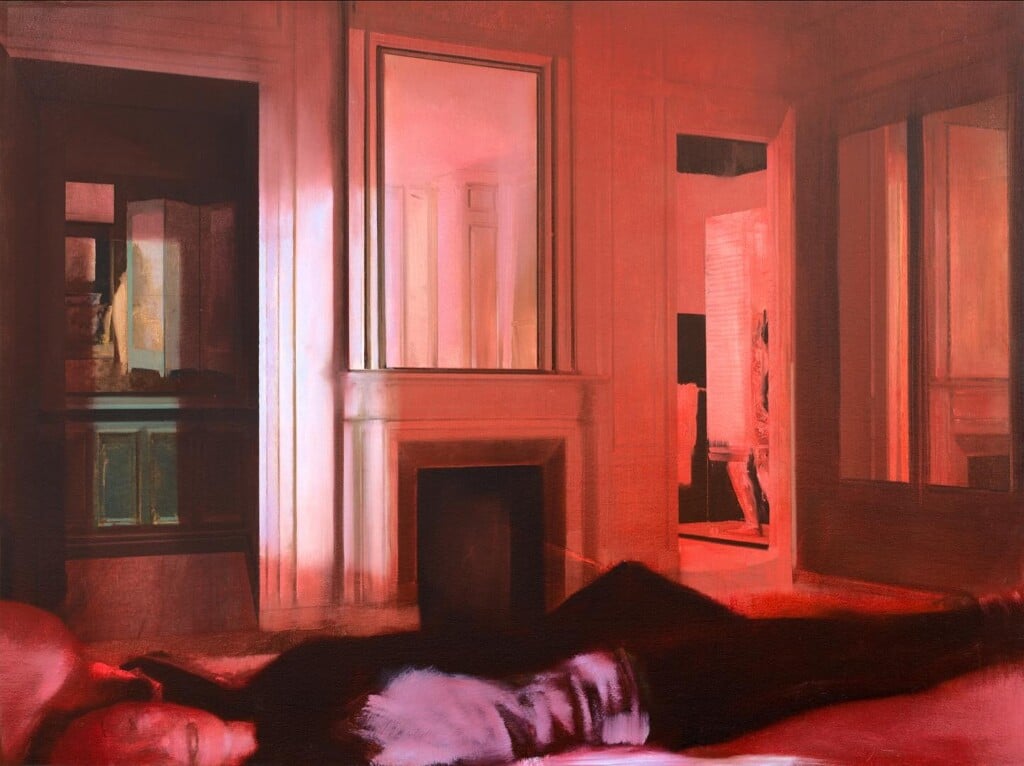
The enigmatic interiors of the Canadian-American painter transform architecture, figures and perspectives into scenes charged with psychological tension, where nothing is quite as it seems. There is something familiar about the paintings of Tim Kent, and yet it is hard to say with certainty what we are looking at. A room lit by afternoon light, a motionless figure, an elegant interior that seems to belong to another era: everything appears recognizable, but it only takes a few moments of looking for the scene to begin slipping away from a single reading. The spaces seem real, the details carefully constructed, but the atmosphere is pervaded by a sense of suspension, as if we were facing the memory of a place or the fragment of a dream.
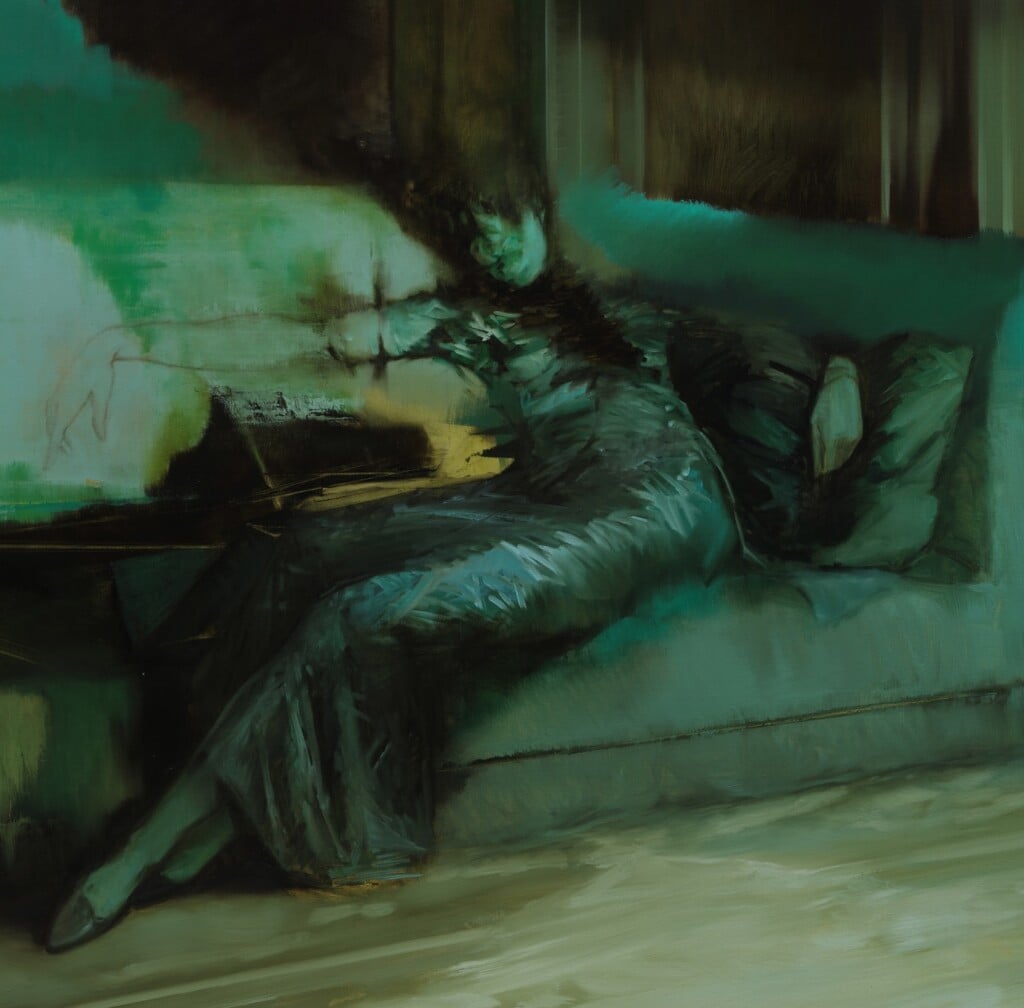
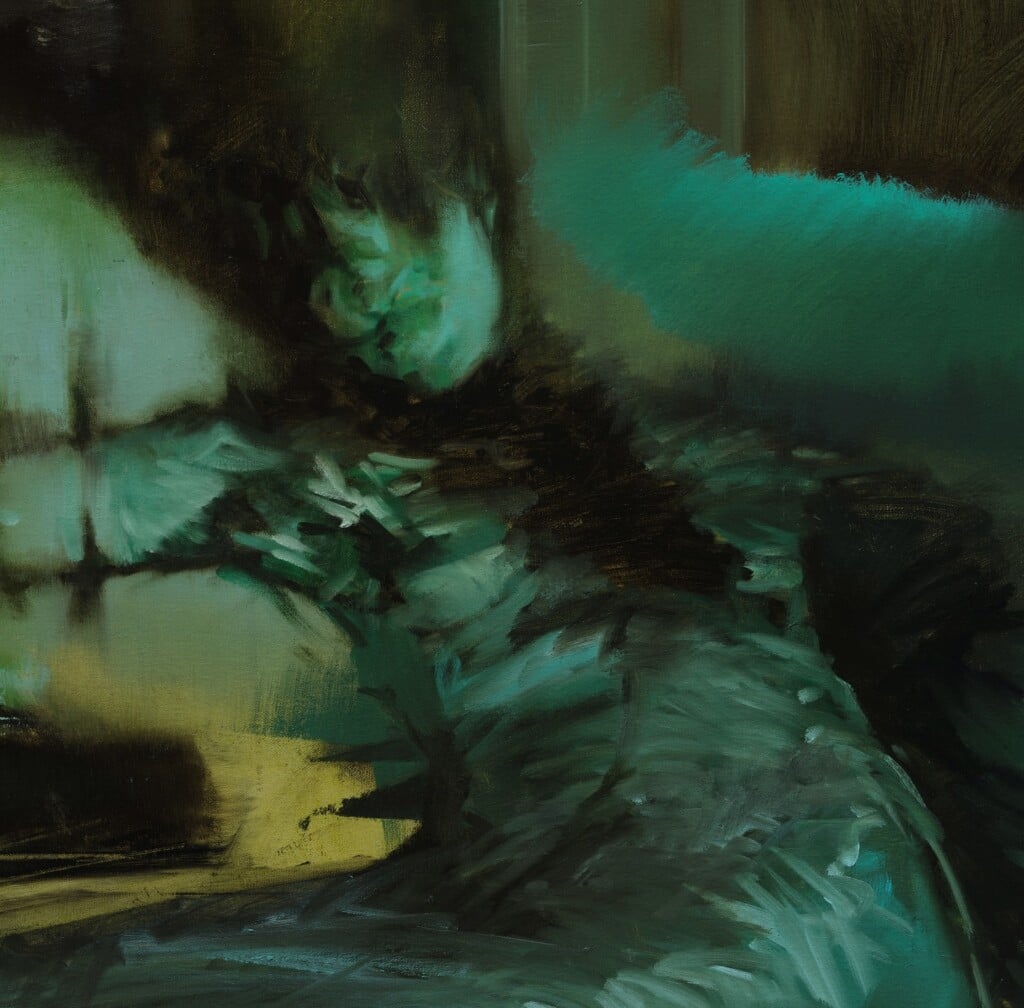
It is within this ambiguity that the work of Tim Kent develops, an artist born in Vancouver in 1975 and now based in Brooklyn. His painting brings art history, architecture and the languages of digital visualization into dialogue, building images that invite us to look beyond what is immediately visible. The environments are not mere backdrops and the people who inhabit them are not just narrative presences: together they help create situations in which personal memory, desire and structures of power intertwine.
To understand Kent’s work, one has to start from the spaces. His paintings are built through deep perspectives, corridors, doors, windows and rooms that seem to continue beyond the edges of the canvas. Architecture organizes the gaze and establishes the relationships between elements, but it does not necessarily offer an explanation of what is happening. On the contrary, the more precise the composition appears, the more details emerge that call the scene into question.
The artist’s training helps explain this attention. After studying perspective painting at the University of Sussex, at West Dean College, Kent began his career creating depictions of historic homes in England. An experience that led him to take an interest not only in the appearance of buildings, but also in the historical and psychological narratives held by architecture and design. In his works, in fact, interiors become places where traces of the past, cultural conventions and social hierarchies settle.
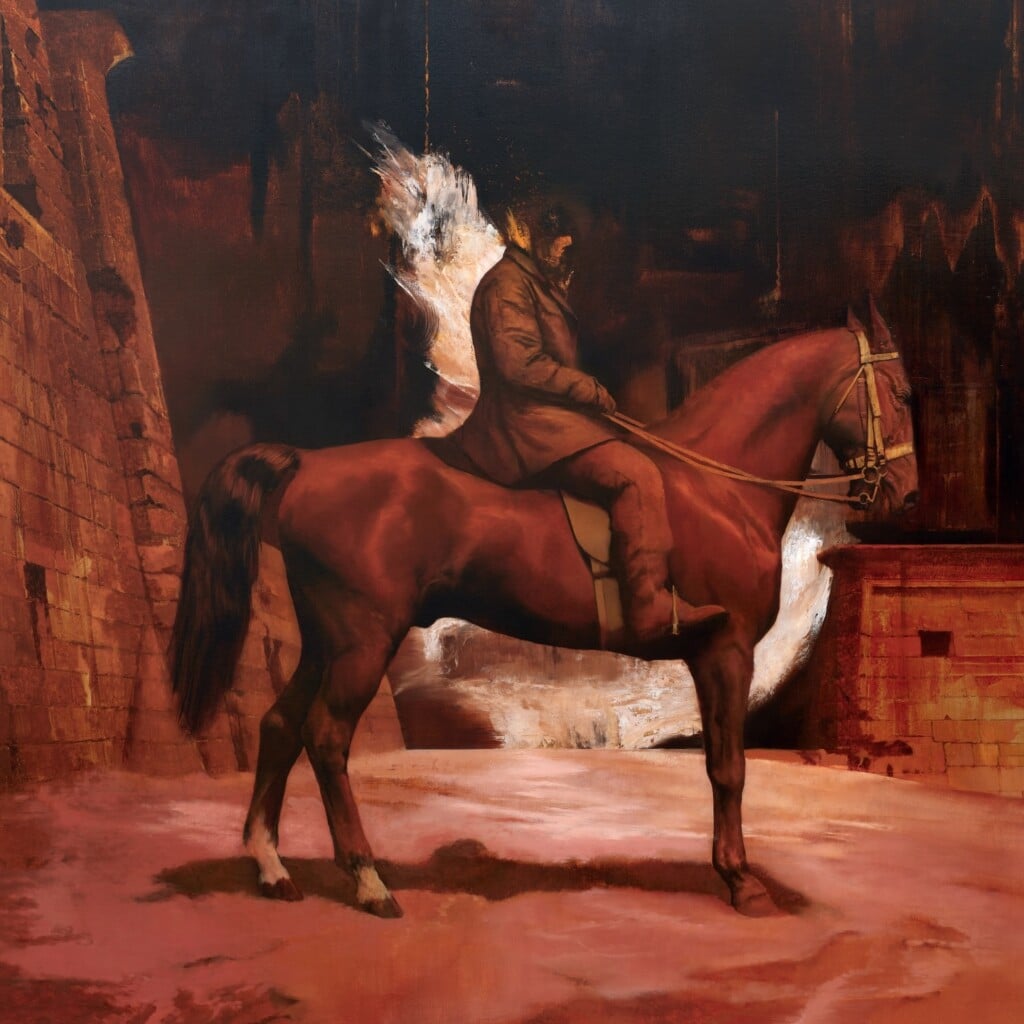
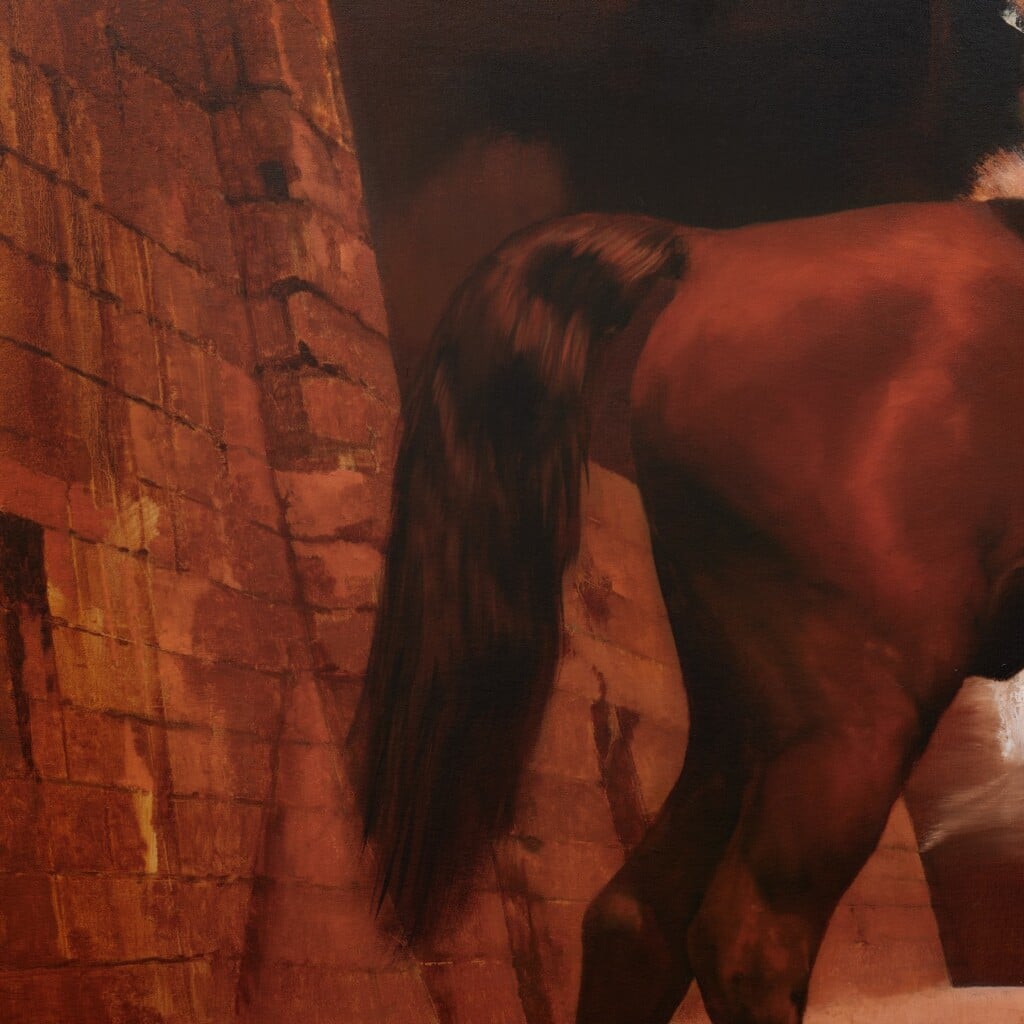
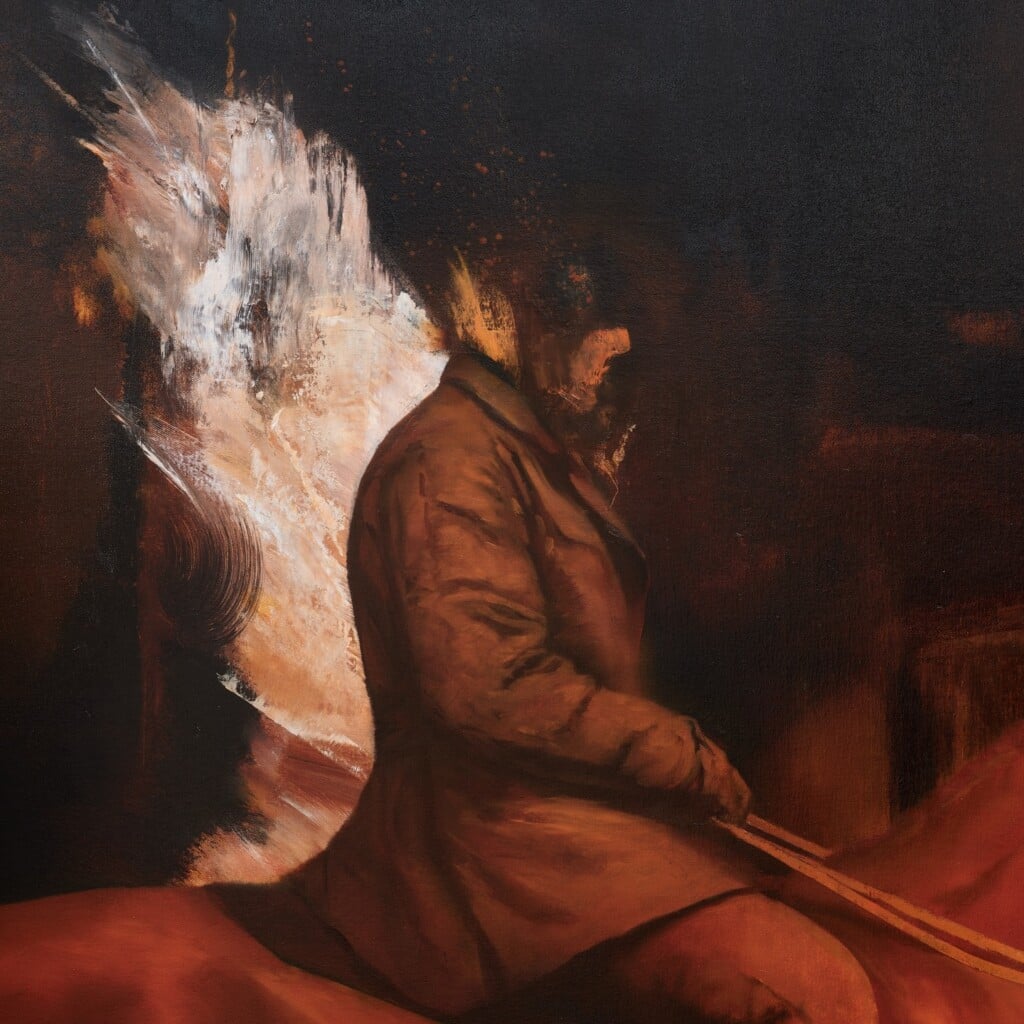
To this research are added references that cross different eras and languages: from Greek statuary to Baroque interiors, from French Rococo painting to Brutalist architecture. Kent does not simply reproduce these models, but reworks them into contemporary compositions, in which gestural brushstrokes and abstract elements interrupt the precision of the environments. The result is a tension between control and indeterminacy: the space is organized with rigor, but what it contains remains open to different interpretations.
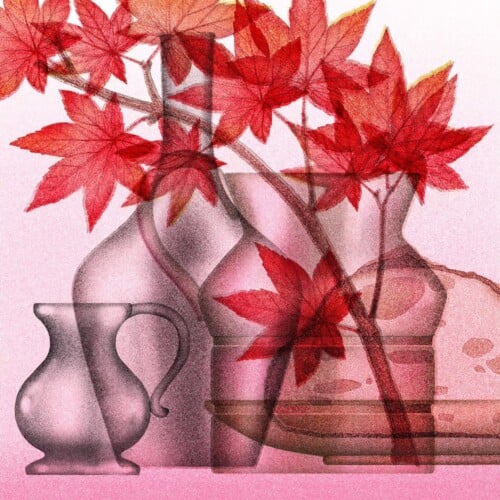
The relationship between painting and technology is central to Kent’s work, which combines photographs, architectural design software and digital tools, including artificial intelligence, to build his compositions. Technology thus becomes a tool for questioning the way we perceive and organize reality. Through geometric perspectives and architectural structures, the artist brings the painterly tradition into dialogue with contemporary languages, creating images in which precision and ambiguity coexist.
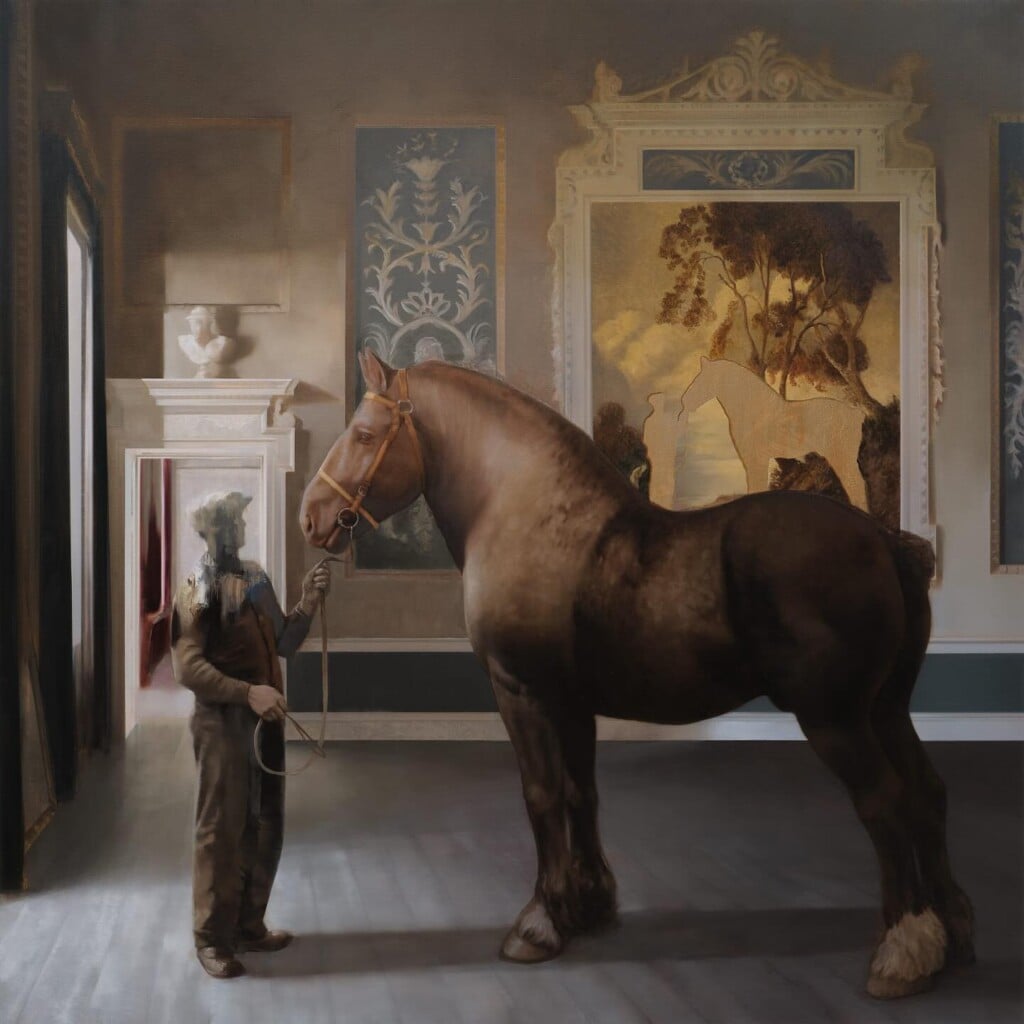
Tim Kent’s work moves between past and present without trying to resolve the contradictions that emerge from their encounter. Architectural precision coexists with narrative uncertainty, the memory of European painting with contemporary digital tools, the quiet of the environments with a subtle unease. Even when the scenes seem motionless, the gaze keeps searching for clues, connections and meanings that are never fully declared.
It is precisely this resistance to an immediate reading that makes his works interesting. The paintings do not merely ask to be observed, but to be traversed slowly, letting the relationships between spaces, figures and objects build a possible interpretation. In a visual landscape dominated by speed and the constant production of images, Kent gives painting back the time needed to doubt what we see.